 And then there is Glen Keith. Glen Keith lies a stone’s throw away from Strathisla. The spirit from Strathisla was pumped to Glen Keith for filling into casks, but also the boiler at Glen Keith warms water for Glen Keith’s production. Glen Keith’s production started in 1958 with three stills (triple distillation). In 1970 the first two stills in Scotland that are heated by gas were installed. Soon after that, the distillery stopped the triple distillation. In 1983 a sixth still is installed. The distillery is mothballed since 1999, but plans are to restart the distillery next month (April 2013).
Chivas Brothers (owned by Pernod Ricard) already opened two of their mothballed distilleries. Allt a-Bhainne in May 2005 and Braeval (a.k.a. Braes of Glenlivet) in July 2008. If memory serves me well, Chivas Brothers also have Imperial. Alas, Imperial was considered not economically viable for reopening. (It was “old” and had the ‘wrong’ capacity, to small for a company like Chivas), so Chivas presented plans in 2012 for a new distillery to be built at the site of the old Imperial distillery. So the demolition of Imperial started around december 2012 and is now also gone for good.
 Color: Copper, cloudy.
Nose: Musty Sherry with a lot of wood. Dried oranges, and sugared orange skin. Crushed dead insects, well they really don’t make them like this anymore! Cloves which fits the orange skin perfectly. Mocha with orange cordial. A forest in the rain. Oak planks. A Whisky with character.
Taste: Old bottle effect. Very spicy oak but not over oaked. It’s heavy on the wood but that not a bad thing here. A lot of wood and paper. Along comes wood spice and some bitterness. It is so clearly a Whisky from another time, that this one needs it. Luckily the rest of the body is quite ‘heavy’ too, but not in your face. It’s a rather quiet malt. Hot butter, sugared oranges and some coal. It actually is pretty sweet, but the sweetness is hidden well behind the wood and oranges. A bottled antiques shop with a long warming finish.
 This is now my favorite Christmas malt. Just smell that dried Orange in combination with the cloves. It’s not a perfect old bottle though, but it’s so clearly a time capsule. It’s impossible to not love this. I was always a big fan of Strathisla of the sixties and seventies and this Glen Keith is therefore really no surprise at all. Merry Christmas everybody!
Points: 92
 Let’s continue with Glenfiddich. Known for their big out turn and fairly priced Whiskies. No cheap entry-level Glenfiddich this time, like the
  Color: Full and dull gold.
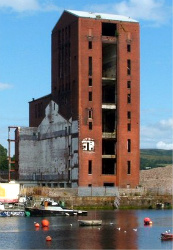 And here is another Cadenhead’s, from the same kind of cask, from the same year 1987, with three years more ageing. Cadenheads call this Distilled at Dumbarton, made with Inverleven stills. Everybody else calls this whisky just Inverleven. To clear things up. The Single malt whisky that was made this way, was called Inverleven. Inverleven was made untill 1991. This was made with the ‘normal’ type stills. In the same building was also a Lomond type still that was installed in 1959 at the Dumbarton distillery and ran untill 1985 (With the malt being called “Lomond”, not Loch Lomond). Loch Lomond lies close by to the north. Only a few kilometres away, still Loch Lomond is a Highland Whisky, and Inverleven a Lowlander. To wrap things up. The Dumbarton Distillery was the spiritual home of the Ballantine’s Blend.
 Color: Light gold. (Darker than the 15yo Cadenhead).
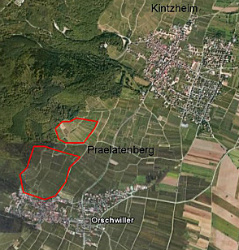 Above Praeatenberg towers the Koenigsbourg castle, built in the 12th century. The altitude of Praelatenberg slopes ranges from 250 to 350 metres and has an east-south-east orientation with a size of 18.7 Ha. The granite bedrock that underlies all Alsace vineyards is very close to the surface. The soil is heavy, covered with loose schist, and is rich with silicium. Dotted with stones rich with iron, quartz and other minerals. This helps the warming of the ground and lets water through easily.
 Color: Straw Yellow.
 Langhe is a hilly area to the south-east of the Tanaro river in the Cuneo province in Piedmont, northern Italy. The black grapes used for this wine is the Dolcetto grape that is widely used in this region, where wineries favour Nebbiolo or Barbera. These wines need a long time ripening. Dolcetto on the other hand is one that doesn’t require a long time ageing, two years will suffice.
 Color: Dark ruby-red.
 On the third day of the Japanese Whisky Week, I tried a fairly standard Miyagikyo 15yo at the reasonable strength of 45% ABV. That one turned out to be very good. Today we’ll have another look at this distillery, but this time a single cask at the more samurai strength of 58% ABV. As I said before, Miyagikyo is one of my favorites from Japan, ánd I’ve stated before that Japanese whiskies need to be cask strength to show their…ehhh strength. So here we go!
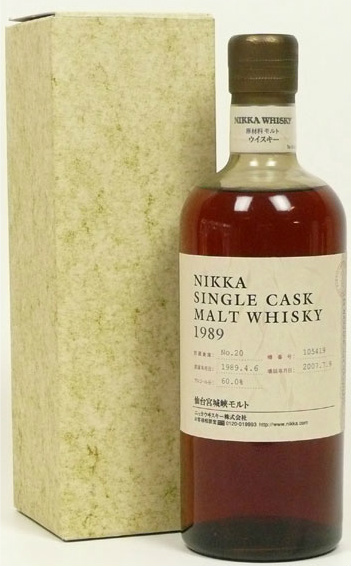 Color: Copper
 Also from 2009 the second release became “Autumn 2009” next up was “Spring 2010” and after that the fourth release was this “Summer 2010”. Also in 2009 the first Single Cask releases were released at cask strength. From 2011 the Single Cask bottles were released with red labels. In 2012 a Sherry Cask release at 46% ABV was released with a black label. Also from 2012 a new addition to the core range was released called “Manchir Bay”. Last but not least there are a few releases of 100% Islay at 50% ABV, where all ingredients of the whisky were sourced form the island itself. Now it’s time for “Summer 2010” solely from Bourbon Barrels from Buffalo Trace.
 Kilchoman then. The newest addition to the immensely popular Islay Whisky family. This new small farm distillery was built in 2004 near Kilchoman in the west of Islay, and therefore named Kilchoman. Operations started in 2005 and their first disaster struck in 2005 also. No distillery can call themselves a real Scottish distillery without a big fire. Well history was in the making so let’s do the fire thing quickly, they might have thought. Not hinting at any foul play of course. In 2005 the kiln burned down. Rebuild in 2006 and operations recommenced. As of 2009 but foremost 2010, Whisky started to be released. In 2009 the first release in the new core range was the “Inaugural Release”. Next up was “Autumn 2009” Let’s try our “Spring 2010” that was the third release.
 Color: Full Gold
 Color: Orange Gold.
 Master Quill