I have to say that many of Ardbeg’s “special” releases aren’t getting a lot of love. It almost seems to be in fashion to slam these releases. Maybe a combination of NAS and silly marketing or the combination of NAS and the pricing of these “specials”, because obviously these Whiskies could be containing pretty young stuff. Maybe people dislike the posh new owners LVMH. How can a leather bag and a mediocre Champagne be the owners of the mighty beast that is our Ardbeg. Whisky is romantic and better than all other alcoholic beverages! Another explanation might be that the core range is actually quite good. Especially Uigeadail and Corryvreckan if you ask me, both better than the 10yo, An Oa and the 5yo Wee Beastie. All five are more affordable than all these special releases. Most of which are often NAS Whiskies (Hence the funny names) and also are a bit more experimental in nature as well.
In 1997 Ardbeg was bought by Glenmorangie, so the experimental nature of these releases comes as no surprise when, since 1995, they have Bill Lumsden on the payroll (Head of Distilling & Whisky Creation at The Glenmorangie Company). For those who don’t know Dr. William “Bill” Lumsden (The Mad Scientist), he previously experimented quite a bit with Whiskies at Glen Moray before experimenting on an even higher level at Glenmorangie and Ardbeg. Online, two of the most disliked Ardbeg expressions are Perpetuum and the Auriverdes at hand. Perpetuum in fact wasn’t even very experimental. Old en Young Whiskies from Bourbon and Sherry casks. Still, I found it was a decent expression and I never had a dull moment with it. I scored it 86 points which is certainly not bad at all. But the two aforementioned cheaper ones from the core range: Uigeadail (2018 batch) scored 87 and Corryvreckan (2014 batch) scored a whopping 89 points, so both outdid the “special” release. As mentioned above , this time around we’ll have a look at another unloved Ardbeg: Auriverdes. Is it experimental? The Whisky matured in second fill Bourbon barrels. The original lids were removed and replaced with new virgin oak ones, which were toasted using a very special secret toasting process, which accounts for the experimental bit.
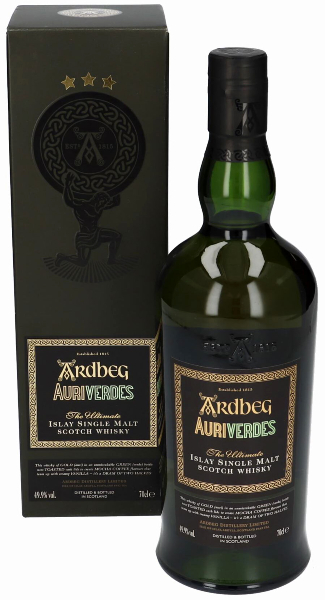 Color: Light gold, not pale.
Nose: Nice funky peat, soft smoke with some notes of crushed beetle. A fireplace in December. The smell of Christmas in a log cabin. Hints of black coal and glowing embers. Old bicycle inner tubes. Less salty and fishy than expected from a south shore Malt, even though more than enough organics are happening in this nose. After a while, a more fresher approach starts, with breaths of fresh air, and more citrus-like aroma’s without being overly fresh or acidic, just adding to the perfume. After this fresh phase, we’re back in the realm of black coal and chimney smoke in winter, preferably on a dark evening after a snowy day, only lit by street lights, by odd coloured sodium lamps. Tiny hints of sweetish licorice powder, a Licorice-Menthos combo and some dust for old-times sake. Ooooh, the rubber comes back. I think this is a really nice smelling Ardbeg. Maybe some experimentally and specially and secretively toasted cask ends, but other than that, no funny business and nose-wise quite a successful experiment. I really do like the nose on this.
Taste: Sweet licorice comes first, as well as the crushed beetle. Somewhat vegetal and tea-like. The texture seems a bit thin initially. An indistinct fruity note is also present. Citrus, only more sweet, more sugared, than it is acidic and maybe some other ripe yellow fruits as well. Warming going down. Somewhat sweet, somewhat peaty and more of the Menthos feel that came rather late in the nose. It tastes somewhat like a minty licorice powder. Whisky-candy. The sweetness works very well in this Whisky. After swallowing, a nutty note emerges as well as some distant vanilla. Initially not big-bodied at all, maybe this is what people dislike in this expression. It is definitely simpler than the nose. The nose is really good and melancholic, the taste is initially a bit watered down, or maybe not mature enough. Is this the youth a NAS Whisky allows for? Yet it has great balance. Everything fits and works together well. Mind you, this is still not bad, but the nose carried some sort of a promise of things to come, a promise that hasn’t been kept entirely. I expected more complexity. During sipping, the nose still keeps on evolving, and truth be told, the taste does collect itself, which makes for a highly drinkable Ardbeg. I’m not having a beef with this one at all. Well, well, well, the taste really does develop after a while. This needed some time as well, time I might have saved, if I had added some water (but why hurry). It did gain even more balance and the body and especially the finish are bigger now, still not very complex though.
If really analysed well, with more than enough time, it is much easier to pick up on the true Ardbeg underneath. Maybe these specials aren’t for casual sipping at all, and if you try to be patient and give it some time, these special releases might be better than I was lead to believe by the internet. Maybe you got to work them a little, and since you are reading this, you as an experienced taster, are very able to do so, so please do.
People can be so judgemental these days, living fast, judging fast, too self confident. That’s human nature in the 21th century Whisky world or maybe even the world in general. I’m actually amazed how negative some people are and how vocal about it as well, and a lot of less experienced people just run with this and claim the same, unsure about their abilities to smell and taste. I see around me that even experienced aficionados fall into this abyss. If this is you, maybe you should learn to relax a bit, sit back some more, take some more time to smell the roses, (or Ardbeg in this case). Don’t be biased that Ardbeg is trying to pull one over your eyes and dupe you, because they probably aren’t. Not from the Whisky makers perspective anyway. Marketing may be another story entirely. Bill may be a mad scientist who tries to explore, often with an idea and sometimes by trial and error. This is definitely not a bad Ardbeg and don’t believe anyone telling you this. I feel this is a decent malt if you only let it. Don’t fool yourself and don’t let yourself be fooled, make up your own mind, and if after this you don’t like it, it must be true. Only then.
Points: 87
 Color: Full Gold
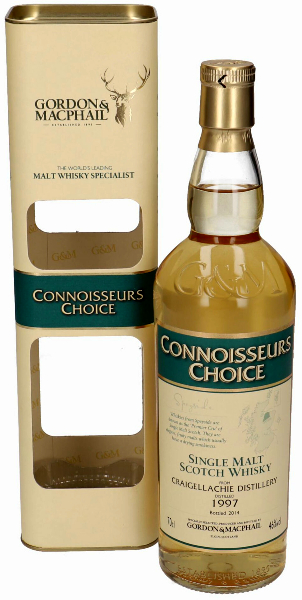 Color: Light White Wine.
 Color: Copper gold, slightly hazy.
 Color: Light copper gold.
 Color: Copper gold.
 Color: Light citrussy gold.
 Color: Gold.
 Most of the Rum-world lacks regulations, although efforts are being made, but on the other hand, Rum also has a history based on the production of sugar. Rum in a way is a by-product of sugar, so why shouldn’t a little bit of sugar be allowed to use?. In my early days, getting to know Rum, I somehow assumed Rum should be sweet, must be sweet, at least half-sweet. Only when I encountered high quality Rums, and single casks Rums, preferably bottled at cask strength, which obviously aren’t laced with added sugar, that I really came to know about Rum! So some believe Rum has a particular sugar-history, and some believe Rum gets better with adding some sugar in the early stages of production. Others are more militant and will kill you if you add sugar anywhere in the production of Rum. Rum should be pure. No mention though of Rums being to dry or to woody.
 Looking back on its history, and its use in cocktails, I’m not against adding sugar to Rums in general, as long as it enhances the final product, making it really better. There is a market for it, just like there is a market for Spiced Rums. There is a market for mixers and there is a market for sippers. Nothing wrong with Spiced Rums, it is a subdivision of Rum. As an aficionado though, a Rum sipper, I would like to know upfront, from the label on the bottle, not by searching the internet that a particular Rum contains added sugar, and especially how much was added. I have experience enough to know how much sugar I can “handle”. Because, dear reader, too much added sugar in Rum can taste really bad! (It reminds me of the discussion around caramel coloring in Whisky, which I found makes the final product not only darker, but also taste rounder, more mono, more flat. Too much sugar will flatten your Rum). I won’t kill you, but for me, many Rums are too damn sweet. On the other hand if used sparsely and with taste, why not?
 Color: Full gold.
 Color: White Wine.
 Master Quill