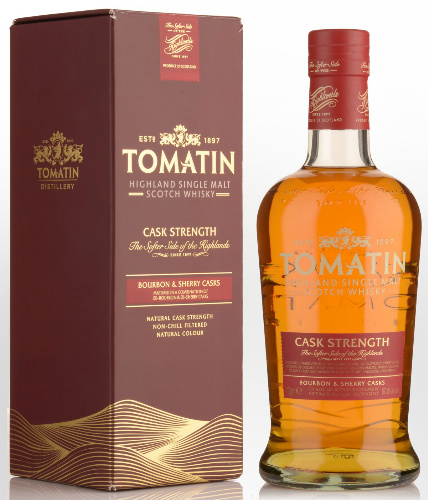
Tomatin 14yo “Port Casks” (46%, OB, Tawny Port Pipes Finish, 2016)

I come from a time when Distilleries started experimenting with other casks than the usual Bourbon and Sherry casks. When Whiskies finished in Wine casks, Port casks and Rum casks popped up in the market, I actually preferred the Rum cask versions the most. I didn’t particularly like the Wine and Port finishes. It’s not because I couldn’t keep up with the pace of change, because today there are lots of these finishes around that are pretty good, but when I taste back the first examples they still are not-so-good. Port was an easy choice for distillers and blenders I guess, since it is related to Sherry and both are fortified Wines. However Sherry casks and Port casks yield very different Whiskies.

I guess the early versions were finished in casks that previously held Ruby Port. Young and bold stuff, which made for a very raw and harsh Whisky, especially when finished for too long. The U.K. loves Vintage Port which are excellent Ruby Ports, 2 years old, so the obvious starting point for experimentation with finishing. Today we see more and more Port finishes done in Port Pipes that previously held Tawny Port. Tawny Ports are older Ports, that turn (reddish) brown from oxidation. For this 14yo expression Tomatin first matured the Whisky in Bourbon barrels and for the finish they used Port Pipes that previously held Tawny port for 50 years! The 14yo Tomatin was first introduced in 2014, a replacement for the 15yo, which came from Bourbon casks only. Tomatin also discontinued the 25yo which also was from Bourbon casks only. In 2016 we saw a complete revamp of the design, so this review is for the “new”14yo, number four in the core range preceded by the “Legacy”, the 12yo and a Cask Strength version without an age statement (We’ll get to that one later).

Tomatin 14yo Port Casks 2016Color: Gold with a pinkish hue.

Nose: Musty and definitely recognizable as a Port finish. It is quite obvious to say the least. Also the color gave it away. You don’t get this pinkish hue, from caramel coloring, and wine finishes smell differently, however it also reminds me a bit of a Jenever fully matured in a Bordeaux cask. Apart from the typical fruity Portiness there is an unusual hay-like aroma, like Grappa has, it is different from your usual Whisky. In the back there is also a more creamy, vanilla note, softening the whole up. Nice soft wood as well. Although the finish is quite strong, it isn’t overpowering, and the Whisky remains balanced. Nevertheless, the finish ís strong enough not to let Tomatin’s signature tropical fruitiness through.

Taste: Sweet and fruity. Chewy. Here the finish isn’t as strong at first like in the nose. Here it starts with sweet and creamy Bourbon cask notes, but the Port quickly exerts itself. I don’t know yet if the burnt note I get, comes from toasted oak, or from the Port pipes (or both). A fruity acidity lies on top, so less balance here than on the nose. Hints of paper (not cardboard, which is heavier and less likeable). The whole is quite creamy and friendly. Well made and quite bold to let the Port finish speak its mind. Creamy, fruity, slightly burnt and some nice wood. That sums it up. Medium finish.

This is daily drinker material. Something I would reach for quite often. Sure you can analyze it to death, but why should you. I already did that for you. Not very expensive and fun to drink and definitely different from most other expressions in the shops today.

Points: 84 (same score as the previous version)

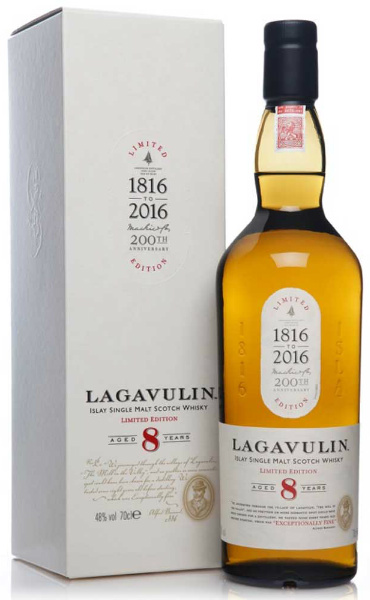
Lagavulin 8yo (48%, OB, Refill American Oak, Limited Edition, 20.000 bottles, 2016)

Here at Master Quill, we love Lagavulin. In fact if you like your peated Whiskies, then it is really hard to find a bad Lagavulin. It has always been a Single Malt of very high quality and rather rare to encounter as an independent bottling, although there are quite a few out there. Another amazing fact is that the “regular” 16yo is still very, very good, and very, very, affordable. Well done Diageo. For now, because when they start tinkering with Lagavulin 16yo, or delete the Talisker 10yo, well, that wouldn’t be so good now would it.

We all know, the Whisky marked changed quite a bit the last few years, it the demand! It’s therefore harder to put out well aged Malts for a price, older Whisky drinkers are used to. In come the NAS (No Age Statement) bottlings with funny names. Like for instance Talisker Skye (the island it hails from), Talisker (Dark) Storm (it is windy on the Isle of Skye), Talisker Port Ruighe (Pronounced as Port Ree, as in Portree, the largest town on Skye), Talisker 57 North (the location on the map) and Talisker Neist Point (a local lighthouse).

With Lagavulin, Diageo didn’t really venture into NAS territory, instead they released this 8yo. Sure still young like many other NAS bottlings, but this time we, the consumer, get to know its age. For one we now know there isn’t any three year old Whisky in this expression, because all the others must have it. No, this time we are not being conned and we are now more than happy to pay for a relatively young Whisky and feel quite good with it. Yup, put on an age statement, even if its 5yo (Benromach) or this 8yo, and everybody’s happy. I’m sure this Lagavulin got a break from the drinking public, whereas the Taliskers mentioned above were criticized to the bone. I for one like age statements, but do not necesseraly dislike NAS bottlings. However, not knowing whats in it, makes me more hesitant in buying them without tasting it first. With an 8yo, you somehow know what to expect…

Lagavulin 8yoColor: Pale straw. Very light.

Nose: Sweetish laid-back peat. Nice spicy feel to it, in part made up of burnt wood, or even better, burning wood. Usually young peated Whiskies tend to be quite heavy on the phenols, but this one smells quite nice and almost elegant. Ashes and candy. Slow development. Hints of rubber, crushed apples turning brown and some distant cigarette smoke. It also has a slightly acidic fruity note. Unripe pineapple and green apple skins. Fresh wood and fern, with mocha tones. Milk chocolate and . It wants to be warming but hardly is. It is a Lagavulin alright, in many ways a lighter version of the 12yo cask strength expression. Sure some might say it’s lighter in style, maybe slightly under-developed, or less complex, but when you spend some time with it, smelling it, it actually is wonderful stuff. Well balanced. Love it.

Taste: Sweet and fruity. To sweet and fruity? Bubblegum, well didn’t expect that. I didn’t expect it to taste like this after thát nose. Very nutty. Almonds and hazelnuts ground to a pulp. Where is the peat? Ahh there it is. Well definitely not a heavy hitting high phenol young peated Whisky. Nope. We can call this very fruity by Lagavulin standards. With some air I get hints of new make spirit. Not the spirity part, but the barley part of it. This one really doesn’t improve giving it a lot of time to aireate in the glass. It shows more imperfections that way, showing, it isn’t really finished yet or even some exposing flaws in the “design”. The finish is medium at best, but shorter than it should have been. How did it get so light, friendly and simple? High drinkability, but in this case even at 48% ABV isn’t enough. It is a very nice one to drink, but the weakness lets it down a bit, or is it too simple, and maybe that lets it down a bit. Maybe both, the truth often lies in the middle, or were my expectations a bit to high.

Beforehand I wanted to compare this one with the 1995 European oak version, but I think it’s better compared to the Wilson and Morgan Caol Ila, also a young peated Whisky.  Smelling the Caol Ila right after the Lagavulin, it seems to have some exhaust fume notes and clay. Garage, new car. Notes I didn’t pick up on when reviewing it. An unusual and very interesting note, just like the petrol taste in good Rieslings. I now love this Caol Ila even more. Smelling the Lagavulin after the Caol Ila, the Lagavulin shows more barley, bread and cocoa, and definitely more youth. I guess lots of the casks weren’t very active anymore. The Lagavulin is even lighter in colour than the Caol Ila. Although the Lagavulin is slightly higher in ABV the difference is noticeable. The Caol Ila is slightly nuttier with nice fruity notes. It tastes well matured and a bit beyond the 9yo it has under its belt. In this direct comparison, I like the Caol Ila better.

I have bought a few of these Lagavulin 8yo’s on good faith and even though I’m a bit surprised how it turned out, I’m not altogether unhappy with it. It still is pretty decent, but it’s not what I expected it to be, and it may still have to find its place in the bigger scheme of things, but let me say this, the 1995 I mentioned above is way better!

Points: 84

Heartfelt thanks go out to Nico for letting me have a sample.

Tomatin 12yo (43%, OB, Bourbon and Sherry Casks, 2016)

Not so long ago, I reviewed four twelve-year olds from Tomatin’s Cuatro Series. Whisky that started out in Bourbon casks but then were transferred for a finish into four different kinds of Sherry; Fino, Manzanilla, Oloroso and Pedro Ximénez. A longer while back, I also reviewed the entry-level 12yo, calling it the new look bottle, built around the color of the distillery. Black, white and the red of the doors. That design was introduced in 2009 and now, in 2016, The company is changing the design again. This is the even newer look from Tomatin. Newly shaped bottle and a new logo, depicting a hogshead. Nope, not the cask, the head of a hog. I love it when people have humor. With the change came also the change in ABV. The old expression I reviewed was 40%, although 43% versions did exist. This new one is bottled at 43% ABV. I’m not sure yet if I like this new design. Although the old bottle themselves look pretty standard. I did like the color scheme of them. This 12yo for instance, looks like it was made for lumberjacks with a green camouflage label. By the way, the gold lettering on the label is hardly readable so bring your reading glasses when visiting your place of choice for buying Whisky…

Tomatin 12yo (40%, OB, Bourbon and Sherry Casks)Color: Light gold.

Nose: Creamy, creamy wood, leafy and definitely similar stuff to the previous 12yo. Sweet vanilla underneath and quite some funky, slightly acidic Sherry on top. LActic acid, toffee and caramel with a hint of raisins. Waxy and quite some woody aromas complete with toasted oak. It also has a powdery quality to it and I even get the occasional whiff of Beer. Even though it doesn’t seem to be pleasantly fruity and accessible at first, it does have a lot going for it. The nose balances out when it gets the chance to breathe for a while. With time, even a floral note emerges and finally some of the typical Tomatin tropical fruits as well. I don’t have the old 12yo around anymore, but if memory serves me well, this new edition seems to be slightly better balanced and seems to be of higher quality as well.

Taste: Sherry comes first. Funky and musty, but less so than the nose promised. Quite sweet and fruity. Funky Sherry and a little bit of burnt oak. Candy sweetness, caramel sweetness with some cocktail cherries. Creamy again. However, the sweetness subsides under the influence of the woody backbone, which also gives it a slight bitter edge. Drying it out a bit. Next, some more creamy vanilla and cookie dough aroma’s, although the Sherry part has the upper hand. This is quite an interesting entry-level Malt. There is definitely quality here and you get a lot for what they ask you to pay for it. The taste may be simpler than the nose, but quite big and nice nevertheless.

If you are willing to give this Malt some time to breathe you’ll be rewarded with a pretty good Whisky at a more than fair price. Sure, the Legend is even less expensive, but for that, you get a much younger Malt with less depth. I would go for this one instead…

Points: 83

Same score actually as the “older expression”, but I do prefer this newer expression over the previous one.

Thanks for the Whisky Erik!