“An Islay Distillery” 9yo 2008/2018 (54.9%, Cadenhead’s, Small Batch, One Bourbon Barrel & One Sherry Hogshead, 330 bottles)

Let’s kick in the open door: this is a Lagavulin (supposedly). It’s not on the label, but I have been assured this is a Lagavulin. However, we still can’t be a 100% certain now can we! Lagavulin used to be, and probably still is, my highest overall scoring Distillery from Scotland. There were hardly any bad or mediocre Lagavulins around. Even the affordable standard 16yo (The White Horse version) was stellar, the newer “Port Ellen version” is still very good. When the 12yo returned as an annual special release at cask strength, again very, very good. Right about the time, lets say 2021, maybe even earlier, signaled a noticeable downfall in quality. Picking up notes of a milky almost new-make spirit. Around 2019 with the release of the 10yo, the 9yo Game of Thrones and the 11yo Offerman Edition came the time that made me look elsewhere. Especially because of the 10yo (and the 8yo, come to think of it). The 9yo and the 11yo were still decent. So, in come the independents! Thank god for them! An indispensable lot. Diageo protects the Lagavulin name with their life, so that’s why companies like Cadenhead’s can’t put the Lagavulin name on the label without being shot, or worse. Hence “An Islay Distillery”. Some others at least think of a resounding name from which the public might or might not guess that it is a Lagavulin, or leave some subtle hits on the front and/or back label. I am buying some of these anonymous Lagavulins just to see if all these younger Lagavulins have the same milky taste I dislike like the 10yo and the latest batches of the 12yo’s have. I hope not. Here is an example from Cadenhead’s, but there will be more in due course.

Color: Orange Gold.

Nose: As expected, peaty and smoky, not even all that heavy, even though there is a lot to take in right from the start. This leaps out of my glass. Some nice wood, although quite masked. Menthos with floral vanilla and quite dusty. Perfumy kippers, salty and smoky. More notes of fresh oak. Vegetal wood, mature and appetizing, so not sappy wood which is more fresh. Hints of textile, melting plastic and wet dog. Silent yet deep dark peat. Smouldering (I love that word, have to use it more often if applicable) embers. Funky organics. There is quite a lot going on, that’s for sure. Something does remind me of matches a bit, but to be honest, I don’t really pick up on any sulfur right now. It has a fresh feel to it as well, like walking in the woods on a sunny and somewhat cool day. A temperature just right for walking. Next a sweeter, yet organic note, like smelling the left over stones from eating really ripe cherries (just before they go soft). Combine this with some light beech wood smoke and maybe a more smoked meat note. This smells entirely different from an officially released Lagavulin 9yo (The Game of Thrones version). The nose keeps developing in my glass showing more traits of red and black ripe fruits and vanilla in a thin coat of peat. Maybe I do pick up on some sulfur now (a fart?). Still in a minute quantity then. Some Iodine, now that’s detectable. Sea-spray? Nevermind. Bonfire on a good day. Big nose, slightly creamy and sweet if you let it breathe. I do like it quite a bit and can’t stop smelling it for the layers it shows.

Taste: Yes, holy moly. Big peat but also big on the warm plastic I also found in the nose. Just enough wood, nice. Also sweeter than expected. Licorice. Definitely not a weak Whisky like the 10yo, much bigger and bolder. The 10yo seems unfinished, milky, nothing of that here. This is 9 years old and it is done and dusted, it’s ready. Very big for a Lagavulin. Iodine and warming. You can think of Lagavulin as an elegant Islay Whisky in general, but mainly because of the 16yo, this 9yo is not, it is raw and unpolished, a different take if you will. You can even see some resemblance to the boldness of the 16yo, at least the 16yo from a while back. The Whisky is so big that the plastic bit, that usually is a big off note, killing even, only plays its part in the whole. It is in no way overpowering nor bad. Still the whole is in your face! Sweet, (burnt) wood, toast, peat, licorice and warm plastic. That’s it, those are the main markers. Luckily more is happening in this one, especially on the nose. You can pick up on the American oak, I’m pretty sure both casks are American oak. The sherry bit is similar to the Sherry you get from a good batch of the 16yo. Cow dung in the finish. Aftertaste is sweet, peaty and plastic-y and very low on bitterness, lets say soft tannins.

Well, this is a small batch and in this case combining two casks, a Bourbon barrel and a Sherry hogshead, together normally good for some 600 bottles at cask strength. However only 330 bottles have been bottled, why is that? Not all has been bottled, leaky casks? I wonder…

I took this bottle to Nico, who seemed to really dislike it, claiming it was too much and over the top. For him this was just wrong, so be warned, this might not be for everyone. Of the two, I am definitely the one who likes extremes more. I’m still actually amazed he feels this strongly about this Whisky he claims is wrong, since I do really like it. I wonder, is my palate shot? Luckily no, since most other Whiskies we both still tend to score pretty similarly, but sometimes something like this happens. For instance, I really like the Palo Cortado Springbank 10yo, I also got pretty enthusiastic about it on a Springbank society tasting (in public). Nico did not (he didn’t even order it). In the end, I feel this 9yo is some sort of a 16yo on steroids and after that even some more steroids. It also seems to have some off notes the 16yo doesn’t have, which in this case works for me just fine, but it might not work for you, as it did for Nico. It is definitely a big Whisky, I’ll say that, very big.

Points: 87
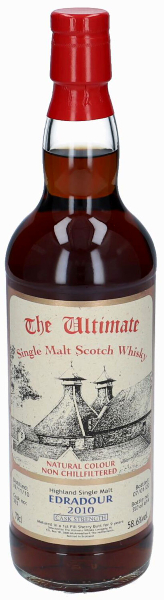
Edradour 9yo 2010/2020 (58.6%, Van Wees, The Ultimate, 1st Fill Sherry Butt #393, 614 bottles)

Seems to be some sort of a recurring theme on these pages to review a Whisky from a distillery I haven’t reviewed for a looooong time. This time around a Whisky from Edradour, which was last featured here in 2015. Edradour is a bit of a difficult Whisky. You don’t hear very often that someone calls it their favorite Whisky. Edradour is a picturesque distillery. As mentioned before, Edradour is owned by Andrew Symington, of Signatory Vintage Fame, since 2002. The distillery itself was founded by farmers in 1825 and who called it Glenforres. In 1837 the name Edradour is used for the first time. The distillery changed hands quite a few times. In a more recent history, 1982, the distillery is bought by Campbell Distilleries (Pernod Ricard), before being bought by Mr. Symington. Since Andrew is used to bottle quite a lot of Whiskies, quite a lot of Edradour Single Malts have been released since.

In 2018 Andrew commissioned a second distillery on site, So essentially Edradour isn’t just one distillery anymore. Interesting, interesting indeed. The Independent bottling at hand has been released by Van Wees of the Netherlands in their Ultimate range. Han van Wees himself has been a Whisky-icon since the sixties. The Ultimate range consists of Whiskies sourced from…yes you might have guessed it, from Signatory Vintage. The ultimate is bottled with almost always the same label, almost never in a box to keep prices reasonable. Because of this, (and the quality obviously), The Ultimate is a very popular range in The Netherlands. What did they always say about the Dutch, and the Scottish as well for that matter?…

Color: Orange brown.

Nose: Lets start by saying that initially this smells a bit metallic, a somewhat similar feel you get when tasting blood. Lots of warm, herbal and sometimes soapy wood. Dusty, dry dead leaves in the sun. Definitely somewhat vegetal, with sawdust and leather. Some raisins, honey and some indistinct red fruit aromas. Sometimes some whiffs of berry-like acidity are apparent. Coffee candy and mocha. Hints of water-based paint with some dish water, complete with some lemon-aroma. Sawdust again. Overall not really fruity, or it is masked by other stronger aromas. Some smoke and some rubber (orange air hose). Lots of fresh oak. Not really complex and not a lot of development over time, not in the bottle, nor in my glass. Overall pretty nice smelling though. For some maybe a bit to harsh, but the balance is unmistakably good.

Taste: Lots of wood, shrinking my oral cavity (a drying sensation). Right from the start, unbalanced and quite harsh. Sawdust from plywood. The nose left a way better first impression. Wood first and foremost, getting spicy and waxy with some licorice and tar next. It’s a bit punishing, but some of us like that. It’s like a Yorkie biting you in the ankles. It still hurts but you love it anyway, unless it’s not yours. Every sip starts very nice, but than the muscle comes in. A bit of a Jekyll and Hyde affair. The middle of the body fits the nose better, which is probably its true identity, yet the finish can be strangely acidic. Strange stuff this sometimes is. I’m actually amazed that for the amount of wood this shows, it isn’t bitter. The aftertaste is not the best part of the experience, yet acceptable and at times depending on the taster, it can be quite nice. Could have fooled me this is not molasses based, which obviously it isn’t.

Another difficult Edradour, which is definitely not for everybody. Works really well though right after robusto coffee. After a strong black coffee, the start is sweeter (toffee, caramel), more fruity (ripe red fruits), more tarry. Still an emphasis on wood, fresh oak, making for a very dry Whisky, somewhat peculiar after the initial sweetness.

Points: 84

The bottle was gifted to me by Auke, who thought it was just too much and is not a coffee drinker.

J.M Cognac Cask Finish 9yo 2005/2015 (40.5%, OB, Cognac Delamain Cask #04 10 156, 800 bottles, 50cl

This is the fourth review of a Rhum J.M from Martinique on these pages. After the other three I tasted and reviewed here: Cuvée 1845, Millésime 2002 and XO, I more than happily bought a set of three special cask finishes, the Cognac finish at hand but there was also a Calvados finish as well as an Armagnac finish. For popping the cork on one of these three, I chose this Cognac finish first, because around the time of opening I also had this Port Charlotte CC:01 open (CC = Cognac Cask), and I wanted to see if the Cognac bit would be a common thread between the two. I never actually really got to comparing the two back then, it would have made no sense anyway, comparing a Rhum Agricole to a Peated Whisky (higher in ABV as well). The CC:01 is now long gone, and remembering the taste of it and comparing it, from memory, to this J.M, nope, not really clear in any of them that it had to do with Cognac. Not really sure what markers to look for to be honest, because both do not taste like a Cognac whatsoever. The label states that the Rhum aged for 8 years in Ex-Bourbon casks and was finished for several months in 350 litre Cognac casks. Less than 5 full months in this case, since this was distilled on 03/10/2005 and bottled 02/03/2015.

Color: Full gold, just shy of orange gold.

Nose: I haven’t tried the Calvados finish yet, but if I had gotten this blind, I would say this would be the Calvados version, because it smells of apples and…well, Calvados. There is something Calvados-y about a Rhum Agricole anyway. So this one is fruity, slightly sugary as well and overall very pleasant. Definitely a sunny expression. Well balanced yet on the nose not very complex. Nice soft wood, with nice soft ripe yellow exotic fruits and thus apples. No citrus and not acidic, not sweet either. Lots of fruit and it keeps on coming, overpowering the wood entirely now, yet leaving room for a more creamy and vanilla-like aroma, giving it some more body. Also, a more earthen and dusty note pops up, as well as some sunshine after rain and now, after sipping, some licorice, runny caramel and chewy toffee comes forth. A wonderful, friendly and positive nose, bringing the Caribbean to my home on this grey March day. I needed to work this nose a bit, but now that it is there, I very much like the J.M character in this again. It is a special spirit. Smells great. After a while in my glass some (sweet) licorice notes pop up, giving it slightly more backbone.

Taste: Aiii, 40.5% ABV was a mistake. Quite dull on entry. However, it starts most definitely again with the apply and/or the Calvados-y note I also got from the nose. Medium sweet and definitely fruity. The wood exerts itself some more here and also shows some bitterness, adding some spices to the whole. It is waxy and slightly nutty. By the way, the bitterness depends a bit on the day and, as always, depends very much too on you as a taster, because the second time around I found it less bitter then the first time. Simpler than the nose was, and simple is the right word here. It is less balanced as well. I’m missing a part of the big fruit that came from the nose, where is that? So less fruit is noticeable, probably because there is more soft wet wood and spicy wood on the palate that sticks to the roof of my mouth. The palate is definitely closer to a Cognac than a Calvados, and differs quite a lot from the nose. Now I would give it more than 9yo. The body is alright, a bit of a mediocre, yet nice, Rhum Agricole to be honest. However, I liked all three J.M’s I reviewed earlier more. This one seems to be not quite sure about its identity. It’s a bit thin and after the sunny nose a bit too bitter as well. Nope, not a fan of this particular one. A great R(h)um is never great by the nose alone.

When sipping this casually, I never cared too much for it, but I always thought that was because of my carelessness when sipping, so when analysing it I was really surprised how great the nose really is. I must have been wrong all this time. However now that I have tasted it again, I know exactly why I didn’t care for it all that much. It falls really short on the palate, at least it doesn’t gel with me. Seems to be lacking some balance, and the less interesting note on the palate seem to dominate over the more pleasant ones. It reminds me a bit of a Whisky that has seen a wee bit to much air in its lifetime. Maybe this J.M doesn’t like air all too much. Ah well, you can’t win them all.

Points: 80

Ledaig 9yo 2005/2015 (56.8%, Signatory Vintage, Cask Strength Collection, 1st Fill Sherry Butt #900146, 664 bottles)

After Caol Ila and two cask strength Laphroaig’s, lets stay with peat for a while (winter is coming) and check out this peated offering from Ledaig. Yes I know, Ledaig isn’t from Islay. Why should it? You can distil with peat anywhere on the planet, or in this case, Scotland. There is already a lot happening on Islay, lots of distilleries, and isn’t Mull more unique? Not a lot of distilleries on Mull. Ledaig as we all know by now, is the peated Whisky made at Tobermory Distillery. You did read all my previous reviews on Ledaig, in preparation to this one, now did you? So you should know by now, yes? Tobermory distillery also releases unpeated Whisky, calling it…well…Tobermory, how did they come up with that! You could fool me sometimes with this statement though. Seems to me some Tobermory’s are peated as well, maybe less so than Ledaig, yet peated. Maybe they’re just not as good at line clearance as they are in making Whisky? Who knows, and who cares if the output can be this good. By the way, not even that long ago Tobermory did have some sort of a wonky reputation concerning the quality of their Whisky.

Earlier I reviewed a fantastic 11yo Cadenheads offering distilled in 2005 which has matured in a Sherry Butt. This time around I went for this 9yo 2005 Signatory Vintage offering, that also matured in a Sherry Butt, expecting and hoping for more of the same and wanting that all 2005’s are somewhat created equal. I just wonder why Cadenheads only managed to draw 450 bottles at cask strength from a Butt and Signatory 664 bottles. That’s quite a considerable difference. By the way, Cadenheads bottled two other casks from 2005, yielding 510 and 516 bottles. Still no 664 bottles though. Different oak with more evaporation or different warehousing conditions? Who knows.

Color: Orange gold.

Nose: Fatty, fragrant and delicious peat. Slightly Sherry sweetness. Full on sweet smoke with some toffee. A little dirty yet sexy. Licorice smoke. Salty and smoked licorice candy. Prickly smoke, with a minty side to it. Smoked menthos. Nom, nom, nom. I have to say, a peated spirit like this, aged in a Sherry butt, what a combination. The start was peat which morphs slowly into smoke. Hints of anise seeds and cumin. In the background dried beef, gravy and salty smoked fish. This has also an underlying fruity side to it, but again, just as in the Caol Ila I just reviewed, this is masked by the usual suspects of peat and smoke. What a wonderful smelling Ledaig again. Utterly amazing smelling Malt and it’s only 9 years old. Glowing embers, warm glowing charred wood. Hot barbecue before anything is put on it, burning off the last spots of fat left behind from the previous session, right before putting something on it again. Or imagine sipping this near the fireplace high up in the mountains. This nose never stops giving. Warm oil emanating from a steam locomotive (a fresh experience from two months ago in Quedlinburg, Germany).

Taste: Starts sweet and peaty, yet also somewhat unbalanced. The peat and the smoke have a bitter edge here right from the start, but also something fresh like a cola has. Nutty and some burnt fat from the barbecue. This note smells better than it tastes, by the way. Very warming and hot going down. Now I do notice quite some dry wood underneath, tucked away neatly between the peat and the smoke. So it might be a bit hidden, but the cask is quite active as well. More towards burning plastic now and again the minty note. The peat note is more bitter and together with the smoke, also less dominant. The Sherry comes trough some more. Dried salty fish. This one needs some time to breathe, but not too much. When standing around in my glass for a long time, the taste deteriorates a bit (the bottle is also nearly empty by the way, so I notice the air did play its part). This will be of no concern with a freshly opened bottle, because then, this Malt still does need a lot of air. Crushed beetle in the finish, and overall still warming. Also some caramel comes forth.

Are all Sherry Butt matured Ledaig’s from 2005 created equal? Nope they aren’t. The Cadenheads rose to the occasion much more than this Signatory initially, but, oh boy, when this got enough time to breathe in an open bottle, yeah man! The nose is up to par with the Cadenheads, alas on the palate, the Signatory falls apart a bit and the Cadenhead is the clear winner. Sure it’s different from the Cadenheads offering as well. That one was tasty from the first poured dram until the last, and this Signatory one did need some time to find its place, which luckily it did, although it never reached those highs of the Cadenheads, and deteriorated a bit when nearly empty. Nevertheless two big peated hits in a row from Tobermory. I’m suspecting an album of greatest hits now, so for the time being, I will be replacing every emptied Ledaig with another one. Can’t wait to open up the next one now. I have to look in my stash for one matured in a Bourbon cask after these two Sherried ones.

Points: 86

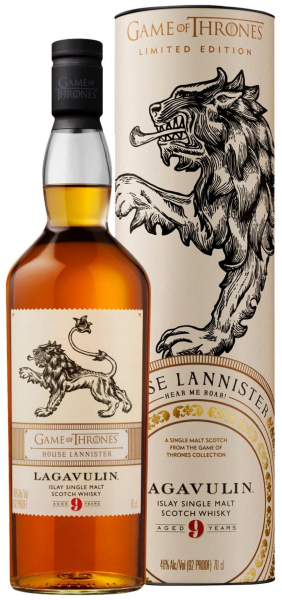
Lagavulin 9yo “Game of Thrones” (46%, OB, “House Lannister” L9016CM008, 2019)

For a Long time, Lagavulin was the unknown jewel in the crown of what is now Diageo, known to only a few. Lagavulin saw more recognition when it became part of the Classic Malts. Before that, Lagavulin was more or less only an utterly wonderful 12yo. Later came the also stellar 16yo and a nicely done Distillers Edition, again a very, very good version of this great distillery. Last of the newer regular releases the return of a 12yo, this time from Bourbon casks only and since 2002 bottled annually as a special release at cask strength. Some batches of these Whiskies have been reviewed on this site earlier.

Personally Diageo was taking a wrong turn starting with Talisker for me, with the release of a lot of mediocre (NAS) “versions”. I might have mentioned this already in several previous reviews, (Talisker is Diageo’s best selling Malt). The 10yo is still by far the best affordable Talisker, although it suffers sometimes of batch variation, just have a look at the following two more recent releases from 2015, and 2019. Incomparable to an earlier bottling from 2002. When NAS wasn’t all that accepted at first, Talisker tested out a rather young Malt, but gave it an age statement. The 8yo from 2018, is a very good Whisky, but the follow-ups from 2020 and 2021 are less so. Alas. I have tried them all, but have yet to review them here.

Back to Lagavulin. When Talisker was being taken advantage of (to up the sales), by all those aforementioned releases, Diageo left Lagavulin alone, at least for a while. Then all of a sudden in 2016 the 8yo and in 2019 the 10yo surfaced. In hindsight, both editions are gnawing away at the perfect reputation Lagavulin had (for me). Sure, both releases are not bad, especially the 8yo was acceptable (for a Lagavulin), but the downward spiral is easily noticeable. A disappointing and depressing feeling for me. Well, the time has come to look at the next one. Between the 8yo and the 10yo came a 9yo, bottled in 2018 in the Game of Thrones range, yeah because coupling up this Classic Malt with a TV-show makes sense now does it. And sure it does, from a business standpoint. I’m sure it’s making Diageo a lot of money and even selling more of the less popular Whiskies from the Diageo portfolio in the Game of Thrones series. Amazing how many people I know, have the whole range at home, some even got the GoT Johnny Walker editions. I respect the fact Diageo is in the business of making money and are not only aficionado’s. I’ve met several Diageo employees who have no clue what it is what they’re selling (but look the part and talk the talk) and only care about their monthly sales and what car they will be allowed to drive next. On the other hand I’ve also met several Diageo employees that are true aficionado’s and big ones as well! (This second group is usually a bit older than the first group).

Having said all that and with the experience I had with the 8yo and the 10yo, I’m not having high hopes for this 9yo, especially with the caramel colouring remark on the back label, but nevertheless here we go!

Color: Gold, slightly brownish.

Nose: Slightly sweet, with nice bonfire smoke and peat notes. Even some (dried) meaty notes crop up. Underneath, a little bit of fresh lemon skin acidity, as well as some menthos you are already chewing on. As always, the E150a cloaks the smell a bit, but also adds some artificial balance, as per design, although I also feel not a lot of colouring was needed for this one. Whiskies with lots of colouring tend to be dull and cloaked. But credit where credit’s due, this is a pretty good smelling Lagavulin. Nice and fresh. Since this is supposed to be first fill Bourbon casks only, is it really? Since it has this added caramel, it still has a decent spicy, ashy, waxy and fruity feel to it. On occasion, I even encounter some floral dishwater-detergent kind-of-job aroma. Spicy with some hot tar and smoking embers. Some molten plastic, clay, wood, some (burning) paper (and ashes), but some red fruit notes seem to point at Sherry, but no Sherry casks were used for this one. Yup, this is a very nice smelling Lagavulin. If the taste is on par with the nose, which has some classic Lagavulin traits to it, I’m in for a nice surprise.

Taste: Here it is a bit thinner than the nose promised. Sweet with obvious licorice and black and white powder right from the start, as well as the sweet lemon skin note from the nose. Smoky toffee. Here the caramel colouring seems to have a greater effect than it had on the nose. Nice chewy peat, nicely framed by some smoke. Waxy. Some cloaking caramel, and creamy, fatty hand ointment, but it’s also letting though some nice red fruity notes. Appetizing. Towards the finish the woody bits show some slight bitterness, fitting the rather large licorice profile quite well. However, for the profile it has it is actually a little bit too sweet. One glass of this on an evening is enough.

Well, this one is a bit of a surprise, I didn’t expect much of it to be honest, considering I’m not really a fan of the 8yo and especially the 10yo, as well as coupling it to a TV-show was a bit suspicious. The Talisker GoT was pretty decent as well. Nothing of the milky, new make-ish, youthful notes I got from both other mentioned Lagavulins. Maybe the E150a did some good here (yeah right, hahaha), or maybe the casks were just better (more likely). This would be a really really good Whisky if it was somewhat less sweet and bottled at a higher strength. Still, this was bottled at 46% ABV instead of the 43% ABV of some other Lagavulin releases. This is a review from a particular batch (L9016CM008) from 2019. I haven’t tried any others, so I can’t comment on batch variation, but there is always a chance that different batches have (slightly) different outcomes.

Points: 86

Evan Williams 9yo 2000/2010 (43.3%, OB, Single Barrel #379)

Sometimes Master Quill tends to repeat himself, well, not really this time. Yes, In the fall of 2015, The Master did do a review of an Evan Williams Single Barrel bottling, and now here is yet another, but not a repetition, because luckily this “new” one is from a different vintage. The former review was this spicy 2003 vintage and this time we’ll have a go at a 2000 vintage. Is older better? I understand that the mash-bill for Evan Williams Single Barrel looks something like this: 78% corn, 12% barley and 10% rye. Lots of corn and not a lot of rye in this mash-bill. The “vintage” range already saw the light of day in 1986, so with this 2000 expression, Heaven Hill already had some 15 years of experience bottling this. So without further ado: take it away Evan, ehhh Master, ehhh Quill. Nevermind. Go, just take it away…

Color: Light orange brown.

Nose: Wood, lots of fresh cut oak. Perfumy. Sweetish and even more floral. Wood driven, but with lots going for it. Balanced and likeable. Greener notes come next, some hay and grass, oak and latex wall paint. More cuttings from the garden and after a while some more fruity notes appear. Slightly acidic and fresh, only adding to the balance. Hints of toffee and caramel. Excellent nose if you ask me. One moment fresh and lively and the next, deeper and more brooding. Definitely some Rye in here, but less so than expected, even though I didn’t expect a lot. After some more breathing, honey notes come forward. Smelling this after some sipping only enhance the honey notes that were almost absent from the start. Interesting.

Taste: On first entry, a bit thin to be honest. I prefer Bourbons at high strength, because especially Bourbons release their intricate aroma’s better at a higher proof. That said, this Single barrel smells very good and is definitely interesting (there is that word again), even when you like your Scotch Whiskies. Another sip. Well, this does the trick, beyond the low proof, some nice aroma’s emerge. Wood, latex paint again. Honey, hints of toasted oak and a tiny hint of leather. Definitely not as sweet as I would imagine, even though this Bourbon saw lots of corn. A slightly bitter note comes next, oak, tree sap, wax. The finish has less length than the nose and is also less complex. medium at best (and it has paper notes). Today the bitterness has some staying power which was less so on other days, so it depends on the taster (as always), time of day and the moment trying it. Aftertaste somewhat indistinct, so it definitely suffers from reduction to 43.3% ABV. Nope, in the taste department, this turns out to be much simpler than the nose promised.

For a nice evening with some Bourbons this is the starter. Well priced, and interesting, but I prefer other, (higher strength) Bourbons more. Compared to the earlier review, this 2000 example is softer (weaker is maybe a better word this time around) and less spicy, and also is lacking the licorice and cherry notes of the 2003. The 2003 is definitely a step up from the 2000. So yes, the date makes a difference. So choose your single cask vintage Evan Williams wisely!

Points: 81

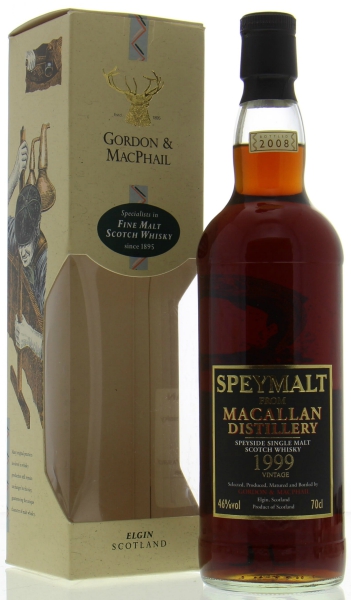
Macallan 9yo 1999/2008 (46%, Gordon & MacPhail, Speymalt, for Van Wees, First Fill Sherry Hogshead #12378)

Wow, look at his colour! I’ll explain shortly what I mean. Also, unusually dark for a Speymalt from this vintage. For those of you who don’t know, here we have an independently bottled Macallan. Maybe this is the way to go for the non-millionaires amongst us, since the owners of Macallan seem to have gone completely over-the-top bonkers with the “brand”, super premiumizing it, crystallizing the bottles, teletubbying the distillery and… well you know what I mean. Let’s shy away from the marketing and focus on quality then. The quality of Macallan’s distillate, the quality of what we’re getting, putting this quality distillate in a quality Sherry cask the good people of Gordon & MacPhail provided for this distillate and reviewing this drinkers’ Macallan…

Color: Vibrant mahogany! No it’s not just orange-brown, it’s mahogany, and it’s only mahogany when it has this redness to it, a red flame if you wish.

Nose: Restrained for a short while. Wonderful Sherry and woody notes. Ever so slightly waxy and also fresh and airy. Milk chocolate, with a tiny hint of smoke, which most likely came into the mix from the burnt insides of the cask. Next, some pencil shavings. Smells fantastic. Quality Sherry cask. Classic Macallan. Not a lot of vanilla, so, I’m hardly guessing, this was matured in european oak, although I do pick up on a slightly creamy note as well. Hard to explain why, but this smells luxurious, elegant and perfumy. Reminiscent of the great Macallans from earlier decades. Remember the times before Fine Oak, and all the stuff that came after that. Remember the days of, “…which science can’t wholly explain…”? Elegant and fruity and in no way, harsh nor overpowered by the first fill Sherry. Not cloying nor heavy. Excellent cask.

Taste: Smoky and slightly tarry. Black coal. Thin honey, yet not a lot of vanilla sweetness. Initially very, very nice. Reminds me of the Macallans, Strathisla’s and Longmorn’s, when Gordon & MacPhail bottles still had screw caps and were bottled @ 40% ABV. (…and still had enough power)! The body is about Sherry and wood, beautiful spicy, and perfumy, wood, and shows a little bit of nice woody bitterness as well. Soft and silky bitterness, which adds to the overall flavour of the Whisky. Quite fruity and almost drinks like red fruit lemonade. Nice notes of mocha and coffee with milk. Rather short finish though. This is where the relative youth comes in, but I don’t think this should have stayed in cask longer. First fill Sherry can be a brutal thing! Short bursts of warming and red fruity notes. And the aftertaste lingers longer than the finish was. Again classic style.

On the other hand, maybe, this could have stayed in cask longer, since in no way it is overoaked. The flavours could have been more powerful, and the cask itself seems very elegant and good. Or maybe it should have been bottled at cask strength, who knows. This might have had some more to it in the end. For me the best bit of this Whisky is the start, when you take a sip and keep it in your mouth for a while before swallowing. Nice woody and licorice notes start emerging that way. Tar and coal. Wonderful stuff. Tiny hint of the typical acidity from rather new oak, which is a different note from fruity acidity, mind you.

The ABV, is slightly higher than the regular expression of the Speymalt from 1999/2008 which was bottled @43% ABV. Darker as well. Still it manages to come across a bit thin. Would it be too harsh at cask strength or is it an economical move by Van Wees? As in, if you dilute it with water you get more bottles from the hoggie? Probably not since it’s a Speymalt. All things considered, this is a classic Macallan. Wonderful stuff. Sure, maybe more could have come from this, maybe not, but I’d still get it as it is. Most definitely I would. Much better than many, and I mean, many modern Macallans, bottled by the (owners of the) distillery themselves. Highly drinkable, so a bottle of this wouldn’t last long…

Points: 89

Highland Park Week – Day 5: Highland Park 9yo 1988/1997 (59.6%, Signatory Vintage, Sherry Butt #10700, 630 bottles)

Lets backup in time even some more. We stay in the land of the independent bottler, this time Signatory Vintage. We are going to take a look at another Highland Park matured in a Sherry cask, a butt even. This one is an even younger example at 9 years of age. The G&M/Whisky Mercenary bottling was 20yo, The Wilson & Morgan was around 14yo, and this Signatory Vintage bottling is a mere 9yo. Highly unusual back then, not so unusual today, since demand has risen dramatically. There is no time anymore to age the bulk of Whisky when there are so much of you around, dear readers. We’ll also go back in time bit since this was distilled in 1988. That is almost 30 years ago!

Color: Copper gold.

Nose: Funky Sherry, but this time with some quality behind it. Meaty and buttery as well, with some nice distant fruit going on. Dusty mocha and milk-chocolate. Dark chocolate as well. Steam, sowing-machine oil. Clean toilet notes, not to be mistaken by a freshly cleaned toilet odour. I know this sounds pretty peculiar, but I get it in this, so I couldn’t help myself and had to write it down. Deeper and more brooding. Probably Oloroso. Cedar wood with an oriental spice-mix and pencil shavings. Even though it is a young Whisky, it already smells like something from another era. Christmas spices. Christmas cake. Dusty and very thick. luxury and velvety, just like the box. The more it breathes the better is gets, give it lots of room for development. A much better Sherry cask than the one, the 1992 Wilson & Morgan expression matured in. After this, forget about that one.

Taste: Well this is almost 60% ABV and that shows. Its big, thick and a bit hot, but also very fruity (meaty blueberries), and amazingly pretty woody as well, but not too much. Luckily it also has some toffee sweetness to it, to balance it all out. Steam and coal. You are conned, by the initial sip, this is going to be sweet, but the sweetness is shoved aside by bullying tannins and Italian laurel licorice. I’m guessing this came from a first fill Oloroso butt, which impaired enough onto this Whisky, so it could be used as a very nice refill cask the second time around. Long oaky finish, with an even longer aftertaste full of black fruits and (cedar) wood. It isn’t all that complex, but when a Whisky is as tasty as this, it doesn’t need to be. It’s only 9yo, but it is bottled at the right time, believe me. Probably Oloroso, but Cream Sherry or PX might be possible as well.

Ohhh, I want one of these. 1988, wow, 9yo, wow-wow. This in my glass and some 80’s music, and I’d have a great day.

Points: 90

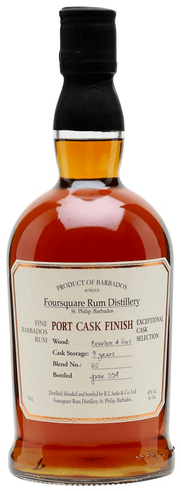
Foursquare 9yo Port Cask Finish (40%, R.L. Seale, Foursquare, Blend No. 162, Exceptional Cask Selection, 2014, Barbados

I had planned to open a bottle of Plantation St. Lucia Rum after I finished both the Plantation Jamaica and Guyana, but after the Doorly’s 12yo I reviewed last, I just had to open a bottle of the Port Cask Finish as well. I just couldn’t help myself, I was so curious, especially after all the rave reviews. The St. Lucia just will have to wait a little longer. Port cask finish? The Rum is 9 years old, of which the “finish” took a whopping 6 years. The start was carried out in a Bourbon cask.

But first we have to get back to 1926. Back then, Reginald Leon Seale started the R.L. Seale & Co. Ltd. A company that is of interest to us since it was trading Rums. Sir David and now his son Richard are the Seale’s that also started distilling their own Rums in 1996 after they bought a defunct sugar factory a year earlier. Simply because it is better to trade Rum you made yourself, than constantly sourcing other Rum’s.

Although Foursquare is a Bajan Rum distillery, molasses are mainly imported from Guyana and the yeast used for fermentation is South-African. Foursquare Rums are blended from a pot still and a two (or three?) column stills. The copper pot still even has a copper column fitted on top, which looks funny for one that is used to Pot Stills with lyne arms on them.

ColoFoursquare Port Cask Finishr: Orange gold. A tiny fraction darker than the Doorly’s 12yo. No red hue.

Nose: Toffee and caramel. Fresh wood, sappy and spicy. A breeze across a dry grass field on a hot and silent summer’s day. Distant fruit (more red this time) and a definite winey note, with slightly burned wine cask notes). On top of the medium sweetness lies a nice acidic red fruit aroma which is different from the 10% Madeira (a sweet fortified white wine) you can find in Doorly’s 12yo. The fruit is redder. The is also a nice nuttiness and dustiness surrounding this Rum, which mixes well with the medium sweetness and (red) fruity acidity. This Rum isn’t about finding lots of aroma’s and complexity. No, this one shines because of its balance. Well constructed, but is a bit middle of the road. It does its best to be liked by everyone. Although the label is pretty anorak, it really is a Rum for everybody, hence the reduction to 40% ABV. Luckily this Rum can handle the reduction, at least on the nose.

Taste: Ahhh here is the greatness. Spicy Indian feel, Cinnamon and exotic wood. This reminds me a bit of an Amrut I reviewed last. It’s still Rum by the way. Even though six of the nine years this was matured, was spent in Port casks, it hasn’t become Port of even Port dominated, but obviously the Port impaired some nice flavours to the Rum. I recognize the nuttiness and the hint of glue from the 12yo (the 12yo has more glue). Wow, amazing balance between the sweet and the dry. It is actually more dry than sweet, influence of the wood of both casks, again a bit virgin oaky, but the wood doesn’t dominate here as it does in the 12yo. Slightly longer finish than the 12yo, but still not very long. The Port starts to really assert itself way into the aftertaste, with the wood of the cask it came in. Nice fruity acidity. Very accessible and extremely drinkable.

This one is younger than the Doorly’s 12yo and therefore less heavy on the wood aroma’s. It seems perfect. Enough to give it character and a backbone, but never dominating the spirit like in the Doorly’s 12yo. Having this, it’s nice to have the woody 12yo open next to it. Personally I don’t have a problem with the wood in the 12yo. It fits the profile Richard went for blending the 12yo.

Highly drinkable, and well made. Not as complex as I expected, but good nevertheless. Again a bottle that will be gone soon I fear. 40%, yeah all right, it will do, but I would prefer a higher ABV. I understand the next Exceptional Cask Selection, The Zinfandel finish is 43% ABV and there will be a Vintage 2004 that will be much higher. I can’t wait. Good stuff especially considering the price. Daily sippers (at 40% ABV), both the Port finish as well as the Doorly’s 12yo, which is a bit more chewy, woody and somewhat sweeter and imho a bit bolder. I did several H2H’s with both and sometimes it’s hard to pick a favorite. Both are equally good. On some days I prefer the 12yo, and on others I like the Port better.

Points: 83

Heaven Hill 9yo (61.5%, Cadenhead, Individual Cask, Bourbon Barrel, 192 bottles, 2006)

All that talk about soapy florality in the Millstone “100 Rye”, made me remember this bottle of Heaven Hill bottled by Cadenhead. Actually this is a very interesting bottle since it is from Heaven Hill’s previous distillery. Heaven Hill Bardstown FireThe Heaven Hill distillery was located in Bardstown (DSP-KY-31) and it burned down on the 7th of november 1996. With the distillery, also 7 of the 44 warehouses were destroyed by the fire, containing some 90.000 casks. Even the water supply caught on fire. Since this bottle is 9 years old and bottled in may 2006, it is distilled somewhere between may 1996 and may 1997. The new distillery, Heaven Hill bought, is the former Bernhem distillery (DSP-KY-1), which is located in Louisville. The Cadenheads label clearly states that the distilling was done in Bardstown, so this means that this particular bottle is yielded from a single cask that was filled just before the fire and somehow managed to survive the fire, assuming it was ageing on site. One question thus remains, is this Bourbon going to be smoky or did it sleep through the fire?

Heaven Hill 9yo (61.5%, Cadenhead, Individual Cask, Bourbon Barrel, 192 bottles, 2006)Color: Dark orange brown.

Nose: Initially very floral, but that somehow manages to escape. Typically high Rye mashbill florality, or is it wheat, since this does remind me quite a bit of the very special Old Fitzgerald 12yo, also distilled by Heaven Hill. Otherwise not very “big” but soft and dry, dusty even. Caramel. Toasted cask. Hints of gravy and toffee. Soft oak and a bit sweet. Promises some sort of chewiness. Pretty is probably a good word for it. Give it some time, or better, al lot of time to breathe the more classic notes emerge, like honey, which finally defines the sweetness. The honey is well-integrated with the woody nose. Burnt wood yes (cask toast), but not smoky.

Taste: Quite a woody bite and there you have it, quite the soapy, floral Rye experience. A lot of flowers pass over my tongue. Lilac, lily-of-the-valley, lavender and tulips. Wow I never got this before! Grannies laundry. Very unusual stuff. The florality disappears down my throat, leaving me with a less floral finish than I initially thought. The aftertaste is more centered around a burnt toffee and creamy soft caramel, wood and soft leather. Only a mere hint of florality. Very unique and layered Bourbon. Never tried anything like this before. Even the most floral Four Roses, is not as floral as this. This one needs some time to develop and definitely needs time get used to. In no way is it a bad Bourbon though, but this will never be your average daily drinker stuff. Very educational. I’m pleased I came across this one.

Again a very good reminder that many Whiskies, whichever kind, need time and air to breathe and compose themselves. A lot is said about using water with Whisky, but air is just as important as water. I prefer giving Whisky some time. Maybe I should be starting to decant my Whiskies some more?

Points: 82