Heaven Hill 9yo (61.5%, Cadenhead, Individual Cask, Bourbon Barrel, 192 bottles, 2006)

All that talk about soapy florality in the Millstone “100 Rye”, made me remember this bottle of Heaven Hill bottled by Cadenhead. Actually this is a very interesting bottle since it is from Heaven Hill’s previous distillery. Heaven Hill Bardstown FireThe Heaven Hill distillery was located in Bardstown (DSP-KY-31) and it burned down on the 7th of november 1996. With the distillery, also 7 of the 44 warehouses were destroyed by the fire, containing some 90.000 casks. Even the water supply caught on fire. Since this bottle is 9 years old and bottled in may 2006, it is distilled somewhere between may 1996 and may 1997. The new distillery, Heaven Hill bought, is the former Bernhem distillery (DSP-KY-1), which is located in Louisville. The Cadenheads label clearly states that the distilling was done in Bardstown, so this means that this particular bottle is yielded from a single cask that was filled just before the fire and somehow managed to survive the fire, assuming it was ageing on site. One question thus remains, is this Bourbon going to be smoky or did it sleep through the fire?

Heaven Hill 9yo (61.5%, Cadenhead, Individual Cask, Bourbon Barrel, 192 bottles, 2006)Color: Dark orange brown.

Nose: Initially very floral, but that somehow manages to escape. Typically high Rye mashbill florality, or is it wheat, since this does remind me quite a bit of the very special Old Fitzgerald 12yo, also distilled by Heaven Hill. Otherwise not very “big” but soft and dry, dusty even. Caramel. Toasted cask. Hints of gravy and toffee. Soft oak and a bit sweet. Promises some sort of chewiness. Pretty is probably a good word for it. Give it some time, or better, al lot of time to breathe the more classic notes emerge, like honey, which finally defines the sweetness. The honey is well-integrated with the woody nose. Burnt wood yes (cask toast), but not smoky.

Taste: Quite a woody bite and there you have it, quite the soapy, floral Rye experience. A lot of flowers pass over my tongue. Lilac, lily-of-the-valley, lavender and tulips. Wow I never got this before! Grannies laundry. Very unusual stuff. The florality disappears down my throat, leaving me with a less floral finish than I initially thought. The aftertaste is more centered around a burnt toffee and creamy soft caramel, wood and soft leather. Only a mere hint of florality. Very unique and layered Bourbon. Never tried anything like this before. Even the most floral Four Roses, is not as floral as this. This one needs some time to develop and definitely needs time get used to. In no way is it a bad Bourbon though, but this will never be your average daily drinker stuff. Very educational. I’m pleased I came across this one.

Again a very good reminder that many Whiskies, whichever kind, need time and air to breathe and compose themselves. A lot is said about using water with Whisky, but air is just as important as water. I prefer giving Whisky some time. Maybe I should be starting to decant my Whiskies some more?

Points: 82

Jim Beam “Black” 8yo (43%, OB, Circa 2004)

Jim Beam white was my first Bourbon ever, in fact is was my first Whiskey ever! Especially for the money I always considered the bulk produced White quite decent. Later in my “career” I bought this Black label, which looks more serious and brooding. Just like a bride stands out next to the Terminator. This used to be 8yo, and it said so on the label, but todays version became a NAS. I don’t think it got much younger, but this way, I guess, the company has the possibility to mix in some 6yo and 7yo Whiskies.

Jim Beam BlackColor: Light copper orange.

Nose: Honey, and lots of it. Nice creamy wood. Vanilla. Very friendly and appetizing. Whiffs of burning newspaper, and sometimes a tiny, tiny whiff of fireworks. Toasted cask, but again, not much. The honey never takes a step back, its omnipresent. The more time you are able to give this the more the wood comes to the front. At twice the age of the “White” that should hardly come as a surprise. Well balanced stuff. Still, after the wood, caramel and toffee show themselves more as well as some white pepper and some, wait for it… rural organics. This is pretty good, considering the price and the industrial amounts that are made of this.

Taste: Quite light. Floral. Honey again. After a short delay that warm honey runs down my throat, quickly turning into slightly burnt sugar and oak. Very friendly and not the big hitter the label seems to promise. Definitely family of the White label, with more of everything, just maintaining the friendliness of it all. Extremely easily drinkable. Creamy vanilla and honey again. Quite sweet and lovely, with nice woody characteristics. Oak stays behind after you swallow. Not very complex, but very well-balanced. Especially when given some air and time. Mellow stuff.

The profile of Jim Beam Black fits that of Evan Williams Single Barrel, but half the price. I have to say I don’t know how a more recent “Black” will perform, but this 2004 bottling performs just nicely. Compared to Binny’s Buffalo Trace, the “Black” has way more honey, and seems soapier, which is something I haven’t picked up on, trying it by itself. The Buffalo Trace is more strict and in a way more fruity and even better balanced. I guess now it becomes a comparison of yeast strains. Jim being more floral and the Buffalo being more fruity.

Points: 80

Aberlour 12yo 1990/2003 “Warehouse No 1” (58.8%, OB, Single Cask Selection, First Fill Bourbon Cask #11552)

Time to follow up the Bourbon casked Aberlour from Warehouse No 1 with another one! This one is a few years younger and bottled more than ten years ago. Right off the bat the colour does seem quite light for something that is from a first fill Bourbon cask. I think it will be quite interesting to compare the two, so without further ado…

Aberlour 12yo 1990/2003 Warehouse No 1 (58.8%, OB, Single Cask Selection, First Fill Bourbon Cask #11552)Color: Light gold, white wine.

Nose: Typically ex Bourbon cask. If you don’t know it by now, you’ll never will. High alcohol, with vanilla. Clean wood and a bit sweet smelling. Toffee. Creamy and dusty. Fresh with a hint of lemon. Mildly spicy, but in a sticky kind of way. I know it does sound a bit strange. Wet dirt and dust. Big in its typical “Bourbon-ness” (the aroma combined with the high ABV.), but the rest is all details, meaning the rest are all mere hints. Fresh air. The wood itself releases quite some nice aroma’s. Slightly sugary wet paper even. Sometimes even whiffs of something meaty can be picked up. Stuff like this may all look alike, and in a way they are. But if you give it some time and attention, yes you have to work for it, the details will show, and sometimes you’ll be rewarded when it strikes a chord with you, like this one almost does with me.

Taste: Sweet, waxy, and nutty. Almonds. Quite hot, due to the high ABV, but the aroma is, again, quite big, so the aroma and the initial sweetness overpower the alcohol and that is quite a feat. Fatty butter, and mixed with that, a dry and leafy quality. Pencil shavings. It breaks down a bit towards the finish, where some bitterness comes to the front and an acidic note decides it doesn’t want to be part of this Whisky anymore. The finish itself is shorter than expected. The finish is gone, when the strength is still making its way down and warming you.

Compared to the 16yo I reviewed last, this one is more about the wood and the vanilla, and creamy toffee. This lack the fruit the more recent 16 yo has. So there is a difference. This 12yo is cleaner and has a more typical nose for a Whisky coming from a Bourbon cask. The 16yo in comparison is way more funky and fruitier and tastewise less balanced and softer. It also has a much longer finish. Who said all ex-Bourbon cask whiskies are alike, since these two alone are already quite different, and I’m not only focussing on the details. Same score though.

Points: 85

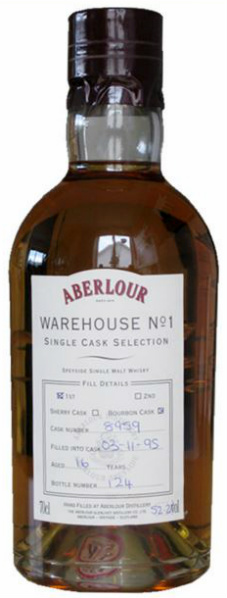
Aberlour 16yo 1995/2012 “Warehouse No 1” (52.2%, OB, Single Cask Selection, First Fill Bourbon Cask #8959)

Aberlour was one of the first Single Malts I’ve ever tried. Back in 2000 or 2001 I got the 10yo for my birthday (thanks Arthur!). Nice stuff. Especially for the novice I was back then, and maybe still am, since there remains an awful lot to learn. For me Aberlour was always more about the Sherried Whiskies than the ones aged in Bourbon barrels or hogsheads. The character of the Aberlour distillate is definitely easier to “get” when trying Aberlours from (refill) Bourbon casks, but this hand filled Aberlour from first fill bourbon will do just nicely too. However, I’ve never came across a Bourbon cask aged Aberlour that knocked me off my feet. Maybe this is the one, since it came directly off the distillery. Distilleries hold the best for themselves don’t they?

Aberlour 16yo 1995/2012 "Warehouse No 1" (52.2%, OB, Single Cask Selection, First Fill Bourbon Cask #8959)Color: Light gold.

Nose: Floral and leafy vanilla powder with some funky organics going on. Extremely fresh and fruity. Canned concentrated fresh air. Combinations of pineapple, dried peaches, peaches in light syrup. Sweet white grapes and cherry liqueur bon-bon. Very aromatic and dusty as well. You don’t get a lot of sweet and dusty, but here it is an evolution going on in the glass. It starts sweeter than it ends. It’s fresh and lively and I’m actually surprised this is already 16 years old. I expected a darker Whisky coming from a first fill Bourbon cask. Fresh and minty with small hints of lime. It has everything you can have from an ex Bourbon cask. Florality, vanilla and lots of fruit. In the background typical wet oak and slightly meaty. Sawdust and paper, and sometimes I smell the Bourbon itself. Reminds me a lot of the 1994 Golden Cask expression I reviewed earlier.

Taste: Soft and spicy and quite sweet right from the start. Almonds and very nice creamy vanilla and fruit, peach it is again. Wow, great Bourbon cask. A lot of the elements fall in its place. For me Whiskies with this profile need to be a bit sweeter (especially when the whole lacks a bit of complexity). Creamy toffee and fine powdered sawdust. Vanilla and fudge. Well you get the picture don’t you? Soft wet wood, like snapping off a branch. Hints of latex paint and sweet wood (with a walnut skin, bitter edge to it).

I like the sweetness and the softness of this Malt. Dry, cask strength Bourbon cask Malts can be quite sharp and hot. For instance. The 1997 Tomatin that was aged in a Refill Bourbon barrel is less sweet, and therefore drier but also a bit hotter and harsher. Again a decent Bourbon Aberlour, as I’ve come to expect by now

Points: 85

Four Roses “Single Barrel” (43%, OB, H294D, 2003, 70 cl)

After the Four Roses in disguise, called Bulleit, let’s compare it to a true Four Roses (with a similar profile). In 2012 I reviewed the current 50% ABV version of the Four Roses Single Barrel and I refered to this discontinued 43% ABV. version, calling it: “Too weak, very light and too floral and girlie for my taste”. At the time of writing I thought I finished the bottle, but as luck would have it, I found a box of archive sample bottles filled with different Bourbons I used to have. I guess it pays to save something for later! So many years later, let’s find out if this 43% ABV version is as hideous as I seem to remember it! By the way, this one is said to be 8yo and was bottled on 12 April 2003.

Four Roses Single BarrelColor: Orange gold.

Nose: Yup it’s the floral rye again. Lilac and Lily of the valley. Easily recognizable and even more pronounced than the new 50% ABV version, the only bottle I had, I forgot to fill up an archive sample of, so no direct comparison is possible, only from memory and notes. Fruity and floral, it’s almost a perfume. Powdered vanilla and coffee creamer. Almonds and fresh cookie dough. With air dusty wood comes into the fold. Elegant and perfumy. Not a lot of wood actually. Well integrated. A lot of honey is starting to emerge too as well as some turkish Delight and licorice, and anise. Don’t like how the honey and floral aroma’s turn out together. Add to that a slightly acidic fruit note, and you’ve lost me a bit. No notes of toasted cask. It comes across as a designed Bourbon. A Four Roses for people who wear a bow-tie, not for rugged lumberjacks. It is actually a Bourbon for the metro man. Although it’s not quite clear what I am, this is my least favorite Four Roses expression to date, but wait, I still have to taste it again after all those years. The nose is something I don’t always like, although I do recognize the quality.

Taste: Paper and wood, pencils (cedar). Quite a lot of waxy notes. Lightly sweet, but the sweetness washes away with the added water to be replaced with some sour, and slightly bitter oak. Honey and creamy sweetness, but here these two do a better job at integrating with each other. A bit weak on entry and not so long a finish, built around the paper and weak woody note, especially when compared to its stronger brother. Good aftertaste though, nice aroma’s return and a great creaminess is added to the aftertaste. Nice delayed effect. The aftertaste even seems stronger than the finish itself, nicer too. The move to 50% ABV was a good move. Alright, this isn’t my least favorite Four Roses anymore. Now it is the “Yellow Label”…

Even though I prefer the 50% ABV “Single Barrel”over this one. Both are well made and do resemble each other. This 43% ABV has some exaggerated floral Rye and doesn’t combine all that good with the honey and fruity notes. The 50% ABV is the same, but for me is better balanced. Having said that, this may be a tad more special, more unique, so it is definitely worth seeking out.

Points: 83

Bulleit 6yo “Frontier Whiskey” (40%, OB, Circa 2010)

Bulleit is a brand owned by Diageo. Diageo is the biggest drinks company in the world and they are known for loving to make a buck. Nothing wrong with that. Making booze is not a charity you know. In 1983 sensible economics made Diageo close a lot of distilleries in Scotland, and Diageo are also the ones who closed the legendary Stitzel-Weller distillery, their only distillery in the US, correct me if I’m wrong. Why then put out a Bourbon Brand? Economics, getting a foot in the door? The regret closing Stitzel-Weller? Who cares what the reasons are. They decided to put out a brand of Bourbon and had it made by Four Roses. The mashbill contains around 28% Rye, which is right in the middle of Four Roses’ own B (35% Rye) and E (20% Rye) mashbills. And at Four Roses they know what they are doing. By the way, The old Stitzel-Weller distillery is now a centre for promoting Bulleit.

Bulleit BourbonColor: Light orange gold.

Nose: For me, Rye Whiskies always smell a bit floral, even though they (should) have a taste with a bite. I don’t know how to describe it differently. This isn’t a Rye Whiskey, but it does smell like it, sort of. High Rye mashbill it is. Dusty, floral and vegetable. Buttery with dry leather. Delayed mint. Funky stuff like crushed beetle and cold dishwater. Old honey and do I detect a wee whiff of urine in there? Well, don’t be fooled, this smells rather nice, but we already know, Four Roses know what they are doing, but i might have said that already. Powdery and dry with some charcoal. Well balanced, especially considering its age.

Taste: Smoother than the nose led me to believe. Slight dryness, but also quite sweet. Sugar water. Funky rural toffee and a bit of leather. Some toasted oak, but the focus lies more on the toast then the oak. Nevertheless, the oak is there, but it’s hardly woody at all. Creamy, but a bit too thin. I believe 40% ABV. is a bit too low. Spicy and chewy Rye. Light, but good. Medium to short finish, with a slight bitter edge towards the aftertaste. I do believe the distillate to be promising, but it is a bit killed by the low ABV.

I didn’t like it when I first opened it, but I warmed up to it now. I remember I didn’t like the pronounced florality of it, and it may have been slightly soapy when it was freshly opened. In the end Four Roses make a pretty good Whisky, even if they do it for Diageo. I would ditch the 40% ABV version and get the 45% ABV version if you have the chance, but it isn’t available in all markets.

Points: 81

Glen Scotia 6yo 1999/2006 (52.7%, The Whisky Fair, Heavily Peated, Bourbon Barrels #541 & #542, 464 bottles)

How ’bout another Glen Scotia then. One in its youth. This heavily peated Glen Scotia has a mere 6 years under its belt. Yes you read it right, a heavily peated Glen Scotia, move over Longrow? This is a Glen Scotia that was bottled for the 2006 Whisky Fair in Limburg, Germany. Most definitely a festival you shouldn’t miss. I like the label of this Whisky Fair bottling, since it looks similar to other Glen Scotia’s from that time. Lets have some peat then…

Glen Scotia 6yo 1999/2006 (52.7%, The Whisky Fair, Heavily Peated, Bourbon Barrels #541 & #542, 464 bottles)Color: White wine.

Nose: Soft elegant peat alright, but also very grassy. Lots of grass, dry grass, and hay. A confectionary sweetness, like warm icing sugar, but mixed with a little milk chocolate and the grass, peat and sweet ashes. Cocos macaroon with more than a hint of almond. This is already wonderful smelling after the mere 6 years in cask. Although this is from Bourbon barrels, I do encounter some sulfury compounds. Still grassy and some typical vanilla, with lemon freshness. Typical for Bourbon Barrels. Barrels are 20% smaller than (remade) hogsheads, so in theory the spirit ages more quickly, but not twice as quick, since nobody wold argue with you if you claimed this to be 12yo. Quite some active barrels. Nice.

Taste: Sweet barley, yup sweet barley. Diluted lemon curd. Altogether quite lemony. Where the nose was quite complex and didn’t show its age, the taste is much simpler and seems young, but not alcoholic. A sweet and creamy rounded off taste. Some prickly peat but not a lot. I wouldn’t call this heavily peated, at least it doesn’t seem heavily peated. Sweet barley and sweet yellow fruits, but none in particular. I guess dried apricots are the closest. Sweet Earl Grey tea with a hint of honey and a lot of lime. Medium to short finish and the same goes for the aftertaste. Which is about young soft peat added to warm diluted lemon curd.

Even though this tastes quite nice, I’m a bit disappointed that the taste didn’t live up to the promise of the nose. I was quite surprised at first in what the nose achieved in 6 years. Still an experience and a nice surprise. I wonder how this would have turned out with some more age to it.

Points: 84

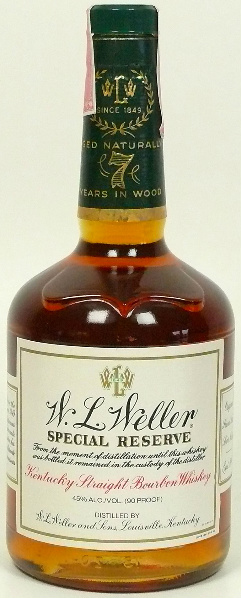
W.L. Weller 7yo Special Reserve (45%, OB, Circa 2007)

Just like the Old Fitzgerald, W.L. Weller is a Wheated Bourbon that used to be made at Stitzel-Weller Distillery.  When that closed down, the Old Fitzgerald brand was sold to Heaven Hill and W.L. Weller was sold to Sazerac, owners of Buffalo Trace. The W.L. Weller 7yo “Special Reserve” is no more. After this one, a similar looking bottle was released, but without the 7yo age statement. Later the look was altered altogether. It’s still called “Special Reserve” and it still lacks an age statement. Other Wellers that are still around are the W.L. Weller “Antique” bottled at 53.5% ABV. and a 12yo, which is bottled at 45% ABV, just like our 7yo. Finally there is a William Larue Weller that is part of the Buffalo Trace Antique Collection (BTAC), which is bottled annually at barrel strength, something in between 65 and 70% ABV.

W.L. Weller 7yo Special Reserve (45%, OB, Buffalo Trace)Color: Medium orange brown.

Nose: Lots of cream and toffee, very appetizing. Honey, vanilla and wood, nutty and dusty. Again toffee and warm runny caramel. Nice spicy wood in the distance even reminiscent of a dry (salty) meaty aroma, beef jerky or polish kabanosy. Sappy charred oak. Savvy and supple. Sawdust, perfumed caramel and chocolate bonbons. A hint of sweet corn and charred cask, and dare I say it, minute amounts of smoke and ashes, probably from the toasted cask. This smells like it owns it. Very well made, interesting and nice. Love how this smells.

Taste: Sweetish, nutty, fresh and well-balanced. Quite some wood influence as well as paper. Sawdust I would say. Bassetts Liquorice Allsorts and lots of vanilla ice-cream with caramel sauce on top. Small hint of dry bitter wood trailed by some, but not much, vanilla sugar sweetness. This works well and gives the Bourbon some backbone. Again, this is a very appetizing Wheated Bourbon. This is a perfect example where all the aroma’s come together nicely, but having said that, this doesn’t seem to be your most complex Wheated Bourbon. It’s very tasty in an almost simple kind of way, but I don’t consider this a daily drinker. It pack a wee bit too much for that and it deserves to be savoured.

Who said that Wheated Bourbons are light and dull? After this one I’m curious if the new “Special Reserve” comes near this one, because this 7yo is quite the winner for me. I like it a lot. I compared it to the Old Fitzgerald 12yo I reviewed earlier, but that one almost seems soapy compared to this one.

Points: 86

Old Fitzgerald 12yo “Very Special” (45%, OB)

I finished the Four Roses single barrel as well as the Old Grand Dad 114, so it’s time to open some fresh bottles. One was very easy to pick, and  that was the Old Fitzgerald 12yo “Very Special”, the next, well you’ll see later I guess. Old Fitzgerald 12yo is a Wheated Bourbon made by Heaven Hill in Louisville Kentucky. If you happen to stumble upon a very old bottling of this, or even a “Very Very Old Fitzgerald”, you’ll have a distillate of the legendary Stitzel-Weller distillery, worth quite some money today. The Old Fitzgerald brand was created around 1889 by Charles Herbst maybe even as early as the 1870’s. Pappy van Winkle bought the brand during prohibition and changed the mashbill of the Original Old Fitzgerald by adding “a whisper of wheat”.

As you might know, the Bourbon mashbill must have at least 51% of corn, and usually Rye is used as a secondary grain with some malted barley. For Wheated Bourbon, the Rye is substituted by Wheat. Apart from these two, also Rye Whiskey (at least 51% Rye) and Wheat Whiskey (at least 51% Wheat) exist, and of course Whiskies with both Rye and Wheat.

Old Fitzgerald 12yo VSColor: Orange brown.

Nose: Dry and dusty, cold soft ashes. Hints of glue. Dry leather, honey and soft almonds. Tiny hint of apple skin, dried out orange skin and some unripe banana. The wood itself is quite floral, like old lavender soap mixed with cocoa powder. Not a lot of spicy wood or toasted cask, even after 12 years. Quite a surprise considering the color of this Bourbon. The age dulls out the fruity notes it probably had when it was younger. Still the nose is built around a dry and dusty wood and leather notes.

Taste: Wood most definitely is the first aroma you taste. Dark cocoa powder, with soft sweetish cinnamon comes next with an elegant sweetness (corn), meaning not too much. The sweetness was toned down by the time this Bourbon spent in cask. The Whiskey goes down like a syrup, very slowly, taking its time, giving a little heat and good length in the finish. Some unbalanced acidity from the wood shows itself in the aftertaste, especially on the tongue, but it’s easy to deal with, even though it has some staying power. Even later in the aftertaste the more powdered creamy notes emerge, buttered popcorn and toffee.

It’s rumoured that Heaven Hill wants to stop making this, but that really would be a shame. It’s good stuff and definitely one you want to try if your favourite wheated Pappy Van Winkle is getting worse a bit, or becoming to expensive to enjoy properly. Also a nice one to try against some of the Weller’s that are around, which are also Wheated Bourbons.

Points: 85

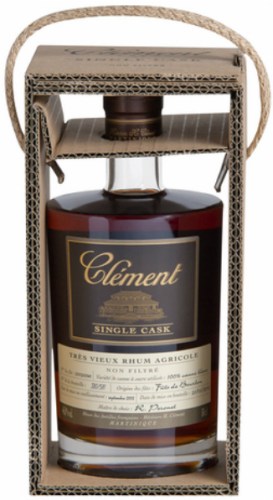
Clément 9yo 2002/2012 Trés Vieux Rhum Agricole (46.8%, Bourbon Cask #20070077, 100% Canne Bleue, 587 bottles, 50 cl, Martinique)

After the excellent offerings from J.M it would be a blasphemy not to recognize Homère Clément, the godfather of Rhum Agricole on Martinique. In 1917 Homère started his distillery on the domaine he acquired in 1887. With the death 0f Homère in 1923, the property with its distillery is taken over by Charles Clément. Charles started making Rhum under the Clément Brand in 1940. The Cléments were already making Rhum for about ten years but under the brand name of the domaine itself: Rhum du Domaine d’Acajou. Charles died in 1973 and the next generation Clément is taking over. It is the generation of George and Jean-Louis-José Clément who saved J.M from bankruptcy but don’t interfere with its Rhum making and management. Investing in the property and distillery, to allow the people behind J.M to make the best Rhum possible.

From Clément’s prestige range comes this single barrel. This “100% Canne Bleue”, non filtré is the first of two single barrel releases. Canne bleue is a cane variety that, apart for its blue color, is known to be the best sugar cane variety for producing Rhum Agricole. Not so long ago a second version in this series saw the light of day, called “Vanille Intense”. Not to be mistaken for a spiced Rhum. No vanilla and/or vanillin was added. Only casks were selected that had the natural potential of releasing slightly more than usual amounts of vanillin from the American oak, as opposed to European oak, which tends to release more tannins.

Clément 9yo 2002/2012 Trés Vieux Rhum Agricole (46.8%, OB, Bourbon Cask #20070077, 100% Canne Bleue, 587 bottles, Martinique)Color: Dark orange brown.

Nose: Fresh and smells of new wood. Also a leafy, plant-like quality. Caramel. Big, hefty aroma, sometimes a whiff of this reminds me of Jamaican high ester Rum, although the whole profile is quite different from that. In the distance even a red fruity aroma. Mostly berries. Burnt sugar with hints of spicy White Wine. Gewürztraminer. Sweet spices. Oregano and to a lesser extent thyme. Toned down vanilla ice-cream.

Taste: A very nice subdued sweetness. It’s like the sweetness has depth in part because its burnt sugar. Milk chocolate, some vanilla and a hint of a paper-like quality, cardboard, cola and lots of cask toast. Just like a great wine, this Rhum Agricole has perfect balance between the sweetness and acidity. The sweet is obvious, the acidity is from the oak. Just like the nose it has this great woody flavour, without it being too sappy or bitter, although the bitterness that is there stays on well into the finish, and even the hoppy aftertaste. The finish is long and has a tiny amount of soapiness to it as well as a bit of red berries and the burnt sugar. The burnt sugar retreats and lets a more creamy and toffeed layer take over for the aftertaste.

It’s really amazing how much color this Rhum Agricole got from only nine years in a Bourbon barrel. It looks like a stunning dark brown Rhum. That must have been very active casks. This is good stuff. Big aroma, big body, long finish. For some a bit too much of the burnt wood and sugar notes, but it comes with the territory. Good ‘un this is. Usually more is more, but I somehow do like the 50 cl size of this. It’s easier that way to get another “100% Canne Bleue” single cask, from a different cask naturally, for comparison. This is a big one. The J.M 2002 shouldn’t be tasted right after this.

Points: 87