 Again rummaging through my box with trophies collected on my travels, I found another Port Ellen. I like Port Ellen, so please forgive me, for yet another review. Port Ellen is the closed distillery from the immensely popular island of Islay, known for its peated whiskies. Always around in abundance, prices were ‘moderate’ for a closed distillery from Islay. Today stocks are depleting, and prices tend to rise sky-high, and it won’t be long untill there’s nothing left. Even if casks still lie around, Port Ellen isn’t getting better by ageing even longer. Maybe casks will be transferred into stainless steel holding tanks to stop ageing and fetching a lot of money when bottled is a few years’ time. Who knows. Since 2001 Diageo releases Port Ellen annually in their special release series. The first release fetching at least a 1000 Euro’s at auctions…
 Port Ellen was founded in 1825, and was sadly closed like many others in 1983. Although the distillery is dismantled, the site is still there. Today it’s home to Port Ellen Maltings. Where barley is malted and all the other distilleries of the island are customers…
Color: Gold (with black cask sediments, floating around).
Nose: Thick and elegant or is it? Dry Fino Sherry and crushed beetle. Peat and kumquats. It smells like a bush, very vegetal. Black tea and flowery perfume. The citrussy wood is great in this one. When left to breathe for a while it’s wonderful altogether, and a mixture of hot tea, with dry black tea leaves comes even more to the fore. Stunning!
Taste: Thick, spicy, sweaty and sweet. Black and white powder. Very balanced. Alas no Port Ellen rubber. Again Fino Sherry. Bold, round body with distant peat and milk chocolate. Clean at first, and dry,with a very nice gritty and dirty bonfire finish that tends to be sweet and sour (green apples), but not bitter. Every sip is like a chameleon, different every time.
Ahhh, the Raw Cask series, a series where filtration got a new meaning. This is a series where the whisky is certainly not chill-filtered. It is probably filtered through a chicken wire fence. Some people even suggest, the stuff floating in these whiskies have sediment thrown in from anywhere and is not even from the original cask. Well I’d like to believe… It looks original and rustic and I don’t have a clue what it does for the taste. If you drink it all, you can imagine what it does for the mouthfeel, well not much really, the flakes just tend to cling to your palate and tickle. This is a very good Port Ellen and it deserves a well-earned…
Points: 91
 Time for another Lowlander. Rosebank this time. I reviewed a
  hoping for a resurrection. Who knows. For the time being, lets see if this Rosebank is any better than the Glenkinchie reviewed earlier.
 Clynelish is a very popular dram. There are several reasons why. First of all it’s a sister of Brora, which maybe the best malt of all. Second. Clynelish has a unique waxy personality and it’s spirit is always of high quality. It’s very hard to find one that is not up to par.
 Taste: Spicy and definitively from a sherry cask. Wood, beer and spice again. Sweet and tarry. Shortbread and gingerlike. Turkish delight and has some traits of a Riesling wine. Full bodied. Slight sour wood and licorice on the finish.
 Instead of expanding into unchartered territory, let’s do something oppositional and do yet another Port Ellen, and another bottle by Douglas Laing. This time from the old series in the normal scotch whisky bottle and not from the new tall bottle. People tend to think this older look contains better whisky. Let’s see if that’s true. By the way ,I read somewhere that in the few months Port Ellen operated during 1983, there weren’t a lot of good casks around, and they filled almost anything they could get their hands on. This Port Ellen looks quite light in color. Is this from a tired butt or a normal refill Fino butt?
 Taste: Peat and rhubarb. Sweet, big, leafy and chewy. Black tea with clean refined sugar. No rubber here and it’s no monster either. The peat is very mild here and the finish is quite simple. Still it seems to be very balanced, just not very complex. It has the dryness and a bit of the spiciness of the oak, but not the bitterness, and that’s a big plus (not a Chevrolet). It has citrus with cardboard in the finish. If tasted blind, I would have thought it to be some odd ten years younger.
 It’s an end of an era, even if it was a tired cask, this is still very typical and good. Really a shame this got closed. In a way it resembles Talisker in it always being decent. This may be no high flyer, but is has a lot of fine moments to give. No I’m not sentimental, this is good in itself. A very nice Islay Whisky. As I’m sipping the last few drops: “Here’s looking at you kid…”
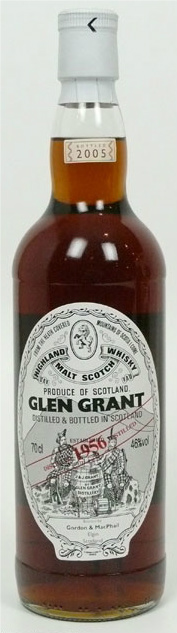 I
I  just had to write another one about Glen Grant. Do I really have to revert to Gordon & MacPhail to find me a good Glen Grant? There are a lot of great Glen Grants around, but are they bottles of the past maybe? Here I have another Glen Grant that as it turns out ís from Gordon & MacPhail. Will it be good or do Gordon & MacPhail also have some mediocre casks? This one is bottled for La Maison du Whisky who usually pick good casks, so no need to worry, this probably will turn out all right. Besides, this is no 70’s Glen Grant, but a 1956. The year Alfred Hitchcock became American and made
  Glen Grant if you want a good one. Well as I said there are a lot of other good Glen Grants around. We’ll have to keep searchin’ to find us one, but for the time being we’ll have this Gordon & MacPhail 1956, and that’s no punishment! The nose is to die for, that alone is worth almost a 100 points. But the whole I will score…
 And here’s yet another Speysider and not just any Speysider but an example of Speyside’s finest distillery…probably. Just consider the statement for a moment (maybe not if you’re called Luc). There’s also Macallan, Longmorn and Strathisla in Speyside. I know there are others, but I didn’t want to make this list too long. Glenfarclas isn’t mentioned on the label, but let me tell you this is a Glenfarclas, and a very old one too. I have tasted several very old Glenfarclas, and sometimes they tend to be very woody, but that’s also because there are a lot of very old Glenfarclas around, and 42yo is a long time to spend in a cask. I’m 42 now and I wouldn’t want to spend my whole life in a cask.
 To the whisky then. Glenfarclas is still a family owned operation that started legally in 1836. In 1965 it was bought by John and George Grant. Since then there were a lot of Georges and John Grants. Very popular names indeed in that family (and The Beatles for that matter). Sometimes they have extra letters for identification purposes.
  Next time I’ll be up at Glenfarclas, I’m dying to meet Ringo S. Grant! Good to see a still family owned distillery surviving competing with the big conglomerates like Diageo. There are several more like Bladnoch for instance. Power to them!
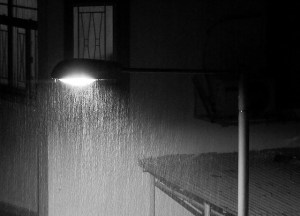 Its raining like crazy outside, and I have this Port Ellen on my lectern, so probably no better moment to have a go at this. Seize the day, the moment is now! There may be no tomorrow! Heed the call of the elements!
 Color: White Wine.
 A’bunadh, as it’s called, has no age statement (NAS) on the bottle, but is believed to be between 8 and 10 years old, and comes solely from Spanish Oloroso Sherry Butts. Well, if you could smell it now, or see it’s colour you would know this is true.
 Even though it’s young, strong and harsh I still like this neat. Water takes away the little sweetness it has and makes it a bit more harsh. Drinking this at cask strength, makes me happy. It’s a bit of a drug that way. Recommended. There are a lot of batches which have their differences. More than you would have thought. So it can be a lot of fun comparing different batches from different years. Some are less harsh, or more sweet or…You guessed it, come back often to A’bunadh, and you’ll be welcomed back every time by a very nice whisky. By the way, who said there weren’t any good sherry casks anymore, and who said those sherried whiskies aren’t affordable anymore?
 Master Quill