 Next up Glen Scotia, also a first on these pages. Glen Scotia hails from Campbeltown, once a big place for whisky with regional status (again). Try to imagine a place that has almost 30 distilleries working at one time in the 19th Century. Not so long ago this Glen Scotia was the ‘other one’ from Campbeltown after the well-known Springbank. Today Springbank makes also Longrow and Hazelburn. And from the same owners the recent ‘addition’ that is Glengyle Distillery (Kilkerran). Let’s say that Glen Scotia is the only Campbeltown distillery not owned by the people of Springbank. Owner today is Loch Lomond Distillery Co. and the place is fairly run down. When the distillery was mothballed in 1994, the staff of Springbank restarted intermittent production in 1999, not to lose the regional status of Campbeltown. A status lost eventually, but eventually reinstated.
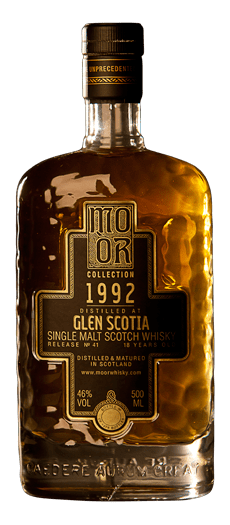 The distillery was founded in 1832 by the Galbraith family. For one reason or another the label on the bottles state 1835. Lots of changes of ownership during the years and even some closures in 1928 and 1984. Since 2000 Loch Lomond has taken over Glen Scotia and runs the distillery with its own staff.
Color: Copper Gold.
Nose: Very musty and dirty. Fruity as in fresh sweet apples mixed with apple compote. A very nice hint of smoke and coal that reminds me of an old steam locomotive. It actually smells like something from the industrial revolution. Old Skool? Lets move on. Mint and still a lot of apple. Lit matchstick. Nice balance and easy. Not very complex. Underneath it all, a sort of sweet wood smell, very laid back.
Taste: Wood and toffee. Caramels and quite a bit of ash and toasted cask. A nice bite and definitely a firm body. Sulphury (of the egg kind) and quite some oaky and milky sourness. Actually I get some more egg notes, especially boiled egg (the white part). Closing in on the finish, it dries out a bit, and is not as big as expected. Here the wood plays a much greater role, than on the nose. Not as balanced as the nose.
Usually you’d expect more color after 18 years in a First Fill Sherry Butt, so this must be a Fino (again) and it kinda goes into that direction.
 I was asked to keep an eye out for sulphur in this one. It’s there slightly on the nose (as a burning match). But it is more pronounced on the palate (the bite here comes not only from the wood, but also from the sulphur. Usually there is some sulphur in Sherried Glen Scotia’s. Lots of it in a 1991 Cadenheads offering if I remember correctly. It’s there on the palate and even more so in the finish (late). Is it ruining the balance or the palate? Does it disturb me? No, it’s some kind of good sulphur. it’s somewhat hidden. It’s there but not in the usual obvious way. That happens sometime, that’s why I called it good sulphur. Still, overall there isn’t a lot of sulphur in this one, so don’t worry. And hey, sulphur is good for the skin!
Points: 84
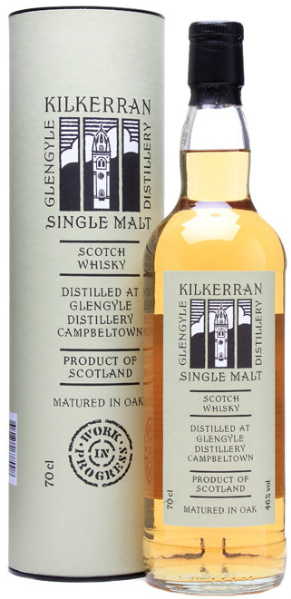 Nose: Fresh, sea air. Soapy and oily. Some smoke. The 7yo seems to me to be less fatty that the 6yo. The 7yo is more refined, but definitively from the same family as the 6yo version. Also some peat and clay. More sea freshness in this one. Lemon curd. In the nose this one has more of everything when compared to the 6yo. The 6yo is more meaty and musty.
 After reviewing one of the most popular official releases by Springbank, the
  Later some mint and furniture wax. Nice throat coating finish.
 Springbank, the strongest survivor of Campbeltown, and one of the few family owned distilleries. Once a great center for whisky, and once a region of its own, it still is, but barely.
 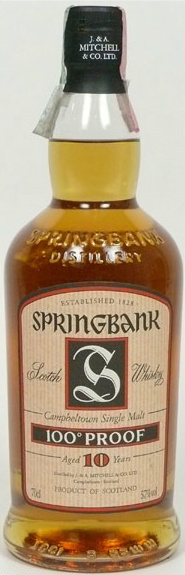 The people behind Springbank do their utmost best to let Campbeltown survive as a region. Glen Scotia is intermittently operated by the crew of Springbank, and of course Springbank themselves are responsible for Longrow, Hazelburn and Kilkerran (Glengyle Distillery). All names from a distant Campbeltown past. Founded in 1828 by the Reid family, who were married into the Mitchells. In 1837 the Mitchell’s bought the distillery. In 1897 J. & A. Mitchell Company Ltd. is founded, the company that is still on the label today. Since 1969 J. & A. Mitchell is also owner of Cadenhead’s. Between 1979 and 1987, Springbank was closed. And since 1989, production is again as it should be. Almost nobody malts themselves these days, but Springbank take the remarkable step to reopen the maltings in 1992. Springbank is a cult malt has a great following, and is by far the most popular malt on Wall Street.
 Yes it’s “Snickers” in a bottle. Slightly unbalanced by the soury woody, and peaty, finish. The finish also leaves a minty sensation on the tongue. Sweet mint as in “After Eight”.
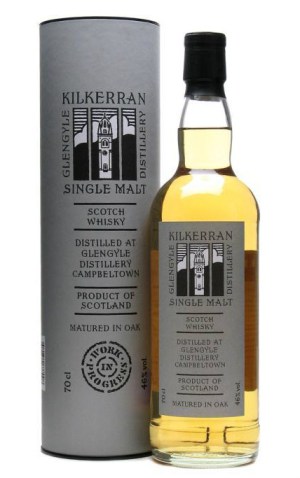 Color: Light Gold.
 We all like to say that the old stuff is better, and “they just don’t make it like that anymore”. Now just have a look of some of those new malts around. And it’s not only Kilkerran, but Kilchoman too, aren’t they making fabulous stuff? And the stuff is just seven years old to boot. Both of them. And if this as good as it is now, how will it be at the planned 12 years old? We just have to wait untill 2016 to try that. But untill then we’ll be just as happy with the annual WIP’s. Forget about cocaine and XTC, there’s a new uncolored and unchillfiltered drug in town and it’s called Kilkerran…(and Kilchoman).
 Master Quill