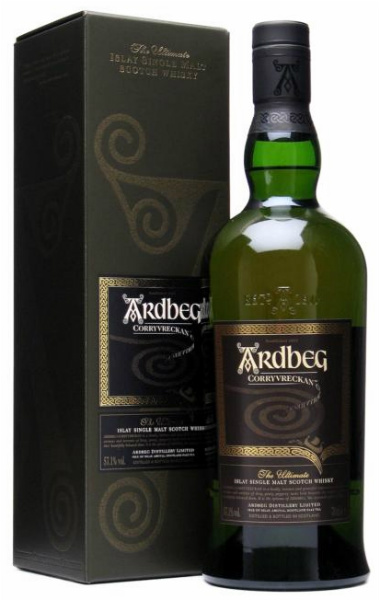
Ardbeg “Corryvreckan” (57.1%, OB, 2014, L59815)

Well, here is an Ardbeg of which nothing is known, apart that it was first released in 2009, following up on Airigh Nam Beist, which ran from 2006 -2008. I won’t bore you with my take on the marketing jazz about Corryvreckan being a whirlpool. You can read about that on the box and on many sites across the interweb. Here the golden nugget from Ardbeg’s own site: “Corryvreckan takes its name from the famous whirlpool that lies to the north of Islay, where only the bravest souls dare to venture. Swirling aromas and torrents of deep, peaty, peppery taste lurk beneath the surface of this beautifully balanced dram”. Well, what can I add to that!

What I’d like to know is, how this Whisky came to be, and that is definitely more difficult to find out. Every bottling of Ardbeg has some sort of unique twist. Casks that were burnt to a crisp before using, or casks that were forgotten in a swamp, or casks that were kept in space for a while. The unique twist this time seems to that part of the Whisky was matured in new French oak casks, (as opposed to the sole use of the immensely popular American oak). The rest of the Whisky was, of course, matured in first fill and refill American oak casks. American oak became so popular since it gives off a friendlier aroma of vanilla, making any liquor softer, creamier and more accessible. European oak, or French oak in this case, is less of the vanilla kind, but more about tannins. All the great Sherried Whiskies from yesteryear were matured in European oak Sherry butts and puncheons. Today the Sherry industry prefers American oak as well for reasons mentioned above. French oak is used a lot in the French Wine industry, so rumour has it, used Burgundy Wine casks were used for this Ardbeg as well. However we don’t know if they were virgin oak, first fill or not and what kind of Wine they contained (if any). A Chardonnay cask will result in a different Whisky, than a Pinot Noir cask…

Color: Full gold (no red or pink nuance though).

Nose: Very ashy and smoky right out of the gate. Licorice wood and sweet smoke. Garden bonfire. Sweet and soft peat. Citrussy, herbal and meaty. Crushed beetle and old tarry rope lying around in the sun. Fresh oak combined with some lemon (not the oil from the skin). Distant vanilla, but it is here. Ripe and sweet strawberry and vanilla ice-cream. More hints of red fruits and more promises of sweetness. Nice soft oak. Dusty. Very well made Ardbeg if it tastes as good as this smells, this will be a keeper!

Taste: Ashy again. Sweet, crushed beetle again, how odd. Big aroma, big body. Lots happening. Initially sweet but it is a good sweetness balanced out with sweet peat and dryness of the smoke. Definitely a type of fruitiness you don’t get from (Bourbon) oak alone, which would support the Wine cask claim. Fat peat and slightly tarry. Empty, off-season, fishing boat in the sun. Visions of an abandoned port. Not hot, only for a moment is shows some higher ABV, but I would have never guessed it is as much as 57.1% ABV. Well balanced, with only a medium, but decent, length. This is where it’s average age is noticeable.

Excellent standard bottling, and a damn good NAS as well, if I may say so. It can be done after all! I’m wondering which of the special releases, which are all more expensive, can beat this one? The 10yo is the entry-level Ardbeg and for me it has lost the most compared to the earlier tens since it has become way too sweet. I guess, that one has to appeal to a larger public, than this Corryvreckan and Uigeadail. I guess the latter are more for connoisseurs and anoraks like me and you. Now I will have to get me a new Uigeadail to compare it to this Corryvreckan. I have high hopes now…

Points: 89

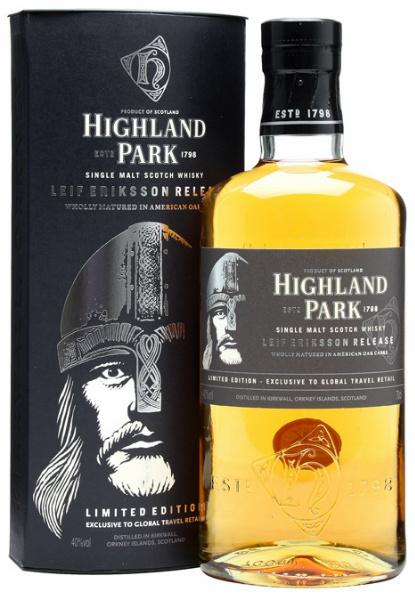
Highland Park Week – Day 1: Highland Park “Leif Eriksson” (40%, OB, Travel Retail Exclusive, 2011)

Time for another of Master Quill’s weeks. This time around we’ll focus on Highland Park. When rummaging through my stash of samples or bottles I sometimes come across a few which have some sort of common link, usually being made at the same distillery, but there can be many others. In no way should it be a true cross-section of the standard range or should it be all official or recent bottlings. Nope, the aim is to have fun with seven Whiskies, more or less picked at random. In this case Highland Park gets the honor. I have picked seven Highland Park Whiskies to have fun with and put them in some sort of logical order. We’ll start off with Leif Eriksson, one of many travel retail offerings. Usually reduced to 40% and usually bottled in a convenient litre bottle. This time however it is the standard 700ml bottle that can be easily picked up outside of an airport…

I may have mentioned this before, but Highland Park is owned by the Edrington Group. A company that also owns The Macallan. With both these distilleries, or brands, Edrington do a lot of marketing. There is an obvious core range made up of Whiskies with age statements, and some of them have already featured on these pages as well. Besides that Highland Park, as many others, loves travel retail outlets and are keen on issuing special series (aiming at collectors).

I am a big fan of the Highland Park distillate and when we look at Highland Park, pré marketing, you would have a hard time finding even a mediocre bottling. Just have a go at an older wide neck bottling and you’ll know what I mean, or even ask Olivier Humbrecht about Highland Park and you are set for the day.

The beginning of the special series craze, I mentioned above, started with the release of Earl Magnus in 2009 (5.976 bottles). It is part of a trilogy called the Inga Saga. Earl Magnus is a 15yo Highland Park of impeccable quality, and back then was released at a more than reasonable price. It was followed up in 2010 with a 12yo called Saint Magnus (11.994 bottles), which was a bit less interesting and the series was concluded in 2011 with an 18yo called Earl Haakon (3.000 bottles). It was a hybrid of the standard ages of 12yo, 15yo and 18yo, but also bore names of mythical figures from the history of Orkney. Today its hard to imagine a company releasing only one special bottling a year! By the way, this 18yo was top-notch again. Many series like this were created since.

However Leif Eriksson is not part of any series I know of. It’s a bottling commemorating the Viking Eriksson who was the first European to set foot in North America. So it shall be no surprise this Highland Park was matured wholly in American Oak casks (probably all ex-Bourbon).

highland-park-leif-erikssonColor: Gold.

Nose: Starts with a hint of smoke and heather, and a nice funkiness I know from older Highland Parks. Initially also quite sweet. Nice sweet barley notes, honey and also quite fruity. Cold butter. A very appealing, and slightly dirty, nose. Lots of vanilla and creamy latex paint, as could be expected. Less expected was the coal dust and Aspirin powder I got next. Highland Park is a distillate that does well in any cask. Excellent nose.

Taste: Oh no. Aiii, sweet honey and sugar-water. What a shame. This one is definitely ruined by reduction. Maybe they felt it was too hot at cask strength and since it had to be bottled for travel retail they automatically reduced it to the lowest strength possible, 40% ABV. Sweet, creamy vanilla again. Hints of almonds. Lots of creamy notes as well as lots of vanilla. That’s the main marker of the taste. Not a lot of wood though, although there is a nice toasted cask edge to it. The palate matches the nose very well. This should have been a litre bottle, since to get the max out of this you need to drink this in big gulps and roll it around a lot in your mouth (needs a lot of air as well). Funny enough a slightly bitter oak note emerges in the aftertaste…

You can still taste the potential of this. It is almost as if has to be suitable for pilots who still have to fly. I hope not. The nose is wonderful and the taste does show the potential. It is not a bad Whisky. It could have been a very good Bourbon expression of Highland Park, but it was ruined by one bad decision. The amount of reduction. Still, it sometimes can hit a soft spot, and is still an example how Highland Park can be without the (big) Sherry.

Points: 81

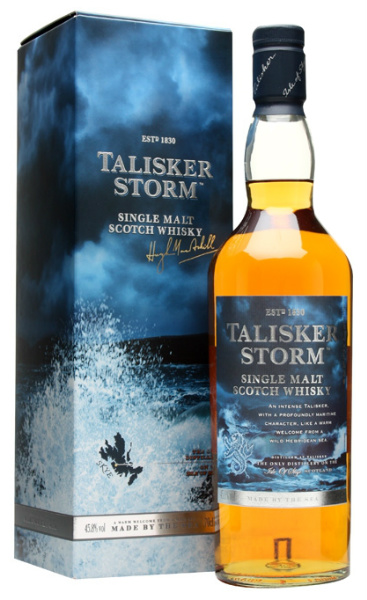
Talisker “Storm” (45.8%, OB, 2013)

Time for another Talisker, and quite a controversial one. Talisker have a very competitive 10yo on offer. One that did change over time. Just compare recent ones to those of ten years ago or twenty, or thirty… Nevertheless, it’s always good and always affordable. Then the time arrived for the NAS expressions, and for Talisker, this Storm was one of the first, and certainly the first that got some big marketing behind it. I remember you could go to your local Port where you could get a dram of “Storm” for free and whilst you were trying it, they aimed their wind-machine at you and threw buckets of water in your face. Talisker is probably the biggest Single Malt brand Diageo own, so a lot seems to be riding on this.

When in 2013 “Storm” arrived, as did “Dark Storm” in travel retail and The Port finished “Port Ruighe”, fans of Talisker were fearing for their beloved 10yo. Surely it would be discontinued? But the faithful 10yo soldiered on. In 2015 Talisker “Skye” arrived, yet another NAS offering, again priced slightly above the 10yo. Are they now going to kill off the 10yo? Nope, it’s still around, although I do still fear for it a bit, and occasionally buy the odd 10yo that is even  on sale quite often. Quite strange, considering discontinuing it would be caused by scarcity. Nevermind.

Earlier I reviewed ‘Neist Point”, a travel retail expression that wasn’t very cheap in some markets. Out came a rant against NAS, but I finished the bottle rather quickly and I have to say I liked it a lot, although a bit overpriced.  “Storm” got a lot of heat from Whisky-drinkers for being more expensive than the 10yo and definitely worse overall. Some even called it the worst whisky they have tasted in a particular year. Today I’m going to have a look at the first batch of “Storm” bought just when it was released. Often first batches tend to be the best…

talisker-stormColor: Light gold.

Nose: Barley, whiffs of new make spirit. Only whiffs, so no cause for alarm. Not bad, but there is some youthfulness noticeable. Nice smoke mixed with some sweetness. Quite lovely. Soft, wet, green and vegetal peat. Not coastal or iodine driven peat. Not Islay. Nutty, a bit of cardboard and fresh. Sweetened black tea, with peach and fern, growing on the forest floor. Quite fruity underneath. Nope, not very complex at first, but it is appetizing and does evolve a lot with some breathing. It is less powerful than the 10yo, although that one also lost some oomph through the years. Nevertheless a quite appealing storm. I like it. It may be younger than the 10yo, but it is well made and balanced. However after giving this Talisker its bold name, the brutal images of heavy waves pounding on jagged rocks and a lion with a fish-tail made of lightning, I expected something of a heavy hitter with lots of heavy young peat, but actually it could be a Talisker, you buy a dram off, at the local ballet school bar. Still beautiful and nice, but Storm? No, a warm breeze at best. Which is excellent, only different. When you smell it proper, it does tick all the boxes. Smoke, peat, fruit, sweetness, well-balanced. Nice development with air, very nice. Excellent nose.

Taste: Barley and cardboard. Sweet and mouth coating. Very nutty, fruity, nutty again and slightly peaty, band from the start, already some balance, but not as much as the nose has. Behind this, quite a lot of sweet, ripe yellow fruits and some minor cardboard again. Not heavy, but the aroma’s are quite big and warming. Just like the nose, it definitely tastes like a Whisky with a good portion of young Whisky blended in. It has an edge tasting like new make. Where the nose reached complexity after breathing and was well-balanced, towards the end of the body the balance is getting a bit, ehhh, unbalanced. Luckily the sweet and fruity aroma’s are big enough to carry it, those are the ones with staying power and make for a nice finish, but the finish itself is not very long. Yes, there is a baby-pepper attack in the finish, typical for Talisker. Especially near the end of the body, and in the finish, the NAS-element shows it’s (ugly) head. I guess it’s this some people scoff at, but calling it their worst? Please dilate your mind!

The 10yo is on offer lots of times, making it even less expensive than all other NAS offerings put on the market by Diageo. So, should you even consider buying one of these NASses? I read a lot of posts on social media of people scoffing at the “Storm”. Well for me this isn’t about winter storms it more of a Whisky for the first colder nights on the end of summer. Sure different from the 10yo, but I’m not sure if it is worse. I actually believe this is a well made Whisky. Compare this to a youthful Springbank and it is maybe just as good. However Springbank as a family owned operation, do get a lot of love from the public. I love Springbank because of its history but also because them make one of the best Whiskies in this modern age. Talisker are owned by Diageo, which is a big, very big, huge money-making drinks giant, and because of that, they don’t get a lot of love. Just look at my reviews of “Neist Point” and this “Storm”, there is a lot of sepsis. When Talisker is viewed by itself, seen apart from the marketing, just looking at the history and the place it comes from, it also is a very good distillery making good Whisky and easily another of my favorites. Both distilleries mentioned use some peat and the profile fits me just right. So I’m not going to criticize this Talisker because there is no need to. It maybe NAS (and easily recognizable as a NAS, especially if you try it after a few other and older Whiskies). It maybe Diageo and it maybe heavily marketed, but the Whisky itself is definitely worth it, especially when you drink it by itself or if it is the one to start you off, but if I had to choose, and considering the price I would prefer…the other one.

Points: 83

Benromach “Traditional” (40%, OB, 2004)

This is quite a unique bottling. In 1993, Gordon & MacPhail acquired the distillery, but it took them ’till 2004 to release this “Traditional”. The very first Benromach made by the new regime. Alas, today the traditional is no more, it has been replaced, last year, by the 5yo. For me this is a unique bottling, whereas everybody is coming up with, sometimes, silly names for their Whiskies, Gordon & MacPhail decided otherwise. They mothballed the “Traditional” name and replaced it with the 5yo, yes an age statement, so it’s not a NAS anymore. For some, “5” is a pretty low number, but at least you get a better sense of what to expect. Luckily this trend is gaining momentum as well, since there will be a Lagavulin 8yo shortly, and I expect quite a lot from that one. Back to the “Traditional”. It is said to be 20% first fill Sherry and the rest comes from first fill Bourbon. All first fill casks, so they must have impaired quite some aroma to this young Whisky.

Benromach TraditionalColor: Straw.

Nose: Barley, butter and lemon water. Very light and does not want to come out of the glass. Hints of Sherry and spicy oak. More barley and grassy notes come next. A bit dull, restrained, as in it doesn’t greet you, popping out of the glass with lots of fresh and citrussy notes. No, it’s restrained, like an English butler. By now, we have gotten used to the slightly peaty and waxy notes, but here it was something of a first. For those of you who know the new 10yo, both the reduced or the 100 proof version, this is definitely family. The peat is typical, and the waxyness of the spirit as well, so for me this is easily recognizable as a modern Benromach. The Cragganmore I reviewed last, had Fino Sherry written all over it, but I have to say, this one has some notes of that kind of Sherry as well. Hints of new make spirit, so a bit immature. There is also something missing here. This is said to be 80% first fill Bourbon, but where then is the vanilla? It’s there but the peaty notes overpower it. Nice.

Taste: Barley again and definitely sugar-water, with some hidden vanilla and paper underneath, did I mention that it is a bit restrained? At first that’s all there is. Soft. Pudding and paper again. Paper-like and peaty bitterness. Fatty. Diluted liquid honey. Hints, really only mere hints of red fruits (from the Sherry I guess). Slightly warming finish, with peat and again a lot of sweetness. Although it has a very light and uneventful (restrained) finish, it does have some staying power. Totally un-complex, which has a slightly different meaning than “simple”. A first offering but not quite there yet. The bitterness stays behind for the aftertaste.

This brings me to the subject of blind tasting, believed to be the most fair of all ways of tasting spirits. First of all, blind tasting is not entirely objective, since the taster is not objective, and not blind for that matter. You also have different moods and different expectations. Second, a blind tasting is usually done with several Whiskies, so you tend to compare the one to the other, both interact with each other, you like one over the other, but what if in a particular flight is this NAS Benromach as well as a Lagavulin 37yo, which would you prefer? I first tasted this in such a flight and my initial score was 65 Points. This time I’m tasting it by itself, and I know what it is. If I’m in the mood for a Whisky like this, I wouldn’t grab the Lagavulin 37yo now would I? Just like every other Whisky out there, every one has their time and place, but yes the Lagavulin is a way better Whisky, with a way better price-tag as well…

This Benromach is young and simple (un-complex). And not every aroma seems to fit, especially in the taste, but it is also light, grassy, citrussy and fresh, as well as peaty and bitter (and sweet). So it has its moment. Some would call it their summer Whisky. Its nice, simple and…restrained.

Points: 72

Talisker “Neist Point” (45.8%, OB, for Travel Retail)

Just a few weeks ago this new Talisker was released, not by Diageo, but by Diageo Global Travel and Middle East (GTME). What? I don’t know why, but why do I have the feeling I’m being more and more conned? First, lets back up a bit. Not so long ago you had Talisker’s with age statements like 10yo, 12yo, 20yo, 25yo and 30yo, I said, not so long ago. Longer ago we had a stellar 8yo as well. At a certain point, again, not so long ago, the 18yo was released. All of a sudden, the stocks were depleted and the owners saw that Whisky was fetching silly money all across the board. I get that, because you’re in business to make a lot of money, hopefully, so I get the prices that are asked today. It’s a question of simple economics, supply and demand. Supply, somewhat unknown, the demand high.

Screen-Shot-2015-04-09-at-9.59.34-AMConned I said. Now, we are getting NAS Whiskies, and I tell you why. We need a lot of stock of older Whiskies to make high-priced Whiskies with an age statement again for the future. Well the price I mention is uncertain, because you never know what we the public are willing to pay for our Talisker 18yo in ten years’ time. Thus a lot of young Whisky must be released with some added older Whiskies for taste, because Diageo found out that the traveller is mainly concerned with taste and not age.

So we saw a lot of young Whiskies enter the market place and top money is spent to convince us that it’s all about taste and not age, well, we are made to forget that age matters a lot when it comes to taste! As I said above, I understand that I have to shell out some serious money for my Talisker 18yo, 25yo and 30yo, but that’s my choice, since I do love those expressions, but I can decide myself if I want to spend that kind of money, now or in the future. Diageo doesn’t really care because if I won’t spend that money, someone else will, because we see a lot of people paying a lot of money for Whiskies these days. And it’s almost no use looking elsewhere (other distillates), since those prices are soaring as well.

So conned I feel (Yoda speak), because the latest Taliskers don’t have numbers anymore, but names. Storm, Skye, Dark Storm and now Neist Point. As I said before, there used to be a stellar 8yo, a stellar (Tomatin) 5yo, etc. Today those numbers are not wanted, not because they are low, lower than the modern standard, the 10yo, no. Those numbers are unwanted because they are still too high and still too much a restriction. And since we already made a leap in yield per field of barley, today’s young Whisky can’t be compared to the 5yo of yesteryear. The quality od Sherry cask today is also different from the old ones. So lots and lots of young Whisky is sold to us through NAS bottlings. Yes it’s about taste, but no, not that much young Whisky can be so good as is claimed, and that’s my conned feeling right there. I’m indoctrinated and I’m made feeling stupid by claiming that age doesn’t matter (never did) and hiding behind the statement that only taste matters.

Conned some more I say: Why the mystery? Making up a name, fine, give your Whisky the name of a lighthouse or a Hyundai car. It’s fine, I like the names and I like the screen printed lighthouse on the Neist Point bottle. We all know it’s mostly young Whisky, with some added older casks to meet a desired flavour profile. Diageo claims that the traveller doesn’t care for age, but does care for taste, but the traveler speaks some more, the traveller also wants smooth Whisky, the traveller wants smooth Talisker. But why? Talisker smooth? Laphroaig is also being made smooth. Why? Can’t we have anything not smooth anymore? Didn’t we like Talisker and Laphroaig rough? wasn’t Talisker called the lava of the Cuillins? Lava as in not smooth? Hot and peppery!

Even more conning: It was said that Neist Point (The Whisky, not the lighthouse) has a huge depth of flavour and showcases a wider range of Talisker characteristics. Combining precisely selected flavoured Whiskies with some of Talisker’s rarest and smoothest mature stocks. Yeah right. Will those of you that believe this raise their hand? Am I really to believe the rarest of all Talisker stock went into this and are not released as super-duper premium Whiskies now and especially in the future?

So instead of a nice rambling about the new Talisker I started ranting, sorry for that, it never happened to me before. Critical yes, ranting, nope. Why not try this new expression of Talisker and see if it still has some lava in it. By the way, in the past Douglas Laing bottled some smooth Talisker’s. Back then, these casks didn’t match the Talisker profile and were sold off to be used in blends, now they are especially sought out and used for Talisker Neist Point… [fanfare music is playing and curtain rises…]
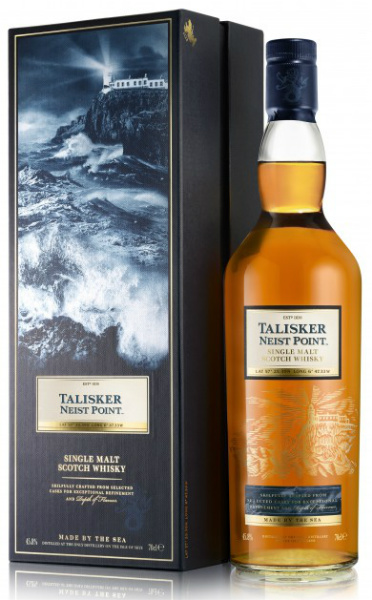
Talisker Neist Point (45.8%, OB, for Travel Retail)Color: Gold.

Nose: Some light smoke. Barley sweetness, and some old Sherry wood. Tiny hint of cask toast, but very mellow altogether. Hints of citrus. There is some sweetish freshness in the back, lemon and unripe tangerines. Crushed fresh almonds, mixed with some sweet and fatty peat. Mind you not a lot. When you close your eyes and someone pulls the glass away, a more fruity note stays behind and not a peaty one. Slightly warming.

Taste: Sweet, barley and nutty, again lots of almonds. Sweet lovely peat. (Springbank style). Extremely drinkable, but even after the first sip it is lacking some power and doesn’t hang around in the mouth for too long. Fruity, but more about yellow fruits. Dried apricots and pineapple. A little bit of toasted wood. Thick clay in the finish, which is nice, but the rest of the finish is about immature and young Whisky. Young can be mature, immature just isn’t mature. No pepper attack, so how’s this a Talisker? Short and a bit unbalanced finish, with a beer like note and fresh barley as the last of the aroma’s.

After the rant above, some of you maybe expected I would hate this Talisker, but in fact I wrote the piece above before even tasting Neist Point. It is how I feel, maybe I’m wrong, who knows. Neist Point is what I thought it would be, nice, smooth, extremely drinkable, but also a bit immature, and the rarest of Talisker casks didn’t hide that. Maybe more of those casks should have gone in?

In the end it’s not bad, but not spectacular either. If they really want to sell this for 150 euro’s, pounds or dollars, I feel it’s too expensive. I paid half of that for my bottle and that would seem more than enough. Sometimes it reminds me of Springbank 18yo and obviously the smooth 1980 Tactical from Douglas Laing. Both are better Whiskies with much longer finishes. Spend your money on that I would say, although the Tactical is hard to get these days.

Points: 85

Cognac Week – Day 1: A. de Fussigny Superieur (40%, Fine Champagne)

Cognac Week LogoHappy new year! Most of you will not read this post, right from the first second of 2016, but probably a bit later. I hope you all got through the fatty stuff you stuffed in your mouth over the past few days, and are ready for a wonderful and healthy 2016. For Master Quill this new year will start with the Cognac Week! A new year, the fourth year for Master Quill, so its time for a new distillate on these pages. A worthy distillate and maybe long overdue. Up untill now we have already covered some wonderful distillates. Obviously Whisky in many forms as well as a growing number of Rums and there has been some Grappa. Wines and Beers have not been so prominent on these pages the last year as in the beginning, but I’m sure they will get their share of attention again someday, although I feel Master Quill is for the time being more about distillates, so that will remain the main focal point in the future. Let’s start with Cognac. The first one is made by A. de Fussigny, which just might taste as modern as the bottle looks.
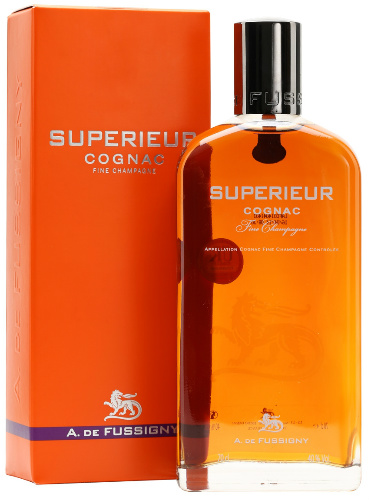
A. de Fussigny SuperieurColor: Orange gold.

Nose: Fruity and dusty. Sappy oak sawdust. Italian licorice. Warm and sweet licorice juice, warm in your mouth. Tiny hint of Apple Brandy and powdered mint candy. Small hints of (new) wood and a tiny hint of unripe banana giving it a more Caribbean feel. Cocktail cherries. This particular Cognac does have some notes of vanilla and has a creaminess that leads me to believe also American oak is used for maturation. Smells young, light, fresh and hip, although some more organic notes appear when the Cognac is warmed in my hand.

Taste: Fruity and quite sweet for a Cognac. Sugar water and sweet cherries. Apples are in here too. Calvados and some caramel. Not a lot of wood (only noticeable under my tongue), and chewing on it, sweet and salty licorice emerges. Quite a simple Cognac though. It has a few markers but overall lacks complexity and has hardly any finish or aftertaste. It shows not a lot of evolution.

For me, this is marketed for young people who just start with Cognac, although I wonder if Cognac appeals to young people these days. Nevertheless we thought the public viewed Whisky as dad’s drink and see how the younger generation have embraced (Single Malt) Whisky with full force. Today it’s one of the factors it’s almost impossible or unaffordable to buy a well aged Whisky anymore.

Points: 79

Four Roses “Single Barrel” (43%, OB, H294D, 2003, 70 cl)

After the Four Roses in disguise, called Bulleit, let’s compare it to a true Four Roses (with a similar profile). In 2012 I reviewed the current 50% ABV version of the Four Roses Single Barrel and I refered to this discontinued 43% ABV. version, calling it: “Too weak, very light and too floral and girlie for my taste”. At the time of writing I thought I finished the bottle, but as luck would have it, I found a box of archive sample bottles filled with different Bourbons I used to have. I guess it pays to save something for later! So many years later, let’s find out if this 43% ABV version is as hideous as I seem to remember it! By the way, this one is said to be 8yo and was bottled on 12 April 2003.

Four Roses Single BarrelColor: Orange gold.

Nose: Yup it’s the floral rye again. Lilac and Lily of the valley. Easily recognizable and even more pronounced than the new 50% ABV version, the only bottle I had, I forgot to fill up an archive sample of, so no direct comparison is possible, only from memory and notes. Fruity and floral, it’s almost a perfume. Powdered vanilla and coffee creamer. Almonds and fresh cookie dough. With air dusty wood comes into the fold. Elegant and perfumy. Not a lot of wood actually. Well integrated. A lot of honey is starting to emerge too as well as some turkish Delight and licorice, and anise. Don’t like how the honey and floral aroma’s turn out together. Add to that a slightly acidic fruit note, and you’ve lost me a bit. No notes of toasted cask. It comes across as a designed Bourbon. A Four Roses for people who wear a bow-tie, not for rugged lumberjacks. It is actually a Bourbon for the metro man. Although it’s not quite clear what I am, this is my least favorite Four Roses expression to date, but wait, I still have to taste it again after all those years. The nose is something I don’t always like, although I do recognize the quality.

Taste: Paper and wood, pencils (cedar). Quite a lot of waxy notes. Lightly sweet, but the sweetness washes away with the added water to be replaced with some sour, and slightly bitter oak. Honey and creamy sweetness, but here these two do a better job at integrating with each other. A bit weak on entry and not so long a finish, built around the paper and weak woody note, especially when compared to its stronger brother. Good aftertaste though, nice aroma’s return and a great creaminess is added to the aftertaste. Nice delayed effect. The aftertaste even seems stronger than the finish itself, nicer too. The move to 50% ABV was a good move. Alright, this isn’t my least favorite Four Roses anymore. Now it is the “Yellow Label”…

Even though I prefer the 50% ABV “Single Barrel”over this one. Both are well made and do resemble each other. This 43% ABV has some exaggerated floral Rye and doesn’t combine all that good with the honey and fruity notes. The 50% ABV is the same, but for me is better balanced. Having said that, this may be a tad more special, more unique, so it is definitely worth seeking out.

Points: 83

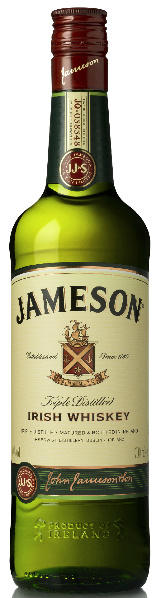
Jameson (40%, OB, Circa 2012)

Today if anyone mentions an Irish Coffee, you say Jameson. If you say Irish Whiskey, you still say Jameson, unless you’re an anorak, than you might say something different, like Connemara, if you like it peated, or Teeling, or Middleton. Enough to choose from and Irish Whiskey is on the rise again, and that is really great! It’s the ancient battle between the Scottish and the Irish, where Whiskey originated from, so why then is the Scottish Whisky so big and why was the Irish Whisky nearly dead in the recent past? There are enough examples of fabulous Irish Whiskeys and there is this Jameson. The oldest and best known of all Irish Whiskeys. Again a bottle you see in all the hotel bars and restaurant and in many homes as well.

When I started getting interested in Whisky in general, a long, long time ago, it started with Jim Beam White, the obvious Jack Daniels, Scottish blends like Teachers and Grant’s, and this Jameson. I hated Jack Daniels and Jameson actually, so I moved quickly into Single Malts and was immediately sold on Aberlour and Laphroaig. The rest is history.

Jameson (40%, OB, Circa 2012)Color: Gold.

Nose: Toffee and caramel. Grainy, fruity and quite fresh. The fruity note is quite lovely. Actually it reminds me of Gin a bit. The fresh, juniper like smell with some well hidden clean alcohol. Definitely grainy and seems to me in part like a sweet Dutch Jenever. It also has a paper like quality. This really smells nice, and I don’t recognize the nose from the first bottle of Jameson’s I had. Is that saying something about me, or is that saying something about Jameson? When the Gin aroma’s dissipate a bit, it at least smells like a Whiskey. And a very pleasant one too. Hints of spicy wood, paper and light wax.

Taste: Paper soaked in sweet apricot water. Definitely a bigger and sweeter body, than I remember from my first encounter with this Whiskey. Yes, slightly fruity sugar-water, with a hint of Whiskey. This sounds pretty negative, but let me tell you it is tasty (in a way). It is nice, very light and extremely simple stuff, but tasty nevertheless. No real off notes, not even the paper notes. but also hardly a Whiskey I guess. Short warming finish, with a short but nice aftertaste. Should work well in Irish Coffee! Otherwise, this is only suitable as an aperitif. If you use this as an after dinner dram, you’ll lose a lot of the subtleties.

This actually smells quite nice, I’m surprised. It is something you could drink easily. How is easy. Anything goes. Mix it, drink it straight out of the bottle, use a straw, you name it. It’s the Whisk(e)y-worlds lemonade, and not as horrible as I remember it. Compared to the “Select Reserve” this is more vibrant and a tad more fruity and playful which suits this destillate. I prefer this one, but the 18yo is way better, way more special, and costs more. If you’re interested in the Jameson 18yo, you’d probably do better with a Redbreast 15yo, but I think I mentioned that before.

Points: 72

Compass Box “Asyla” (40%, OB, Circa 2006)

After the Chivas Regal 12yo, a Blended Whisky from a big company, let’s see what the little, more independent, guy can do. A guy with a passion for blending. Obviously I’m talking about John Glaser, and his Compass Box Whisky Company. A company that all Single Malt aficionado’s seem to love. We’ll have a look at an early “Asyla” here. Asyla is part of Compass Box’s signature range, or core range for us normal folks. A quick look at the website of Compass Box learns us that Asyla is the lightest of the signature range, calling it delicate and sweet.

Only Whiskies from first fill used American oak casks were used, for vanilla purposes obviously. The Malt’s used are Linkwood (30%), Glen Elgin (10%) and Teaninich (10%) and the Grain comes from Cameronbridge (50%). Sometimes Longmorn is also named as an “ingredient” for this blend, because the Compass Box website mentions that the Malts for this blend hail from the towns of Longmorn and Alness. Looking at the map you can say that Linkwood and Glen Elgin come form the town of Longmorn, so I’m not sure that there is any Longmorn in this blend. Since Asyla is around for quite some time, maybe the Malts that go into this blend differ from time to time. For now I’ll stick to Linkwood, Glen Elgin and Teaninich though. Before I forget, the other four offerings from the signature range are: “Oak Cross”, “The Spice Tree”, “The Peat Monster” and “Hedonism”. Of course outside of the signature range, a plethora of other bottlings exist.

Compass Box AsylaColor: Light gold.

Nose: Grainy, light, yet perfumed. Floral at first but also fruity, with a tiny hint of pineapple and green sour apple skin. Sometimes I even get a trace of lavas. Heaps of vanilla shoveled on top, and given some time even some spicy wood. More than a hint of Calvados, an Apple Cider distillate from Normandy or Brittany. Dry and powdery. Sweetness is mentioned by Compass Box themselves, but for me the nose doesn’t carry a promise of sweetness, in any way or form. Elegant and light, but alas also a bit thin and anonymous.

Taste: Paper and grain come first, after that a blend of sweetness and (virgin) oak, although no virgin oak was used for this one. The vanilla presents itself after the paper and grain, and a slight bitter note, fade out. Not a lot of development going on, and you’re probably not surprised this doesn’t have a long finish as well. The finish itself seems to be a bit unbalanced, due to some acidity from the oak. The oak seems a bit fresh, as in not used for a long time when it contained Bourbon (or Tennessee Whiskey).

To be honest other bottlings of Compass Box made me expect more from this. Something in the order of a variant of Delilah’s. It should have been more creamy and even more towards the vanilla note so vehemently advertised.

Sure. Whisky is the product of spirit and wood (amongst others), but the bitterness it could do without, and as I said, it should have been more creamy. If you can find it, get a Delilah’s by the same bottler, and you’ll know what I mean.

I do like a lot of Compass Box Whiskies, but this one is not entirely for me, and that’s a surprise, because I expected this would be better than the Chivas Regal 12yo. Maybe age does matter?

Score: 72

Four Roses (40%, OB, 2011)

After the highly specialized Octomore, let’s get back to basics with this Four Roses Kentucky Straight Bourbon Whiskey aka Four Roses Yellow, since it has, and you’ve guessed it, a yellow label, although with every revamp of the look, the yellow label gets less yellow. The one I’m about to review, is one that was released a few years ago, but since this is the entry-level best known product of the distillery, I expect a lot of consistency exists between different batches. Four Roses is a bit of a tricky Bourbon for me. Four Roses have their ten recipes and it depends of the usage of these recipes in blending the Bourbons if I like them or not. For instance, if you have read my review of the Single Barrel expression, you know I found the new 50% ABV version quite good, whereas I didn’t like the older 43% ABV version as much. For me it was too floral. Don’t get me wrong. It’s about the taste, not the amount of alcohol in the finished product. I understand that this yellow labelled Bourbon I’m about to review is around 6 years old and can contain any of the ten recipes Four Roses makes, although most of it is OBSK and OESK. If this means nothing to you, please have a look at my other Single Barrel review.

Four Roses YellowColor: Orange gold.

Nose: Smells young, and slightly alcoholic. Light and creamy. Even some yeast and quite some honey. Dusty, with charred oak and whiffs of the new oak underneath. It has more to do with oak than the florality of the old single barrel expression. It seems a bit closed to me, since it is a bit hard to get all of the aroma’s out of my glass from the start. Maybe it’s reduced a bit too much. Another layer shows us some cardboard and a leafy, grassy note. Dry grass mixed with the slightly spicy note that has to do with the toasted oak. The honey note quickly disappears, making it less sweet and somewhat more spicy. Otherwise quite light and yes, simple. Bourbon tea.

Taste: Cardboard, wood and sugary sweet. Waxy paper. Sugar water sweetness and a very nice oaky note. New oak, with again a grassy, spicy and soapy note. There are some good flavours in this and even has enough character for an entry-level Bourbon. The wood and cream give it its initial likeability and backbone. It maybe a bit simple, but it’s very nice as an unoffensive entry-level bourbon should be. Nice body, medium finish.

Start with something like this, share a bottle with mates, get to know it. Compare it to several other entry-level Bourbons, like Jim Beam (white), Evan Williams (black), Buffalo trace and others. Quickly move on from there, if you’re an adventurous person. My review may seem a bit harsh, but it’s actually not that bad at all. This Bourbon is pretty decent, has some nice aroma’s and is very drinkable and buying this, won’t scare your wallet at all. With the age comes also a rather simple body with a not too long finish. I hope it’s strong enough for mixing, but I couldn’t say. I’m no mixologist.

Compared to the aforementioned single barrel expression, the single barrel has more depth to it, seems better balanced and benefits greatly of its higher strength (50% ABV), although it has a tad more of the feared florality. Luckily it’s not enough to spoil it for me.

Points: 78