As said in the previous review, I tend to have a pair of open bottles of Paul John on my lectern. At the moment cask #4914 (peated) as well as this unpeated #1615 are on there. Both bottled for the German market. After the peated expression, lets mow turn our attention to the unpeated expression. In the previous review I have remarked that the peated expressions seem to be better and thus score higher. Unpeated cask #1051 scored relatively low with 84 points and low and behold, now the peated cask #4914 from the previous review scores mid eighties as well. 85 points is lower than its predecessors. This is how the universe tends to work. I’m now betting on this cask #1615 getting a score, very high in the eighties, to bring balance in said universe. Not much more to add to the intro at this point, all has been said, so why not cut this intro short for once and dive right into this unpeated Paul John.
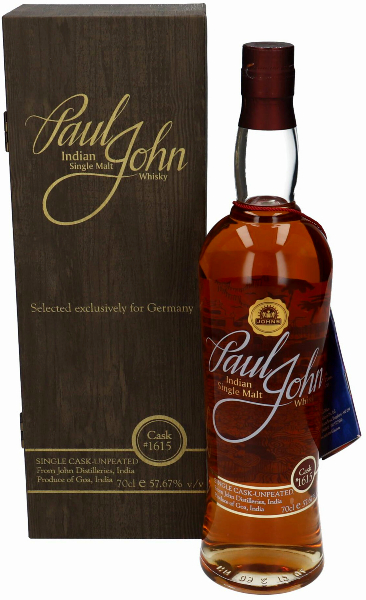 Color: Slightly orange gold.
Nose: Fruity and very appetizing. Right out of the gate a fruity, nutty and friendly dram. Malts, sweet malt actually. Lots of unexpected fruit notes, still have to wrap my head around all these fruits. All yellow fruits. Now I get hints of grapes and Alsatian über aromatic Gewurztraminer. Wow, how’s that for yet another take on a single cask Paul John. Ripe yellow fruits, bananas from Jamaican Rum. Cask #1615 turns out to be quite the funky puppy. Wet cardboard and dust. Quite a change is happening now to the body of this Malt. Dry wood with more fruit and vanilla. Fruity ice-cream. Instant gratification, not a lot of layering or complexity. This one puts all its wonderful smelling cards on the table right away.
Taste: Very tasty right out of the gate. Fruity like the nose with nice, slightly prickly oak. Nutty, somewhat vegetal and with a slightly sweet deepness. Warming. Very well balanced. Amazing actually how all these Paul John single casks can differ so much, and remember all are coming from first fill Bourbon casks. Unpeated yes, but there is something about this one. Maybe toasted oak, maybe the oak had lots of residual sugars, like a hint of smoky, sugary oak. Although the fruit dominates this Malt, the wood definitely plays a wonderful role as well. Paul John always claim to be tropical, well if you want a tropical Paul John, this is it. It’s the most tropical I’ve had to date. Very fruity but with a paper or cardboard edge to it, turning into a more bitter wood note, as well as some pencil shavings in the finish. Quite dry. This would have benefited if some of the fruity sweetness would have made it into the finish more, as well as into the aftertaste. In no way is this young smelling or unfinished. Maybe if this had aged some more, it might have gained somewhat more complexity, but it might also have picked up some more wood and bitterness and it also has more than enough of this, so maybe it is at its best as it is.
Points: 88
As a casual sipper I definitely preferred this unpeated cask #1615 to the peated cask #4914. With other sets of open Paul Johns I had in the past, it is often the other way around. Also I’d like to mention that casual sipping is much different from analyzing, because in the case of the latter, the Whisky is getting much much more attention. When analyzing, the Whisky is the focal point whereas with casual sipping the center of attention might be a film, a book or an interesting conversation, to name but a few distractions. This shift in attention also changes your perception of the Whisky at hand more than you might think.
Since this turns out to be yet another high scoring Paul John, and since I still have a wee dram of peated cask #745 left, lets compare these two for a moment. Wow, smelling cask #745 (again, the darker of the two) after cask #1615 makes it truly amazing. Holy moly what a winner cask #745 truly is on the nose. And what a nice pair to smell. The peated one has the Paul John plastic note, and this unpeated one does not. cask #745 has peat, clay, rubber and plastic, all traits cask #1615 does not have (obviously). cask #745 is a way more fuller and aromatic Whisky, more industrial and much bigger (and it has horseradish in the aftertaste). It unhinges slightly in the finish though, and that is probably why cask #777 scored a point more than cask #745. Both cask #1615 and cask #745 taste entirely different. So again, 89 points for cask #745 still stands (again) and the way cask #1615 finishes and all things considered, 88 points is correct amount of points for this one as well. Mind you, all this scoring stuff is highly personal, so I urge you all to make up your own mind if you get the chance to taste the Whiskies you read about, and don’t follow what anybody says blindly. Over and out for now!
 Color: light, middle gold.
 Color: Light copper gold.
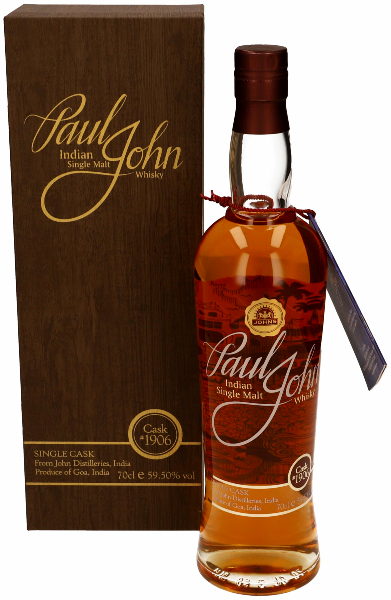 Color: Gold.
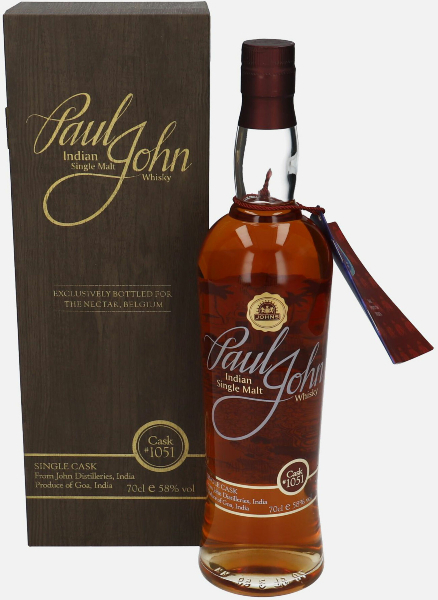 Color: Gold.
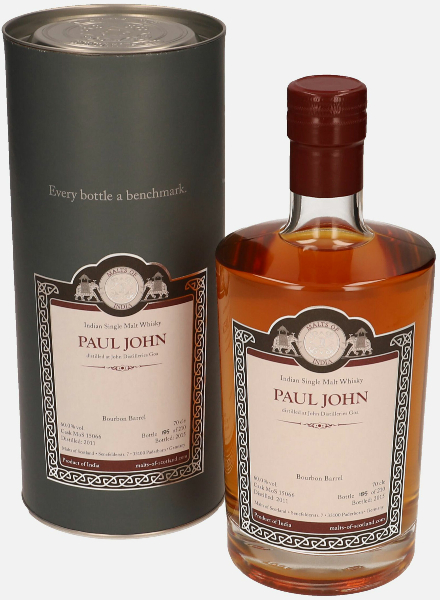 Color: Full gold.
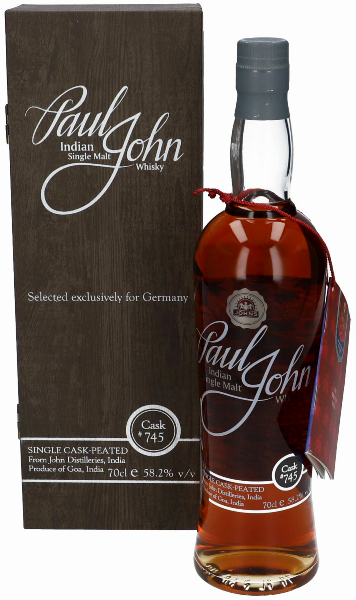 Color: Orange golden brown.
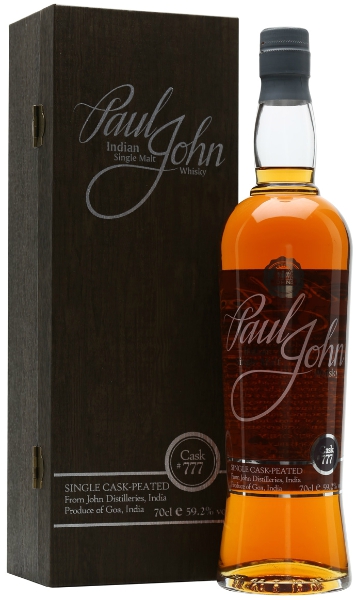 Color: Orange gold.
 Color: Orange-Brown Gold. Bourbon. Slightly misty. Indian mist.
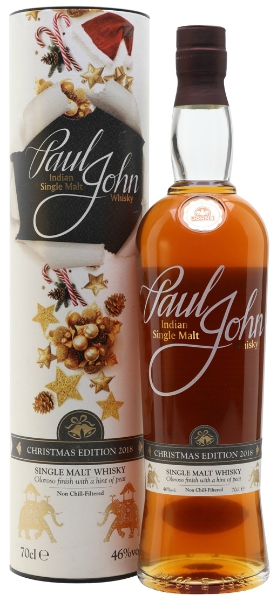 Color: Copper gold, cloudy.
 Master Quill