Bimber “France Edition” 2021 (58.9%, OB, Port Cask #30, for La Maison Du Whisky, 290 bottles)

This is the fifth review of Bimber on these pages, After cask #194 (Rye cask), cask #224 (Bourbon cask), cask #94 (virgin oak cask) and cask #41 (Pedro Ximénez cask), we now turn our attention to cask #30, which was a cask that previously held Port. This is another chance to see yet another side of Bimber. Until now the scores ranged between 86 and 88, which is quite a narrow range of scores, well see if this Port expression will broaden this narrow range somewhat, although I suspect it might not, and is so, not by a lot anyway, since the quality has been there all the time. A score lower than 86 is probably unlikely, especially since, for the time being, the Spirit seems to work well in any cask, and on the other hand, the Whisky might be just too young to propel the score way past 88 Points, but hey, you never know and if the Whisky turns out stellar, it will definitely score higher than 88, and if the Whisky is (badly) flawed it will definitely score lower than 86.

Color: Orange Brown, no red hue.

Nose: Warming, elegant. Spicy, one of the markers that many Bimbers have is cinnamon. It’s a signature aroma. Vanillin, raisins, licorice, leather, dust and old mahogany. Lots happening right from the beginning. The wood especially smells really good, very classy. Hints of Rhum Agricole and an old hardened out floral bar of soap. I said: hints, so this nose is not particularly soapy. No, cinnamon, licorice and wood are the main markers, other than that, this smells quite fresh and lively. It has some fruity acidity to it, as well as a breath of fresh air. Apple pie and cookie dough. This one ticks a lot of nice boxes. Toffee. Not very red-fruity though. In the Whisky business Port is Port, they really don’t seem to care a lot that there are a lot of different kinds of Port in existence. So I wonder what kind of Port was in the cask before the Bimber spirit, assuming it is a first fill. Again a very pleasant nose. The Bourbon, Rye, Virgin, Pedro Ximénez and now this Port are all very good on the nose, yet this one especially. This Port version smells really really good, it might not be the most complex of the ones I have smelled and tasted until now, but very good nevertheless. The aged spirit already smells nice, but the Port definitely adds another layer.

Taste: Definitely leather first this time. Hints of black coal and old style red fruits, initially like a Whisky from the seventies in a good Sherry cask. This old-style effect only shows itself now that the Whisky had some time to breathe in the bottle as well as in my glass. The freshly opened bottle didn’t have this. Some toffee and sweet fruity Wine notes at first. Cinnamon propels it forward. Again a very elegant taste. Wood, cinnamon and leather. Slightly burnt sugar and hits of tarry licorice. A tad of woody bitterness as well now. Sweetish with again the hints of red fruit we know from Old Bowmores and good old Redbreasts. Sweet and fruity not unlike strawberry jam. Next some vanilla powder seems to be mixed into the cinnamon. More typical fresh oak, with a neat little bitter edge, giving it some more backbone. Pencil shavings adds another wood-note. This is also the moment, the initial sweetness wears off. On the palate it even has more traits of Rhum Agricole than the nose had. I even pick up on some cola now. Tasty. This is a very balanced Bimber. Initially I thought Bimber works best with Bourbon, Rye and Virgin oak casks, and I might have mentioned that earlier, in hindsight, I guess it will work in almost everything, since the Pedro Ximénez turned out better than I thought and this Port also works very, very well for me. With 86 Points, the Pedro Ximénez version is the lowest scoring Bimber, and my least favorite of the lot. But come on, 86 points, that’s quite impressive for the worst Bimber on these pages. Taste-wise this Port version might not be the most complex of the lot, yet comes close though. It does have a better drinkability than the Pedro Ximénez version I just reviewed, still not one for casual sipping though, but if you do, you’ll be alright nevertheless. I totally get why La Maison Du Whisky (LMDW) picked this particular cask, excellent choice!

This one has a lot to offer. After all the Bimbers I’ve tasted, not all have been reviewed though, I’m sure the beauty lies in the details and therefore Bimber still needs to have my full attention. This one is not a casual sipper. If you give it the time it rightfully deserves, you’ll definitely will get rewarded big time. Personally, Bimber is maybe my favorite of all the new distilleries. High quality and very mature for the age of the liquid.

Points: 89

The window of scores did become a little bit wider now with 89 Points. Very good Bimber once again. If the Sweetness would have more staying power towards the finish and into the aftertaste, this would have scored 90 points.
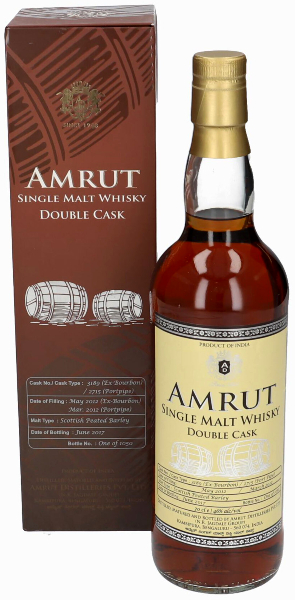
Amrut Double Cask 5yo 2012/2017 (46%, OB, Bourbon Cask #3189, Port Pipe #2716, Scottish Peated Barley, 1050 bottles)

Amrut Double Cask. In this case, Amrut just married two different casks together and reduced them to 46% ABV. In 2010 the first Double cask was released, marrying two Bourbon casks together, ehhhh, where is the fun in that? Later in 2016 and 2017 two more batches (both in two expressions) were released that seem to be a lot more exciting: batch 2, marrying Bourbon with PX (using unpeated Indian barley) and batch 3, marrying Bourbon with Port (using peated Scottish barley, most likely of the Aberdeen kind.), so I expect both later batches to differ quite a bit. I’m quite sad actually, because Double Cask seems to be a concept with many possible permutations, and I thought there would be a lot more batches than only these three. For completists here are the three batches/five expressions of Amrut Double Cask:

  • Batch 1 (2010-02-27): 2002-07-25 (Bourbon #2273) / 2003-02-27 (Bourbon #2874),
    The original Double Cask (7yo), 306 bottles
  • Batch 2 (2016, August): 2009, June (Bourbon #3451) / 2010, May (PX #3802),
    Unpeated Indian Barley (6yo), ??? bottles
  • Batch 2 (2016, August): 2009, June (Bourbon #3452) / 2010, May (PX #3803),
    Unpeated Indian Barley (6yo), 800 bottles
  • Batch 3 (2017, June): 2012, May (Bourbon #3189) / 2012, March (Port Pipe #2716),
    Scottish Peated Barley (5yo), 1050 bottles
  • Batch 3 (2017, June): 2012, May (Bourbon #3190) / 2012, March (Port Pipe #2717),
    Scottish Peated Barley (5yo), 900 bottles

Color: Dark orange brown.

Nose: Starts with peat and iodine. Very big and definitely bold. Animalesk, the acidic note of crushed beetle (don’t ask) and miscellaneous organics. Cola. Maybe too early to say, but I don’t think reduction to 46% ABV hurt this Whisky at all. Clean and tight. Port yes, but very much playing second fiddle behind the peat, adding a dimension and not really upfront or overpowering. Otherwise, as said, very fresh and tight. Definitely a winter type of affair. Because of the lack of Indian Six-row barley, this Amrut really misses its exoticness. If this was done with Indian barley, it would be highly unlikely this Whisky would come across as a winter-Whisky. So in that respect quite an unusual affair (for an Indian Whisky). I guess the other version, the 2016 one, that has been done with PX and unpeated Indian barley will be entirely different, probably back into the exotic realm. Next up some fatty clay and smoke. Scottish autumn at the bank of a river (with clay). Chocolate powder (Droste or Dutch Windmill) and warm plastic. Mocha and the tiniest hint of vanilla. Yeah, but all in all, this is yet another great smelling Amrut. As often with Whiskies that came into contact with Port casks, the nose is somewhat less complex. After the peat subsides a bit over time in my glass, the Port is able to show the fruitiness it is able to give to this Whisky. Good stuff. After a day or two, the empty glass smells of a lot of peat and a wee bit of polyester. I have smelled that before, but not in an Indian Whisky.

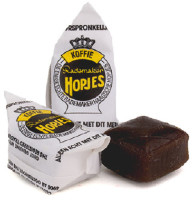
Taste: Starts thin. Where the nose was thick, bold and big, this thin texture comes a bit as a surprise, making me wonder how the unreduced Whisky would have been. Starts with berry like fruits, ripe red fruit and a lot of almonds. Nice. Its like eating unsalted roasted almonds with sweet dried cranberries. The almonds also have a lot of staying-power, and linger for a long time in my mouth. With the fruit comes also a nice sweetness. Just like the nose, not very complex. Cola here again. The cola, the fruits and the almonds put together, remind me of Cherry Coke. Needless to say this tastes highly drinkable. Haagsche Hopjes, a Dutch hard coffee candy. Well isn’t this turning into a treat? Very nice. With a taste like this, who needs complexity? In the end, this one is on the palate still a wee bit too thin. Could have done with slightly more points on the ABV-scale, 50% seems about right, but this is just a minor gripe. I haven’t tasted this at 50%, so I really don’t know if it would have been better. The finish and the aftertaste retain quite a lot of fruity sweetness. To be hones it could have done with slightly less of it. Highly drinkable every time, but not one keep pouring one after the other. If your glass is empty refill it with another Amrut. I’ll finish this like I started, really sad there aren’t any more Amrut Double-casks around. Please Amrut do some more, surprise us. I’ll even forgive you if you keep them at 46% ABV, for continuity purposes.

Well, well, well, Scottish Peated Barley. For me the strength of an Indian Whisky lies in the specialness, the “exoticness” of Indian six row barley, setting it apart from other Whiskies and carving more than only a niche for itself. A type of Whisky I really do like myself, if I may say so. There are already a lot of Amruts and Paul Johns on these pages, and also Indri is knocking at the Indian Whisky door with quite the drum-roll. Up ’till now I tried three expressions of Indri, and all are winners in my book. With this Amrut Double Cask however, don’t expect an Indian Whisky because the whole comes closer to a Scottish peated Whisky than any Indian Whisky. So in fact, what we have here is a Whisky with a bit of an identity crisis, and from now on, don’t underestimate the power and the character of Indian six-row barley.

Points: 86

Springbank 12yo 2003/2015 (58.3%, OB, Port Pipe, for UK Customers, 696 bottles, 15/177)

When the fifth release of Springbank Local Barley 10yo (2019) hit the shelf, I was offered a generous sample by Nico. In stead of money exchanging hands, it is always nicer and more adventurous to exchange it for a sample that hopefully can stand up to the Local Barley. Looking through my stock, I decided upon this single cask bottling for UK customers. I opened it, filled a sample bottle for Nico and when he got it, we had contact whilst he was trying it. Sort of an online tasting. I poured myself a wee dram as well. Well, what can I say, we both liked it. At first Nico liked it big time and appreciated it even more than I did, and I already did like it. Some time has passed since then, and with some air, and maybe even some more balance to it, it is time to have this more “official” look at this full time Port cask matured Whisky from the stills of Springbank Distillery.

Color: Orange gold. No red hue.

Nose: Funky Wine. Fresh and fruity smelling. Cherries (fresh and sour ones), sweet licorice, waxy and oily. Traces of peat, hints of dust and cardboard. Warm electricity cable and sometimes a whiff of hospital (ether). Funky organics and animalesk. Fruity and slightly sweet smelling. Nice warm wood notes with almonds and after a while a soapy note emerges, at times more resembling a lemon based dishwater soap. Sounds bad, I know, but it’s not, giving it a fresher, more zesty phase. If this soapy note comes back in the taste though, than it’ll be a problem! The winey bit is very present and almost overpowering, and it doesn’t remind me necessarily of Port. It was bottled just in time for it be be nice smelling and balanced in the nose as well. At times floral and perfumy. This is a nice smelling and highly complex Springbank, showing its provenance because of the oils and fats, not dissimilar to a (very) good batch of the 10yo. I see this as a Springbank “+”. It still is clearly a Springbank with just another layer added. Some light and subdued mixture of kitchen spices and sometimes some notes of hay and dry grass. Amazing balance and complexity in the nose. After a while a more fresh oak note emerges, and more grass, especially after sipping it. The nose becomes even better and more balanced after sipping.

Taste: Nice big entry. Again fatty, fruity and nutty, yet much less so than on the nose. Waxy and ever so slightly peaty, with a peppery and spicy attack (not yet from the wood it was aged in). Deep note of peat and red ripe fruit (and some plastic?). Big, big, big, yet somewhat less complex than the nose is. Black coal, maybe some tar and warm machine oil. More hints of wood, just like smelling fresh dried staves. Dried grass and definitely licorice. Honey-licorice with a slight bitterness and spiciness to it. Definitely more wood in here (eventually) than in the nose. Where the nose was almost overpowered by the fruity Port cask, here it is the other way ’round. The Springbank spirit overpowers the Port. Unmistakable Springbank here. Still enough fruit and sweetness now. You can’t call this sweet in any way, but there is some of it giving it even more balance, although I feel this is also less balanced than the nose was. More fruity wax, and the tiniest hint of clay. Fruity Port and some black coal in the finish. For this particular Malt, balance is very important. If the balance of the taste and the mouthfeel were just as good as the nose, than this would have scored (close to) 90 points.

A very good expression, yet not in the style of a daily drinker. A bit too demanding for that. Complex and big. In a way this doesn’t resemble a modern Malt. It has a rarely seen profile, that oozes the times of yesteryear. Also, to finish things off, if you want to catch some annoying fruit flies in your home, than this is your liquid of choice, even now that we’re well into autumn/fall.

Points: 88

Amrut 4yo 2009/2013 (59%, OB, Single Cask, for Europe, Charred American Virgin Oak & Port Pipe #2712, Peated Barley, 357 bottles)

What again? Yes here is another tandem Malt. After last weeks Amrut here is another one. This time not a direct comparison, there was no reason for that, but I did compare both behind the scenes, to assess which one is better and for the height of the scores. I do love Amrut. Most Amruts I have tasted are at least good, and some are better than that. Lovely stuff and definitely a different and exotic take on Single Malt Whisky. Maybe the people at Amrut don’t even know how to produce a bad Whisky, or maybe they are out there, but I haven’t encountered them yet? Who knows. Amrut is most welcome to the world of Single Malt Whisky, since they do bring something new into the fold.

In 2013 a few single cask bottlings emerged, especially bottled for Europe, but there should be versions for other markets as well, even bottled in a different year. Earlier, I already reviewed a virgin oak and first fill Bourbon barrel version and a charred American virgin oak and PX Sherry butt version. All good things come in threes, so the third version they released that year is this Charred American Virgin Oak and Port Pipe. This time the barley was peated. Amruts standard is so high, that even the “simple” and affordable peated and especially the unpeated cask strength versions turned out to be very tasty, and in hindsight the charred American virgin oak and PX Sherry butt version may have been somewhat less than perfect, still it was slightly better than the peated cask strength version. The peated cask strength version is my lowest scoring Amrut on these pages, and it still was a Whisky I liked. I will probably buy it again sometimes, just to see how it fares.

Color: Orange-brown gold. Bourbon.

Nose: Initially fruity and milky. I often have this Malt right after the Kadhambam, and it definitely has this milky quality to it. Even some expressions of Paul John tasted right before or right after this one makes that evident. Don’t worry though, in the nose the milky bit mostly wears off. I’m guessing this is from the Virgin oak. Fruity and very PX-like. Nosed blind I would have guessed PX instead of Port. Dusty, deep, dark and brooding. Some underlying heavy sweetness, like warm syrup and tarred wood. Treacle. No Indian spiciness, so for me the cask overpowered the original Malt. Mind you, this wasn’t initially matured in Bourbon casks, but rather in virgin oak casks. Red fruit lemonade. Strawberry and raspberry syrup, with still this tarry and treacle note underneath. Fire place smoke, yet hardly peaty. Not peaty at all actually. Pencil shavings and crushed dry leaves from trees. A more fresher citrussy note emerges next, as well as some faint mackerel in oil aroma. Since this was matured in a hot climate, the virgin oak works differently, compared to its Scottish counterparts. No harsh, creamy or sappy wood, we can pick up from Scottish Single Malts matured (in part) in virgin oak. Maybe here the milky bit is the way the virgin oak exerts itself? Also a floral bit now. Soft and delicate rose notes combined with sharper whiffs of smoke from the fire place. This is a winter Malt, bordering on Christmas. Certainly brings you in the mood. It’s a big Malt this. The aroma’s are big and bold and never stop giving…

Taste: Tarry wood. Spicy autumn leaves. Quite sweet and prickly (smoke). Treacle and cookies. Black coal. Carbon powder, gun powder. Big, very big. Almost a bit like Rhum Agricole mixed with a heavy Demerara Rum. Steampunk locomotive. Yes Port, but again, it is also not that far away from a heavy PX cask. Well balanced. Chocolate and Brownies. Candied cherries. Licorice and smoke, but also a green note. Oak, but not like the virgin oak we know. No vanilla notes to be honest. Red fruit syrup towards the finish, warming log fires as well. Some residual bitterness, from burnt down logs of wood. Since I got this heavy Rum note, its hard to picture it without it. This has a very long finish, very warming and a perfect aftertaste of everything mentioned before. All is here and all stays with you for a long time. Very good stuff.

Here a lot of the aroma’s are quite big and overpowering, so it is near impossible to make out the Spicy Indian Spirit. So for me maybe less typical than other expressions, but nevertheless a very tasty piece of work again. The beauty lies in the details, but here the details are masked. Luckily the result is still quite nice. There were more casks bottled like this. I bought cask #2714 as well. I’m especially curious now if that one will have this milky note as well as this one. Something we’ll find out in the future…or not…

Points: 89

Warre Late Bottled Vintage 2011

Sometimes you have to strike the iron while hot, so after an absence of Port on these pages for an amazing five years, here is number two within this week. After Auke’s Kopke I reviewed last, lets turn to a different style of Port, with my own Warre’s Late Bottled Vintage 2011. 2011? Is that a typo? No it isn’t, 2011 turned out to be a truly amazing, quintessential Vintage Port year! I ask myself, why didn’t they turn this into a LBV then? B-choice?

So what is a Late Bottled Vintage Port, I hear you ask?

Well, traditionally a Late Bottled Vintage (or LBV for short), is a Ruby Port from a single harvest/year, bottled after ageing for four to six years in wood, tonnels to be precise, which are very large casks. It should be a Vintage Port in style which is to retain some of the character of fruit and the tannins from the wood influence and the aroma’s to be had from the depot of the unfiltered Port (some more tannins for ya). Back in the day, there were many unfiltered LBV’s around, more akin to Vintage Ports. Apart from filtering, I’d like to point out that the time frame of four to six years is quite large. A 4yo Port does taste different from a 6yo Port (when aged in wood).

Today an LBV can taste young and fruity by, (in part), maturation in a tank, to retain that youthful, zesty, vibrant fruitiness, or a LBV can taste mature with noticeable wood ageing. Most of today’s LBV’s are filtered (and fined) and don’t need further ageing in the bottle, which is convenient. Luckily, some however, do have (some) depot and can be aged for a while longer. My Warre is such and example, going against the grain of the modern consumer who wants young and fruity LBV’s which are ready to drink. Although this Warre is not a true Traditional completely unfiltered, LBV, at least it doesn’t say so on the label, it does have some depot. Also, drinking this I do not feel the need to decant it. Sure you sometimes don’t know what you are getting when buying any bottle of LBV from the shelf, if only the labels were more clear, but I do welcome the choice.

To finish this introduction off, a household remark: The picture below is of the 2013 version, My bottle is already open, therefore not very photo genetic, and I couldn’t find a decent picture of the 2011 on ye olde interweb, so I used a decent picture of the next L.B.V. bottled by Warre, the 2013. Don’t be confused though, it looks exactly the same (apart from the year stated obviously).

Color: Extremely dark ruby red. Slightly cloudy and there is some depot in the bottle. Don’t spill this on your white shirt (I did that once at a Port Tasting, awkward).

Nose: Red Wine and fruits. Fresh and slightly sweet smelling, sometimes sugared fruits. Warming and fresh, almost like the warmth of the sun was captured in here. I get this every time I try it. Thick and yet not the promise of a lot of sweetness. Slightly dusty and closed. Warm berry juice over pudding. A tiny hint of vanilla, so American oak? Accessible and promising.

Taste: Sweet on entry with good acidity. Fruitier than the nose, otherwise it tastes like it smells.  Excellent acidity actually, matching the medium sweetness. Good balance. Again accessible just like it smells. 20% ABV, and it shows an alcoholic note, that seems to be disconnected from the Port itself. Tannic (Red Wine) mouthfeel, not much, but enough for the specific feel you get between your tongue and roof of mouth. Sweetish and fruity. Fruit juice for semolina pudding. Medium finish with (luckily) some tannins and woody bitter notes, all well in check, just adding to the complexity and giving it a more “Vintage” style. The Port is good and moderately complex. An easy daily drinker and definitely not a true Vintage Port which is something else entirely, but it is family. After multiple sips, the tannins dry out your lips and stay behind on your tongue. I like this style of LBV, it puts the V in the LBV, so to speak.

Just like the Colheita before, this Late Bottled Vintage is a style made for comfort, for all us full-time, over-time, busy office people. Tasty, without a lot of fuss. Just open it and drink. No decanting, no ages of ageing after buying, not a lot depot that gets between your teeth. Easy stuff. This is a very accessible and nice Port with some Vintage Port-style without the Vintage Port price tag, even less hard earned cash has to change hands than when buying a good Colheita. Nevertheless, a Colheita is something different, so you need both in your life. Frankie says: go for it!

Points: 83

After doing this review I feel that the Kopke Colheita 2003 I just reviewed, seems to be more modern in style (as mentioned above for modern LBV’s. It youthful and very fruity, which is a bit odd considering Colheita’s are about long ageing… Food for thought.

Thanks go out to Auke for bringing up Port again! Now de-cork the old White please 😉

Kopke Colheita 2003 (2018)

In several of my previous reviews, even more than once, I stated that I love my Ports, and I hereby confirm that I still do, even though my last review was done in the spring of 2014! Terrible! There is no excuse! How did that happen? five years! Is time flying this fast? I have to make amends and restart the fire of Port! Auke, also mentioned before, was so kind as to present me with a sample of one of his recent acquisitions, to help me restart the fire. Kopke Colheita 2003. Auke loves his Ports as well, and even managed to visit Portugal this summer, something I have yet to do.

personally, I love Colheita’s. They are aged, refined, easy to use, (so no decanting of unfiltered vintages) and quite affordable. Sure, vintages are the biggest thing in Port-world, but Colheita’s most definitely earned their place under the sun as well. Even better, Colheita’s also offer us a high quality alternative to Vintage Port and L.B.V.’s, with a different profile, a Tawny profile. Aged, not ruby red any more and more delicate. So a true win-win situation.

Color: Vibrant old red, tiniest hint of tan.

Nose: Fresh, sweet and fruity. Perfumy even. Deep, dusty and dark, with hints of asphalt, tar and licorice. Dry forest floor (in the summer). This adds to the third dimension of the Port and is most certainly not upfront. The combination of freshness and fruits with the darker side is quite interesting. The fruit stays, cherries and raisins with a nice acidic vibrancy. Waves of chewy fruity sweetness. Hardly any wood notes, not even the vanilla of American oak, nor the tannins of European oak. This Colheita is all about being quiet. It’s quiet and calm, softly spoken. The quiet intelligent guy in the corner who would rather ready a book than party hard.

Taste: Quite thin on entry. Not very syrupy and the sweetness seems to be very well kept in check. Plenty of youthful vibrancy and acidity. Here it shows its winy character. The body is quite simple, very nice, but simple. This is a Colheita that is not about sweetness. Sure it has some sweetness to it, (dry honey, does that make sense?), but that is not the crux of the story this Port wants to tell. Nope, this is about fruit, little sweet forest strawberries, cherries (especially in the nose). Not overly ripe red fruits, but almost there. all in all, a rather short finish for such and “old” Port, or does the old age show its fragility here? By the way, the deeper notes I got from the nose are not here in the body of the taste, not even in the finish, although the tiniest hint of wood (bitter) does show itself along to some almonds. Nope, well into the fruity and acidic aftertaste some more of the darker notes briefly return to take a final bow to the lover of Port and kiss his or her lips for the final time.

Medium sweetness which is balanced out nicely by firm fruity acidity. Very friendly and likeable on entry, but lacking a bit of complexity and oomph in the body and finish, but a real winner on the nose! Master Quill’s top tip: take this in big gulps to enhance the aroma’s.

Points: 84

Tomatin 14yo “Port Casks” (46%, OB, Tawny Port Pipes Finish, 2016)

I come from a time when Distilleries started experimenting with other casks than the usual Bourbon and Sherry casks. When Whiskies finished in Wine casks, Port casks and Rum casks popped up in the market, I actually preferred the Rum cask versions the most. I didn’t particularly like the Wine and Port finishes. It’s not because I couldn’t keep up with the pace of change, because today there are lots of these finishes around that are pretty good, but when I taste back the first examples they still are not-so-good. Port was an easy choice for distillers and blenders I guess, since it is related to Sherry and both are fortified Wines. However Sherry casks and Port casks yield very different Whiskies.

I guess the early versions were finished in casks that previously held Ruby Port. Young and bold stuff, which made for a very raw and harsh Whisky, especially when finished for too long. The U.K. loves Vintage Port which are excellent Ruby Ports, 2 years old, so the obvious starting point for experimentation with finishing. Today we see more and more Port finishes done in Port Pipes that previously held Tawny Port. Tawny Ports are older Ports, that turn (reddish) brown from oxidation. For this 14yo expression Tomatin first matured the Whisky in Bourbon barrels and for the finish they used Port Pipes that previously held Tawny port for 50 years! The 14yo Tomatin was first introduced in 2014, a replacement for the 15yo, which came from Bourbon casks only. Tomatin also discontinued the 25yo which also was from Bourbon casks only. In 2016 we saw a complete revamp of the design, so this review is for the “new”14yo, number four in the core range preceded by the “Legacy”, the 12yo and a Cask Strength version without an age statement (We’ll get to that one later).

Tomatin 14yo Port Casks 2016Color: Gold with a pinkish hue.

Nose: Musty and definitely recognizable as a Port finish. It is quite obvious to say the least. Also the color gave it away. You don’t get this pinkish hue, from caramel coloring, and wine finishes smell differently, however it also reminds me a bit of a Jenever fully matured in a Bordeaux cask. Apart from the typical fruity Portiness there is an unusual hay-like aroma, like Grappa has, it is different from your usual Whisky. In the back there is also a more creamy, vanilla note, softening the whole up. Nice soft wood as well. Although the finish is quite strong, it isn’t overpowering, and the Whisky remains balanced. Nevertheless, the finish ís strong enough not to let Tomatin’s signature tropical fruitiness through.

Taste: Sweet and fruity. Chewy. Here the finish isn’t as strong at first like in the nose. Here it starts with sweet and creamy Bourbon cask notes, but the Port quickly exerts itself. I don’t know yet if the burnt note I get, comes from toasted oak, or from the Port pipes (or both). A fruity acidity lies on top, so less balance here than on the nose. Hints of paper (not cardboard, which is heavier and less likeable). The whole is quite creamy and friendly. Well made and quite bold to let the Port finish speak its mind. Creamy, fruity, slightly burnt and some nice wood. That sums it up. Medium finish.

This is daily drinker material. Something I would reach for quite often. Sure you can analyze it to death, but why should you. I already did that for you. Not very expensive and fun to drink and definitely different from most other expressions in the shops today.

Points: 84 (same score as the previous version)

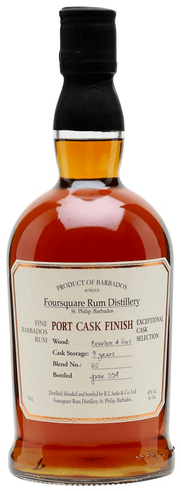
Foursquare 9yo Port Cask Finish (40%, R.L. Seale, Foursquare, Blend No. 162, Exceptional Cask Selection, 2014, Barbados

I had planned to open a bottle of Plantation St. Lucia Rum after I finished both the Plantation Jamaica and Guyana, but after the Doorly’s 12yo I reviewed last, I just had to open a bottle of the Port Cask Finish as well. I just couldn’t help myself, I was so curious, especially after all the rave reviews. The St. Lucia just will have to wait a little longer. Port cask finish? The Rum is 9 years old, of which the “finish” took a whopping 6 years. The start was carried out in a Bourbon cask.

But first we have to get back to 1926. Back then, Reginald Leon Seale started the R.L. Seale & Co. Ltd. A company that is of interest to us since it was trading Rums. Sir David and now his son Richard are the Seale’s that also started distilling their own Rums in 1996 after they bought a defunct sugar factory a year earlier. Simply because it is better to trade Rum you made yourself, than constantly sourcing other Rum’s.

Although Foursquare is a Bajan Rum distillery, molasses are mainly imported from Guyana and the yeast used for fermentation is South-African. Foursquare Rums are blended from a pot still and a two (or three?) column stills. The copper pot still even has a copper column fitted on top, which looks funny for one that is used to Pot Stills with lyne arms on them.

ColoFoursquare Port Cask Finishr: Orange gold. A tiny fraction darker than the Doorly’s 12yo. No red hue.
Nose: Toffee and caramel. Fresh wood, sappy and spicy. A breeze across a dry grass field on a hot and silent summer’s day. Distant fruit (more red this time) and a definite winey note, with slightly burned wine cask notes). On top of the medium sweetness lies a nice acidic red fruit aroma which is different from the 10% Madeira (a sweet fortified white wine) you can find in Doorly’s 12yo. The fruit is redder. The is also a nice nuttiness and dustiness surrounding this Rum, which mixes well with the medium sweetness and (red) fruity acidity. This Rum isn’t about finding lots of aroma’s and complexity. No, this one shines because of its balance. Well constructed, but is a bit middle of the road. It does its best to be liked by everyone. Although the label is pretty anorak, it really is a Rum for everybody, hence the reduction to 40% ABV. Luckily this Rum can handle the reduction, at least on the nose.

Taste: Ahhh here is the greatness. Spicy Indian feel, Cinnamon and exotic wood. This reminds me a bit of an Amrut I reviewed last. It’s still Rum by the way. Even though six of the nine years this was matured, was spent in Port casks, it hasn’t become Port of even Port dominated, but obviously the Port impaired some nice flavours to the Rum. I recognize the nuttiness and the hint of glue from the 12yo (the 12yo has more glue). Wow, amazing balance between the sweet and the dry. It is actually more dry than sweet, influence of the wood of both casks, again a bit virgin oaky, but the wood doesn’t dominate here as it does in the 12yo. Slightly longer finish than the 12yo, but still not very long. The Port starts to really assert itself way into the aftertaste, with the wood of the cask it came in. Nice fruity acidity. Very accessible and extremely drinkable.

This one is younger than the Doorly’s 12yo and therefore less heavy on the wood aroma’s. It seems perfect. Enough to give it character and a backbone, but never dominating the spirit like in the Doorly’s 12yo. Having this, it’s nice to have the woody 12yo open next to it. Personally I don’t have a problem with the wood in the 12yo. It fits the profile Richard went for blending the 12yo.

Highly drinkable, and well made. Not as complex as I expected, but good nevertheless. Again a bottle that will be gone soon I fear. 40%, yeah all right, it will do, but I would prefer a higher ABV. I understand the next Exceptional Cask Selection, The Zinfandel finish is 43% ABV and there will be a Vintage 2004 that will be much higher. I can’t wait. Good stuff especially considering the price. Daily sippers (at 40% ABV), both the Port finish as well as the Doorly’s 12yo, which is a bit more chewy, woody and somewhat sweeter and imho a bit bolder. I did several H2H’s with both and sometimes it’s hard to pick a favorite. Both are equally good. On some days I prefer the 12yo, and on others I like the Port better.

Points: 83

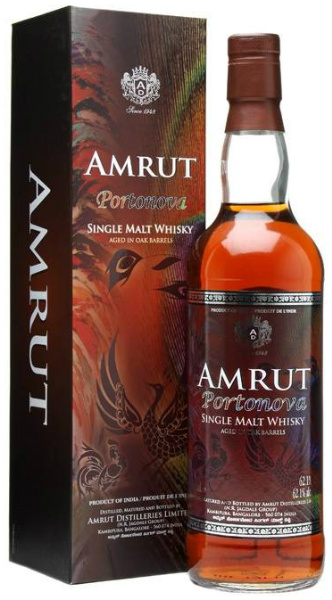
Amrut Portonova (62.1%, OB, Batch 5, 2014)

Ahhh, another Amrut. Nice. I had the pleasure to try some Amruts in the past and was very nicely surprised by the Intermediate Sherry (which I then bought) a Single PX Sherry Cask #2699 (which I then bought) and the Kadhambam (which I have yet to buy). I also tried the “plain” cask strength version, and although pretty nice, I preferred the former ones. Now this Portonova crosses my path. This time a Port finished Amrut, and yes, I have high hopes for this one too…

Amrut Portonova Batch 5Color: Light orange gold. No typical Port pinkishness.

Nose: Although this has a huge ABV, this doesn’t leap out of the glass. Give it some time and some dust and cinnamon emerges. Wow. Cookie spices, dried plums and raisins. Exotic and Christmas in a bottle. Fresh air after rain. Creamy and soft oak. Hot metal. Barley, but different from barley you get from (young) Scottish Whisky. Sweet milk chocolate and red fruit juice. Apart from this all, it has a sweet and deep feel. Exotic spices, curry, cardamom, but where is the Port? I already missed the pink hue, but I also miss its smell. Complex stuff this because there is even a lot more happening in the nose than what I noted here.

Taste: Condensed red fruits. Thick, but initially simpler than the complex nose promised. Obviously quite hot with this high ABV. The wood tastes more like paper and cardboard, than any kind of wood. Not a lot of the wealth of spices shine through on the palate, and that’s a shame. Its more a fruity Whisky with maybe some faint hints of Port. Vanilla comes next. With time if becomes more outspoken and creamy. Nice evolution though. Hints of banana in the aftertaste. Lovely.

First I have to air a disappointment. This would be a stellar malt if the spices from the nose were noticeable so more in the taste as well, without being overpowering of course. Missing the spices on the palate makes the taste of this Whisky a bit simpler than it could have been. Now that we have that out-of-the-way. The whole is still an utterly good Whisky. Very much recommended. An excellent winter warmer I would say. I will have to get me one of these soon.

Points: 88

Spey Tenné (46%, OB, Selected Edition, Tawny Port Cask Finish, 18.000 bottles)

The Speyside distillery was officially founded in 1976 by George Christie. Distillation was in George’s blood since he used to be a… submarine captain, who probably missed the sound of trickling liquids. Building of the distillery commenced already in 1962 and was finished in 1987. Lots of the building was done by George himself, so it took him a while. We have to wait a further three years for the first distillation. (December 1990), The spirit has to age for at least three years to be called a Whisky, so in 1993 the first Whisky was released under the name “Drumguish”, from the name of the place the distillery was built. In 1999 the first Single Malt was released under the “Speyside” name, an 8yo. In 2012 the distillery which already changed hands a few times was sold to one of its clients. Harvey’s of Edinburgh. Harvey’s again changed the name of their Single Malt, calling it simply “Spey”. In 2014 the new range was released, starting with this Tenné, but also a 12yo and a 18yo were released.

Spey TennéColor: Salmon, like a modern rosé wine from the south of France.

Nose: Extremely malty. It’s like holding the grain in your hand. This smell makes up most of the beginning of the nose. Given some time the Port starts to “work”. Initially a more glue like sensation which turns into an overly fruity and acidic distilled Port that is used to fortify Port. With even some more breathing, a hint of sweetness and wine gums come to the fore, combined with some rural or farmy notes. After that it tones down and gets more powdery with even a tiny hint of gunpowder. Stale beer in the finish but also some vanilla. Wine finishes can be pretty funky.

Taste: Pretty sweet, bitter oak and again malty. It comes in layers and in that particular order. First a very friendly sweet candy like aroma, when that moves over, the roof of your mouth gets a bitter sap attack which evolves into a slightly toasted and oaky taste, mixed with sandalwood, (the Port probably did that), and licorice. Intertwined is the taste of malts. On top, a slightly acidic and fruity note, but that’s it actually, not a lot more is happening. The ABV of 46% gives it some strength and some hotness for the finish.

This expression is said to be a minimum of 8 years old. It is an extremely malty and pretty simple Whisky. For me, the Port finish didn’t bring a lot of complexity to the mix. Just giving it a shift in profile. Malty and simple, not bad, but also nothing to get overly exited about. Anonymous at best, except for the bottle itself. Looks very luxurious with its beautiful tartan ribbon.

Having said all that, it’s a lovely distillery and I hope they will get better with every release.

Points: 73