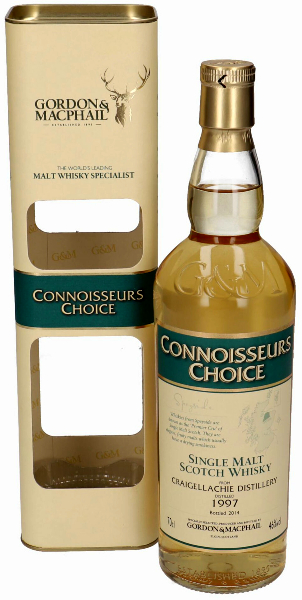
Craigellachie 1997/2014 (46%, Gordon & MacPhail, Connoisseurs Choice, Refill American Hoghead & Refill Bourbon Barrels, AD/JIIG, 01/07/2014)

Craigellachie is no stranger to Master Quill. Funky and meaty, with often some hints of sulphur. Seize the day people, time flies like never before! Last time I reviewed a Craigellachie was almost 10 years ago, yes you heard that right, almost TEN years ago. Just sayin’. Craigellachie is now bottled officially by John Dewar & Sons Ltd. which are part of the Bacardi – Martini drinks giant since 1998. With plenty of stock they decided to put out lots of Whiskies from their newly acquired Distilleries, all with age statements. That’s not very 21st century now isn’t it. Fun fact: this only happened in 2014, so it took them a while think up of this plan of bottling their own Whiskies.

Apart from the officially released Craigellachies, also some casks manage to find their way into the welcoming arms of independent bottlers. Nevertheless, most of the output of this distillery ends up in several blends, but primarily end up in Dewar’s White Label. The bottling for this review isn’t a blend, but a (reduced) independent Single Malt offering from Gordon & MacPhail. After the Glenallachie I reviewed last week, I thought why not, why not do another of those 46% ABV bottlings from the previous iteration of the Connoisseurs Choice range before it got revamped a few years ago.
Color: Light White Wine.

Nose: Waxy, woody and warming. Hints of paper and somewhat sweet smelling. The first thing to do is to keep an eye (or rather a nose) out for sulphur. Craigellachie is so associated with sulphur, one must be careful not to fool oneself and smell it when it’s not there. Still, I’m happy to report, at the moment there are only mere hints right at the start during the first nosing. Soft mocha and soft milk chocolate with an ever so slightly acidic fruity note, something in the vicinity of unripe pear. Next the nose turns sharper, fine by me, but yes this has a tad of sulphur, which is also somewhat peppery. A sharp, and specific deep smell. Personally I never had problems with hints of sulphur, only when it becomes more dominant I start to dislike it. Most often that kind of sulphur can be found in Whiskies matured in ex-Sherry casks. This fine example hasn’t seen Sherry and this sulphury bit that must be present in the Spirit is fine by me. In this form it suits the sprit, it’s a part of the distillery character. I believe Bacardi, who are the current owners, even mentioned sulphur when they introduced their new official offerings, like the 13yo in 2014. The nose if fine, really soft overall.

Taste: Hints of paper, some indistinct ripe fruit and some cannabis, similar to the cannabis notes I get in some older Bunnahabhains. All of this seem to fit together well, however at times it also comes across as a bit of an unbalance, here a really minor gripe, hardly worth the mention. Next sip, more of the same really, paper and cannabis, sugar water. Not complex, nor layered, yet tasty. I actually expected more after some 16 or 17 odd years this has been in a cask. Where the Glenallachie wasn’t simple, this one sort of is. More fruity sweetness comes through. This is actually a pleasant and soft Malt, where Craigellachies can be more beefy and meaty, bigger and sharper. Again, I guess that the reduction might have had something to do with this. The Cannabis note is omni-present. It defines this dram. I like it for it, I was tempted to up the score with one point for the cannabis note, but I won’t. As a daily drinker however, it might be just a tad too sweet. Medium finish, with a pleasant and friendly aftertaste.

This one is really different from the G&M Glenallachie I reviewed before. This is actually a nice Whisky from an independent bottler when you’re a novice. I actually has no off notes unless you are really allergic to sulphur and can’t even handle minute amounts. For the rest of us, the hint of sulphur is OK. Where both the Glenallachie and the Craigellachie are good, I would buy the Glenallachie if spotted in the wild, and this Craigellachie I would pass up on. The Glenallachie is also hands down better and the Craigellachie is nice, but also somewhat less challenging, therefore a Whisky more for a novice. Across the years, some cask strength Craigellachies from 1997 were bottled by G&M, maybe I’ll come across one of those to compare it to this one, one day, although I won’t be especially looking out for one.

Points: 84.
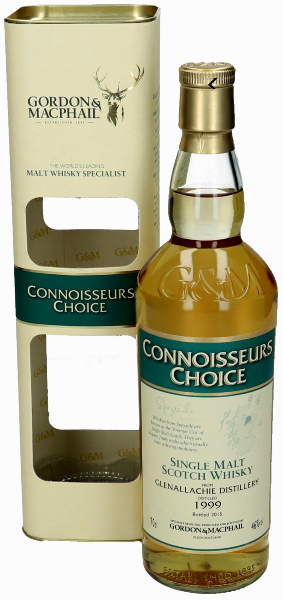
Glenallachie 1999/2015 (46%, Gordon & MacPhail, Connoisseurs Choice, Refill Bourbon Barrels, AE/JJCG, 23/01/2015)

So in earlier reviews I found out that Glenallachie probably isn’t one of my lesser known distilleries that really click with me. Some bottlings I tried were good, some a bit mediocre and some quite forgettable. Up ’till now nothing really stood out. I have a feeling though the newer Whiskies might prove to be better than ever, so Glenallachie might be on the way up again (for me). Nevertheless, Glenallachie is making quite a name for itself the last few years. Lots of official bottlings but also a lot of independent bottlings are coming to the marketplace, with quite a few people who like the output very much, so who am I to argue.

I have already reviewed some independently bottled Glenallachies: Dewar Rattray, Kintra, Beinn a’Cheo, Mo Òr and Cadenhead. Missing from this list is “the biggest and the baddest” of them all: Gordon & MacPhail. Here we have a 1999 distillate reduced to 46% ABV. Alas the only Cask Strength 1999 Gordon & MacPhail ever bottled was sent to Binny’s in the U.S. of A. Not really my neck of the woods. It was bottled way back in 2011. Hard to come across one of those now, since it doesn’t have a lot of collector value, so I can imagine the good people of the U.S. of A. drank most of them, an d rightly so! So without further ado, lets just dig into this reduced one from 2015, shall we?

Color: White Wine

Nose: Wow, very malty and sweet. Cookies, dusty oats and breakfast cereals. Dry grass and hay like. A brekkie Whisky. Sweet smelling cookie dough, with a green note, a fruity note and a cold dishwater note and thus quite appetizing and pleasant. Marzipan and ever so slightly nutty. After a while a tiny hint of licorice. This nuttiness is the closest it gets to wood, because the wood itself is hardly noticeable. It has quite an interesting and appealing perfume to it as well, which emerges somewhat later from my glass. This is real and honest stuff and maybe a bit back to basics, although it isn’t really basic nor simple for that matter. Just a very nice smelling Whisky. Excellent example what a spirit in some “basic and simple” Bourbon barrels can achieve, also proving that the Glenallachie spirit is a good one. Based on the nose alone this could be a very good Whisky, and based on the nose alone I would definitely buy it. Let’s move on.

Taste: Hmmm, quite different here on the palate. Starts fruity, with a surprising and definite bitter note. How strong this bitterness is perceived by the taster depends upon the taster. The first time around, I found this to be more better than the second time around. Runny, thin toffee, wood and thus its bitterness, yet also spicy with some black pepper. Dark chocolate, wood and an alcoholic note you get with those bonbons that contain alcohol. Based on the nose I didn’t expect this bitter note. I expected fruity caramel to be honest. Let’s take another sip. After a while I guess my palate just got used to the bitterness and it isn’t so dominant anymore. It’s hard to put my finger on it, but just like the nose, this palate has something really appealing and interesting which intrigues me. In this case the 46% ABV seems very soft. I may be used to, and prefer cask strength Whiskies to be honest, but this example seems very do-able in the alcohol department. Its neither harsh nor hot.

This will do very well as a daily drinker, or as an aperitif. However, do not make the mistake believing this is merely a simple, entry level Whisky. It is quirky, it is able to surprise you and I definitely like this one (especially after leaving it in my glass for a while to settle some more). Still, this has some bitter notes here and there, so buyer beware. Definitely noticeable is the reduction to 46%, sure quite a high ABV, but it is definitely different from a cask strength offering.

To me this smells and tastes like a classic ex-Bourbon casked Whisky, not modern at all. Would never have thought this was from 1999, which feels like yesterday to me. Maybe today it is a classic Whisky though. Personally I’m shifting my interest in Glenallachie. Where Mr. Walker puts out a lot of different casks, I will be, for the time being, sticking to ex-Bourbon Glenallachie. Again personally: I like this stuff way more than the heavily Sherried 15yo. Yeah, this is a nice surprise, have to find me one now somewhere.

Points: 86

Pulteney 15yo 2004/2020 (63.3% Gordon & MacPhail, Connoisseurs Choice, Cask Strength, Refill Sherry Butt No. 629, 20/092, 507 bottles)

Pulteney is the most northerly Distillery on the mainland of Scotland, just 30km shy of John O’ Groats. The distillery is situated in Wick and lies in a part of Wick that used to be called Pultney Town named after its founder Sir William Pultney. The distillery itself was built by James Henderson in 1826 and was initially called Pultney Town. I don’t think James built the entire distillery with his own two hands though. The distillery was owned by the family of James for nearly a decade, but the family had to sell off the distillery in 1920 due to financial hardship caused by WW I. The distillery was sold to James Watson & Co, owners of Ord and Parkmore. In 1923 James Watson & Co. dissolved into John Dewar & Sons (D.C.L.), which closed the distillery in 1925. The distillery in its closed state changed hands several times, and several owners were busy rebuilding the distillery. In 1951 production resumed and in 1959 new stills were installed. In 1995 Pulteney, together with Balblair (part of the same portfolio by then) were sold to Inver House Distillers, the current owners. The last review of an official (Old) Pulteney on these pages, was distilled in 1982, and must have been one of the early releases by said owner. This time however, we are going to have a look at a 2004 distillate bottled by good old Gordon & MacPhail in their new Connoisseurs Choice Cask Strength range.

Color: Light orange gold.

Nose: Very malty and lightly Sherried. Slightly sweet smelling, soapy and dull (and I don’t mean boring). Right from the start a classic smell. I would have never guessed this was distilled in the 21st century. Slightly off-balanced acidic fruity smell. (This is the Sherry influence). Old paper, hints of pencil shavings and spices (part of the “classic” smell). It doesn’t have perfect balance, but still I do like the nose of this dram a lot. Who cares about perfection? Old, dusty, at times waxy, yet fresh and vibrant. It has been a while, analysing something like this. I have to say, based on the nose alone, this was a very welcome buy. Just lay back and sip it, clear your mind and let everything go away for a while. No children, no work, just you, Norah Jones, and your dram with its classic feeling. Wonderful wood spices. Fruity and some distant meaty notes as well. Aromas of an old court yard, of old buildings. An usually busy place, but now quiet on a Sunday. More nice wood spices, yet now helped along with some old honey (which has some nice staying power), soft mocha and whipped cream. Soft licorice added to the spices already present. The balance regains itself after some breathing, and it doesn’t need a lot of time to get there. Occasionally more whiffs of old paper, toasted cask and breaths of fresh air. Yes very special, what this is able to bring up from my memory of old places I visited and classic drams I had before. Keep it moving around in your glass. Keep Matilda waltzing so to speak. After some more extensive breathing the (sweet) licorice note gains in strength. Yes, this has a wonderful nose. A fresh pour is definitely more closed, so there is quite some nice evolution going on in my glass.

Taste: Prickly and again initially somewhat unbalanced (or is it?), yet so tasty. Quite sweet now, perfectly balanced by the woody notes and cigarette ashes, so it doesn’t feel sweet overall. After the first sip, the nose of this Whisky is really excellent more. Right out of the gate, a lot of different things are happening. Different tastes shoot off in many different directions. Pepper, Peppermint, bamboo, cold dishwater, licorice and fruit to name but a few I just caught in the moment. I’m sure I’ll catch some more going forward. Second sip starts again somewhat sweet, yet less so than the first sip. It shows almonds and more creamy notes, as well as more dry wood. A medium Talisker-like white pepper attack, paired with the licorice and cigarette ashes I mentioned earlier, and some sweetness. All of this also paired with the almonds, wood and its medium bitterness, which is hidden well by the medium sweetness. I guess all these paired notes constitute a very good balance. The fruits here seem somewhat different, more acidic and lemony than the nose showed. The balance is good and the palette of tastes and aroma’s is just great. Give it enough time to breathe. I’m stopping writing notes now, but rest assured, this still has even more to give, it just keeps evolving like mad. Wonderful tasty and fruity finish, with some nice oak, just not a lot of it. Aftertaste is perfectly balanced and friendly. Amazing drinkablity at this ABV. This never needed any water.

Even though this might have some minor flaws across the board, it is also a very good and tasty Malt. I don’t even know why I’m pointing out these minor flaws all the time, because by now we also know this is an excellent malt. Both the nose and the taste of this Pulteney are complex, the layering (the evolution over time in my glass) is impressive. We’re definitely in the in the “you-should-have-bought-a-second-bottle” territory with this one. But as is always the case on these pages, this is only my personal opinion, and as we all know, tastes can differ a lot. Keep in mind that ones taste can shift over time and are highly dependent of the moment as well. Tasting is a subjective science. So for me this is really great stuff, and it might, it just might not be entirely true for you. It is for me!

Points: 90

Highland Park 14yo 2003 (52.9%, The Creative Whisky Company, The Exclusive Malts, Refill Hogshead #751, 235 bottles)

This Highland Park was a bit hard to review. The rule of thumb is usually, when reviewing a Whisky I have a full bottle off: open a bottle, let it breathe a bit, try it several times and when it’s about half full, (or half empty), review it, A review not only based on the tasting experience when analysing and writing, but also from memory of the first half of the bottle. Well, this bottle has now only 20% left in it and from memory alone, I would have a hard time writing something up, not because I killed off most of my brain cells, no, more because this is a very particular Whisky, one that seems to have an attitude, grumpy if you will. One that needs all your attention, and if not, sod it; “I’m not opening up to you drinker!” “I will keep most of my secrets to myself!” I have no clue how this Whisky really is, after an evening on my couch watching something or reading, thus giving less attention to the Whisky it requires. This was not an instant gratification Malt and I might have told you it is a disappointing Malt. Only when I took it with me to a friends house for a dedicated evening of a lot of great Whiskies and music, thus giving it the attention the Whisky itself feels it deserves, it finally did shine. What a moody piece of work! I could pick a fight with this Highland Park, telling it to behave or grow up or just… (pardon my French).

Color: Light gold (not pale).

Nose: Creamy toffee. Bourbon hogshead alright. Fatty and big. Quite aromatic. Fruity with some nice smoke to it, as well as slightly nutty (oak). Soft bonfire and waxy oak. Right out of the gate it smells quite complex, with a lot of creamy, toffee and caramel notes, but also a lot of ripe yellow fruit notes and on top if this, the smoky bit. A very clean smelling Highland Park, big and aromatic, so clean and in a way also modern. Sweet smelling. Very ripe and sweet white peach. Dried apricots. Pineapple syrup. After a while the soft oak comes forward, smelling almost as if the wood was painted white on the outside, because of the tiny chemical aroma this Whisky has. The small chemical bit smells thus of white paint but also whiffs of moped (warm oil, exhaust fumes) and polyester (probably from inside the saddle of the moped), otherwise clean oak (it still matured in a hogshead) and a wee bit of horseradish and unlit tobacco. All of this is so minutely present, that it only adds to the complexity without putting you off. See how strangely complex this one is? This must be why it does need your full attention. Do you also see what is happening here, I give the damn thing the attention it wants and it gives me all these complex and wonderful big aroma’s in return, however if I carelessly sip it away…nothing much! What a piece of work this is. This one seems to be alive and having a personality. There is just too much (happening) in the nose, and it is just too complex for casual sipping, and if you don’t understand its components, it will tell you off. I guess this is one of those Malts not for novices (yet again). I’ll get back to that later.

Taste: (Heathery) sweet, waxy, nutty and woody and pretty smoky on entry, fatty smoke with again some minor hints of plastics and/or polyester. Creamy fruit, mixed with some woody bitterness that not always pops up. In fact all the chemical bits mentioned above are here, yet not causing any problems. The entry is fantastic. It is not entirely similar to the nose, but seems to build on it, extending it. It is chewy and stays moderately sweet. With enough wood and smoke (and peat) to balance this out. Its certainly prickly on my tongue. White pepper? Apart from the heathery sweetness of the initial taste, this could have been a Talisker. Amazing complexity and a wonderful balance. Also some green notes, like dried out leaves and garden waste in autumn (dry, so the pre-rot phase, although close to it). Since I found the pre-rot here, I now also detect it on the nose. These green notes I mentioned earlier, also show up in the nose, after it showed up in the taste. That’s the workings of your oral cavity for you! Warming, The finish is long, complex and warming, and the aftertaste is an extension of the finish. Great balance! After a while the finish shows some bitterness from the wood paired with some licorice and the tiniest hint of some soapiness on the back of my tongue. The amount of bitterness seems different from day to day and is definitely saying something about the taster and not entirely about the Whisky.

A wonderful piece of work. Complex and of very high quality. Ranking very, very high on the interesting Whiskies list as well. Amazing how this Whisky manages to takes some off-notes (The bitter, the soap, the paint, the polyester and the moped for instance) and turns them around into something nice in the balancing-out-department. You as a consumer better be a skilled and an experienced taster, if not, this most definitely is not for you. It will sense that and will try to piss you off, making you think this is a mediocre and not so nice Whisky. It is not. It’s amazing. It really is. If anything, it might be slightly too sweet in the beginning and slightly too bitter at the end. If you try this on a couch or a reclining seat, you will miss the point. You need to try it sitting upright on a chair at the table, alert, without being distracted, giving it a lot of time, and then, if you’re “lucky” (actually luck has nothing to do with it), and the planets align as well, you will finally get it, like I just did. This one will not stop giving. It’s special stuff, ’nuff said…

Points: 90

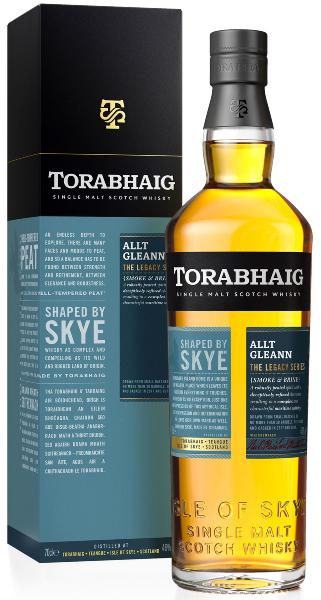
Torabhaig Allt Gleann (46%, OB, The Legacy Series, First Fill Bourbon & Refill Bourbon Barrels, Batch 001, 2021)

Not too long ago when thinking about Whisky, Skye was Talisker, and Talisker was Skye. Not any more, since a second Distillery came about on the island. Production at Torabhaig started in January 2017 and this particular bottling contains Whisky from the opening year as well as from 2018. The back label is a treasure trove for info: Barleys used for this bottling are Concerto and Laureate. Yeasts used are Pinnacle MG+ and Safspirit M-1. For me a first. I have never seen the yeast being mentioned, nor do I possess any knowledge about yeast strains that are used today. So useful info I’m sure, just not right now. The in-grain phenol content was 77 ppm, off the still, it was around 60 ppm, with a residual peating level of around 17 ppm, so this is then a heavily peated Malt. The Whisky underwent no chill filtration, nor was it coloured. Before the Allt Gleann came the 2017 vintage in the Legacy series, which was also bottled @ 46% ABV. The difference between the two probably the usage of 2018 spirit in the Allt Gleann, and by now there is also a second release of Allt Gleann called Batch 002.

Color: Pale White Wine

Nose: Modern, soft with slightly sweet peat. Very clean, including a breath of fresh air, maybe even slightly Menthos-like minty. Salty smoke (this makes my lips go dry, only by smelling it), tobacco, dust and soft wood (not virgin, yet slightly creamy and vanilla-like). Quite mature actually for such a young Whisky. Nice spicy and green notes. Slightly perfumy. Nicely peated, yet not over the top. Black tea with a slight leather note as well. Distant fruitiness and the smell of baking cookies, an ashtray and cold roasted pork. This is much better smelling than I thought it would be, well made stuff. The smell gets somewhat softer and more malty (and sweeter) after extensive breathing. If this tastes anything like it smells, we have a winner on our hands. Even the Lagavulin 12yo, I recently reviewed, showed more hints towards new make than this. Quite amazing. I only hope the reduction to 46% ABV didn’t harm it in any way.

Taste: Aiii, right from the beginning rather thin. Tastes oily and fatty, but doesn’t have the matching texture. Nice soft peat, wood and some liquid smoke and yes, quite sweet and fruity. Yellow fruits with lots of unforeseen licorice notes. Thin it is yet balanced and tasty. Quite strange and unexpected since the nose is quite big and aromatic. Elements of crushed beetle and maybe some lemonade or cola mixed in with the smoke and the peat. Less salty than the nose predicted. No new make in the taste as well. Not entirely Islay in its approach, but not far from it either. Good stuff, I hope for a bright future for Torabhaig.

I think this is already amazing stuff for a Whisky of three to four years old and definitely better than I though it would be. The quality is there, even at this reduced ABV. I’d like to try a similar product of Torabhaig at cask strength, that should be nice!.

Points: 86

Thanks go out to Auke for his sample.

Lagavulin 12yo (56.5%, OB, Special Release, Refill Casks, 2021)

All of a sudden summer is over (on my side of the planet anyway) and now we are in this, still sunny, yet colder autumn season. After the 13yo Aberlour, I was planning to do another Aberlour review, yet a human can be very predictable. A change of season and the body started to crave some…peat! All of a sudden I found myself reaching for peated Malts. So no Aberlour, let’s do a Lagavulin in stead. Don’t worry, the Aberlour will surface eventually. Back to the Lagavulin at hand. More than ten years ago… wait a minute, I have to let that sink in for a while… ten years. Wow! Well in 2012 I did the last review of a Lagavulin 12yo Special Release, in that case the 2007 edition. These special releases continue to be very good, so I have no reason whatsoever to believe this might be any different. Well, Master Quill is still around and the 12yo Lagavulin is still around as well. So without further ado, let’s dip into this Lagavulin straight away.

Color: Pale White Wine.

Nose: Sweet and soft peat and delicate smoke. This is somewhere between rough and elegant. Fruity with citrus, apple (Calvados), very soft vanilla, some iodine and a somewhat milky acidity I got from the 8yo and the 10yo as well as, to a lesser extent, in the 9yo GoT and the 11yo Offerman editions (all three of them actually). Initially this resembles new make a bit and gives this Malt a youthful edge. However, luckily I might add, in here this milky note is much less pronounced than in the other two/four/six Lagavulin’s I mentioned. Yes this one is again slightly older, but also bottled at cask strength, and this probably makes a difference as well. I don’t like this milky characteristic in Lagavulin. For me Lagavulin is dropping the ball with these newer expressions, and unfortunately this element is now becoming apparent in this 12yo Special Release as well. I hear some rumours of Lagavulin overcooking for a higher yield if that makes any sense? Maybe 2008/2009 is some sort of pivotal point for Lagavulin, trying too hard to meet demand? After some breathing this milky note, dissipates or maybe my nose gets used to it and doesn’t smell it any more. (I tried it again later and the milky bit is gone. Pouring me a new one brings it back, so nothing wrong with my nose after all). A short while later, the nose (of the Whisky, not my nose) becomes more balanced. Still fruity and sweet (and youthful), with added dishwater and warm plastic (both fitting the whole). Quite prickly clean smoke and tarry licorice. A slightly spicy smoke maybe, crushed beetle and the tiniest hint of oak, late saltiness and iodine again. It smells refined and this is definitely not your hard hitting peated Whisky. I will have to compare this one to a Laphroaig 10yo Cask Strength in the future, as well as to the previous version of the 12yo Special Release.

Taste: Again sweet and fruity on entry, but also quite creamy and right out of the gate again quite youthful. A very friendly rendition this time. Not a hard in your face Malt, lacking even any bitterness from the wood. Some well integrated smoke, licorice and ashes. Tarry rope, sweet mint (Menthos) and salty. After all that fruit I didn’t expect all these Islay notes any more, but it’s still here. Lacks a bit of development and complexity, although un-complex it is not. The whole is more a banks of the Thames kind of Whisky than shores of Islay, and that probably isn’t a coincidence, but probably by design. Ashes, some iodine and wet marshland wood. Nope, not a lot of wood in this one. Part of these casks must have been at least second refills or otherwise somewhat inactive. The colour seems to suggest that as well, because it is quite pale for a Diageo bottling, a company know for their love for chill filtering and caramel colouring. Still very balanced and equally tasty though. The quality is on a slippery slope, but I still do like it, yet in a different way than I used to with these 12yo’s. It’s tasty and highly drinkable. Every aroma is neatly stacked upon another, like blocks of Lego. And every block is clear of a different colour and easily discernable. This Lagavulin is definitely more minty and modern. Still a nice expression though, just different. No need for water, but feel free to do so. The finish is of medium length and balanced throughout. No bad markers at all, apart from the milky youth bit mentioned above. The finish is sweet and smoky, the aftertaste is medium at best, warming, fruity and ever so slightly smoky. A good way to remember it, because the finish as well as the aftertaste don’t contain the questionable bits.

This is a friendly and tasty Malt, yet not exactly the high quality we are used to for the 12yo Special Release. It doesn’t even feel like a 12yo (it feels younger). Maybe lacks some strength, but in part it makes up for this with its accessibility and likeability throughout. Still good stuff but comparing it, from memory, to the 2007, it definitely is a different puppy altogether, which can be good, since it gives us another choice, and a way to match the Lagavulin 12yo Special Release to your mood. A good reason to have several editions open at the same time, if you needed one. However it unfortunately is also a bad thing, since I feel the quality is also a bit less. I worry about the future (in general as well as for the 12yo Special Release). Nevertheless, this one will split opinions. People who know the Lagavulin 12yo’s from the past will not be impressed by this one whereas others might like the new friendlier direction, and will have no clue why I’m on about sliding quality. For me, even though I do recognize its faults, I also do quite like it (to a certain extent). I’m curious about how the next few editions will be.

Points: 87

Royal Brackla 14yo 2006/2020 (59.5%, Gordon & MacPhail, Cask Strength Connoisseurs Choice, Refill Hogshead #310821, Batch 20/110, 281 bottles)

Wow, on it for a long time, and still I manage to review a Scottish Single Malt Whisky that has never been featured on these pages before. How nice, and it’s not a new distillery either. This distillery was founded back in 1812 and called itself Royal since 1835, a title awarded by King William IV. Today Royal Brackla is part of the Dewar’s portfolio, owned by Bacardi-Martini since 1998. Other Scottish Single Malts in this portfolio are Aberfeldy, Aultmore, Craigellachie and Macduff (marketed as Glen Deveron). Apart from Macduff that was owned by William Lawson Distillers as well as the William Lawson’s Brand, the other four distilleries, as well as the Dewar’s Brand, were bought from the newly formed Diageo to avoid a monopoly position. Of the five Single Malt Whiskies, Royal Brackla was the only one absent from these pages until now. As said, the company also owns two blends: Dewar’s and William Lawson’s, both big sellers, and since both are big sellers, Bacardi didn’t do a lot to market the five Single Malts at first. Only since 2014/2015 a big relaunch of the Single Malt portfolio was carried out. They called them The Last Great Malts, a bit of an ominous or sad name to be frank.

Color: Pale White Wine

Nose: Very appetizing, barley, barley sugar and yellow fruits. Very nice perfumed wood, hay, American oak, very elegant. I already love the nose. It reminds me of Whiskies like this that were bottled twenty years ago. Floral and fruity and both go together well. Soft, yet this still manages to leap out of my glass. Mocha and barley. Since the fruit is the dominant aroma, this also smells a bit fruity/sweet. Red fruit (raspberry) candy (again a sweet smell) mixed with some wet wood. The wet wood is a softer (greenish) wood aroma, setting it apart from more spicy dry oak. This is an extremely balanced smelling Whisky for a sunny day and a happy mood. This is not a melancholic drop, but in a way it also is, when it reminds me of Whisky from a while back. For a simple ex-Bourbon cask matured Whisky, this is really likeable and nice. Well made, aged in a good cask. Well done USA! Nice aroma’s and quite some complexity to it as well. There is a lot happening between the sprit and the active cask. Lots of organic and green notes. I would love to have this, when lying on a blanket in some quiet field on a hot, yet slightly windy, summers day. Far from everybody and everything. Yup, melancholic mood Whisky it is. After a while, slightly more oak, with a hoppy note, still green and wet though. Hints of vanilla and some indistinct dry kitchen spices. Hot butter and wax. Good stuff. The more air this gets, and time obviously, the fruitier it becomes. Definitely melancholic, or is it just me?

Taste: Sweet on entry. Very fruity, right from the start. A nice slight white pepper attack, with waxy and quite some wonderful woody and nutty aroma’s following suit. After the first sip, the nose even gets better than it already was. The Whisky evaporating inside your oral cavity, helps the smell further along. The fatty sweetness does dissipate quite quickly for a short acidic burst, leaving room for another yet shorter peppery attack and a somewhat thinner feel. The wood, still green and vegetal, now also shows an austere bitter note. Sappy, as in tree sap. After this happens, the balance can’t really match up with the wonderful balance of the nose. When the bitter note appears in the taste, aroma’s come to the fore, that aren’t really in harmony with each other. The nose itself remains wonderful though, maybe even better than before. Still a kind of bitterness in the finish that doesn’t match the whole, and even for an almost 60% Whisky, a light and shortish aftertaste. Whiskies like this need to be sipped in a high frequency.

So it comes apart a bit in the finish, but the nose is very good en even grows over time, so give it time. I will have fond memories of this one, even though it has this slight “defect” towards the end. Its a defect that can be sorted by upping your sipping speed. So at first you have to be slow, to let it breathe and after that the “race” begins. Like a stage in the Tour de France that ends in a sprint.

Points: 87

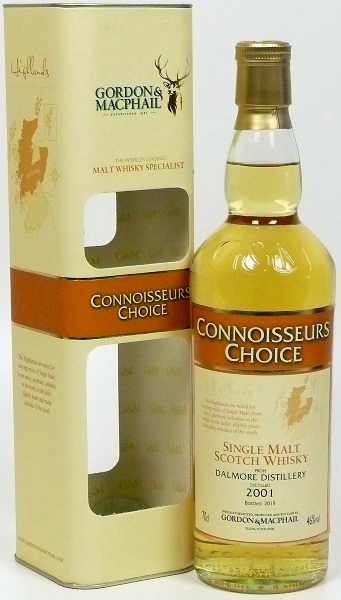
Dalmore 2001/2015 (46%, Gordon & MacPhail, Connoisseurs Choice, Refill American Hogsheads, AE/JBAC, 05/03/2015)

So here’s Dalmore. Dalmore isn’t a Whisky I have many bottles of, if any. It was also a long time ago Dalmore’s were featured on these pages. This is now the third review, after the two reviews I did back in 2014. Obviously one from the distillery itself, the 12yo from around 2004 (so also a while back) and one 11yo independent offering from Kintra Whisky from The Netherlands. Both a bit under my radar to be honest, not spurring a lot of interest in buying more Dalmore’s, (which I didn’t). Dalmore also seems known for some affordable middle-of-the-road bottles, as well as quite some super rare, super premium, super old bottlings, giving Macallan a run for its money. How odd. After all those years, yet another Dalmore managed to emerged on top of the heap of samples. After many of my own bottles, here is sample for a change. As often happens with distilleries and their owners, they tend to change hands more often than they used to back in the day. In the year of both other Dalmore reviews, namely 2014, the company that holds Dalmore, Whyte and Mackay, was bought by Philippines’ largest liquor company called Emperador. Just to refresh your memory, Whyte and Mackay doesn’t only operate Dalmore distillery, but also in their portfolio are: Fettercairn, Tamnavulin, Jura and Invergordon (grain).

Color: White Wine.

Nose: Fruity and Malty, with a tiny hint of smoke in the back. When freshly poured this is big on fruit, candied fruit, but a lot of this is just blown away rather quickly. Smells of toffee, caramel and apple, caramelized apple to be precise, but also fresh apple flesh and hints of apple skin. Warm cookie dough. Apple pie, but most definitely without the cinnamon, no cinnamon in this apple pie whatsoever. Fresh air and an even sharper breath of air, probably because of the smoky note this Whisky has. Maybe this comes from the toasted oak. Not sure right now. The Malty notes are getting more of a say and seem to introduce some more waxy notes, like the wax from the skin a red apple. With this waxy note comes the promise of some bitterness in the taste, we’ll see if that is the case here. By now, more wood as well. Sawdust from plywood. Dusty altogether. Hints of lemon peel and some remarkable horseradish notes, I didn’t expect here. Smells like a modern Whisky, although tasted blind, I wouldn’t have been surprised if this was coming from some sort of refill Sherry cask (as well). For me this doesn’t have (only) the classic refill Bourbon notes we all know so well by now. No, this one has something else as well, something I also picked up on in the Dalmore 12yo, being different from others.

Taste: Soft, spicy, slightly woody and creamy. Sugar water. Wood, paper and a nice sweet chewiness. Waxy and indeed slightly bitter. Having this in your mouth makes the nose expand a bit. Not really fruity though, but it is vegetal. Highly drinkable, but not easily drinkable, it seems to have a taste profile more cut out for aficionado’s or connoisseurs. It has too much fresh oak notes and it might be a bit too bitter for the general public I guess. It’s also rather simple and thin, although it does have good balance. However, after tasting this, the nose expands, more and more is showed there. I’m wondering if this effect of the nose evolving and the taste being rather simple, comes from too much reduction of this particular example. Medium finish at best, disintegrating a bit, but the aftertaste is nice and warming, shows some of the sweetness and paper-like bitterness this Whisky possesses.

Definitely different from both other reviewed Dalmore’s, and it is not as bad as it seems. It has to be worked a bit and personally, I wouldn’t like to try this as a novice. I like the vegetal notes it shows, but it needed a very long time in my glass to show this. More than 30 minutes for sure…

Points: 85

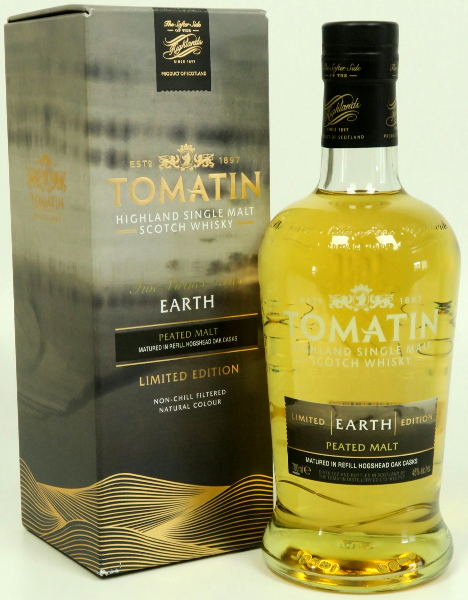
Tomatin “Earth” (46%, OB, Five Virtues #3, Peated, Refill Hogsheads, Sherry Hogsheads and First Fill Bourbon Casks, 6.000 bottles, 2017

After “Wood” and “Fire” here is #3 in the Five Virtues series. Wood was named wood because of three different kinds of oak used for that Whisky: American, French and Hungarian oak. Fire was named fire because of the de-char and re-char treatment of the casks, so these casks were set on fire twice. Earth is named earth because it’s made with peated malt, and peat, as we all know, comes from the earth. So until now, “the logic makes sense”. If I’m not mistaken, this may very well be the first and only peated Whisky bottled under Tomatin’s own brand name. (The peated Cù Bòcan, although made by Tomatin, is a different brand). Earth was distilled in 2006 and made from 50% refill hogsheads, 25% Sherry hogsheads, most likely from American oak, and 25% first fill Bourbon casks, so it must be 10 or 11 years old.

In a way “Earth” has quite some similarities to An Cnoc’s “Rascan”. Both are peated Whiskies from distilleries that aren’t known for their peated Whiskies. Both Whiskies are NAS and quite light in colour. Both claim they’re highland Whiskies even though many Whisky writers place Knockdhu in Speyside. Knockdhu is the distillery, An Cnoc the brand name, by the way. So it came natural to me to start a flight of Whiskies with said “Rascan” and to follow it up with this “Earth” or vice versa. Well, these two are both decent Whiskies, but they absolutely don’t work with one after the other. Both are able to bring out the worst of each other. No matter which one was tasted first. How odd, I wonder why. Rest assured, for this earthy review there was no Rascan in sight.

Color: White Wine.

Nose: Sweet, soft and dusty peat with citrus notes on top. Hint of glue (only when the Whisky is freshly poured). Smells more mature than “Rascan”, lacking the milky new make note Rascan initially has. Very nice spicy wood notes, American oak vanilla notes with sweet citrus on top. Warming peat and only slightly smoky. Rain water, Gin-like. Very aromatic. Smells quite tasty. Hints of sweet coffee with milk, and some added runny toffee. Dust and paper. Old damp wood in a cellar. There isn’t a lot of peat to begin with, but it also dissipates a bit, or is it my nose that gets used to it? Fruity, typical tropical yellow fruits, typical for the best Tomatin’s. Sweet yoghurt with white peach? Slightly peaty and well balanced. After you set you garden waste on fire, it smells like the glowing remnants of the biggest branches in the pile, just before it dies out. I’m sure some of you will share such an experience with me. Coffee candy comes back, together with a whiff of perfume, old almonds and some pencil shavings. When smelled in the morning, the fruits have more to say than it does in the evening. So for me this is more of a day-time dram than it is an after-dinner dram. It maybe is too delicate for after dinner or to pair it up with a cigar. It’s soft peat and sweetish fruit, but it isn’t smoky. It’s not a bonfire dram. This is a lovely peated Whisky, that’s more fruity than it is peaty (or smoky). Fruit comes from the earth as well, so the name is still valid.

Taste: On entry, the sweet and the fruit come first, as well as the almonds from the nose. After this, some prickly smoke and another sweet touch. Only after sipping the smoke comes forth in the nose with some pencil shavings. Creamy and fruity with a tiny hint of bitterness for good measure. Fruit, biscuits and cookie dough. The sweetness is just right, the peat is hardly detectable, yet present. This is a bowl of ripe fruits in a kitchen where preparations are made for baking a apple pie (just no apples in this nose, or are they…), no it’s about the dough. Even though this is peated (can’t be much), this is still easily recognizable as a Tomatin (when you know your Tomatin’s of course). Not super complex, but actually this is a very nice and interesting Tomatin. Sure we have Cù Bòcan, but I’m really interested how another peated Tomatin would turn out, hopefully bottled at cask strength this time, if they care to repeat the experience.

I have to say, that after the first three Five Virtues, this series is quite likeable. All three turned out to be decent Whiskies with interesting differences, and I believe the best is yet to come.

Points: 86

One point above Wood and Fire. All three are good and different, but this one is even more tasty and slightly more special.

Ledaig 12yo 2008/2020 (45%, Gordon & MacPhail, Connoisseurs Choice, Wood Finished, Refill Sherry Hogsheads, 3 year finish in Hermitage Casks, 4440 bottles, 20/074)

The previous reviews have shown that the industry is getting the hang of how to successfully incorporate Red Wine Casks into the production of decent Whisky. The three Longrow Red’s reviewed last, were all pretty good. So maybe it’s time to have a look at a different example of this practice. But first this: for one reason or another, the interest in Springbank (and, Hazelburn and Longrow, but to a lesser extent as well), has skyrocketed in the past year of two. Maybe the best example is the latest rendition of the Springbank Local Barley over which people really went ape-shit, and really, there is no other way to put it, ape-shit indeed! Why is that, one might wonder, the colour, more money to spend because of the pandemic? In many markets this latest Local Barley was near impossible to get, and just have a look what people are willing to pay today for one of these at auction. It’s a 10yo! Even when Springbank Society is releasing a bottle these days, you have to enter a ballot! Even though costs have risen considerably across the world, due to Brexit, people are going ape-shit after those as well. Not only aficionado’s and fan’s but many bottle flippers as well, since most of these releases are readily available, in great numbers, I might add, at the next action. A few years back, Springbank Society didn’t even sell everything and you could get a second bottle without any problem. Times are a-changing.

So now that Springbank is often impossible to get (in a normal way), I tried to figure out what would be a nice alternative to Springbank. Well, that is a rather personal question, and the answer might differ from person to person. However I did come to some sort of a conclusion for myself, and figured out it is the peated distillate of Tobermory, we all know better as Ledaig. There are probably more alternatives one can think of, but let’s stick with Ledaig for now. First of all, Ledaig is getting better by the year, (they used to have a rather wonky reputation), it’s readily available, especially through independent bottlers, and it’s damn tasty stuff, even at a young age. I have bought quite a few Ledaig’s in the past year, so I could have, and probably will have it permanently represented on my lectern. So, Ledaig it is for now, and after three Longrow Red’s, here is a Hermitage Wine finished Ledaig. Hermitage is a French Red Wine from the northern Rhône region, made with Syrah grapes. Let’s see if this is really a worthy alternative for the Longrow Red’s. A final remark before digging in, this Gordon & MacPhail offering has been reduced to 45%, where the Longrow Red’s are bottled at cask strength, we’ll see if that matters much.

Color: Vibrant orange brown, like a bourbon. No pink Red Wine hue.

Nose: The bottle I’m reviewing now is less than half full, and this really needed to breathe a lot to get where it is now. When freshly opened, I was really disappointed, asking myself, is this it? Quite unbalanced. Yet today, it is another story altogether. Bonfire smoke and the fur of a wet dog, or maybe an animal with a more coarse fur, lets say wet bear then. Dried out cow dung in the middle of summer. Ledaig always has these “animalesk” notes to it. Fresh air with a whiff of paper and chlorine, this is not a bad thing, because it fits the whole. Smoke, nutty, winey, funky and sweet smelling fatty peat. Also licorice is present in this peat. There is a lot going on in this peat-bit alone. Some wood, nice laid back oak. Hints of fireworks (sulphur). The whole is dark and brooding based around great peat and smoke. Motor oil, coffee flavoured candy, and some vanilla. Creamy. Smallest hint of red fruits only, so the influence of the Red Wine casks is somewhat different to other Red Wine finished Whiskies. Partly floral. Yes after the big aroma’s played their part, a more floral note comes popping up from below. There is definitely a lot happening here. Many entirely different aroma’s come together in harmony. Nevertheless, this seems to me to be dirtier than your average Islay Malt, however I’m not entirely sure right now, if this dirtiness hails from Mull or Southern France, my guess would be the former. Good Ledaig again. Smoke, floral, soap and fresh fruit notes now. I can get used to this. So let people get ape-shit some more on the output of Campbeltown, we’ll join in occasionally, and apart from that, we’ll have Mull as our (dirty) little secret. Amazing how this managed to get from this unbalanced state when freshly opened to this harmonious and balanced Whisky it is now.

Taste: On entry, somewhat sweet (red fruit syrup, in part artificial), toffee, animalesk-peat, crushed beetle, ginger bread, caramel and nutty. With a slightly soapy slippery feel to it and woody bitterness for good measure. Amazingly this also has a little red pepper sting to it. Here, it is all slightly less big and powerful and it tastes somewhat diluted compared to the Red’s. I know there are a lot, and I really mean a lot, of cask strength Ledaig’s out there, but this one would benefit from some more ooomph as well. Still, it is what it is and it is a good Ledaig again. Way less complex here than it was on the nose. Hence less words are needed to describe the taste than the nose. Warming bonfire and cigarette ashtray in the finish and warming meaty aftertaste with coffee candy and surprisingly some mint. Very warming indeed.

First of all, this one definitely needs a long time to breathe and if you allow it to, you’ll be rewarded. Just leave the cork off for a day or two after opening, and repeat this process if necessary. Second, just like the Red’s, here we have another successful Red Wine cask finish. By the way, remember this Deanston? The reputation of Mull is growing and before you know it, (it might take a few years), it just might catch up with Campbeltown altogether. It’s a worthy alternative, and it is not more of the same. Luckily, even though the output of Springbank Distillery is very, very good. But we aficionado’s do like the differences that can be had. One minor gripe. Even though this is yet another good Whisky, the reduction to 45% ABV is very well noticeable. Historically these finishes were bottled by Gordon & MacPhail @ 45% ABV, but with the revamp of the different series they had, towards the “new” Connoisseurs Choice, maybe there should be some Cask Strength Wood Finishes as well?

Points: 86

This one is for Luke Todd-Wood, who recommended it to me, without even knowing. Cheers Luke, I guess you already finished your bottle by now!