The Glenglassaugh I reviewed recently was a first on these pages, but so is this Blair Athol. Blair Athol puts more than 90% of its new make into Bourbon Barrels and/or Hogsheads, and most of those are used for the Bells Blended Whisky. Less than 10% of the new make winds up in Sherry Casks and eventually most of those are used for the 16yo Flora and Fauna expression. Official expressions of Blair Athol are scarce. A long time ago there were a 8yo and a 12yo, and more recently a version of Blair Athol found its way into the Rare Malts series (a 27yo with distillate from 1975), and in the Managers Choice series (a 13yo with distillate from 1995).
When visiting the stand of Douglas Laing last year at the London Whisky Show, Chris Birthday Boy Leggat, gave me a sample of this and told me he was very curious what I would think of it, so let’s have a look…
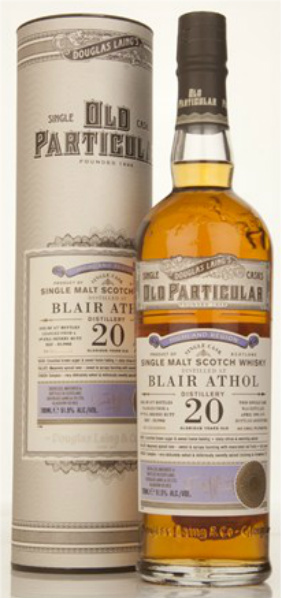 Color: Golden nectar with the slightest red hue.
Nose: Malty and full. Dusty and sweet. Sweet wine. Hints of cookie dough and warm apple pie. Hard to detect the fruitiness through the dough and the pie (and the apparent sweetness). Funky (in a Bootsy Collins kind of way) with the occasional whiff of fresh air. Aroma’s here are from the low-end of the spectrum, heavy and sweet, as opposed to acidic and fresh citrus fruits. With some breathing the oak finally emerges.
Taste: Sweet with pie again, but lots more wood than the nose suggested. The wood gives it character and hardly any bitterness. Very creamy, more like clotted cream than plain vanilla. There is however a little strange hint of acidity that affects the balance a bit, this acidity continues into the finish. It is strong enough to get in between of the sweetness and the cookie dough and cream. If you ask me more a kind of acidity from the wood, than the Sherry. With extensive breathing more wood emerges, just as in the nose, as does the smallest hint of fresh cola. The balance picks up with breathing, so don’t be too quick drinking this. Salty lips.
I’m guessing from a Fino Sherry Butt (or maybe even Manzanilla, which also seems a bit salty). Blair Athol isn’t one of those distilleries with a huge following and almost never is truly great. This one is as good as Blair Athol can be. Nice.
Points: 85
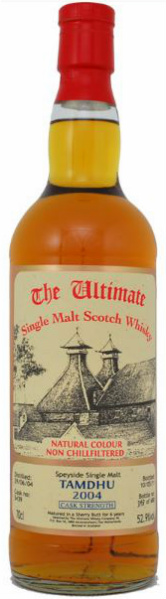 Color: Pale gold.
 Looking at the history of The Ultimate, most bottlings up untill 2005 were bottled at 43% ABV, and after that at 46% ABV. Sometimes however, a cask strength Whisky is released. Sometimes as a ‘Rare Reserve’ release, sometimes because a Whisky just doesn’t respond well to water and sometimes, being the Whisky lovers they are, they leave a Whisky be. It’s already good and it would be a shame to reduce it, let’s just bottle it.
 Color: Pale gold.
 Color: Gold, with a slight pinkish hue.
 Recently I was invited to attend a master class or presentation (depends how you look at it) for The Devil’s Casks. The Devil’s Casks were already sold out at the time, so the focus was shifted more to the 23yo matured wholly in Port. I was a bit sceptical at first, since finishing in port usually makes for a harsh Whisky. This one was fully matured in Port, still it was good. I’m guessing the usual Port Pipes that are being used, hold vintage Red Port, but I think maybe these pipes were used to mature Colheita’s or Tawny Port, because the Whisky was very smooth and far from being harsh.
 Color: Copper brown.
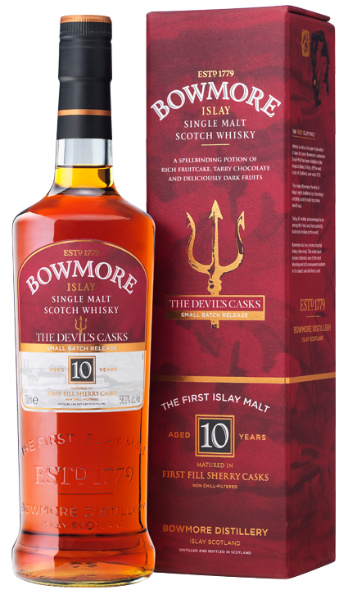 Color: Copper brown.
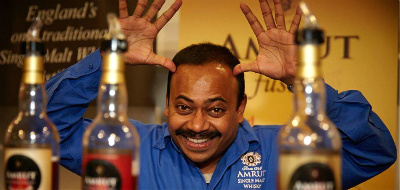 with that, they were the first indian distillery to do so. In 2004 Amrut released its first Single Malt Whisky in Glasgow Scotland, (in the lion’s den you might say). Today and that isn’t even a decade later, Amrut already released a lot of different Single Malt Whiskies. Peated and non-peated, matured in Bourbon, Sherry, Brandy, Cognac, Port and all sorts of different casks. Amrut have even released in one bottle, Whisky matured in India and in Europe, or using malts from different continents. Lots of thinking out-of-the-box.
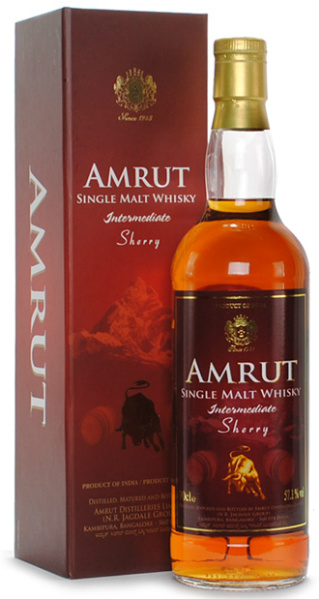 Color: Full ocher gold.
 Color: Honey gold.
 As I said, lots of discussion, since all casks are good, didn’t cost a lot and have some differences. So nice whisky to compare to each other. I still have some Sherry Butt #72315 left, so I can compare it to this Sherry Butt #72319. Word in the grapevine is that the first one (Sherry Butt #72315) is the “worst” of the three, all are very clear about that. Some consider Sherry Butt #72318 to be the best and some Sherry Butt #72319.
 Color: Copper Brown (less red/orange in color than Sherry Butt #72315)
 Color: Copper
 Master Quill