Tomatin “Cask Strength” (57.5%, OB, Bourbon & Sherry Casks, 2016)

Today there are a few NAS Cask Strength Whiskies on the market that haven’t received a funny marketing driven name. Sure among many others, f.i. Ardbeg Corryvreckan and Uigeadail are very good, but considering the owners of Ardbeg, marketing is a given. There are also a few quiet boys in the back of the class, whispering about quality and quality only, not caring too much about marketing and don’t spend their money even on getting a funky name. A few of those come to mind as well. The last review I did is even one of those expressions. Glengoyne “Cask Strength”. Others are Tamdhu, Glendronach and Tomatin to name but a few. I never got around to review the original Tomatin Cask Strength, but now I have a chance at the first batch from last year’s newly designed release. As mentioned on the box, this Whisky comes from Bourbon and Sherry casks and will be an interesting comparison to Glengoynes expression with the same name.
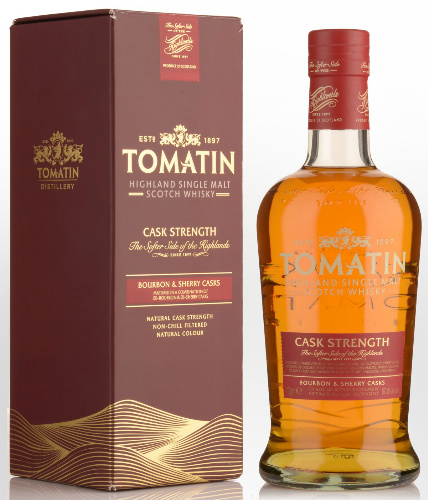
tomatin-cask-strength-2016Color: Light gold.

Nose: Lots of barley and funky Sherry. Lots of cereal notes as well, but also a hint of smoke and cask toast (the former probably coming from the latter only). I can’t say this smells very appetizing and nice from the start, but the Glengoyne got better with extended breathing, so we’ll give this one some time as well, but I can already tell you that this Tomatin won’t take as long as the Glengoyne. There are also buttery and creamy elements and some hidden fruits. Sugar water and hints of licorice, clear glue and some sweet fruits. Pencil shavings, paper, cardboard and a slightly odd (or off) acidic note. Not much, but it’s there. Just not of the tropical kind Tomatin is known for…or is it, considering the evolution with air. Just like the Glengoyne version, It shows its youth and both show a somewhat similar young and strong style, based on both Bourbon and Sherry casks.

Taste: Yeah, strong at first but next, heaps of wonderful tropical fruitiness with nice nuts! It’s definitely a Tomatin all right. Sweet on entry. Toffee, caramel. Butter. immediately followed by some nice oaky notes. Not as strong as the number suggests, and also not hot. Pretty easy to drink, if you have some cask strength experience, that is. Cookie dough and cream, with just enough sweetness to present the finish which is definitely a bit drier. Just like the Glengoyne the taste is better than the nose is. Lacks a bit of complexity though, but in the taste it doesn’t remind me of a young Whisky. Whiffs of old style Whisky pass by as well.

The youthful cereal notes? I don’t like them. It’s that part of Whisky that transforms into something way better with some proper ageing in proper casks. When freshly opened these notes are pretty upfront, in your face. A bit off-putting in my opinion, but the same happened with the Glengoyne Cask Strength as well. Sure it wears off, but do you really want to wait some time after pouring it, before you can thoroughly enjoy it? Because you can, if you work at it a bit. After extensive breathing both become nice cask strength drams worth your money. The quality is there and therefore the score is up there well into the eighties. But for me, this is also proof why Whisky should be aged properly and why I’m also a bit hesitant when it comes to NAS-expressions, which most definitely are not all bad, just look at the WIP Kilkerrans to name but one. Luckily this one tastes so good, I have no problems forgiving it for the funky nose. Again one you have to let breathe for a while.

Points: 85 (almost 86).

Thanks Alistair!
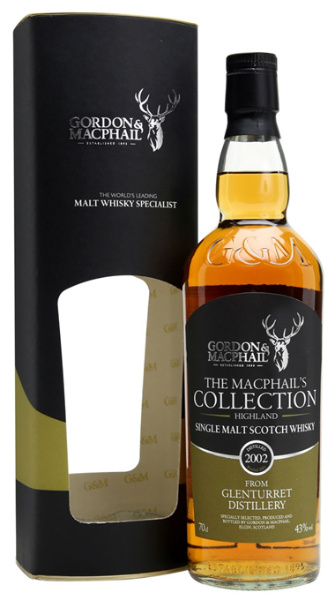
Glenturret 2002/2015 (43%, Gordon & MacPhial, The MacPhail’s Collection, First Fill Sherry Puncheons)

After all these years time for another first on these pages. This is the first review of Glenturret. Glenturret is the oldest still working distillery of Scotland. It started operation in 1775 and was originally called Hosh. Like most others, never working throughout all these years. Todays owners are the Edrington Group. A group formed in 1996, that knows how to market Whisky and make money of it. Just have a look at some other distilleries owned by the Edrington Group: Names like Macallan and Highland Park. Both are (very) highly marketed and very much in the spotlight. Edrington is also the brand owner of Scotland’s favourite blend Famous Grouse, and that has to be marketed well, so in comes the Famous Grouse Experience built at…the Glenturret Distillery, since Glenturret finds its way into this blend. So Glenturret is considered the spiritual home of Famous Grouse and therefore has a raison d’être. Finally Glenrothes is a distillery owned by The Edrington Group, although the brand “Glenrothes” is owned by Berry Bros. & Rudd (as is Cutty Sark, another Blended Whisky). Finally, The Edrington Group is also 50% owner of the North British grain distillery, the other 50% is owned by Diageo.

In the recent past Bunnahabhain, Glenglassaugh, Glengoyne and Tamdhu were also a distilleries owned by the Edrington Group, but probably considered to hard to build up these brands to the extend of the other brands, so all were sold off. Glengoyne (2003) and Tamdhu (2011) to Ian MacLeod. Bunnahabhain, together with the Black Bottle Blended Whisky brand to Burn Stewart in 2003, and Glenglassaugh (2008) to a private group of investors, who subsequently sold it to Billy Walker of Benriach in 2013. Billy then sold all of his distilleries (Benriach, Glendronach and Glenglassaugh) to Brown-Forman (Jack Daniel’s) in 2016. Can you hear the Carousel Waltz?

glenturret-gm-2002Color: Full gold.

Nose: Yup, this is from Sherry casks alright. Quite different from the usual young Whisky drawn from Bourbon casks. Nice, creamy and dusty. Fruity, fresh ripe fruits and lots of candied fruits as well. Sweet peach yoghurt mixed in with the smell of new tires. Although no promise of any real sweetness yet, it does come across as syrupy. Vanilla, cloves with some pencil shavings and a nice (this time) fruity acidity even though it isn’t completely integrated with the rest of the aroma’s. Smells quite good actually. Apart from all this, it is quite perfumy as well. A slight burning note. Not really burned wood or toasted cask, no, the burned note seems to be integrated into the smell of new tires I mentioned above. I wouldn’t say unusual, but quite interesting, and I don’t mean interesting in a way to not say it isn’t any good, because it is, it’s very appealing and complex. I like it very much, it smells really good. I hope it tastes even better, if so, where can I order a case of this? But, lets not get ahead of ourselves, lets taste it first…

Taste: Wow, very sweet on entry. Syrupy and creamy all right. Butter candy and vanilla. The burning note and the tire note are in here as well, and I have to say right from the start, this doesn’t disappoint at all. Burned toast. Next a sugary and nutty note, alas a bit of a watery, sugary nutty note. Maybe this has seen a little bit too much reduction? Distant banana with creamy vanilla. Sweet fruity yoghurt again. This aromatic part is so big, that the more astringent woody notes you should almost always pick up, since Whisky is matured in wood, only shows in the finish. You can feel it in the back of your mouth. No bitterness whatsoever though and the finish itself has more than enough staying power, but when its gone, its gone, you’ll need to take another sip.

Sure Ferrari’s are amongst the nicest cars to drive, but sometimes you can have a lot of fun with a small cheap car as well. It’s the same with Whisky, Sure I get a lot, and I mean a lot, from a 1972 Brora, but sometimes you can have an equal lot of fun with an inexpensive Whisky from a distillery that doesn’t have a big name like Macallan of Highland Park, so in comes this Glenturret.

I’m wondering if, somewhere in the future, we will see a cask strength version of a similar 2002 Sherried Glenturret. That would be really interesting, I mean, good!

After writing this review I did a direct H2H comparison with the Gordon & MacPhail Teaninich I reviewed last. When tasting both Whiskies on different days you will remember them differently as in a direct comparison. H2H allows you to find differences and sometimes even aroma’s you would never get otherwise. For instance, when smelling the Teaninich right after the Glenturret, I’m amazed the Teaninich almost smells like a Rum at first. Waxy and thick. Something I never got when tasting it solo. Tasting it, it is definitely a Whisky, although big, bold and waxy. The Glenturret is much more refined and elegant.

Points: 85

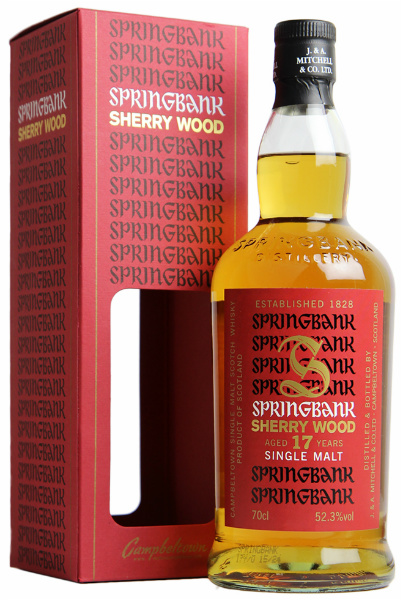
Springbank 17yo 1997/2015 “Sherry Wood” (52.3%, OB, Fresh and Refill Sherry Butts and Hogsheads, 9.120 bottles, 15/24)

When attending the Whisky Show in London last year I absolutely loved this one at the Springbank stand. Sure there were better Whiskies at the show, but also you’d almost have to take out another mortgage on your house to buy those. Nope, I mean, this was definitely one of the best Whiskies at a fair price. Still, over here in Europe this sells for well over a hundred euros. Despite this, it was really a no brainer to buy, and remember, why get only one, when you gen get two for twice the price. When I just recently finished another Springbank, (more about that next time), it was time to finally break out this one. Distilled in 1997 and fully matured in fresh and refill Sherry butts and hogsheads. Possibly, but not necessarily, a combination of european and american oak.

Springbank 17yo SherryColor: Gold.

Nose: Nice, waxy and fresh, powdered vitamin C or should we call it vitamin W from now on? Dusty and dry and definitely lots of Sherry mustiness. Hints of apples (Calvados). Slightly wet forest floor with mushrooms growing. Unripe cold banana, some sweet malts, vanilla and quite vegetal as well. Ashy and slightly smoky (more so than peat). Hints of tar and charred cask and even some new wood, although that isn’t used for this expression. Even though this is 100% Sherry, this smells like a typical Springbank, minus the big sweet creamy vanilla that is, the Bourbon part always brings. Remember, Springbank usually is a blend of Bourbon and Sherry casks. Luckily the Springbank distillate does well in every kind of cask. However, all types of casks used, bring their own flavor to the Springbank spectrum. So there is no better Whisky to try different expressions from. This one reminds me of old Springbank in a way. Coconut and quite fruity as well. Very well made and extremely balanced smell. They are definitely doing everything right. The Sherry smells unbelievably fresh and defined. It must have some casks (if not all) that contained Sherries matured under flor. Fino and Manzanilla that is. I doesn’t smell like typical Oloroso matured Whisky to me, (although very dry Oloroso could be possible). The Sherry notes also smell a bit different from the Sherry in the 12yo Cask Strength. Lovely expression, which would have been nice to compare to the 18yo I reviewed earlier. Alas, that one is already gone, so that is not possible anymore. Bugger.

Taste: Yup, Sherry (from under flor) and typical Springbank. If you love Springbank like I do, it feels like coming home again. Waxy, vanilla and lots and lots of coconut again. Sometimes a bit soapy even. Welcome back: coconut! Peat (more so than smoke) and quite vegetal and fruity. Coconut mixed with almond cookies. Cookie dough and a nice friendly sweetness to it. Toffee. It also has a bite as well. Burnt wood and some peat. On top, as with many modern Sherry casked Whiskies, a slightly acidic red fruitiness that stands out a bit, less integrated so to say. It’s this aroma that dominates the finish as well. Thus the finish is less about the cookies, coconut, toffee and dough. Nevertheless, this one has it all. Super stuff with utter balance. Springbank works very well in Bourbon casks, and although you know what some Bourbon casks would have done to this Whisky, this time I don’t miss them. Nice Sherry expression this is. Well done Springbank!

I’d like to mention, that this review is written just a few minutes after opening the bottle. Springbank is never at its best right after opening the bottle. It’s a big Whisky that needs time to breathe. If you are patient with it and it has time to breathe, wow!

Points: 90

Tomatin 12yo (43%, OB, Bourbon and Sherry Casks, 2016)

Not so long ago, I reviewed four twelve-year olds from Tomatin’s Cuatro Series. Whisky that started out in Bourbon casks but then were transferred for a finish into four different kinds of Sherry; Fino, Manzanilla, Oloroso and Pedro Ximénez. A longer while back, I also reviewed the entry-level 12yo, calling it the new look bottle, built around the color of the distillery. Black, white and the red of the doors. That design was introduced in 2009 and now, in 2016, The company is changing the design again. This is the even newer look from Tomatin. Newly shaped bottle and a new logo, depicting a hogshead. Nope, not the cask, the head of a hog. I love it when people have humor. With the change came also the change in ABV. The old expression I reviewed was 40%, although 43% versions did exist. This new one is bottled at 43% ABV. I’m not sure yet if I like this new design. Although the old bottle themselves look pretty standard. I did like the color scheme of them. This 12yo for instance, looks like it was made for lumberjacks with a green camouflage label. By the way, the gold lettering on the label is hardly readable so bring your reading glasses when visiting your place of choice for buying Whisky…

Tomatin 12yo (40%, OB, Bourbon and Sherry Casks)Color: Light gold.

Nose: Creamy, creamy wood, leafy and definitely similar stuff to the previous 12yo. Sweet vanilla underneath and quite some funky, slightly acidic Sherry on top. LActic acid, toffee and caramel with a hint of raisins. Waxy and quite some woody aromas complete with toasted oak. It also has a powdery quality to it and I even get the occasional whiff of Beer. Even though it doesn’t seem to be pleasantly fruity and accessible at first, it does have a lot going for it. The nose balances out when it gets the chance to breathe for a while. With time, even a floral note emerges and finally some of the typical Tomatin tropical fruits as well. I don’t have the old 12yo around anymore, but if memory serves me well, this new edition seems to be slightly better balanced and seems to be of higher quality as well.

Taste: Sherry comes first. Funky and musty, but less so than the nose promised. Quite sweet and fruity. Funky Sherry and a little bit of burnt oak. Candy sweetness, caramel sweetness with some cocktail cherries. Creamy again. However, the sweetness subsides under the influence of the woody backbone, which also gives it a slight bitter edge. Drying it out a bit. Next, some more creamy vanilla and cookie dough aroma’s, although the Sherry part has the upper hand. This is quite an interesting entry-level Malt. There is definitely quality here and you get a lot for what they ask you to pay for it. The taste may be simpler than the nose, but quite big and nice nevertheless.

If you are willing to give this Malt some time to breathe you’ll be rewarded with a pretty good Whisky at a more than fair price. Sure, the Legend is even less expensive, but for that, you get a much younger Malt with less depth. I would go for this one instead…

Points: 83

Same score actually as the “older expression”, but I do prefer this newer expression over the previous one.

Thanks for the Whisky Erik!

Dutch Jenever Week – Day 6: Zuidam Korenwijn 14yo 1999/2013 Oloroso Sherry (38%, Special #3, Cask #1649 & 1650, 491 bottles)

Jenever Week Logo

On the sixth day, God created… This actually is the last review I’m writing for this series of Dutch Jenevers. To be honest, I almost never write reviews in the order of publication. Especially with the Master Quill Weeks. At some point in time, I find a “logical” progression in which to order the seven days of the Master Quill Week, not necessarily by ascending scores, mind you.

This is the fourth (!) offering by Zuidam in this week, another Korenwijn, and I promise you, it’s the last in this series. Tomorrow we’ll see another offering from Rutte (again). Now don’t start thinking now that Rutte and Zuidam are the only distilleries in The Netherlands producing Jenever. There actually is a long list of companies around, many of which are several centuries old.

The history of Jenever started in the Dutch cities of Amsterdam and Rotterdam, both port towns. Other cities like Groningen and Leeuwarden (in the north) also have a Jenever history. Making Jenever turned out to be a smelly business, so with time the production of Jenever moved into neighbouring cities with some more room. Weesp (near Amsterdam) and Schiedam (near Rotterdam).

From Amsterdam I’d like to mention Lucas Bols (1575), Wynand Fockink (1679) and Van Wees (1782). From Rotterdam I’d like to mention Onder De Boompjes (1658), Nolet (1691), De Kuyper (1695), Wenneker (1693), Herman Jansen (1777) and Dirkzwager (1879). Most of them produce Jenever under different brand names.

Rutte was never located in Rotterdam itself. Rutte has always been from Dordrecht. Finally Zuidam itself is more recent. It started doing business since 1975 in the town of Baarle-Nassau near the Belgian border.

Zuidam Korenwijn 1999Color: Orange gold.

Nose: Closed at first. Some wine related notes, fruity. Needs to move around in my glass some more. Yeah development commences quickly. A deep thick aroma, countered by sharp woody dry notes. Some ground white pepper and clear glue which dissipates quickly never to return again. Also a slightly burnt and tarry cask note. Sawdust and toffee for short. The whole smells rather laid-back and calm. Subdued yet big. Happy about itself. Sawdust and pencil shavings and underneath some hints of new wood. All very spicy but well in check. It has a very specific fresh and fruity acidity to it, I also got from tomorrows offering, although not in such a big way, and way more balanced as well. Here it must be from the Sherry cask. The nose is an amalgamation of Jenever, the Sherry cask and oak, and I must say the Sherry cask really did its work here.

Taste: Creamy, buttery and very fruity. Very nice and very appealing. It starts out sweet. Toffee, mocha and runny caramel. When that subsides, and it does that quite quickly, it makes room for a very nice fruity aroma. You could almost call it a “special effect”. Nice wood as well, sometimes bordering on cardboard and old paper, but it works quite well. However, I feel it is hardly recognizable as a Korenwijn. At least when I compare it to it younger Brother, the Korenwijn 5yo I reviewed earlier. it almost seems like a hybrid with Whisky, Cognac and other distillates. Taste this blind and try to find out what this is. Again an entirely different product from Zuidam. Nice. The finish has medium length and finishes with the warmth of the Toffee/Caramel and some sharpness of wood. Chewy. This is definitely after dinner. It’s a dessert all by itself. Nicely soft and lively, even though the basis is quite sweet, as all Zuidams seem to have. Likable and dangerously drinkable.

Quite a small outturn, considering this came from two Sherry casks ánd the Korenwijn being reduced to 38% ABV. Nice expression from Zuidam though, and its clear to me why it was chosen as a special release. This one is quite expensive. Its more than twice the price of the Korenwijn 5yo, but when compared to the Korenwijn 10yo and 20yo, Zuidam also produces, the price seems to fit right in.

Points: 85

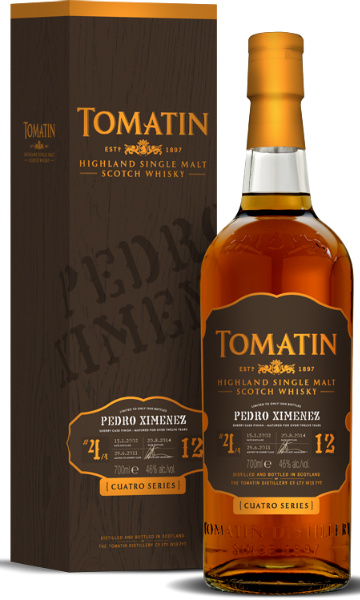
Tomatin 12yo 2002/2014 “Pedro Ximénez Sherry” (46%, OB, Cuatro Series #4, 3 years Pedro Ximénez Sherry Finish, 1.500 bottles)

The fourth and final installment of the Cuatro series is the one finished in Pedro Ximénez (PX) Sherry casks. Understandably the last one of the series, since PX is a very dark and sweet dessert Sherry. The grape variety itself is white, getting its color of drying in the sun. We started out light (in color, not aromatics) with the Fino and Manzanilla expressions. Examples of Sherries that age under flor (which keeps oxygen at bay). The third expression was the Oloroso one. Oloroso is a Sherry that ages without flor and thus prone to react with oxygen. So finally the PX. Even darker than Oloroso and also very sweet as opposed to most other kinds of Sherry. Historically, Oloroso casks were always the most popular casks for ageing Whisky. Back in the day, one was sure the Oloroso butt (or puncheon) was made of european oak, giving off some more tannins than the American oak that is so popular with Sherry Bodega’s today. American oak gives off a more vanilla like and creamy aroma. Today, PX has become quite fashionable as well, for ageing Whisky, since it gives off a lot of color and a sweetish aroma. However, the sweetness does not always come through though.

Tomatin Cuatro Pedro XiménezColor: Gold, more or less the same as the Oloroso expression, ever so slightly darker.
Nose: Thick and a very rich nose. Hints of burned wood and even some tar and coal. Nice, and right from the start a better balanced nose than the Oloroso expression. Underneath, thick, creamy and chewy, like crème brûlée. If you smell it vigorously, you can recognize the PX. On top lies a nice acidic winey note as well, adding to the complexity of the Whisky. All well-balanced here. A nice grassy note emerges, aided by some fruits. Nice overripe red and yellow fruits, but also a very distinct aroma of unripe bananas, biscuits and vitamin C pills (another acidic note). An Autumn Whisky, just for the moment the leaves start to fall. Wonderfully rich and elegant nose, better than the nose of the Oloroso expression. I hope it tastes better too!

Taste: Big. A lot from the nose comes back in the taste. Slightly tarry, burnt wood again, with hints of vanilla and butter. Burnt sugar, yet not sweet sugar. All of the (acidic) fruity notes are there, but here, even some hints of white grapes show themselves. Add to that a typically Dutch coffee bon-bon called Haagsche Hopjes, and you’ll get the picture. Nutty. Hazelnuts and even fatty peanuts. The body and the finish are not thick, chewy and cloying like a true PX Sherry, but the aroma’s are there. A somewhat Beer-like finish. The different “burnt” notes; the tar, the wood and the sugar, are on the rise, so if you don’t like that, don’t get this one. It starts out elegant, but ends a bit raw and bold.

And there you have it. The whole Cuatro range explored. Was it worth it? Yes! A very nice learing experience. Do you, and I, as consumers need the whole set of four? Yes, we do if you want to share the experience with lots of others. Four bottles of study material from the Tomatin University Distillery. Do you need a whole box to drink by yourself? No, not really.

For this end piece I did a proper H2H2H2H. Yes, that means I have four drams in front of me. Comparing the Fino to the Manzanilla is interesting, but for a drinking Whisky both are too similar. Especially on the nose. If you only want one, I would opt for the Fino expression, since it tastes slightly better. Oloroso, supposedly the best Sherry cask for Whisky, was in this case a bit disappointing. Smelled less aromatic than the first two, but otherwise surprisingly similar. Not the same but certainly very well related. On the taste it is somewhat unbalanced especially toward the finish. I would pass on that one. Finally the PX does show poise, and yes it does start a bit sweeter on entry compared to the other three. It’s well-balanced, and definitely the one to pick over the Oloroso expression. But, and there is a but, the PX does show a lot of burnt notes you’ll have to like, although those notes are more and more obvious in the Oloroso expression as well. In the end, I would take two, The Fino and the PX, Both are very tasty and somewhat different from each other, but not as much as expected beforehand. If I had to pick one, I would definitely go for the Fino, which for me is the best of the bunch.

Points: 85

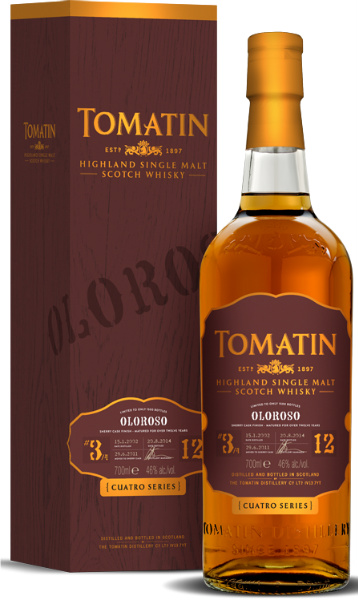
Tomatin 12yo 2002/2014 “Oloroso Sherry” (46%, OB, Cuatro Series #3, 3 years Oloroso Sherry Finish, 1.500 bottles)

Number three is the Oloroso finished one. Hands down the most popular Sherry in the Whisky industry. Somehow casks that once held Oloroso Sherries produce the best Whiskies that (once) graced the face of the earth, even though the Sherry itself isn’t seen as the best there is in the (fortified) Wine world. Oloroso Sherry is produced by oxidative ageing, meaning, there is more contact with air than the previous two expressions that age under flor. The forming of flor is suppressed by adding alcohol from distilled Wine, thus prohibiting flor to form. This oxidative ageing produces a darker more nutty Sherry which is not sweet. Dark sweet Sherry will be the topic of the next Sherry finished Tomatin. Let’s see if our precious Oloroso finish also manages to fetch the best results in the cuatro series. Up untill now the “Fino” expression managed to get the highest score so, 85 is the score to beat.

Tomatin Cuatro OlorosoColor: Gold, but slightly darker than the previous two.

Nose: Funky and dusty. Slightly acidic. New wood and raisins. Yes its nutty. Quite complex and lovely. New wood and toasted wood, slightly tarry. Spicy wood and slightly herbal. Vanilla, creamy and fruity, although new, fresh oak is always right up front. Very aromatic. Loose, unlit cigarette tobacco mixed in with the new wood aroma and licorice. Actually this smells like coming from a red wine cask. It’s sharply defined, fresh and slightly acidic. Tannins and spicy. Slightly dusty and smoky. Very nice stuff if you give it time to develop in your glass. Mocha and tar (again). Nice.

Taste: Sweet and funky on entry. Nutty with a fruity acidity, and very aromatic. If you ask me, easily recognizable as a true Oloroso. Tasting the nuttiness brings out the nuttiness in the nose as well. Milk chocolate and a sharp spiciness. Wait a minute. Where is the Tomatin in this? Where are my tropical fruits? Quite the finish ‘eh? Yup, a bit overpowering. Heaps of fruity acidity now. Red wine (finish). The new (peppery) wood from the nose comes to the fore right before the finish. Luckily it doesn’t dominate it. Breaks down a bit in the finish, which is a shame really. A hot sensation stays behind, with wood and the acidity with the longest staying power. Big and raw, but also lacking a bit in complexity as well as in elegance both the Fino and the Manzanilla expressions showed.

This one is big, but not the best balanced one. This one has its moments, but also has its flaws. Its nice, but not the best one up ’till now. Maybe the Oloroso Sherries and/or the casks they were matured in aren’t what they used to be? On the other hand, what still is…

Points: 83

Tomatin 12yo 2002/2014 “Manzanilla Sherry” (46%, OB, Cuatro Series #2, 3 years Manzanilla Sherry Finish, 1.500 bottles)

On with #2. The second installment is the Manzanilla Finished one. Quite the logical #2, since Manzanilla is also a type of Fino Sherry. Manzanilla is made in the town of Sanlúcar de Barrameda in Andalusia. Just like Fino, it is a very dry and pale kind of Sherry. The region is less hot and more humid, so the flor here is even thicker, giving an even better protection against oxygen. Manzanilla’s are therefore even fresher than their Fino-brothers. Manzanilla’s also have a somewhat salty feel to them. The Sherry ages near the sea, but should that allow for a more salty liquid? In Spain, Manzanilla means camomile tea. The Sherry is named as such, since the aroma’s are thought of resembling camomile. So salt and camomile are the things to look for in a Manzanilla Sherry, but are they also the things to look for in this Whisky?

Tomatin Cuatro II - ManzanillaColor: Gold.

Nose: Starts immediately less funky than the Fino. It also doesn’t need a lot of time to breathe, to settle, its ready for consumption right of the bat. Subtler and more restrained. Hints of burning wood and toasted cask. Dry grass, vegetal and dry warm barley. Easier than the Fino and seems less complex as well. Sweetish and again full on aromatics. Just not as thick and cloying. Smells nice. Fruity, and quite similar to the Fino expression. Tropical, ripe, sweet and aromatic fruit, which is typical for the Tomatin spirit. Dried apricots, but also a hint of bicycle tire. If you ask me, no traces of camomile in the nose. Salty? Nope again.

Taste: Sweet and boasts a fruity start. Chewy toffee. Fruity, yes, but this time slightly fresher and more acidic. Fresh green apple skin and white pepper. Not (as) hoppy as the Fino, but there are some fruity Beer aroma’s to be found towards the end of the body. The wood moves into the realm of pencil shavings. I don’t get the camomile one might expect, nor do I find it salty, although I do have slightly salty lips. Quite a simple expression. Likable, but simple. Maybe next time they should finish this for a while longer, although this finish carries just enough bitterness for me.

Slightly more approachable than the Fino, but with that also slightly less “special”. Sure, you have to work the Fino a bit, and its start can be a bit of a scare, but when it opens up, lots is happening, especially on the nose. Yes the Fino has definitely the better and more complex nose of the two. In the taste both are closer to each other. The Manzanilla expression actually doesn’t show as much development in the glass as the Fino. It is immediately clear what you have in your glass. This one is more of a daily drinker. No faults, but also no ooohs and ahhhs as well. Good, but not as special as the Fino. However, I do feel that these casks that once held Sherries that aged under flor, show a lot of potential for ageing and finishing Whiskies, and especially the tropical fruit spirit of Tomatin.

Points: 84

Tomatin 12yo 2002/2014 “Fino Sherry” (46%, OB, Cuatro Series #1, 3 years Fino Sherry Finish, 1.500 bottles)

It’s Monday, vacation is over, September is already visible at the horizon, so back to “work”. Time to pick up again with a nice box of four Tomatin’s, the highland distillery known for it’s Whisky with tropical aroma’s…

In 2014 Tomatin released a box with four full-sized bottles called the “Cuatro Series”. All four Whiskies were distilled on Tuesday the 15th of January 2002. All four were matured for 9 years in American oak, however, all received a final maturation of three years in four casks that previously held different kinds of Sherry. An excellent way to show the adventurous public the differences between finishing with four different Sherries. A novel idea and the pricing was reasonable as well. Just releasing it as four full-sized bottles in one box made for slow sales. Who wants to buy four more or less similar bottles of Tomatin where the difference lies in the details? Learing from the experience, Tomatin released several similar ideas since, but always in half sized bottles. Nevertheless, the “Cuatro Series” did sell out eventually, although the odd single bottle seem to be still available.

The four Sherries used in this series are, Fino, Manzanilla, Oloroso and Pedro Ximénez. The first expression, as numbered by the distillery, is the Fino expression. Fino Sherries are very dry and very pale. What makes Fino stand out, is the fact that maturation in the cask happens under flor. Flor is a layer of the Saccharomyces yeast strain, that lies on top of the liquid. The layer of yeast prevents the ageing fortified wine from oxidizing too much, making for a fresher Sherry. In the Wine-world Sherries like this are considered the cream of the crop, as opposed to Scotland’s favorite, Oloroso.

Tomatin Cuatro I - FinoColor: Gold.

Nose: Very musty on entry, which is not very pleasant. Luckily the mustiness dissipates rather quickly. So you really need a glass for this one. Underneath a nice note of olives, burning coal, some charcoal and lots of fruit. Yellow fruit, overripe or sometimes even candied. Some pineapple, mango and maybe even some nectarines. This nose is exploding with aroma. Dusty and creamy vanilla and nice soft oak, so the original cask did it’s work well. The Fino cask also seems to be of high quality, since it did impair some wonderful aroma’s to the Whisky. This one is wonderfully balanced and eventually smells rather nice. The fresh oak bit turns floral. More vanilla but this time with a touch of jasmine and, dare I say it, a hint of paracetamol. Wonderful nose for a 12yo. It has the tropical fruit traits Tomatin is known for. Reminds me a bit of a Fino Glenfarclas I once had.

Taste: Sweet and spicy. Beer-like hops, and again lots of fruits carried by the beer-like bitterness. Is it the yeast from the flor that does this? Again, like the nose, wonderfully balanced, but not as complex as the nose. Here the Fino impairs a nice nutty flavour as well as some italian laurel licorice (sweet). Creamy with a note of buttery vanilla. Strange enough there is an acidic top-note now. Finish has some length, with again some bitterness that carries it. And beyond that a nice lingering and fruity/nutty aftertaste. This may not turn out as the easiest of the four, but if you have mastered tasting Fino (finished) Whiskies, this is certainly no dud.

For those of you who also read my Rum-reviews, you’ll know, that I found Rhum Agricole to be wonderful stuff as long as you give yourself the time to grow into. More or less the same goes for finishing in Fino Sherry. There are examples of Whiskies with a Fino finish that work exceptionally well, but I also found Fino finishes, something I had to get used to.

Points: 85

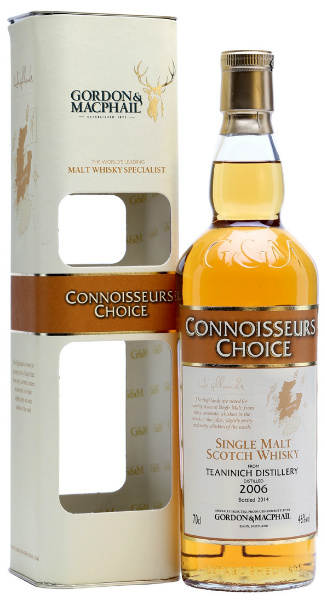
Teaninich 2006/2014 (46%, Gordon & MacPhail, Connoisseurs Choice, First Fill Sherry Hogsheads, AD/JFBG)

More than four years ago I wrote a review about another Teaninich from the Gordon & MacPhail’s Connoisseurs Choice range. That one was distilled in 1983 and bottled in 2003, so that one was bottled before this one was even distilled! Reading back I see the mindset I was in at the time. The first decade I was interested in Single Malt Whisky, I hardly ever bought something that was reduced with water to “drinking strength”. If I bought anything from an independent bottler, it was most certainly bottled at cask strength. Today I still very much like my whiskies at cask strength, but I don’t have a problem anymore buying something reduced, as long as they didn’t reduce it too much. Old malts, distilled in the 50’s, 60’s and 70’s seem to have some power left in them, when bottled at 40% ABV, but more modern malts need a higher a ABV. 43% seemed a bit of a compromise, but the 46% we see today, is doing the trick for me. So, two weeks ago I caught myself red-handed with a bag of no less than four of Gordon & MacPhail’s Connoisseurs Choice bottlings! Go figure. As I’m a fan of Teaninich, I hardly could wait opening this one, so finally I didn’t even manage to wait for 24 hours…

Teaninich 2006/2014 (46%, Gordon & MacPhail, Connoisseurs Choice, First Fill Sherry Hogsheads, ADJFBG)Color: Reddish gold.

Nose: Waxy, fruity and with a nice toasted oak aroma as well. Biscuity and a warm smell of lovely barley and cereal. Right now I already want to stop smelling this, and have a sip, but I’ll wait. The toasted aroma becomes more complex since it turns a wee bit into coal and even boasts a slightly tarry note. A breath of fresh air comes next, laced with alcohol. Reminding me of high quality and ultra soft rye Vodka. Hey, give it a break, it’s a very young Whisky. Bread and toasted bread obviously. Grassy and still waxy. Waxy, red blushed, apple skins? Slightly floral notes mixed in with coffee-creamer. Somewhat sweet and a nice note of vanilla. Since these are Sherry hoggies, I’m guessing the hoggies were made from American Oak. This is only a 7 or 8 years old Whisky, so it shouldn’t be too complex, but you don’t hear me complaining. I understand what it is, and I think it is pretty impressive already, at this age. Well balanced and I guess the casks were pretty good as well. They will do just nicely as second fill casks.

Taste: Definitely starts with a Sherry note. First fill casks all right. I guess they bottled this rather quickly, since the Sherry already starts to dominate the Whisky. My guess would be a Sherry matured under flor. Initially sweet (but not for long, because some white pepper comes to the fore). Waxy again and notes of paper and not of wood, although the paper note seems to make way for a more bitter woody note eventually. A tad funky and slightly less balanced than the nose promised. More Sherry (& flor) wood, with even some slight soapy notes. Don’t worry. Even though this is bottled at 46% ABV., it doesn’t even seem that strong. Sure its fruity, but in a more sugared kind of way. Perfumed lemon curd. Hidden behind the waxy and soapy wood. Surprisingly, the finish isn’t very long, giving away its relative youth.

Let me warn you about the new Gordon & MacPhail packaging. I had an open-topped Whisky bag and the experienced salesman, shoved the metal lids into the cartons instead of leaving them on the cartons. I would have lost them otherwise. I tried this at home and he was absolutely right. Just grabbing the carton and the lid already pops off, weakening the structure, with a possibility of dropping the lot on the floor. This is the 21st century isn’t it? Sort it out people. And it’s not only Gordon & MacPhail. Signatory have tins of which the lid comes popping off as well. The folded cardboard stuff some Diageo bottlings come in, can spontaneously unfold under your arm when carrying slightly too much Whisky at a time. That way I saw a bottle of Talisker slowly disappear from under the firm grip of my armpit onto the welcoming tiled floor.

Points: 84

16-3-2017: I just finished this bottle and I have to add that it got gradually better over time. This really needs to breathe to show all of its huge potential, even though its just a reduced young Whisky. A have a soft spot for Teaninich and this one really didn’t dissapoint me again. I Love it. I’ll give it a point more, and maybe I should have given two…

Points: 85