The first of April is no joke this time. It is the start of Ardbeg April, one month which will be solely dedicated to some more recent bottlings of Ardbeg. Since there are already quite a few Ardbeg’s reviewed on these pages, the history of Ardbeg has already mostly been covered. For this review we first have to go back to 1996 when Ardbeg was put on sale and was bought by Glenmorangie Plc. for £7 million just a year later. Ardbeg distillery was in a bit of a state, so quite some renovations were necessary for which money was dearly needed. Also because of this, the most recent fase of Ardbeg’s modern history starts in 1997. Not only did Glenmorangie buy the distillery in that year (February 27th), with Dr. Bill Lumsden entering the Ardbeg scene, but also production was restarted (June 25th) and to bring in some money Ardbeg 17yo was released quickly thereafter.
Bottled at a mere 40% ABV (for the domestic market?), yet luckily there also was a 43% ABV version (for other markets or travel retail?). I tried several of both, and the extra 3% most definitely made a difference. Other landmarks were the releases of the 10yo (TEN) in 2000, Uigeadail in 2003 and Corryvreckan in 2008. These three form the true current backbone of the range. There are obviously a lot more releases since 1997, but in the day, these three together with the 17yo were “Ardbeg”. Alas the 17yo was discontinued in 2004, most likely, since Ardbeg was distilling intermittently, not a lot of stock for a 17yo was available anymore, hence the move to two NAS bottlings for the core range, though both boasted a higher strength than deemed normal for a core range. But hey, fans of Ardbeg are not normal folk. Then came 2023, the rebirth of the 17yo, return of a legend, bottled again at 40% ABV and commanding a hefty price. Both parameters made me pass up on a bottle of my own, but I did participate in a bottle-share with Nico and also Andy was so kind to provide me with a sample.
On the back of the box it is mentioned that for this release Dr. Bill Lumsden meticulously crafted this new 17yo to mirror the original, that is quite the statement, because the original 17yo has quite a reputation and proved to be highly popular and the available Whiskies at Ardbeg to create the original are very different from the Whiskies available today. I guess the original 17yo is a hard act to follow. For Ardbeg 17yo, Whiskies were used that matured in Bourbon and Sherry casks.
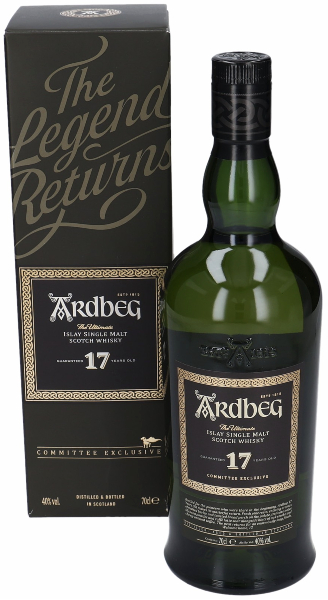 Color: Straw
Nose: Lightly peated, lively and very fruity. Light overall, so I guess the reduction to 40% ABV did its trick here as well, but I maybe getting ahead of myself here. Pour it and keep it under a lid for a moment, and then smell, works wonders. Comparing the old 10yo to the old 17yo. the 10yo was always more raw, peaty, just more of a beast. The old 17yo, was a way more refined and elegant Ardbeg. The smell of this new one is definitely soft, fruity and elegant, ther is a lot coming up from my glass. Pretty pleased with this one so far. Is it the same as the old 17yo? Hard to say without a head to head. Its been a really long time ago I had one full sized bottle open on my lectern. Does it smell like an older bottling? Sure, yes I believe so. So based on the nose alone I would say well done, getting this profile from more modern stock. Very soft and sweet smoke, combined with an almost sweet and citrussy fruitiness. After some breathing Iodine becomes noticeable. Very distant and very soft wood note (slightly salty smelling, yes salt has a smell as well). It is even more dusty than it is woody. Again, still very lively and fresh. The reduction is also noticeable that even after extensive breathing not a lot is happening anymore. No oozing of layers. Well balanced it is though. Extensive breathing also brings out more of a modern feel. Very nice nose. Well done.
Taste: First sip is almost like drinking water, I was prepared for some reduction, but not as much as this. OK, reset my expectations and palate and try again (just in case this is a big gulper, I splashed a little more in my glass for the second sip). Update: it is a big gulper, definitely! (This means, don’t drink this in small sips, this doesn’t work). The nose was quite “big” so this greeting was kind of unexpected. Second sip/gulp, still very thin. Slightly sweet, old peat, crushed beetle, slightly smoky and fruity again, exactly the same as the nose. Hints of cold black tea with yellow marmelade. Also hints of latex paint (minus the solvents) and a nice herbal note. Hot butter on toast. Again well balanced, but so thin. Funny enough the taste is more complex than the nose, especially when you let it sit for a while. Liquorice enters the finish, or better the aftertaste, it becomes apparent right after swallowing. Not a hard one to review.
Releasing this as a committee exclusive makes sense. This is for fans of Ardbeg (count me in). I’m a defender of all the NAS special releases, and believe me, I’ve got a lot of defending to do, even in my own Whisky-club. And just to annoy these people, then next review will be just one of those. The public in general probably haven’t tasted the old version, nor would pay the price. Aficionado’s have and will, and even better we even forgive them the reduction for historical reasons. I really like the experiment and seeing a 17yo again, and am happy I could try this. Will I buy it? Probably not, I guess the bottle-share suffices. No modern stock just doesn’t work at 40% ABV like older stock can, Great to get and older profile on the nose, but taste-wise I probably would have decided against 40% ABV even when the old 17yo was bottled at that strength, and please don’t tell me that is what the public wanted… This commands quite a hefty price, I wonder what an old 17yo bottled at 43% would cost at auction? Also, this new 17yo is a big gulper, as mentioned above, so be prepared you will finish your expensive bottle pretty quickly.
Points: 86 (It might be better than this, but it’s so thin!)
Thanks Andy: this was from your sample! I needed the lot in one sitting, also because I accidentally poured a little bit of it on my keyboard, sorry!
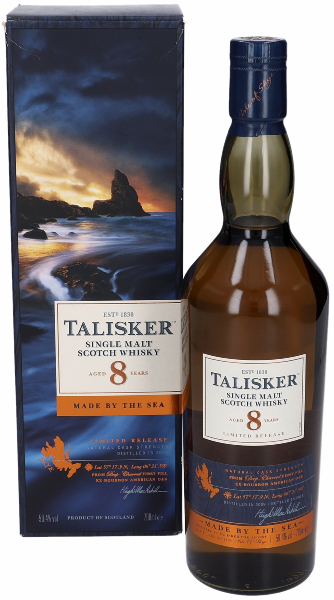 Color: Light gold.
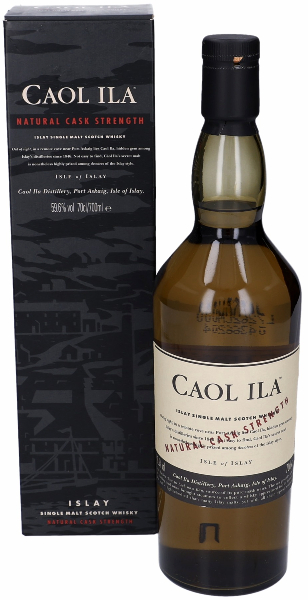 Color: Straw, light White Wine.
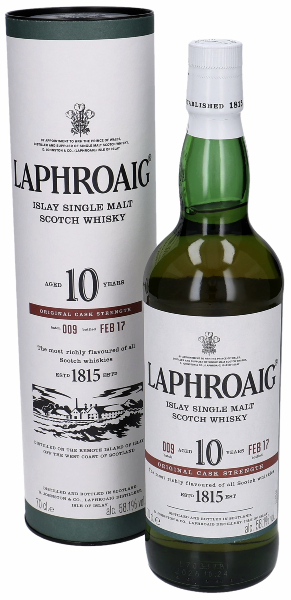 Color: Light orange gold.
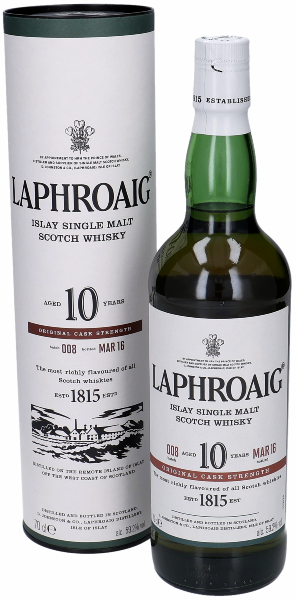 Color: Light copper gold.
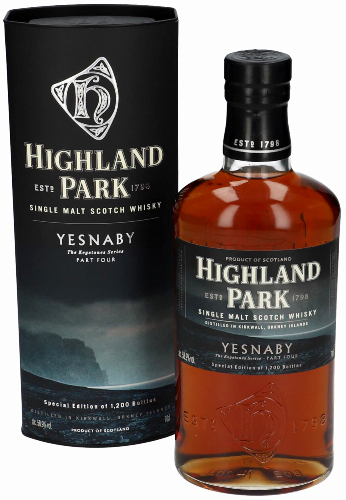 Color: Copper Gold, I guess caramel coloured.
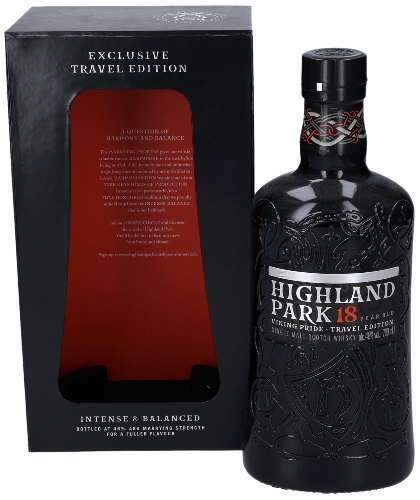 Color: Light copper gold.
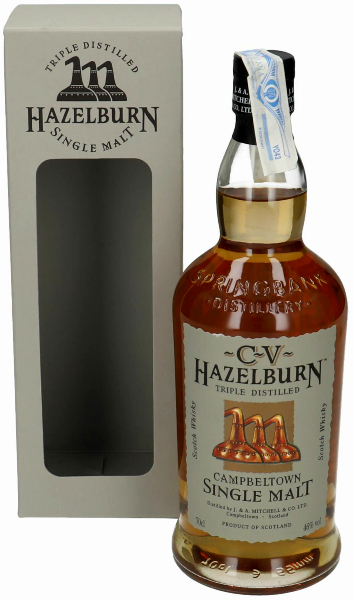 Color: Straw gold.
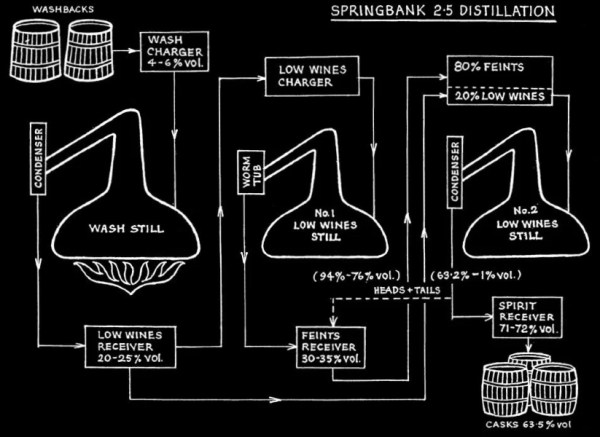 After rummaging some more in the box mentioned in the previous review, I found another sample of interest, but since some data seems to be missing, that one had to be postponed, whilst I wait for some additional data to come in. After some more rummaging in said box, I found another sample from the Springbank distillery, this time around, not a true Springbank, but a Longrow. Same distillery, just more peat and only distilled twice as compared to a true Springbank which is distilled 2.5 times (as shown to the right). When you follow the flow in the chart, half of the Spirit flows through two low wines stills (#1 and #2), and the other half only through one low wines still (#2). In essence it is a 50/50 mixture of two times distilled Spirit and three times distilled Spirit. Fun fact, this Longrow was bottled by an independent bottler called Cadenhead, which has the same owner as the Springbank distillery. Nevertheless, Cadenhead bottles a lot more than Springbank/Longrow/Hazelburn alone and have been doing that for a very, very long time.
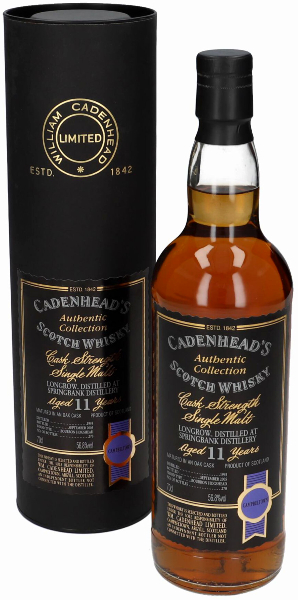 Color: Gold.
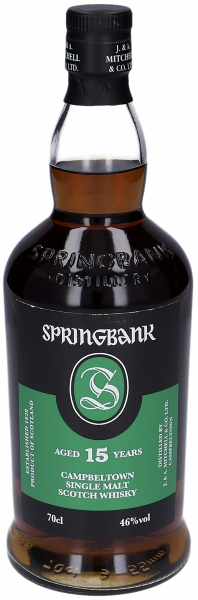 Color: Orange brown gold. Quite dark!
 Master Quill