Laphroaig ‘The 1815 Legacy Edition’ (48%, OB, for Travel Retail, L7345VB1, 2017)

Here is number two in Laphroaig’s travel retail trilogy. We started the trilogy with the smooth and soft ‘Lore’ made for manbuns and suits, where the classical feel of Laphroaig is of weather worn fishermen, storms and salt. Today we are going to have a look at a different, but similar looking travel retail bottling, ‘The 1815 Legacy Edition’. Both bottles have dark green labels on green glass, and in my opinion look very smart and sets them apart from the white labels we know. Just like the ‘Lore’, the copywriting on the packaging is something to forget rather quickly, and luckily Whisky can help you do that.

This ‘1815’ (for short), is made up with first-fill bourbon barrels and new European oak hogsheads which sounds similar to the make-up of the ‘An Cuan Mor’ and Ardbeg’s ‘Corryvreckan’. The ‘An Cuan Mor’ has spent around 8 years in first-fill Maker’s Mark barrels, after which they were finished for a further two years in virgin European oak casks. Laphroaig have more bottlings using virgin oak, like the ‘Select’ and ‘QA Cask’ (Quercus Alba), but both bottlings use American Virgin oak, giving off more vanillin than European oak, which is more about tannins. I’m guessing they changed the name of the ‘An Cuan Mor’, as well as the packaging, because (some of the) timings for the ‘1815’ are different. Nevertheless, knowing I rather liked the ‘An Cuan Mor’, I guess this should be a very nice Laphroaig as well, contrary to popular belief.

Color: Dark Orange Gold

Nose: Soft, fruity and ashy. Definitely starts with the same Christmas spices as the Lore. After a while these spices just disappear, or are overpowered by other aroma’s. Soot. Creosote. Quite a big nose this Laphroaig. Dirty. Love it. Along for the ride comes this fruity fresh citrus note and it retains a bit of its sweetness. All in good balance. This one shows some earthier notes as well. Maybe more restrained, but also somewhat more promising. A hint of peat I know from the 10yo ‘Cask Strength’ bottlings. After some breathing more of the restrained beauty emerges. I’m liking where this is going. Only just now more woody notes come along. Yes fresh, virgin oak, but different from the omnipresent virgin American oak. After a while a metallic breath of fresh air whiffs by. After drinking this, the nose takes it up a notch. Getting better and better over time. Fresh oak and a lot of depth. In this sooty, tarry nose lies a nice and white floral heart (and some yellow fruits as well). You have to inhale as if your life depends on it, but it is there ready for you to behold.

Taste: Sweet yellow fruits in sweet yoghurt and Greek style yoghurt. Even more liquorice than ‘Lore’ had, and the whole starts out much harsher, but also more honest and more powerful, although that term should be used lightly here. Dirty is a better word, ashtray. On entry this reminds me a bit of some Rhum Agricoles. Ginger notes combined with some nice sooty notes. Sharp, dry fresh oak. Yes lots of wood influence, especially the acidic oak could be a wee bit less. Definitely some virgin oak, but less vanilla and butter-like so the more tannic European oak influence makes sense. Compared to this, ‘Lore’ was sweeter, easier, more polished and seemingly more refined. Definitely a lot of wood now and the ashes and soot remain. Spicy and bitter. Warming going down. It still doesn’t resemble a proper Laphroaig like the 10yo ‘Cask Strength’ version, but closer to it than the ‘Lore’. Nope, the difference is much greater than the difference in ABV alone. Way longer finish than the ‘Lore’, with wood, and a slight bitterness. Tannins and even a soapy element. Tarry and bitter. Warm asphalt. Dirty for sure. Maybe a bit less balanced than usual, but no problem in this. Still don’t discard this Laphroaig’s sweetness, it might be big and dirty but it also has plenty of sweetness underneath. Winey a bit… no they didn’t, didn’t they? PX, in this? (They did with Ardbeg ‘An Oa’).

As said above, this one doesn’t get a lot of love from other people, but considering this is a NAS and the virgin oak doesn’t overpower the whole, I’m actually pretty amazed with what was achieved here. I found it a Laphroaig and even a tasty one. I’m not against the usage of virgin oak, as long as it is done sparsely and done with taste. It works for me in this and it works for me in Ardbeg’s ‘Corryvreckan’. Even though this is more raw and unrefined, less balanced even, I still would prefer this over the Lore. However, if you prefer Lore over this, I can definitely understand that as well. Having said all that I actually prefer ‘Corryvreckan’ over the ‘1815’. Its just better and has a higher ABV (which I like) to boot and costs less. Easy.

Points: 86

‘The 1815’ H2H ‘An Cuan Mòr’ The ‘1815’ is slightly darker in color. Nosing them, I would say that they seem very similar, with some slight differences. The ‘An Cuan Mòr’ seems more mature and slightly better balanced, with a nice, warming bonfire note. ‘1815’ seems somewhat simpler, yet also more rough (in a good way as described above). ‘1815’ is waxier and has these wonderful whiffs of Christmas spice. Given more time they both come closer to each other. The differences in taste are a bit similar to the differences in the nose, where the ‘1815’ seems a bit rougher and more oaky, shorter in barrels, longer in the European oak? Both are essentially the same Whisky and the differences described may be accountable to batch variation, and not because they are blended differently. Both are good, and almost like twins, but the beauty lies in the details. And trying them both together, there is one that starts to shine a bit more, let it breathe a bit and the ‘An Cuan Mòr’ is the (slightly) better one, especially when tasting it, it is better balanced, more complex, just better. Still, I prefer both over the Lore, which for a Laphroaig is too easy, too soft, maybe even a bit weak. But that’s just my opinion. For me it also lacks complexity considering older cask(s) were used. It just doesn’t impress, but bad it is not.

Review #750.

Laphroaig ‘Lore’ (48%, OB, for Travel Retail, L8297, 2018)

When surfing, reading the odd review or two, I find that NAS and/or travel retail Laphroaigs don’t get much love and sure enough, are even hated by many. For instance, Lore and the 1815 Legacy Edition are the replacements for previous travel retail bottlings like the PX cask, QA cask and An Cuan Mòr, to name but a few. So, why this dislike? First of all, do they taste bad, or are they badly made, do they taste super young, unfinished?

Laphroaig has been taken over by Beam-Suntory, and since then, a plethora of NAS travel retail offerings have emerged. Big Bad company trying to make a lot of money with supposedly immature Whisky over your back, coaxing you out of your hard earned cash. Maybe that is the reason these bottling do not recieve a lot of love? Or is it the travel retail channel, making them a little bit harder to get, although I see all of these bottling in lots of shops. Also, travel retail also has some sort of stigma of offering mediocre, highly reduced (often to 40% ABV), litre bottles. And last but certainly not least; NAS, which often means lots of three year old Whisky mixed in, or so we, the consumer, like to believe. By now we don’t trust anyone, or any company, anymore. They are just in it for the money and not for the art of making Whisky, made for us the discerning drinker, and lover of malts.

In Laphroaig’s case, the bottles which are to be replaced, seem far from sold out as well, even when marked down. So shops are stocked up with many Laphroaig NAS bottlings. Being a big fan of the older/other bottlings, the 10yo (Green Stripe) Cask Strength comes to mind, or even the 10yo at export strength (43% ABV), the 15yo, I somehow lost interest with all these new NAS bottlings.

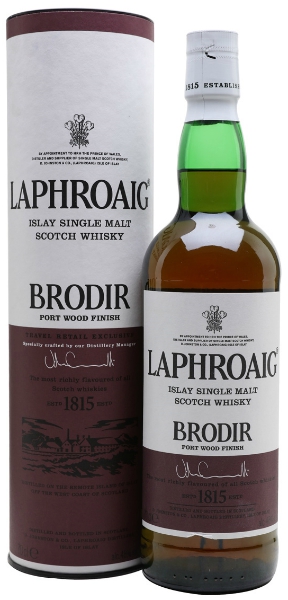
However, time has come for me to have a go at some of them. The An Cuan Mòr I have reviewed earlier, and I liked it, where lots of fellow drinkers didn’t. I will be the first to admit that it isn’t a daily drinker type of Whisky, but still the quality is there (for me), and I did like it. So which one of the “new” Laphroaigs to pick then? And what if they aren’t any good, as many people are so passionately claiming? In comes plan B. Bottleshares! Always a good way of getting to try expensive bottles without losing a lifetime’s worth of savings, or for spreading the risk in case of imminent anticipated disappointment. Is the risk low, share it/buy it with one friend. This time however the risk seemed pretty high, (I so believe everything I read), so time for a bottle share with three friends, which was a first for me. I still have to give the parties involved (parts of) their share, due to low stock of empty sample bottles. Through this four-way bottle share, I got the “Lore” and “The 1815 Legacy Edition”, and I bought a whole bottle of Brodir, which seemed a somewhat safer bet.

Lets start with Lore. On Tweet-ter John Campbell mentioned that Lore contains: “7 to 21 year old liquids with 3 more ages in between” so if it was stated on the label it would have been officially a 7yo Whisky, so no 3yo NAS people, even though older components were used to make this expression, so let’s call it by its name and not its unstated age, I give you: Lore…

Color: Dark Gold

Nose: Very aromatic thick smell. Sweet, syrupy, but not sugary, no, more like condensed sweet smoke. Perfumed smoke, Christmassy smoke. Cigarette smoke infused car interior. Licorice and an amazing freshness hovering over it as well. Quite promising right from the start. Very fragrant and spicy. Smells wonderful and different from most other Laphroaigs I know (mostly those bottled a while back). Paper announces the turn towards the softer side of Laphroaig, since it becomes very medium and soft, still meaty and smoky though. Velvety, almost, and still a bit sweet smelling. Some fruity notes and when smelling/drinking these, whiffs of black fruits are sometimes noticeable. Very soft peat, mostly from the well aged kind. So the older casks are definitely recognizable. No wood, not even soft wooden notes, no, its fresh and thick (almost impossible together), and very fruity. Sweet and accessible. To me this doesn’t smell like a travel retail exclusive but more as a holiday season exclusive. Softer than usual. Warming fire place and hardly any peat. This one is about aromatic smoke. Well done thus far, now let’s taste it, since something’s gotta be wrong with this, it just has to.

Taste: Black and white powder, liquorice and quite sweet. Bassetts Liquorice Allsorts. Sweet, also on the lips. Even though this has 7yo Laphroaig in it, it still isn’t heavy on the peat. Reminds me a bit of An Cuan Mòr, even though this is not its direct successor. Again more a smoky one. More of the softer stuff comes forth. The whole of the Whisky is sweet, dominated by it in fact and the lack of upfront peat makes it also very drinkable. Not sure about the sweetness in the long run though. Makes it a bit flatter, smoother. I hate that word when describing a Whisky. Smoky yes, peat, no, not so much. Starts out quite sweet and going through the body of the Whisky, the drier smoky notes take over. Salty lips, which is a nice effect after the initial sweetness. Somewhat simple in its approach. The finish is somewhere between short, shortish, cloying sweetness and of medium strength/length at best. The aftertaste; only some sweet liquorice again (and some smoke). Quickly gone. Quite a simple Whisky actually and definitely from Laphroaigs love-it-or-hate-it series. Nope for this one, Laphroaigh came down from it’s big rock in a storm, to club level on Ibiza. Miami Vive attire. Don’t I like it then? It’s nice, its different, still made up of good casks. A bit to sweet, for my taste, and therefore a bit too flat, and definitely too short. Laphroaig is always a bit sweet, but in the old days, most of it was well hidden by all those sea and peat aroma’s for which we love Laphroaig. The taste is ok, but it is the nose that presents all those awesome aroma’s. The original price is too high for what it is, but I paid half price for it (even before the bottle share), and then it is one you shouldn’t pass by, or maybe you should, because maybe one of the others mentioned above, might be better…

Knowing now what kind of Whisky this is and how it tastes, the copywriting on the packaging is a load of BS. “The richest of the Rich”, or, “…is our richest expression ever”? WTF? (I just stopped believing everything I read). Some Laphroaigs definitely are, but this Lore, nope, sorry, metro man territory, yes, manbun, yes, tailored suit, yes, this is for the travelling business class metro man, with coiffured beard. Doesn’t even come close to how a proper Laphroaig can be and should be. Darling can you pass the green stripe please?

Points: 84

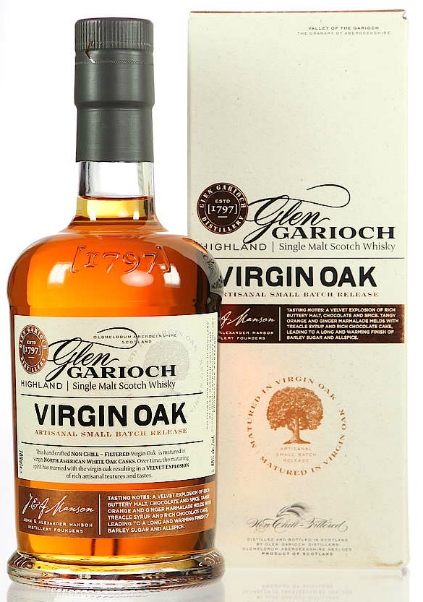
Glen Garioch ‘Virgin Oak’ (48%, OB, 2013, L132293)

Whisky is already around for quite a long while. Just pick up any general Whisky book, have a look at chapter one and the first year mentioned is definitely a long long time ago. In all that time, Single Malt Whisky was always about ageing in previously used casks. Oloroso Sherry casks turn out to give nice results, but also the abundance of Bourbon casks showed us, that wonderful Whisky could be made with those as well. So, Single Malt Whisky is to used casks what Bourbon is to new casks. For centuries and centuries this situation stayed like that. It was traditional and just the way it worked, why change it? Many variants were tried before and these two were the ones that worked best. However, the world is ever changing, and the demand for Sherry casks has risen considerably, since Whisky isn’t the only distilled spirits industry interested in these kinds of casks. Also, I guess, the consumption of Sherry is lower than it used to be in the 60’s and 70’s. In comes the adventurous modern Whisky drinker and the modern Whisky industry, both with modern ideas (and facing shortages and steep prices for Sherry casks). Modern marketing is all about product diversification, catering to the adventurous or novice Whisky drinker. In time there just had to be someone, sooner or later, who would come up with the novel and outlandish idea of putting Scottish new make into a virgin oak cask. How bold!

The use of virgin oak is one of the steps taken by the industry alongside f.i. the explosion of NAS bottlings. Some virgin oak casks were blended in to the final Single Malt Whisky expression to add an element to the Whisky, or used merely as a finish. Laphroaig ‘1815’ and Ardbeg ‘Corryvreckan’, to name but two (again), are known for using, in part, virgin oak. Sometimes with European and sometimes with American Oak. Maturing full-term though, was initially unheard of! Nevertheless today there are several full-term matured virgin oak bottlings, and this Glen Garioch from 2013 is one of them, fully matured in North-American white oak. Deanston has another. Glen Garioch calls this an artisanal small batch release. The public calls this a “Bourbon”…

Color: Copper orange gold.

Nose: Grassy and sappy oak. Green. Sweet and fresh. No signs of new make or under-matured Whisky, but there is some resemblance to the honeyed nose of a Bourbon. Lots of fresh woody notes. Sawdust, caramel. Sweet ginger and some more wood spices. Milk chocolate and oak sap. Green leaves. After these expected suspects, come in the more fruity notes, well one actually. Dried orange skins, quickly to be overtaken by more wood and paper notes. So yes, lots of woody notes, but nothing too spicy or too overpowering. Its fresh, green, sweet and fairly simple.

Taste: Sweet, creamy and slightly bitter, (fresh tree sap). Spicy right from the start. Sweet at first and wood-spice next. Warming going down, giving dried ginger, sugared nutmeg, spicy cinnamon and half-dark chocolate notes in return. The nose wasn’t all that complex and the taste is even less so. It shows you all its got right from the start. No development over time. Quite green and vegetal tasting as well. Like eating the cuttings from your early summer garden. Have you ever cut off a small branch from a shrub or small fruit tree? Remember the smell of the fresh wood, the sappy bit? Well, this tastes a bit like that smells. Towards the finish, still warming and with even more length to it than I expected. Quite spicy, again on cinnamon and the medium bitterness has a lot of staying-power as well. A shame really that the sweetness in the finish is gone. Also it seems to lose a bit of balance towards the end. The finish is not the best part of this Whisky.

So there you have it. A fully virgin oak matured Whisky. Now you know which element this brings to other Whiskies that only use partial maturation in virgin oak. Interesting, yes, there is this dreaded I-word. Full maturation virgin oak is an education. It is something you should fathom, when you want to know stuff about Whisky. To be short, it gives us a rather un-complex Whisky. Wood, spices, and some nice sweetness to balance it out, just lacking in the finish. Slightly fruity but not much.

I always liked Glen Garioch. It is one of those Malts that suit me. Glen Garioch is somehow a powerful Malt, with many possibilities. So if any distillate could handle Virgin Oak, Glen Garioch should be one of those. This is a nice experiment of which recently a second attempt was released.

Points: 81

Even though this score might be somewhat low, I have to admit that I’m amazed this bottle is already empty. No, it isn’t one of those malts you are drinking to get out of the way and replace by something new (and better). I do have fond memories, already, of this one. As I said before, an interesting Malt and and most definitely an education. Goodbye sweet Geery. See ya around.

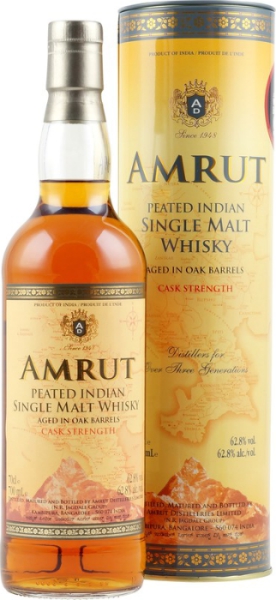
Amrut Peated Cask Strength (62.8%, OB, Batch 38, 2017)

Earlier this year, I reviewed the Amrut Unpeated Cask Strength, which turned out to be quite an excellent Whisky. I wasn’t really surprised, since I’ve come across many nice Amruts. many, but not all of them, because the one I reviewed last was nice, but also a bit unbalanced. A single cask for Europe, matured in virgin oak and finished in a PX-Sherry butt. Nevertheless, it still managed to get 84 points so it wasn’t all bad now was it? The Unpeated Cask Strength batch #87 was definitely better. It might have been a (big) batch, but it still blew the, far more costly, Single Cask out of the loch…ehhh, water. I love my peats as well, so the time has come to review The Unpeated Cask Strength’s supposedly darker brother. Again, I have high expectations for this Peated Cask Strength…

Color: Light gold.

Nose: Just opened the bottle and the soft peat welcomes you already. The first aromas already enter your nostrils even before you pour your first dram. From the glass now: youthful, lively and playful. Nice fresh and fatty peat with hints of clay (Das Pronto) and a greenish edge to it. Fresh and fruity. Wine gums and hints of sweet cherries. Sunny and summery, so definitely not a darker brother, ab-so-lutely-not. Nope, peat is not always about winter storms, twilight or salty sea spray. By the way, this Amrut has another trick up its sleeve. With this one it is possible to momentarily “forget” about the peat and smell what it would be like without the peat, as if you can turn it off. Underneath it is a very fruity, light and bright Whisky. Flip the switch and the peat comes on like a light. Next, more freshness and some smoke, way more balanced than the virgin/PX Amrut. Somewhat late hints of fragrant cedarwood and more meaty components emerge as well. Some floral notes and some Christmassy perfume. Well what a surprise it is, giving this dram some time to breathe. Dusty notes emerge next, as well as some sweeter notes. This one is more complex than its unpeated brother but also less bold, who would have thought comparing a peated version with an unpeated one.

Taste: Spicy, peaty, hot and slightly bitter at first. Slightly sweet, but not much. A lot of wood, with matching medium bitterness. Hmmm, some virgin oak again guys? Caramel with almonds and dead cigarettes in an ashtray. Much simpler than the nose, quite some bitterness as well. I get the feeling this isn’t finished yet, bottled too young, bottled too soon, but on the other hand, ageing this longer on these active casks would have extracted even more wood and bitterness, so no, not bottled too soon after all… The finish is bitter. The aftertaste is, luckily, less bitter and warming. In fact the aftertaste is better than the finish. I suspect virgin oak, too much of it. The taste is a bit of a disappointment after the nice and complex nose, and especially disappointing after the great unpeated cask strength version. It is also a bitt dissapointing aftre the virgin/PX. Its just too woody and bitter.

First of all, the color of this batch was lighter than that of its brother, so please don’t take my remark to literal. After nosing, the peated one is definitely not the darker brother, the contrary actually. Yes these two Whiskies are brothers, but the unpeated version seems to me to be more mature, maybe it’s the older brother? In this one the wood and bitterness are too much, but the peat is lovely, and much more complex than you might think, and makes this Amrut remind me a bit of a peated Paul John, something that has never happened to me before. Yes, Amrut and Paul John are both Indian, but like the place they come from, they are entirely different. Mind you, India is a big place!

Points: 82

I spoke too soon with the virgin/PX version, because now this peated cask strength version is the worst Amrut I ever had, yet still 82 points. If only the taste would match up with the wonderful nose.

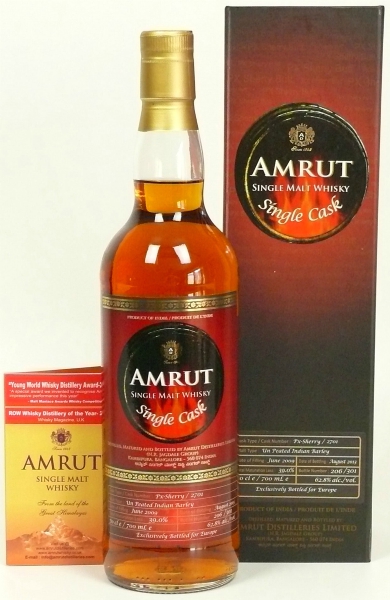
Amrut 4yo 2009/2013 (62.8%, OB, Single Cask, for Europe, Charred American Virgin Oak & PX Sherry Butt #2701, 301 bottles)

After the long overdue reviews of Port, even two of them, from Kopke and Warre and to a lesser extent, a Bourbon, Evan Williams, let’s stay away a little bit longer from Single Malt Whiskies from Scotland. Yes let’s look at some Single Malt Whisky from India! OK, so not completely different, it’s still Whisky, but don’t you worry, I plan to review some other non-Scottish stuff as well. Nevertheless, lets start with this Amrut.

In 2013, (and other years as well), some single casks were bottled for Europe, in three varieties. The Bourbon version I reviewed earlier, this Virgin Oak/PX-Sherry combination we are going to look at right now, and last but hopefully not (the) least (of the three), a peated Whisky matured in a Port pipe. I’ll open this last one soon, right after I finish the Whisky I’m about to review now, and there isn’t much left in the bottle I can tell you. Amruts never stay long on my lectern…

Color: Bright gold with a pinkish hue.

Nose: Highly aromatic. Dry, Indian, exotic (cinnamon) and winey. Lots of dusty barley notes, somewhat enhanced by funky PX. Caramel and toffee notes without the sweetness. Reminds me a bit of Port finished Whisky. Sometimes its like the smell of blood up my nose. Meaty notes as well. Fatty gravy. Soft wood now, a bit cardboard-like. Even if I wouldn’t know it, it is easily recognizable as Virgin oak. Nose-wise not the most balanced of Amruts. Like PX and the Indian Barley/Virgin Oak really don’t like to work together and don’t see each other out of the office. This Amrut needs a team-building session. Funny how up front this sensation is, because I get this instantaneously. Still dusty and drying, with hints of dry clay. Yes Wine, Port, PX. That’s it. If I’m honest, I would say that the virgin oak even overpowers the PX-finish. I’m sure this would have worked better if it started life in a nice American barrel, used before, so not virgin. Maybe then the PX finish would have worked better. I like the use of virgin oak in some Whiskies like Ardbeg Corryvreckan and Glen Garioch Virgin oak as well, but this time in my beloved Amrut, not so much. Nevertheless, still a good Whisky, just not so good as Amrut can be.

Taste: Very hot and stingy. An explosion of flavour. Bitter wood. Cherry liqueur, dark chocolate and even more oak. Unsweet caramel again, mixed with alcohol. Wait a minute, unsweet? There is also this sugary sweetness to it. Warming going down, well, hot going down might be a better way to describe it. Just like the nose, it lacks balance. Everybody was put on this team, but they really just don’t want to work together. Even before I can start to take in the aroma’s, the lack of balance and the apparent simpleness of the Whisky comes to the fore. Lots of wood, overpowering and ruining the balance a bit. Again this is still a pretty good Whisky, it’s just not quite there. After some breathing, the first sips become somewhat sweeter. Lots of virgin oak in the body too. Short, bitter-ish and very hot finish. Wood for sure. Virgin oak in the aftertaste as well. I think we all got a bit surprised by the activity of this wood. What about the PX in this bottling then? not so sure, because this Whisky is so wood-driven. Maybe it’s not the Virgin oak and yet the PX-cask gave off a lot of tannins, or maybe both?

Nope, I can tell you already that for me the Amrut distillate works better with the previously reviewed ex-Bourbon casks, like the Single Cask (with Virgin oak as well, just less of it, apparently) and the regular (or so you would think) unpeated Cask Strength version. Sherried versions like the Intermediate are also pretty good.

Points: 84

And with that this is the “worst” Amrut I ever had. It’s not bad, but there are a lot more of better Amruts to be found. nope, this one is not my favourite expression…

Glenfarclas 16yo 1990/2007 (58.9%, OB, The Family Casks, Sherry Butt #9246, 617 bottles)

And we’ve already reached the end of our short journey of Whiskies left behind by Erik. Professional work has almost ended at our house (the ceiling has yet to be done) and the time has come for me to finish up in true amateur style. The final chapter of this brief tour will be this vintage Glenfarclas. This is the 1990 vintage from the original release of the Family Casks back in 2007. In that year The Grant Family released 43 cask strength single cask bottlings, with vintages between 1952 up to 1994. Many different casks were used, like ex-Bourbon casks, first to even fourth-fill Sherry casks, but also Port pipes can be found in this series, or the many series that followed later. This first 1990 vintage is from a pretty hefty Sherry Butt, I can tell you that!

Color: Warm orange brown. Definitely mahogany.

Nose: Big and spirity. If caught off guard, it almost seems as if whiffs of acetone pass by. Fresh oak, Earthy next. Spicy and meaty, with lots of gravy notes. Honey (The Bee stuff). Perfect thick and cloying Sherry nose. Fresh and woody. Lots happening, with already signs of excellent balance. Soft warm wood, nothing like the sharper style I found in the 25yo Cadenhead Highland Park. No, this is entirely different and also a bit younger. Sometimes it smells like a Bourbon from a very heavily charred cask. George T. Stagg style. Fruity, nutty, yet this still carries those nail polish remover notes. Weaved into the fabric of the aroma’s I mentioned above is a wonderful, and sometimes odd smell of happy red fruits. I tried to describe it differently, but it just smells fruity, sunny and happy to me. The Highland Park, mentioned earlier, could be thick, dark and brooding, more like a gray rainy day. This Glenfarclas, on the other hand, also is a big Sherried Whisky, but happier, livelier, with a more acidic fruity bit. Sometimes this smells like food, chewy, substantial. Hey after the first sip I smell some Jasmine in here too. So a hidden floral bit rears its pretty little head. Nice.

Taste: Yeah big again, very big, definitely loads of wood, with rich tannins and also some bitterness. Oak and ashes. Fruits overpowered and pushed back. Warming. Quite hot with rough edges. You even could call it harsh. Yes this takes no prisoners, and is definitely not for everyone. Very hot going down, this is beyond warming actually. Cola notes, and also some burnt notes. Underneath fruity and because of its age, an oaky bitterness kept well in check. Its only so…hot. Coal, licorice, oaky, its big and harsh but also shows quite some beauty. Something you know is bad for you, but still you can’t help yourself and keep being drawn to it. Very interesting. Its in many ways over the top, woody, drying tannins, yet not all that bitter. Already towards the end of the body, this gets very simple and good. Not a lot of development though. The Highland Park had a lot more going for it, especially after some (extensive) breathing. The finish of this Glenfarclas is about wood, oak, fresh oak, virgin oak, Fresh sanded oak planks, but definitely less bitter then the Highland Park. So chocolate yes, dark chocolate, no, not exactly. Milk chocolate then? Nope, lacks the sweetness of that. No, it’s more like cocoa powder. Yes that’s it. Wood, leather, gentleman’s club. Rich, but in the taste not fruity. For fruity Sherry I turn to old Longmorns and Strathislas.

If I’m not mistaken, Erik brought this bottle with him when our Whisky club went abroad and did a tasting in Hamburg, Germany some years back. When freshly opened this was considered almost to harsh to drink and we all tried to find out why it was actually being released in this new and prestigious The Family Casks series. It’s more do-able now, but still not a Whisky to tackle without gloves. A full bottle of this would last me for many, many years to come.

Points: 85

Highland Park 25yo 1988/2013 (55.7%, Cadenhead, Small Batch, 2 Sherry Butts, 1086 bottles, 13/242)

This is part three (of four) in Erik’s not-so-run-of-the-mill left behind bottles series. This time a super dark heavily Sherried offering from Cadenhead and Highland Park. Highland Park always went well with ex-Sherry casks. I used to be a big fan of Highland Park, one of the first I considered to be of the highest class available from Scotland. It is such a great tasting Whisky, honest, honeyed and humble. At least it used to be. It didn’t shout off the rooftops how great it is, and still managed to have a pretty solid fan-base around the world. Today however, Highland Park (and The Macallan) are part of a humongous marketing machine, which I tend to distrust. Sure the Whisky is still good, and there are still many, many, amazing bottles to be had (for a price), but the feeling is different, the feeling’s gone, sorry Highland Park. Just compare it to the way Springbank and Bruichladdich are marketed. The feeling is entirely different with these. Yet here we have an independent offering of Highland Park.

Cadenhead, by the way, thanks to Mr. Watt, seem to have reinvented themselves for many years to come. This bottling, it doesn’t say so on the label, seems to be the result of marrying two Sherry Butts together.

Color: Very dark orange brown, just shy of a mahogany hue.

Nose: Deep and dark, lots of oak, making it fresh. Toasted oak, and some warm plastic, which fades and disappears luckily. Fruity heavy Sherry. Meaty oak, and licorice. The wood also has quite a big floral component. Perfumy even. Next I got some Rhum Agricole “sweetness” mixed with dark chocolate. This one is neither red/black fruity, as old Longmorns nor thick and cloying. In the end it has more of the latter than the former. Elegant wood, yet definitely not old skool. Good Sherry, but modern. More and more whiffs of Rhum Agricole and cold gravy. Also drier spicy notes when you let it stand for a while.

Taste: Starts sweet and very nutty. With emerging bitterness when swallowed. A Doppler effect of bitterness. The bitterness is kept in check, so no problem here. Good tannins, not drying the mouth. Silky texture. Hints of vanillin and milk-chocolate pudding. Fruity and again this bitter end of the body. And a big body it is. Well it has been in rather active Sherry casks for 25 years, so no surprise here. Paper and clear glue. Honey, the stuff of bees, not your darling, I hear you ask? Nope, no not really, although it does remind me of licorice candy made with honey. Hardly a Highland Park. Its about the Sherry cask this one. Black tea bitterness, but with a nice edge of coal. Steam punk, but not old skool. The more this breathes in my glass the “older” it gets. More coal, and more steam (and motor oil). It may lack a tiny bit in complexity, but it makes up for it with development (in my glass). The finish is simple and again bitter (medium), but the body is very good (it finally does get into the realm of Longmorn after extensive breathing). Long aftertaste of oak, licorice and black fruits and yes, the bitter bit has the longest breath of all the notes. So it has its good and less good points. Maybe this should have been bottled a few years earlier?

Letting it breathe is a must for this Whisky, it makes all the difference.

Points: 87

Benrinnes 15yo “Flora & Fauna” (43%, OB, L8044CS000, Circa 2008)

Rummaging around the bottles Erik left behind, I found this Flora & Fauna Benrinnes 15. Wait a second, didn’t I already review this Whisky? Yes I did. Almost two years ago I reviewed The Flora & Fauna Benrinnes 15yo. Only that one was an earlier bottling from 2001 and this one was bottled some seven years later. But why not? I remember I liked the 2001 bottling, and we know Diageo doesn’t like batch variation, so now we have a chance to find out. All in good “relativeness” since I have to compare it with the “other” review, since I don’t have any of the 2001 stuff around any more. I’ll write this review first before re-reading the other review.

Color: Orange brown with a copper hue.

Nose: Sherried, with big notes of (fresh) oak. Dark and brooding, somewhat meaty and tarry with strong notes of (sweet) licorice. Dusty paper. Green notes, vegetal, with crushed beetle. So definitely both flora and fauna are in this Whisky. Hints of coal dust, and also something sharper. Smoke? Prickly. I can’t find typical PX-markers, so I do believe this is Oloroso Sherry only. Quite a nice Sherried nose. Seems to me pretty good casks were used for this bottling. Is it fruity? Yes fruits can be found, but not those I expected, what I find is marginally sharper, more acidic. Something like warm apples. Compote. Hints of raisins and honey. Nice stuff. Not a lot of development though. Every time I smell it it is more or less the same. So nice and big, very influenced by Sherry, but not overly complex. Hey, the paper note re-emerges.

Taste: Well who would have thought that the first note I taste is of warm apples again? Very nice as a whole, tasty stuff. Not as big as expected, but highly drinkable. Warming at first and quickly turning into a a pretty short finish with not a lot happening, apart from some sweetness from a coffee bonbon, in the aftertaste as well. Some woody bitterness, but the wood itself, pretty invisible actually. Hints of paper and cardboard, but nothing off putting. After every promising sip it is amazing how short the finish really is. Relatively big nose, big start, but weak finish. No off notes, but it is short. yes, Sherried, hints of some kind of petrol based solvent and woody bitterness. Not so dark and brooding, but sweetish and easy going. Hints of coals dust. Not as complex as it might have been, but its strength is its accessibility and overall taste. Pretty simple for a Sherried bottling with 15 years of age behind its belt.

It is a good Whisky, but lacks a bit of oomph, a bit of complexity and a bit of length. Other than that pretty alright for the price. I don’t have to read back my earlier review of an earlier bottle, to tell you the 2001 is better than this 2008 bottling. Having read the previous review, I believe, both are quite similar. Only the 2001 seems much bigger and longer than this 2008 offering, hence the score. I hope I get a chance to review an even more recent bottling of this, so see what happened next.

Points: 84

Talisker 20yo 1980/2001 (50%, Douglas Laing Old Malt Cask, “Tactical”, Finished in Sherry Wood, 504 bottles)

Earlier this year I had a leak in my house form a burst cold water pipe. Some demolition was done fixing the problem, so as of this past week and for three weeks in total, I live temporarily elsewhere, whilst several professionals fix up and better my place. My mate Erik offered me his house and I gladly accepted. Erik already sold his house but moved in with his girlfriend earlier than both expected, hopefully that will go well. If you think this is amazing, then let me tell you he also left me some open bottles as well, so I can review them here. And not your average run-of-the-mill, bang-for-your-buck Whiskies as well! 6.5 years ago I already did some kind of short job on another Tactical from the Old Malt Cask range and now, finally, I have a chance to review another one. Thanks mate!

Color: White Wine.

Nose: Slightly peated and sweet. Grassy and vegetal. Organic and slightly fruity acidity with every first sniff from my glass. Old scool. Slightly nutty, fresh and pungent. Hints of warm motor oil and definitely nothing like a modern Whisky or officially released Talisker I know of. If you move it around your glass for a bit, the sweetness emerges first, quickly to be taken over by a lot of the other aromas. Cooked red beets, and more of the sweetness, and some smoke again. Aromas released as by an indicator light. Sweetness on, sweetness off, sweetness on, sweetness off…More fireplace notes, with even whiffs of almost overheated plastic, and back to the green grassy notes again. Indicator light all right. Coffee, mocha, cardboard and hints of well aged Calvados. Dark chocolate bonfire. Sugar water, warm water from doing the dishes, peach and apple, for fruits. Yes, there is a lot happening here. Unique smell, very much the smell of Whisky from yesteryear. A smell to die for. Ticks boxes, awakens emotions. Great Scot(t) (and Bruce) almighty!

Taste: Starts a bit bitter, with charred wood, and again green and vegetal. Warming going down. Strong coffee notes with almonds. Smelling it after the first sip makes the smell even better. Second sip starts with the slightly bitter coffee notes with now some added fresh fruity acidity. A narrow band of green apple skins. The whole is not as big and complex as the nose promised. Next some more of the peaty notes. No heavy peat, but yes, the classic Talisker pepper attack is here people! Hello there! After the silky bitter notes finally some sweetness appears, to balance it out. Still this killer smell, wow! Sure, big on wood, peat, yes, but not as earthy nor as fatty as we’ve grown accustomed to from the usual suspects. Slight hint of warm plastic on the palate as well. Still a lot of coffee notes and dark chocolate stay on for the warming finish. The finish itself is pretty long, built around peat and wood. No big aftertaste though. 

The smell is stellar, old scool and well balanced. Amazing length, and the longer you let it breathe the better it gets, almost as if there are no limits to the development. The taste less so. Lacks a bit of complexity and evolution in my glass. Not overly bitter, but definitely bitter and wood driven. Could have been “bigger”, more complex. If only the fruity bits and some acidity could have made their way through, I believe it would do much better. Nevertheless, this is still a sort of classic Malt. From days long gone. I love it, its good and definitely an experience. 

Points: 87

Springbank 15yo (46%, OB, 18/375)

Ahhh, Springbank 15yo. Not the first one on these pages. A few years back I wrote a review of an older batch from around 2003. After 15 years (since this example is from 2018), the glass bottle is still the same, but the label has changed quite a bit along the way. I’ve tasted quite a few of these latest batches, but not every batch. All are good enough to buy blind and many are excellent to boot. This bottle isn’t open all that long, and still I have to write this review a bit in a hurry, before it’s too late and all is gone…

Color: Gold.

Nose: Nutty and Sherried, and for a Springbank 15yo of recent years, pretty restraint. Waxy and dirty, but not as much as other batches. Hardly any smoke, but there is some nice layer of mild peat and spicy wood and even a tiny hint of sulphur, way in the back. Yes a bit dirty. When it gets some time to breathe, it opens up nicely. Typical Springbank, we love. Next a fresh, slightly acidic fruity note. Some wood, almost like fresh oak and tree sap. This however, also sets it apart from the much fattier, deeper and more brooding batches of the 15yo. Now some meat, gravy and paper (no typo, paper, not pepper), and some more oak. It’s great but “narrower” in comparison. Hints of licorice and cherry liqueur. Mon Cherie. Fresh and sharp oak abundant with some hidden chlorine. After a while the acidic fruit turns to orange juice, with a slightly more burnt and perfumy note simultaneously. This has no problem opening up, but still it’s a bit restrained compared to other batches of the 15yo with the green label. More restraint, but definitely a wonderful smelling Malt, keep it moving in your glass for a while, it needs a lot of air still, and will reward you for it. Amazing how Springbanks can smell.

Taste: Waxy, slightly peaty and fruity. Sherried. Licorice and upfront wood. Initial sweetness and no bitter oak. Even though it’s quite fatty, it also is remarkably fruity underneath. Yes, some black fruits from 60’s Bowmore or Redbreast 15yo (the L5). Wonderful. The body is big right from the start, but right around the mark it releases the black fruits, it also get a bit thinner and slightly unbalanced afterwards. There is also a wee cheesy note. Fresh cottage cheese. “Thin” is it’s only flaw compared to other batches. Where other batches stay big and Sherried, this chickens out a bit. A flaw only covered by a quick next sip. This next sip shows some Sherry, but also wood and smoke, coal dust and sweetness, but already covers the black fruit. The nuts appear here as well. So not so big body and a medium finish at best. Truth be told, the finish is rather short for a Springbank, all very typical for rotation 18/375. If you want to get the besy out of this dram, you must give it enough time to breathe. Keep it moving in your glass, and it will get better (and strange enough: sweeter).

This may not be the best batch of the latest fifteens, not by a long shot even. However, don’t make the mistake thinking this is a mediocre Whisky, because it still makes everybody else jealous! As with many Springbanks, this needs a lots of air. Another one I would recommend to leave the cork off for a while in the beginning. This might need even a day or two without a cork to get better. Try it, be brave. Capiche?

Almost hard to believe this one is 15 years old and the Longrow from 1992, only 10 years, since that one has even more depth, and is in my opinion definitely the better of the two.

Points: 86