After an Inchgower I reviewed earlier, here’s another example from the likes of Raymond Armstrong. If he isn’t distilling his Bladnoch, he’s on the look-out for casks of sometimes unusual distilleries. Worth a look, since he isn’t charging a lot of money for these forum bottlings. By the way, his son, Martin, has even more cask strength single cask whiskies on offer.
 Balmenach was licensed in 1824, but existed much longer as an illicit farm distillery called Balminoch. Not earlier than 1992 the first official bottling is released, a 12yo Flora and Fauna. Not long after this United Distillers (now: Diageo) sold Balmenach to Inver House Distillers, with wich came an end to the Flora and Fauna bottling.
The new owners released between 2000 and 2002 only three rare bottles. A 27yo from 1973, a 28yo from 1972 and a 25yo from 1977 celebrating the queens jubilee (still shaped bottle). No more official bottlings have emerged yet. Today Balmenach is owned by Thai Beverages.
Color: Gold
Nose: Sweet and malty. Citrus, oranges with creamy wood and custard. Very powdery and paper like. Clean, what you smell is what you get. Creamy wood is the main part, but nothing overpowering. Candied apricots. Hints of cigarette smoke.
Taste: Spicy wood, sweet and sour. The sweet and sour is fruity. Again candied apricots and bitter lemon peel. Lemon with vanilla. Quite sweet and a lot of wood and bitterness in this one. Warming beer with its hoppy finish.
Actually a quite nice whisky. Fruity, overall likeable, with just one ‘flaw’. It’s quite woody and bitter. Although not overpowering.
Points: 84
Thanx to Erik L. for bringing the bottle!
 Old Bothwell is a company from Bothwell, Lanarkshire Sur near Glasgow Scotland. It’s a company that specializes in bottling their own stock of wines and spirits with the possibility of personalized labels. In the whisky-world they became quite famous for bottling a series of great Port Ellen’s. Alas Old Bothwell just bottled their last cask of Port Ellen, so now they will move into other whiskies. First up are a Tormore 1988/2012 and Macduff 1980/2012.
 Again rummaging through my box with trophies collected on my travels, I found another Port Ellen. I like Port Ellen, so please forgive me, for yet another review. Port Ellen is the closed distillery from the immensely popular island of Islay, known for its peated whiskies. Always around in abundance, prices were ‘moderate’ for a closed distillery from Islay. Today stocks are depleting, and prices tend to rise sky-high, and it won’t be long untill there’s nothing left. Even if casks still lie around, Port Ellen isn’t getting better by ageing even longer. Maybe casks will be transferred into stainless steel holding tanks to stop ageing and fetching a lot of money when bottled is a few years’ time. Who knows. Since 2001 Diageo releases Port Ellen annually in their special release series. The first release fetching at least a 1000 Euro’s at auctions…
 Port Ellen was founded in 1825, and was sadly closed like many others in 1983. Although the distillery is dismantled, the site is still there. Today it’s home to Port Ellen Maltings. Where barley is malted and all the other distilleries of the island are customers…
 Earlier I reviewed a very old independent
 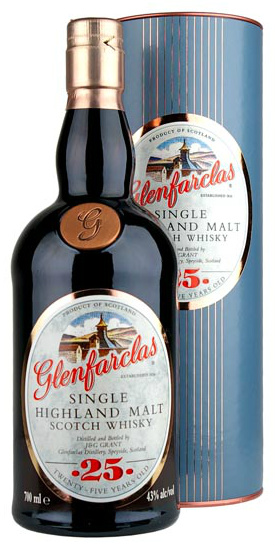 Color: Orange Gold.
 Cardhu is a very special distillery in the portfolio of Diageo, since it is their biggest selling malt (Spain and France mainly), but when talking to other enthusiasts the response isn’t all that…well enthousiastic. There is only talk of old bottles of Cardhu. Since 2006 a special cask reserve is issued, which isn’t welcomed with open arms, but since it sells so well, it must be the ultimate entry-level whisky. Personally I don’t like it.
 Founded in 1811 by the illicit distiller John Cumming, who became legal in 1824. In 1884 the old distillery is replaced. Purchased by John Walker & Sons in 1893. Then in 2002 a small revolution took place. Cardhu, the whisky was silently changed into a vatted malt. (Several single malts blended together). The bottle and the label stayed the same, just the word ‘single’ changed into ‘pure’. Well this didn’t last long, in 2004 the ‘pure malt’ was withdrawn. Luckily in 2005 this 22yo was issued.
 Time for another Lowlander. Rosebank this time. I reviewed a
  hoping for a resurrection. Who knows. For the time being, lets see if this Rosebank is any better than the Glenkinchie reviewed earlier.
 …and here is my second entry for our Genietschap gathering. Yesterday I reviewed an older expression of the ‘standard’
  Color: Copper Brown.
 One of the other gems he found there, was a very old 20yo Sestante Mortlach, so the theme for this year soon became Mortlach. I have to admit, I really love a tasting with a single distillery theme, especially when a lot of bottles are brought in. Strange enough that was not the case with Strathisla, but with Mortlach we had 14 of them, and an extensive aftertasting with some other gems. (Laphroaig 10yo unblended bottled in the mid 70’s!).
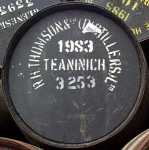 Teaninich isn’t amongst those superstars of Single Malt Whiskies around, but it has a fanatical following with certain enthusiasts. Well I’m one of them. Almost every time I taste a Teaninich, blind or not, this always tickles my fancy. I connect with it. It suits my palate. Dare we say: “For reasons not even science can wholly explain…”
  Teaninich was founded in 1817. In 1970, yes a small jump in time, a whole new six still ‘distillery’ was built alongside the current one, consisting of four stills. The new one was called the A-side (The old stuff was therefore called the B-Side). They worked together as one distillery. In 1984 the old distillery was mothballed, and 15 years later, demolished.
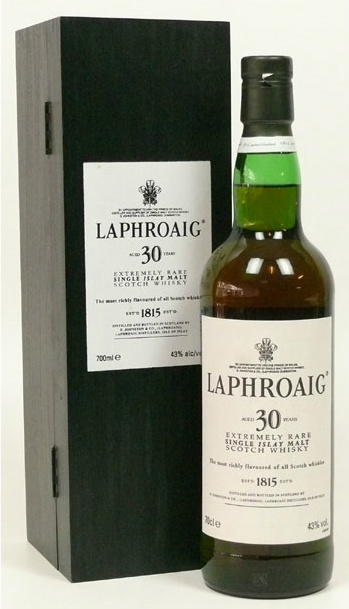 Time for a nice old Laphroaig. The
  Master Quill