And suddenly the sun came out! Nice temperature so I felt like a nice light and refreshing wine. I have a batch of Pinot Blancs lying around for the white asparagus season, but thought I would give this one a try by itself, for me you never can go wrong with an Alsatian Wine. This Pinot Blanc is made by Domaine Zinck from Eguisheim, Alsace, France. Zinck have four great Grand Crus: Eichberg, Pfersigberg, Goldert and Rangen. The last two I also know from Zind-Humbrecht. Spectacular stuff. This Pinot Blanc is from the “Portrait” line of wines and are made as an introduction to Wine. We call that entry-level. 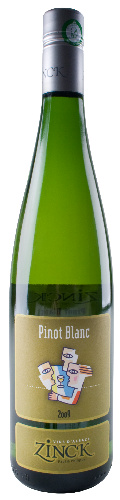
Color: light yellow with a slight green tint, medium viscosity
Nose: Flowery and half sweet. Meaty and buttery with hints of earth. Quite a “thick” and aromatic nose (lots of yellow fruits), seems sweet at first. Vegetal and herbal, maybe sage. Coastal (the terroir is silty), and fruity, melon-style.
Taste: Syrupy sweet. The acidity is in check. The sweetness and the acidity somehow doesn’t seem to be well married together. Something not quite right and I can not put my finger on it. The fruity melons are here too, and just like the nose, “thick”. Quite some bitterness too, that stays well into the finish. Where it shouldn’t be. Chewy and behind it all sweeter than it appears to be.
Pinot Blanc is not Alsace’s favourite grape variety, and I guess this wine shows why. It is recommended with food, asparagus. Don’t have that here at the moment, but I’ve tried it with a salad, OK and with spicy chicken legs, that was quite good actually. Since the wine is quite thick the Pinot Blanc managed the spicy chicken well. Easily drinkable. I personally didn’t like this as much as a lot of other wines from the region, but it does seem to fare better with food than on its own. Well just a matter of taste really, since my wife did love this on its own and is more than happy to drink the rest of the bottles that are in the cellar.
Points: 77
 Color: Gold, with a slight pinkish hue.
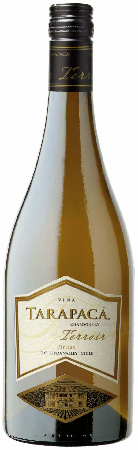 Color: White wine
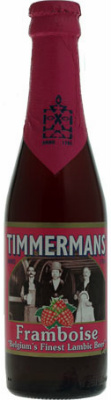 Timmermans is part of
  Color: Light Gold.
 It’s a rainy day today, grey and bleak and I am a little bit under the weather too. Luckily I have some notes lying around I can work with. Otherwise not actually a nice day to go out and have a smoke. But a nice day to put some Art Blakey on. I have A Night in Tunesia & Moanin’ to warm me up and write something about Le Hoyo du Maire.
 Hoyo de Monterrey Le Hoyo du Maire (30 x 100mm, Entreacto, Small Panatela, Box code FR NNSR)
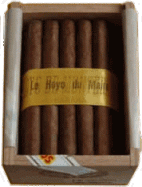 Taste: Oily wrapper and salty on the lips. Just lit and it tastes immediately great. Very woody, but a great overall taste. The wood becomes a little bit sour but the cigar still has good balance. The draw and the smoke are good. It’s a sour-woody and spicy cigar. Ash is light grey with some whites. As often, ash has tiny white spots. It’s very thin so it is stronger than your usual Hoyo. A cigar to ‘sip’, otherwise it will burn too hot. Sometimes you do get small whiffs of…fireworks. The development is linear, still it does have a lot of character for such a small cigar. The draw diminished in the second half, but rolling it between my fingers solved this minor problem.
 A very new brand, established just in 1997 by Don Alejandro Robaina, one of the best tobacco farmers on the island of Cuba. Don Alejandro lived a full life and died of cancer in 2010 being 91 years old. Who said the Cigars are not good for you? The major part of his crop was used for wrappers, he was thát good. Today this multi-local brand with minor market share has only three expressions left, since two of the five expressions were deleted.
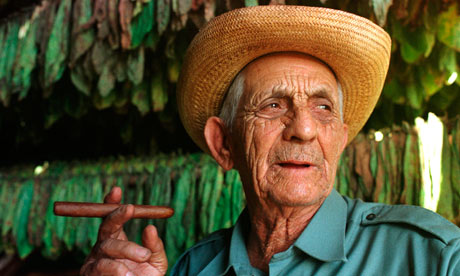 Taste: Already after a centimetre or so, it’s obvious that this isn’t a beginners cigar. Its tarry and very spicy. Hints of petrol. Wow, heavy cigar, that goes wonderfully well with water and this made my espresso taste like something for children. I guess that if you want this to accompany a drink, you should pair this with a very heavy rum, a sweet one perhaps. Lots of smoke. Some kind of industrial grade? It’s funny it’s so heavy-duty since it smelled so elegant a cru. Ash is gray, dark grey and black, with countless tiny light grey spots. No white ash whatsoever. Some plastics and popcorn in the finish.
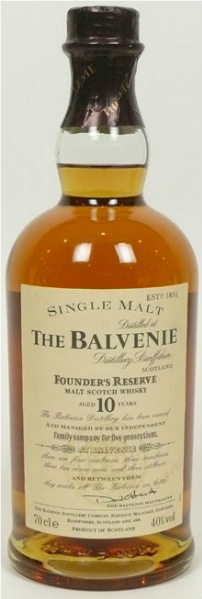 When looking around. and being new to Single Malts I almost fell in love by the shape of the bottle and really liked the way their labels looked. Not a lot to choose then. There was this 10yo (Founders Reserve), a 12yo (Double Wood), a 15yo (Single Cask), a 21yo (Port Wood) and a 25yo (Single Cask). And there was one limited oddity, the 17yo (Islay Cask). Nothing more. Today like with others there is more choice than ever. Lets have a look at the cheapest Balvenie, the 10yo “Founders Reserve”…
 After the fabulous
  It’s all right. An example of a typical Tripel. I prefer other Tripels, which will be reviewed eventually. After the Pale Ale this is a bit disappointing. Maybe I had too high expectations for this? It reminds me a bit of a Duvel, but Duvel is better (for me). Don’t get me wrong, this still is a pretty decent beer, but for me it doesn’t add anything to the world of the Tripel. Actually, maybe this isn’t even an Abbey-style Tripel. But a heavy Blond Ale with a third fermentation in the bottle (which a lot of people call a Tripel). It just has to decide which one of the two it really is.
 Here at Master Quill I’ve explored some Scottish Whiskies and I think it’s time to expand a little. There is a lot more out there and I feel it’s time for me to look into what America is capable of. The journey started for me with a Bourbon, as can be read
 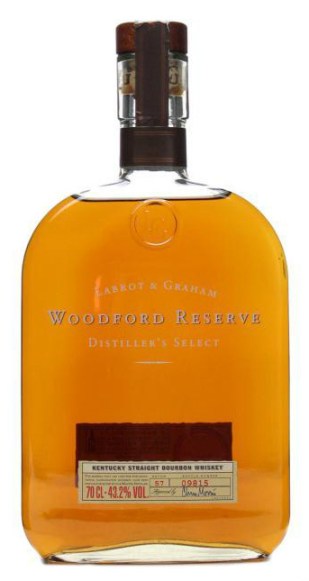 Lets move on to the next candidate. The first Bourbon we will explore is the small batch Kentucky Straight Bourbon Whiskey, Woodford Reserve. This bourbon is made by Brown-Forman, but marketed under the name of the previous owners from long long ago: Labrot & Graham. The Distillery was built near Versailles (Kentucky) in 1812, but distilling activities started as early as 1797. Brown-Forman owned this distillery previously from 1940-1960 and now owns it again from 1996 onwards. The first batches were distilled ‘elsewhere’. Whisky is distilled partly in Scottish Pot Stills and partly from Column Stills from their Early Times plant in Shively (Kentucky). Besides this there are also Woodford versions made for the Kentucky Derby at a slightly higher ABV (45.2%, I don’t know if there are more differences, besides the illustrations on the bottle). There is also a small Masters Collection series and now a new Double Oaked version.
 And even later than that the toast from the cask. This really unwinds slowly. Still its a bit unbalanced, and thin. I would have bottled this at a higher ABV.
 Master Quill