The Macallan ‘Fine Oak – Whisky Maker’s Selection’ (42.8%, OB, 1 Litre, Circa 2006)

I come from the times when The Macallan may have been the best Sherried Speysiders around. Almost all Macallans were made of Oloroso Sherry cask, well controlled by the distillery. Who doesn’t know the old back label with the famous last words: “FOR REASONS NOT EVEN SCIENCE CAN WHOLLY EXPLAIN, whisky has always matured best on oak casks that have contained sherry.” or the famous last two words on this very back label: “the tumbler” Well I for one was very disappointed tasting the very first Fine Oak range back in the day, having expected something like the quality of the old Macallans. For me the Fine Oaks had to be of the higher ages to get a high rating. Also the pricing has put me off back then. Some time has passed, some ten years, and here is finally another Fine Oak. Let’s give it another chance…

Color: Honey gold.

Nose: Fresh wood and fresh overall. A bit like a nice Fino Sherry. Waxy (ear wax) and slightly soapy. Apricot and bitter orange marmalade. Heather and a lot of toffee. Quite syrupy smelling and promises of a full body. Seems young with some added depth from some older casks.

Taste: A bit thin at first, but highly drinkable. Again some heather and maybe even a little bit of honey. I can’t shed the feeling this actually is a full bodied Highland Park with lots of Fino Sherry. Hidden bitterness surrounded by fruity sweetness and custard. Towards the end of the body and into the finish it gets drier with more wood and it’s bitterness. Even the toasted cask is here in minute amounts.

This reminds me of the old wide neck Highland Park 12yo, with even the same sort of bitterness in the finish. In fact, if I would have tasted this blind I most definitely would have said this was a Highland Park, who knows, same owner 😉

Points: 85

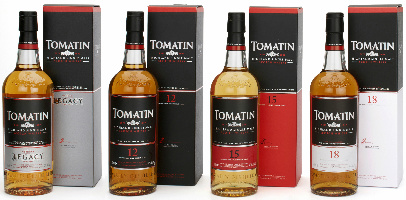
Tomatin 15yo (43%, OB, Bourbon Casks)

This is my last review of a Whisky from the standard range of Tomatins released by the distiller. The standard range comprises of Legacy, a 12yo, a 15yo, and last but not least, the 18yo. The age statement (or lack of it) not being the only difference. All are different in usage of casks:

  • Legacy – New Oak Casks and Bourbon Casks (82 Points).
  • 12yo – Bourbon & Sherry Casks (83 Points).
  • 15yo – Bourbon Casks (?? Points).
  • 18yo – Refill Bourbon Barrels with an Oloroso Sherry finish (87 Points).

So here we have the 15yo. This one is on paper the younger brother of the now sadly deleted 25yo. Both come from only Bourbon Casks. The new Tomatin is called Legacy, but the 25yo will turn out to be a Legend. But, and I can’t stress this enough, Tomatin 30yo, that’s even better imho!

Tomatin 15yoColor: Light gold.

Nose: Spicy and clean. Sweetish and creamy. Hints of toasted oak and crushed fresh leaves. Nice toned down fruitiness. Cookie dough. It does remind me a bit of the 25yo (and some notes of the fruitiness remind me of the 30yo). Fruity ánd perfumy. Very aromatic example of Tomatin. Good balance.

Taste: Clean and warming, warm wood and caramel. Hints of licorice, vanilla and toasted wood. Very creamy and half sweet. Again very good balance. Dangerously drinkable.

These four whiskies are absolutely family of each other. Brothers and sisters of one another. But just as with people, there is a family resemblance, but most definitely have different characters. It’s not merely an older version of the previous example, no, all are meant to be different through usage of different casks. I guess all of them will have different likers (or dislikers if you don’t like the mean Tomatin profile).

So time to come clean, which one would I buy? Well, according to points the 18yo is the winner. It has a stunning nose and taste to match, but there is always a candidate everybody likes, isn’t there. I scored the 15yo one point lower than the 18yo, but I think the 15yo is a true and honest malt (just look at its color), and is definitely easier to drink than the 18yo. I had problems writing tasting notes, because the glass seemed always empty, how is that for drinkability! So if you are new to whisky or just enjoy a good malt, I would buy the 15yo to start with, if you’re somewhat more seasoned and able to appreciate the added notes of the Oloroso finish , I would recommend the 18yo. Legacy and the 12yo are both alright, and dirt cheap to boot, but not my personal first choice. So for me the 18yo and the 15yo are the ones to buy, and differ strongly enough from each other to get both 🙂

Points: 85

Thanks to Jennifer for sending me this sample.

Tongerlo Prior Tripel (9%, 33 cl)

The Tongerlo beers are brewed by brewery Haacht, and they are doing so since 1990 (when they got the rights to this Abbey beer). I’m sad to report that a few years ago, brewery Haacht, in all its infinite wisdom, have decided to delete Tongerlo Tripel. That’s a sad thing since I really liked that one. To make up for it, they replaced it with another Tripel. It’s called Tongerlo Prior Tripel and the golden-yellow label is replaced by a brooding black one. Tongerlo Prior Tripel is made with Saaz hops and, compared with the old Tripel ,a new kind of yeast. They also upped the ABV from 8% to 9%. This beer is fermented (additionally in the bottle) and the brewery advises to pour the yeast depot in your glass for a bigger and bolder flavor, but it’s also possible to leave the depot in the bottle with a small amount of beer to be consumed separately. Advised drinking temperature is 7º C.

Even this new Tripel got the chance to age for 2,5 years after it’s best before date. You may think I’m mad, but with most Belgian beers it only adds to the character, don’t worry you, won’t get sick. Breweries are obliged to put a short-term on the label, but are starting to add the bottling date. Frank Boon decided to stretch the best before date far beyond the standard three years and easily puts best before dates twenty years into the future!

Tongerlo Prior TripelColor: Orange yellow with some flakes (due to ageing). Almost white foam.

Nose: Fresh and half-yeasty. Citrus acidity. Warm lemon curd. Linen and again some yeast. Pretty straightforward.

Taste: Estery and half bitter. Orange peel. The whole is quite warming. The whole taste seems a bit toned down, but when taken in a big gulp, it becomes quite chewy and gains a lot of character. An explosion of flavor so to speak. Nice, and not overly acidic. Lemon and oranges. Very fresh at first, but that fades into a heavy, syrupy sweetness. I would call this a winter warmer. Excellent stuff by the way.

I love tripels and this one (again) fits the bill. Compared to Westmalle Tripel this has less of the orange skins and definitely is less bitter. Candied sugar sweetness. I really don’t get the point why the Original tripel was replaced with this one. Although this one is also very nice, the original tripel was (very) different and could have easily kept its place under the stars. The original Tripel was quite fresh and appealing, this Prior is more warming en deeper. It’s like night and day, like summer and winter. They got the labels right too, summery yellow and deep as night black…

Points: 85

Domaine Louis Moreau Chablis ‘Domaine de Biéville’ 2011

After the Chardonnays from Languedoc and Chile, now we return to France for the Mother of all Chardonnays, or maybe the Stepmother of all Chardonnays: Chablis! (the mother being Montrachet).

Domaine de Biéville, located in Viviers, was founded in the 70’s by Jean-Jacques Moreau. The Domaine comprises of one piece of 65 ha, and its orientation is south /south-west. It has a mild climate. Today his son Louis with his wife Anna lead the company (it’s also a wine traders).

Domaine de Biéville has great terroir (former Truffel grounds) and orientation, which often makes it as good as a Premier Cru. The grapes for this wine grow on 40 year old vines (vieilles vignes). By the way this Chardonnay has an ABV of 12%. The website of Louis Moreau is full of Premier Cru and Grand Cru wines, so if this Domaine de Biéville is any good, it is probably safe to say that the rest is even better, or so it should…

Domaine Louis Moreau Chablis ´Domaine de Biéville´ 2011Color: White wine

Nose: Fresh citrussy (lemon) and flinty. Slight hint of meat (beef). Typical Chablis, but a bit dirty, and I like that. It the meaty/gravy bit that does that. The more I nose this, the better it gets. Fruity (hints of apricot) and creamy

Taste: Nice acidity and when that rolls of the tongue, again that fabulous flintyness and depth emerge. Even the dirty part from the nose is here. The nose and the taste match up completely, how’s that for balance. The acidity is quite up front in this one, but a very nice touch to this Chablis is that long into the finish some sweetness emerges. The aftertaste is great. Well made.

Nicely balanced Chablis. Nice acids that play the biggest part in this wine, but hiding after that  is some great meaty dirtiness and of course a typical flintiness. No off notes and for fans of Chablis, well this will come as no surprise. Very easily drinkable and not too complex. Since the acids are quite prominent, this wine can age for a few years more. Recommended with fish, crustations and some cheeses.

Points: 85

Merci beaucoup, Richard!

Partagás Serie D No. 5 Edición Limitada 2008

Partagas LogoReaders that like my occasional reviews of cigars will know by now that I don’t smoke inside the house. The sparsity of these cigar reviews are only caused by long stints of bad weather. It almost seems to me that the last five years, we didn’t even had one decent summer! It’s june, and here we had only a few whole days of Sunshine! You do not have to be a rocket-scientist to figure out when that happens, a cigar will be freed from its humidor. This time I chose a Partagás. Partagás usually are on the heavier side and I thought let’s start the season with a nice nicotine rush!

This is a beautiful day. Sunny not too hot and a little bit of wind. Even without the cigar I’m enjoying the silence, the rustling sound from bamboo in my garden and the sloshing sound of the water behind my house. Don’t worry, no flooding, it’s supposed to be there. So, sun, water, bamboo and hopefully an excellent smoke.

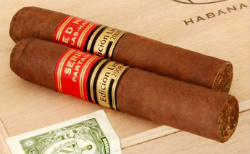
This is a  Cuban Edición Limitada 2008 version by Partagás (50 x 110mm, Petit Robusto, Box Code Unknown).Partagás Serie D No. 5 Edición Limitada 2008

This Edición Limitada from 2008 was made with Tobacco that already was aged for two years. First released in 2008 obviously it turned out to be an immediate success. Since 2011 it is added to the current series of Partagás cigars.

Color & Looks: Nice wrapper, tightly wound with small veins. Packed with a lot of tobacco and clearly well-built. Draw is good, especially for such a tightly packed thick cigar. Right from the start, this is a good smoke.
A cru: Chocolate, dusty old books with a nice creamy touch and with a slight hint of toffee.

Taste: I have just set fire to it, and already this tastes very good. Not as strong as I have come to expect from a Partagás. Very rich taste, fabulous spicy taste. I actually have smoked just 5 millimetres from this cigar, but it already is one of my favorites! How’s that for a bold statement! Soapy feel on the lips. The Tobacco was harvested in 2006 and aged for two years, after that it almost aged another 5 years in my humidor, but still the cigar shows some youth. Still, it is already very, very good, but consider the additional ageing potential!

My cigar burns a bit uneven, so I had to “correct” that a few times, but that’s no problem. Dark chocolate, woody, warming and a fabulous smelling smoke, even for the one sitting next to the smoker. The ash is almost white (another good sign). After 1/3, the cigar becomes more like a Partagás, a very good one. Spicy and full of character, woody and dry. I’m having a mild arabica coffee with this, but the cigar doesn’t overpower it. So it is full of Partagás character, but it doesn’t pack that Mr. T. punch Partagás so often have. Excellent. With water on the side the cigar tastes more sour, so I wouldn’t recommend drinking water with this cigar because it changes the fine constructed character of the cigar.
The cigar is very consistent. There is some minor development in the beginning, but after that the cigar is linear. The first ash fell of after the half way point. Taste wise the first half is the better half. The second half is drier and more woody. But the difference isn’t that great. As mentioned before, the ash of the cigar is almost white, and near the end, the cigar shows a caramel colored heart. More wood towards the end too.

Personally I find the 50 gauge a bit too much. It doesn’t look very elegant and it cramps the jaw, but that’s probably my european opinion. The cigar is quite mild altogether, no big nicotine rush. And no turning points. I enjoyed this cigar thoroughly. I smoked this as long as I could, and burned my fingers, but it is that good, all the way through. This will probably score even higher after some additional ageing.

Points: 86

Bruichladdich 14yo 1991/2005 “Yellow Submarine” (46%, OB, WMD II)

WMD stands for Whisky of Mass Distinction. A name one would find on a Frankie Goes To Hollywood 12″ in the eighties. Two years earlier the first WMD was released (a 19yo from 1984) and had a rocket on the label. This second “weapon” is a Yellow Submarine. Most of us would have thought of the Beatles, but this time it about another submarine. One owned by the Royal Navy of Great Britain.

Islay Fisherman Baker was at sea to check his lobster baskets, when he saw a yellow object floating just under the surface of the water. Which first seemed a buoy seemed to be a 2 metres long radio-controlled mine detector from the Royal Navy. When Fisherman Baker called the coastguard informing them that he spotted a submarine with markings from the Royal Navy, they told him to he was drunk, not very uncommon on such an Island. Still fisherman Baker wouldn’t budge and the coast guard called the Royal Navy, but they denied it’s existence!

Just days later the Royal Navy admitted they had lost HMS Penzance (The Yellow Submarine) in a drill. But just after 6 months they decided to pick the thing up> They sailed out at night, to arrive very early in the morning, not to draw a lot of attention to the operation. But the people of Islay are no fools, so half the Island was present at the beach. 12.000 bottles of Yellow Submarine were made and the Royal Navy got six to commemorate the incident. Later the French manufacturer of the Sub ordered another 1000 bottles of this edition for marketing purposes…

Color: Light Gold.

Nose: Woody and smoky. Quite estery and fruity as well. Clay and wet earth. Chewy (in the nose?). In a way candied and wine-treated (it is ACE’d in Rioja Casks, well that’s very Obvious in the nose). The wine finish takes the nose hostage, never to let go, whatever ransom you’re prepared to pay. Is that a bad thing, no not really it is likeable in the nose. I just hope is does the palate some justice. Creamy milk pudding. Powdery perfumed wood. Fresh.

Taste: a bit harsh and winey from the start, but it seems balanced. Wood and milk chocolate pudding. Creamy. Also a little bit from the wood and a wave of sugary sweetness. The palate is very nice, but also very simple. Probably a good idea to reduce this to 46% ABV, because now we have a very drinkable whisky. Nothing overly special though, with also an unspectacular finish, but it definitely is all right!

Well this most definitely is a Rioja finish. The Rioja is all over the place. It draws all attention to itself. Although wine finishes almost every time ring my alarm bells, this is not bad. Alas the maker doesn’t state what kind of Rioja it was red, white or rosé, although rosé would be pretty uncommon, most probable would be red. Most used grape variety in Rioja is the Temperanillo grape, remember the Temperanillo casks used by Tomatin?

Points: 85

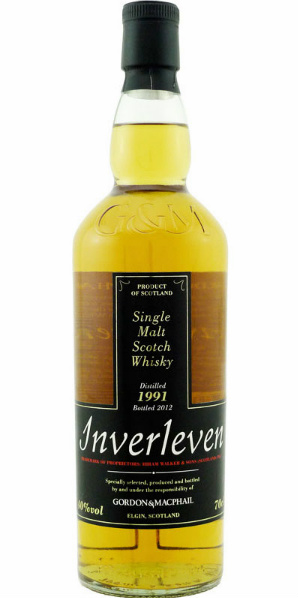
Inverleven 1991/2012 (40%, Gordon & MacPhail, AB/JDAD)

This is the latest Inverleven bottling of the now defunct Inverleven Distillery by Gordon & MacPhail. Gordon & MacPhail still have casks of Inverleven lying around, but have told me since Inverleven is a closed distillery, and the whisky more and more rare, this is the last time Inverleven was bottled in this series. Next time it will be issued in a ‘higher’ series (and hopefully at a higher strength). Inverleven is a whisky made in two Copper Pot Stills on the premises of the Dumbarton Grain Distillery. Whisky was made in these stills between 1938 and 1991, when the Stills were removed. Grain Whisky is still made here in a Column Still. For a while even a Coffee Still was in operation making the very rare “Lomond” Whisky (from 1959 to 1991). By the way, this is not Loch Lomond Whisky, that actually is only a few kilometres away, far enough to be a Highland Whisky. Dumbarton is the home of Ballantine’s blended Whisky.

Inverleven 1991/2012 (40%, Gordon & MacPhail, AB/JDAD)Color: Gold.

Nose: Very fresh, citrussy and creamy. Dry leaves in the autumn. So, lots of lemon and vanilla ice-cream. Very nice, slightly sour and spicy wood. Wood in wet earth. Never overpowering. Elegantly spiced, but all the spice is from the wood. Fresh air. This seems to me, based on the nose alone to be a great summer or autumn Whisky. For a Lowlander ánd a Whisky at this strength, this has a very rich nose and very good balance. I can only hope the whisky tastes as great as this nose does.

Taste: Well the first sip I took was quickly gone. So quick that the only taste that came to mind was sweet pineapple and after that I already tasted the spicy bite of the wood, which again is not overpowering, but firmly present. From the second sip I have some vanilla, caramel and even later on a dried grass element. It’s not quite hay.  The initial sweetness, dries out quickly. Malty.

Quite a lot of wood in this one. And the first time around I found the finish to be short. Second time around, when the Whisky had some time to breathe the finish became a wee bit longer. Still, the nose is very nice and the wood shows itself in the nicest of ways. After breathing the woody part got bigger as well, but the finish got a little bit unbalanced. Maybe this got reduced too much? Let’s hope that the next 1991 Inverleven get’s a better chance at 46% (and maybe more…).

Points: 85

Thanks to Stan and Alistair for the sample.

Rum Week – Day 4: El Dorado 12yo (40%, Guyana)

Next up a true Demarara Rum from Guyana. Guyana is a south-american country next to Surinam. Guyana had a lot of great Demerara distilleries. One by one they got closed, but most of the equipment was saved and moved to the next distillery that was kept open for a while, and when that one was closed this all happened again. Today, all the stills that survived are in one place. Diamond. So rums distilled in a few of these stills find their way into El Dorado Rum. In this 12yo, I’m happy to report, are Rums made in the original wooden Enmore Coffey still and predominantly, the original Diamond two column metal Coffey still. All the El Dorado Demerara Rum is aged in American Bourbon barrels.
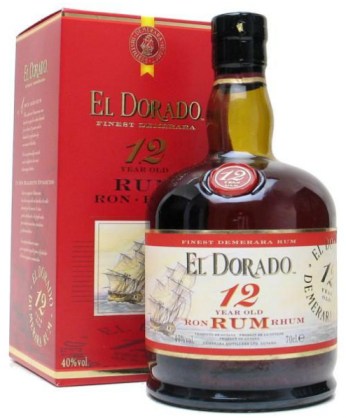
Color: Copper.

Nose: Very perfumy and very mature. Hints of caramel and burned sugar. Leafy and tarry. Heavy organics and crude oil. Wow, such a lot of character and so thick. A stunner this! Licorice all sorts. Lots of it! It takes a while to let the wood take a little spot in the whole. Utter balance in the nose which keeps on developing. If the taste will be anything like the nose, we’ll have a winner!

Taste: Well this is pretty sweet, but not as sweet as I seem to remember. At first opening this was extremely sweet and I didn’t like it for it. It’s more or less the nose in a toned down version, with added sweetness. Cough Syrup and syrupy altogether, with a very nice acidity that comes through the sweetness. For me this is a bit too sweet.

Again we have a rum that has a fantastic nose, but doesn’t seem to put that quality into the taste as well. Still this is a very good rum, and compared to a lot of Single Malts, this is dirt cheap. Having said that is this a replacement for overpriced Single Malts? No, not really, this is a completely different kind of sport. It should be added to your palate not to replace something else.

Points: 85

Chateau Saint-Paul 2005 Haut-Médoc

I used to drink a lot of reds and for the last six years or so I love to drink a lot of whites. Alsace was probably what set that off. But as you might have guessed, being the frequent reader you are, I drink foremost Scottish Single Malts nowadays. But it’s not all Scotch that lights our world, so I’ll definitely have to try some different things here too. This time the first red wine on Master Quill.

Haut-Médoc is the large southern part of the Médoc district of Bordeaux in the south-west of France. The famous wines from this region are Margaux, Pauillac, Saint-Estephe and Saint-Julien. You might have heard of those.

The wine of choice for today is Chateau Saint-Paul of the 2005 vintage. Saint-Paul is a Cru Bourgeois from the Haut-Médoc (St. Seurin de Cadourne). 2005 was a good year for Haut-Médoc, as it was for the whole of the Bordeaux region. The soil is mostly gravel, chalk and clay. The wine is made of 50% Cabernet Sauvignon, 48% Merlot and 5% Cabernet Franc. ABV is 13%.

Color: Ruby red.

Nose: Meaty and sour. Red and dark fruits, berries, black currants and blackberries. Plums maybe? Dust and moist dirt. Floral. In fact it tasted quite thick and sweet (raisins), which it probably is not, still it reminds me a bit of sniffing a ruby port.

Taste: It has depth and is a little sour and powdery. Definitely some wood in here too. Wet leaves, but not earthy. Elderberries, but not bitter. Good tannins which do not take over the wine, still you’ll know from your tongue. It isn’t overly complex, but is has good balance and is a very nice wine to drink. Medium body and medium to long finish.

This one is at it’s best decanted for an hour or so, maybe two. When I tasted this from the just opened bottle, it was quite closed, but a few hours later it showed a lot more. So age this maybe a little longer, decant it properly, then this will be at it’s best.

Points: 85

Dailuaine 17yo 1980/1997 (43%, Hart Brothers, Sherry)

Dailuaine is a distillery that also is around for a long time. Founded in 1852 and rebuilt into a big distillery, for the time, in 1884. Just five years later Dailuaine became a landmark since it got Scotland’s first Pagoda roof, from Charles Doig. Also noteworthy is the fact that Dailuaine and Talisker distilleries merged in 1898. Again the year of the Pattison Crash. Mind you, Dailuaine and Talisker aren’t exactly across the street from one another.

Again we have here a distillery with a fire. But this fire forced the distillery to close for three years! This happened between 1917 and 1920. After that, like with many others, the years of expansion. Today Dailuaine is in the portfolio of Diageo and mainly used for the Johnnie walker blends.

Color: Light Gold.

Nose: Musty, vaguely sherried and sweet. Rather thin. Floral and perfumy, which do not necessarily go together. The nose is quite elegant. Vanilla. Nice clean sour oak. Barley and apple compote. Given some time, the floral part is overshadowed by the sour oak. Otherwise quite nice and good balance.

Taste: Well I got cannabis in there again! Typical sweet and sourness from applesauce. Honey. Very clean otherwise. The woodyness doesn’t need a lot of time to rear its head, pencil shavings. This isn’t bad. Without it, its character would be even less interesting. Still this has a lot of body. The sourness of the oak, dominates this finish. Reduction is ok on the palate, but makes the finish a bit weak and short.

A bit anonymous this one. Taking this blind it could have been anything.

Points: 85

Thanks go out to Serge for handing me this sample a long time ago.