At last a new review at Master Quill! Some kind of throat infection and a Polish vacation stood in the way of writing some new reviews. But now all’s well and time to do some tasting again! I’m also happy to inform you that at last today was a day that made me forget about the half-year winter we had. First time it was really nice to sit outside in the sun, with even a nice cup of coffee and a little cigar, a Vegueros Seoane I reviewed more than a year ago.
Let’s get out some Clynelish. This Clynelish was officially bottled by The Prestonfield Whisky Company Ltd. which is just another moniker for the Signatory Vintage Company. There is also a second bottling of a 1973 Clynelish, of sister cask #8913. Under the Signatory label, Casks #8914 and #8915 were bottled in 2006 and 2007. These last two bottlings mention a Refill Butt, so this one here is probably from a Refill Butt as well. All four Butts were bottled as 33 year olds.
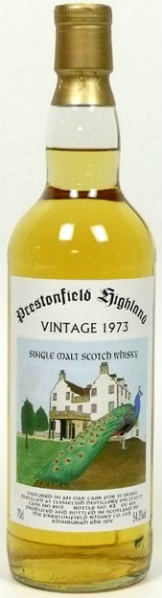 This Clynelish was distilled July 23rd 1973, a year Brora was still open but not very active, if active at all. As we all know, 1972 was Brora’s finest year, or so it seems. Time to find out what they did one year later at Clynelish…
Color: White wine
Nose: Farmy, with butter and old wood spice. Sweet and sweaty. Dusty and above all lots of beeswax. Typical Clynelish and a typical old Whisky. Also a fresh sea-air note. It has some hints that make me think this was a Fino Butt, but it could have been a Bourbon cask as well. Nothing is particularly Sherry in this one. It’s mainly oak (which here is a very lovely smell), and wax. It does tend to smell sweet, but not very fruity. Not fruity at all.
Taste: Sweet and again the spicy waxy wood. Great and elegant! Who said old whiskies are overly woody, and who said wood is a bad thing. Not in this one! This taste is a great example of how wood can taste when it’s carried by some sweetness and waxiness. It’s fat! Mocha, milk chocolate, toffee and again very Fino-ish. Later on a toasted not emerges accompanied by some sea weed and wait for it…It’s medicinal! The elegant wood lingers on and stays in the finish for quite some time.
A whisky of great balance, what you smell is what you taste (WYSIWYT). When I think of it, no, it’s still not very complex (but it is pretty sweet). Just like a Prestonfield Ben Nevis 1975. Also fabulous tasting whisky. That one is almost a Scottish Bourbon, yet also not very complex.
Points: 91
 Color: Gold
 After the cold, cold winter we actually had (are still having), with lots of snow, I guess it’s time for a nice long hot summer! First day of spring went by some time ago, and it still was snowing on that day, so I guess we all need a bit of summer in our lives. Unlike yesterday’s 1984, 1985 is a year more common to find a Glengoyne from. In 2006 Glengoyne even bottled a sister cask of this ‘Summer’ edition, that was a Butt, so it’s probably safe to assume, that this is from a Butt as well.
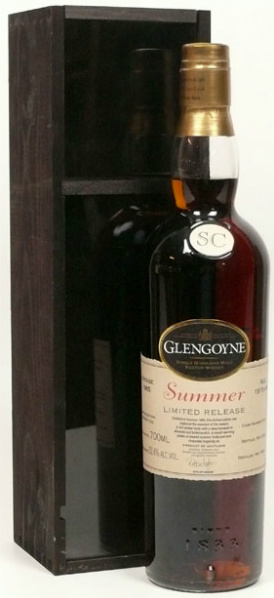 Color: Dark orange brown.
 So it’s time to celebrate the first anniversary of Master Quill and I’ve picked this bottle of 1979 Scapa, bottled in 2002. Well, things got off really good! Like I said, I would rip open this bottle and so I did accidentally. I broke off the cork! Bugger!
 Color: Copper
 it’s not completely balanced, but it will get there in the end. Complex, well, not exactly. It shows some sourness from the oak, but after half an hour it is pulling together, and it has a great and long finish. This again is a stunner!
 Let’s continue with Glenfiddich. Known for their big out turn and fairly priced Whiskies. No cheap entry-level Glenfiddich this time, like the
  Color: Full and dull gold.
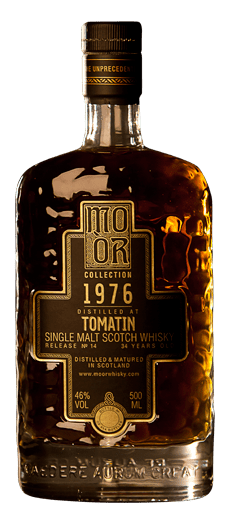 Color: Copper Gold.
 Happy new year! I wish all my readers a great year full of fulfillment, health and great drams. please don’t settle for mediocrity. Try to broaden your horizons for true beauty that can be put in your mouth, but do it in moderation, we don’t want to create modern drunks.
 Well what would be a better start, than with an old Strathisla! In the past I tried some nice old Gordon & MacPhail Strathisla’s from this series. The review for the 25yo can be found here, but together with this 25yo I tried the 21yo and that was similarly spectacular. Mind you these are the old 80’s bottlings for the italian market, and whiskies with these labels were issued for a couple of decades, so every batch will differ (massively). The 21yo and the 25yo were quite dark, and hopefully not colored, and being from the early eighties, the distillate is early sixties or maybe even late fifties.
 Short finish. The 21yo and the 25yo performed better in that respect. Treat this elderly Whisky with respect, but be bold and take bigger gulps. The whisky itself, maybe is a tad fragile and subdued, but hey, the stuff was made some 55 years ago and along the way was reduced to a mere 40%, so give it a break will you?
 Lou Reed’s Transformer on the record player and the new Tomatin 30yo OB in my glass, what can go wrong? As I already mentioned
 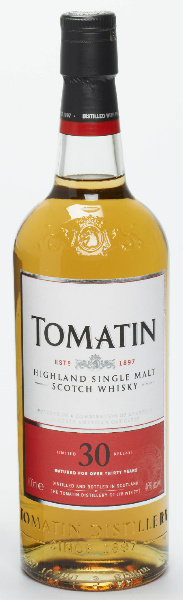 The new 30yo was introduced in 2011, replacing the 25yo that still can be found. It’s reduced to 46% ABV, to fit neatly in the ‘standard’ range which now comprises of the 12yo, the 15yo, the 18yo and now the 30yo. The 21yo I reviewed earlier is a limited release and higher in ABV (52%), so it’s not part of the standard range. Still it looks like a huge gap to me between the 18yo and the 30yo. And a new 21yo or 25yo would be nice. For now, mind the gap…
 Can’t imagine this was colored. It’s so light in color. That would be great, since we don’t like people messing with our drams, don’t we? Both the nose and the palate are neatly balanced. I really love these kinds of whiskies. One I thoroughly enjoyed. Imagine a great 30yo whisky and what they ask you to dish out these days. Considering this, this one is a steal (in some markets) and deserves a following. It’s 46% ABV and very nice, this makes it almost too easily drinkable and there is a possibility that this bottle will be empty in no time, so beware. The 2011 batch was also very good, still this one from 2012 scores one point higher, since it’s even more fruity.
 Color: Gold
 Color: Full Gold
 Master Quill