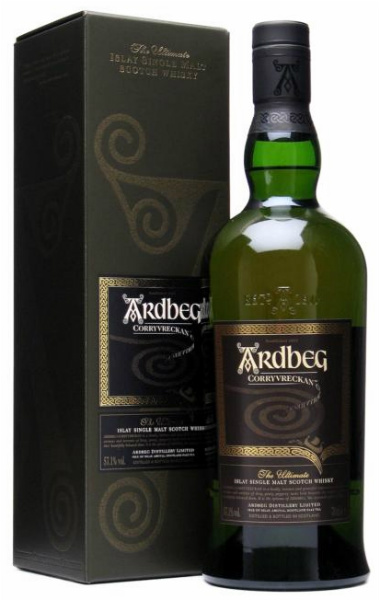
Ardbeg “Corryvreckan” (57.1%, OB, 2014, L59815)

Well, here is an Ardbeg of which nothing is known, apart that it was first released in 2009, following up on Airigh Nam Beist, which ran from 2006 -2008. I won’t bore you with my take on the marketing jazz about Corryvreckan being a whirlpool. You can read about that on the box and on many sites across the interweb. Here the golden nugget from Ardbeg’s own site: “Corryvreckan takes its name from the famous whirlpool that lies to the north of Islay, where only the bravest souls dare to venture. Swirling aromas and torrents of deep, peaty, peppery taste lurk beneath the surface of this beautifully balanced dram”. Well, what can I add to that!

What I’d like to know is, how this Whisky came to be, and that is definitely more difficult to find out. Every bottling of Ardbeg has some sort of unique twist. Casks that were burnt to a crisp before using, or casks that were forgotten in a swamp, or casks that were kept in space for a while. The unique twist this time seems to that part of the Whisky was matured in new French oak casks, (as opposed to the sole use of the immensely popular American oak). The rest of the Whisky was, of course, matured in first fill and refill American oak casks. American oak became so popular since it gives off a friendlier aroma of vanilla, making any liquor softer, creamier and more accessible. European oak, or French oak in this case, is less of the vanilla kind, but more about tannins. All the great Sherried Whiskies from yesteryear were matured in European oak Sherry butts and puncheons. Today the Sherry industry prefers American oak as well for reasons mentioned above. French oak is used a lot in the French Wine industry, so rumour has it, used Burgundy Wine casks were used for this Ardbeg as well. However we don’t know if they were virgin oak, first fill or not and what kind of Wine they contained (if any). A Chardonnay cask will result in a different Whisky, than a Pinot Noir cask…

Color: Full gold (no red or pink nuance though).
Nose: Very ashy and smoky right out of the gate. Licorice wood and sweet smoke. Garden bonfire. Sweet and soft peat. Citrussy, herbal and meaty. Crushed beetle and old tarry rope lying around in the sun. Fresh oak combined with some lemon (not the oil from the skin). Distant vanilla, but it is here. Ripe and sweet strawberry and vanilla ice-cream. More hints of red fruits and more promises of sweetness. Nice soft oak. Dusty. Very well made Ardbeg if it tastes as good as this smells, this will be a keeper!

Taste: Ashy again. Sweet, crushed beetle again, how odd. Big aroma, big body. Lots happening. Initially sweet but it is a good sweetness balanced out with sweet peat and dryness of the smoke. Definitely a type of fruitiness you don’t get from (Bourbon) oak alone, which would support the Wine cask claim. Fat peat and slightly tarry. Empty, off-season, fishing boat in the sun. Visions of an abandoned port. Not hot, only for a moment is shows some higher ABV, but I would have never guessed it is as much as 57.1% ABV. Well balanced, with only a medium, but decent, length. This is where it’s average age is noticeable.

Excellent standard bottling, and a damn good NAS as well, if I may say so. It can be done after all! I’m wondering which of the special releases, which are all more expensive, can beat this one? The 10yo is the entry-level Ardbeg and for me it has lost the most compared to the earlier tens since it has become way too sweet. I guess, that one has to appeal to a larger public, than this Corryvreckan and Uigeadail. I guess the latter are more for connoisseurs and anoraks like me and you. Now I will have to get me a new Uigeadail to compare it to this Corryvreckan. I have high hopes now…

Points: 89

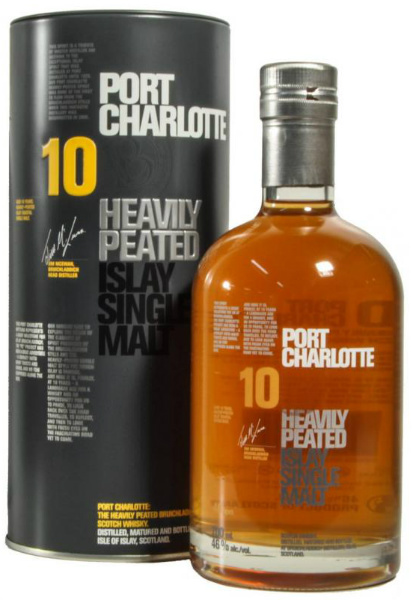
Port Charlotte 10yo (46%, OB, 13/153)

Many people like Springbank very much and some of those people, the likes of bloggers and vloggers and die-hard aficionados, call out to other distilleries to look more at Springbank as an example how they feel things have to be done. In that respect, hiding in plain sight is Bruichladdich, who are doing things like Springbank but in their own way. For one they have multiple brands: Bruichladdich, Port Charlotte and Octomore and more interestingly they are doing the “Local Barley” thing as well (f.i  the Bere Barley and Islay Barley bottlings). Both series contain rather young Whiskies, which are surprisingly good. Personally, even more exiting is the batch variation, which I find, adds to the adventure in Whisky, although I don’t think they change the composition as much as Springbank between batches. They even code like Springbank (here: 13/153). The first official Port Charlotte 10yo was bottled in 2012, so this is not the first batch of the first release, but it is still the first release, since in 2016 an official second release came out bottled at 50% ABV.

Color: Light gold.

Nose: Nice fresh peat, and dare I say it has a Sherried note? Honest and slightly sweet. Full-on aroma. Slightly sweaty and floral at the same time. Soft as well. Dusty. Clay and finger paint. Pencil eraser. Medicinal. Cold gravy. For me, very special stuff with quite some unusual markers. This big synergetic aroma easily overpowers the soft peat. Maybe not overpowers, but it sure works well in tandem with it. Nice development and evolution of the nose. Every sniff seems different from the last, unless you are sniffing continuously. Appetizing stuff.

Taste: Peat, wood and some fruit in the background. The fruit shows quite some acidity. Starts out sweet, caramel, toffee, but that isn’t here to stay. Well, the aromas stay but the sweetness retreats a bit. Licorice wood. More (different kinds of) licorice combined with milk chocolate mousse. Some soap in my toffee now, as well as some mints (mint candy). Is this the taste of the floral part? Where the nose had a big aromatic presence, the body of this Whisky isn’t as big. Alas the taste cannot keep up with the nose, but the potential is there. If the quality of any of the younger distillates is anything to go by I’m predicting the future of the 10yo to be a bright one. Just compare it to, the sweeter by the batch, offerings of Laphroaig and Ardbeg 10yo’s.

Yes even by today’s standard, 40 ppm phenols is heavily peated, even though by now we are used to the insane peating levels of Octomore, where 167 ppm is just the start.

Bruichladdich might not be the most original distillery around, although Octomore sure is as original as it gets, but it might very well be the most progressive of the bunch today. Springbank is a main stay for me and I guess Bruichladdich can be added to that list now as well. Don’t worry, these two aren’t the only ones on that list. Not by a long shot.

Points: 86

The Glenlivet 13yo “Zenith” (57.9%, OB, Single Cask Edition, Cask #8024, 2013)

It was that other well-known Speyside distillery which between 1999 and 2004 released a few Exceptional Single Cask bottlings. Some of which I tasted and were very…exceptional indeed. Alas the bottles were a mere 500ml. The Glenlivet liked that idea and somewhere around 2005, started bottling their own exceptional single cask bottlings. For the first decade, releases were kind of sparce, but more recently, many more bottlings have seen the light of day. I’ve tasted quite a few by now, and some are really exceptional and some are less so. Still good, but nevertheless, not all that exceptional in my book. Proceed with caution I would say, especially when most of them are pretty costly even the young ones.

Another remark. Although it seems quite some information is put on the label I still miss a lot. Although the label does show a cask number (here: #8024), not stated is what kind of cask it came from. And what a about distillation year? pretty basic information most other single cask bottlings show. By the way, since most of these bottlings are quite expensive to boot, where is the wooden coffin? Even the Glenlivet 21yo has that and costs less than half. Sure you can’t drink the wooden box, but it would look nice wouldn’t it. Just look at the picture below. The bottle looks great, but the cardboard box next to it… not so much (at this price point).

Color: Gold.

Nose: Fresh with nice citrus notes countered by some smooth vanilla and soft oak. Very pleasant right from the start. Some distant fruit. Dusty mocha, aspirin powder and spicy oak. Yes the oak definitely asserts itself. Typical notes for a Whisky from a refill hogshead made from American oak, and as such, reminds of many fairly young Cadenheads bottlings from ex-Bourbon casks (remember those tall green bottles?). However, this one is not that hot. Again, there is some dried yellow fruit in the back. Well hidden but definitely noticeable. Hints of salt and pepper. By now the citrus notes have gone.

Taste: Here the fruit is more upfront, but the oak is as well. Not an instant-pleasure fruit-bomb you’ll like right away. After the initial fruity aroma, it has a sharp and slightly bitter attack of oak. Slightly soapy as well. Floral without ruining it. Just like the Glen Elgin I just reviewed, this seems to be one of those Whiskies you’ll have to work with. Definitely not a casual Whisky. It needs your full attention. So don’t distract yourself with loud music or some reading, since you would miss the essence of this Whisky. Spicy and bitter wood definitely take over from the initial aroma. Nutty as well. Fresh soft almonds. If you are patient and let the Whisky breath a while in your glass, the spicy oak, and especially the bitterness get softer, leaving more fruit to develop and reach a better balance. Still, the more this breathes the better it gets. Surprisingly it only has a medium finish, with a tad of  bitterness. Peanut butter and walnut skins in the aftertaste.

If you have a collection of these Single Cask bottlings, this one can serve as a contrast to some others, but if you buy just the one, I don’t think this is exceptional enough. What might be exceptional is that this is a non-Sherried, cask strength Whisky, which stays soft almost all the way through.

This one was bottled in 2013 and resurfaced in The Netherlands in 2016 with quite a discount. No wonder it sold out rather quickly. I guess it might be worth the price I paid (less than a 100 euro’s), but I would be very unhappy if I bought this, without tasting it first, for the initial price. Recent single casks, age notwithstanding, cost more than the very good XXV bottling. Something worth to consider.

When comparing similar bottlings I have open, sure the Lochside and the Caperdonich are better but also older and more rare. Compared to readily available Malts with a similar profile that I have, I would rather go for the Glen Keith, but this Glenlivet is nothing to scoff at though.

Points: 85 (original score)

Added note (September 10, 2018): I’m now drinking the last drops from this bottle, and man did it come around. This needed a lot of air, and time to open up, but it did come up trumps. The nose is utterly wonderful, on the palate it didn’t change as much. Sweeter, more malty, very well balanced. Comes close to the Glen Keith mentioned above, which i still prefer.

Points: 86 (new score)

Glen Elgin 19yo 1991/2010 (53.9%, Signatory Vintage, Cask Strength Collection, Refill Sherry Butt #2324, 412 bottles)

After the amazement of the Glendronach I recently reviewed, here is another shock (at least for me it is). I’m actually baffled I didn’t throw in Glen Elgin earlier on these pages, since it is one of my secret loves. Every Single Malt aficionado knows which Malts are just the best, but one always has a secondary, more personal, list of Single Malts. Everybody just loves Brora, or at least knows its one of the best around. However, not a lot of people would pick f.i. Teaninch as such, which is one of my other favorites. Usually it is a Malt with a less “easy” profile that somehow manages to tickle one’s fancy. It’s personal.

Glen Elgin. I love it. Many times it just floats my boat, and this one is no different. I brought it with me as a favorite to my Whiskyclubs gathering in Hamburg, where it failed to get the applause, I thought, it deserves. Yes, again, my opinion. The same club presented me a while back with a sister cask of this one, bottled something around the 61% ABV mark, and since then, I was looking out for a bottle of my own. This cask #2324, in Hamburg, was deemed too extreme and hot by many, but after a 1990 Family Cask of Glenfarclas, the Elgin was retried and deemed more accessible and creamy. So, remember, when tasting a lot of Malts in short succession, it is important where it is placed in the line-up, what you had to eat, how tired you are, and understand how your palate works. It all depends…

Color: Copper orange.

Nose: Sherry, nutty, creamy with lots of soft vanilla notes. Soft wood fiber, but right from the start, not the usual oak aromas. I get hints of Rhum Agricole. Storm by the waterfront. Waterfront organics. Reed. Old air-dried oak (the outside of the cask). Vanilla, cream and wood, but not very fruity yet. Spicy and slightly grassy (wet). Sometimes hints of licorice (wood). Otherwise thick and syrupy with the sugar smell you get from a freshly opened sugar packet. The Rhum Agricole notes stay around, rendering the smell more dry. Add to this another layer of an acidic red berry smell (and some gravy) for complexity. Greek yoghurt? Only hints of sugared and dried yellow fruits now, but I couldn’t tell you which ones (dried papaya and pineapple come to mind).

Taste: Short attack. Big. Starts with some vanilla sweetness mixed with paper or cardboard. Wood, nuts and fruit. Fresh almonds (chewed). Creamy and dusty. Nutty and a medium wax aroma. Altogether a medium and very pleasurable body. The big start soon gets smaller. Fruity acidity on top, from red fruits. Berries. The acidity is quite unexpected and doesn’t fit the nose all that well, or the Whisky as a whole for that matter. Hints of Beer. Finishes (long) on the fruity acidity adding some light bitterness for the first time. The bitterness makes up the aftertaste as well.

I have to be honest. I don’t like it as much now as I did in the beginning. It is definitely one you have to work with, but you also need to forgive some minor flaws (like the acidic top note). I also fear this suffers a bit from oxidation. This is a bottle I often grab when I want a few cask strength Sherry expressions, so it is already 2/3 down, lots of air to play with.

Points: 85

The Balvenie 12yo “Doublewood” (40%, OB, Circa 2016)

Remember Master Quill’s Highland Park Week? Remember day two? I went completely bonkers by reviewing a different batch of a recent Highland Park 18yo. Why would one do that when they are supposed to be quite similar? First I reviewed a 2012 batch and a bit later I reviewed a 2014 batch. We all know the industry is always insuring consistency between different batches. Consistency is the magic word, and at least in color, and color only (or so they say), consistency is achieved by adding caramel coloring. If you read both Highland Park 18yo reviews you’ll see there is quite a difference between both batches. The difference being five points! My last two Balvenie reviews were also of two different batches of the 12yo Doublewood. First I reviewed a 2014 batch and a bit later I reviewed a 2004 batch. I found that even though the batches were ten years apart, at least quality-wise, the difference was not that great, although the 2014 showed that some Sherry-influence was traded in by sweetness. The difference being only one point.

This triggered a response of Nico, one of my readers claiming there is a larger negative shift in the quality of his 2016 batch Balvenie 12 Doublewood. He invited me over try find out for myself. Well, Master Quill is an adventurous guy, so an appointment was made, and I drove over, but not without a bottle of a very early Balvenie 21yo Portwood in my bag and this 17yo. After a very nice dinner with white gold (asparagus) and a wonderful piece of salmon, the Balvenie tasting begun…

Color: Orange gold.

Nose: Sweet Sherry on a bed of sugared yellow fruits. Caramel and toffee sweetness, but this time with lots of fruits and even a floral bouquet. Extremely friendly and accessible, but strange enough it also reminds me a bit of a sugared Rum. Vanilla from American oak. Cereal and oat cookies. All seems to blend well together, it’s almost one big aroma. No off notes, but you have to work on it to detect some separation between the different constituents of the aroma. I’m missing some wood actually. The chewy sweetness seems to hide it. Hints of warm (not burnt) plastic and some toasted wood and cardboard. Smells you get when ironing clothes. Hey, there is the wood-word! Hint of cherries. But yes, there is a blanket of dumbing “sweetness”, dulling the whole. Initially its friendly and likable, but there is also something not quite right. Maybe dull is a word I should use again?

Taste: After Nico’s notes, I expected it to be sweeter, but that’s how expectations work. Still, it has the taste of sugar-water. Worse, the same is noticeable as in the nose. It seems to be some sort of mono-aroma. When I was a member of the Malt Maniacs we encountered this “effect” when adding caramel coloring (E150-a) to four otherwise unadulterated Whiskies (link below). It shaves off highs and lows from the original Single Malt Whisky, making it taste more like a Blended Whisky. When the Whisky is entering my mouth, al seems to be ok, but the body already starts to disintegrate right after that, focussing on an oaky and acidic note. Later the cereal and sweaty cookie notes make a short appearance. Again no separation between the aroma’s. Short finish and no aftertaste worth mentioning. Well cookies, smelly socks maybe and something burnt. Toasted White Wine cask. This is not good. Unbalanced. Whisky like this is no fun. Avoid. (I washed the taste down with the wrong batch of Highland Park 18 (82 points), and that was (now) amazing, at least it smelled amazing…

I could deal with the sweetness. I guess I don’t think it is as sweet as Nico mentions, but I was surprised with the mono-aroma, the complete lack of complexity and development and the quick break-down. I believe this has definitely suffered from too much added caramel. It has all the life squeezed out of it. The nose sort of shows what kind of Whisky this used to be/could have been. Claiming adding caramel does nothing but changeling the color is pretty ignorant. If you don’t believe me, I urge you to conduct your own caramel experiment and see (taste) for yourself.

Points: 72 (eleven whopping points below the 2014 batch and ten whopping points lower than the wrong batch of Highland park 18yo)

Thanks go out to Nico for obvious reasons, and Michel again for the excellent E-pistle.

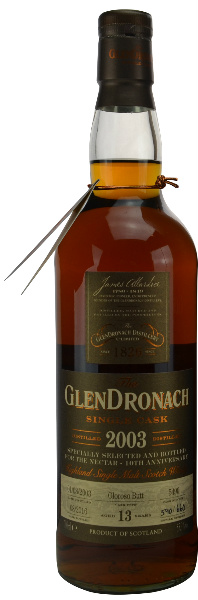
Glendronach 13yo 2003/2016 (55.2%, OB, for TasTToe & Drankenshop Broekmans, Oloroso Sherry Butt #5489, 705 bottles)

To my amazement, after all those years of writing Single Malt reviews, this is the first Glendronach on these pages. How did that happen? I’ll have to conduct a formal inquiry into this matter. Heads will roll. Lets hope this young Glendronach is a worthy expression of the distillery. Glendronach was founded in 1826, and has changed hands some nine times if I count correctly. In recent history the distillery was mothballed in 1996. Production resumed for a short while in 2002. In 2005 the distillery abandoned coal firing in favour of indirect firing with steam. After the change the distillery reopened in the portfolio of yet another owner, when Chivas Brothers (Pernod Ricard) acquires Allied Domecq. Almost there. In 2008 Pernod Ricard sells the distillery to a small consortium lead by Billy Walker, the owners of the Benriach distillery. Billy revamped the core range and started releasing Single Cask bottlings with the now common brown labels, as the one I’m about to taste. After Glendronach, Billy and his mates bought Glenglassaugh in 2013, but sold all three to Brown Forman in 2016 for a heft sum of money…

By the way, the picture below is wrong. I couldn’t find a proper picture of the bottle I tasted, and the picture I took of the label with my phone, well lets say it wouldn’t look professional. The picture below is for another Glendronach 13yo from 2003. In fact it is of a bottle filled from the cask filled in 2003 right after the one I tasted. Same distillate, same sort of cask, but still another single cask. The picture I used is for cask #5490 whereas I tasted cask #5489. Both were bottled for different customers from the same country: Belgium, so close enough, wouldn’t you say? Enough of the dry stuff, let’s get wet now!

Color: Copper gold.

Nose: Oloroso Sherry alright. Thick but right from the start some nice dusty woody notes and do I detect a hint of the S-element? Sweet raisins, fresh and pretty modern.  (which need some time to breathe to show themselves). Black and white licorice powder. Remember the 9yo Highland Park I recently reviewed? Well that is old style Sherry maturation, where the wood is softer, whereas this is more modern. Clean and sharp. Woodshop with oriental spices. Hints of fresh new oak and a wonderful floral and woody perfume, fragrant soap even, very nice. Very faintly meaty, like cold gravy. Great balance but not very complex. More wood notes in the form of pencil shavings. So, excellent wood, with less Sherry than expected. Wonderful nose.

Taste: Yep big wood alright, but again not in a bad way. Oriental Spicy wood with thin cherry liqueur. Reminds me a bit of Amrut. I really love the wood in this. Remember, someone is saying that the wood makes the Whisky, so wood should be a contributing factor. Again the wood has more to say than the Sherry. Starts half-sweet at best, where wood and Sherry share the attention, but quickly the wood demands center-stage for itself and dominates, without overpowering it though. Both contribute the right amount of aroma’s to make for a wonderful Malt. Hints of Italian laurel licorice and hard coffee candy. The body is even less sweet and for a moment turns in to an oaky acidity. Again, not bad. Medium finish and more of the same into the aftertaste, which after a while is gone completely.

This is well-balanced, not very complex, but very nice to drink. I feel no need to add water. It seems to be good to go as it is. Nice and likeable. A bottle you’ll like and finish quite quickly since it will be the one you’ll want to start the evening with. Unless you insist on starting with something at 40 or 43% ABV.

Points: 87


Thanx Nico!

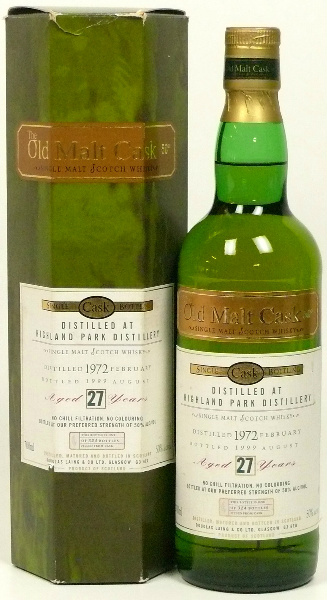
Highland Park Week – Day 7: Highland Park 27yo 1972/1999 (50%, Douglas Laing, Old Malt Cask, 324 bottles)

Wow, it’s already the seventh and last day of Master Quill’s Highland Park Week. How time flies when you’re having fun, but I say that after every Master Quill Week. Somehow it is always nice to concentrate on one subject and try several examples in quick succession. This week may have been a bit heavy on the Independent side, since only two offerings released by the distillery themselves were reviewed. Beforehand I would have thought the 18yo OB would be a worthy opponent to the five Independent offerings, but it turned out otherwise. We know the 18yo can be (very) good, but we also know that it does suffer from batch variation. So quite a surprise there. Another surprise was the sheer quality of the 9yo Signatory bottling. A Whisky not even in its teens! If only all of todays NAS offerings would be this good… Yesterday we had a very nice Highland Park bottled by Douglas Laing, which churned out quality Whisky one after the other. So it wasn’t a hard decision to end this Week with a 1972 bottling by Douglas Laing again, especially since it was bottled in 1999, early on in the Old Malt Cask series (OMC). Early OMC bottlings were always right up there, so lets see if this is any different, and therefore a worthy example to finish off this week.
Color: Gold.

Nose: I had only one sniff and I’m already in love. Nectar of the gods. Super fruity, old Malt. Too much fruit to name. Pineapple, passion fruit, apricots and white peach (somewhat later in the mix), but there is a lot more. More apricots, dried and sugared, Hints of regular peach and banana. Super fruity and super funky. Nutty and sweaty. Utterly wonderful. Yes this is an old Single Malt from, and I’m guessing here, a remade American oak hogshead. Vanilla combined with clay, soft spices and very soft oak. Vegetal and slightly dusty. Hints of cereal and latte macchiato as well. The yellow fruits are thick and syrupy, but just like a great, sweetish, White Wine, the acidic part is equally important. This thick, syrupy Highland Park has such an acidic top note, that livens the whole up. This is stuff from the hall of fame, something like 1972 Caperdonich. Stellar. Sugared yellow fruits picked up by hints of zesty citrus fruit. Well-integrated acidity. With some breathing, a more restrained note emerges. Fresh air. The big fruit dissipates a bit, leaving more room for some sour oak. Underneath, a slightly meaty, cold gravy aroma. Amazing how little wood is showing throughout. Butter with hints of salt and black pepper and after a while some nice oak finally emerges to make up the finish. Creamy and half-sweet yoghurt with white peach. Calvados and graphite powder. This change in character is kind of special. This Highland Park starts out as a 1972 Caperdonich, however the Caperdonichs don’t show such a change, so both finish quite differently.

Taste: Wonderful, elegant, half-sweet at first and a bit brittle. Lots of fruit again, red fruit pastilles and a large nutty part combined with slightly bitter dark chocolate and toffee. This is a bit of a Malt with granny’s osteoporosis, but we all love our granny don’t we, warts and all. It still has enough power at 50% ABV, but the aroma’s don’t seem to be as big as in the nose. Laid back fruit and even some Belgian Beer (again). It’s definitely simpler and not as thick as I imagined it to be. Some sweetness from sugared fruits, which fade-out… The body is thin, but not weak. It disintegrates a bit. Still a pretty long finish though, leaving a note of warm milk (from the latte macchiato?)

Don’t buy the, sometimes, mediocre over-priced, over-hyped bottlings of today, unless there are no old bottles to be bought, when bottles don’t show up anymore at auction. All collected or hopefully drunk by people who appreciate them. Spend your hard-earned cash on something like this, before it’s really too late. Everybody needs to taste how it used to be, and how it could be done…

Points: 91

Highland Park Week – Day 6: Highland Park 17yo 1984/2001 (50%, Douglas Laing, Old Malt Cask, 786 bottles)

Two more to go, so alas, we are near the end of yet another Master Quill Week. As we have seen the past few days, here is another independently bottled Highland Park, this time by Douglas Laing. Near the end of the nineties, Douglas Laing started bottling single cask Single Malts, with enormous success. It may very well have been the most successful independent bottler with stellar releases, time after time. Heaps of Brora and Port Ellen come to mind. I guess back then, they were a bigger name, temporarily, than Gordon & MacPhail and maybe Signatory Vintage. If the cask had enough ooomph, the Whisky was reduced to their preferred drinking strength of 50% ABV. It is a good strength. Nobody back then complained about reduction, or that it should have been cask strength only. I loved a lot of their bottlings and bought quite a few of them. Even though the bottle itself is pretty simple, I am a sucker for Whisky in green glass (remember Laphroaig?).

Here we have a 17yo Highland Park with hardly any color. The cask yielded a lot of bottles, so I’m guessing the original Whisky was pretty high in ABV, and came out of a Fino Sherry puncheon (or butt). I’ve tried quite a few Douglas Laing bottlings from Fino Sherry casks, so it shouldn’t be too hard to recognize.

Color: White Wine.

Nose: Very restrained, but right from the start the unmistakable aroma’s of Fino Sherry maturation. As I said, if you had a few, it isn’t too hard to recognize. Fresh sea-spray with a laid back nuttiness. The more it breathes, the nuttier it becomes. Wonderfully elegant and not as big or raw, as Oloroso and PX sherry casks can be, especially in more recent bottlings. This Fino cask didn’t impair a lot of color to the Whisky, but that doesn’t mean it didn’t give off a lot of aroma as well. Well, one thing is for sure, this doesn’t smell like a Whisky from a Bourbon or even some other tired cask. So don’t be fooled. Added to the fresh sea-spray, are some lemony notes. Zesty lemon skins. Perfumy, and ever so slightly floral. Cookie dough. Almond cookies. Hints of toasted cask. Scorched heather maybe? Vegetal, with hints of garden bonfire (but not the smoke). Slightly dusty as well. Extremely balanced, but not hugely complex. Lovely.

Taste: Yeah. Sweet, much sweeter than expected. Lots of Vanilla and nicely creamy and vibrant. Lemons and the flesh of sweet apples, so not thick nor cloying. Where the nose was quite restrained, this isn’t, but on the other hand, the nose had more “Fino” to it. Ice-cream and hardly any wood. For a short while, towards the finish, it has aroma’s from a Belgian Trappist Triple Beer. Also a bit soapy, floral with a tad of bitterness. These three are kept in check rather well, so don’t be disturbed. High quality stuff, and tasting it now it is much nicer and better than I remembered. Last time I tasted this, I still had not acquired the taste for Fino Whiskies, but now I have and I love it! Long finish, as all Whiskies should have and a very nice and warming aftertaste. If I’m honest, this isn’t the most complex stuff around, even though there is enough development in the glass. It is, however, extremely balanced, and I consider this to be high quality stuff, but I might have said that before already.

When I smell this and my mind wanders off, I feel Whiskies today rarely ever have this profile anymore, so it seems Fino casks often end up somewhere else than in Independent bottlings. Maybe the Whisky is different because Sherry casks themselves are more often made from American oak (more vanilla aromas) than European oak (more tannins). American oak makes Sherry creamier and more accessible, friendlier, aiming at a larger consumer base.

I have said it before, and I will say it again. Whiskies from Fino casks maybe are an acquired taste, as it was for me. I wasn’t too fond of the particularities of Fino cask maturation for a long time, but I got it in the end, and I have to say it works wonders with Whisky. I love it. Its like Bourbon cask matured Whisky with a twist, and sometimes quite a large twist, also the difference between Fino bottlings can be enormous.

A nice contrast to yesterdays Signatory offering. The differences couldn’t be greater, even though both come from a “Sherry-cask”. So now you know if you see: “Matured in a Sherry cask” on a label, you still know nothing and have no clue of what to expect…

Points: 87

Highland Park Week – Day 5: Highland Park 9yo 1988/1997 (59.6%, Signatory Vintage, Sherry Butt #10700, 630 bottles)

Lets backup in time even some more. We stay in the land of the independent bottler, this time Signatory Vintage. We are going to take a look at another Highland Park matured in a Sherry cask, a butt even. This one is an even younger example at 9 years of age. The G&M/Whisky Mercenary bottling was 20yo, The Wilson & Morgan was around 14yo, and this Signatory Vintage bottling is a mere 9yo. Highly unusual back then, not so unusual today, since demand has risen dramatically. There is no time anymore to age the bulk of Whisky when there are so much of you around, dear readers. We’ll also go back in time bit since this was distilled in 1988. That is almost 30 years ago!

Color: Copper gold.

Nose: Funky Sherry, but this time with some quality behind it. Meaty and buttery as well, with some nice distant fruit going on. Dusty mocha and milk-chocolate. Dark chocolate as well. Steam, sowing-machine oil. Clean toilet notes, not to be mistaken by a freshly cleaned toilet odour. I know this sounds pretty peculiar, but I get it in this, so I couldn’t help myself and had to write it down. Deeper and more brooding. Probably Oloroso. Cedar wood with an oriental spice-mix and pencil shavings. Even though it is a young Whisky, it already smells like something from another era. Christmas spices. Christmas cake. Dusty and very thick. luxury and velvety, just like the box. The more it breathes the better is gets, give it lots of room for development. A much better Sherry cask than the one, the 1992 Wilson & Morgan expression matured in. After this, forget about that one.

Taste: Well this is almost 60% ABV and that shows. Its big, thick and a bit hot, but also very fruity (meaty blueberries), and amazingly pretty woody as well, but not too much. Luckily it also has some toffee sweetness to it, to balance it all out. Steam and coal. You are conned, by the initial sip, this is going to be sweet, but the sweetness is shoved aside by bullying tannins and Italian laurel licorice. I’m guessing this came from a first fill Oloroso butt, which impaired enough onto this Whisky, so it could be used as a very nice refill cask the second time around. Long oaky finish, with an even longer aftertaste full of black fruits and (cedar) wood. It isn’t all that complex, but when a Whisky is as tasty as this, it doesn’t need to be. It’s only 9yo, but it is bottled at the right time, believe me. Probably Oloroso, but Cream Sherry or PX might be possible as well.

Ohhh, I want one of these. 1988, wow, 9yo, wow-wow. This in my glass and some 80’s music, and I’d have a great day.

Points: 90

Highland Park Week – Day 4: Highland Park 1992/2006 (46%, Wilson & Morgan, Refill Sherry)

Yesterday we ventured into the realm of the independent bottler, well two actually. Today we’ll stay there but add only one independent bottler to our collection. This time we’ll have a look at a reasonably priced, (at least it was reasonably priced ten years ago, when this was bottled), and reduced Highland Park bottled by Italian outfit Wilson & Morgan. Yes, you’ll find a lot of people in Italy with names like that!

Yesterdays Highland Park was distilled in 1995, this particular one was distilled several years earlier. Do you see a trend? However, since this was bottled ten years prior to yesterdays 1995 offering, this one is definitely younger (as in it spent less time in wood). Here it is stated on the label that this came out of a Refill Sherry cask, so lets see if this one has more Sherry influence, compared to yesterdays Refill Hogshead.

Color: Gold.

Nose: Funky Sherry notes and actually a bit soapy. Much different from the previous Highland Park. Right from the start discrepant fruity acidic notes. Dusty and vegetal. Not very appealing actually. First impression is that something is not quite right. Warm, dull (nothing sticks out or shines) and somewhat simple. Not a lot of development. It’s almost like the Highland park distillate and this particular Sherry cask are no friends of each other. I’m wondering what kind of Sherry it was. Definitely unbalanced. Hints of caramel, toast and aspirin powder. Add to that a vibrant red fruity, synthetic, acidity. Unbelievable how dusty this is. No wood and some hidden sweetness. Syrup, sugar (the smell of it, not the sweetness). Hints of morning breath and Jenever. Powdered coffee creamer.

Taste: Wow, the dullness mentioned above is right op front the taste as well, as is (finally) some wood. Short hot burst and woody spices. Friendly hint of, again synthetic, lemon. Some sweetness in the background, toffee, coffee creamer and yet again an unbalanced middle part. Rural notes. Here the dullness translates into paper. Old newspaper (hold the ink). The red fruits mentioned above make up the rather short finish, with a unbalaced aftertaste. The cask did it’s part here. It did impair aromas you wouldn’t get from a Bourbon cask. However, just like was noticeable on the nose. The Highland Park distillate and the cask didn’t work together very well.

This one is long gone and you don’t even see them that much on auctions. Most older bottles of reduced Whisky, by Wilson & Morgan were very affordable, so I guess most were drunk when they were released. If you come across this one at auction or on a dusty shelf somewhere, well it’s not without reason it stayed on that shelf and when auctioned, I wouldn’t pay all that much for it. Its Whisky, it’s not bad and it doesn’t have big flaws. Definitely drinkable, but not a high flyer if you ask me. A bit unbalanced and very restrained or dull, but not boring, or maybe that as well…

Points: 80