Unbelievable! Here we have another Distillery that has never featured on these pages before. Balblair. Just like Glenrothes, Balblair is a distillery that has gone down the road, laid out by Wine. The long and winding road of releasing their products as vintages (in a reduced state, ABV-wise, that is). On the back of the bottle, in rather small print one can find the statement: “2nd release”. It implies that there has been an earlier 1st release, yes? Well, yes, but…
Since 2008 there has been an 1990 release which was a lot lighter in colour and which was only released in litre bottles for travel retail. That one was matured solely in ex-Bourbon barrels. It was released annually untill 2011. So there was a 1990/2008, a 1990/2009 etc. Since 2013 the first 2nd release, was released. the second in 2014, the third in 2015 etc. So what we have here are multiple, annual, batches from different bottling years of the 1st release, as well as of the 2nd release. So not only Glenrothes style vintages, but also Springbank style batches. Again the industry seems to consider batch variation to be a dirty word(s), yet I hope there is some adventure in these different batches. This will be a review of the 2014 batch (the 2nd batch of the 2nd vintage 1990, can you still follow? However, if a different batch falls into my hands, I’ll compare it to this one. By the way the 2nd release comes from the same casks and the same vintage as the 1st release, the only difference being this second release has spent about two years in ex-Oloroso Sherry butts. Oh, and with each new batch, it gets older as well.
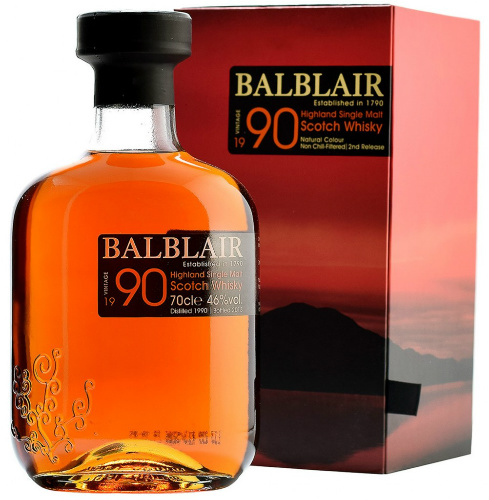 Color: Copper gold.
Nose: Quite creamy, with sweet vanilla, ice-cream, fresh cold butter and Sherry. Hints of oak, fresh and toasted. Dry (scorched) leaves and herbal. Hints of coal even. Hints of paper, cardboard, toffee and honey. Cough syrup. This smells so sweet and syrupy that it is easy to conclude it lacks a bit of the woody backbone to keep it standing. This Whisky smells like a dessert by itself. The wood that is here, smells like pencil shavings.
Taste: Quite big, matching the nose. Sweet (Sherry) and syrupy. A bit too sweet imho. Maybe these casks didn’t contain the highest quality Sherry in the first place. Sweet milk chocolate, vanilla and vanilla ice-cream. (Now the honey in the nose becomes more pronounced as well.) Butter and more chocolate. Almonds with fruity acidity on top, as often this fruity acidity doesn’t blend in all that well. There seems to be a little problem with balance as well. This acidity also has quite some staying power well into the finish only to dissipate in the aftertaste.
One sunny afternoon I tasted this 1990 2nd release and I loved it. Now, when giving it almost too much attention and analyzing it, there are some flaws that distort the balance a bit. It’s a bit too sweet and I don’t think the Sherry finish worked quite as it should. It’s completely fine when you have a casual dram and that is precisely where it’s for. I really liked it on that sunny afternoon, outside, with nice food and friends. When sitting at home, analyzing it, in a controlled environment, these flaws become more obvious, but I still like the Whisky very much. I wish I had the first release for comparison.
Ok, now I ask you to look past the flaws I described above, because as a whole this is definitely a good Whisky, so I stand by my score, which might be higher than you might expect from the text alone, and yes, at a good price, I would even buy it again. How is that for a recommendation. Just pick your moments to drink this, wisely…
Points: 87
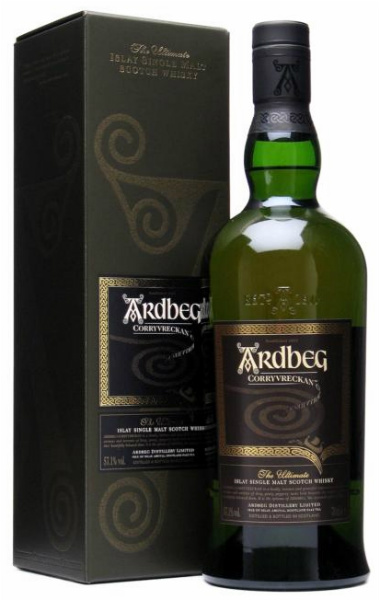 Color: Full gold (no red or pink nuance though).
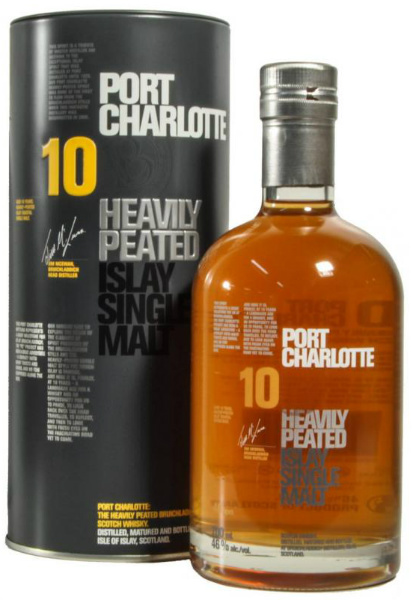 Color: Light gold.
 Color: Gold.
 Color: Copper orange.
 Color: Orange gold.
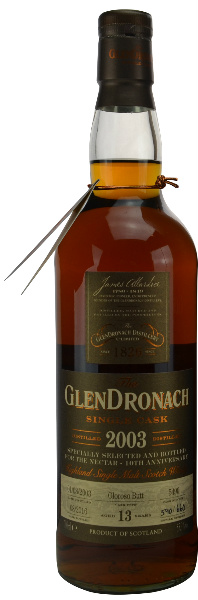 Color: Copper gold.
 Wow, it’s already the seventh and last day of Master Quill’s Highland Park Week. How time flies when you’re having fun, but I say that after every Master Quill Week. Somehow it is always nice to concentrate on one subject and try several examples in quick succession. This week may have been a bit heavy on the Independent side, since only two offerings released by the distillery themselves were reviewed. Beforehand I would have thought the 18yo OB would be a worthy opponent to the five Independent offerings, but it turned out otherwise. We know the 18yo can be (very) good, but we also know that it does suffer from batch variation. So quite a surprise there. Another surprise was the sheer quality of the 9yo Signatory bottling. A Whisky not even in its teens! If only all of todays NAS offerings would be this good… Yesterday we had a very nice Highland Park bottled by Douglas Laing, which churned out quality Whisky one after the other. So it wasn’t a hard decision to end this Week with a 1972 bottling by Douglas Laing again, especially since it was bottled in 1999, early on in the Old Malt Cask series (OMC). Early OMC bottlings were always right up there, so lets see if this is any different, and therefore a worthy example to finish off this week.
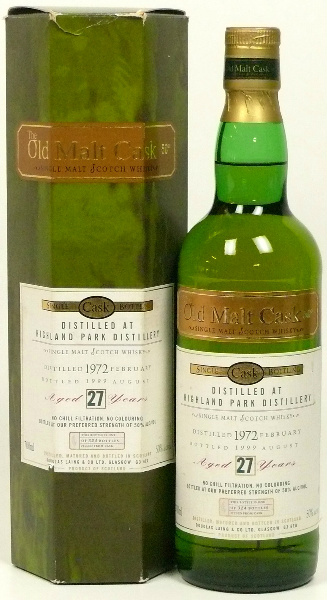 Color: Gold.
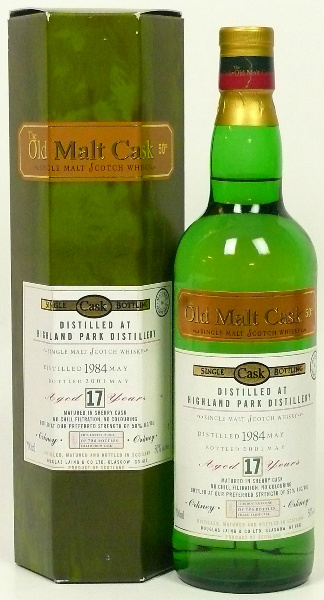 Color: White Wine.
 Color: Copper gold.
