Benromach Contrasts: Cara Gold Malt 11yo 2010/2022 (46%, OB, First Fill Bourbon Barrels, 20/01/22)

I almost forgot to write this review, because I though I’d already done it. Here we have the first Benromach on these pages after they revamped the look in to this slightly bulkier glass bottle, more straightforward cardboard box (easier to store) and last but not least the usage of the colour red. I was a bit hesitant at first because I really liked the copper they used in the previous package, but the red stands out, looks fresh, smart and traditional. So I do like the new look a lot now, and love having them around. If this one’s empty, I’ll probably replace it with another (red) Benromach. Most likely another one from the contrasts series, since it offers interesting takes on Malt. Here it is because of the usage of Cara Gold barley.

Most Benromachs that are on the market now are fairly young, sure there are some older bottlings like the 15yo and the 21yo, which are different yet not necessarily better. The Whisky at hand is 11yo and a nice choice for starting a flight of Whiskies or as a casual sipper. Not expensive and an honest pour. Benromach produces a heavier more meaty spirit, often slightly peated and sits well with knowledgeable anoraky aficionados, you know who you are, and since you are reading this, you’re probably one of them. This particular offering is partly made with Whisky made from Cara Gold barley as well as the normal Benromach lightly peated malt, both matured in first fill Bourbon barrels.

Color: Straw.

Nose: Sweet barley first, very appealing and very aromatic. Clean, fresh, fruity and malty with malt sugars and a nice layer of dust and paper-like aroma’s adding to the whole. Nice fresh wood tones, but nothing overpowering or off. Straightforward without any frills. Candied wood and candied yellow fruit, with hints of sweet smelling smoke, as well as some licorice. Clean and modern, although some yesteryear comes through as well. More wood (perfumed, highly aromatic) and wax with ripe yellow fruits. The label claims tropical notes, and sure enough… My perception of the fruit depends on the moment I’m smelling this. The first time around I wasn’t all too sure about the fruitiness, but the second time around, yes, here it is. I recently recovered from a nasty variant of the flu, and now that the nose is working again, I certainly pick up more on the fruit now! I’m very pleased with this Benromach. It smells very nice, accessible, balanced and its very aromatic and appealing. Well made, wonderful stuff and very affordable as well. After smelling this on many occasions over time, the fruity bit does wear off if you keep this for a while in your glass, focussing on the dusty and woody notes. Still soft and friendly though.

Taste: On entry, sweet smoke and sweet licorice. More subdued fruits. Candied Barley. You could smell it already, but it is most welcome tasting it. 46% ABV is a very nice drinking strength, definitely better, for modern Malts, than 40% or 43% ABV. Back in the day 40% ABV worked well, think of very old Gordon & MacPhail bottlings, like early Connoisseurs Choice bottlings (brown label, map label etc.) Yet Malts from this century definitely need a higher strength, higher than 43% if you ask me. Sweet, woody, spicy, somewhat bitter and slightly fruity (less so than in the nose). Tropical, well maybe. The wood has more to say here than it did on the nose. So more wood, slightly harsh even and showing some bitterness. The smoke is here as well and in the triangle between the wood, the smoke and the bitterness, it does take away a bit from the balance of the palate. A new sip with a fruity start masks the bitter bit for a moment. The finish is not very long and not a lot of it carries over into the aftertaste. But almost all you get is good (it turns out the bitterness has the longest staying power). No off notes. A very pleasant, fairly simple (it doesn’t develop a lot) and affordable dram. There is some diluted vanilla present, proving the maturation on (first fill) American oak. By the way, due to the bitter note this has, it isn’t entirely a casual sipper. Good, but I preferred the nose over the palate.

By itself a (partial) Cara Gold offering isn’t saying very much, it would be really interesting to have several Benromach bottlings, like this one, made with different barley varieties, open at the same time, to be able to compare them to each other. I checked my stash, but there isn’t another one at hand. A bere barley version would be nice, come to think of it, because bottlings like this remind me of the rebooted Springbank Local Barley series, where the Bere Barley version bottled in 2017 is my favourite. Yes I often prefer it over the 16yo and the dark 10yo. Sure the 16yo and the dark 10yo are great and definitely stellar as well, but the 11yo from 2017 is so good! Don’t be fooled by higher numbers or the colour of Whisky! Final remark, this particular Benromach worked best for me in a small tulip glass, a narrow, long stemmed Riedel for instance as opposed to a bigger glass, like the Holmegaard Perfection Spirit Glass. Both are very good, yet different. Good glassware always shows you more sides of the Whisky you’re drinking, so I do recommend to invest in good and several different pieces of glassware. It makes exploring your dram a lot more fun!

Points: 85

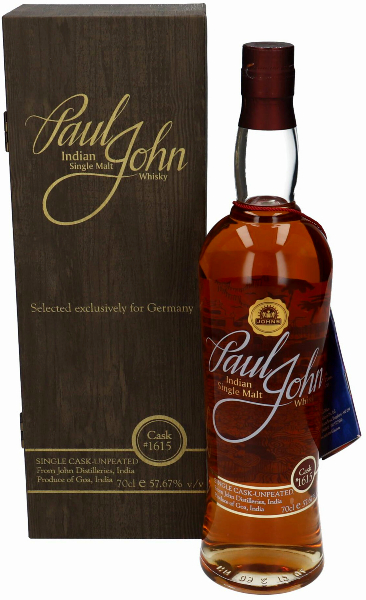
Paul John (57.67%, OB, Single Cask #1615, for Germany, 216 bottles, 2016)

As said in the previous review, I tend to have a pair of open bottles of Paul John on my lectern. At the moment cask #4914 (peated) as well as this unpeated #1615 are on there. Both bottled for the German market. After the peated expression, lets mow turn our attention to the unpeated expression. In the previous review I have remarked that the peated expressions seem to be better and thus score higher. Unpeated cask #1051 scored relatively low with 84 points and low and behold, now the peated cask #4914 from the previous review scores mid eighties as well. 85 points is lower than its predecessors. This is how the universe tends to work. I’m now betting on this cask #1615 getting a score, very high in the eighties, to bring balance in said universe. Not much more to add to the intro at this point, all has been said, so why not cut this intro short for once and dive right into this unpeated Paul John.

Color: Slightly orange gold.

Nose: Fruity and very appetizing. Right out of the gate a fruity, nutty and friendly dram. Malts, sweet malt actually. Lots of unexpected fruit notes, still have to wrap my head around all these fruits. All yellow fruits. Now I get hints of grapes and Alsatian über aromatic Gewurztraminer. Wow, how’s that for yet another take on a single cask Paul John. Ripe yellow fruits, bananas from Jamaican Rum. Cask #1615 turns out to be quite the funky puppy. Wet cardboard and dust. Quite a change is happening now to the body of this Malt. Dry wood with more fruit and vanilla. Fruity ice-cream. Instant gratification, not a lot of layering or complexity. This one puts all its wonderful smelling cards on the table right away.

Taste: Very tasty right out of the gate. Fruity like the nose with nice, slightly prickly oak. Nutty, somewhat vegetal and with a slightly sweet deepness. Warming. Very well balanced. Amazing actually how all these Paul John single casks can differ so much, and remember all are coming from first fill Bourbon casks. Unpeated yes, but there is something about this one. Maybe toasted oak, maybe the oak had lots of residual sugars, like a hint of smoky, sugary oak. Although the fruit dominates this Malt, the wood definitely plays a wonderful role as well. Paul John always claim to be tropical, well if you want a tropical Paul John, this is it. It’s the most tropical I’ve had to date. Very fruity but with a paper or cardboard edge to it, turning into a more bitter wood note, as well as some pencil shavings in the finish. Quite dry. This would have benefited if some of the fruity sweetness would have made it into the finish more, as well as into the aftertaste. In no way is this young smelling or unfinished. Maybe if this had aged some more, it might have gained somewhat more complexity, but it might also have picked up some more wood and bitterness and it also has more than enough of this, so maybe it is at its best as it is.

Points: 88

As a casual sipper I definitely preferred this unpeated cask #1615 to the peated cask #4914. With other sets of open Paul Johns I had in the past, it is often the other way around. Also I’d like to mention that casual sipping is much different from analyzing, because in the case of the latter, the Whisky is getting much much more attention. When analyzing, the Whisky is the focal point whereas with casual sipping the center of attention might be a film, a book or an interesting conversation, to name but a few distractions. This shift in attention also changes your perception of the Whisky at hand more than you might think.

Since this turns out to be yet another high scoring Paul John, and since I still have a wee dram of peated cask #745 left, lets compare these two for a moment. Wow, smelling cask #745 (again, the darker of the two) after cask #1615 makes it truly amazing. Holy moly what a winner cask #745 truly is on the nose. And what a nice pair to smell. The peated one has the Paul John plastic note, and this unpeated one does not. cask #745 has peat, clay, rubber and plastic, all traits cask #1615 does not have (obviously). cask #745 is a way more fuller and aromatic Whisky, more industrial and much bigger (and it has horseradish in the aftertaste). It unhinges slightly in the finish though, and that is probably why cask #777 scored a point more than cask #745. Both cask #1615 and cask #745 taste entirely different. So again, 89 points for cask #745 still stands (again) and the way cask #1615 finishes and all things considered, 88 points is correct amount of points for this one as well. Mind you, all this scoring stuff is highly personal, so I urge you all to make up your own mind if you get the chance to taste the Whiskies you read about, and don’t follow what anybody says blindly. Over and out for now!

Paul John (59.2%, OB, Single Cask #4914, for Germany, Peated, 138 bottles, 2017)

For a long time now I have been opening two Paul John bottles at once. One peated and one unpeated, once a mix of both. Very often single cask offerings, simply because they interest me the most and beauty lies in the details. As far as know, all the single cask offerings I came across are ex-Bourbon casks, so no Sherry or Port stuff here. As many aficionados or anoraks know, Paul John appeared on my radar because of the wonderful tornado that is Shilton Alameida, currently of Tel Aviv outfit Milk & Honey. If you ever visit a good Whisky Festival go over and visit Shilton! Paul John does not seem to bottle a lot of single casks anymore, so most of the reviews that will appear on these pages in the future are bottles from my stash. These older single cask offerings will disappear more and more from retail shelves although they still do appear in auctions with decent hammer prices. Decent from the buyers perspective that is.

I’ve had plenty of Paul Johns open, and thus Paul John is no scarcity on these pages, with even several independent offerings from Malts of Scotland and Cadenheads. However the focus now lies on Officially released Single Casks and as has been the case earlier, I will review one peated and one unpeated expression. Until now, three unpeated OB expressions have been reviewed earlier (scores between brackets): cask #1444 (89), cask #1906 (87) and cask #1051 (84). Two peated OB expressions have been reviewed earlier: cask #745 (89) and cask #777 (90). As can be seen the peated expressions right now seem to be “better” than the unpeated ones. So lets see how the next pair will turn out. Let’s start with the peated expression: cask #4914.

Color: light, middle gold.

Nose: Initially quite malty, with fatty, smoky vegetal notes of peat. Clean and smoky, bonfire style. Light (and deep), yet also very balanced, fragrant and laid back. Ever so slightly meaty, more gravy-like actually. Slightly fruity with hints of warm plastic and distant vanilla. Soft wood and fresh almonds. Pencil shavings later on in the mix, and I might add, these are the shavings of a very old pencil. Its warming, fresh and clean at the same time. The nose has a pudding-like quality to it and is actually very nice, not raw or harsh in any way, nor is the smoke sharp. If the taste is anything like the nose is we’ll have yet another peated winner from Paul John. Its almost like a breath of fresh air. Seaside, a strong and windy day kind-a fresh air, mixed in with some minty notes and horse radish, that’s how fresh this smells. This smells different from all other Paul Johns I had before. Much cleaner, and this time around, when sniffed “blind”, I probably wouldn’t have guessed this is Indian Whisky. I struggle to find the six-row barley in this one, its there, but less apparent than in most other ones. Still an amazing Whisky considering it still must be a young spirit, although we know by now how ageing works in the Goan climate.

Taste: Quite an unexpected start after smelling this one for a while. It starts sweet and nothing in the nose prepared me for that. Sweet and fruity and the almonds from the nose are present as well. First sip is very warming going down. Sweet with vanilla and slightly bitter wood. Very tasty, yet also a bit thin and a lot less complex than the nose was. The balance seems slightly off towards the finish, since not everything you taste seems to fit together perfectly. The wood becomes more paper-like, as well as slightly acidic, but not in a fruity way at all. It’s the acid you get from oak. You can almost smell this acidity in freshly cut oak. So the start and most of the body are more than OK, it’s the finish and especially the aftertaste where things start to go slightly wrong. It is layered, but in this case the layers won’t stick to each other. A sort of unpleasant tension is happening between the layers. I have plastic in the finish, and if I smell it right after that, the nose shows this plastic edge as well. Plastic is not uncommon for Paul John, but it usually isn’t a problem. It is actually a bit of a shame the palate can’t keep up with the nose, especially since the nose promised so much, and this is not even a heavy hitter, so go figure. Hey don’t get me wrong, this is still a tasty Whisky, but it certainly does have its flaws. The wood is slightly too bitter, and it goes downhill in the finish and the aftertaste. It loses its sweetness and fruitiness, to be replaced by acidic wood. Easy to pick up on when one’s somewhat experienced with Paul John.

As luck would have it, I still had a sample lying around from cask #745, the liquid of which is quite a bit darker, way more creamy and pleasant and way more balanced. Yeah, cask #745 is really good stuff. Based an a quick comparison on the nose, cask #745 is the clear winner. It has a lot more going on for it. It’s quite a big difference as well for two bottles you would expect to be similar. To sum things up, not all single casks are created equal. If you come across one, you might want to pass up on unpeated cask #1051 and thus this peated cask #4914, both are sub-par compared to the rest, yet still not bad. On the palate, cask #745 is also much better, bigger and way more balanced. The peat is different and more special as well. It also has some off-notes, but these work well with in stead of working against the Whisky, and only adds to the experience.

Do I regret getting #4914? No, not at all. After a few of those single casks, one might think all are quite similar and also might get a bit boring. However cask #4914 is still a good one, and trying it is still a great experience because of the different feel it has, and it also shows me how good #745 really is. By the way, cask #745 also has the same plastic note as cask #4914, and is much better. See, off-notes aren’t necessarily bad, they can work. This review has again been quite educational, and when these two bottles are gone, I will more than happily replace them with two other single casks, one peated and one unpeated. I guess the 89 points for cask #745 still stand, although 90 points would feel good as well.

Points: 85

Bimber “France Edition” 2021 (58.9%, OB, Port Cask #30, for La Maison Du Whisky, 290 bottles)

This is the fifth review of Bimber on these pages, After cask #194 (Rye cask), cask #224 (Bourbon cask), cask #94 (virgin oak cask) and cask #41 (Pedro Ximénez cask), we now turn our attention to cask #30, which was a cask that previously held Port. This is another chance to see yet another side of Bimber. Until now the scores ranged between 86 and 88, which is quite a narrow range of scores, well see if this Port expression will broaden this narrow range somewhat, although I suspect it might not, and is so, not by a lot anyway, since the quality has been there all the time. A score lower than 86 is probably unlikely, especially since, for the time being, the Spirit seems to work well in any cask, and on the other hand, the Whisky might be just too young to propel the score way past 88 Points, but hey, you never know and if the Whisky turns out stellar, it will definitely score higher than 88, and if the Whisky is (badly) flawed it will definitely score lower than 86.

Color: Orange Brown, no red hue.

Nose: Warming, elegant. Spicy, one of the markers that many Bimbers have is cinnamon. It’s a signature aroma. Vanillin, raisins, licorice, leather, dust and old mahogany. Lots happening right from the beginning. The wood especially smells really good, very classy. Hints of Rhum Agricole and an old hardened out floral bar of soap. I said: hints, so this nose is not particularly soapy. No, cinnamon, licorice and wood are the main markers, other than that, this smells quite fresh and lively. It has some fruity acidity to it, as well as a breath of fresh air. Apple pie and cookie dough. This one ticks a lot of nice boxes. Toffee. Not very red-fruity though. In the Whisky business Port is Port, they really don’t seem to care a lot that there are a lot of different kinds of Port in existence. So I wonder what kind of Port was in the cask before the Bimber spirit, assuming it is a first fill. Again a very pleasant nose. The Bourbon, Rye, Virgin, Pedro Ximénez and now this Port are all very good on the nose, yet this one especially. This Port version smells really really good, it might not be the most complex of the ones I have smelled and tasted until now, but very good nevertheless. The aged spirit already smells nice, but the Port definitely adds another layer.

Taste: Definitely leather first this time. Hints of black coal and old style red fruits, initially like a Whisky from the seventies in a good Sherry cask. This old-style effect only shows itself now that the Whisky had some time to breathe in the bottle as well as in my glass. The freshly opened bottle didn’t have this. Some toffee and sweet fruity Wine notes at first. Cinnamon propels it forward. Again a very elegant taste. Wood, cinnamon and leather. Slightly burnt sugar and hits of tarry licorice. A tad of woody bitterness as well now. Sweetish with again the hints of red fruit we know from Old Bowmores and good old Redbreasts. Sweet and fruity not unlike strawberry jam. Next some vanilla powder seems to be mixed into the cinnamon. More typical fresh oak, with a neat little bitter edge, giving it some more backbone. Pencil shavings adds another wood-note. This is also the moment, the initial sweetness wears off. On the palate it even has more traits of Rhum Agricole than the nose had. I even pick up on some cola now. Tasty. This is a very balanced Bimber. Initially I thought Bimber works best with Bourbon, Rye and Virgin oak casks, and I might have mentioned that earlier, in hindsight, I guess it will work in almost everything, since the Pedro Ximénez turned out better than I thought and this Port also works very, very well for me. With 86 Points, the Pedro Ximénez version is the lowest scoring Bimber, and my least favorite of the lot. But come on, 86 points, that’s quite impressive for the worst Bimber on these pages. Taste-wise this Port version might not be the most complex of the lot, yet comes close though. It does have a better drinkability than the Pedro Ximénez version I just reviewed, still not one for casual sipping though, but if you do, you’ll be alright nevertheless. I totally get why La Maison Du Whisky (LMDW) picked this particular cask, excellent choice!

This one has a lot to offer. After all the Bimbers I’ve tasted, not all have been reviewed though, I’m sure the beauty lies in the details and therefore Bimber still needs to have my full attention. This one is not a casual sipper. If you give it the time it rightfully deserves, you’ll definitely will get rewarded big time. Personally, Bimber is maybe my favorite of all the new distilleries. High quality and very mature for the age of the liquid.

Points: 89

The window of scores did become a little bit wider now with 89 Points. Very good Bimber once again. If the Sweetness would have more staying power towards the finish and into the aftertaste, this would have scored 90 points.

Bimber “Pedro Ximenez” 2020 (50.9%, OB, Pedro Ximénez Sherry Cask #41, 335 bottles)

So earlier I reviewed three Bimbers, all matured in American Oak casks, one that previously held Rye, one that previously held Bourbon and one that previously held nothing. In those reviews I already told you that I felt those three types of casks worked best for the Bimber spirit, mostly quite similar but also at the same time quite different. I also mentioned that it would become clear in another review why those type of casks work best. Well here it is, this is that other review. This example was fully matured in an Ex-Pedro Ximenez Sherry Cask. Pedro Ximénez is a (very) sweet fortified Wine made from very ripe grapes of the same name. The grapes dry in the sun to obtain a must with a high concentration of sugar. Pedro Ximénez-casks are also very well known in the Whisky-world. Usually not for full maturation, but more for a finish. People do still feel that an ex-Oloroso Sherry casks works better for Whisky than a Pedro Ximénez cask. I understand the feeling, but this is no always true.

I once brought three Bimbers to a meet of my Whisky club. The Virgin Oak cask I reviewed earlier was somehow accepted, bust this Pedro Ximénez not so much. So proceed with caution. I might think Bimber is great, but that might not be true for you.

Color: Copper gold.

Nose: Very spicy. I know now this is quite common for Bimber. Smells like a pre-war shop selling spices. Hints of Pedro Ximénez, yet not fruity. An old leather bag. The whole is more dark and brooding. Also a thin veneer of lactic acid, acetone and a wee hint of horseradish, distant smoke and petrol. All in minute quantities (I didn’t pick upon these yesterday). Somewhat sweet smelling. Chocolate chip cookie dough. After a while in my glass, the aforementioned shop becomes somewhat more of a candy shop. Cinnamon sticks (lots of it) as well as the pink, raspberry flavoured ones? Still not fruity. The nose is quite raw and dry, like drawing in a breath of ice-cold air, yet the whole seems to be more warming, as can be expected from cookie dough and cinnamon. More of the old shop and an old book show up now as well. To be honest this is an amazing nose, with a small lactic acid fault, but the whole is pretty amazing smelling, amazing and classical. Quite a feat for yet another NAS. How do they do it? Dust and licorice powder, still this aura of sweetness in the smell. Smells like Christmas. Good balance, I like it.

Taste: Sweetish, spicy and woody on entry. Something prickly. Lots of licorice in many guises. The powdered stuff as well as the black bit of Licorice Allsorts. Sweetish and slightly sticky. Sweet wood and some raisins. The dry and the sweet work together well, not exactly cancelling each other out, thus reaching a nice synergy. Every new sip starts with wood, sometimes somewhat harsh maybe, but next comes this ever growing fruity sour note. Although Pedro Ximénez is very sweet, the Wine works well because of the underlying sour notes. Just like Laphroaigh is heavily peated, but quite sweet underneath, that makes it work wonderfully. The acidic fruit note is authentic for a Whisky that was (fully) matured in Pedro Ximénez, yet some might find it off-putting, as I found out the hard way. There is slightly less balance on the palate than there was in the nose. By the way, especially after sipping, the nose becomes even more beautiful, even after the first sip. The taste does show a slightly burnt character. Still pleasing stuff nevertheless. This bottle, more than others, got a lot of slack from some people, but now properly analyzing it, I don’t concur. Sure these are some small issues with it, as there always are (have you ever encountered an perfect Whisky, and if so did you score it a 100 points?). The whole is very tasty, elegant and pleasing. Or is it just me with a liking or fondness of Bimber? So the only faults I could find, if I’m looking for them, are the lactic acid right at the start I mentioned above, and the aftertaste being rather sticky, with sawdust and a slightly burnt note as well. The body of this Whisky is very good.

A lot is happening behind the scenes with Bimber these days, and the stories I hear, one even more crazy than the other. Still I hope they can sort it out and for things to fall into place. It would be a shame to lose Bimber. It’s a young distillery, and a young, well looking brand, yet the whisky, still all NAS is nothing short of amazing. This Pedro Ximénez one is not a casual sipper, but one for an armchair, a good book and a nice warming fire in the fireplace. A winter warmer. I can forgive it the few flaws it has, because the rest is more than making up for it. For a long time I believed that clean American oak was the way to go for Bimber. Bourbon, Rye and virgin oak, but this Pedro Ximénez is working for me as well, even though of the four mentioned it does scores the lowest. Maybe Bimber has such a nice spirit it will work well in anything. No don’t you break out the herring of Tabasco casks just yet, people. We’ll see what the next reviews of Bimber will show, but up ’till now I’m quite happy with Bimber, and I’m looking forward to the next one.

Points: 86

Longmorn 1967/2003 (52.2%, Scott’s Selection, Speyside Importing Company, Duxbury MA USA, 750 ml)

Longmorn is a distillery with a huge reputation with Whisky aficionados. If you encounter a person who identifies as a Whisky aficionado and you start talking about Longmorn from 1971, chances are quite big that a person like that will start talking enthusiastically, not stopping for at least half an hour. Reason for this is that there are a lot of really, really good Longmorns from 1971. Actually, there are lots of really, really good Longmorns from the sixties and the seventies. The highlight of the Longmorn-era, although some feel that Longmorn still is very good. Sure, there are a lot of good Longmorns in more recent decades as well, yet those from the sixties and seventies are in a class of their own. Really, really good. Focusing now on Scott’s Selection, there are two dark sherry bottlings from 1971 bottled by Scott’s Selection that are amazing. One bottled @ 58.6% and the other one @ 57.8%. Both bottled in 1999, but there are two (?) others, one bottled in 2000 bottled @ 52.3% (one that I have never ever seen in the wild, no clue is this another dark one or not and if it actually exists to boot). In 2004 one was bottled for the US market, this one is definitely not dark. In 2003 and 2004 several more, “lighter”, Longmorns from 1967 and 1968 have been bottled for the US-market. Let’s have a look and a taste one of those, the 1967 Longmorn bottled in 2003.

Color: Full Gold.

Nose: Waxy (almond wax, if that exists) and super fruity. Soft warm fruit and candied fruit both mixed with a little bit of sweat. Old style. Old style is often riddled with funky organic aroma’s, which might be quite negative to read for some, like sweat for instance, yet those funky aroma’s are always very nice in an old style Whisky. Old clothes cabinet. Old, time-worn, smelling wood. Great complexity. Chewy with hints of black coal. Nope they don’t make them like this anymore. Soft, wet wood. Not spicy nor harsh. More wax mixed in with the wood. Old style dust and lots of old style yellow fruits. Deep and brooding. Hints of white chalk and white latex wall-paint. Old bottle effect combined with a minty note. Hints of peach, dried apricots and ripe, yet not overpowering, banana. Cherries on syrup. I don’t pick up on the banana every time I smell this though. Steam, also with hints of latex. Well balanced. Vegetal and green, especially after some time of breathing. Late to the mix: pencil shavings as well as some cold dish water. Maybe even a tiny hint of smoke, but this also can be the toasted bit from the cask-char. The whole nose has this promise of a sweet Whisky. The colored bits of Licorice Allsorts. If you leave the (not empty) glass standing around for a bit, notes of honey emerge (as well as some plastic). The empty glass the next day has even more of this plastic aroma. However, needless to say, but the whole is very nice, very nice indeed.

Taste: Starts powerful and spicy. Very fruity and a lot more wood-influence than expected form the nose. Where the nose finished on Licorice Allsorts, here on the palate it starts with it. Candied anise seeds. So yes it starts out sweet, but not overly so, especially when the wood kicks in. Slightly soapy. Green again with half-bitter hops and some cannabis. Waxed nuts and waxed wood with a decent amount of bitterness. Just enough for the whole taste of it. This has a beer-like quality to it. Half-sweet and very fruity again. Not only yellow fruits, but some red fruits as well. Sweetish strawberry and cherry juice combined with hints of vanilla. The minty bit comes through here as well as again the slightly soapy bit. Just like the bitterness, the minty taste comes from the wood. This is a Whisky that grows even more complex on the nose when you finally start sipping it. You’ll probably take a while taking in the complexity of the nose anyway. Finish shows some more cask toast and retains the soapy taste, which strange enough works well this time. Very fruity with a slightly bitter aftertaste from the woody backbone, especially if it got time to breathe. Great dram, just not as good, but also very different, as the darker 1971’s.

Hard to say really in what kind of cask this was matured in. First guess would be a Bourbon hogshead, not a barrel and also not a first fill. (Second) refill Sherry, could be.

Points: 91

Deanston 24yo 1996/2020 (50%, Hunter Laing, Old Malt Cask, Sherry Butt HL 17661, 452 bottles)

Deanston is not a Whisky or distillery I was interested in for a long time, no Deanston came much later. I obviously knew Deanston existed, but I felt it didn’t get much love, and you hardly read about Deanston back in the day, so I didn’t bother even to buy it and others didn’t bring it to tastings I attended. So it flew a long time under everybody’s radar until… In 2015 Deanston released their 20yo matured in Oloroso casks. All of a sudden Deanston found itself on the Whisky map, and people started to like it. Today Deanston is seen as distillery that puts out great honest stuff, a bit of a go-to Malt if your local watering hole hasn’t much stock of Springbank, a distillery with a similar “feel”. I liked the 20yo as well (someone brought it to a tasting), but never got to buy one, instead I went for several expressions of their Organic Whiskies. I suspected these might be maybe a bit of their take on a similar series from Bruichladdich, only those are much younger, or even the recent Springbank Local Barley’s. However the first bottle I opened and reviewed here was a Bordeaux Finish I probably got a great deal on, since I am usually very careful with Wine finished Whiskies. This Independently bottled Deanston is only the second review of a Deanston on these pages, but certainly not the last, since Deanston turned on their transponder and Deanston is now on everybody’s radar.

Color: Orange Gold.

Nose: Elegant with nice clean oak notes. Fresh smelling, almost floral even, but at the same time also old and distinguished. A deep fruity, partly waxy and well aged smell (that’s the old style). This also might have to do with the glass and the Whisky warming up when holding the glass in my hand. Creamy vanilla dust with sweet barley. Excellent balance. The Sherry adds some red fruit, but not a lot, also a fresh sense of acidity pops up, next to a paper-note (paper without ink). Bigger role than expected is played by a sweet and minty aroma. I may have mentioned Menthos before. But it’s like eating those. Hints of citrussy dishwater liquid cut through the waxy fruitiness. Next more freshly shaven American oak, mixed in with some toffee and/or caramel. On occasion it smells slightly too dry, because of the fresh oak notes, to be a true dessert Whisky. Now it’s closer to an aperitif because of the lack of “bigness”, or is it? Remarkable nose, it seems like it phases in and out of different aromas and notes, phasing out and phasing back in again over time. It smells complex, but also like it won’t be big on the palate. We’ll see. Nice smell of red fruits like a good old Sherry cask would impair back in the day. Herbal and vegetal as well. Licorice with horseradish. Can’t really put my finger on it now, what this herbal bit precisely is, although there is some lavas in there, but wait there is more. Cumin with gravy, yet still more. I remember the smell of this wood from casks that held Red Wines. Creamy, so American oak ones. This Deanston has a lovely depth to it. Smell it with a low flow of air, but smell it for a longer while (in one go, without passing out that is) to unlock all the underlying beauty this nose has. More of this minty acidity, which seems to be not fully integrated. Its definitely there, this slight unbalance, but on the nose its a minor gripe. The back of the smell feels like rain on earth on a dull day.

Taste: On entry, fruity, less sweet than I thought. Nutty toffee with hints of cannabis, and yes a bit thin, but also very tasty, well balanced stuff. Quite waxy and fruity, again old style and warming. Watered down toffee. Good balance, especially if you let it breathe for a while. Definitely let it breathe! The start is very tasty indeed. It matches the nose. Wood has a soft, yet big presence, but not only. There is a sense of fresh oak as well. Somewhat prickly and spicy, wet wood yet also toasted cask, giving it structure. More than in other Whiskies, the wood plays quite a big role in this one. A lot of shades of wood are passing by, and most surprisingly, woody bitterness isn’t one of them. A lot of great stuff is going on. Pecan ice cream, with a tad of warm honey and the taste of perfumed wood. This Whisky would make for a fantastic ice cream flavour. A kind of wet bitterness to the wood. Toffee here as well. This is a very, very interesting Whisky, tasty as well, not for novices though, since you need to be somewhat experienced and open minded to fully “get” it and it would be a waste of money if you’re not there yet. It’s not cheap, nor is it an easy Whisky as well. Again one that works well now when analyzing, yet somewhat less so when casually sipping. I like it better now than when I try it when watching a movie.

This one you have to work a bit, most of the nice bits aren’t well noticed when casually sipped. This really needs your full attention. A few years back I tried a wonderful 25yo Deanston from Hunter Laing that was much easier (Thanks Paul!), Bigger, right out of the gate, and one that did not need work from the taster at all. I might have expected more of the same buying this one, but its different, is it worse? No probably not, this one is beautiful as well, maybe even more complex, it only needs your attention some more. To sum this one up: toffee, (red) fruit, and wood. By the way, this one definitely needs a lot of air, the second half of the bottle was most definitely better than the first.

Points: 89.

Bladnoch Vinaya (46.7%, OB, Classic Collection, 1st Fill Sherry & 1st Fill Bourbon casks, 2021)

Only the third review of a Bladnoch on these pages, I actually thought there would be more. I guess the first review of the 8yo Beltie Label was a true learning experience to get to know Bladnoch. Bladnoch had a bit of a reputation and that particular bottle when freshly opened just confirmed this reputation. If I’m not mistaken the 8yo fully came out of the production when Raymond Armstrong was the owner. He produced mostly between 2000 and 2009. However, the more I tried it and the more air went into the bottle, that’s when the magic started happening.

Fast forward all these years (since 2012) and now Bladnoch is one of those “obscure” Malts that I really like. Between that review and the next, Bladnoch Distillery changed hands, and the second review (in 2021) was the official 10yo bottled in 2018 by the new owner David Prior. David’s Bladnoch started production in 2017. Comparing both reviews you can clearly see I warmed up completely to Bladnoch. When I finished the 10yo I replaced it with the Vinaya, which is a NAS Bladnoch, again from the new owners, to see how I would feel about another young Bladnoch like the 8yo, now that I’ve become fond of Bladnoch. Would the Vinaya have a similar false start like the 8yo Beltie, or is it more like a NAS version of the 10yo I mentioned earlier. First of all the difference, apart from the age statement, is that Vinaya has in part matured in Oloroso Sherry casks, where the 10yo matured solely in Bourbon casks. Vinaya uses older casks from Raymond’s Bladnoch blended together with (probably 4yo) Whisky from David’s Bladnoch.

Color: Gold.

Nose: Malty, pleasant, with slight notes of diluted Red Wine, which is also noticeable as an added acidic note. Also candied lemon seems present. Fruity overall. Fruit syrup. Since we know that this has some young Whisky in the fold, I’m happy to report that there is no sign of new make spirit or anything that resembles that. Creamy notes from American oak also some notes of toasted oak. It has a slight “bite” to it, which is very nice in combination with the thick fruity aromas. Yet again a big smelling Lowland style Malt from Bladnoch. Lowlanders are often grassy and hay like (and so they should, its their heritage), yet Bladnoch in general are pretty creamy and Vanilla-like, and all of this in a big way. Maybe that’s why I always liked St. Magdalene (Closed) en thus Bladnoch (Very much alive again). So the nose is big, big on the traits of a Whisky matured in Bourbon casks. Bourbon definitely plays a larger part in the profile of this Whisky than the Sherry does. Quite surprising, since the Sherry casks are first fill as well. Candied pineapple, (yellow) fruity aroma’s emerge. Hints of paper as well as traces of burning paper, Wine again and warm butter. Dust and the wood of an old dried out cask. Pretty mature smelling for a NAS-Whisky. Very good nose this NAS-er has. Hints of old style Malt, which is a surprise considering the composition of this NAS. I foresee great potential in Bladnoch’s new production, which as mentioned above, started just in 2017.

Taste: Just like the nose this starts Malty. Warm super-ripe fruit mixed in with a lot of cardboard (Malt) and some young wood. Here the wood provides a “bite”. Warm apple compote in a soggy cardboard box. Yes, definitely a fruity Malt, just with this wood/cardboard edge to it, probably from the Malt of the younger production. Next sip, more of the cream and vanilla, as well as some sweetness, astringent wood and distant nuttiness. In a way dull, in a sort of basic Malt kind of way that is. Simple, without a lot of development (by the way, the nose does develop more than you would expect). Present also, luckily, this acidic note from the nose, only less so. The whole is definitely a lot simpler than the nose promised. Not very expressive to be honest, yet what you do get is nice. Dull is a fitting word, not to be confused with boring, although I can imagine some of you aficionados that are not (yet) into “back-to-basics” (again) would call this boring. Still, it is fatty, creamy. Not entirely sure this Whisky is 100% balanced though. I get the Sherry influence, but it doesn’t seem to be perfectly integrated. Medium to short finish (hey, it’s a NAS), again with this slight unbalance to it, somewhat paper-like. The aftertaste is slightly creamy with wood and warming, with something new: hints of gout de petrol. I wonder how much of the new production is in this and how it is on its own. By the way, don’t let this sit in your glass for too long, a fresh pour tastes the best.

An excellent nose for an NAS-Whisky, yet somewhat less thrilling to taste. It’s good, yet not spectacular. But hey, it isn’t very expensive now isn’t it? Definitely worth a go, I would say. Daily drinker kind of stuff. Personally I’m not a daily drinker, far from it, but if I would be, this will definitely be on the list, especially amongst others with a different profile. Sometimes one doesn’t feel like getting a peated Whisky or a Sherry-bomb, but something like this (lets call this a Bourbon+ profile, “+” for the added Sherry influence), is always good. I never grow tired of this back-to basics profile. I’m not sure the 10yo and 11yo Bourbon versions still are available, but I would recommend both over this one. The score might not reflect it entirely, but this is a fun Whisky nevertheless, so no regrets, worth the price of admission for sure.

Points: 84

“An Islay Distillery” 9yo 2008/2018 (54.9%, Cadenhead’s, Small Batch, One Bourbon Barrel & One Sherry Hogshead, 330 bottles)

Let’s kick in the open door: this is a Lagavulin (supposedly). It’s not on the label, but I have been assured this is a Lagavulin. However, we still can’t be a 100% certain now can we! Lagavulin used to be, and probably still is, my highest overall scoring Distillery from Scotland. There were hardly any bad or mediocre Lagavulins around. Even the affordable standard 16yo (The White Horse version) was stellar, the newer “Port Ellen version” is still very good. When the 12yo returned as an annual special release at cask strength, again very, very good. Right about the time, lets say 2021, maybe even earlier, signaled a noticeable downfall in quality. Picking up notes of a milky almost new-make spirit. Around 2019 with the release of the 10yo, the 9yo Game of Thrones and the 11yo Offerman Edition came the time that made me look elsewhere. Especially because of the 10yo (and the 8yo, come to think of it). The 9yo and the 11yo were still decent. So, in come the independents! Thank god for them! An indispensable lot. Diageo protects the Lagavulin name with their life, so that’s why companies like Cadenhead’s can’t put the Lagavulin name on the label without being shot, or worse. Hence “An Islay Distillery”. Some others at least think of a resounding name from which the public might or might not guess that it is a Lagavulin, or leave some subtle hits on the front and/or back label. I am buying some of these anonymous Lagavulins just to see if all these younger Lagavulins have the same milky taste I dislike like the 10yo and the latest batches of the 12yo’s have. I hope not. Here is an example from Cadenhead’s, but there will be more in due course.

Color: Orange Gold.

Nose: As expected, peaty and smoky, not even all that heavy, even though there is a lot to take in right from the start. This leaps out of my glass. Some nice wood, although quite masked. Menthos with floral vanilla and quite dusty. Perfumy kippers, salty and smoky. More notes of fresh oak. Vegetal wood, mature and appetizing, so not sappy wood which is more fresh. Hints of textile, melting plastic and wet dog. Silent yet deep dark peat. Smouldering (I love that word, have to use it more often if applicable) embers. Funky organics. There is quite a lot going on, that’s for sure. Something does remind me of matches a bit, but to be honest, I don’t really pick up on any sulfur right now. It has a fresh feel to it as well, like walking in the woods on a sunny and somewhat cool day. A temperature just right for walking. Next a sweeter, yet organic note, like smelling the left over stones from eating really ripe cherries (just before they go soft). Combine this with some light beech wood smoke and maybe a more smoked meat note. This smells entirely different from an officially released Lagavulin 9yo (The Game of Thrones version). The nose keeps developing in my glass showing more traits of red and black ripe fruits and vanilla in a thin coat of peat. Maybe I do pick up on some sulfur now (a fart?). Still in a minute quantity then. Some Iodine, now that’s detectable. Sea-spray? Nevermind. Bonfire on a good day. Big nose, slightly creamy and sweet if you let it breathe. I do like it quite a bit and can’t stop smelling it for the layers it shows.

Taste: Yes, holy moly. Big peat but also big on the warm plastic I also found in the nose. Just enough wood, nice. Also sweeter than expected. Licorice. Definitely not a weak Whisky like the 10yo, much bigger and bolder. The 10yo seems unfinished, milky, nothing of that here. This is 9 years old and it is done and dusted, it’s ready. Very big for a Lagavulin. Iodine and warming. You can think of Lagavulin as an elegant Islay Whisky in general, but mainly because of the 16yo, this 9yo is not, it is raw and unpolished, a different take if you will. You can even see some resemblance to the boldness of the 16yo, at least the 16yo from a while back. The Whisky is so big that the plastic bit, that usually is a big off note, killing even, only plays its part in the whole. It is in no way overpowering nor bad. Still the whole is in your face! Sweet, (burnt) wood, toast, peat, licorice and warm plastic. That’s it, those are the main markers. Luckily more is happening in this one, especially on the nose. You can pick up on the American oak, I’m pretty sure both casks are American oak. The sherry bit is similar to the Sherry you get from a good batch of the 16yo. Cow dung in the finish. Aftertaste is sweet, peaty and plastic-y and very low on bitterness, lets say soft tannins.

Well, this is a small batch and in this case combining two casks, a Bourbon barrel and a Sherry hogshead, together normally good for some 600 bottles at cask strength. However only 330 bottles have been bottled, why is that? Not all has been bottled, leaky casks? I wonder…

I took this bottle to Nico, who seemed to really dislike it, claiming it was too much and over the top. For him this was just wrong, so be warned, this might not be for everyone. Of the two, I am definitely the one who likes extremes more. I’m still actually amazed he feels this strongly about this Whisky he claims is wrong, since I do really like it. I wonder, is my palate shot? Luckily no, since most other Whiskies we both still tend to score pretty similarly, but sometimes something like this happens. For instance, I really like the Palo Cortado Springbank 10yo, I also got pretty enthusiastic about it on a Springbank society tasting (in public). Nico did not (he didn’t even order it). In the end, I feel this 9yo is some sort of a 16yo on steroids and after that even some more steroids. It also seems to have some off notes the 16yo doesn’t have, which in this case works for me just fine, but it might not work for you, as it did for Nico. It is definitely a big Whisky, I’ll say that, very big.

Points: 87

Ailsa Bay Release 1.2 Sweet Smoke (48.9%, OB, 022 PPPM, 019 SPPM, 2018)

“No other Malt is made with this much science” as said by Stuart Watts, Distillery Manager. Well that’s a first. Single Malt Whisky used to surround itself with romanticism, traditionality and age statements, with people making the stuff, oozing with skills passed on from generation to generation to generation. In the old days it was all handy work and thus skill, so if a Whisky was good it was really excellent, yet also some absolute misses occurred. Today, all seems to be computer controlled and science driven. Good for overall quality, and obviously not forgetting about getting the highest yield from the barley as possible. It also seems that the highs of yesteryear aren’t really there anymore, and I haven’t really encountered any terrible misses as well. So, we now live in a different, flattened out, era, or so it seems.

Ailsa Bay opened with 8 stills in 2007 and is owned by William Grant & Sons, a company we better know as the owners of Glenfiddich and The Balvenie, as well as Kininvie and the Girvan grain distillery. Already in 2013 the distillery was expanded greatly with another 8 stills, all 16 stills similar to that of The Balvenie. The condensers of one pair of stills are made of stainless steel, to make it possible to have more sulfur in the spirit. Usually distillers want to avoid sulfur, that’s why copper is used. Just like Kininvie before it, Ailsa Bay was needed to provide Single Malt Whisky for the many Blends of William Grant & Sons, since the output of Glenfiddich and especially The Balvenie is more and more used for Single Malt alone. Hence commissioning stills in the style of The Balvenie. In 2016 the original Ailsa Bay was released as a Single Malt (021 PPPM and 011 SPPM) and the one we are about to review was the second release from 2018 and that’s more or less it, nothing more has been released as Ailsa Bay. Sure William Grant & Sons also released Ailsa Bay Whisky as Aerstone in 2018 (a land cask version and a sea cask version), dirt cheap and bottled at 40%. Not particularly in a hurry to buy those though, and there are also a few independents that have some Ailsa Bay, often tea-spooned, hence some fantasy names as Ardmillan, Dalrymple and Drumblade. Maybe not entirely fantasy, probably names of hill, water sources etc. etc.

Color: Light Gold.

Nose: Sweet, funky, perfumy, vegetal peat. Wood fire in winter. Cozy and appetizing peat combined with an acidic (almost fruity) note. Quite some smoke as well. Tiny hint of lemon dishwater liquid. This is a good and rather modern smelling peat smell due to the combination of peat with wood fire. Very clean and of medium sharpness, due to the smoky bit. For me peat is usually a more rounded out and earthy smell, and smoke is usually a bit sharper. Nice fresh oak and sandalwood smell come next, as well as a more fire-like a garden bonfire. More vegetal and on the nose definitely more about peat and smoke than it is sweet. If you smell this one carefully, there is also a floral bit (and in my mind also a salty bit), yet not like fresh flowers, more like flowers in peat, if this was possible obviously, without them rotting away to be a part of peat. This is the first Ailsa Bay I’ve had, but based on the nose alone, I’m impressed. It feels like A.I. managed to produce this Whisky, a feeling based on the “science” statement on the label. After a while the peat is still here, softer and more earthy, and the slight sharpness of the smoke dissipated to leave room for a more, sweeter apple compote-like smell as well as some dry, salty and smoked meat. Hints of plastic anyone? Yes even though peaty, this is an elegant and well made Whisky, at least the nose is great, lets have a taste to confirm my suspicion.

Taste: It starts sweet and chewy, but the sweetness, combined right out of the gate with peat, and definitely also with some smoke and acidic fruit. Not apples though as on the nose. Chewy at first (toffee and caramel, check), yet also turning a bit thin. Warming going down. Sappy woody bitterness, wood and smoke. However the perception of this bitterness depends on the moment, and the taster. The second time around, tasting this for this review, I wasn’t picking up as much bitterness as I did the first time. Alas we people are faulty, subjective. I expected the sweetness to be more fruit-like, but it resembled sugar diluted in warm water more. That one wasn’t all that complex as well, but it did show great balance. Hints of mint. Some diluted citrussy and pear-like aromas emerge, hindered a bit by these bitter notes on the side of my tongue. From the wood maybe, but more likely from the peat. F.i. Laphroaig is underneath the peat actually quite a sweet Whisky, but I don’t feel this Ailsa Bay is all that sweet underneath, so 019 SPPM is probably a low number for sweetness. 022 PPPM seems about right for peat, although the whole feel is more peaty than that 022. Peat is definitely what this Whisky is all about. Finally, the taste of this Ailsa Bay is somewhat simpler than the nose, yet I still had a lot of fun with this one. A welcome addition to my lectern. This one most definitely gets a recommendation from me.

So, altogether, this is a true peated Whisky, and a nice one at that to boot. I wonder how this will turn out with some more age to it, when the peat is more sophisticated, leaving more room for the 019-sweetness. Since nothing happened since 2018 I guess William Grant & Sons aren’t really into Ailsa Bay as a Single Malt anymore, probably focusing more on their main brands Glenfiddich and The Balvenie. A shame really, since this is a very nice peated Single Malt as well. I hope there will be a release 1.3 someday, with maybe even more SPPM and maybe slightly less PPPM. The 48.9% ABV works well for me.

Next day, the empty glass feels fatty and slippery (glycerol?), and smells even more peaty than the nose. Still clean and very appetizing though.

Points: 85