Port Askaig 10yo “10th Anniversary” (55.85%, Elixir Distillers, P/000247, 2019)

As far as I know there is no distillery called Elixir nor is there a Port Askaig distillery. Maybe there will be in the future? Nope, this Elixir distillers is a brand of the people behind The Whisky Exchange (London, UK). When creating an Single Malt Islay brand, you have some more room than a single distillery, because you have the opportunity to use the output from more than one distillery, as long as you keep it a Single Malt. So one distillery at a time in a particular bottling. I haven’t got any other Port Askaig’s lying around at the moment, but on the back label of this particular bottle it is mentioned that this comes from a distillery on the north-east coast of Islay. Historically Bunnahabhain and Caol Ila, and more recently also Ardnahoe is situated there. The back label also mentions that the distillery is close to Port Askaig, so geographically it is most likely this Whisky was distilled by Caol Ila. This Whisky was blended from just 33 casks (distilled in 2008). 20 refill American hogsheads, 8 first fill Bourbon barrels and 5 ex-solera Sherry butts. If these are true solera casks, then the casks could have been used for Sherry for quite some time. Last but not least, this hasn’t been chill-filtered and no caramel colouring has been added. Why should they when the glass bottle is this dark. So why 55.85% ABV I hear you ask. Well, The latitude of Port Askaig is 55.85º N. The longitude is -6.11º W, and to be honest, -6.11% is quite useless for an ABV.

Color: White Wine.

Nose: Soft fruity and tea-like peat. Elegant indeed. A special mix of fruitiness and florality (and dust). Citrus mix and a wee note of sweet red fruits. Friendly and elegant. For some, this might be slightly too perfumy and the fruity bit slightly too fruity (sweet), but personally this all sets it apart from other modern Islay Malts, making it rather unique in that respect. Very interesting blending result. Even though this mostly has been in contact with American oak, something did overpower the vanilla note one would expect. I wonder what the 5 Solera casks could do to this Whisky. The peat is soft and elegant as well, without smelling salty or tarry. Extremely well balanced. This bottle is now almost 90% empty and since it didn’t get the attention it clearly needs (more about that below), I couldn’t even tell you how it compares to a freshly opened bottle. After pouring, the nose still develops over time, getting better (as in, it shows more of itself). The development becomes apparent when re-pouring this dram. The freshly poured Whisky seems a quite different from the Whisky after breathing for a while and constantly sipping it. So it has a lot to give. Slight notes of burnt herbs, warm dry earth and freshly peeled almonds. Hints of old Malt, so for a 10yo, quite a feat. A worthy anniversary bottle. After a long while and after extensive tasting, the nose produces an iodine note combined with soft oak. The next day, the empty glass simply oozes with Iodine, and when cleaning with only water, even more Iodine notes come to the fore. Amazing.

Taste: Less fatty and fruity than the nose, so quite a surprise here. Seems thinner and sharper yet still soft. Prickly (sweet) smoke, slightly sweet chocolate powder and plenty of warm tar. Chewy and sweetish licorice in many guises. Warming. Less complex and quite different from the nose. Here the vanilla is present. Even though it seems less fruity at first, there still is a lot of nice fruits to behold. Acidic fruits well integrated with the smoke and peat. Again nicely balanced. The finish seems medium to short initially, but there is a lot that stays behind, and comes back for a nice and lingering, warm aftertaste. All in all a very interesting and well made Malt. Good job, showing a different side to an Islay Malt.

Again a Whisky that needs your attention to get the most out of it. I had a lot more fun and picked up on a lot more now when analysing it for this review, than I had when carelessly and randomly pouring it for a dram in the evening. It has a lot to offer, so make sure you focus a bit on it. Just give it the attention it needs and deserves. However, in this also lies its fault. If you don’t give it this attention, and you do carelessly sip it (as we usually do), this might pass a bit anonymously. This has probably to do with its softness and elegance, so maybe a bit too much of that?

Points: 87

Royal Brackla 14yo 2006/2020 (59.5%, Gordon & MacPhail, Cask Strength Connoisseurs Choice, Refill Hogshead #310821, Batch 20/110, 281 bottles)

Wow, on it for a long time, and still I manage to review a Scottish Single Malt Whisky that has never been featured on these pages before. How nice, and it’s not a new distillery either. This distillery was founded back in 1812 and called itself Royal since 1835, a title awarded by King William IV. Today Royal Brackla is part of the Dewar’s portfolio, owned by Bacardi-Martini since 1998. Other Scottish Single Malts in this portfolio are Aberfeldy, Aultmore, Craigellachie and Macduff (marketed as Glen Deveron). Apart from Macduff that was owned by William Lawson Distillers as well as the William Lawson’s Brand, the other four distilleries, as well as the Dewar’s Brand, were bought from the newly formed Diageo to avoid a monopoly position. Of the five Single Malt Whiskies, Royal Brackla was the only one absent from these pages until now. As said, the company also owns two blends: Dewar’s and William Lawson’s, both big sellers, and since both are big sellers, Bacardi didn’t do a lot to market the five Single Malts at first. Only since 2014/2015 a big relaunch of the Single Malt portfolio was carried out. They called them The Last Great Malts, a bit of an ominous or sad name to be frank.

Color: Pale White Wine

Nose: Very appetizing, barley, barley sugar and yellow fruits. Very nice perfumed wood, hay, American oak, very elegant. I already love the nose. It reminds me of Whiskies like this that were bottled twenty years ago. Floral and fruity and both go together well. Soft, yet this still manages to leap out of my glass. Mocha and barley. Since the fruit is the dominant aroma, this also smells a bit fruity/sweet. Red fruit (raspberry) candy (again a sweet smell) mixed with some wet wood. The wet wood is a softer (greenish) wood aroma, setting it apart from more spicy dry oak. This is an extremely balanced smelling Whisky for a sunny day and a happy mood. This is not a melancholic drop, but in a way it also is, when it reminds me of Whisky from a while back. For a simple ex-Bourbon cask matured Whisky, this is really likeable and nice. Well made, aged in a good cask. Well done USA! Nice aroma’s and quite some complexity to it as well. There is a lot happening between the sprit and the active cask. Lots of organic and green notes. I would love to have this, when lying on a blanket in some quiet field on a hot, yet slightly windy, summers day. Far from everybody and everything. Yup, melancholic mood Whisky it is. After a while, slightly more oak, with a hoppy note, still green and wet though. Hints of vanilla and some indistinct dry kitchen spices. Hot butter and wax. Good stuff. The more air this gets, and time obviously, the fruitier it becomes. Definitely melancholic, or is it just me?

Taste: Sweet on entry. Very fruity, right from the start. A nice slight white pepper attack, with waxy and quite some wonderful woody and nutty aroma’s following suit. After the first sip, the nose even gets better than it already was. The Whisky evaporating inside your oral cavity, helps the smell further along. The fatty sweetness does dissipate quite quickly for a short acidic burst, leaving room for another yet shorter peppery attack and a somewhat thinner feel. The wood, still green and vegetal, now also shows an austere bitter note. Sappy, as in tree sap. After this happens, the balance can’t really match up with the wonderful balance of the nose. When the bitter note appears in the taste, aroma’s come to the fore, that aren’t really in harmony with each other. The nose itself remains wonderful though, maybe even better than before. Still a kind of bitterness in the finish that doesn’t match the whole, and even for an almost 60% Whisky, a light and shortish aftertaste. Whiskies like this need to be sipped in a high frequency.

So it comes apart a bit in the finish, but the nose is very good en even grows over time, so give it time. I will have fond memories of this one, even though it has this slight “defect” towards the end. Its a defect that can be sorted by upping your sipping speed. So at first you have to be slow, to let it breathe and after that the “race” begins. Like a stage in the Tour de France that ends in a sprint.

Points: 87

Cardhu 11 (56%, OB, Special Release, 2020, L0120CM004)

When I think of Cardhu, or Cardow as it was used to be called, I always remember the fond memories first. The official 22yo, a special release from 2005 was really good. So Cardhu is indeed able to make a Whisky worth noting. Sure, a lot of Cardhu is sold around the world, which doesn’t automatically mean it is very good. It can be, but often it is not. In the core range we have a 12yo, a 15yo and a 18yo, as well as “Amber Rock” and “Gold Reserve”. The Game of Thrones is a variant of the Gold reserve, and let’s not forget the Special Cask reserves which ran somewhere between 2007 and 2012. Most of these I have tried and none of them scored 80 points or higher. (I have yet to try the 18yo and the GoT edition, and surely the 18yo should be able to score in the 80 point range, don’t you think?). For Master Quill, I tried the 2010 Special Cask Reserve and that was a rather disappointing experience. I have tried some Cardhu from the 70’s, and even at 8yo and 43% ABV Cardhu could really rock. So even with this wonky reputation, I was really pleased to see a cask strength 14yo pop up as a special reserve in 2019 (and again in 2021), as well as this 11yo in 2020. This 11yo, was offered at a special price for a short while, and not having bought a Cardhu in a long long time, (and really digging the label), I went for it…

Color: White Wine

Nose: Malty, bread-like (toast), a bit waxy and with some yeast. Clean and fresh otherwise. Citrussy. Quite fruity actually, slightly sweet, with more of the (sugary) barley notes. Slightly milky, which to me is a note of underdevelopment. Luckily this note seems to dissipate after a while. Yellow fruit jam. Very friendly. Soft hints of wet wood, toasted oak and wet earth, combined with some mocha. Leafy and green. This is a lively and friendly Whisky. Floral perfume and slightly soapy. You’d imagine your grandmother liking this (if she drinks anything else beyond tea). Slightly dusty, with a tiny hint of heavily diluted apricot and peach syrup,as well as some (new) cardboard. Sometimes faint notes of a sweet White Wine crop up. As said above, this Malt has a (milky) youth to its nose, which is somewhat masked when you have it by itself (it is noticeable right before the fruity bit kicks in, and definitely more noticeable when the bottle was freshly opened). If you pour yourself another dram before or after this, this milky youth becomes apparent still. So, in the end, this Malt is fruity and floral and the two go together quite well in this Cardhu. This promises to be a highly drinkable Malt, lets see if that is the case here.

Taste: Sweet and peppery. Waxy, very, very fruity, fatty and nutty. Appetizing. Sometimes, this reminds me a bit of Bladnoch, but the fruit sets it apart. The nose does have this greenish note to it, lacking though on the palate. Dry compressed fruit powder candy, as well as canned syrupy yellow fruits. Peaches in sweet yoghurt. Again in the vicinity of the fruity aroma, this Malt also shows its youth here. Showing some slightly underdeveloped notes. The wet wood from the nose is here as well, complete with a slight bitter edge. This is not a problem at all, since the syrupy sweetness quickly takes care of any bitterness, although the feeling of a woody backbone remains. The wood morphs a bit into cold dishwater. Sounds worse than it actually is. Interesting combination of yellow fruits, (stingy) white pepper and the tiniest hint of sweet licorice. Chalk and fruit. Supple juicy fruit aroma’s with quite some alcohol, yet with a dry and chalky feel to it. Fruity sweetness and licorice in the finish and a tasty and warming aftertaste with quite some length.

This is a morning Malt to be had by itself. It is at its best by itself, because it is quite a good Malt, when it’s not compared to anything that might follow. Nevertheless be warned that this doesn’t have a morning ABV to match the feel of this Malt. Apart from that, this is quite a nice Cardhu to boot, with quite some balance to it as well. However, for me personally, it also shows a sort of underdeveloped side of itself, keeping me from scoring it even higher than I did. It is very good and very nice, just has some minor flaws to it. Still, one of the best official Cardhu’s I have tasted. A good buy and it went pretty fast, always a good sign.

Points: 87

Ardmore 20yo 1996 (49.3%, OB, 1st Fill Bourbon and Ex-Islay casks, L817757B)

Sometimes Ardmore can be quite stellar. Once, I even wrote that it has the potential to be the new Brora. Back then, there weren’t any plans to reopen Brora, so today probably Brora itself has more potential to be the new Brora than Ardmore. However, the owners of Ardmore don’t do a lot with this Malt and most independent bottlers, bottle Ardmore at quite a young age. Why is that? In comes this official 20yo. I immediately bought two of those, guided by my own statement and hoping for, (expecting), the best. As I said, Ardmore can be great, and this one has some pretty decent age to it and a nice ABV to boot.

When I opened this bottle, it was very much closed and stayed like that for a long, long, and even longer, time. I even left the cork off for several days, and still it wouldn’t budge, bumming me out. Disappointing and annoying, and along the way it never really became a favourite of mine. I usually wait until the bottle is half full/half empty to write a review so that the Whisky had a chance to grow with air and over time. This bottle is now 1/3rd full, and still I’m not sure how it really is. I usually can remember Whiskies I tasted a decade ago, but every time I return to this Ardmore, I haven’t got a clue how it actually is. This is really a difficult one. So for some reason or another, I once tasted it in the morning et voilà, there is more to this in the morning, than in the evening with a tired palate. This is a delicate morning Whisky, with the emphasis on delicate, so I had to write some things down in a wee morning session! How unusual (and how nice actually).

Color: Light gold.

Nose: Quite fruity, with already a little hint of smoke and slightly rubbery peat. Very nice combination of old style, yellow half-dried fruits and wax. Whiffs of old style Malt yet sometimes also a whiff with a lack of balance, a strange or less well integrated fruity bit. Luckily this phenomenon doesn’t happen on every occasion. Quite light as well. Fruity sugared pineapple, shiny apple skins. Mocha with walnuts, hazelnuts in whipped cream. More of the nice waxy note comes forth and still it knows how to improve over time with more airing in the glass. This Malt really is dependent on air, it needs truckloads of it. This is therefore not an easy Malt. You really have to work at it a lot to get everything out, and don’t be fooled, this really has quite a lot more than meets the eye (?) initially. The waxy bit interacts quite well with a nice and soft woody note (American oak style), especially when the little bit of smoke somewhat stings the insides of your nose. The waxy bit finds a companion in some clay. After a while, good balance is reached as well at the end of the development. It just suddenly stops giving off new layers. Hardly any alcoholic notes in the nose, seems lower than the 49.3% ABV. With a lot of time and air, this nose does deliver. Quite wonderful.

Taste: Soft and creamy. Somewhat sweet vanilla and diluted whipped cream. Do I detect some faint notes of strawberry ice-cream? The sensation of cream with a little bit of water. Fruity yes and even the peat from part of the casks is noticeable. Prickly smoke on the sides of my tongue. Waxy and peaty. Almonds? After a while the oak starts to show more and more of itself, along with its bitterness, yet it never really overpowers. For twenty years, this has been in contact with wood alright. All of this, not in the greatest of balances to be honest. Also somewhat simpler than I would have expected from Whisky of this age. Lacking the complexity of a 20 year old malt, as well as the development. The finish is medium at best, actually quite short, whit a decent and warming aftertaste though. Very delicate stuff. Brittle, apart from the wax and the wood.

Technically, this must have been one of the most delicate Whiskies I have ever tried (when also analysing it). This one has managed to learn me something. You can sip your way through a bottle over a prolonged period of time in the evening and essentially having no clue what the Whisky really had to offer. Just this freak accident to have a sip in the morning, showed me that there is a lot more to this Ardmore. Treat this as a morning Whisky. Still, perfect it is not, not by a long shot. But hey, most of us usually sip our drams not-in-the-morning, so please take this into account. This is definitely not a casual sipper. Not bad at all, but should have been better than it actually is.

Points: 85

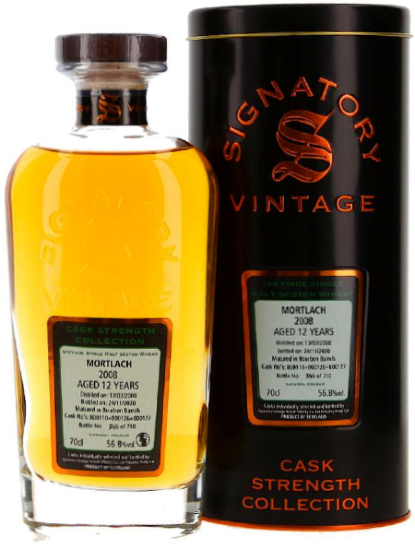
Mortlach 12yo 2008/2020 (56.8%, Signatory Vintage, Cask Strength Collection, Bourbon Barrels #800110, #800126 & #800127, 710 bottles)

After the wonderful and very interesting Loch Lomond, let’s try another Whisky fully matured in ex-Bourbon casks. This time one that was distilled at Mortlach. Mortlach has quite the reputation with Whisky Aficionado’s and rightly so. For instance, Mortlach 16yo was arguably the best offering in Diageo’s once extensive Flora and Fauna Range. Having this niche popularity, Diageo decided to do something more with the brand that is Mortlach and discontinued the 16yo around 2012 in favour of a Rare Old (NAS, not rare nor old, 80 points), an 18yo and a 25yo (84 points). All in 500 ml bottles! These three were released in 2014 and replaced in 2018 by more common age statement versions: 12yo, 16yo (a magic age statement for Mortlach) and 20yo. All three now in 700 ml/750 ml bottles. Mortlach is known for its Whiskies matured in Sherry casks. The 16yo Flora and Fauna is an example of this, and I thought an offering by Wilson & Morgan was even better than that. No surprise then, this has matured in a Sherry cask as well. I also reviewed a Provenance Mortlach earlier, I suppose was matured in Ex-Bourbon wood, which was not so interesting, so let’s see if this Signatory Mortlach is any good, or we should stick to Sherried versions of Mortlach altogether.

Color: Light gold.

Nose: Winey, clear glue, creamy and slightly acidic. Not your usual creamy vanillin kind of smell though. A moment later some more fruits emerge, as well as the creamy vanilla powder notes. Dusty and slightly smoky (probably from toasted oak, not peat). Hints of gravy and cold dishwater, and some soft sugared fruit notes. This is a big Malt, which already shows amazing complexity. Not a cloying smell, since a nice fruity acidity keeps playing its part. This is a Mortlach and Mortlach is a special distillate, and boy, does this smell special. For some this may be a simple kind of Whisky, just pour new make into Bourbon Barrels, mind you, they didn’t even turn those into hogsheads, lazy buggers, and job done, easy, simple, no hassle. Yet Mortlach in a Bourbon Barrel, comes out slightly different from Whiskies from other distilleries matured like this, there is always something different about Mortlach, richer, beefier, meatier, just bigger, special. It’s almost like the fatty acid chains are just longer with Mortlach (without becoming soapy). Hints of raspberry hard candy, next to the half-ripe yellow fruits. Just not as exotic as it can be in well matured Tomatin’s. However, keep in mind that this is only 12yo, and not 30yo like the Tomatin’s I just mentioned. I don’t even know why I brought that up, since Mortlach and Tomatin are very different from each other. So fruity it is, just not all that tropical.

Taste: Sweet and very, very nutty and fruity at the same time, much more fruity than expected actually. Some wood, more akin to pencil shavings than oak, to be honest. Including a slight harmless bitter note. Again, not cloying since the big body also has enough fruity acidity to help it along. Nice. What a wonderful start. Signatory have recently issued some Mortlach Sherry Monsters from the 2010 vintage, which are more or less the same age, but I can’t imagine those ones beating something like this. Licorice powder, some paper and some spices as well as a peppery backbone. Sometimes a sweet minty note pops up. Mocha, milk chocolate. Tastes like a dessert Malt now. Hints of hay, more paper and overall still quite complex. Nice finish and a long warm aftertaste, including the glue again, which you pick up on initially when smelling a freshly poured dram of this.

This is an excellent Mortlach that was not matured in a Sherry cask. Very big and tasty, with complexity and length. The quality is unmistakeable and this will please a lot of Whisky aficionado’s. Its a good example of the spirit of Mortlach and a good example of what “simple” American oak can do. The quality is right upfront, and easy to see for everyone. I scored the Loch Lomond from the previous review slightly higher than this Mortlach, but I also believe, that one might not be for everyone, and you can only find the true beauty of the Loch Lomond when you work it a bit. The Mortlach is more suitable for casual drinking, its always good. the Loch Lomond needs your full attention, otherwise it can be a grumpy old git and will Will-slap you across the face.

Points: 88

Loch Lomond 17yo Organic (54.9%, OB, First Fill Bourbon Casks, L2 120 18, 30.04.2018)

After all those unhealthy and environmentally unfriendly products we have been putting into our bodies, finally some Organic Single Malt Whiskies start to emerge onto the market sporadically. The first Organic Malt I reviewed on these pages was an Organic Bruichladdich, This Loch Lomond is just the second. I have checked my stash, but I could only find a 12yo Organic Loch Lomond and a 14yo and a 15yo Organic Deanston, and that’s about it, no more. I should investigate if there are some more to get. I know there were a few Springbanks and some (young) Benromachs, but beyond that, who knows? Apart from the Deanston’s, this is the only well aged one out there. I did some quick and dirty research, so don’t expect something very deep now, but Nc’Nean also has Organic Whisky in its portfolio, but after that, its mostly American made Whisk(e)y that is also organic. Quite surprising from the land of fast food and a huge overweight problem. Wall-e was no joke. And before you start sending me hate-mail, or even worse, Will Smith, I’m quick to add that I am overweight as well. The Organic Bruichladdich was young and simple, easy, yet tasty. Scored rather high, since it was a high quality Malt, but could have done with some more ageing. Well, if you are after a better aged Organic Malt, than a 17yo Loch Lomond is quite a step up! Yes Loch Lomond, ahhh no, please no, you’re not going to talk about a certain Captain now, don’t you? Well, OK, let’s not. I’ll finish off this introduction with the fun fact that this was distilled in a combination of a swan neck and a straight neck pot stills.

Color: Light gold.

Nose: Barley, dusty and woody. Classic Bourbon casked Single Malt Whisky nose. Sure, we’ll throw in Organic as well, although I have no clue whatsoever how “Organic” is supposed to taste. Smells very clean and honest. Artisanal. A bit sweetish as well, resembling, bot only in a small part, a Grain Whisky. A nice combination of dust, wax and light citrus skin notes. Fruity and lively. In a way delicate and also a bit old skool. Soft wood, mocha and slightly spicy. Light smell of an old aired out, weathered, stock cube. All nice and well integrated. Better now than when freshly opened. Sometimes a short soapy whiff passes by. After a while in my glass even more balance is reached between a waxy note that got company from some peanuts and more fruits. By far, the best smelling Loch Lomond I ever had. You probably think it’s the only Loch Lomond I ever had, but this is not the case. Not at all. Especially nice when you are of an older generation, like me, and remember the old stuff filled from an Ex-Bourbon cask. A classic. The spicy notes in this nose are just excellent, especially when this is sniffed outside. Fresh air helps this one along quite a bit. Great stuff for sure.

Taste: Sweet on entry, The spicy notes from the nose are right up front here as well. Grassy and wonderful. Here it is a bit accompanied by some licorice. Creamy yet also a bit hot. A slight metallic note, reminding me of Tormore. In fact, if I would have tasted this one blind, I would have probably thought this was a Tormore. Tormore distillates in casks like these perform rather well IMHO. Similar spices too. Both this and such Tormore’s bring a smile to my face. These suit me very well, but that is a personal thing, and might not be true for you. Again, what an amazing balance this Whisky has. Nothing short of a must-have for me. Perfect for some quiet me time (and a book). After the first sip, the nose develops even more in the cavity of your mouth. Good quality stuff this one. Amazing, remember the times when Loch Lomond had this awful reputation, well they certainly managed to turn that around with this one. Well done! Medium body with all these wonderful woody, spicy and woody aroma’s. The ABV of almost 55% carries this Whisky beautifully. Really good stuff. Must find me another one.

This Whisky is very good. When consumed carelessly, often within a flight of other Whiskies, I didn’t pick up on the all the wonderful bits this Whisky has on offer. When reviewing it, it is usually reviewed on its own (on occasion H2H with another somewhat similar example for comparison). For obvious reasons, one tends to give the subject a lot of attention when reviewing. So, when this is given your full attention, this Whisky reveals a lot more than meets the eye at first. It deserves to have your full attention and you might also give it some time to breathe and you’ll be able to pick up on some delicate and wonderful old skool classy aroma’s. Recommended.

Points: 89

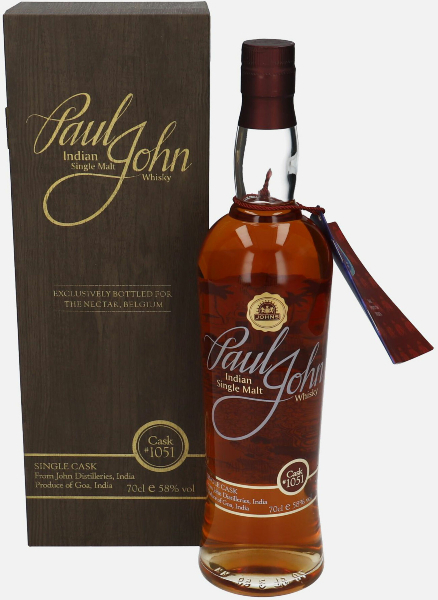
Paul John (58%, Single Cask #1051, for The Nectar Belgium, 2015)

Last year I wrote a review of the Malts of Scotland Paul John #15066, another unpeated example of a Paul John single cask Whisky. When I emptied that bottle, it got replaced by this official bottling from single cask #1051 picked by Mario G., and bottled for The Nectar in Belgium. I normally write my reviews of a half full/half empty bottle. You know the drill about optimists and pessimists. Most of the time, Whiskies need some time or air to reach their best, so it is actually a big no-no to review a freshly opened bottle. However, this time around, I’m writing this review from a nearly empty bottle, but I have been following the development of this bottle very sharply, and I do remember all the stages this Whisky went through over time. All this, because in this particular case, this actually was at its best right after the bottle was freshly opened. I was really happy with it, let’s say the first half of the bottle, and when I brought it with me for a tasting of my whisky club, the comments were not all that positive. Yes, it may have suffered a bit by the preceding Whiskies in the line-up, but when tasting it back a few days later, I also thought it wasn’t as good as it was earlier. I left a few drams in the bottle and let it sit for a while before reviewing it now. I will make an honest review, based on all its stages and not only about the last bit I have left at this point. I haven’t tasted it yet, this last bit, so let’s see what time did to it this time.

Color: Gold.

Nose: Buttery, woody and waxy. Quite nutty as well. The wood is fresh and lively at first with a nice spicy feel to it. Sweet smelling, fruity, with big notes of pencil shavings. Pencil shavings is what this Whisky always had over time, big time. Barley notes with cold dish water and dry grass. Do I detect the tiniest hint of clear glue? It still is quite simple in its approach, but what you get, smells good, yet also for some, maybe a bit dull. Dusty, now turning a bit meaty (gravy actually) and glue like, before the pencil shavings come back. Still overall a good nose, with the fruity bit taking a back seat. It’s still there but not really overpowering. Simple yet appetizing. It’s simpleness is also evident in the lack of development, over the course of time in my glass there isn’t really anything changing. This is one for first impressions and not one that must grow on you. Even though these are the last drops of the bottle, it smells nice and seems to have kept its quality. It’s good, but not a stellar smelling expression, with the main focus on cold dishwater (and barley) and especially the pencil shavings.

Taste: Sweet and very nutty on entry, with a nice (red pepper?) sting to it. After the first sweet wave comes a more fresh and acidic wave. Here is the cold dishwater again. All this is quickly surpassed by medium bitter and spicy oak and pencil shavings. Slightly minty as well, since it has a slight cooling effect on the middle of my tongue. I don’t remember from earlier tastings, the amount of bitterness it is showing now. The bitterness is somewhere in-between oak and the oils from the skin of oranges, without really being all that orange-y. You know what I mean. Luckily the bitterness is smack in the middle of the body and less pronounced in the finish. Warming going down with a more toffee-like and friendly finish, yet still a lot of wood of the pencil shavings kind. Finish and aftertaste have less staying power than expected, although quite warming. It just fades away.

When freshly opened this really was a very promising unpeated Paul John. Time and air however, didn’t do this Malt a lot of good. The freshly opened bottle showed a pleasant nose and rounded out taste, balanced and tasty. Over time the Malt got ripped apart a bit, thus showing less balance. This never has been a very complex Malt to boot. Based on the freshly opened bottle, I understand and support Mario for selecting it. I just learned over time, this wasn’t Paul John’s best offering. I understand the comments it got from the guys from the club, because in a way this is a delicate expression, even though it has a big body. This won’t do well in a flight, sandwiched between other Malts, also because it is different from most others. It doesn’t know too well how to mingle. When having only this one and focussing on it and analysing it, it is clear to me, that this is more than a decent Malt, even though I feel it was better when the bottle was freshly opened. It did suffer in the balance department over time and with air.

Points: 84

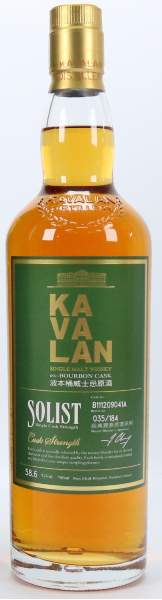
Kavalan Solist Ex-Bourbon Cask (58.6%, OB, B111209041A, 2017.07.11, 184 bottles)

After the minion-Solist I reviewed last week, here is the first true Solist on these pages. I guess that any journey into the world of a particular Single Malt should actually start with the result from maturation in a cask that previously held Bourbon, because casks like these, especially refill casks, show the distillery character best, not overpowering the true nature of the spirit. So here we have a Solist, an ex-Bourbon single cask bottling bottled at cask strength. Beforehand I was quite excited to find out if this Malt would be closer to an Indian Malt or more like an aged Scottish Malt. As said in the previous review, Kavalan is mostly made with Scottish imported barley, but matured in the hot Taiwanese climate, whereas Indian Malts are predominantly made with Indian Six-row Barley, but also matured in a similarly hot climate. By the way, another fun fact, the Indian distilleries do import something else from Scotland though: Peat, and maybe Kavalan does so as well. I’ll look into this when reviewing a peated Kavalan. But first back to basics…

Color: Gold.

Nose: Spicy, sweetish, fresh and modern. Buttery and creamy. Microwave popcorn (the buttery/salty one, definitely not the sweet one) and latex paint for walls. (Not talking about solvents here, although maybe the tiniest hint of some acetone is noticeable, like you get from fermenting over-ripe yellow fruits). Pretty fruity from multiple yellow fruits, as well as a nice Asian florality. After a while the fruit turns slightly syrupy or jam-like. Medium spicy wood. Fresh and herbal. White pepper and pencil shavings. Slightly dry and dusty as well. Mocha and light milk chocolate with distant ice-cream. Some vanilla and wood spices, suggesting of course, American oak. After some breathing the more dusty and cardboard-like notes emerge, adding to the complexity. This is a very good example for a well aged Bourbon cask Whisky, only well aged in Taiwan has thus a different meaning than it does in Scotland. It takes much less time there than a similar example of Whisky aged in Scotland. This particular Kavalan reminds me a bit of Bourbon cask matured Glen Keiths from Signatory, but it could be similar to many other well aged ex-Bourbon cask matured Scottish Single Malt Whiskies as well. The point being, that the aforementioned Glen Keith’s are some 20 years old and I don’t think this Kavalan is a lot more than 5 or 6 years of age. So quite the result for a young Whisky. All in all, a clean smelling Kavalan, this is. Thank you, Mr. Yoda for that.

Taste: Very nutty and prickly, right from the start, fresh almonds. Nice sweetness but also a wonderful fruity acidity complements the sweetness very well, making it fresher and “lighter” than a similar Scottish counterpart. Didn’t pick up on a lot of this nuttiness on the nose though. Cocoa powder, wax and clay and with just the right amount of sweetness counter-parted by spiciness. Fresh and citrussy as well. Very fruity, very tasty. On the body, since a lot is already happening, not a lot of wood is discernible, but in the finish a bitter edge is there. Warming going down. Sure it has quite a high ABV, but it really doesn’t come across as one. Well balanced stuff this, just slightly less complex than the nose was.

This, (ex-Bourbon), is one of the more nicely priced Solists available, and if the price stays as it is, it most definitely is a good alternative for an older Bourbon cask matured Single Malt. It is also closer to a Scottish Single Malt than an Indian Whisky is, and with this, Kavalan seems to be not really carving out its own niche…but rather fishes in exactly the same pond as the Scots do. In that light some of the Solists have some pretty hefty prices. Nevertheless, this “basic one” is very well made, and it takes a lot less ageing time to match the quality of a Scottish Single Malt. Recommended.

Points: 87

Entirely by chance, I found out this malt works extremely well outside on a sunny day in spring (so when it’s still a bit chilly outside), combines very well with (cold) fresh air.

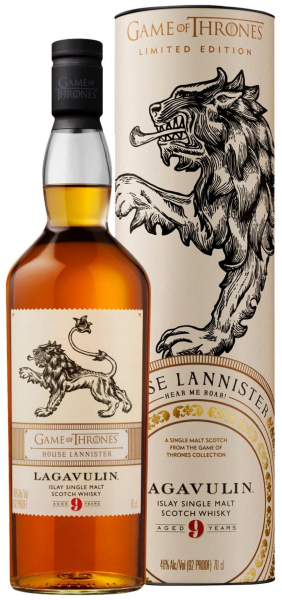
Lagavulin 9yo “Game of Thrones” (46%, OB, “House Lannister” L9016CM008, 2019)

For a Long time, Lagavulin was the unknown jewel in the crown of what is now Diageo, known to only a few. Lagavulin saw more recognition when it became part of the Classic Malts. Before that, Lagavulin was more or less only an utterly wonderful 12yo. Later came the also stellar 16yo and a nicely done Distillers Edition, again a very, very good version of this great distillery. Last of the newer regular releases the return of a 12yo, this time from Bourbon casks only and since 2002 bottled annually as a special release at cask strength. Some batches of these Whiskies have been reviewed on this site earlier.

Personally Diageo was taking a wrong turn starting with Talisker for me, with the release of a lot of mediocre (NAS) “versions”. I might have mentioned this already in several previous reviews, (Talisker is Diageo’s best selling Malt). The 10yo is still by far the best affordable Talisker, although it suffers sometimes of batch variation, just have a look at the following two more recent releases from 2015, and 2019. Incomparable to an earlier bottling from 2002. When NAS wasn’t all that accepted at first, Talisker tested out a rather young Malt, but gave it an age statement. The 8yo from 2018, is a very good Whisky, but the follow-ups from 2020 and 2021 are less so. Alas. I have tried them all, but have yet to review them here.

Back to Lagavulin. When Talisker was being taken advantage of (to up the sales), by all those aforementioned releases, Diageo left Lagavulin alone, at least for a while. Then all of a sudden in 2016 the 8yo and in 2019 the 10yo surfaced. In hindsight, both editions are gnawing away at the perfect reputation Lagavulin had (for me). Sure, both releases are not bad, especially the 8yo was acceptable (for a Lagavulin), but the downward spiral is easily noticeable. A disappointing and depressing feeling for me. Well, the time has come to look at the next one. Between the 8yo and the 10yo came a 9yo, bottled in 2018 in the Game of Thrones range, yeah because coupling up this Classic Malt with a TV-show makes sense now does it. And sure it does, from a business standpoint. I’m sure it’s making Diageo a lot of money and even selling more of the less popular Whiskies from the Diageo portfolio in the Game of Thrones series. Amazing how many people I know, have the whole range at home, some even got the GoT Johnny Walker editions. I respect the fact Diageo is in the business of making money and are not only aficionado’s. I’ve met several Diageo employees who have no clue what it is what they’re selling (but look the part and talk the talk) and only care about their monthly sales and what car they will be allowed to drive next. On the other hand I’ve also met several Diageo employees that are true aficionado’s and big ones as well! (This second group is usually a bit older than the first group).

Having said all that and with the experience I had with the 8yo and the 10yo, I’m not having high hopes for this 9yo, especially with the caramel colouring remark on the back label, but nevertheless here we go!

Color: Gold, slightly brownish.

Nose: Slightly sweet, with nice bonfire smoke and peat notes. Even some (dried) meaty notes crop up. Underneath, a little bit of fresh lemon skin acidity, as well as some menthos you are already chewing on. As always, the E150a cloaks the smell a bit, but also adds some artificial balance, as per design, although I also feel not a lot of colouring was needed for this one. Whiskies with lots of colouring tend to be dull and cloaked. But credit where credit’s due, this is a pretty good smelling Lagavulin. Nice and fresh. Since this is supposed to be first fill Bourbon casks only, is it really? Since it has this added caramel, it still has a decent spicy, ashy, waxy and fruity feel to it. On occasion, I even encounter some floral dishwater-detergent kind-of-job aroma. Spicy with some hot tar and smoking embers. Some molten plastic, clay, wood, some (burning) paper (and ashes), but some red fruit notes seem to point at Sherry, but no Sherry casks were used for this one. Yup, this is a very nice smelling Lagavulin. If the taste is on par with the nose, which has some classic Lagavulin traits to it, I’m in for a nice surprise.

Taste: Here it is a bit thinner than the nose promised. Sweet with obvious licorice and black and white powder right from the start, as well as the sweet lemon skin note from the nose. Smoky toffee. Here the caramel colouring seems to have a greater effect than it had on the nose. Nice chewy peat, nicely framed by some smoke. Waxy. Some cloaking caramel, and creamy, fatty hand ointment, but it’s also letting though some nice red fruity notes. Appetizing. Towards the finish the woody bits show some slight bitterness, fitting the rather large licorice profile quite well. However, for the profile it has it is actually a little bit too sweet. One glass of this on an evening is enough.

Well, this one is a bit of a surprise, I didn’t expect much of it to be honest, considering I’m not really a fan of the 8yo and especially the 10yo, as well as coupling it to a TV-show was a bit suspicious. The Talisker GoT was pretty decent as well. Nothing of the milky, new make-ish, youthful notes I got from both other mentioned Lagavulins. Maybe the E150a did some good here (yeah right, hahaha), or maybe the casks were just better (more likely). This would be a really really good Whisky if it was somewhat less sweet and bottled at a higher strength. Still, this was bottled at 46% ABV instead of the 43% ABV of some other Lagavulin releases. This is a review from a particular batch (L9016CM008) from 2019. I haven’t tried any others, so I can’t comment on batch variation, but there is always a chance that different batches have (slightly) different outcomes.

Points: 86

Talisker 8yo (57.9%, OB, Special Release, Carribean Rum Cask Finish, 2020)

Talisker is no stranger on these pages, and this 8yo is already the fifteenth Talisker reviewed, and why not, I ask you. Talisker has a lot going for it. It is an excellent distillate, has some peat, although not as much as some others on the market, and has a distinct and maybe unique feature, it is often considered to be peppery. A lot of wonderful aroma’s can converge in a Talisker. Works well in both Bourbon and Sherry, and the core range 10yo is already a very good Whisky. One other distillery manages to tick all these boxes save one. The distillery’s name is Springbank and the box not ticked is the box for pepper, I did say it was an unique feature, didn’t I?

In 2018 the first 8yo was released in Diageo’s annual special releases series. That “first” 8yo, was a very good one, and I remember back then, (and this is not that long ago), the talk of the town were the plethora of NAS releases (in general). At the time, there were many Talisker NAS bottles released as well. This 8yo was so good, a lower number like 8 suddenly became acceptable again, and the public always seem to prefer an age statement, so better a low number than none at all. I guess this took Diageo a bit by surprise, who knows, because there wasn’t an 8yo released in 2019. In 2020 this Caribbean Rum version saw the light of day (rushed maybe?) and earlier this year, another 8yo was released, from the smokiest stock they could find. Looks like the 8yo is here to stay. We’ll see what next year brings.

Color: White Wine.

Nose: Initially milky and young. Tasted blind, I would have guessed this was a Lagavulin, since it has some similarities with the 8yo and the 10yo, similarities, which, I didn’t like by the way. I really, really like Lagavulin, never came ‘cross one that was sub par. So when coming across the 8yo and the 10yo, it felt a bit like a sell-out by Diageo, and I was overly disappointed, damn, I didn’t think they would stoop so low as to mess with the ‘vulin. But I digress, back to the Talisker at hand. Sweet tea leaves (wet), rain water and dead dry leaves on the street in autumn. It shows more (quite nice) wood spices when the initial milky component wears off a bit. Spicy, with mild sulfury organics, sweet mint and orange powder. Smells of a distant wood fire whilst walking on a snowy street at night (by yourself). This bit is great. When drinking this Whisky casually, I have a hard time to find any notes of Rum, both in the nose and in the taste. I do now, but for me they are more similar to a Rhum Agricole than the Caribbean Rum that is stated on the label, and by the way, Caribbean Rum, that isn’t really narrowing it down now doesn’t it? So Rum yes, but there isn’t a lot of it though. I feel all the alien notes this Talisker shows us, maybe aren’t even coming from the Rum casks at all, but they probably are. Diluted smoky toffee notes and hints of Brazilian Rum (Epris 15yo). At times sharp. The wood turns towards, toffee, coffee, mocha and pencil shavings. This will improve a lot with air, so give it time, but if you pour yourself another dram, the whole experience starts anew, including the wait for the nose to improve. Recognizable as a Talisker though. Apart from the wonky start the nose is all-right.

Taste: Starts with coarse alcohol, like Wodka, right from the start, not balanced. Paper and cardboard and some residual (barley) sweetness. Not much later the wood and all the lovely aroma’s from American oak kick in, as well as a peppery attack, yes, there it is. The aroma’s are there but the balance still struggles, like its missing a component. The wood also impaired a healthy amount of bitterness onto this Whisky, but since this Whisky also has a bit of sweetness, the bitterness is kept in check. The bitter notes take residence right on the very back of your tongue. Smoky and thus a peppery attack as well, so it’s still a Talisker after all. Fresh almonds, wood and latex paint. Come to think of it, this one isn’t really all that complex. The body of the work is good, the ending a bit less, so the finish shows the unbalance again, and the aftertaste does so as well, and shows us again the bitter notes this has.

First piece of advice. Pour this dram and put it away, let the air do its job first, because the first aroma’s that escape from your glass are too close to new make spirit. And after a long wait the whole experience is much better. The nose improves a lot and therefore the taste is helped along. In the end it is an interesting Talisker, no regrets opening it and it wasn’t a nasty chore to finish it as well (not empty just yet, but it will be soon). I won’t be opening a second bottle anytime soon though. Buy the 2018 version in stead, and well see about the 2021 edition in the (near) future.

Points: 85