WMD stands for Whisky of Mass Distinction. A name one would find on a Frankie Goes To Hollywood 12″ in the eighties. Two years earlier the first WMD was released (a 19yo from 1984) and had a rocket on the label. This second “weapon” is a Yellow Submarine.  Most of us would have thought of the Beatles, but this time it about another submarine. One owned by the Royal Navy of Great Britain.
Islay Fisherman Baker was at sea to check his lobster baskets, when he saw a yellow object floating just under the surface of the water. Which first seemed a buoy seemed to be a 2 metres long radio-controlled mine detector from the Royal Navy. When Fisherman Baker called the coastguard informing them that he spotted a submarine with markings from the Royal Navy, they told him to he was drunk, not very uncommon on such an Island.  Still fisherman Baker wouldn’t budge and the coast guard called the Royal Navy, but they denied it’s existence!
Just days later the Royal Navy admitted they had lost HMS Penzance (The Yellow Submarine) in a drill. But just after 6 months they decided to pick the thing up> They sailed out at night, to arrive very early in the morning, not to draw a lot of attention to the operation. But the people of Islay are no fools, so half the Island was present at the beach. 12.000 bottles of Yellow Submarine were made and the Royal Navy got six to commemorate the incident. Later the French manufacturer of the Sub ordered another 1000 bottles of this edition for marketing purposes…
 Color: Light Gold.
Nose: Woody and smoky. Quite estery and fruity as well. Clay and wet earth. Chewy (in the nose?). In a way candied and wine-treated (it is ACE’d in Rioja Casks, well that’s very Obvious in the nose). The wine finish takes the nose hostage, never to let go, whatever ransom you’re prepared to pay. Is that a bad thing, no not really it is likeable in the nose. I just hope is does the palate some justice. Creamy milk pudding. Powdery perfumed wood. Fresh.
Taste: a bit harsh and winey from the start, but it seems balanced. Wood and milk chocolate pudding. Creamy. Also a little bit from the wood and a wave of sugary sweetness. The palate is very nice, but also very simple. Probably a good idea to reduce this to 46% ABV, because now we have a very drinkable whisky. Nothing overly special though, with also an unspectacular finish, but it definitely is all right!
Well this most definitely is a Rioja finish. The Rioja is all over the place. It draws all attention to itself. Although wine finishes almost every time ring my alarm bells, this is not bad. Alas the maker doesn’t state what kind of Rioja it was red, white or rosé, although rosé would be pretty uncommon, most probable would be red. Most used grape variety in Rioja is the Temperanillo grape, remember the Temperanillo casks used by Tomatin?
Points: 85
 Color: Gold
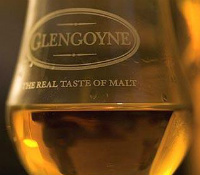 Oh no, we’re already at the end of the Glengoyne week, quelle misère! This is always the moment with a little bit of melancholy. That moment when you’ve been with a good friend for a week and you know he or she has to leave. Waving goodbye at the train station or the airport. Going home alone with a little tear in the corner of your eye.
 Color: Sparkling gold.
 with an almost equally briljant and newer ‘summer’ edition in the runner-up position. Actually the odds were a bit uneven since this Glengoyne is from the seventies and therefore well older than the rest of the contenders, but who said it was a contest? Through the rest of the offerings reviewed in this Glengoyne week, it can be clearly seen that Glengoyne makes a high quality whisky with multiple facets to it. Keep up the good work!
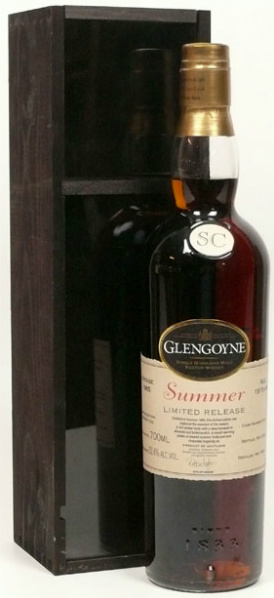 Color: Dark orange brown.
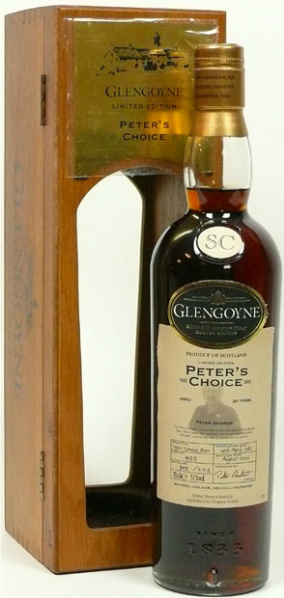 Color: Sparkling copper brown, almost with a red tinge.
 * Shoogle is a Scottish word which means to gently shake or agitate.
 “In my time at Glengoyne this is the best cask I have tasted. Heaps of complexity with no rough edges.”
 Robbie is the distillery manager and Deek and Billie are warehousemen.
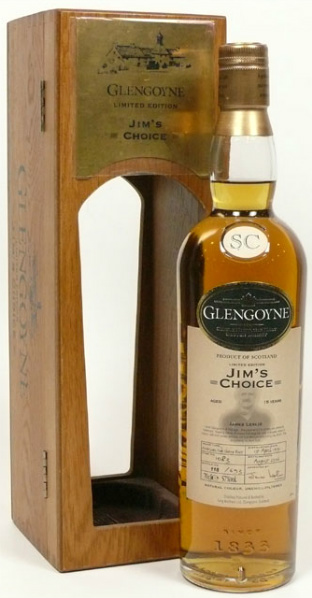 Color: Gold.
 Color: Gold
 Well lets end this month with something different. Wow! Look at the label. Pure Grain Scotch Whisky! Today we call this a Single Grain Whisky. North British was founded in 1885 and lies near Edinburgh, on the site of a former pig farm. North British is a joint venture between Diageo and The Edrington Group. I don’t think Diageo needs an introduction, but the Edrington Group today is best known for their Highland Park and Macallan distilleries and The Famous Grouse and Cutty Sark blends.
 Most important is that this still operates continuously as opposed to a pot still. The alcohol from a continuous still is much cheaper to make. The spirit is made at a higher strength (ABV) and has less flavor, more neutral. This kind of whisky is made for blended whisky, and is not often bottled by itself. If bottled by itself, like this single grain, almost all of it is aged for a prolonged period of time, to get as much flavor as possible from the cask is matures in.
 Color: Gold
 Color: Copper Gold
