Highland Park Week – Day 5: Highland Park 9yo 1988/1997 (59.6%, Signatory Vintage, Sherry Butt #10700, 630 bottles)

Lets backup in time even some more. We stay in the land of the independent bottler, this time Signatory Vintage. We are going to take a look at another Highland Park matured in a Sherry cask, a butt even. This one is an even younger example at 9 years of age. The G&M/Whisky Mercenary bottling was 20yo, The Wilson & Morgan was around 14yo, and this Signatory Vintage bottling is a mere 9yo. Highly unusual back then, not so unusual today, since demand has risen dramatically. There is no time anymore to age the bulk of Whisky when there are so much of you around, dear readers. We’ll also go back in time bit since this was distilled in 1988. That is almost 30 years ago!

Color: Copper gold.

Nose: Funky Sherry, but this time with some quality behind it. Meaty and buttery as well, with some nice distant fruit going on. Dusty mocha and milk-chocolate. Dark chocolate as well. Steam, sowing-machine oil. Clean toilet notes, not to be mistaken by a freshly cleaned toilet odour. I know this sounds pretty peculiar, but I get it in this, so I couldn’t help myself and had to write it down. Deeper and more brooding. Probably Oloroso. Cedar wood with an oriental spice-mix and pencil shavings. Even though it is a young Whisky, it already smells like something from another era. Christmas spices. Christmas cake. Dusty and very thick. luxury and velvety, just like the box. The more it breathes the better is gets, give it lots of room for development. A much better Sherry cask than the one, the 1992 Wilson & Morgan expression matured in. After this, forget about that one.

Taste: Well this is almost 60% ABV and that shows. Its big, thick and a bit hot, but also very fruity (meaty blueberries), and amazingly pretty woody as well, but not too much. Luckily it also has some toffee sweetness to it, to balance it all out. Steam and coal. You are conned, by the initial sip, this is going to be sweet, but the sweetness is shoved aside by bullying tannins and Italian laurel licorice. I’m guessing this came from a first fill Oloroso butt, which impaired enough onto this Whisky, so it could be used as a very nice refill cask the second time around. Long oaky finish, with an even longer aftertaste full of black fruits and (cedar) wood. It isn’t all that complex, but when a Whisky is as tasty as this, it doesn’t need to be. It’s only 9yo, but it is bottled at the right time, believe me. Probably Oloroso, but Cream Sherry or PX might be possible as well.

Ohhh, I want one of these. 1988, wow, 9yo, wow-wow. This in my glass and some 80’s music, and I’d have a great day.

Points: 90

Highland Park Week – Day 4: Highland Park 1992/2006 (46%, Wilson & Morgan, Refill Sherry)

Yesterday we ventured into the realm of the independent bottler, well two actually. Today we’ll stay there but add only one independent bottler to our collection. This time we’ll have a look at a reasonably priced, (at least it was reasonably priced ten years ago, when this was bottled), and reduced Highland Park bottled by Italian outfit Wilson & Morgan. Yes, you’ll find a lot of people in Italy with names like that!

Yesterdays Highland Park was distilled in 1995, this particular one was distilled several years earlier. Do you see a trend? However, since this was bottled ten years prior to yesterdays 1995 offering, this one is definitely younger (as in it spent less time in wood). Here it is stated on the label that this came out of a Refill Sherry cask, so lets see if this one has more Sherry influence, compared to yesterdays Refill Hogshead.

Color: Gold.

Nose: Funky Sherry notes and actually a bit soapy. Much different from the previous Highland Park. Right from the start discrepant fruity acidic notes. Dusty and vegetal. Not very appealing actually. First impression is that something is not quite right. Warm, dull (nothing sticks out or shines) and somewhat simple. Not a lot of development. It’s almost like the Highland park distillate and this particular Sherry cask are no friends of each other. I’m wondering what kind of Sherry it was. Definitely unbalanced. Hints of caramel, toast and aspirin powder. Add to that a vibrant red fruity, synthetic, acidity. Unbelievable how dusty this is. No wood and some hidden sweetness. Syrup, sugar (the smell of it, not the sweetness). Hints of morning breath and Jenever. Powdered coffee creamer.

Taste: Wow, the dullness mentioned above is right op front the taste as well, as is (finally) some wood. Short hot burst and woody spices. Friendly hint of, again synthetic, lemon. Some sweetness in the background, toffee, coffee creamer and yet again an unbalanced middle part. Rural notes. Here the dullness translates into paper. Old newspaper (hold the ink). The red fruits mentioned above make up the rather short finish, with a unbalaced aftertaste. The cask did it’s part here. It did impair aromas you wouldn’t get from a Bourbon cask. However, just like was noticeable on the nose. The Highland Park distillate and the cask didn’t work together very well.

This one is long gone and you don’t even see them that much on auctions. Most older bottles of reduced Whisky, by Wilson & Morgan were very affordable, so I guess most were drunk when they were released. If you come across this one at auction or on a dusty shelf somewhere, well it’s not without reason it stayed on that shelf and when auctioned, I wouldn’t pay all that much for it. Its Whisky, it’s not bad and it doesn’t have big flaws. Definitely drinkable, but not a high flyer if you ask me. A bit unbalanced and very restrained or dull, but not boring, or maybe that as well…

Points: 80

Highland Park Week – Day 3: Highland Park 20yo 1995/2015 (50%, Gordon & MacPhail, Exclusive, for The Whisky Mercenary, Refill Hogshead #1485, 325 bottles)

Day three of Master Quills Highland Park Week and after two OB’s, its time to see what the IB’s are up to with Highland Park. Here we have a special one since it is one independent bottler, Gordon & MacPhail, bottling a Highland Park for another independent bottler, The Whisky Mercenary. This may very well be the best of three worlds, first Highland Park make a great distillate. Second I love how G&M work, where they try to have as much in their own hands as possible, The wood, the maturation, the selection and the bottling to mention but a few. Third, Mercenary Jurgen has a good nose, and is able to pick some nice stuff, and believe me it’s hard to get what you really want as an independent bottler. So here we have a 20yo Highland Park from a refill hogshead. When looking at the colour it seems to be at least a third refill remade hogshead from staves taken out of Bourbon barrels. Now forget what I said, because looks can often be deceiving and it is actually very dangerous to do so. My bad, and I hope you won’t make the same mistake like me.

Highland Park 20yo 1995/2015 (50%, Gordon & MacPhail, Exclusive, for The Whisky Mercenary, Refill Hogshead #1485, 325 bottles)Color: Light gold, almost White wine.

Nose: Right from the start, not even smelling from the glass, but whilst pouring, a nice creamy vanilla smell passes by. On top some Calvados. Quite some aromas that have to do with apples. Fatty red apple skin, but mostly warm apple sauce. In the background it has some more scarce notes of other distillates, other than Whisky. Can’t put my finger on it yet. Nutty chocolate paste with a trace of red fruit acidity. Warm soft wood with hints of semi-sweet yellow fruit and some dust. Underneath this has some smoke combined with soft woody spices and cold butter. American oak alright, and definitely not first fill or the next fill. So I guess my dangerous assumption plays out all right this time. So overall quite nice, good balance, but not very complex though. Adding to my feeling the cask may have been a bit tired already. I don’t think it was filled yet again.

Taste: The first note is that of wood. Soft wood. Next some sweetness. Honey, smoky toffee and caramel at first but the wood takes over again adding some dryness. Vegetal. Same as the nose. Good balance but not very complex. Tired cask again, even though the biggest influence seems to be that of wood. Medium finish and hardly any aftertaste. When its gone, its gone. No honey or wood stays behind. After some breathing and taking sips again, the Calvados notes emerge on the taste as well. The diluted toffee notes seem to grow not bigger, but wider, like butter candy with hints of lemon skin shavings or lemon curd, since that is sweeter. Also distinct notes of almonds. The smoky notes present themselves here as well now. So with extensive breathing there seems to be more (complexity) to this Whisky than I initially thought. See, how you have to be patient? Don’t fill up your glass too much, give it room for air, and be patient if you want to enjoy its full potential.

Connoisseurs, there is that dreadful word again, dislike tumblers or any other “wrong” glass. They are adamant about it. They don’t allow for flavour development, of which this Highland Park is an excellent example. This Highland Park needs a good glass. Personally I equally dislike it when one buys the “right” glass but then fill it up too much (and then post  a half full Glencairn glass on social media). This again doesn’t allow the Whisky to develop in the glass. You need a lot of room for air. Try it. Be patient, be smart!

The hint of smoke is actually very nice and makes it resemble Talisker and, to a lesser extent, Springbank a bit. So if I had to taste this blind I would have gone for Talisker, without the pepper though. Good distillate, reasonable cask and a nice profile. Needs some time, so don’t be hasty. Good Highland Park and just like the Leif Eriksson, again one without Sherry, and another thing becomes clear, 50% ABV > 40% ABV.

Points: 86

Highland Park Week – Day 1: Highland Park “Leif Eriksson” (40%, OB, Travel Retail Exclusive, 2011)

Time for another of Master Quill’s weeks. This time around we’ll focus on Highland Park. When rummaging through my stash of samples or bottles I sometimes come across a few which have some sort of common link, usually being made at the same distillery, but there can be many others. In no way should it be a true cross-section of the standard range or should it be all official or recent bottlings. Nope, the aim is to have fun with seven Whiskies, more or less picked at random. In this case Highland Park gets the honor. I have picked seven Highland Park Whiskies to have fun with and put them in some sort of logical order. We’ll start off with Leif Eriksson, one of many travel retail offerings. Usually reduced to 40% and usually bottled in a convenient litre bottle. This time however it is the standard 700ml bottle that can be easily picked up outside of an airport…

I may have mentioned this before, but Highland Park is owned by the Edrington Group. A company that also owns The Macallan. With both these distilleries, or brands, Edrington do a lot of marketing. There is an obvious core range made up of Whiskies with age statements, and some of them have already featured on these pages as well. Besides that Highland Park, as many others, loves travel retail outlets and are keen on issuing special series (aiming at collectors).

I am a big fan of the Highland Park distillate and when we look at Highland Park, pré marketing, you would have a hard time finding even a mediocre bottling. Just have a go at an older wide neck bottling and you’ll know what I mean, or even ask Olivier Humbrecht about Highland Park and you are set for the day.

The beginning of the special series craze, I mentioned above, started with the release of Earl Magnus in 2009 (5.976 bottles). It is part of a trilogy called the Inga Saga. Earl Magnus is a 15yo Highland Park of impeccable quality, and back then was released at a more than reasonable price. It was followed up in 2010 with a 12yo called Saint Magnus (11.994 bottles), which was a bit less interesting and the series was concluded in 2011 with an 18yo called Earl Haakon (3.000 bottles). It was a hybrid of the standard ages of 12yo, 15yo and 18yo, but also bore names of mythical figures from the history of Orkney. Today its hard to imagine a company releasing only one special bottling a year! By the way, this 18yo was top-notch again. Many series like this were created since.

However Leif Eriksson is not part of any series I know of. It’s a bottling commemorating the Viking Eriksson who was the first European to set foot in North America. So it shall be no surprise this Highland Park was matured wholly in American Oak casks (probably all ex-Bourbon).

highland-park-leif-erikssonColor: Gold.

Nose: Starts with a hint of smoke and heather, and a nice funkiness I know from older Highland Parks. Initially also quite sweet. Nice sweet barley notes, honey and also quite fruity. Cold butter. A very appealing, and slightly dirty, nose. Lots of vanilla and creamy latex paint, as could be expected. Less expected was the coal dust and Aspirin powder I got next. Highland Park is a distillate that does well in any cask. Excellent nose.

Taste: Oh no. Aiii, sweet honey and sugar-water. What a shame. This one is definitely ruined by reduction. Maybe they felt it was too hot at cask strength and since it had to be bottled for travel retail they automatically reduced it to the lowest strength possible, 40% ABV. Sweet, creamy vanilla again. Hints of almonds. Lots of creamy notes as well as lots of vanilla. That’s the main marker of the taste. Not a lot of wood though, although there is a nice toasted cask edge to it. The palate matches the nose very well. This should have been a litre bottle, since to get the max out of this you need to drink this in big gulps and roll it around a lot in your mouth (needs a lot of air as well). Funny enough a slightly bitter oak note emerges in the aftertaste…

You can still taste the potential of this. It is almost as if has to be suitable for pilots who still have to fly. I hope not. The nose is wonderful and the taste does show the potential. It is not a bad Whisky. It could have been a very good Bourbon expression of Highland Park, but it was ruined by one bad decision. The amount of reduction. Still, it sometimes can hit a soft spot, and is still an example how Highland Park can be without the (big) Sherry.

Points: 81

Benriach 36yo 1976/2013 (40.1%, OB, for Whiskysite.nl, Refill Hogshead #3012, 118 bottles)

After reviewing the Arran, a more recent Whiskysite bottling, I remembered I have already reviewed some other Whiskysite bottlings, like this Bushmills and this Port Ellen, but there are still more out there, even a Karuizawa! However, I have yet another one up my sleeve to review, and since I found out in the previous review I’m getting old, there is no better time than now for yet another Whiskysite bottling. Not just any other bottling I might add. Nope this time a 1976 Benriach. This was bottled for the boys from Leiden way back in 2013, and even then, sold out quite fast. Why? Because Benriach from 1976 have some sort of reputation, just like Tomatin’s from the same year. When we talked to Douglas Campbell (Master Distiller at Tomatin), he told us there was nothing special going on at the time, just a lot of distilling being done, as in the years before and after 1976. Any cask they could get a hold of was filled and later, when money was needed, a lot of that particular vintage was sold off, which might explain why a lot of 1976 Tomatin’s exist. However we also heard some compelling stories about fruity yeast strains and an exceptional summer making for super fruity barley.

Color: Orange gold.

Nose: Ahhh funky, old Whisky funkiness. Heaps of fruit with and edge of vanilla, more than an edge actually, giving it a creamy texture you can smell. You’ll never get this out of a NAS or otherwise young distillate. Sugared pineapple, dried and sugared papaya, lychee combined with refined creamy vanilla. Definitely a Hoggie remade with (mostly) American oak staves. Back then they didn’t care about 100% correctness, so when remaking the Hogshead, and if it would fit, the occasional European oak stave would find its way into a cask like this very easily. The wood note in this is very soft, not spicy. More about nuttiness than the wood-notes themselves. Uber-fruity with nice vegetal notes. Some less obvious notes emerge as well, hints of cardboard, lavas, coffee with lots of milk, mocha and latex-paint come to mind, but mind you, they only add to the complexity and do no harm to the whole. So don’t be alarmed. By the way, for all it’s fruitiness, this is not the most fruity smelling 1976 single cask Benriach, by far.

Taste: Oh my God this is good! Starts out with short bursts of the sugared and/or the dried yellow fruits I mentioned in the nose. When the body moves, rather quickly, through the cavity of your mouth it starts to develop black fruits in large amounts. Wonderful. This is what you look for in a 1960’s or 70’s Malt. The holy grail, at least for me it is! Also quite unexpected, since the blackcurrant and super-ripe blackberries are nowhere to be found in the nose. What a wonderful surprise.

I mentioned that the body moves rather quickly, What I mean is that it seems to have a start and a finish, but the body itself is very short-lived. It’s a bit thin and fragile, which can be attributed to the low ABV, but not only. The fragility of this malt has something to do with this specific single cask offering, since it is not always like this with older Malts or even sister casks. Luckily the black fruit thing is what makes up the finish, which is of medium length at best and should have lasted forever. Excellent! In the end a wonderful Malt, with alas a weak side. It should have had a little more oomph and staying power. It could have done with a bigger body, but in the end it is a remarkable, yet thin, Whisky. The aroma’s are wonderful and that also is worth the price of admission, although there are obviously better examples to be found. Don’t take too long since otherwise most of these Whiskies will end up in collections only, and therefore will cost more by the day.

Sure Whiskies like this will cost you a pretty penny (at auction), but its history in a bottle. More recent Whiskies will never smell and taste like this, it simply cannot be achieved, and if something like this would be marketed today in today’s market, it will be over 40yo old, and it will cost you 40 cars at least, and I don’t mean Dinky Toys! You have to taste something like this to be whole I guess.

Points: 92

Arran 19yo 1996/2016 “The Chosen One” (54.7%, OB, Limited Edition, for Whiskysite.nl, Sherry Hogshead #1390, 312 bottles)

One of the finer places to buy Whisky in the Netherlands is Whiskysite based in the town of Leiden. Excellent, wonderful looking store, good people, fair prices and a very handy Website which services the whole world. For me one of the go-to places. The same guys also host a Whisky festival called Whisky in Leiden. This years edition is next saturday on april 1st. No joke. If you are interested, I’m sure they will have room for you next year since this years edition is long sold out. Just like any real good festival, or retailer, the guys have special bottlings done for them. One of last years bottlings was a very old Arran. I can still remember Arran starting up, and here we have already a 19yo example of the Malt. I’m getting old.

Color: Gold.

Nose: First sniff and I’m guessing Fino Sherry casks. Nice Sherry note combined with nuts and wood. Mocha and a sweeter component in the background. Chewy toffee. As I said before, I never was a big fan of Fino cask Whiskies but just like Rhum Agricoles it is an acquired taste, and today, wow, I get it. They are very special. Vanilla and dried lemon powder, in part like in artificial sweets. Hints of high winds at sea, combined with cold dish water. Strange èh? But in reality not strange at all. Hints of wood come next, as well as some pencil shavings with floral notes and wood from cigar boxes. This smells very distinguished and luxury. Next a layer of cold fruitiness. Green and red apple skins, dried apricots and some dried basil as well. Sweet yoghurt. A promise of some fruity sweetness. Crushed beetle and rotting flower bulb, both a childhood memory. I’m sorry for the animal, I only did it once, by accident. Well balanced and none of the aromas presented here are overpowering. A quiet Arran. Toned down. Whispering. A sort of connoisseurs Whisky maybe. You need some experience to discover it all, as well as appreciate it fully. I hope I don’t sound arrogant now. If you are a novice, please buy it if you come across it, but wait a few years before opening it.

Taste: Half sweet and spicy. Nice wood-notes and soft nevertheless. Sweet fruit yoghurt. The stuff with peaches in it. White peach with a spicy bite. Warming. Mocha and hard coffee candy. Butterscotch and some aspartame sweetness. Pencil shavings. Again, well-balanced stuff and very tasty. If this would have been 5% lower in ABV, this would be dangerously drinkable and you’d finish the bottle way too quickly. Now it is slightly hot, which makes you appreciate it better and follow it up with a different Whisky. It’s almost as if the sweetness and the dryness of the wood are competing. one sip, and one manages to get all the attention, and in the next sip the other. Hints of Belgian Beer towards the finish. The finish itself is quite long.

Good cask strength Whisky from a nice (Fino) cask. No typical distillery character if you ask me, but also no particular aroma that manages to take the lead. Well balanced but with nothing really sticking out, making for a bit anonymous yet well-balanced Whisky.

Points: 86

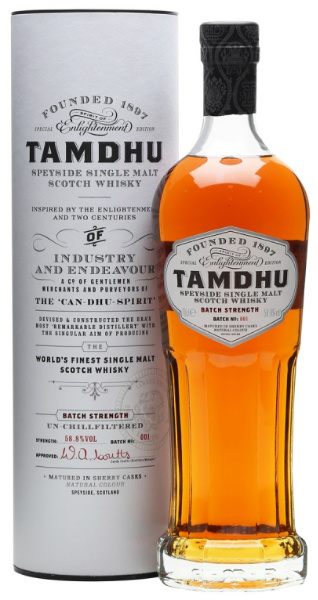
Tamdhu “Batch Strength” (58.8%, OB, Batch 001, Sherry Casks, 2015)

In our series of NAS Cask Strength Whiskies, here is number three. After the nice Glengoyne and the surprisingly good Tomatin, here is Tamdhu. Tamdhu is since 2011, the new jewel in the crown of Ian MacLeod, who have managed to save yet another distillery from the hands of the Edrington Group. The group chose to focus on the highly marketable Macallan and Highland Park brands, so no use for this low profile, but high quality distillery Tamdhu is. Over the years all previous owners haven’t done a lot with the Tamdhu brand, so there aren’t a lot of Tamdhu expressions around. Ian MacLeod, being the new owners, came up with a nice retro design and up ’till now have released four expressions. A 10yo that is widely available, blended from first and second fill Sherry casks. A limited edition 10yo, blended from first fill Sherry casks only, which has sold out rather quickly. And last but not least, two batches of the Batch Strength expression. Today we’ll have a look at the first batch, although last year the second batch saw the light of day.

Color: Orange gold.

Nose: Funky bread-like notes. Cereal and smelly, brooding Sherry. Quite spirity and paper-like at first. Cold dish-water. After a short while of breathing a more likeable fruity note emerges, but not much. Hints of gravy, Beer and menthol. Butterscotch and a rather strange burnt note, with an acidic top note (that’s why its strange). I’m not alarmed though, because the previous two NAS cask strength expressions started out funky as well, but turned out to be really tasty in the end. Next a more vegetable and woody note. Spicy but not in a big way. Still some paper, (slightly scented toilet paper comes to mind), as well as some jasmine tea. Pencil shavings start to emerge. Soft with a hint of sweetness. Creamy and nutty. The more it breathes the more toffee it shows. The strangeness mentioned above never really disappears.

Taste: Big on toffee and pencil shavings. Wow. Nice. Sweet. Hot. Big. Brash. I like it! Here too a funky note. Even some orange skin. Different from the other two, but one that screams yes! Its good. Where the nose had some off-putting aroma’s, the taste is very inviting. If you like cask strength, this is immediately likeable. Sure a bit raw and at times a wee bit under-matured, but not much. It won’t be twenty years old, but it won’t be three years either. Well made, you can taste a lot of care went into this. Lots of nutty Sherry notes, so I’m guessing some Sherries that matured under flor were used as well. Wonderful woody elements adding to the whole. Medium finish at best. The big aroma’s turn dry and then disappear altogether, which invites you to take another sip.

First of all, this is all Sherry casks, as the plan is for all Tamdhu releases, but way different from the all Sherry cask Aberlour A’Bunadh, blended solely from Oloroso Sherry casks. Compared to the other two I reviewed recently, or even to the A’Bunadh, this is maybe priced a tad to high, but I suspect this liquid was also quite pricy to produce.

However, if I had to choose on smell alone I would pick the Tomatin, which is also less expensive than this Tamdhu, but since Ian MacLeod made the bold move to buy this distillery, which isn’t known to the big public, I understand the pricing and the Whisky is definitely worth its price. In a direct comparison with the Tomatin Cask Strength, it is obvious both are equally good, and both show something about the distilleries they’re from. The difference in taste is a matter of opinion, as well as your mood. You can’t go wrong with either of them, including the Glengoyne which did score one point less.

Points: 85

Thanks Alan!

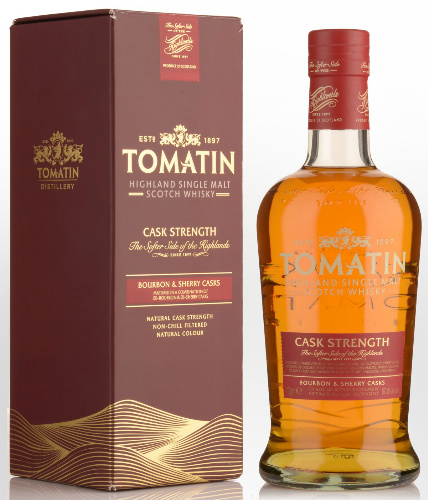
Tomatin “Cask Strength” (57.5%, OB, Bourbon & Sherry Casks, 2016)

Today there are a few NAS Cask Strength Whiskies on the market that haven’t received a funny marketing driven name. Sure among many others, f.i. Ardbeg Corryvreckan and Uigeadail are very good, but considering the owners of Ardbeg, marketing is a given. There are also a few quiet boys in the back of the class, whispering about quality and quality only, not caring too much about marketing and don’t spend their money even on getting a funky name. A few of those come to mind as well. The last review I did is even one of those expressions. Glengoyne “Cask Strength”. Others are Tamdhu, Glendronach and Tomatin to name but a few. I never got around to review the original Tomatin Cask Strength, but now I have a chance at the first batch from last year’s newly designed release. As mentioned on the box, this Whisky comes from Bourbon and Sherry casks and will be an interesting comparison to Glengoynes expression with the same name.

tomatin-cask-strength-2016Color: Light gold.

Nose: Lots of barley and funky Sherry. Lots of cereal notes as well, but also a hint of smoke and cask toast (the former probably coming from the latter only). I can’t say this smells very appetizing and nice from the start, but the Glengoyne got better with extended breathing, so we’ll give this one some time as well, but I can already tell you that this Tomatin won’t take as long as the Glengoyne. There are also buttery and creamy elements and some hidden fruits. Sugar water and hints of licorice, clear glue and some sweet fruits. Pencil shavings, paper, cardboard and a slightly odd (or off) acidic note. Not much, but it’s there. Just not of the tropical kind Tomatin is known for…or is it, considering the evolution with air. Just like the Glengoyne version, It shows its youth and both show a somewhat similar young and strong style, based on both Bourbon and Sherry casks.

Taste: Yeah, strong at first but next, heaps of wonderful tropical fruitiness with nice nuts! It’s definitely a Tomatin all right. Sweet on entry. Toffee, caramel. Butter. immediately followed by some nice oaky notes. Not as strong as the number suggests, and also not hot. Pretty easy to drink, if you have some cask strength experience, that is. Cookie dough and cream, with just enough sweetness to present the finish which is definitely a bit drier. Just like the Glengoyne the taste is better than the nose is. Lacks a bit of complexity though, but in the taste it doesn’t remind me of a young Whisky. Whiffs of old style Whisky pass by as well.

The youthful cereal notes? I don’t like them. It’s that part of Whisky that transforms into something way better with some proper ageing in proper casks. When freshly opened these notes are pretty upfront, in your face. A bit off-putting in my opinion, but the same happened with the Glengoyne Cask Strength as well. Sure it wears off, but do you really want to wait some time after pouring it, before you can thoroughly enjoy it? Because you can, if you work at it a bit. After extensive breathing both become nice cask strength drams worth your money. The quality is there and therefore the score is up there well into the eighties. But for me, this is also proof why Whisky should be aged properly and why I’m also a bit hesitant when it comes to NAS-expressions, which most definitely are not all bad, just look at the WIP Kilkerrans to name but one. Luckily this one tastes so good, I have no problems forgiving it for the funky nose. Again one you have to let breathe for a while.

Points: 85 (almost 86).

Thanks Alistair!

Glengoyne “Cask Strength” (58.8%, OB, Batch #4, 2015)

In 2012 Glengoyne launched their NAS offering simply called “Cask Strength”, because that is what it is. A cask strength Whisky without an age statement. Before that, the Cask Strength offering did already exist, but it was also 12yo. In this case, rumours have it, that the Whisky isn’t all that young. So I don’t expect a 3yo Whisky with a few older casks thrown in to give it some depth. Sure there is “Burnfoot” and there are 5 batches of “Teapot Dram”, but that’s about it. No more NAS from Glengoyne. Nope, the regular range of Glengoyne is made up of good old-fashioned numbers like 10, 12, 15, 18, 21 and 25. Above that a recent 35yo comes into play, but expect to pay a lot of hard-earned cash for that one. Back to the one without a number, this time bottled at a hefty 58.8% ABV. I sometimes tend to whine a bit about Whiskies being reduced too much, well I don’t think that will be the case this time. Lets find out if it’s any good, shall we?

glengoyne-cask-strength-batch-4Color: Orange gold.

Nose: Nice funky Sherry, cask toast, mocha and vanilla. Funky as in not sparkling or fruity, nope, its deeper and more brooding than that. Less welcoming and dark. Medieval. Bread and barley, lots of it. Warm (toasted) bread, so definitely a cereal note. No trace of new make spirit though, so it’s not a 3yo NAS. However, there is some youth to it. Nevertheless, sometimes, it really does remind me a bit of Whisky made some time ago as well, so definitely a Whisky with multiple facets. Next whiff is of a slightly floral and herbal perfume. This could be interesting. When given some time to breathe, hints of new make do emerge, and the funky, sulky notes from the start, ease up a bit, to become more friendly and floral. Glengoyne are adamant about not using peat, but this does have a smoky note probably provided by toasted (Sherry) oak. It gives it more backbone and a bigger aroma. Meaty. Dusty vanilla powder. This is an autumn Whisky. If it’s October, bad weather, this is your dram. I like it. If I had to sum it up in a few words: Cereal, (American) oak and Sherry. Well balanced yet not all that complex though, also lacking some development and balance. This could do with some more ageing, which would obviously affect the price.

Taste: Barley, bread and quite sweet. Lots of Sherry and creamy notes. Fruity with a nice oaky bite. Old warehouse. Right from the start already better than the nose. More balance and tastier than it smells. Sure its a bit hot, because it has a lot of alcohol and the wood is also quite active. Lots of wood notes. Pencil shavings and oak from the start. Vanilla but also toasted oak and virgin oak. More pencil shavings. The woody bit is quite nice and kept in check by the sweetness of the Malt. A winning combination. The entry is great and the body nice big and sweet. The sweetness isn’t lasting though making way for a more woody, dry and (fruity) acidic side of the Whisky. It’s a two-stage Whisky. Again, not the most complex in the world, but very tasty and very good value to boot. Definitely one for drinking and less for smelling if you ask me, unless you are patient and let it breathe for quite some time. It gains a lot in the balance department that way.

You’ve got to love Glengoyne, for advertising not using peat for drying their malt. Especially when the world is peat-mad. Hey even Glendronach and several other Speyside distilleries offer peated expressions. When will we see a peated expression of Glengoyne? Remember Macallan advertising that their dram is so special because of the hand-picked Oloroso casks? Well look what happened there… No fuss at Glengoyne, just like Springbank. Making Whisky their way and doing it well. No funny names, no marketing tricks, mostly age statements, although Teapot Dram almost is a funny name.

Points: 84 (same score as Batch #1, but not as high as the previous 12yo cask strength expressions that I scored between 86 to 88 points)

Thanks go out to Alan for the sample, thanks mate!

Mortlach 11yo 1992/2004 (46%, Douglas McGibbon, Provenance, Autumn/Summer, DMG 627)

Talisker Storm is essentially a young Whisky, one of today’s NAS-expressions. A decade ago, this 11yo Mortlach would be considered a young Whisky and back then we hardly ever heard of NAS-Whiskies to boot. Mortlach is known for its unique distilling regime where the Whisky in the bottle was distilled 2.6 times. Mortlach is also known for dark and dirty Sherry bottlings. Mostly first fill and Oloroso. Just have a look at this Wilson & Morgan Mortlach. So Mortlach fits in the group of Macallan (of old), Aberlour, Glendronach and Longmorn.

However, here we have a rather pale expression of Mortlach bottled by Douglas Laing, from the time Fred and Stewart were still running a business together. Douglas Laing had essentially three series of bottlings. Provenance, Old Malt Cask and Old & Rare (better known as the Platinum-bottlings). There were some more, but lets stick to these three better known ones, shall we? Provenance was mostly reduced to 43% and later 46%, Old Malt Cask to 50% (if possible) and generally older and more special. Finally Old & Rare-expressions were cask strength en even older still (and extra special). Maybe there are some exceptions but in my mind all were single cask bottlings. Here we’ll try a young and very pale Mortlach from the least expensive series of the three. Young-ish and reduced.

mortlach-provenance-11yo-1992-2004Color: White Wine.

Nose: Fresh, soft and fruity. Some barley and definitely some citrus notes. Very fresh and “summery”. Hints of bread, mocha and nuts, but also a chewy, green oaky note. Vegetal. Green leaves and perfumy. Hints of dishwater and latex paint as well, which really isn’t as bad as it sounds. Powdery and dusty, in part like the smell of old books, some leather and cold gravy. Warm butter and vanilla pudding. Quite a lot happening here, and a bit dirty alright. Although all of the aroma’s I’m picking up here, are pretty different, the whole is well-balanced. They mix together well. Mortlach is known for a meaty element (from Sherry casks), but that is lacking here.

Taste: Barley again and a lot of the vegetal, green and oak notes. Chewy again and it has a short sharp edge from the oak. It’s almost like virgin oak this, with a bite. A little bitter woody bite. Don’t think now this is a bitter Whisky, because it isn’t. The bite itself is extremely short, leaving room for a very soft and mellow Whisky. Cannabis and vanilla. Creamy, with cookie dough and chocolate-chip cookies as well. Sweet(ish) and fruity. The taste of this Mortlach is less complex than the nose. Judging by the color, the cask didn’t seem all that active, but it did impair a lot of the woody notes, so it probably was an easy pick when considering bottling a younger Whisky. Hey, but it’s not all (soft) wood notes, there is also some coconut, nutty and creamy aroma’s. (something you can also find in some Glen Keith‘s matured in ex-Bourbon casks). It’s fruity as well. Medium nutty and creamy finish, with hints of cannabis (the first time around). With a medium bitter aftertaste giving the whole experience some backbone.

Mortlach is known as a dirty, meaty Sherried Whisky. However, this probably came from an American oak cask that previously held Bourbon. So does the meaty part come from the Sherry then? Well not entirely. Especially on the nose, the distillate, without the influence of (Oloroso or PX) Sherry casks, still shows a meaty aroma. Cold gravy I called it, and dirty. It doesn’t taste as a dirty meaty Mortlach to me though. Remarkably soft, and pretty decent overall, yet nothing special as well.

Points: 81