Asparagus season isn’t over yet, so we decided to do another round. Last time around I decided to accompany the asparagus with an Austrian Riesling, but there was another Austrian wine lying around, so I decided to open another Austrian white wine. This time a Grüner Veltliner from Wachau by Domäne Wachau.
 Grüner Veltliner is a white wine grape variety that stems from Savagnin and further down the line, Rotgopfler and Pinot Noir. Despite of the name Veltliner, the grape isn’t related to Roter Veltliner and Frühroter Veltliner. Most Grüner Veltliners are planted in Austria and to a lesser extent, Slovakia and the Czech republic, but more recently also in the United States and Australia. One-third of all the grapes planted in Austria is Grüner Veltliner. In Slovakia one-fifth and in the Czech republic “only” one-ninth of the planted grape varieties is Grüner Veltliner. Most Grüner Veltliners age well and accompany food excellently.
 Especially in the Wachau wine region on of the following terms can be found:
- Steinfeder: lightest version with up to 11.5% alcohol,
- Federspiel: a slightly more powerful version with 12.5% alcohol,
- Smaragd: the most rich and powerful Grüner Veltliner with 12.5% alcohol and often more. (Smaragd can be compared with the german term Spätlese, the grapes are harvested late and often ripen for a prolonged time on stainless steel or large casks). (This Smaragd is 13% ABV).
Finally, Weissenkirchen is one of Domäne Wachau‘s village-bottlings. Besides Weissenkirchen itself, it comprises of the villages of Joching, Wösendorf and St. Michael. The wines are elegant, full-bodied, fruity and quite mineral.
 Color: Straw
Nose: Lemony and acidic. Smells very fresh and refreshing with whiffs of alcohol. You can already smell the balance between the sweetness and the acidity. Nosed blind this could have easily been from Alsace. Nice yellow fruits. Hints of peach and dried apricots, but also some sweat! (No that’s not a bad thing, in this wine). All in all, light and fresh, but with body.
Taste: Definitively more spicy. Fruity syrupy sweetness (high iron content). Apple treacle, raisins, tree sap with the slightest hint of licorice. Green apple skin. Some hints of wood, although this probably never came in contact with wood. Some unbalance when near the finish. Short, slightly sugary, finish. The sweetness in the finish is a bit “strange”.
Of the two Austrian wines we recently had with Asparagus, we liked the Riesling Better. Having said that, on its own, this one isn’t bad either.
Points: 81
 Here in Holland the Asparagus season has started and nothing goes better with that, than a nice fresh white wine. This Berger Riesling was ogling at me for quite some time, since all Austrian wines have the Austrian flag on top, it is easily recognizable.
 This Riesling (12.5% ABV), is wine from
  They are on a stony soil dating from prehistoric times. From these parts you can have a dry, minerally Riesling or Grüner Veltliner. Second on the south of the Krems Valley on the south bank of the Danube, small vintners in ancient villages make local wines in their own old-fashioned way. Third, to the east of Krems, towards Rohrendorf and Gedersdorf, there is löss in the vineyards which is noticeable in the wine, its softer and more lavish in style. The best wines from this region are called reserves.
 Color: White wine.
 This is a widely available inexpensive blended wine from Cortona (an Etruscan settlement) in Tuscany, Italy. The first bottle of
  olor: Dark ruby-red.
 For what I read, people weren’t too happy about this one when is was younger, so it was no problem to let this lie for a couple of years. I left it for almost 10 years, but now it was time to have a look how it is doing.
 Here is another bottle from Fattoria La Vialla that found its way into my castle. Click
 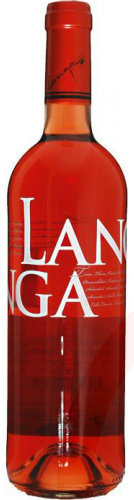 This is the Rosé wine Langa makes. This 2009 is made of Syrah and Cabernet Sauvignon. The newer versions are made with Merlot rather than Syrah.
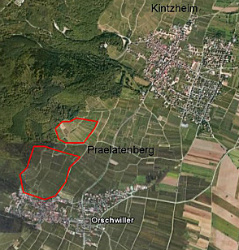 Above Praeatenberg towers the Koenigsbourg castle, built in the 12th century. The altitude of Praelatenberg slopes ranges from 250 to 350 metres and has an east-south-east orientation with a size of 18.7 Ha. The granite bedrock that underlies all Alsace vineyards is very close to the surface. The soil is heavy, covered with loose schist, and is rich with silicium. Dotted with stones rich with iron, quartz and other minerals. This helps the warming of the ground and lets water through easily.
 Color: Straw Yellow.
 Langhe is a hilly area to the south-east of the Tanaro river in the Cuneo province in Piedmont, northern Italy. The black grapes used for this wine is the Dolcetto grape that is widely used in this region, where wineries favour Nebbiolo or Barbera. These wines need a long time ripening. Dolcetto on the other hand is one that doesn’t require a long time ageing, two years will suffice.
 Color: Dark ruby-red.
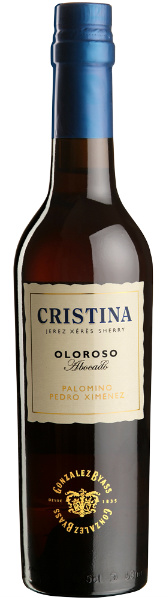 Essentially, there are three types of Sherry:
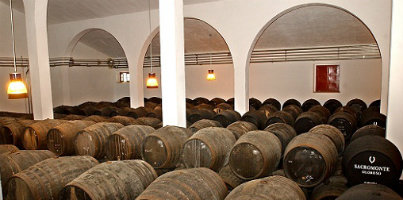 Valdivia was founded by a supplier of building materials in 2003. He bought an old property in Jerez and completely renovated it. Next was locating some old stock to be able to release a series of old Sherries. This Series is called Sacromonte and are made up of 15 year old Sherries. Here we will try a PX from the ‘standard’ series. The modern look is aimed at the new trend-conscious generation. In its young history, Bodegas Valdivia already has its third owner.
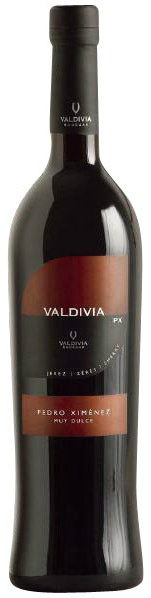 Color: Mahogany. Dark brown with a fabulous red hue.
 For me the nose is fabulous, and the taste a bit thin and short. Lacks a bit of complexity. When I finish this bottle, I will try the 15yo Valdivia.
 Master Quill