Cognac Week – Day 6: Ragnaud-Sabourin Alliance N° 20 Reserve Speciale (43%, Grande Champagne, 1er Cru du Cognac, Circa 2006)

Cognac Week LogoAlready the sixth day of Master Quill’s Cognac Week, and we’ll finish off this week with Ragnaud-Sabourin. In no way is this week representative of the huge Cognac World, but I already found out I like quite some Cognacs from Ragnaud-Sabourin, that’s why I’ll finish off with two of their expressions. Today we’ll start with the Alliance N° 20 Reserve Speciale. First we see that this Cognac doesn’t have the 40% ABV. of most others I reviewed up ’till now. Most had a watery taste, so like me Ragnaud-Sabourin felt it could benefit from some more alcohol to transport the aroma. My kind of thinking! This is a Cognac made from grapes grown in the Grande Champagne region, and it is an older bottle. Todays version looks a lot less stuffy.

Cognac is a distillate of White Wine. To be called a Cognac (a Cru), it must be distilled twice and 90% of the grapes used must be Ugni Blanc, Folle Blanche and Colombard. The last 10% may be Folignan, Jurançon Blanc, Meslier St-François, Montils, Sélect and Sémillon. When the Cognac won’t be a Cru, the rules are a bit less strict. Percentages differ as well as the use of different grape varieties. Ageing must be done in Limousin oak for at least two years.

Color: Orange gold.

Nose: Very aromatic. A wealth of depth and no so unbelievably smooth. This has a lot more going for it than only that smoothness most Cognacs have. Sure it’s smooth, but it also has a hint of petrol, like a good Riesling. Hints of mushrooms, lavas and dust. Licorice, fruity with thick toffee ice-cream. A breath of fresh air and some nice spicy oak in the background. Definitely French oak since this is lacking the vanilla of american oak. Slightly tarry and a tiny hint of soap and burnt caramel. Wonderful stuff. A really good nose.

Taste: Licorice and just after that some thick caramelized cherries. Warming. Already a nice woody attack. Slightly bitter hint of wood passing by mixed with a hint of sweetness. Toffee again, but also the burnt caramel. Hints of licorice and paint. Vegetal. Although not as complex as the nose, still a lot happening here, with some nice surprises. The bitterness stays on well into the finish. If only it would have been slightly more complex (like the nose). If the bitterness would have worn of towards the finish, this would have been near perfect.

This is 43% ABV and it shows. In style it is much rougher than your usual Cognac, but the slightly higher strength is doing its part as well. Fabulous Cognac, especially for me being an avid Single Malt fan. If you’re a distinguished Cognac gentleman, this may be a little bit to rough ’round the edges (and slightly too high in alcohol), but I love this one, so…

Points: 86

Cognac Week – Day 5: Martell XO (40%, Circa 2006)

Cognac Week LogoSo the Château Montifaud XO turned out to be 30yo and was really no dud even though it was “only” a Petite Champagne. Let’s break out some, at least great looking, XO from a big brand: Martell, one of the oldest houses that still exists. Martell was Founded in 1715 by Jean Martell. Jean was born in 1694 and hailed from the Island of Jersey, the largest channel island off the coast of Normandy. In the thirteenth century Jersey was lost to the Kings of England. Jean Martell died in 1753. The business was continued by his wife and later by his sons. The first Martell VSOP was created in 1831 and in 1912 Cordon Bleu saw the light of day. In contrast, this XO was only recently created in 2005!

The bottle looks like it was inspired by an entire museum of art. But the bottle shouldn’t be the reason we buy a Cognac now do we? No, we care about what’s inside. Inside is XO Cognac created from eaux de vie aged between 10 and 35 years old. The eaux de vie come from the Borderies, Grande Champagne but also Petite Champagne and Fins Bois. The Borderies is the most prestigious region, followed by Grande Champagne, Petite Champagne, Fins Bois, Bons Bois and finally Bois Ordinaires and Bois Communs. The “lesser” the region, the bigger its size.

Martell XOColor: Dark orange brown.

Nose: Nice and beefy. Very fruity, but not as soft and smooth as I expected (again). Vanilla and cherries. Thick aroma. Sandalwood, toasted bread and laurel licorice. When smelled vigorously a small hint of dry elephant dung (never been to a zoo?) combined with licorice. Perfumy (woody notes from an eau de toilette) and very elegant. Dont drink this without at least a smoking jacket.

Taste: Thick and syrupy. Sugar water sweet, but much lighter than expected. Not very complex. A quick second sip, already shows some more. Paint and slightly acidic fruit. Syrupy feel with cherries and plain Sugar and burnt caramel. But all is happening in the beginning, so when we get to the finish, not al lot is happening anymore.

It actually tastes like a good cognac, alas one that has lost its stride a bit. Made on autopilot. Sure it has old elements, and sure it has a dark color. Sure it is nicely packaged. Not very practical though on my lectern. Just a shame this has a pretty weak finish, if you ask me. Its instant gratification, but nothing more durable. Good, very nice nose again, but actually I’m a bit disappointed. I wonder how the price of this compares to the Château Montifaud XO.

Points: 83

Cognac Week – Day 4: Château Montifaud XO (40%, OB, 1981/2011)

Cognac Week LogoJust like I promised yesterday, Today we’ll return to Château Montifaud, and this time we will have a look at their XO expression. (Extra Old). By law an XO should be at least 6yo, but again we see that Montifaud age their Cognacs longer than necessary. This XO is 30yo! In 2016 however law will be changed, and an XO should be 10yo, but I don’t think Montifaud will age their 30yo XO Cognac even longer, now the law will change. Just like the VS, this is made with grapes from the Petite Champagne region. It maybe a “lesser” region than the Grande Champagne Region, but Montifaud will know what to do with these “inferior” grapes, if the VS is anything to go by.

Chateau Montifaud XOColor: Orange copper gold (ever so slightly lighter than the VS.)

Nose: Winey and with some added acidity, which smells as “age”. Deeper and more brooding. Old bottle effect and powdery. It’s different from the VS which already had a beautiful nose. This XO is really a fantastic Spirit to smell. It’s so nice, that I completely forgot to take notes when I was nosing this!

Taste: Winey and sweet. It’s even more winey than the VS and lacks the licorice, its younger brother has. Honey and green apple skins. Fragile old age. This one has more depth, (but not as much as I’ve come to expect from a 30yo Cognac). It does have much more staying power compared to the VS The finish has a well hidden burnt wood note that’s hardly there. When that dissipates it shows a slightly translucent acidic note that also quickly dissipates. The sweetness is less of a honey quality and more of plain sugar, and it’s always present. If the sweetness would be more refined, it would have been an even better Cognac.

Coming from a Whisk(e)y background, I find these Cognacs to be very…lovely and light. Even these old blended stuff of 25yo like the Jean Fillioux, and this 30yo Montifaud come across as a bit too simple in the taste, and I do believe the lowest possible ABV. for a Cognac is hurting the wealth of aroma’s these kinds of Cognac should have. So age isn’t everything when you start adding a lot of water. In fact I don’t want to write about this again. With this one I want to sit back and enjoy.

Points: 86

Cognac Week – Day 3: Château Montifaud VS (40%, OB, 2001/2006)

Cognac Week LogoDay Three already of Master Quill’s Cognac Week. Today, and tomorrow, we’ll have a look at Château Montifaud. Château Montifaud was founded in 1837 by Augustin Vallet, and by now the sixth generation of Vallet is with the company: Laurent Vallet. In between came Pierre, Maurice, Louis and Michel. Where Jean Fillioux has sort of a super premium reputation, Château Montifaud has lots of fans with the public. You get quite some quality and the Cognacs are very reasonably priced and most of the time get longer ageing than similarly named Cognacs from the big brands. Take this VS (Very Special) for instance. The youngest component of a VS is required by law to be at least two years old. The VS of Château Montifaud is five years old, and is made with grapes from the Petite Champagne region. You’ll see this “overageing” throughout the range.

Chateau Montifaud VSColor: Orange copper gold

Nose: Slightly winey, light, dusty and sweetish. Young, with already a nice depth to it. Licorice. Abundant sugared fruits. A nice one to smell vigorously. Wonderful nose, but a little bit restrained. It doesn’t leap out of the glass even after some time exposed to air. Definitely more complex than the A. de Fussigny Superieur.

Taste: Quite light. hints of licorice. Sugary sweet and fruity. Syrupy and the sweets are like half crystallized light honey. Maybe too young, but it tastes too thin. I know 40% ABV is typical for Cognac, but it just is too light. Very mellow, nothing sharp at all. Short finish, but whats there, is very nice.

Young, good stuff. Excellent daily drinker Cognac. Very friendly, not very complex, light and mellow. Great balance. If it’s there it’s in the right place. Well made and Montifaud is definitely worth exploring further. I’ve also tried a more recent version (2014) of this very Cognac, and that one seems stronger, is more aromatic, but also tends to be somewhat simpler, less complex and even thicker in its sweetness. The quality is unmistakably there though, and it still would get the same score as this earlier bottling.

Points: 83

Cognac Week – Day 2: Jean Fillioux Très Vieux (40%, Grande Champagne, 1er Cru du Cognac)

Cognac Week LogoNext please! In our Cognac Week, we move on to a Cognac made by Jean Fillioux. Today the fifth generation of Fillioux is at the helms of the company named for the second generation of Fillioux. The company was actually started by Honoré Fillioux in 1880, before his son Jean took over. Honoré learned the trade as a blender at Hennessy. Fillioux’ “La Pouyade” estate is located in the golden triangle, the place where the best Cognacs come from. The estate is situated right in between the towns of Verrieres, Angeac Champagne and Juillac le Coq. Grapes for the Cognac’s of Jean Fillioux grow on 50 acres on land with a terroir of limestone and chalk clay.

Jean Fillioux Très Vieux is a Grande Champagne Cognac, around 25 years old. This one has quite a few years under its belt, so lets see if this Fillioux lives up to its grande reputation.

Jean Fillioux Très Vieux (40%, Grande Champagne, 1er Cru du Cognac)Color: Copper Orange

Nose: Sweet and fruity. Pretty and elegant. Nice soft wood and elegant fruitiness and hints of sweet white wine, banana, pear and vanilla. After a while plain licorice and over ripe mango juice and a tiny hint of pineapple. Given some time to breathe, the licorice transforms itself in the softer and sweeter laurel licorice. New cured leather and nutmeg, with a tiny hint of lavas. Dry, dusty and quiet. Like an afternoon in tropical heat on the border of a desert listening to Georges Zamphir. Excellent nose, wonderful stuff. I just hope it tastes just as good.

Taste: Much drier than expected. Well balanced, perfumed and slightly soapy. Abundant tropical fruits. It almost tastes like a Tomatin. Soft tannic bitterness, that gives the Cognac a backbone. Quite warming and less soft than the nose promised. Although different, lighter and simpler than the nose, this is not a disappointment. Late in the finish a more woody bitterness appears, showing this has seen quite some (new) wood during its extended ageing.

Fantastic nose, that develops and develops when moving about in the glass. Very nice. Much simpler in taste however. Good stuff, but not necessarily something I must have on my lectern. Quite expensive too, considering the simple taste. You pay for the age. Sure, it tastes great, just lacks a bit in the complexity department. You will find more complexity in other Cognacs of Jean Fillioux.

Points: 81

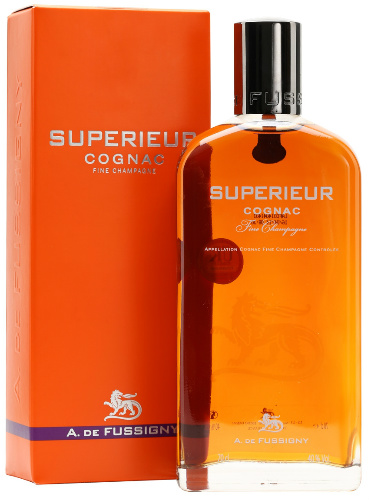
Cognac Week – Day 1: A. de Fussigny Superieur (40%, Fine Champagne)

Cognac Week LogoHappy new year! Most of you will not read this post, right from the first second of 2016, but probably a bit later. I hope you all got through the fatty stuff you stuffed in your mouth over the past few days, and are ready for a wonderful and healthy 2016. For Master Quill this new year will start with the Cognac Week! A new year, the fourth year for Master Quill, so its time for a new distillate on these pages. A worthy distillate and maybe long overdue. Up untill now we have already covered some wonderful distillates. Obviously Whisky in many forms as well as a growing number of Rums and there has been some Grappa. Wines and Beers have not been so prominent on these pages the last year as in the beginning, but I’m sure they will get their share of attention again someday, although I feel Master Quill is for the time being more about distillates, so that will remain the main focal point in the future. Let’s start with Cognac. The first one is made by A. de Fussigny, which just might taste as modern as the bottle looks.

A. de Fussigny SuperieurColor: Orange gold.

Nose: Fruity and dusty. Sappy oak sawdust. Italian licorice. Warm and sweet licorice juice, warm in your mouth. Tiny hint of Apple Brandy and powdered mint candy. Small hints of (new) wood and a tiny hint of unripe banana giving it a more Caribbean feel. Cocktail cherries. This particular Cognac does have some notes of vanilla and has a creaminess that leads me to believe also American oak is used for maturation. Smells young, light, fresh and hip, although some more organic notes appear when the Cognac is warmed in my hand.

Taste: Fruity and quite sweet for a Cognac. Sugar water and sweet cherries. Apples are in here too. Calvados and some caramel. Not a lot of wood (only noticeable under my tongue), and chewing on it, sweet and salty licorice emerges. Quite a simple Cognac though. It has a few markers but overall lacks complexity and has hardly any finish or aftertaste. It shows not a lot of evolution.

For me, this is marketed for young people who just start with Cognac, although I wonder if Cognac appeals to young people these days. Nevertheless we thought the public viewed Whisky as dad’s drink and see how the younger generation have embraced (Single Malt) Whisky with full force. Today it’s one of the factors it’s almost impossible or unaffordable to buy a well aged Whisky anymore.

Points: 79

Springbank 15yo (46%, OB, Circa 2003)

So the Springbank 10yo is always a nice dram and really affordable to boot. Springbank 15yo is usually quite a different dram, never simply only an older version of the 10yo. We already know there always is quite some batch variation with Springbank, and we love that. Not every consecutive 15yo is similar to the previous one, and now the 15yo is not a mere step up of the 10yo. Apart from the taste of it, probably the reason a lot of anoraks love Springbank. So without further ado lets finish off this rotten year 2015 (at least for me it was) and aim for a better year in 2016. So I’ll see you again next year, in good health. Slainthe!

Springbank 15yo (circa 2003)Color: Orange gold.

Nose: Funky Sherry, right from the bat, mixed with fresh air. Something completely different from the 10yo. More fruity with fruity acidity from all kinds of different fruits. Apply acidity as well as acidity from dark fruits. Dry and dusty. Lean and sharp, as opposed to the fatty vanilla from the 10yo. It’s not just an older version of the 10yo. Small hints of peat as well as (only) a small hint of the clay and wax from the 10yo at first, but these aroma’s, as well as the sweetness, develop a lot over time, so give it time to grow. Wonderful stuff.

Taste: Sweetish, red fruits, cloying syrup. A bit Port like. Toasted cask. Peatier than the 10yo, but the peat is well hidden behind the Sherry notes. Definitely a lot drier and fruitier from the 10yo. Alas, just like the 10yo, this has not the longest of finishes and the aftertaste is not particularly big as well. Lovely development towards more fatty peat and oil and sweet tar and a hint of licorice and sugared black tea. Extremely well made and balanced.

I remember when this was released, it wasn’t a very popular bottling. Sure it deviated quite a bit from the usual Campbeltown profile. Even today the 15yo isn’t the most popular Springbank. People seem to dish out more for the old 10yo than for this old 15yo. I’m just happy it is here and it is different from the 10yo. I love both, but for me the Sherry brings something new to the Springbank table, and therefore will score this slightly higher (and because I like it more).

Points: 86

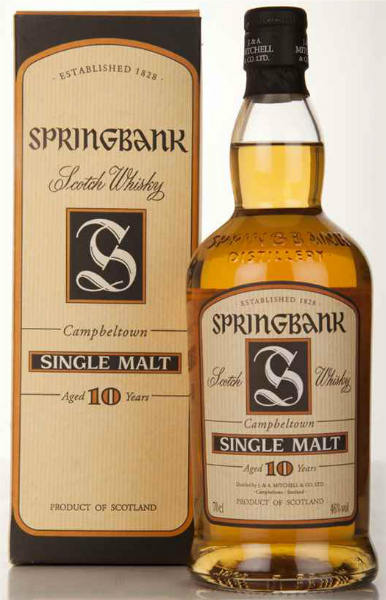
Springbank 10yo (46%, OB, Circa 2003)

So I guess you managed to survive Christmas, congratulations! Christmas is over, but the year is not. There are still a few days left before this year is over, so I dug up two Springbank Whiskies from some twelve years ago. It’s not long ago since I reviewed a more recent 10yo from 2010, so its nice to see how this older version “behaves”. Yes, I said two Springbanks, so the last review on these pages for this year 2015 will be its brother (or sister), the 15yo, from the same time as this 10yo.

Springbank 10yo (circa 2003)Color: Gold

Nose: Oily and fatty. Typical Springbank. Warm barley.  Creamy sweetness. Vegetal. Lots of vanilla, vanilla sugar, vanilla pudding. Nice soft wood. Warm sugar-water. Amazing how sweet this actually smells. Dusty and powdery, but again think creamy and vanilla. Sure it shows its typical Campbeltown profile, but believe me, this is nowhere near the complexity of the current 10yo. Almonds and slightly acidic crushed beetle (with a hint of banana and paper), combined with more and more dusty and dry oak. Tiny hint of smoke and maybe some freshly cut muddy peat, but in fact it is hardly peaty at all. Seems a bit simpler compared to more recent offerings of the same age.

Taste: Sweet it is. Oily, nutty and slightly industrial. Lots of clay. Sweet toffee. Chewy. Very big aroma. Typical Campbeltown. Sugared fruits and again quite a lot of wax (and clay). Warming with noticeable peat this time. After a while a citrussy and fresh note appears. Lemon curd, not sharp lemon by itself. Lemon captured in sugar. After the big and sweet body, I didn’t see the rather weak finish coming. The nose still oozes aroma of wax, clay and wood, then you sip it, and it is big and sweet, and then it starts to leave the building rather quickly. The aftertaste is slightly off with oaky acidity.

It different from the 2010 10yo, but both are great. If you can get this one for not too much money, I would say pick it up. It’s good and very educational compared to more recent bottlings. Where every other distillery try to manage some kind of consistency, Springbank is not that anal about it. The Campbeltown profile is pretty specific, so I don’t think its customers are seeking consistency, but rather welcome the evolution over the years as well as the batch variation that is clearly the with all of Springbank’s products. One of the Whisky nerds favorite distillery, and you are probably one of them, and just like me, proud of it.

Points: 85

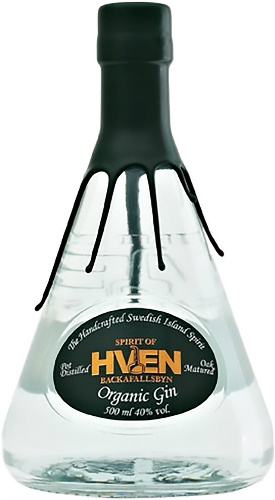
Spirit of Hven Backafallsbyn “Organic Gin” (40%, OB, Sweden)

Avid followers know that in october, Master Quill likes to go to the Whisky Show in London, England. Up ’till now there has always been something that really surprises. A few years back Tomatin surprised with a lot of non-1976 bottlings. Another year, a lot of offerings from Benromach were a discovery, and this year (2015) was the year of Indian Distiller Paul John. Especially their single cask bottlings were stellar. Even a Boutique-y Paul John was fantastic! However, hidden in a corner of the room, next to the coffee stand near the entrance, were three Swedes. They didn’t even had a real stand, but they used a cask as a table and put some Erlenmeyer flasks with colored stuff on top. I have to say, I met some driven and passionate people doing the Spirit of Hven. Spirit of Hven is not only a distillery, but it is also a hotel, a restaurant, Whisky bar and chemistry lab! Mad scientist with a passion for booze? I like that! So apart from Paul John, the discovery of the year was this Spirit of Hven Gin. Go figure!

Gin is an interesting product, since Gin can be made rather quickly, you don’t have to wait ages to see how it turns out. Nice stuff to experiment with and make it personal, by thinking up and combining different botanicals. This Gin has its obvious basis of Swedish Juniper and citrus. Other botanicals include Grains of Paradise, Aniseed, Calamus Root, Mauritian Bourbon Vanilla, Cassia bark, Cardamom, Sichuan Pepper and Guinea Pepper (dried fruit), not to be confused with Grains of Paradise which is also known as Guinea Pepper (ground seed). The Gin is oak aged prior to the final distillation, so the influence of wood is another ingredient.

HVEN Organic GinColor: Clear water.

Nose: Laid back and sweet-smelling juniper. Toned down by some sweet carrots and hidden vanilla. You know it’s there but somehow in disguise. Soft vanillin from wood maybe? Sure it is a Gin, with juniper and citrus, like all, but in here the combination smells excellent yet different. The sharpness is shaven off by the hidden vanilla and the promise of sweetness. A bit like a Gin Liqueur, although this might not be sweet tasting at all. Next some grain, black tea and dried grass. It’s still a Gin, so not extremely complex, but this one is so well-balanced. It’s hard to put down and stop smelling. Very soft and mellow with a nice floral touch and some sweet spices and soft wood to finish it off. Pine forest (floor) after autumn rain.

Taste: The first sip is of sweet grain and paper. The basis is there. It has notes of Vodka, a very smooth and soft Vodka. Next come the juniper, sweet oaky vanilla and well-integrated soft citrus note as well as a hint of caramel. Towards the finish we’re most definitely in the territory of sweet licorice. Laurel licorice. It’s a honeyed kind of sweetness, so more depth than sugary sweet. I use “sweet” a lot, but let me assure you that this comes nowhere near Gin Liqueur and not even an Old Tom. The finish has quite a bit of length and finally it leaves you with a nice anise and licorice aftertaste. Wonderful sipping Gin.

This is the first Gin on these pages and for a long time there was a good reason for that. Gin usually winds up in a cocktail or in a Gin-and-Tonic and I am a drinker and taster of Spirits. When Gin gained popularity the last few years I obviously got the chance to try some very nice Gin-and-Tonics, the way I like my Gin the best. It all went wrong when I started trying Gins by themselves. Nipping them, say, like a Whisky. Well, I can assure you, Gin is no Whisky! So Gin seemed to be not for nipping, so I left it alone for a while. I did find some nice Gins though, that worked well in Gin-and-Tonics. Hendricks with Fever Tree is nice, but Zuidam aged Gin with Indi Tonic, was a lot better. The Zuidam aged Gin was the first Gin I liked by itself, so I decided not to give up on Gin (as a sipper) yet. And then I encountered this Organic Gin. Wonderful stuff. With this one I never got passed the sipping stage, it’s that good. I do hope I have enough left to try it with Tonic though. Recommended!

Points: 78 (and believe me, that is a lot of points for a Gin by itself)

A.H.Riise X.O. Reserve Christmas Rum (40%, 875 bottles, 2013, Saint Thomas, U.S. Virgin Islands)

Albert Heinrich Riise was born on the 11th of September 1810 on the Danish Island Ærø. In 1932 he graduated as a pharmacist in Copenhagen. In 1838 he followed his dream to work as a pharmacist in the Danish West Indies in St. Thomas. In 1842 he married Henriette Marie Worm (1821-1889) on St. Croix. The couple had 13 children. I guessed he felt at home in the Carribean! In 1843 he had his own pharmacy which he turned into a succesful business. Being an excellent pharmacist Riise used Caribbean plants and herbs for the manufacture of pharmaceutical alcohols and cosmetics. He especially was succesful in selling Riises Bay Rum, yes you guessed it, a perfume! He also started distilling Rum and bitters as medicine. Way to go Albert. In 1868 an epidemic broke out of cholera, yellow fever and smallpox. No Rum would cure that, so the family decided to go to Denmark for a year, but in the end never returned to live on St. Thomas. Albert passed away in 1882 and his wife Henriette followed him in 1889.

A.H. Riise X.O. Reserve Christmas Rum has aged up to 20 years, and was finished in PX Sherry casks. Each bottle comes from a single cask.

A.H.Riise X.O. Reserve Christmas Rum (40%, Saint Thomas, U.S. Virgin Islands)Color: Brown with an amber hue.

Nose: Nice Demerara type of Rum nose with notes of cloves in (partly dried) orange skin and cinnamon. Old wood, speculoos cookies and very festive smelling. Its like visiting and old distillery museum where a lot is done with spirits and spices or a bakery museum where all the spices are stored for making cookies. Vanilla, hot butter and fruity acidity. Very aromatic. Also hints of ginger, cardamom, dust and nutmeg. Very nostalgic, appetizing and tasty. Based on the nose alone a must-have so lets see if it also tastes as good…

Taste: Thick and sweet. Syrupy. Sugared red fruits. White pepper and some wood. Fresh cookie dough. The orange skins are present too, but without the cloves. Noticeable is the finish in PX casks. Not the longest of finishes, but warming and just right. The part that stays on the longest is the fruity acidity, but wait…the cloves return for the finish, excellent!

The nose alone puts me in a melancholic mood and puts me in a bakery or Jenever distillery where spices and botanicals are used for the spirit. It makes me feel like it’s the 1930’s again (or so I imagine, since I wasn’t born yet in the 1930’s). The nose is very nice and suits the Christmas name they use for this Limited Edition. The taste is somewhat simpler and the finish shows that 40% ABV was  a little too light for this kind of rum. On the website the claim is made, or maybe that’s just how I read it, that the typical aroma’s come from the PX casks that were used for the finish and not by added spices, so it should not be a spiced Rum. In the end that’s not entirely important, since it is a very nice Christmas Rum, and even if it was spiced, isn’t Christmas a time to forgive? Wink, wink, nudge, nudge. Merry Christmas everybody!

Points: 87