Next up an already rather “old” Macallan. Macallan is a brand with a huge reputation as a Sherried Speysider, and therefore a huge following. The quality is unmistakable there, just have a look what older bottles fetch these day at auctions. Since the “new” Fine Oak series, Macallan have again a huge reputation, but this time more as a marketing giant, but again with a huge following. Alas from a connoisseurs point of view it not thát much of a Sherried Speysider anymore, not as they used to.
This is an independently bottled Macallan, and it doesn’t look like a heavily Serried Speysider. If I’m not mistaken Gordon & MacPhail can bottle Macallans in the Speymalt series, with a vintage, when the distillery themselves do not have a vintage of that same year themselves.
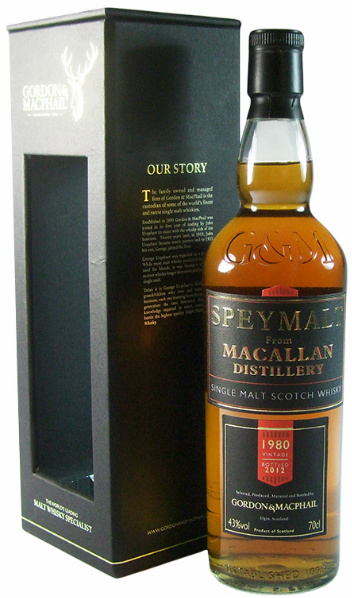 Color: Orange gold
Nose: Hmmmm, fabulously old and waxy smelling Speysider we have here. Lovely! Old soaked wood and very deep half-sweetness. The initial blast of fruitiness, and waxiness leave the building. What comes next is dry and dusty. The wood turns into old cardboard, but it works. It’s not an in your face Sherried Speysider, but definitely a very nice and elegant Macallan. Quality stuff. Toast and burn paper in the finish of the nose. Hints of a bonfire and vanilla (pudding). The nose is top-class.
Taste: Sweet with an edge. Estery and some acidity, that makes for great balance. Creamy and soft-toffee. Hints of black tea and a tiny hint of anise. Hardly any wood, which is a bit odd after give or take 32 years in the cask. The wood does show itself in the tiny bitter (and soapy) bite that graces the finish.
Absolutely a fine nose, alas the taste doesn’t match up. It somehow lacks some complexity. Having said that it is a damn fine Whisky, that for the price is easy drinkable. Gone before you know it. Therefore easily a favorite when on my shelves. For me a tad too much reduction here, I would have liked this at 46% ABV. Old Fino?
Points: 89
Thanks to Stan for the sample!
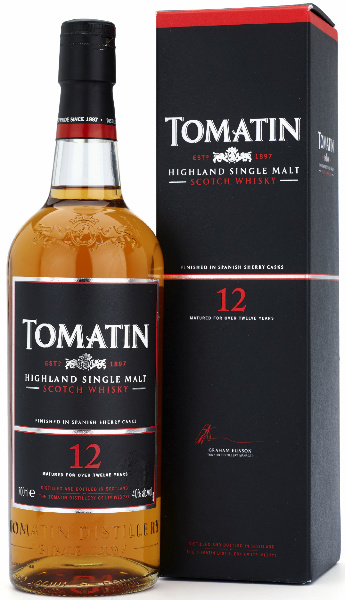
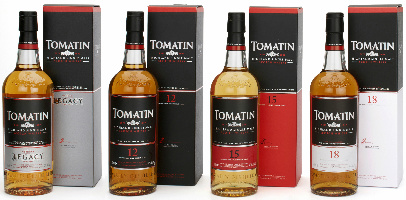 This is my last review of a Whisky from the standard range of Tomatins released by the distiller. The standard range comprises of Legacy, a 12yo, a 15yo, and last but not least, the 18yo. The age statement (or lack of it) not being the only difference. All are different in usage of casks:
 Color: Light gold.
 if you’re somewhat more seasoned and able to appreciate the added notes of the Oloroso finish , I would recommend the 18yo. Legacy and the 12yo are both alright, and dirt cheap to boot, but not my personal first choice. So for me the 18yo and the 15yo are the ones to buy, and differ strongly enough from each other to get both 🙂
 Grimbergen is somewhat of a (commercial) giant amongst Belgian Abbey Beers. Only Leffe sells more beer. It already was big when Scottish & Newcastle were the owners but when that company was bought by Dutch Beer Giants Heineken, well… Next question, is Grimbergen any good? At this point I don’t know, but I picked this Optimo Bruno to find out. Optimo Bruno saw the light of day in 1988 as a beer specially made for easter. Grimbergen Beers are made by Alken-Maes from Waarloos, not to far from the abbey. The top fermented Beers are made L’Union in Jumet. (Top fermenting means that the yeast lies on top of the wort). Last but not least, the beer did not receive post fermentation in the bottle, so even extended ageing (2 years past its best before date) kept this beer “clean” and there is no deposit.
 Color: Brown, a little bit of cream-colored foam.
 In the early eighties Pierre Gobron and Chris Bauweraerts (Brothers in law, and thus Brothers in Beer) started brewing beers as a hobby, and founded Brasserie D’Achouffe near Houffalize in 1982. Houffalize is in the Ardennes, where lots of stories are about elves (They call the leprechaun an elf).
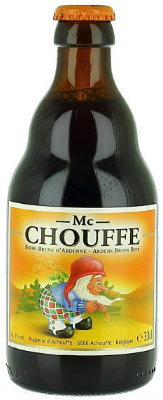 Color: Brown. Not a lot of foam, but a lot of CO2
 The Tongerlo beers are brewed by brewery Haacht, and they are doing so since 1990 (when they got the rights to this Abbey beer). I’m sad to report that a few years ago, brewery Haacht, in all its infinite wisdom, have decided to delete
  Even this new Tripel got the chance to age for 2,5 years after it’s best before date. You may think I’m mad, but with most Belgian beers it only adds to the character, don’t worry you, won’t get sick. Breweries are obliged to put a short-term on the label, but are starting to add the bottling date. Frank Boon decided to stretch the best before date far beyond the standard three years and easily puts best before dates twenty years into the future!
 Color: Orange yellow with some flakes (due to ageing). Almost white foam.
 Color: Dull light gold.
 Color: (Dull) gold.
 Color: White wine, light.
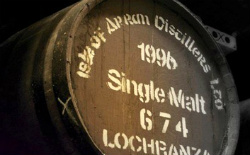 Linkwood is another example. Luckily this also happens the other way around. For most people Teaninich is nothing out of the ordinary, but I really do like my Teaninichs…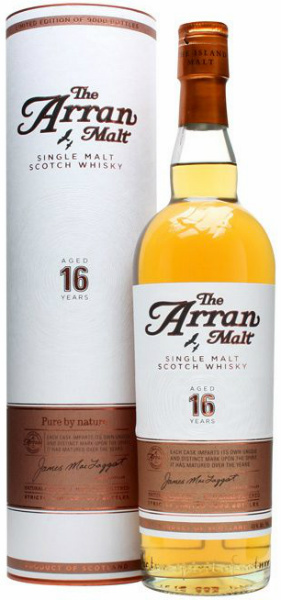
 Not so long ago, this was the new-look entry-level malt from Tomatin, but in the quickly changing Whisky-world and especially the trend of releasing Whiskies without an Age Statement (NAS), Tomatin issued
  Color: Ochreous gold (Chewbacca golden hairdo).
 Master Quill