 Readers that like my occasional reviews of cigars will know by now that I don’t smoke inside the house. The sparsity of these cigar reviews are only caused by long stints of bad weather. It almost seems to me that the last five years, we didn’t even had one decent summer! It’s june, and here we had only a few whole days of Sunshine! You do not have to be a rocket-scientist to figure out when that happens, a cigar will be freed from its humidor. This time I chose a Partagás. Partagás usually are on the heavier side and I thought let’s start the season with a nice nicotine rush!
This is a beautiful day. Sunny not too hot and a little bit of wind. Even without the cigar I’m enjoying the silence, the rustling sound from bamboo in my garden and the sloshing sound of the water behind my house. Don’t worry, no flooding, it’s supposed to be there. So, sun, water, bamboo and hopefully an excellent smoke.
This is a Cuban Edición Limitada 2008 version by Partagás (50 x 110mm, Petit Robusto, Box Code Unknown).
This Edición Limitada from 2008 was made with Tobacco that already was aged for two years. First released in 2008 obviously it turned out to be an immediate success. Since 2011 it is added to the current series of Partagás cigars.
Color & Looks: Nice wrapper, tightly wound with small veins. Packed with a lot of tobacco and clearly well-built. Draw is good, especially for such a tightly packed thick cigar. Right from the start, this is a good smoke.
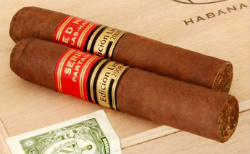 A cru: Chocolate, dusty old books with a nice creamy touch and with a slight hint of toffee.
Taste: I have just set fire to it, and already this tastes very good. Not as strong as I have come to expect from a Partagás. Very rich taste, fabulous spicy taste. I actually have smoked just 5 millimetres from this cigar, but it already is one of my favorites! How’s that for a bold statement! Soapy feel on the lips. The Tobacco was harvested in 2006 and aged for two years, after that it almost aged another 5 years in my humidor, but still the cigar shows some youth. Still, it is already very, very good, but consider the additional ageing potential!
My cigar burns a bit uneven, so I had to “correct” that a few times, but that’s no problem. Dark chocolate, woody, warming and a fabulous smelling smoke, even for the one sitting next to the smoker. The ash is almost white (another good sign). After 1/3, the cigar becomes more like a Partagás, a very good one.  Spicy and full of character, woody and dry. I’m having a mild arabica coffee with this, but the cigar doesn’t overpower it. So it is full of Partagás character, but it doesn’t pack that Mr. T. punch Partagás so often have. Excellent. With water on the side the cigar tastes more sour, so I wouldn’t recommend drinking water with this cigar because it changes the fine constructed character of the cigar.
The cigar is very consistent. There is some minor development in the beginning, but after that the cigar is linear. The first ash fell of after the half way point. Taste wise the first half is the better half. The second half is drier and more woody. But the difference isn’t that great. As mentioned before, the ash of the cigar is almost white, and near the end, the cigar shows a caramel colored heart. More wood towards the end too.
Personally I find the 50 gauge a bit too much. It doesn’t look very elegant and it cramps the jaw, but that’s probably my european opinion. The cigar is quite mild altogether, no big nicotine rush. And no turning points. I enjoyed this cigar thoroughly. I smoked this as long as I could, and burned my fingers, but it is that good, all the way through. This will probably score even higher after some additional ageing.
Points: 86
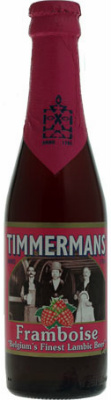 Timmermans is part of
 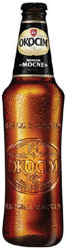 Here we have a beer from Poland. I visit the country on a regular basis, so it’s not that hard for me to come in contact with some of the Beers they’re making over there. Poland, of course, is better known for its Vodka, than for its Beers, but during the last few decades has seen a big shift away from the consumption of Vodka (even the tax on Vodka was lowered at some point) to Beer. A few moments later, brewers from the west saw this opportunity and quickly bought up all the large brands. Especially Heineken (f.i. Zywiec & Warka) and Carlsberg (f.i. Okocim & Harnas) were quick to snap up the Polish brewers. Lets have a look at this Okocim Premium Mocne then. I aged the Beer for an extra year (I love to do that), and this Beer can take some ageing.
  For me always a good sign.
 Color: Gold
 Second thing i noticed is that it’s 43% ABV, making the 12yo the only one in the standard range this is 40% ABV. The rest is higher with 43% and 46%. Having said that, Tomatin placed this Legacy before the 12yo, simply by making it cheaper. Pretty neat.
 Color: Light gold.
 Moving on to a beer this time, and not just any beer, but a Guinness, you know the dry stout that is good for you! (especially for the heart, because the antioxidants found in the beer, battle cholesterol depositing in your body). Today it’s almost everywhere illegal to make such a medical claim.
 If you want to know more about the beer, I have found the
  Grüner Veltliner is a white wine grape variety that stems from Savagnin and further down the line, Rotgopfler and Pinot Noir. Despite of the name Veltliner, the grape isn’t related to Roter Veltliner and Frühroter Veltliner. Most Grüner Veltliners are planted in Austria and to a lesser extent, Slovakia and the Czech republic, but more recently also in the United States and Australia. One-third of all the grapes planted in Austria is Grüner Veltliner. In Slovakia one-fifth and in the Czech republic “only” one-ninth of the planted grape varieties is Grüner Veltliner. Most Grüner Veltliners age well and accompany food excellently.
 Especially in the Wachau wine region on of the following terms can be found:
 Color: Straw
 Returning from my vacation, a blank white box was waiting for me. Inside this rather large sample (70cl !), wrapped in a black velvety cloth, of the new Glenlivet Alpha or α (being the first letter of the greek alphabet). Alpha is also used as a synonym for first (of a series) or simply meaning “the beginning”. If this Glenlivet is the first of a series, then there are 23 more letters in the greek alphabet. Bring on The Glenlivet Iota and Omega! (The 9th and the 24th letter of the greek alphabet).
 It therefore has become more common practice to bottle Whisky without an age statement (or NAS), and give it a name. Just have a look at a lot of recent Ardbeg’s or some of the newest Macallan’s, but also Tomatin Legacy and Talisker Storm to name but a few, almost all with extensive add-campaigns to explain what kind of Whisky it is and what’s inside the bottle.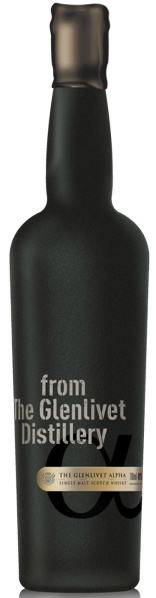
 Looking back, I see that two of the last four posts are old Clynelishes. One from
 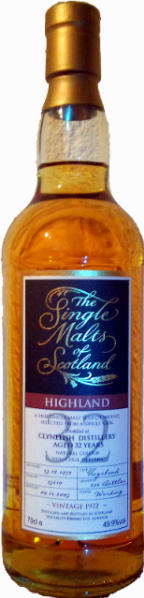 But that’s Brora, here we have a 1972 Clynelish, so it’s distillate from the then newly built distillery next to Brora…
 Here in Holland the Asparagus season has started and nothing goes better with that, than a nice fresh white wine. This Berger Riesling was ogling at me for quite some time, since all Austrian wines have the Austrian flag on top, it is easily recognizable.
 This Riesling (12.5% ABV), is wine from
  They are on a stony soil dating from prehistoric times. From these parts you can have a dry, minerally Riesling or Grüner Veltliner. Second on the south of the Krems Valley on the south bank of the Danube, small vintners in ancient villages make local wines in their own old-fashioned way. Third, to the east of Krems, towards Rohrendorf and Gedersdorf, there is löss in the vineyards which is noticeable in the wine, its softer and more lavish in style. The best wines from this region are called reserves.
 Color: White wine.
 Master Quill