Very typical Bordeaux blend. This one comprises of 70% Merlot and 30% Cabernet Sauvignon. The ABV is 13.5%. The grapes were harvested by hand and the wine was put on oak casks for one year. The grapes that grow on vines are 30 to 40 years old. grow in the heart of the Médoc region near Bégadan, where the D3 crosses the D103 (for those who were there). Saint Estèphe is just up river.
 For what I read, people weren’t too happy about this one when is was younger, so it was no problem to let this lie for a couple of years. I left it for almost 10 years, but now it was time to have a look how it is doing.
2003 was a very special year for the region. The 2002 harvest was very dry and the winter that followed was cool and wet. In march it was already warm (and dry) so growth started early. The following period stayed dry which means low yields. The summer, well, heat wave! So in June, July and August, the grapes got roasted.
Color: Very dark, with deep sparkling red. Almost doesn’t let light through.
Nose: It might be heavy, according to the text above, but for me this is quite lively. Grape skin, hot earth, dry but with a lot of depth. Elderberries with some acidity. Yeast and a little hint of sterile wood. Altogether very balanced. I might be biased by now, but this oozes hot weather.
Taste: Deep, this has some tannins. Thick grape skins and plums. Lots of ripe cherries. Not the red ones but the sweetish black ones. It’s not bitter nor woody, but it does dry the mouth quite a bit. The fun is to be had taking big gulps and the effect this has on the palate. Finish is quite short and a bit anonymous. This is very much recommended with food (meat).
In the end not very complex, but with a lovely nose. And I like the shift toward the black cherries. Especially the taste is ‘simple’ but it doesn’t overpower you, nor does it have any other flaws, apart from the tannins that dry your mouth extensively. Considering early report about this wine, I can say that ageing this is a good idea.
Points: 81
 Here is another bottle from Fattoria La Vialla that found its way into my castle. Click
  Color: Full Gold.
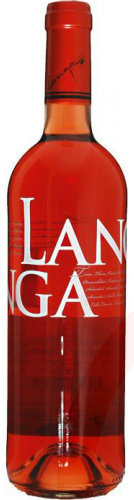 This is the Rosé wine Langa makes. This 2009 is made of Syrah and Cabernet Sauvignon. The newer versions are made with Merlot rather than Syrah.
 Erik Molenaar is the boss of this outfit. Did Erik source a tiny Hogshead of Ledaig? “Honey. I shrunk the Hogshead” maybe? Nope, Erik shared a cask with a shop in Maastricht. Slijterij Bams. The share of the shop was 218 bottles, Erik’s share was only 36. Funny enough the label of ‘the other’ bottle states 50.6%. The humor doesn’t stop here. Bams don’t have it on their list anymore. Sold out? But The Kintra version is still available! So I can’t wait to try this. I hear that modern Ledaigs can be pretty good…
 Color: White wine.
 Lot’s of ash in the finish. The lack of balance is a bit disturbing. There is also a bitterness like earwax and a hint of crushed bugs.
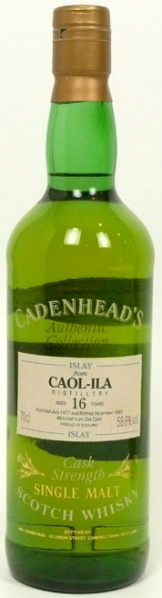 Color: Gold
 Caol Ila. This was recognizable blind. This has a nice full body with a perfect sweetness (slightly acidic) that matches the toned down peat a lot, combined with the smoke…a winner. Macaroons (made with almonds) and a slightly bitter finish (from the wood) and overall a tad too simple for a score into the 90’s.
 A few days ago my whisky club had a tasting of Aberlours. Quite a unique one to boot since these were almost all exclusively official bottlings. We only had one independent Aberlour. It was from a Bourbon Cask and did show the distillery profile for a while, but that was quickly gone. We had a few out of the standard range and a few from the standard ranges from the past. A few bottles stood out. We liked one old 12yo double cask matured for its high dark Oloroso Sherry content (and costing next to nothing). An old 21yo from 2000 was very good and this odd one out. The 1988 Distillers Selection, that was released exclusively in Spain. After this one 1988 came only one other Distillers Selection, the 1989. Again for Spain only. For Aberlour this is quite special. It is said that instead of the usual Oloroso, for this bottling Fino and/or Manzanilla is used!
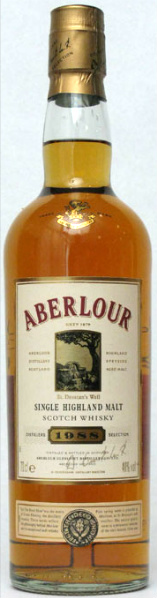 Color: Full Gold
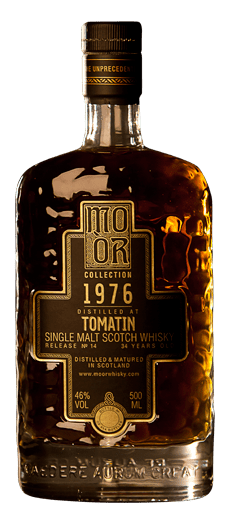 Color: Copper Gold.
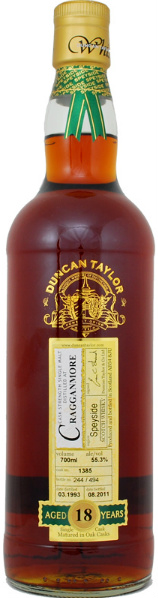 oday I have the chance to give this another go. First of all, I can look at this by daylight and I can’t see the red lemonade anymore. It has this orange brown color most Bourbons have.
 Happy new year! I wish all my readers a great year full of fulfillment, health and great drams. please don’t settle for mediocrity. Try to broaden your horizons for true beauty that can be put in your mouth, but do it in moderation, we don’t want to create modern drunks.
 Well what would be a better start, than with an old Strathisla! In the past I tried some nice old Gordon & MacPhail Strathisla’s from this series. The review for the 25yo can be found here, but together with this 25yo I tried the 21yo and that was similarly spectacular. Mind you these are the old 80’s bottlings for the italian market, and whiskies with these labels were issued for a couple of decades, so every batch will differ (massively). The 21yo and the 25yo were quite dark, and hopefully not colored, and being from the early eighties, the distillate is early sixties or maybe even late fifties.
 Short finish. The 21yo and the 25yo performed better in that respect. Treat this elderly Whisky with respect, but be bold and take bigger gulps. The whisky itself, maybe is a tad fragile and subdued, but hey, the stuff was made some 55 years ago and along the way was reduced to a mere 40%, so give it a break will you?
 Master Quill