Clynelish 1989/2003 (46%, Wilson & Morgan, Barrel Selection, Marsala Finish)

This will be interesting. Experience learns me that I have tasted a lot of good Clynelishes from 1989, although one might ask oneself how far vintages work for Whisky as they do with Wine. An other interesting point is, although todays Wine finishes are quite common, back in 2003, when this was released, Wine finishes weren’t all that hip. Remember that the demand for Whisky was a lot less than it is today, so the sentiment, back then was, if it’s finished in an odd cask (not Bourbon or Sherry), than there must have been something wrong with the original Whisky. This has been finished, by the bottlers, in a cask that previously held Marsala Wine. Marsala is a fortified Wine from Sicily Italy. Marsala can be dry or sweet, and can be white or red, or something in between. Just like Sherry and Port which also comes in lots of different versions, so the word Marsala alone only narrows it down a bit what to expect. It would have been nice to know exactly what kind of Marsala was in the cask. No surprise that we have an “early” experiment with a Wine finish, since Fabio (the man behind Wilson & Morgan) is Italian and already a Wine buff before getting interested in Whisky and Rum. Remember Rum Nation? That’s also his.

By the way, there are other 1989 W&M Clynelishes around. At least one Sherry and one Bourbon expression exist as well. Just look at the bottom right corner of the front label. By the way I have tried this Bourbon expression and it wasn’t as good as other 1989 Clynelishes. Maybe the reason for finishing this one.
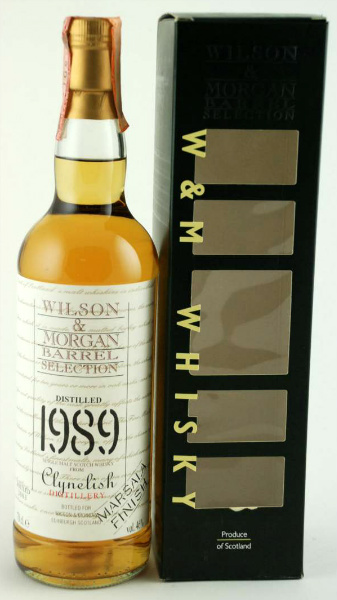
clynelish-1989-wm-marsala-finishColor: Gold.

Nose: Dry, restrained and not “thick”. Elegant. Well balanced. Lightly fruity and appetizing. Peaches. Nutty and dusty. Pushed way back some notes of creamy vanilla, so I’m guessing American oak, and probably the previous maturation was done in a Bourbon cask. Don’t be fooled, a lot of Sherries are matured in American oak as well, since it gives off a more creamy, vanilla feel, whereas European oak has more tannins to it. Next some spicy notes. Hints of sweetish basil. Nice one to smell and in no way does the Marsala overpower the Whisky. Fabio was on to something here, and maybe the Clynelish itself wasn’t too bad as well? Hints of dusty dark (friendly) cocoa powder. Good. Give it some time to breathe and the nose does show it has some origins in Wine, but still in a very restrained manner. Hints of Calvados even.

Taste: At first some wood, dusty and spicy but soon a wave of utter fruit passes by, although the fruity sweetness is almost nonexistent, the initial sip has definitely some sweetness to it. Nutty and nice. It has some fruity acidity though, not much but it does help the balance. Two distinct layers after which the finish sets in. A pretty good Whisky with a nicely done finish. It is a treat on entry and has a nice balanced body. The finish has some moderate staying power, and is easily the weakest point of this Malt. It doesn’t have enough length, and is actually not very complex. luckily the rest of the experience is very positive, so definitely a malt one can enjoy. I guess this experiment can be called a success.

The middle has some heat to it so the 46% ABV seems appropriate. I can be easily disappointed when a Whisky has been reduced too much, but I’m also easy in admitting that reductions often work out. In this case I’m not wondering how a cask strength version would have been. I’m happy as it is.

Points: 86

Don José 12yo 2003/2015 (53.6%, Isla del Ron, IdR 012, 252 bottles, Panama)

Don José you might ask? “I know only of Panamanian Rums called Abuelo”. Well, Don José is the distillery owned by Varela Hermanos. Abuelo is a Panamanian Rum brand owned by…Varela Hermanos. You do the math. Earlier I reviewed a very nice Rhum from Guadeloupe bottled by Isla del Ron, The Rum outlet of Thomas Euers, Whisky people know better from his independently bottled Whiskies under his Malts of Scotland label. Both the Rums from Abuelo, and the Isla del Ron label, need no further introduction, so why waste any more words on this introduction when both need no introduction? In case you’re wondering, the introduction is now over.

Don José 12yo 2003/2015 (53.6%, Isla del Ron, IdR 012, 252 bottles, Panama)Color: Gold.

Nose: Thick and cloying. Extremely creamy. Cream, vanilla pudding. Vanilla ic-cream and butterscotch. Yes this is an Abuelo all right, but it’s also different. Next come some hints of old, dried out leather and even Whisky. Dust and a pronounced woody backbone, add some balance to the overly creamy nose. I also get an edge of paper, right next to the wood. Oak, paper and powdered aspirin. Had I nosed this blind, and after some breathing, I might not have guessed this was an Abuelo though, because it reminds me now even more of Foursquare. Doorly’s 12yo for example. (…so I pulled up the Doorly’s 12yo and had a sniff. Yep quite similar at first, although the Doorly’s has an additional winey note, and is less creamy. The similarities are becoming less obvious, when the Doorly’s gets some time to breathe and develops in the glass. It develops even more of the acidity mentioned earlier than the “Abuelo”, go figure).

Taste: Yeah now we’re talking. Always wanted to know how an Abuelo would taste at a higher strength, well, here is your chance. Definitely less creamy than the official outings. And guess what, and you might want to read my other reviews of Abuelo, this one doesn’t have the discrepant fruity acidity on top. Again notes of paper, cardboard and quite some wood and burned wood. Those notes add some bitterness to the whole. Almonds. By the way, it is slightly soapy as well, and has a slightly (bitter) Beer-like finish. Now you don’t get that in a regular Abuelo now, don’t you. The bitterness does however dominate the aftertaste. Surprising.

Again, like with many Abuelo’s, something seems to be not quite right, and I mean it suffers a bit in the “balance” department. Usually it is the fruity acidity that doesn’t reach the synergy needed, but this time it is a less fruity and a more waxy note that seems to be a bit off and unwilling to cooperate. Nevertheless this is a minor fault compared to the acidity-problem in other Abuelo’s. This particular expression is all about the wood. You can say it its wood driven and has this quite unusual bitterness. Is that bad? Well, it’s not overpowering, so it doesn’t ruin the Rum, it is quite upfront, so if you like your woods, you are going prefer this one over the regular Abuelo’s, that’s for sure. It has a higher ABV, and you do notice that, but not as much as expected. I don’t find it hot or too high in alcohol. Nope, it’s still quite easily drinkable.

Points: 83

De nuevo muchas gracias señor Rik!

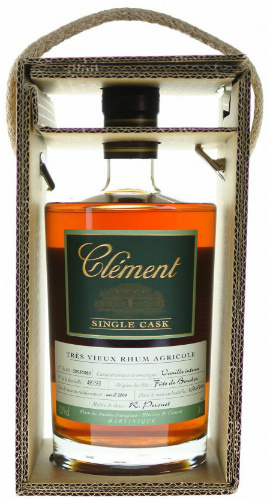
Clément 10yo 2003/2013 Trés Vieux Rhum Agricole (42.8%, Bourbon Cask #0310054, Vanille Intense, 459 bottles, 50 cl, Martinique)

Alas, my 100% Canne Bleue version of a single cask Clément is almost gone. Damn small those 50cl bottles. I said I liked the smaller size of these bottles, because it would give us the chance to buy a bottle from another cask. True, but when they are as good as the first one, less definitely is not more. So what should I replace it with? Well, what about another version from Cléments single cask series. Yup, let’s do that. Sounds like a good idea. In comes the second version released: “Vanille Intense”. I don’t know about you, but somehow I’m expecting a R(h)um that is full of, well, vanilla notes. Where the previous one was all about the Canne Blue sugar cane variety, this time it’s all about the wood, or at least so I imagine. Sure R(h)um by itself can have enough notes of Vanilla, but here, I guess, it’s also the vanillin that came into the mix by way of the wood of the cask. It’s from a Bourbon cask, so American oak, which gives off vanilla notes to enhance the vanilla notes from the R(h)um. Expect intense vanilla notes.

By the way, a third version has been released recently, called “Moka Intense”. Interesting, but lets not get ahead of ourselves, and have a go at this “Vanille Intense” first, shall we?

clement-vanille-intenseColor: Copper golden brown.

Nose: Cookie dough. Luke-warm sweetened black tea. Vanilla. Only after this creamy start, the typical Rhum Agricole notes emerge, although throughout the whole experience, they are pushed back well into the background. So we are definitely in the territory of some active Bourbon casks here. Floral, honey and licorice. Nice (Indian) spicy wood, plywood and pencil shavings, although I don’t think they have used the latter two for this Rhum. Well integrated, a faint, but nice and sweet red fruit aroma. Leather and quite dusty. Next comes the sweetness, brown sugar and slightly warm toffee. This one really gives it up in layers. Is the vanilla intense? Well, not as much as the label suggested, but it is definitely a smoother and sweeter smelling Rhum, compared to its 100% Canne Bleue sister. It’s not the vanilla ice-cream I somehow expected. For me, especially the elegant woody notes are the best. Quite a nice nose, almost not a Rhum Agricole, but I like it!

Taste: Very soft, dull, dusty and sugary sweet. Simple. Warm sugar syrup with pencil shavings, cardboard and indian spices. Toasted cask. Lots of diluted toffee, watery caramel, licorice and vanilla. Spicy backbone from the oak, even a slight bitter vegetal note, with a late return of sugar. You can really taste the pencil shavings now. Remarkably soft and simple compared to the 100% Canne Bleue version. So it’s not about the vanilla after all. They just picked smooth, creamy, sweet and simple casks to avoid the potential rawness of the previous version I guess. Short finish as well, where the woody bitterness has the longest staying power. A bit disappointing really. Where the J.M 2002 and the Clément 100% Canne Bleue had something extra, this Vanille Intense does not. I think the Rum Nation Martinique Hors d’Âge is just as good and way more affordable.

Compared to the 100% Canne Bleue version, this one is less raw. More civilized and simple. Also toned down a bit. The 100% Canne Bleue seems to explode with aroma. Dare I say that the Vanille Intense is a bit boring? I just did, didn’t I? I don’t know if the lower ABV has something to do with it, or maybe it is just the profile of this Rhum. Also remember these are single cask bottlings and there should be a difference from cask to cask. Going on these two I will probably buy another bottle, bottled from a different cask, of the 100% Canne Bleue version (Brown label) and pass up on another Vanille Intense (Green label). Don’t get me wrong, the green ‘un is still good, but not as good as the brown ‘un…

Points: 85

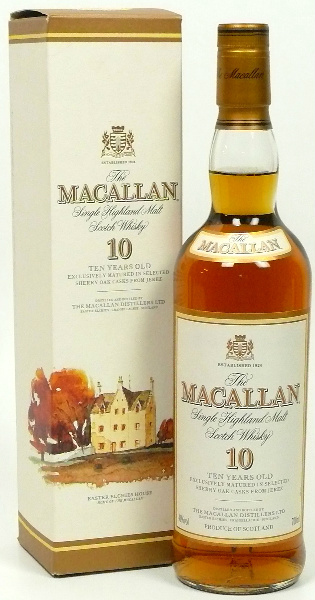
The Macallan 10yo (40%, OB, Circa 2003)

We move back a decade or so to visit one of our old friends. One of the most standard bottlings of that time, the original Macallan 10yo. It had an age statement back then and was diluted to 40% ABV. It was the time, no fan of Macallan or otherwise, was aware of the dark clouds that were forming up ahead. Finally the storm broke and we were given the Fine Oak series. So for me the downfall in quality started with bottlings issued in the newly designed bottlings like the “Fine Oak” series. However, if memory serves me well, in 2002 they started releasing some sort of NAS called the “Elegancia”, preparing us for a softer and smoother experience, moving away from the true Sherry experience of the true Macallan. Not truly a NAS by the way, since it did carry a vintage, like Elegancia 1991. Nevertheless, after the Fine Oaks I really didn’t look back. I was so disappointed. I turned my attention towards Longmorn instead. Back then a lot of it was around and at fair prices to boot. The standard 15yo was pretty good, although the introduction of the 16yo made me rise my eyebrows a bit. Better looking bottle, but the Whisky was less interesting. No, may independent released some pretty stellar Longmorns, so I needn’t look back at Macallan. Of course I did try some of the newer bottlings, but I was never convinced moving back towards the Macallan. Only the future can tell us.

Macallan 10yo (40%, OB, Circa 2003)Color: Dark orange gold.

Nose: Wow, very aromatic. Heaps of Sherry. Extremely fruity, Cherries, apples and banana. Simply wonderful. Already from the start a nice backbone of (new) Oak and a promise of toffee’d sweetness. Warm runny caramel. A lot is happening from the start and it only needs little time to reach a nice balance. This is how I remember drinking Whisky a decade ago, without even giving it much thought then. Stuff like this would be around forever, wouldn’t it? Damn, why is it so hard to make something like this today? Ice cream, vanilla, caramel, laced with apples. Sugared apples and a splash of plain and simple refined sugar-water. Fruity, but not only apples. Sugared cherries and hints of mango and passion fruit. A tropical mix that could have been an older Tomatin. Resembles Tomatin 25yo a bit. Thick and cloying at first, but give it some time to breathe and the whole gets thinner. I wouldn’t say it dies out on us, but it does get a bit more restrained. Balances out. Every time I smell this I get hints of well made Calvados. It becomes fresher. More waxy apple skin aroma’s emerge. When you look for it, there are hints of toasted cask. Hints that are more upfront in older good Ex-Sherry cask matured Whiskies.

Taste: Simpler. Starts out soft and sweet, but not as complex as the nose. Tropical fruits and runny caramel again. Is is youth? Probably not. Is it reduction? I guess so. Sweet and on entry, sometimes like someones bad breath mixed with cardboard, what? Relax, it’s not that bad actually. This time around definitely some toasted cask in the mix, which does wonders for the balance. It gives the fruity and fresh Whisky a nice backbone. Slightly bitter oak, slightly burned as well. New sappy wood aroma is also present, although it is highly unlikely new wood was used, but you never know don’t you. The wood is sappy and sometimes a bit harsh and upfront. It’s the “burned” sensation however, that stays well into the finish. Also a nice and rich nuttiness appears towards the finish, combined with the cardboard we found earlier. For a 40% ABV Whisky this has a pretty lengthy finish, but no, it’s not long.

Tasting it now, in 2016, this is high quality by todays standard. Remember this was the simplest of Macallans some ten years ago. Sure, Italy had their official 7yo, since they like young and fresh Whiskies. Hard to believe not so long ago this was entry-level stuff. Today this would have been packaged in a shiny box that costs more than the  Whisky itself did ten years ago. You don’t want to know even how much it would cost today. Looking at auction prices, I would say every time, you get a fair deal when you want to buy one like these. Go for it. They don’t make them like this anymore.

Points: 85

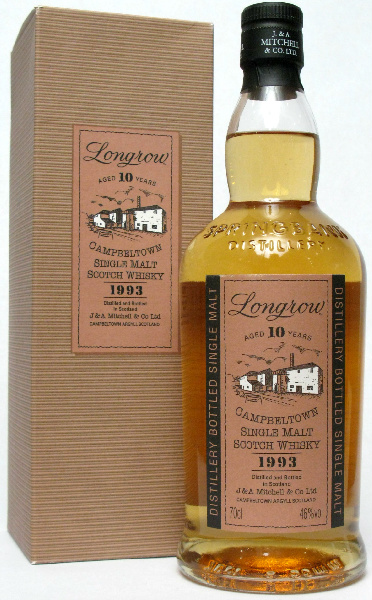
Longrow 10yo 1993 (46%, OB, 2003)

Another peated whisky in the summer? Has Master Quill gone completely crazy? Yes, because who wants to be “normal”! If you feel like it, just do it… By the way, it’s raining like crazy outside, so it only seems fitting.

2001 saw the first release of a 10 year old, with a vintage. Remember the classic brown paper Longrow label on the tall bottle? The first two releases, both in 2001 and both distilled in 1991 were a “normal one” said to be only from Bourbon, but also, for one time only, a Sherrywood. The series was short-lived, and was discontinued in 2006 after the 1996 vintage, in favour of the 10yo without a vintage statement. Throughout the series I don’t believe all normal ones were from Bourbon casks only, if any. You know Springbank, they tend not to repeat themselves. Just compare the last two releases of the Longrow 18yo (with the white labels), since the 2016 release contains Rum casks. Never a dull moment with Springbank and all of their other brands. Today we’ll have a look at the 1993 vintage of the 10yo, that was released in 2003.

Longrow 10yo 1993Color: Light gold.

Nose: Nice fresh peat. Fatty and smoky. The peat is smelling three-dimensional. It’s not only just there, it goes deep, and seems without end in complexity. Peat mixed with hints of lemon, waxy apple skins and vanilla. Cookie dough. Whiffs of warm apple pie. Burning leaves, sugared yellow fruits and even hints of sweet-smelling sweat, crushed beetle and slightly burned herbs and even has a quaint nuttiness about it. Very balanced stuff, with only a mere hint of wood. All seems to fit in together nicely. This is the best peat I’ve smelled in quite some time. I must admit, it had plenty of air to work with. Love it.

Taste: Quite sweet on entry. Heavy on licorice and the peat is shoved into the background, by the sweetness. The sweetness dissipates and leaves more room for a sort of herbal fruitiness. Prickly licorice and the nuttiness from the nose. Alas the peat never really makes it to the top and the wonderful depth it has on the nose doesn’t really blossom tasting it. Long finish, built around the caramel sweetness and with a larger role for sour oak. Coffee and chocolate in the aftertaste. It still is a wonderful Malt. Just if the complexity of the nose would have shone through in the taste, it would have been a truly exceptional Whisky.

Well this might not be a Whisky from the seventies, but it does remind me of the quality of that decade. I’m actually amazed a bit that many of the vintages are still available, although somewhat more expensive than the new 10yo.

Points: 88

Gardel 1992/2003 (42%, Fassbind, The Secret Treasures, Barrels #4, #8 & #121, 1401 bottles, Guadeloupe)

We are going to visit Guadeloupe again! This time I have more room for some geography, since the previous review was already a bit long as it is. Guadeloupe lies in the Lesser Antilles in the Caribbean. Guadeloupe is not one island. What usually is considered to be the main island is in fact two islands with a narrow strait in between. Grande-Terre in the east and Basse-Terre in the west. To the south lies Marie Galante. There are more islands to Guadeloupe, but those don’t have Rum distilleries on them. From Guadeloupe comes this Rum I’m about to review. What else could it be? The Rum was made by Gardel, which was founded in 1870 by “General Sucriere”. After working for almost 130 years the distillery is now closed, but the Gardel sugar company still exists. The sugar factory is the sole remaining sugar factory on Grande-Terre, and still one of the largest in the world. Depending on the harvest, it crushes around 500.000 tonnes of sugar cane, produces 50.000 tonnes of sugar and 25.000 tonnes of molasses per annum.

GuadeloupeThis Rum is from 1992, the same year the column still was supposedly exchanged for a pot still. As far as I know, Gardel never bottled Rums themselves, but Gardel was bottled by numerous independent bottlers, although I don’t think a lot of Gardel is still around, so If you like Rhum Agricole and if you like Gardel, be quick. This particular Gardel was bottled by Swiss distiller and spirit importer Fassbind. We already know them from the Linkwood I reviewed earlier. I have seen quite some Rums from them, but most of them have been bottled in 2003. The most recent bottling of Whisky was from 2007, so I don’t believe they are active anymore, although The Secret Treasures bottlings are still not extremely difficult to find. Just like Plantation and many bottlings of Rum Nation, this series was never really expensive, so lets see if this is a hidden gem.

Secret Treasures Guadeloupe 1992Color: Copper brown.

Nose: Very nice and aromatic. I love how this smells. Big, and very fruity. Banana and wax. Lots of heavy esters. Black tea. Leafy and green. Easily recognizable as a sugar cane distillate. Hints of burnt wood and burnt caramel. Sweet tea, flint and gunpowder. Fireworks. New wood, and overripe fruit. Papaya and passion fruit. Creamy vanilla pudding. Very appetizing and very complex. There is a lot happening here. Biscuits and to a lesser extent, fresh cookie dough. Sugared orange skins. Well balanced with lots of complexity.

Taste: Starts with diluted (ear) wax, but is less bitter than that. The bitterness is more of the sappy wood kind. Don’t be worried, the bitterness is quite faint. Some toffee and vanilla, but the Rum still is dry. I guess, If you don’t know the stuff you might not like it at first. Funky toffee, with an acidic touch, intertwined with banana. Warming. Much drier than the nose suggested. Thinner yet chewy. You always get something exciting from a sugar cane distillate. Different and special, although simpler than the nose. Hints of plastic in the finish. Maybe this should have been bottled at a higher ABV? We’ll never know.

Sure it has its faults. The taste is not all that well-integrated. You get several layers of aroma’s and not every layer fits on top of the other nor does it pass on the baton that well either. It even has notes of plastic in the finish, and the finish itself isn’t one of great length. You hardly can say it has a noticeable aftertaste. So this is not so good then? Nope, au contraire, I would say. The nose is really very special. Sure, it lacks a bit in the taste department, but it is also a distillate that puts a spell on you. Hard to put my finger on it, but it is mesmerizing and wonderful. I guess when on Guadeloupe it would be next to impossible to leave this stuff alone. This is particularly a very typical example of a cane juice distillate and definitely is not for everybody. I urge you to develop your palate, because when you get it, this is secretly wonderful (yet faulty).

Rum is a very diverse product. Most of us know Rum to be a molasses based sweet distillate, and like it. After a while you might encounter a Rhum Agricole, which can be quite a challenge. I often hear of people disliking Rhum Agricole at first, but warming up to it a while later (probably a few years, actually). Not an easy distillate, but when you get into it, you might be hooked for good. Rhum Agriciole or maybe I should say, Rum made from sugar cane juice in general, is something different.

Points: 85

Cragganmore 14yo 1989/2003 (46%, Cadenhead, Original Collection, Sherrywood, 696 bottles)

Early on in my “Whisky career” I used to be a “regular” at one of the few Cadenhead Shops that were around. Amsterdam had one of the first shops outside of Scotland. I tried quite a few Cadenhead bottlings in those days and bought maybe even more, so I still have quite a few of those older bottlings. However, almost all the Cadenhead bottlings I brought home were cask strength versions, called Authentic Collection. At the same time Cadenhead bottled part of the same cask at 46% ABV, calling it the “Original Collection”, although I suspect, sometimes the whole cask was reduced and bottled at 46%. I’m not sure if there exists a cask strength version of this Cragganmore. I have to admit I hardly own an “Original Collection” bottling (if any). Cragganmore of course is one of the Diageo Distilleries, and is represented in the Classic Malts range. Since Diageo hugely promotes these Malts, it is always nice to compare that to one of the independent bottlings. I’ve already reviewed some of them on these pages. The 12yo, the 1988 Distillers Edition and the 29yo Special Edition. I also had a great 1993 Sherried Cragganmore, bottled by Duncan Taylor. Lets see how this 1989 Cadenheads offering will do.

Cragganmore Cadenhead 1989/2003Color: Copper gold.

Nose: Rich and sweet. Fruity. Waxy apple skin. Funky raisins, honey and cherry water. The initial fruity acidity is quite thin so after a while you don’t smell it anymore. If you use a lid for a while, the acidity gets concentrated and is noticeable again. Without this acidity, this is a dark and brooding offering. A bit goth I would say. Damp earth and slightly rotting leaves on forest floor. Still smells quite toffee-sweet and underneath there is some vanilla as well. Dusty with notes of dull wet wood mixed in with more toffee and caramel. Quite aromatic but at the same time sweet and syrupy. A two-faced puppy this is. Put a lid on it, and its more fruity and acidic, let it breathe and it becomes more brooding. Very interesting malt though. Smells nice and appetizing.

Taste: Almond and toffee sweetness (which dissipates quickly). Lots of toffee. Short licorice attack. Apple skins and apple aroma’s more akin to Calvados. Very nutty (Sherry) this is. Probably a Sherry that aged under flor, so not from our usual Oloroso and PX casks. No, this is more Fino or Amontillado. Wine people believe this is Sherry royalty, much better than Oloroso and PX, which are the most popular casks for ageing Whisky these days. Just check out the bottlings of Glendronach. Having said that it, obviously doesn’t automatically mean the Whisky is better off as well. This has some wood, with a slight bitter edge, but also vegetal bitterness, like you get from biting fresh leaves. Strange? Get out of your chair then and spend some more time in nature! The body starts big, but gets light quickly and the finish isn’t as long as expected, and the aftertaste, with a strange chemical fruitiness to it, is otherwise, with, paper, sweet toffee and caramel, quite anonymous too. One to take in in big gulps, to maximize the flavour. Seems likeable, but also a bit unbalanced and short. Many flaws, but still likeable.

Personally, I find Fino Sherry casks can produce very nice, but different Whiskies. For me it was something I had to grow into, and I guess I’m not finished growing just yet. I really do recognize the quality of the result, but it somehow is not something that like right off the bat. It needs some work. On the other side, I believe, this profile suits a nice Cuban cigar, if you are able to pick the right one for it.

Points: 82

Glenfiddich 18yo “Ancient Reserve” (40%, OB, Circa 2003)

Glenfiddich. Often scoffed at, but never really disappoints. I’ve tried quite a few and all are decent daily drinkers. Older expressions (expensive!) can be really stellar. Sure, Glenfiddich is often reduced to the max, 40% ABV, but sometimes, some more alcohol is possible too, like the Distillery Edition that was bottled at 51% ABV. The higher alcohol, transports the flavours well, so I’m a firm believer in upping te ABV with Glenfiddich to show people with a prejudice against Glenfiddich, that it actually is not that bad. Sure, often not a super-duper malt as well, but surely nothing to scoff at. Today we’ll be looking at an 18yo that is no longer with us, but should still be available if you look closely enough. The 18yo “Ancient Reserve” is blended from Whiskies from Sherry and Bourbon casks, but in this case also from virgin oak casks. The tree are married in a large Solera Vat, using the Solera system.

Glenfiddich 18yo Ancient ReserveColor: Full Gold.

Nose: Waxy and extremely creamy, with definitely quite some Oloroso Sherry influence. Smells quite good. Traits of all casks are clearly noticeable. Vanilla and creamy Bourbon wood and some thick Sherry. Candied apples. I can’t say if the Sherry is from European oak or not. Not a lot of tannins happening on the nose. Sweet peach yoghurt. All aromas are nice and creamy and integrate very well. Waxy fruit. Candied fruit mixed with a hint of yoghurt like acidity and some fresh air. A mere hint of toasted cask in the background and even a tiny hint of waxy apple skins. With air it becomes more dusty and dry. Creamy vanilla holding it’s ground. Not the most complex of noses, but very pleasing nevertheless.

Taste: Very smooth and waxy again, but that dissipates quickly. Well even before I can write down what else I taste, it’s already gone, as is the finish as is the aftertaste. Wow, quickest Malt I have ever tasted, and no it’s not a bad sample. Will this be another story about reduction? Well let’s take another sip, and another, better keep focussed now before it’s all gone. Waxy, nutty and woody. The wood is slightly acidic. Sherry influence, and … Wait a minute, it’s gone again, will have to take another sip. Bare with me. Creamy Sherry and an instant of sugar. Sweetish, Sherried and fruity. The wax carries a woody bitterness towards the end. Smells better than it tastes, although the taste isn’t bad, mind you. Vanilla powder, candied fruit, dried apricots. Nice development. But very weak going into its finish. Funny enough, in the aftertaste some bitterness appears. New wood?

40% ABV is to low for this profile. For the US market this was bottled at 43% ABV. Still quite nice, and better than the current 18yo. Alas this Ancient Reserve was discontinued in 2008. If I could find it for a decent price, I would get it, but I fear it would also be quickly gone. A real shame this got discontinued, especially since the current 18yo is no match for this one.

Points: 85

Aberlour 13yo 1989/2003 “Warehouse No 1” (58.7%, OB, Single Cask Selection, First Fill Sherry Cask #13330)

Yes, it’s still not over. Just like the 2003 Bourbon Cask Aberlour, I have also a Sherried one. The 1995 16yo Sherry was impressive, let’s see how this 1989 13yo compares…

Aberlour 13yo 1989/2003 Warehouse No 1 (58.7%, OB, Single Cask Selection, Sherry Cask #13330)Color: Mahogany.

Nose: Wow! This is more like it. This smells of proper Sherry cask. From proper European oak. Whisky from the old days. Wonderful wood and dry leafy quality. warm milk chocolate, no raisins. The Sherry is extremely well-integrated and immediately make the right connections in my mind. Wonderful (there is that word again!). Hints of tar and black coal. Remember this from the dark 1971 Scott’s Longmorns? Hints of warm machine oil. Warm steam locomotive, but not as strong as the aforementioned Longmorns. Dry and dusty wood. Old wood, just stripped of 50 years of paint. Wonderful dry fruit. Black berries and such. I love a Sherry profile like this. I just hope it tastes just as good…

Taste: Wow, it starts with wood and the high ABV. Careful. Extremely smooth. Here, there are some raisins put in the chocolate mix. Earwax and nice powdery wood. Cough syrup and wonderfully deep. Thick and cloying. A tad sweeter than the nose lead me to believe. Lacks the tar and black coal from the nose. In itself that’s a shame, but the overall taste and the sheer balance make up for it. This cask had much to give, that they were right to bottle it after 13 years. It would have been over the top with wood if would have aged a few years longer. Stellar aftertaste as well. Near perfect stuff.

I just finished my bottle of a heavily Sherried 1989 Mortlach, but Aberlour also had something going for them in 1989. Tasted blind I might have gone with a Japanese Whisky. I wish I visited Aberlour Distillery in 2003…

Although the Bourbon Aberlour’s are nothing to scoff at, the Sherries are the way to go. Aberlour and Sherry are a made for each other. This 13yo Aberlour is better than all the A’bunadh’s I’ve ever tasted.

Points: 93

Aberlour 12yo 1990/2003 “Warehouse No 1” (58.8%, OB, Single Cask Selection, First Fill Bourbon Cask #11552)

Time to follow up the Bourbon casked Aberlour from Warehouse No 1 with another one! This one is a few years younger and bottled more than ten years ago. Right off the bat the colour does seem quite light for something that is from a first fill Bourbon cask. I think it will be quite interesting to compare the two, so without further ado…

Aberlour 12yo 1990/2003 Warehouse No 1 (58.8%, OB, Single Cask Selection, First Fill Bourbon Cask #11552)Color: Light gold, white wine.

Nose: Typically ex Bourbon cask. If you don’t know it by now, you’ll never will. High alcohol, with vanilla. Clean wood and a bit sweet smelling. Toffee. Creamy and dusty. Fresh with a hint of lemon. Mildly spicy, but in a sticky kind of way. I know it does sound a bit strange. Wet dirt and dust. Big in its typical “Bourbon-ness” (the aroma combined with the high ABV.), but the rest is all details, meaning the rest are all mere hints. Fresh air. The wood itself releases quite some nice aroma’s. Slightly sugary wet paper even. Sometimes even whiffs of something meaty can be picked up. Stuff like this may all look alike, and in a way they are. But if you give it some time and attention, yes you have to work for it, the details will show, and sometimes you’ll be rewarded when it strikes a chord with you, like this one almost does with me.

Taste: Sweet, waxy, and nutty. Almonds. Quite hot, due to the high ABV, but the aroma is, again, quite big, so the aroma and the initial sweetness overpower the alcohol and that is quite a feat. Fatty butter, and mixed with that, a dry and leafy quality. Pencil shavings. It breaks down a bit towards the finish, where some bitterness comes to the front and an acidic note decides it doesn’t want to be part of this Whisky anymore. The finish itself is shorter than expected. The finish is gone, when the strength is still making its way down and warming you.

Compared to the 16yo I reviewed last, this one is more about the wood and the vanilla, and creamy toffee. This lack the fruit the more recent 16 yo has. So there is a difference. This 12yo is cleaner and has a more typical nose for a Whisky coming from a Bourbon cask. The 16yo in comparison is way more funky and fruitier and tastewise less balanced and softer. It also has a much longer finish. Who said all ex-Bourbon cask whiskies are alike, since these two alone are already quite different, and I’m not only focussing on the details. Same score though.

Points: 85