The English Whisky Co. 3yo 2007/2010 “Chapter 6” (46%, OB, American Standard Barrel #001-011)

Next stop is in Roudham, Norfolk, UK. Although close to the source, from a Scottish perspective, this is a World Whisky. The English Whisky Co. is the brand name and the distillery is called St. George’s Distillery. Founded by James and Andrew Nelstrop, its location was chosen because of clean and pure water, and well Barley and Norfolk, need I say more? Initially they wanted to build a micro distillery, but customs and excise wouldn’t have it, they wanted a big distillery, otherwise they wouldn’t bother giving off a licence. In december 2006, distilling commenced under the supervision of Laphroaigs one and only Iain Henderson. 29 barrels were filled. This particular Whisky was distilled two months after opening by Iain, aged for three years so it is barely legal…

The English Whisky Co. 3yo 20072010 Chapter 6 (46%, OB, First Fill American Bourbon Casks #001-011)Color: Light gold.

Nose: Extremely malty, and noses like new make spirit. White bread used for sandwiches dumped in water. I guess the eleven casks used weren’t very active. Grassy, lemongrass and sugar. Hay and all sorts of grass plants. Citrussy. It will remain the new make spirit it essentially is. Malt, bread and Vodka. That’s it. Sure, noses like this are part of the Whisky industry as a whole, so you “gotta love it”. But I don’t like it when I buy a bottle of a finished product. I’m not nosing this and enjoying myself, to be honest.

Taste: Soft and sweet. At least the taste shows some potential. Well rounded, and just the right amount of sweetness. Taste wise no off notes whatsoever, just plain young and massively un-complex. Enjoyable? Very! Toffee and vanilla. light and sunny. You get my drift.

Nosing this stuff I really asked myself why would anyone bottle this when it is clearly not ready. This is why they came up with the rule that Whisky must be three years old. Well, if you make stuff like this in a cold climate with inactive casks (first fill, really?) and it reaches three years of age, then it hardly meets requirement doesn’t it. Tasting it is a different story completely. Good potential, and I’ll be watching this Whisky grow. I hope they will succeed. Good luck!

Points: 75

Hampden 17yo 1990/2007 (46%, Berry Brothers & Rudd, Jamaica)

Quite nice trying some Rums in a row, something I haven’t done in a while, and I have to admit it, it’s quite a lot of fun. After the white Plantation, and the brown Cockspur 12, let’s try a super premium high ester Rum from Jamaica, bottled by the old Wine and Whisky traders, Berry Brothers & Rudd.

Hampden Distillery from Jamaica is known for heavy pot still Rums a.k.a. high ester Rums. A lot of effort is made in the workings of yeast in the production process using century old fermentors, and of course, they use their own cultured yeasts. Hampden has a reputation to uphold when it comes to this kind of high ester Rum.

Hampden 1990 BBRColor: White wine.

Nose: Highly aromatic. Lots of esters. Extremely funky and dense. I really love Jamaican Rum, and this is exactly why. I recognize the typical Jamaican smell from the Plantation Jamaican Rums. Its thick and chewy. Rum with raisins or raisins full of Rum. It reminds me of a lot of things but I can’t put my finger on it what it exactly is. Christmas cake. Vanilla Ice cream with raisins in it. Reminds me of Napolitanean cassata ice-cream. That’s it. Loads of vanilla and new (bicycle) tires, where do you get that! Great funkiness. After a while a bit dusty. This is reggae in a bottle. Excellent stuff, I need it.

Taste: Sweet (just right for me) and lots of fruity acidity. Which is a great addition that prevents this Rum from becoming too heavy or cloying, what is even worse. So it has a lot of the Jamaican funk, but it is also super fruity. Unbelievable. Heaviness I can deal with, I love it actually, but overly and sugary sweet, nope, not my cup of tea. This Hampden ís my cup of tea. Give me the whole pot! Clean (no, not clean actually) and funky, slightly Industrial. But I like Industrial notes in Rum. You can find it in Caroni from Trinidad, but also in Rum Agricole. Good drinkability at 46% ABV. Lovely stuff. Sipping away at this, the added acidity stand out in the finish, defining it, and sometimes can be too much.

I don’t want to add too much to what I’ve already written above. This is great Rum and I really like this style. For a Jamaican, it could have been dirtier even, and bottled at a higher strength even, but I’m not complaining. this is wonderful stuff, with more than usual fruitiness, and a nice fresh acidity. All that after 17yo! Wow. I can almost cry this isn’t available anymore.

Points: 89

Glenallachie 7yo 2007/2014 (50%, Dewar Rattray, The Specialists’ Choice, Sherry Butt #900168, 350 bottles)

Glenallachie, just like Braeval, is one of the fairly new distilleries originating in the sixties. Glenallachie was founded in 1967. (Remember Sgt. Pepper’s ?) Glenallachie is located in Banffshire in a region that we particularly know as Speyside. Built by Scottish and Newcastle Breweries and sold to Invergordon Distillers in 1985. S&N ran it for two years and thus closed it down in 1987 and subsequently sold it to Pernod Ricard. Those of you who have read my recent reviews of Glenlivet, Strathisla and Braeval, know that Pernod Ricard are putting a lot of effort into marketing their big brands Aberlour and especially The Glenlivet, but don’t do a lot, if anything, with their other distilleries Strathisla and Braeval, but also Glenallachie, Glenburgie, Glentauchers, Miltonduff, Scapa and Tormore don’t get a lot of “Airplay”.

Glenallachie 7yo 2007/2014 (50%, Dewar Rattray, The Specialists' Choice, Sherry Butt #900168, 350 bottles)Those distilleries are viewed as production capacity for numerous blends owned by Chivas Brothers, like the well-known Chivas Regal. As said before, I would like to see those marketed as Single Malts by their owners! For the time being we’ll have a look at this independent version of a quite young and Sherried Glenallachie.
Color: Copper gold.

Nose: Nice half-stale meaty Sherry, with lots of wood, sawdust and pencil shavings and some nice woody spices. All of this wood after only seven years! Chocolate with a breath of fresh air. Lavas and other leafy spices. Remember cleaning out the gutter, when the heap of leaves aren’t completely dried out? After that chocolate combined with toffee, so it is most certainly interesting. Cold gravy.

Taste: Wood with chocolate and a hint of cherry liqueur. Forget about Ferrero Rocher, now we have this! Dark chocolate again and all the woody notes I mentioned above apart from the cedary pencil shavings. The wood brings some bitterness and a kind of acidity, The Whisky really doesn’t need. This sour note would probably disappear after some more ageing, so for me it shows its youth. Wood and leaves is what stays behind towards the finish.

Although initially very interesting, the nose is pretty nice and starting to sip this, yes, nice again, but along the way parts of the taste doesn’t seem to match the rest of it. Somewhere it’s pretty unbalanced and pretty young. A bit mono dimensional. It’s ok and without mayor flaws, but also not a lot to rattle my boat as well.

Points: 83

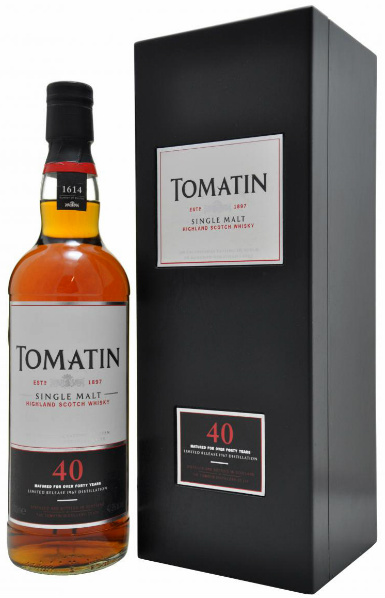
Tomatin 40yo 1967/2007 (42.9%, OB, Seven Bourbon Hogsheads, 1614 bottles)

As can be read on these pages, Tomatin rarely disappoints. There is always room on my lectern for a tropical Tomatin. Especially older Tomatins quite hit the mark with fabulous aroma’s of tropical and citrus fruits for which it is known. Tomatin has a high reputation with bourbon cask only bottlings like the 15yo that has been discontinued to be replaced with the 14yo port finish. The 25yo has been discontinued too, which also was made with Bourbon casks only. Now, here we have a 40yo Tomatin formed from seven Bourbon Hogsheads with distillate from 1967. You may have heard of The Beatles and Sgt. Pepper? Yes 1967. And this is still available. How is that possible? Is this bottling a dud of some sorts? Time to find out…

Tomatin 40yo 1967/2007 (42.9%, OB, Seven Bourbon Hogsheads, 1614 bottles)Color: Copper brown gold.

Nose: Sweet and fruity, quite typical for older Tomatins. Lots of vanilla and quite thick. Highly aromatic. Quite syrupy too. Hints of mint and black coal and even some tar and sweets. Complex with lots of development. Give it time. Almonds are coming through after a while. Great nuttiness, rarely seen in Tomatin. Fruity, dusty and dirty at times. Great.

Taste: Fruity again, but also some bitter hops, waxy bitter wood. Elegant. Sweet and brittle at the same time. Lovely waxy stewed and candied fruits towards the finish. Lovely vanilla, with memories of old wood in the back. Apricot and vanilla pudding with fresh and acidic red berry sauce on top. Hints of mint are here in the taste as well. Fabulous development built up in layers and a lovely finish to boot. At the end of the finish the expected woody bitterness (and pencil shavings with almonds) appear or stay behind when the momentarily overpowering waxy fruitiness dissipates. Sweet almond cookies are all over this Malt. The taste is less complex than the nose and shows a surprising fruity freshness and youthfulness.

Malts like this were reasonably expensive when they came out and prices have been rising ever since. However, modern malts can never be like this anymore. So why dish out 300 euro’s for a modern 12yo generic special edition when you can pay a measly 100 more and get yourself a museum-piece still readily available on the market today. This is history in a bottle. Isn’t that worth something?

Points: 89

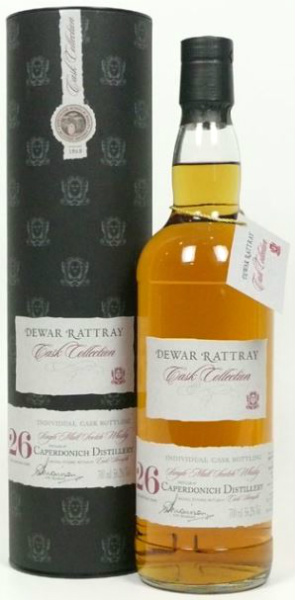
Caperdonich 26yo 1980/2007 (56.2%, Dewar Rattray, Bourbon Cask #7349, 164 bottles)

Earlier this month my Whisky club reconvened again and this time we picked Glen Grant and Glen Grant 2 as the subject of choice. Glen Grant 2 is better known as Caperdonich. This 1980 was my entry into the line-up and got a lot of thumbs up. Not the winner in the end, because what Whisky could compete with the great Glen Grant, Gordon & MacPhail bottled to celebrate the wedding of Charles and Diana (the clear winner in my opinion). Also present was a highly praised Duncan Taylor Caperdonich from 1972 and two Murray McDavid Missions from 1968 and 1969…

Caperdonich 26yo 1980/2007 (56.2%, Dewar Rattray, Bourbon Cask #7349, 164 bottles)Color: Dark gold.

Nose: Vanilla, but a very strict kind of vanilla. Lots of influence from the wood. Spicy vanilla. Buttery and creamy. Demerara sugar. This also has a nice luxurious paper like quality to it. Old warehouse full of ageing Malts. A wonderful old Malt this turns out to be. The (dried) spiciness is quite complex. Light honey and nutmeg. Have you ever treated yourself at home to a quality vanilla ice-cream and didn’t do the dishes right away? Remember the smell of the dried out ice-cream at the bottom of the bowl? It’s in this very Whisky. Nice! Dried leaves partly from forest plants and partly from dried herbs and to a lesser extent: pencil shavings.

Taste: Vanilla again, but also a hoppy character. You also try the occasional beer don’t you? Toffee and caramel. Just the right amount of sweets, combined with a very zesty, although, tiny hint of fruity acidity. Red fruits, little forest strawberries, half-dried raspberries and other red berries. Where in most cases the acidity isn’t all that well-integrated, here it works like a charm. The fruitiness continues well into the long finish where the hoppy (cannabis?) bit returns. Is there even a tiny, tiny hint of coconut? All of this is given a good and astringent backbone of oak, that is aiding the Whisky along and giving it character. It’s not overpowering, just, but definitely in there. The high strength is noticeable but the Whisky is never hot.

What a great Malt this is. Fantastic development over the time you’re trying it and what wonderful flavours this gives off. This may take water very well, but I have never been feeling the need to do that yet. Thankfully I still have quite some left in this bottle to play around with and mostly, to enjoy myself with it. A great buy. Sad this distillery is no longer producing Whisky. But you never know how modern Caperdonich would have turned out in the first place. Luckily the old Caperdonichs are often stellar, especially from Bourbon casks.

Points: 88

Irish Whiskey Week – Day 7: Connemara 15yo 1992/2007 “Single Cask” (46%, OB, Cask #K92/34 4126)

Irish CloverThis will conclude our Irish Whiskey Week, a week that was lurking in the mud and only came into fruition when it was almost too late. I already published the first Tyrconnell review here and was writing the second Tyrconnell review (The Port one) when it hit me that I could make this into a Irish Whiskey Week. Irish Whiskey deserves that. In the end Ireland only has three distilleries that are “big”, Bushmills, Midleton and Cooley. No Bushmills Whiskey was reviewed here this time, Midleton was only featured with Jamesons 18yo and the rest are all really Cooley Whiskies. Even The Wild Geese are supposed to use Whiskey made by Cooley. Maybe I should have called this a Cooley Whisky Week…
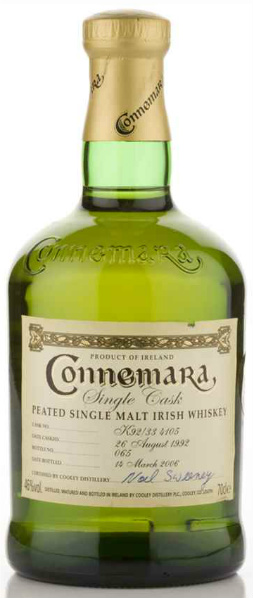
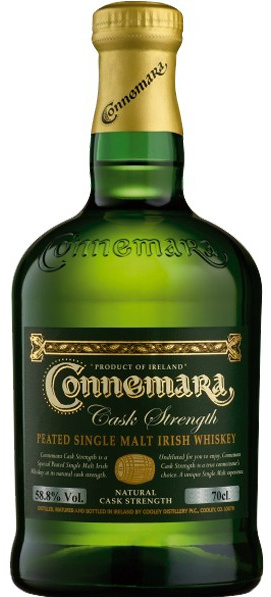
Let’s finish this week off with a hopefully nice Single Cask Connemara, or peated Cooley Whiskey if you prefer. Strange enough this and a lot (but not all) of its brothers and sister single casks were bottled at 46% ABV instead of Cask Strength. When I look around, even all these Single Cask Connemara’s are sold out, so if you happen to find one get it if you’re interested.

Connemara Single Cask (with a different cask number)

Color: Light gold

Nose: Very light peat, creamy with vanilla. I smell more smoke than peat actually. Again a very elegant peated Irish Whiskey. Clay (a fresh uncolored clay brick kids play with). Very deep, toned down wet wood. Smoked kippers. Needs some air to open up, but I really like what I smell. Behind the smoke there is also some nice sweet fruits and salty licorice and mint. Meaty.

Taste: Sweet almonds. Sugared nuts. Small hint of peat, very elegant and toned down. Warming. Great balance. Ashes and a tiny amount of wood bitterness. Definitely a very tasty whisky, a mile (not miles) away from the regular young Cask Strength version, which is a lot cleaner, but also full of aroma, with less complexity. The finish is long and goes down the throat like a syrup, slowly and warms you up nicely. It leaves you behind with salty lips. I called this more complex than the cask strength version, but in itself it is not very complex, shall we say medium complexity?

Again we have here a very good Irish Whiskey that is impossible to buy these days. Not a lot of Connemara is bottled as a single cask and I’m wondering why. It is great stuff, even when its reduced to 46% ABV. I hope more bottling will be made like this. It’s a shame it’s that scarce.

This is the end, Irish Whiskey Week is over. A final comment? I have to say that this final Connemara is very different from my beloved Redbreast 15yo, and maybe even a tad better, what lovely stuff. I was surprised at the quality of the Jameson’s 18yo and how it reminded me of the Redbreast. Another plus was the quality of the Kilbeggan 15yo blend and the quality of both Connemara’s. But the sad thing is that all the good Irish stuff is hard to come by. Kilbeggan and Connemara Single Cask are both almost impossible to come by, and that’s a shame.

Points: 88

Irish Whiskey Week – Day 6: Connemara “Cask Strength” (57.9%, OB, 2007)

Irish CloverAnd here is yet another Cooley Whiskey with another brand name. I started with The Tyrconnell Single Malt which was acquired Cooley in 1988. Tyrconnell was mothballed already in 1925. The second Cooley Whiskey was Kilbeggan, a Blended Whiskey and here is the third one:  Connemara. Connemara is the brand used by Cooley, for their peated double distilled Single Malt Whiskey. There is a fourth one and that is Greenore, a Single Grain Whiskey made from corn exclusively.

Cooley Distillery is located on the Cooley Peninsula in County Louth and it was converted in 1987 from an older potato alcohol plant into a two column still distillery by John Teeling. In 2012 Beam Inc. acquired Cooley for €71 million.However, Beam itself was taken over by Suntory Holdings in 2014 to form Beam Suntory.

Connemara Cask Strength (mine looked like this but at 57.9% ABV)Color: White wine

Nose: Lightly peated, and lightly woody. Elegant, as long as a Whisk(e)y can be called elegant. Very light and young otherwise. Soft citrus fruits, lemon sherbet. No barley or hay, but there is some lemongrass. Very clean and a little bit meaty. Dirty wood smoke, like from a fire that was not only from (wet) logs. A type of peaty Whiskey that needs a copious dinner to go with it. Nice and interesting.

Taste: Yeah, lemon sherbet again and light peat ánd smoke. Fatty and sweet and very tasty. Even though this is very high in Alcohol at 57.9% ABV, it is not extremely hot. Its creamy, with Madagascar Vanilla, not so much vanilla ice-cream, just chew on a tiny portion of the dried bean. The peat makes this Whiskey chewy and the some even trickles through into the taste. So its prickly but not hot. Excellent stuff full of upfront aroma’s.

Sure it’s young, and yes it may be overly complex. But it is well made and very tasty and dirt cheap to boot. I already had one of these before, when it was fairly new and came in a tall green glass bottle. It was more than ten years ago, and it was young and clean back then too but I still was very impressed by it. This time there seem to be more dirty food notes into the Connemara, which makes it less clean, but what remained is that I’m still impressed by this Whiskey. Definitely a contender for the Cask Strength Bang-for-your-buck award (If I would have one). I have to get me some of this again. I only hope now Jack Teeling sold Cooley the new owners continue to make this Connemara as excellent as it ever was.

Points: 86

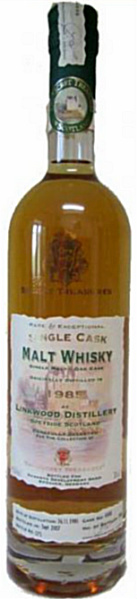
Linkwood 21yo 1985/2007 (43%, The Secret Treasures, Bourbon Cask #4548, 348 bottles)

Linkwood 21yo 1985/2007 (43%, The Secret Treasures, Bourbon Cask #4548, 348 bottles)Here we have a Linkwood bottled by a Swiss outfit bottling under the name of The Secret Treasures. Their website is quite amateurish and uninformative. Some basic information is there, but seems a bit outdated. The firm is known for some great rums, like Demarara and Guadeloupe, and apart from Whisky also bottles a Bitter (Els from herbs only found in the Eiffel region), a Gin and some fruit distillates. Their Whiskies are bottled at 43% ABV, a strength that also seems a bit outdated where single cask bottlings are concerned. Bottle looks nice though!
Color: Gold

Nose: Spicy wood, sweet with some vanilla notes. The typical smell of a Whisky coming from a Ex-Bourbon Cask, but with quite a lot of aroma. It smells big and fruity. Das pronto clay, I remember from my childhood. Nutty as well, with some flowery notes but also some candy sweetness. Mocha, tiny hint of mocha coffee. Small hint of cask toast mingled with some dry old spices. Creamy and powdery. I think you get the picture. Very balanced (after extensive breathing) and slightly salty even (dry lips). It doesn’t smell reduced, and this has hints of cannabis in the aftertaste. A big plus for this Linkwood.

Taste: Vanilla and oak. Big and slightly toasty. Small hint of cannabis (again), which is not quite unusual for this type of oak. Wax, maybe ear wax. Perfect fruity sweetness. Vanilla ice-cream with some pencil shavings and fresh almonds. Even though this is reduced to 43% it is quite hot at times, and the hotness stays around for a while. The finish itself, tastewise, is much shorter. Hints of fermentation (yeast, cow dung?) and then a bit sour. However, don’t get me wrong. This is very appetizing. Big and just nice even at this lower ABV.

Quite sweet and in part light. Nice sweet body with a hot finish that stays longer than the taste itself. To me this Whisky shows some small faults in distillation, but has way more good things to it. Initially it seems a nice Malt, with a nice smell and so forth, but the taste already shows some unbalance, nevertheless it needs some air to settle and reaches a higher balance. Nice entry, than heavy on the sweet part, and full body, but sometimes a bit hot and a medium finish at best finish. Not bad! A word of caution. This isn’t as good when freshly opened, it really needs a lot of air and patience to really shine, even this reduced Whisky, needs time.

Points: 84

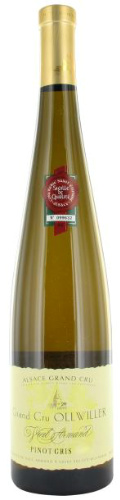
La Cave Du Vieil Armand Grand Cru Ollwiller Pinot Gris 2007

Ollwiller, which is a Grand Cru since 1983, lies in the municipality of Wuenheim (Close to the famous Grand Cru of Rangen near Thann), is named after the Château d’Ollwiller that was built in the 12th century A.D. The Ollwiller castle is the former estate of the Bishop of Strasbourg, who was behind the development of the vine in the thirteenth century A.D. The castle is now owned by the Gros family since 1825, cowinemakers and co-founders of the Cave of the Old-Armand.

The vines are situated in a dry microclimate with only 450 mm of rain per annum. The vines are sheltered from the wind by the Hartmannswillerkopf a.k.a. Old-Armand where some heavy fighting in World War I took place, which also destroyed all the vineyards. Its slopes face south-east, with maximum sunshine on an altitude between 260 and 330 m. The soil is composed of conglomerates (loosely cemented heterogeneous material) and marl, reddish sandy clay and gravel.      

La Cave Du Vieil Armand Grand Cru Ollwiller Pinot Gris 2007Color: Light gold with a slight pink touch

Nose: Full on everything, overwhelmingly aromatic. Expect nice sweetness, acidity, fruit, white grapes and also something flinty a trace of sulphur, although it isn’t in the terroir. Marl is. Yellow fruits like white peach (lighter and more elegant compared to the more “common” peach) and dried apricots and pear. Also tighter fruits like white grapes. All of this is in the background adding to the complex nose. This is so much more than just a fruity wine. Unbelievable how well the sweet and the acidity blend together, and don’t forget this is just the nose we’re talking about.

Taste: Thick and syrupy, but not very sweet. Again just like the nose, very good balance and all tastes blend well together. Hints of peach yoghurt, but also a well-defined depth of dried apricots. Fantastic stuff this is. Not as mineral as I’ve expected, but great acidity to keep it in check. Don’t get me wrong it’s not very sweet nor is it acidic, it’s just perfect, although I have to say that the taste is less complex than the nose is.

This gem will do with a lot of foods, yes, we can mention de usual suspects like salads and fish, coquilles etc. But this one is excellent on its own. Sitting back with a nicely chilled “Old Armand” is the way to enjoy it for me. This should only be sold in Magnum sized bottles. Wonderful, This is again an example, why I love Alsatian wines so much.

Points: 90

This review is dedicated to Yvonne and Joost. If you can read dutch please check out their website about Alsatian Wines.

Port Morant 15yo 1992/2007 (46%, Berry Brothers & Rudd, Islay Cask, Guyana)

This Demerara Rum from Port Morant was bottled by Berry Brothers & Rudd and somewhere in its life came in contact with a cask that once held Islay Whisky. The label doesn’t state from which Islay distillery the cask came…

BBR Port Morant 1992 Demerara RumColor: White Wine with lots of viscosity.

Nose: Very aromatic with lots of petrol and tar, paper and cardboard and you know we like this in a rum. Vanilla, caramel, Demerara sugar. Industrial at first and not very fruity, Solvents, but not the usual stuff. Small hint of mint and a good body of wood, but nowhere near the amounts of wood that can be found in aged Rums. Fantastic balance, but wait. A lot more is happening here after a while. The wood opens up and the whole becomes more floral and adds notes of dry leaves. That’s a first for me with Demerara’s. Next are some spices, cardamom, white pepper and it finishes of in great funkiness. Actually it never ends, put it away and pick it up again and you smell new things. Wonderful stuff. Although this comes from an Islay cask, meaning peat I guess, I can not detect any peat at all but there is a tiny, tiny hint of smoke. Can’t imagine they would use an unpeated Malt Whisky cask for this.

Taste: Yes there is the peat! Very up front and comes sailing in on a wave of restrained sweetness. Nice. Fits the toasted wood note that comes next. Mocha, toffee and chocolate (not the darkest kinds though), hints of cucumber, can it get any crazier than this? The wood and the peat give off a slightly disturbing kind of bitterness to this not-so-sweet Demerara. The jury is still out if it actually fits the Rum. Sometimes this note resembles an electrical fire. Still, it oozes character and proves again that Demerara’s are a force to recon with. Alas, most distilleries are closed by now, luckily most stills have survived…

It reminds me a bit of a Cadenhead Enmore, also a Demerara Rum from Guyana which will be reviewed in the future. Talking about Cadenheads, also a Scottish independent bottler, that also used some Islay casks, but from them we know they were Laphroaigs, one of the most heavily peated Islay Whiskies.

Points: 87