Rhosdhu 12yo 1996/2008 (46%, Murray McDavid, Bourbon Cask, 2.000 bottles)

Murray McDavidNext we are going to have a look at three bottlings by Murray McDavid. Murray McDavid was founded in 1996 by Mark Reynier, Simon Coughlin, and Gordon Wright, naming it after Mark’s grandparents, Harriet Murray and Jock McDavid. The motto “Clachan a Choin” translates as “the bollocks of the dog”, so yes, the logo has a dog in it. Besides being an independent bottler, maybe their biggest claim to fame was acquiring Bruichladdich Distillery in the year 2k. In 2000 the distillery was still mothballed, but Mark and his mates quickly turned it into a working distillery. Less than 12 years later in the summer of 2012, Bruichladdich was sold to Rémy Cointreau UK Limited, as well as the independent bottler Murray McDavid. Rémy Cointreau didn’t know what to do with the bottler, so less than a year later they sold it to Aceo Ltd, a supplier of casked whisky and distillery services like cask storage, bottling and labelling.

So the first of three bottlings from Murray McDavid will be a rendition of a Loch Lomond Whisky: Rhosdhu.
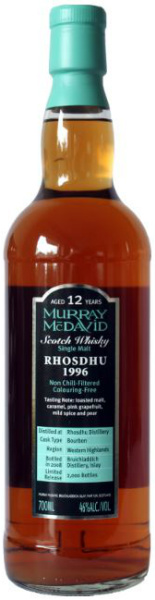
Rhosdhu 12yo 1996/2008 (46%, Murray McDavid, Bourbon Cask, 2.000 bottles)Color: Gold.

Nose: Spicy and briny. Funky, with some prickling cigarette smoke. Lots of grain, but also some traits I get from Rhum (of the Agricole kind) and Bourbon itself. Actually more like a Rye Whiskey. A dry and sweet fruitiness mostly. Definite cask toast. Vanilla and tangerine. Lots of saw dust and dare I say it (again), cardboard. It smells like an old (sweet) Single Grain, at the fraction of the cost. Dry powdery and again (citrus) fruity. Give it some air, and boy, does this need some air, and it’s even tarry sometimes.

Taste: Again quite grainy and fruity. A bit raw but therefore it needs the fruity sweetness it has. Vanilla powder and smelling like an old vanilla pod. Noticeable paper and cardboard again, but in no way is this disturbing in this one. Slightly weak in the finish, but otherwise a decent Whisky, helped by quite an active cask. Some acidity enters the fold when it’s time for the finale. The finale has great depth, with a toffee and caramel sweetness. Part of this caramel is even slightly burnt. The sweetness is just right, helped along by the leafy and spicy backbone.

I remember this when freshly opened and it didn’t do too much for me then (79 Points). This time around, with some more oxidation, this turned out nicely. This is a Whisky that needs a lot of air and really benefits from the heat of your hand. Keep it in the palm of your hand, don’t hold it by the stem. Knowing its secret, and if it was available today I would most certainly buy it. If you have it, remember how to treat it. Heat and air will do the trick.

Points: 83

Glenfarclas 29yo 1979/2008 (50.6%, OB, The Family Casks III, Plain Hogshead #2216, 171 bottles)

In 2006 Glenfarclas started with an ongoing series containing lots and lots of single cask bottlings called the Family Casks. From the beginning, almost every vintage thinkable was released in very nice looking wooden boxes including a nice booklet. After a while, some vintages were not available anymore in the warehouses, and the wooden boxes were replaced by something a lot simpler. For the time being 2014 was the last year any Family cask was released, since 2015 saw no release of a Family Cask bottling (yet). Although Glenfarclas has a name to uphold with heavily sherried malts, just like The Macallan once did, and Glendronach does today, what was nice about the Family Casks was that any type of cask was released. This 1979 expression from the third run of Family Casks is from a Plain Hogshead and was bottled on the 17th of July 2008. Plain Hogshead could mean a rebuilt cask from staves that once formed a Bourbon barrel.

Glenfarclas 29yo 1979/2008 Family Casks IIIColor: Copper

Nose: Lots of creamy vanilla and coconut, what immediately makes me think about American oak. Very creamy and firm. Extremely fruity. Apricots, pears and ripe green plums. Hints of not yet ripe banana-skin and sweet ripe apples. It does have notes of a high quality Calvados. Almonds with dry powdered coffee creamer. Amazing how strong the aroma’s are, this is in no way a closed Whisky, no, no, no! Spicy, the wood kicks in a bit. Hint of latex paint. Lurking in the depth is a strange note, which is hard to describe. Old dried out cucumber with a tiny speck of acetone. You know how a cucumber smells, tone that down a few notches, and that’s whats in here too, underneath all those heavy hitting aroma’s from the highly active cask. I wonder what Bourbon it came in contact with. Wonderful old Whisky, with a perfect and endless nose. A true gem to smell!

Taste: Again extremely creamy and full of aroma. The power. Wonderful. Perfect stuff. Quite sweet upon entry. Creamy sweet and following quickly is a much drier woody sensation with just the right amount of bitterness. More wood than the nose had, but when the wood takes a step aside, wonderful aroma’s of ginger with jam made with red and black forest fruits present themselves, but not a lot of the fruit I mentioned in the nose. Amazing! Small hints of cask toast, slightly burned bread and candied cinnamon. Cloves and Christmas cake. Of course not a perfect Whisky, that does not exist, but this does come close. Wow! Warming and luckily a super long finish.

Here we have another super fruity old Bourbon Hogshead Whisky from the seventies. Reminding us of the stellar Caperdonichs from 1972, to name but one. I can only hope I’ll find me one of these sometimes.

Points: 93

Caroni 1998/2008 (40%, Bristol Classic Rum, Trinidad & Tobago)

The Caroni distillery was founded in 1923 and after 80 years of operation, sadly was closed in 2003. In 2001 the Trinidad government sold its 49% share in Rum Distillers Limited to Angostura for $35 million who were forced to close the distillery two years later, because that same Trinidad Government closed their sugar refinery on the island. In the first half of the 20th century Trinidad had some 50 odd distilleries, but today only one survives, Angostura. The demise of the Trinidadian sugar cane industry means that molasses today are mainly imported from Guyana. Because of its heavy style, Caroni was a favourite with the British Navy and yours truly.

Bristol Spirits Caroni 1998-2008Color: Gold.

Nose: Dry, funky and slightly industrial. Like a crossing between Rhum Agricole and Jamaican Rum, with added motor oil and petrol. High ester heavy style Rum. Different kinds of wood and waxy. Lots and lots of aroma. Hints of oranges and mushrooms. Hot butter. Orange skins at first, but with good nosing a deeper (and sweeter) kind of sugared oranges appear. I’m a big fan of Rums like these. Later on, some oak and earwax. Burnt wood and smoke. Bonfire and a fishy note. Grilled fish (hanging over the bonfire). When my mind wanders off, I will associate the hint of smoke and burnt wood with Islay Whisky. Nice side effect. When all the extremities wear off on the nose, the whole becomes slightly sweeter and friendlier. More salty and smoky vanilla. What a nose!

Taste: Dry oranges with some hidden sweetness underneath. Still a bit industrial, not saying that is bad, on the contrary. Nice hints of oranges again, all of it, the skins, the freshly pressed juice and the candied oranges. All quite dry and smoky, never truly sweet. The wood is trying to get some bitterness across, but that hardy is the case. The Rum itself is highly aromatic, the bitterness is pushed back, there is simply not a lot of room for it. Bitter orange skin and again a burnt note. I can’t help but feel that the orange oil you get with the juice from the skins also gives off a slight acidic note that doesn’t completely integrate with the rest of the taste. Something that also happens in the Abuelo 12yo. Only here it’s not that bad.

This is great stuff from a sadly closed distillery. Not your run of the mill easy-going overly sweet Rum, but something more daring and industrial. Maybe this Rum isn’t for everyone, but if you like the profile this was one of the best.

The 1998 Caroni reviewed here was bottled in 2008. In 2013 exactly the same rum was released, just 5 years older. That one would be nice to review sometimes. The picture on the left is from the 2013 release, but looks exactly the same as the 2008 release.

Points: 86

Benromach 2008/2014 “Organic” (43%, OB, Virgin Oak)

Not really a NASser since this is a vintage 2008 bottling. We also know this was bottled in 2014 so it is a 5yo or 6yo. Benromach doesn’t like hide its Whiskies in a shroud of mystery. Of course I love an aptly named Whisky but I was brought up with age statements so I like to (officially) know what I’m getting. Maybe all those NASsers are for a younger, more hip, generation? We’ll see. This “Organic” was distilled in 2008 and filled into virgin oak casks, just like they do with Bourbon spirit. Don’t worry, this will not turn this Whisky into a bourbon since only malted barley was used, and no corn nor rye. Why not make a rye Whisky then Benromach, wouldn’t that be something different and exiting?

Benromach Organic 2008Color: Gold

Nose: Yes woody. Sawdust, but also vanilla and warm vanilla pudding. Custard. I would say American Oak, wouldn’t you? Sugary sweet. The apparent sweetness is balanced out with some spicy oak, but not all oak is spicy, it also has a sappy oak quality to it. Sweet barley. Given some time, (when the taste becomes waxy), the nose tuns more floral. Floral with sandalwood.

Taste: Sweet at first, then vanilla and a more fruity note. Still all sugared fruits. Behind that the oak comes in again, but it’s not all wood alas, The wood also emits a cardboardy taste. Luckily that is soon exchanged with the sappy oak. That sappy oak turn a bit waxy and that in turn becomes a bitter edge into the finish. The bitterness also has some staying power. The finish is rather austere, so its quite different from the sweet start. The florality and waxiness of the nose, becomes also evident in the aftertaste.

For a Whisky this age and only new wood was used, this has already picked up a lot of color (as do Bourbons). Nosing and tasting this Whisky it really is what you may have expected. A Whisky that is defined by the use of new wood. Otherwise quite sweet and obviously not very complex, but more than expected.

Points: 82

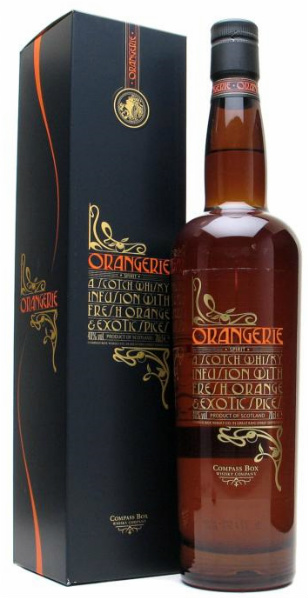
Compass Box “Orangerie” (40%, OB, 2008)

Oranges and Whisky, where have I heard that before? Ah yes the new Amrut. This Orangerie isn’t Whisky, but it isn’t a liqueur either, as it doesn’t have the required additional sugar. Orangerie is made with soft and sweet Malt and Grain Whiskies, infused with (a lot of) Navalino orange peel and Indonesian Cassia bark, a kind of cinnamon and Cloves from Sri Lanka. It almost sounds like the desert from the menu of a very posh restaurant. The Navalino oranges are hand zested at the Compass Box HQ. So when coming in to the office they never know what John has in store for the people at Compass Box.

Compass Box OrangerieColor: Vibrant gold, thick and syrupy.

Nose: Oranges and dark chocolate. Orange skins yes, but not a lot of orange juice. Still there is some juice in here to be found, it has some hints of orange pulp. Hints of vanilla and lots of cloves. The bark used seems to be the glue that holds it together. Smelling it more vigorously, yes there is some Whisky underneath. It smells like something you’d combine with dark chocolate. Give some time, this has also a floral part, but also another dimension of the fruit emerges. Very strange but in the distance it has some characteristics of Gewürztraminer. Not a lot, but some if it is in here.

Taste: Not sweet at all. It’s Whisky all right, orange skin and spices. That’s it. No sweetness. Tiny hint og bitterness, enough to give it character, but too little to overpower. Try it again and forget the statement that this is a liqueur, because it isn’t. Not enough sweetness. It’s all aroma. Take another sip. Just like the nose, it has a lot to do with dark chocolate. On the palate it’s in the spirit already, but this has to be combined with dark chocolate.

Special stuff, and a niche by itself. It claims to be a Whisky, it’s not. It has additions, so it’s not a Whisky anymore. It claims to be a liqueur, but it’s not. Not enough sugar. No bad thing, this will save your teeth. Nope, it’s something else. It’s a quality mixture. Not something for every moment though. You won’t empty it quickly. Once in a while, you just want to take a sip of this and pair it with nice dark chocolate…

Points: 72

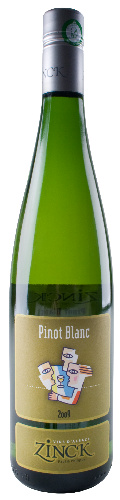
Paul & Philippe Zinck Pinot Blanc 2008

Exactly a year ago, I reviewed the 2009 vintage of this Pinot Blanc. Comparing notes it will be quite interesting to compare both. Just like last year, the end of may had its sunny days and this time around we are going crazy over asparagus (the white ones) at home. First time around we had Asparagus with the Zenato Pinot Grigio 2013, this time we’ll take a classic one from Alsatia. Quite an oldie actually since these wines aren’t made for keeping around for a longer time, but I never had a problem with White Wines from Alsatia.

Zinck Pinot BlancColor: White wine with a slight green tint.
Nose: Fresh and citrussy. Slight hint of melon (but without the sweetness). Creamy calcium and flinty. Hints of white peach. Smells quite citrussy and acidic. This may very well be quite a sour example, but we’ll see. Even though this is supposed to be quite a simple Wine, there is a lot going on in the nose.

Taste: Yes, quite acidic. Roter vitamin C. Is it too high in its acids, well no, not even for me. I usually don’t like over acidic Wines, but this one is do-able. After the acidity leaves the mouth, a more syrupy feel gets a chance to present itself. IS a bit the depth of syrup, but this time without the sweetness. Hard to explain. Although probably not present, but you never know in a difficult year; it seems to ave some wood. Toward the finish it calms down a bit, getting less about the acidity, but having drunk a whole bottle yesterday the acidity was something you get used too.

2008 was a challenging year for Alsatian Wines. The 2008 vintage is known for higher acidity, and yes, that’s true for this one too. I wouldn’t drink a whole bottle of this by itself, too high in its acids, but it is a nice and simple Pinot Blanc. Together with White asparagus, excellent. This Pinot needs food. Compared to the 2009 vintage, this is better balanced but also less sweet and more acidic. My wife preferred the Zenato with Asparagus. I had fun with both, but just a little bit more fun with this Zinck. Big difference between the 2008 and the 2009 vintage though.

Points: 78

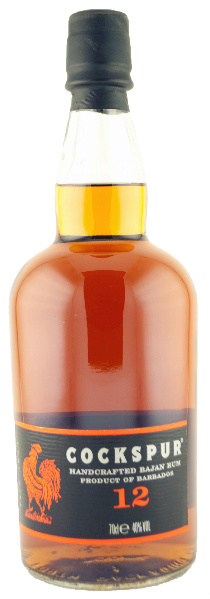
Cockspur 12 (40%, Circa 2008, Barbados)

Well, that didn’t do the trick. For some strange reason or another, I picked a white Rum for sipping purposes, when white Rums are usually made for mixing. However I heard Plantation make a very good white Rum, I just had to have a go at it. Quite nice, but as I said before, it didn’t do the trick for me, and I still need a sip of a good Rum. This time I’ll try a brown one, and my eye fell on this Cockspur 12, a handcrafted Bajan Rum. Cockspur 12 is made from both column still and pot still Rums. Careful readers have seen that the 12 in the title is not really an age statement. The 12, means that the Rum is blended as to seem to be 12 years old. In fact the Rums in this blend can be even 17 years old but also as young as 4 years old. Although this is Bajan Rum, the bottle itself comes from Scotland with an UK distributor, so I’m guessing this Rum came as bulk to europe, where it also was bottled.

Cockspur 12Color: Copper gold or dark amber.

Nose: Well this is something else. This does smells of age. Wood, but also fresh. Sweet yes, but with nice touches of fruity acidity. Nice. Elegant polished wood, reminding me of some good Bourbons. Give the glass a whirl to release some more aroma’s from it and the deep brooding slightly tarry notes allow you to smell this is actually a Rum. Fatty and sweet milk chocolate of reasonable quality. Give it some time and you still believe this to be an older kind of Bourbon. Honey and wood and warm freshly roasted nuts and peanuts.

Taste: Well definitely no Bourbon now. In part it may well have been. but the syrupy quality most definitely isn’t. Toffee, wood and caramel. Thank god for the wood in this one. It gives it character and gives the sweetness a run for its money. Not an overly sweet rum this is, but think away the wood it probably would. Vanilla and a creamy note. Pudding.

Very easily drinkable. This really lies very close to Bourbon, albeit a sweet one. So a mashbill with lots of corn. It definitely smells of an (older) Bourbon, but the taste is Rum. Still some traits of Bourbon, but definitely a Rum. Taste wise quite a simple Rum, but one with great balance and great drinkability. Personally I think this could have done with some more oomph. 43 or 46% would have been nice. Recommended.

Points: 83

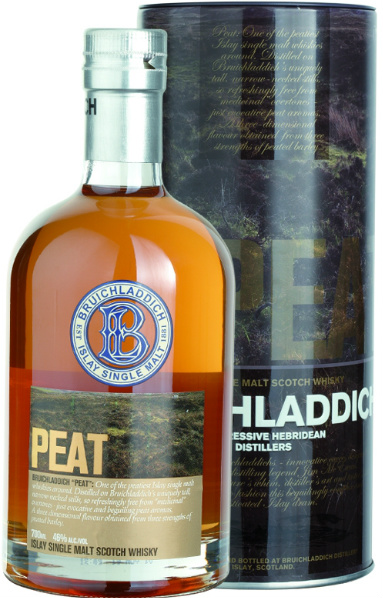
Bruichladdich “Peat” (46%, OB, Bourbon Casks, 2008)

Suddenly I had a craving. Lets try something with peat, so I picked this fairly new, but already discontinued Bruichladdich “Peat”. In everyday life, Whiskies released under the “Bruichladdich” brand name are unpeated. Bruichladdich has other brands for their peated Whiskies, like Port Charlotte and Octomore. This Bruichladdich “Peat” was peated up to a phenol level of 35 ppm, which compared to Octomore is pretty “light”. “Peat” bares no age statement, and will probably be young, but there are several other young Bruichladdichs around that are pretty good. Islay Barley (2006, 2007 come to mind)…

Bruichladdich Peat (46%, OB, Bourbon Casks, 2008)Color: Gold

Nose: Slightly peaty, with dust, elegant wood and vanilla. Very “friendly” smelling. Smoke on top. Young and likeable. Fruity. Distant pear, banana, Galia melon and other (sugared and/or dried) yellow fruits (trail mix). Fruitiness is not upfront. Slightly meaty. I suddenly have a craving for bacon! Nice.

Taste: Young, light and malty. Lots of licorice (in many guises) and some wax combined with old wood. Sugary sweet alcohol. Very toned down and laid back. Nice hints of oak and dry barley. Lots of licorice in the finish, with hints of Marmite in the finish too. Although maybe young and generic, I found it to be a nice addition to the peat-universe. Elegant and relaxed. Salty lips. I like it a lot actually. Imagine this with more complexity and sophistication, now that would be stellar!

Maybe its simple yet it is also very delicious. A nice companion to heavy hitting 10.000 ppm peat bombs. This has 35 ppm and is a very friendly Whisky, that also used to be very friendly on the olde wallet.

Points: 84

Partagás Serie D No. 5 Edición Limitada 2008

Partagas LogoReaders that like my occasional reviews of cigars will know by now that I don’t smoke inside the house. The sparsity of these cigar reviews are only caused by long stints of bad weather. It almost seems to me that the last five years, we didn’t even had one decent summer! It’s june, and here we had only a few whole days of Sunshine! You do not have to be a rocket-scientist to figure out when that happens, a cigar will be freed from its humidor. This time I chose a Partagás. Partagás usually are on the heavier side and I thought let’s start the season with a nice nicotine rush!

This is a beautiful day. Sunny not too hot and a little bit of wind. Even without the cigar I’m enjoying the silence, the rustling sound from bamboo in my garden and the sloshing sound of the water behind my house. Don’t worry, no flooding, it’s supposed to be there. So, sun, water, bamboo and hopefully an excellent smoke.

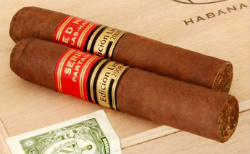
This is a  Cuban Edición Limitada 2008 version by Partagás (50 x 110mm, Petit Robusto, Box Code Unknown).Partagás Serie D No. 5 Edición Limitada 2008

This Edición Limitada from 2008 was made with Tobacco that already was aged for two years. First released in 2008 obviously it turned out to be an immediate success. Since 2011 it is added to the current series of Partagás cigars.

Color & Looks: Nice wrapper, tightly wound with small veins. Packed with a lot of tobacco and clearly well-built. Draw is good, especially for such a tightly packed thick cigar. Right from the start, this is a good smoke.

A cru: Chocolate, dusty old books with a nice creamy touch and with a slight hint of toffee.
Taste: I have just set fire to it, and already this tastes very good. Not as strong as I have come to expect from a Partagás. Very rich taste, fabulous spicy taste. I actually have smoked just 5 millimetres from this cigar, but it already is one of my favorites! How’s that for a bold statement! Soapy feel on the lips. The Tobacco was harvested in 2006 and aged for two years, after that it almost aged another 5 years in my humidor, but still the cigar shows some youth. Still, it is already very, very good, but consider the additional ageing potential!

My cigar burns a bit uneven, so I had to “correct” that a few times, but that’s no problem. Dark chocolate, woody, warming and a fabulous smelling smoke, even for the one sitting next to the smoker. The ash is almost white (another good sign). After 1/3, the cigar becomes more like a Partagás, a very good one. Spicy and full of character, woody and dry. I’m having a mild arabica coffee with this, but the cigar doesn’t overpower it. So it is full of Partagás character, but it doesn’t pack that Mr. T. punch Partagás so often have. Excellent. With water on the side the cigar tastes more sour, so I wouldn’t recommend drinking water with this cigar because it changes the fine constructed character of the cigar.

The cigar is very consistent. There is some minor development in the beginning, but after that the cigar is linear. The first ash fell of after the half way point. Taste wise the first half is the better half. The second half is drier and more woody. But the difference isn’t that great. As mentioned before, the ash of the cigar is almost white, and near the end, the cigar shows a caramel colored heart. More wood towards the end too.

Personally I find the 50 gauge a bit too much. It doesn’t look very elegant and it cramps the jaw, but that’s probably my european opinion. The cigar is quite mild altogether, no big nicotine rush. And no turning points. I enjoyed this cigar thoroughly. I smoked this as long as I could, and burned my fingers, but it is that good, all the way through. This will probably score even higher after some additional ageing.

Points: 86

Berger Kremstal DAC Riesling Spiegel 2008

Here in Holland the Asparagus season has started and nothing goes better with that, than a nice fresh white wine. This Berger Riesling was ogling at me for quite some time, since all Austrian wines have the Austrian flag on top, it is easily recognizable.

This Riesling (12.5% ABV), is wine from Weingut (Erich) Berger, Gedersdorf Austria. Gedersdorf is in the North-East part of the Kremstal (2200 – 2300 Ha.), next to the Danube River. Weingut Berger is one of 150 Winegut’s in Kremstal (and in fact Kremstal itself is not one, but three valleys). The region also has Three different terroirs. First, the vineyards west of the city of Krems are similar to those in the adjacent Wachau wine district. They are on a stony soil dating from prehistoric times. From these parts you can have a dry, minerally Riesling or Grüner Veltliner. Second on the south of the Krems Valley on the south bank of the Danube, small vintners in ancient villages make local wines in their own old-fashioned way. Third, to the east of Krems, towards Rohrendorf and Gedersdorf, there is löss in the vineyards which is noticeable in the wine, its softer and more lavish in style. The best wines from this region are called reserves.

Color: White wine.

Nose: perfect Riesling nose. Crisp and fresh. Lot’s of yellow fruits. Some grapefruit, banana, apple, apple skins. Definitely stoney and mineral. I really like these kinds of white wines from Alsace, Germany and Austria, and again a nose like this is perfect.

Taste: Quite simple, but great balance in the acidity and sweetness. Again apple come to the fore. Light body and medium finish. Especially the finish is quite mono-dimensional, showing almost nothing else than (sugared) lemon. This is a wine for big gulps, drinks great that way and it concentrates the flavours a bit. Easy going and very accessible. What’s not to like here. Quite good with asparagus, but I can imagine this is a great wine for easy drinking in the summer. Simple, but I like it.

This wine was especially good the second day around. It was quite closed when freshly opened and the taste wasn’t rounded out and actually quite dull. The second day around it got smoother and sweeter, and the fruits al be it very light come through some more. Not a complex wine, but very likeable and stunningly fresh, and it won’t break the bank!

Points: 83