Benromach Contrasts: Cara Gold Malt 11yo 2010/2022 (46%, OB, First Fill Bourbon Barrels, 20/01/22)

I almost forgot to write this review, because I though I’d already done it. Here we have the first Benromach on these pages after they revamped the look in to this slightly bulkier glass bottle, more straightforward cardboard box (easier to store) and last but not least the usage of the colour red. I was a bit hesitant at first because I really liked the copper they used in the previous package, but the red stands out, looks fresh, smart and traditional. So I do like the new look a lot now, and love having them around. If this one’s empty, I’ll probably replace it with another (red) Benromach. Most likely another one from the contrasts series, since it offers interesting takes on Malt. Here it is because of the usage of Cara Gold barley.

Most Benromachs that are on the market now are fairly young, sure there are some older bottlings like the 15yo and the 21yo, which are different yet not necessarily better. The Whisky at hand is 11yo and a nice choice for starting a flight of Whiskies or as a casual sipper. Not expensive and an honest pour. Benromach produces a heavier more meaty spirit, often slightly peated and sits well with knowledgeable anoraky aficionados, you know who you are, and since you are reading this, you’re probably one of them. This particular offering is partly made with Whisky made from Cara Gold barley as well as the normal Benromach lightly peated malt, both matured in first fill Bourbon barrels.

Color: Straw.

Nose: Sweet barley first, very appealing and very aromatic. Clean, fresh, fruity and malty with malt sugars and a nice layer of dust and paper-like aroma’s adding to the whole. Nice fresh wood tones, but nothing overpowering or off. Straightforward without any frills. Candied wood and candied yellow fruit, with hints of sweet smelling smoke, as well as some licorice. Clean and modern, although some yesteryear comes through as well. More wood (perfumed, highly aromatic) and wax with ripe yellow fruits. The label claims tropical notes, and sure enough… My perception of the fruit depends on the moment I’m smelling this. The first time around I wasn’t all too sure about the fruitiness, but the second time around, yes, here it is. I recently recovered from a nasty variant of the flu, and now that the nose is working again, I certainly pick up more on the fruit now! I’m very pleased with this Benromach. It smells very nice, accessible, balanced and its very aromatic and appealing. Well made, wonderful stuff and very affordable as well. After smelling this on many occasions over time, the fruity bit does wear off if you keep this for a while in your glass, focussing on the dusty and woody notes. Still soft and friendly though.

Taste: On entry, sweet smoke and sweet licorice. More subdued fruits. Candied Barley. You could smell it already, but it is most welcome tasting it. 46% ABV is a very nice drinking strength, definitely better, for modern Malts, than 40% or 43% ABV. Back in the day 40% ABV worked well, think of very old Gordon & MacPhail bottlings, like early Connoisseurs Choice bottlings (brown label, map label etc.) Yet Malts from this century definitely need a higher strength, higher than 43% if you ask me. Sweet, woody, spicy, somewhat bitter and slightly fruity (less so than in the nose). Tropical, well maybe. The wood has more to say here than it did on the nose. So more wood, slightly harsh even and showing some bitterness. The smoke is here as well and in the triangle between the wood, the smoke and the bitterness, it does take away a bit from the balance of the palate. A new sip with a fruity start masks the bitter bit for a moment. The finish is not very long and not a lot of it carries over into the aftertaste. But almost all you get is good (it turns out the bitterness has the longest staying power). No off notes. A very pleasant, fairly simple (it doesn’t develop a lot) and affordable dram. There is some diluted vanilla present, proving the maturation on (first fill) American oak. By the way, due to the bitter note this has, it isn’t entirely a casual sipper. Good, but I preferred the nose over the palate.

By itself a (partial) Cara Gold offering isn’t saying very much, it would be really interesting to have several Benromach bottlings, like this one, made with different barley varieties, open at the same time, to be able to compare them to each other. I checked my stash, but there isn’t another one at hand. A bere barley version would be nice, come to think of it, because bottlings like this remind me of the rebooted Springbank Local Barley series, where the Bere Barley version bottled in 2017 is my favourite. Yes I often prefer it over the 16yo and the dark 10yo. Sure the 16yo and the dark 10yo are great and definitely stellar as well, but the 11yo from 2017 is so good! Don’t be fooled by higher numbers or the colour of Whisky! Final remark, this particular Benromach worked best for me in a small tulip glass, a narrow, long stemmed Riedel for instance as opposed to a bigger glass, like the Holmegaard Perfection Spirit Glass. Both are very good, yet different. Good glassware always shows you more sides of the Whisky you’re drinking, so I do recommend to invest in good and several different pieces of glassware. It makes exploring your dram a lot more fun!

Points: 85
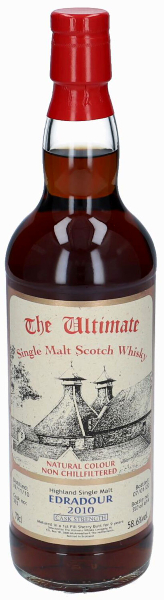
Edradour 9yo 2010/2020 (58.6%, Van Wees, The Ultimate, 1st Fill Sherry Butt #393, 614 bottles)

Seems to be some sort of a recurring theme on these pages to review a Whisky from a distillery I haven’t reviewed for a looooong time. This time around a Whisky from Edradour, which was last featured here in 2015. Edradour is a bit of a difficult Whisky. You don’t hear very often that someone calls it their favorite Whisky. Edradour is a picturesque distillery. As mentioned before, Edradour is owned by Andrew Symington, of Signatory Vintage Fame, since 2002. The distillery itself was founded by farmers in 1825 and who called it Glenforres. In 1837 the name Edradour is used for the first time. The distillery changed hands quite a few times. In a more recent history, 1982, the distillery is bought by Campbell Distilleries (Pernod Ricard), before being bought by Mr. Symington. Since Andrew is used to bottle quite a lot of Whiskies, quite a lot of Edradour Single Malts have been released since.

In 2018 Andrew commissioned a second distillery on site, So essentially Edradour isn’t just one distillery anymore. Interesting, interesting indeed. The Independent bottling at hand has been released by Van Wees of the Netherlands in their Ultimate range. Han van Wees himself has been a Whisky-icon since the sixties. The Ultimate range consists of Whiskies sourced from…yes you might have guessed it, from Signatory Vintage. The ultimate is bottled with almost always the same label, almost never in a box to keep prices reasonable. Because of this, (and the quality obviously), The Ultimate is a very popular range in The Netherlands. What did they always say about the Dutch, and the Scottish as well for that matter?…

Color: Orange brown.

Nose: Lets start by saying that initially this smells a bit metallic, a somewhat similar feel you get when tasting blood. Lots of warm, herbal and sometimes soapy wood. Dusty, dry dead leaves in the sun. Definitely somewhat vegetal, with sawdust and leather. Some raisins, honey and some indistinct red fruit aromas. Sometimes some whiffs of berry-like acidity are apparent. Coffee candy and mocha. Hints of water-based paint with some dish water, complete with some lemon-aroma. Sawdust again. Overall not really fruity, or it is masked by other stronger aromas. Some smoke and some rubber (orange air hose). Lots of fresh oak. Not really complex and not a lot of development over time, not in the bottle, nor in my glass. Overall pretty nice smelling though. For some maybe a bit to harsh, but the balance is unmistakably good.

Taste: Lots of wood, shrinking my oral cavity (a drying sensation). Right from the start, unbalanced and quite harsh. Sawdust from plywood. The nose left a way better first impression. Wood first and foremost, getting spicy and waxy with some licorice and tar next. It’s a bit punishing, but some of us like that. It’s like a Yorkie biting you in the ankles. It still hurts but you love it anyway, unless it’s not yours. Every sip starts very nice, but than the muscle comes in. A bit of a Jekyll and Hyde affair. The middle of the body fits the nose better, which is probably its true identity, yet the finish can be strangely acidic. Strange stuff this sometimes is. I’m actually amazed that for the amount of wood this shows, it isn’t bitter. The aftertaste is not the best part of the experience, yet acceptable and at times depending on the taster, it can be quite nice. Could have fooled me this is not molasses based, which obviously it isn’t.

Another difficult Edradour, which is definitely not for everybody. Works really well though right after robusto coffee. After a strong black coffee, the start is sweeter (toffee, caramel), more fruity (ripe red fruits), more tarry. Still an emphasis on wood, fresh oak, making for a very dry Whisky, somewhat peculiar after the initial sweetness.

Points: 84

The bottle was gifted to me by Auke, who thought it was just too much and is not a coffee drinker.

MacDuff 10yo 2000/2010 (56.5%, The Creative Whisky Co, The Exclusive Malts, First Fill Sherry Butt #3525)

Just like the Dailuaine from the previous review, Macduff is featured quite some times on Master Quill already, twice in 2012 and twice in 2014. That’s certainly a while back. What also isn’t new on these pages is a Whisky featured from David Stirk’s old company: The Creative Whisky Company. Earlier I tried a 20yo Bunnahabhain and much later a quite quaffable 10 yo Girvan and not so long ago a very good 14yo Highland Park, I had to work hard for to get the most out if it. The Bunnahabhain was bottled in 2011, the last two mentioned offerings bottled somewhere around 2017.

This time we’ll have a look at a 10 yo Macduff distilled in 2000, and bottled in 2010, in a different style bottle than the Girvan and Highland Park yet the same as the Bunnahabhain. The bottle I bought is an example with an over-glued back label. The original back label mentions that the Whisky was selected by our Belgian friends of The Bonding Dram (200 bottles for them) and that this Whisky shows what can happen when a great Malt Spirit is put in an excellent Sherry cask. The rest of the cask was bottled probably at the same time, with some of them (or the rest of them) with the over-glued label. The label also learns us that the bird on the label is a Eurasian Jay (Vlaamse Gaai, a bird common to Belgium). See the bottle on the right here. The over-glued label that’s on the bottle I have, mentions non of this all, not even what kind of bird is on its label, yet it does mention that Macduff produces a strong Spirit used in major Blends. From my label we can also find out that the Sherry Butt is a First Fill, hardly a surprise looking at the colour of this Whisky. David would never tamper with his Whisky, so the colour does say something in this case. The label promised that the Whisky will have rich stewed fruits, raisins and plums and sweet syrupy-flavours. Knowing The Bonding Dram (a very knowledgeable bunch) as well as David (an even more knowledgeable man), I’m sure I will be in for a treat with this one! (I know I am, I’ve had this one several times before…).

Color: dark orange, almost brown.

Nose: Soft and sometimes a bit harsh at the same time. Soft fruits with vanilla and some harsh fresh oak. Harsh might be a slightly too big of a word to describe what I am smelling here. Smells very tasty and red fruity. Dusty and chilly fruits still in the cold shop. Cold cooked vegetables, cold dishwater, Rhum Agricole (closest to J.M from Martinique). In a way also a bit floral, like a nice floral perfume in a fine detergent. Well kept in check, so not a problem (I know, it may sound horrible, but believe me it isn’t). It’s not soapy. Sometimes even hints of honey, pine, horseradish and cola. Well masked wood spice. Sometimes animalesk and sometimes farmy. How’s that for complexity. What a wonderful combination. The wood smells like pencil shavings and after a while more green and leafy. After this, whiffs of fresh air. Starts to smell somewhat elegant after breathing. A rich and wonderful nose. Definitely more special than a hard hitting all-overpowering Sherry monster. Quality stuff this one, with amazing complexity.

Taste: Big, sweet and sour. Tasty! Big, yet also lively and fresh. Fruity cherries, black coal and some tar (woody bitterness). Chewy (not always though, it seemed thinner when tasted late in the evening) and some late, mouthwatering, spicy and prickly bits with just enough oaky bitterness. A good kind of bitterness. Tarry and toasted oak. Unlit cigarette tobacco. Slightly minty feel. Ever so slightly soapy, masked well by dark syrupy fruit. This is a big one, but not a monster. This is, as well as the nose is, and the whole of the Whisky, very well balanced. Very nice spirit and a very nice cask did come together in this one. This is better than many 10yo Whiskies from first fill Oloroso Sherry casks that see the light of day these days. Whiskies that taste like they only are used to season the cask for use as a refill, where the refill is more important than the first fill. This one tastes fantastic. It just stays on the right side of being over the top. With some notes it hints at the past, yet in an entirely different way than the old skoolness of Dailuaine 16yo and Strathisla 25yo mentioned in the previous review.

By the way, I mentioned the knowledge of David in the intro. He has a new book out, and if you are interested in independent bottlers please check it out, since it is about… well… independent bottlers (he should know, he is one). Here is a link, but there are many others that are selling his crowdfunded book as well.

I originally planned to compare this one to the Flora and Fauna Dailuaine 16yo of the previous review, still some drops left in that one, but this wouldn’t work, both are so different and actually incomparable. The difference in ABV’s also wouldn’t help. As a whole, both Whiskies are entirely different. Yet again the Macduff is a whisky that smells really good but tasted even better. Dirt cheap when it came out, now worth looking for at an auction.

Points: 89

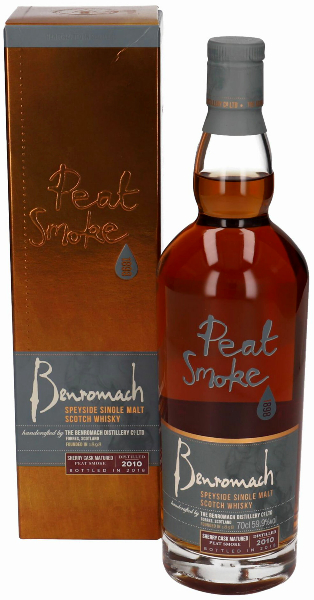
Benromach Peat Smoke 2010/2018 (59.9%, OB, Sherry Cask Matured, First Fill Sherry Hogsheads, 34ppm, 22/11/2018)

Benromach is not new to these pages. This is in fact already the eighth review of Benromach on these pages, and before looking back, I wondered which of the Benromachs I reviewed, or didn’t review, I remembered the most. The one that popped up in my mind first was the old Benromach 18yo. I liked that one a lot right from the start, even though it was only bottled @ 40% ABV. It was time anyway to do a new Benromach review before the bottle I’m about to review was empty and done with. I did already start taking tasting notes for it, before I had a look at one of Ralfy’s reviews of Mortlach. Mortlach is a big name in the circles of Whisky aficionado’s, a sort of hidden secret, due to it’s austerity, meatiness and special distilling regime. Just look at the wonderful 16yo Flora & Fauna bottling.

Back to Ralfy. In this particular review he mentioned the similarities between Mortlach, Longrow and Benromach. Well if these are somewhat similar, I’m now even more than ever, interested in Benromach again. I love Springbank and the Springbank Distillery output is harder and harder to come by these days, which recently put me on the trail of Ledaig as a tasty alternative. Mortlach has always been on the radar and isn’t all that easy to get as well. Now that Ralfy also put Benromach in the grander scheme of things (for me), isn’t it now more than fortunate that I have here this Peated (and Sherried) Benromach? Planets aligned for sure!

Color: Copper brown, Bourbon.

Nose: Young, slightly milky, cold gravy, with lots of Sherry (smells of PX), and only then, very soft peat as well as some sharpish smoke. Dry oak. Very dry and dusty smelling. The alcohol is quite upfront as well. Lots of influence from (fresh) oak. Spicy, lots of vanilla and cinnamon, fruity and Sherried, this one seems to have it all. Creamy vanilla underneath, butter and pudding with some chocolate powder. Smoke from burning newspapers mixed with toffee aroma, like standing next to someone vaping a toffee scented liquid, and burning off old newspapers at the same time. Well why not, cigarette smoke as well, from very spicy tobacco. Hints of sulphur, but in a very warming and non-offensive way, like pre-lit matches. At times more flinty and closer to fireworks than rotting eggs or a liberating fart. Hints of burning plastic. All in good measure though, and the whole is quite appetizing. Modern, yes, maybe, but everything is in its right place. Smells fine, more than fine, to me.

Taste: Big! Prickly and hot. Sherried and dry, creamy (toffee again), sweet and sooty, like solid smoke. Rubber, ashes, tar and black coal. Industrial, yes very, but also lots and lots of red fruits, cocktail cherries, licorice, black and white powder and cinnamon, with steam and more black coal following up. Pencil shavings and a wee bit of motor oil. Dare I say it’s a bit meaty, now that Mortlach was mentioned above? Sure I do. This Benromach is meaty, there you have it. This one is big in many ways, and a good one as well, steam punk! Slightly minty in the aftertaste, which otherwise comprised of more of the above. After Bladnoch another type of extreme. Reminds me of aroma’s from a while back, when Whisky was different. So this one smells more modern, but it tastes less modern. Interesting. All aroma’s are big and upfront. It’s actually not very complex, nor does it show a lot of development. This Whisky wants to show it self and given the opportunity (an open glass), everything leaps out immediately, like an Olympic 100m dash. (By the way, Smoky P. Rubber, running in Lane 8 for Scotland, was the surprising winner).

This particular bottling seems to divide opinions a bit, just like Bladnoch does, and that is probably true for every “extreme” Whisky. Since I’m already an older guy, with some experience in Whisky and still a working memory, for me, this really shows (at times) a quality similar to Whiskies from another time. However, like was the case with Bladnoch 10yo, this might not be for you. If you are a novice and prefer OB’s or more middle of the road Whiskies, you might want to skip this one. If you really know your way around Whiskies you might think my score is too high, since it lacks development and distillery character might be pushed back a wee bit too much. However, I think this is very well balanced, big, and damn tasty. Add to that some aroma’s from a time long gone, so this is definitely for me. Amazing result for a Malt less than 10 years old. For me (again), time to look into Benromach some more (again), but it yet too early to say if it somehow comparable to Mortlach and Longrow. I really need to do a lot more testing/tasting for that!

Points: 89

P.S. The empty (covered up) glass the next day: big medicinal peat, wow!

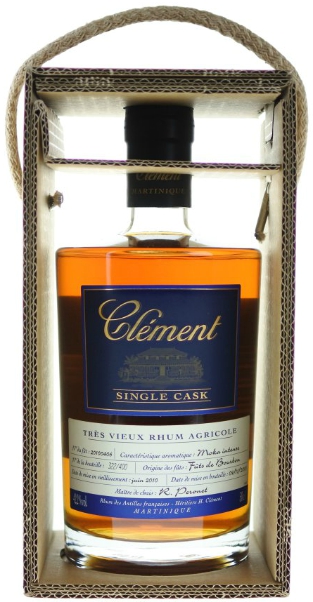
Clément 5yo 2010/2015 Très Vieux Rhum Agricole (42.2%, Bourbon Cask #20100409, Moka Intense, 412 bottles, 50 cl, Martinique)

Earlier, I reviewed both the 100% Canne Bleue (the original single cask bottling) and the first variation upon the single cask theme, called Vanille Intense. Where the first version was marketed with the emphasis on the sugar cane variety (Canne Bleue), the second, or so it seemed to me, more marketed towards the wood, since vanilla is an obvious marker of American oak, but sure, it can emerge from the Rhum as well. Here we have the next variant called Moka Intense, boasting mocha and coffee notes. I’m a big fan of coffee, so this variety is most welcome. However in the back of my mind the Vanilla Intense variety wasn’t quite as good as the original 100% Canne Bleue was, so I’m really expecting something along the lines of Vanilla Intense. Still these are single cask bottlings so it isn’t said that all 100% Canne Bleue are better than every Vanille Intense bottling. This Moka Intense is half the age of the other two. Maybe the coffee notes are more obvious in younger Rhum?

Color: Copper orange gold.

Nose: Soft, vanilla, slightly nutty. Lozenges and soft wood. Nice Agricole notes. Sometimes it’s too soft really. Hint of sugared orange skins and cherry liqueur with some dark chocolate. Black tea, infused for a short while, with lots of sugar in it. Mocha? maybe, not now at least. Coffee, nope, sorry. Very soft and un-complex. Its really simple really. Sugared. Wait a minute, I do get a sweet coffee note somewhere in the back, but actually it is a note that can be found in many other R(h)ums. So not a coffee that stands out. Mocha is softer and definitely present. I have to admit this Rhum does need some breathing. It opens up nicely and starts to show more of the above but now with better balance. Nose-wise this is now better than the Vanille Intense was. It has a very appealing quality to it, but it does need a lot of time to get there. Nice stuff nevertheless.

Taste: Not cloying, but definitely sweet. Warm going down, with bitter notes from the wood, maybe that’s why it was bottled earlier than the other two examples. Canne Bleue underneath but cloaked. Some notes of diluted sugar in warm water, without the taste being overly sweet. Just like some Whiskies go soft and smooth by caramel colouring. Personally I steer clear from distillates that are called soft and smooth. Never a good thing. On the palate this is definitely a wood driven Rhum. Even after extensive breathing that helped the nose forward, it doesn’t bring complexity to the palate. Alas. The body of the Rhum is black tea, typical Agricole notes, somewhat nutty, with a slight acidic edge. Lacking a bit in balance to be honest. Finish is not very long, and even less balanced. Is this the age? Sure it is. Aftertaste, some more typical Agricole notes and some sugar, that’s more or less it.

Since this is younger than the other two expressions I expected something more raw and bold, but au contraire, it turns out to be quite austere. I was afraid this next variant would be somehow less good than the original and it is. Although this still is not a bad Rhum, not at all, but both the Vanilla and especially this Moka Intense, seem to be out of their depths compared to the original single cask 100% Canne Bleue. This is a softer version, but with that, also more boring than the 100% Canne Bleue and even less interesting than the Vanille Intense. Now that I have reviewed all three, I’m now very interested how another batch of 100% Canne Bleue would perform. Anyone? For now, I would recommend you get the 100% Canne Bleue and forget both variants which add nothing more to the world of Clément single casks to warrant you, buying all three.

Points: 83

This one is for Lance who had to wait a long time for me to review a R(h)um again!

Evan Williams 9yo 2000/2010 (43.3%, OB, Single Barrel #379)

Sometimes Master Quill tends to repeat himself, well, not really this time. Yes, In the fall of 2015, The Master did do a review of an Evan Williams Single Barrel bottling, and now here is yet another, but not a repetition, because luckily this “new” one is from a different vintage. The former review was this spicy 2003 vintage and this time we’ll have a go at a 2000 vintage. Is older better? I understand that the mash-bill for Evan Williams Single Barrel looks something like this: 78% corn, 12% barley and 10% rye. Lots of corn and not a lot of rye in this mash-bill. The “vintage” range already saw the light of day in 1986, so with this 2000 expression, Heaven Hill already had some 15 years of experience bottling this. So without further ado: take it away Evan, ehhh Master, ehhh Quill. Nevermind. Go, just take it away…

Color: Light orange brown.

Nose: Wood, lots of fresh cut oak. Perfumy. Sweetish and even more floral. Wood driven, but with lots going for it. Balanced and likeable. Greener notes come next, some hay and grass, oak and latex wall paint. More cuttings from the garden and after a while some more fruity notes appear. Slightly acidic and fresh, only adding to the balance. Hints of toffee and caramel. Excellent nose if you ask me. One moment fresh and lively and the next, deeper and more brooding. Definitely some Rye in here, but less so than expected, even though I didn’t expect a lot. After some more breathing, honey notes come forward. Smelling this after some sipping only enhance the honey notes that were almost absent from the start. Interesting.

Taste: On first entry, a bit thin to be honest. I prefer Bourbons at high strength, because especially Bourbons release their intricate aroma’s better at a higher proof. That said, this Single barrel smells very good and is definitely interesting (there is that word again), even when you like your Scotch Whiskies. Another sip. Well, this does the trick, beyond the low proof, some nice aroma’s emerge. Wood, latex paint again. Honey, hints of toasted oak and a tiny hint of leather. Definitely not as sweet as I would imagine, even though this Bourbon saw lots of corn. A slightly bitter note comes next, oak, tree sap, wax. The finish has less length than the nose and is also less complex. medium at best (and it has paper notes). Today the bitterness has some staying power which was less so on other days, so it depends on the taster (as always), time of day and the moment trying it. Aftertaste somewhat indistinct, so it definitely suffers from reduction to 43.3% ABV. Nope, in the taste department, this turns out to be much simpler than the nose promised.

For a nice evening with some Bourbons this is the starter. Well priced, and interesting, but I prefer other, (higher strength) Bourbons more. Compared to the earlier review, this 2000 example is softer (weaker is maybe a better word this time around) and less spicy, and also is lacking the licorice and cherry notes of the 2003. The 2003 is definitely a step up from the 2000. So yes, the date makes a difference. So choose your single cask vintage Evan Williams wisely!

Points: 81

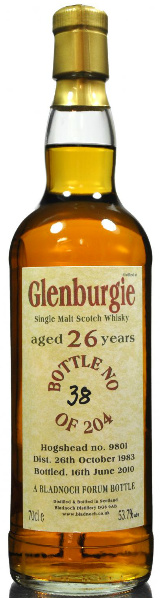
Glenburgie 26yo 1983/2010 (53.7%, Bladnoch Forum, Hogshead #9801, 204 bottles)

Kilnflat was founded, by William Paul in 1810. The distillery was closed between 1870 and 1878. When it was opened again, by Charles Hay, he also renamed the place to Glenburgie, a name are more familiar with. In 1884 Alexander Fraser & Co. takes over only to go bankrupt in 1925. Again the distillery changes hands, and this time to those of James & George Stodart Ltd. In 1927 the distillery was mothballed and stays that way untill 1936, when Hiram Walker buys the distillery. In the mean time in 1930, Hiram Walker also gained a majority of James & George Stodart Ltd.

In 1958 the distillery also gets Lomond Stills to produce another SIngle Malt you might have heard of: Glencraig. This will go on for several years but finally in 1981 the Lomond Stills are removed again and replaced by conventional stills, making Glencraig a “closed distillery” and somewhat of a collector’s item. In 1987 Hiram Walker is bought by Allied Lyons. In 2005 Chivas Brothers (Pernod Ricard) buys Allied Domecq becoming the current owner of Glenburgie.

In 2003 the distillery was demolished entirely and replaced (a bit further down the premises) by a new and highly modern distillery. Only the old customs house remains and the four stills, the boiler and the mill were brought in from the old distillery. By 2006 another pair of stills were added.

Unbelievable, this is only my first review of a Glenburgie. Amazing. That’s why I stared with this brief history “lesson”. Not so long ago I was asked about great, lesser known, Malts (from Scotland) a.k.a. personal favourites off the beaten track. Glenburgie managed to get into that top 10, that’s why I’m so amazed this is just the first review of Glenburgie, should have been much sooner. Glenburgie is a distillate that works extremely well in Sherry casks.

Glenburgie might be lesser known as a Single Malt, but that’s because a lot of it goes into the Ballantine’s Blend. In 2017, Chivas Brothers released three Single Malts under the Ballantine’s name. Huh? Yes Glenburgie 15yo (the heart), Miltonduff 15yo (the foundation) and Glentauchers 15yo (the finish), were released as such, to tell the story how they make up the Ballantine’s Blended Whisky.

Color: Almost copper gold.

Nose: Very big aroma, this leaps, or rather, attacks you, with a soothing friendly voice, from the glass. Nutty and fruity. Meaty and dusty. Some soft old oak right after that. Dusty old oak. Quite big and holding a promise of sweetness, sweet (and meaty) apples rather than the usual Sherry notes. The oak has an aroma reminiscent of tobacco and leather and hints of old Calvados. Very fragrant Glenburgie. Nice and spicy. In fact, this holds it all. Quite balanced, and very big, it’s so big it hides the complexity a bit. Try not to forget, this is a 26yo Malt. It doesn’t show a lot of evolution over time as well, it stays more or less the same when nosing it. But with a Malt so big and nice, who needs complexity and evolution?

Taste: Yes sweet on entry, but with a lot more. Cannabis and toffee. Crushed beetle again and lots of nuts. Yes, let’s throw in some caramel as well. The start is sweet and sticky. Quite hot and the 53.7% ABV printed on the label, seems a bit low. Very fruity but grassy as well, thick fat grass notes, different from fresh-cut grass or dry grass and hay, but as mentioned above, also the grass you smoke. It’s fatty grass and cannabis. Do I detect a nice tarry edge right behind the spicy oak? Hot black tea. Dries out towards the finish. What a wonderful complexity and blend of aroma’s. This bottle is now 1/3 down, and that’s a good thing, because right after opening, this was much tighter and closed. Amazing how the nose lacked complexity and evolution, and when tasting it now, it is all but complex and shows a lot of evolution as well. One has to stop oneself writing notes, since, this keeps emitting more aroma’s from my glass…

Wonderful Glenburgie, extremely drinkable, even at cask strength.

Points: 89

Glen Elgin 19yo 1991/2010 (53.9%, Signatory Vintage, Cask Strength Collection, Refill Sherry Butt #2324, 412 bottles)

After the amazement of the Glendronach I recently reviewed, here is another shock (at least for me it is). I’m actually baffled I didn’t throw in Glen Elgin earlier on these pages, since it is one of my secret loves. Every Single Malt aficionado knows which Malts are just the best, but one always has a secondary, more personal, list of Single Malts. Everybody just loves Brora, or at least knows its one of the best around. However, not a lot of people would pick f.i. Teaninch as such, which is one of my other favorites. Usually it is a Malt with a less “easy” profile that somehow manages to tickle one’s fancy. It’s personal.

Glen Elgin. I love it. Many times it just floats my boat, and this one is no different. I brought it with me as a favorite to my Whiskyclubs gathering in Hamburg, where it failed to get the applause, I thought, it deserves. Yes, again, my opinion. The same club presented me a while back with a sister cask of this one, bottled something around the 61% ABV mark, and since then, I was looking out for a bottle of my own. This cask #2324, in Hamburg, was deemed too extreme and hot by many, but after a 1990 Family Cask of Glenfarclas, the Elgin was retried and deemed more accessible and creamy. So, remember, when tasting a lot of Malts in short succession, it is important where it is placed in the line-up, what you had to eat, how tired you are, and understand how your palate works. It all depends…

Color: Copper orange.

Nose: Sherry, nutty, creamy with lots of soft vanilla notes. Soft wood fiber, but right from the start, not the usual oak aromas. I get hints of Rhum Agricole. Storm by the waterfront. Waterfront organics. Reed. Old air-dried oak (the outside of the cask). Vanilla, cream and wood, but not very fruity yet. Spicy and slightly grassy (wet). Sometimes hints of licorice (wood). Otherwise thick and syrupy with the sugar smell you get from a freshly opened sugar packet. The Rhum Agricole notes stay around, rendering the smell more dry. Add to this another layer of an acidic red berry smell (and some gravy) for complexity. Greek yoghurt? Only hints of sugared and dried yellow fruits now, but I couldn’t tell you which ones (dried papaya and pineapple come to mind).

Taste: Short attack. Big. Starts with some vanilla sweetness mixed with paper or cardboard. Wood, nuts and fruit. Fresh almonds (chewed). Creamy and dusty. Nutty and a medium wax aroma. Altogether a medium and very pleasurable body. The big start soon gets smaller. Fruity acidity on top, from red fruits. Berries. The acidity is quite unexpected and doesn’t fit the nose all that well, or the Whisky as a whole for that matter. Hints of Beer. Finishes (long) on the fruity acidity adding some light bitterness for the first time. The bitterness makes up the aftertaste as well.

I have to be honest. I don’t like it as much now as I did in the beginning. It is definitely one you have to work with, but you also need to forgive some minor flaws (like the acidic top note). I also fear this suffers a bit from oxidation. This is a bottle I often grab when I want a few cask strength Sherry expressions, so it is already 2/3 down, lots of air to play with.

Points: 85

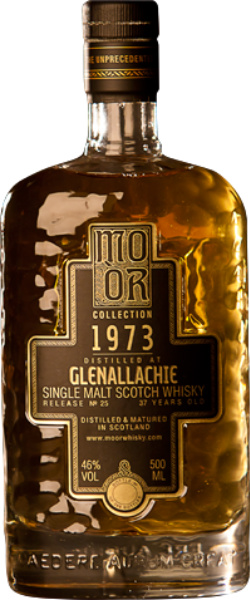
Glenallachie 37yo 1973/2010 (46%, Mo Òr, Bourbon Hogshead #6746, 266 bottles, 500 ml)

After all those fairly recent distillates, I guess its time to look at something older. This time we’ll have a look at a 37 year old expression of Glenallachie bottled by the Dutch Whisky Investors: The Whisky Talker. The Mo Òr line of Single Malt Whiskies was thought of as an investment, or as a luxury gift for business people. Sometimes you can even encounter a bottle like this in a super-duper hotel bar. Yes, Whisky is the new Swiss Watch or a premium golf-set. Glenallachie though, is one of the workhorses of Pernod Ricard, a laborer, meant for the Clan Campbell blend, not really a luxury brand isn’t it? But if you are worrying about the size of your next yacht, who cares? Ignorance is bliss. Let’s see if this old Glenallachie is any good.

Glenallachie 37yo 1973/2010 (46%, Mo Òr, Bourbon Hogshead #6746, 266 bottles, 500 ml)Color: Almost gold.

Nose: Soft and fruity. Next, some old bottle effect and great Speyside seventies fruity wax. Anoraks know this from Caperdonichs from 1972 and Tomatin’s from 1976, to name but a few. Vanilla plays a nice part in keeping the whole together. Definitely a (second) refill Hogshead. The cask wasn’t very active, but over almost 40 years, the wood did play it’s part in ageing this Whisky. Just let this breathe and it gets even better and better. Hints of old soft (sugared) mint in the background. Almond cookies with a bit of dust on them. Old wooden floor and a very distant smoky touch. The mint holds its ground and keeps accompanying the rest of the aroma’s from the nose. Great old malt, but it has its limitations. Lacks a bit of development compared to some of the (non-Sherried) greats from that era, but the whole is still fantastic and a treat to nose. Don’t get me wrong. Maybe this one shouldn’t have been reduced, although at 46% it’s still no dud.

Taste: Quite light and fruity. Sure, Speyside peach from old American wood. Hints of paper. Slightly sweet black tea with raspberry flavour. Especially here tasting it, the reduction shows itself. Making the whole a bit thin and shortening the finish. Also the cask seems to have been a bit tired. Hints of wood and sawdust and a hint of white wine. Sweaty high quality Sauvignon Blanc from the Loire. The wood shows a more soft mocha note now. Sawdust and pencil shavings. The mint from the nose stays behind in the back of my throat.

Whisky from a great time, but not the best expression from that time though. Probably a bit too tired a cask, and certainly should have not been reduced. It may have been already a bit frail and reducing it may have dulled it down. However, it still is an example of aged Speyside Whisky from the era, with this wonderful fruitiness and lighter style. I don’t know why, but this screams for some Roxy music from 1973. “The Bogus Man” sounds just right.

Points: 87

Followed this up with the 1976 Benromach. Both are 46% ABV, and both score 87 points, but the The Glenallachie is lighter, and smells more like a Whisky from another time. I would prefer the Glenallachie, especially for its nose.

Bulleit 6yo “Frontier Whiskey” (40%, OB, Circa 2010)

Bulleit is a brand owned by Diageo. Diageo is the biggest drinks company in the world and they are known for loving to make a buck. Nothing wrong with that. Making booze is not a charity you know. In 1983 sensible economics made Diageo close a lot of distilleries in Scotland, and Diageo are also the ones who closed the legendary Stitzel-Weller distillery, their only distillery in the US, correct me if I’m wrong. Why then put out a Bourbon Brand? Economics, getting a foot in the door? The regret closing Stitzel-Weller? Who cares what the reasons are. They decided to put out a brand of Bourbon and had it made by Four Roses. The mashbill contains around 28% Rye, which is right in the middle of Four Roses’ own B (35% Rye) and E (20% Rye) mashbills. And at Four Roses they know what they are doing. By the way, The old Stitzel-Weller distillery is now a centre for promoting Bulleit.

Bulleit BourbonColor: Light orange gold.

Nose: For me, Rye Whiskies always smell a bit floral, even though they (should) have a taste with a bite. I don’t know how to describe it differently. This isn’t a Rye Whiskey, but it does smell like it, sort of. High Rye mashbill it is. Dusty, floral and vegetable. Buttery with dry leather. Delayed mint. Funky stuff like crushed beetle and cold dishwater. Old honey and do I detect a wee whiff of urine in there? Well, don’t be fooled, this smells rather nice, but we already know, Four Roses know what they are doing, but i might have said that already. Powdery and dry with some charcoal. Well balanced, especially considering its age.

Taste: Smoother than the nose led me to believe. Slight dryness, but also quite sweet. Sugar water. Funky rural toffee and a bit of leather. Some toasted oak, but the focus lies more on the toast then the oak. Nevertheless, the oak is there, but it’s hardly woody at all. Creamy, but a bit too thin. I believe 40% ABV. is a bit too low. Spicy and chewy Rye. Light, but good. Medium to short finish, with a slight bitter edge towards the aftertaste. I do believe the distillate to be promising, but it is a bit killed by the low ABV.

I didn’t like it when I first opened it, but I warmed up to it now. I remember I didn’t like the pronounced florality of it, and it may have been slightly soapy when it was freshly opened. In the end Four Roses make a pretty good Whisky, even if they do it for Diageo. I would ditch the 40% ABV version and get the 45% ABV version if you have the chance, but it isn’t available in all markets.

Points: 81