Worthy Park 7yo (61.2%, Rum Nation, Limited Edition, Cask Strength, Pot Still, 3.000 bottles, 2018, L18-134, Jamaica)

This is the slightly younger, yet taller brother of Rum Nation’s 8yo Oloroso finished Worthy Park bottled at 50% ABV in 2015. Taller because it’s higher in ABV. A brother from another mother was reviewed on these pages earlier, being the Rum Nation Limited Edition Cask Strength offering from Réunion, which was very good in my book. There is also a version from Guyana. Although the name of the Distillery isn’t anywhere on the label nobody seems to be wondering if this is anything other than Worthy Park.

Color: Copper gold.

Nose: laid back leather, nice fresh oak notes and distant Jamaican funk. It is definitely not as funky as one might expect from a Jamaican Rum. Even though it’s not on the label, it is easily recognisable as a Worthy Park. Quite similar to their own bottlings like the ones reviewed earlier; the Single Estate Reserve, the Oloroso and the Quatre Vins. So wood is a main aroma, supposedly all American oak barrels, but its not big on vanilla one might expect from American oak. So wood, dust, dry earthen floor it is. Not a lot of fruit aroma’s. Sometimes a whiff of mint or peppermint passes through. Slightly meaty. Very well made and overall a classic nose. Close your eyes when smelling this and you’re transported to another place (a warehouse) in another time. As said earlier, not very funky, so don’t look for overripe bananas in this one. There is a whiff of Sinaspril going one, remember that? (Headache medicine for children, with a artificial orange aroma). The whole is simple and maybe not complex, nor funky, yet this still is a very nice nose to smell, or smell to nose. Tiny hints of wax and almonds with hints of acidic and slightly sweet red fruits coming in late into the fold. After sipping, these red fruits turn into hard raspberry candy and soft black licorice candy as well. Remember keeping either of them in your mouth for as long as you could? Maybe simple, (is it?), yet quite amazing.

Taste: On entry, slightly sweeter than expected, although here as well the wood is quite dominant. Slightly prickly wood, as if it was carbonated. The sweet onset is quickly swept under the mat by dry oak. Somewhat floral, vegetal and fragrant. When was the last time you had a taste of a perfume ‘eh? And if so, I hope this is what it tasted like. Initially also fruitier than the nose, but also…yes you guessed it, swept under the mat by oak. Warming going down. No surprise there at this ABV. An acidic oaky edge has the most staying power and dominates the taste. After a while the wax and almonds from the nose present themselves well into the realm where normally the funky Jamaican style would be. Also a slightly burnt as well as a slightly plastic-y note pops up. Next an unexpected farmy note and some unlit tobacco and soft licorice. Taste wise there seems to be enough happening right now. We already know I guess, but this dominance of this nice wood, could only come forth with full term tropical ageing. If I would have tasted this “blind” and on a “bad” day I probably wouldn’t have said this is Jamaican. On a “good” day, it does show a lot of Worthy Park traits and when you get to the point of understanding this has been fully matured in the tropics than yes, Jamaican it is. Cardboard in the aftertaste, wow, and a tiny hint of the burnt plastic-y note. Not really a problem though.

Jamaicans like overproof Rum, and this should be no exception, although I wonder how a Jamaican would perceive this lack of funk. Still I like this one very much. It is well balanced and shows a lot of well integrated nice aromas, both on the nose as well as in the taste. Definitely recommended.

Points: 86

“An Islay Distillery” 9yo 2008/2018 (54.9%, Cadenhead’s, Small Batch, One Bourbon Barrel & One Sherry Hogshead, 330 bottles)

Let’s kick in the open door: this is a Lagavulin (supposedly). It’s not on the label, but I have been assured this is a Lagavulin. However, we still can’t be a 100% certain now can we! Lagavulin used to be, and probably still is, my highest overall scoring Distillery from Scotland. There were hardly any bad or mediocre Lagavulins around. Even the affordable standard 16yo (The White Horse version) was stellar, the newer “Port Ellen version” is still very good. When the 12yo returned as an annual special release at cask strength, again very, very good. Right about the time, lets say 2021, maybe even earlier, signaled a noticeable downfall in quality. Picking up notes of a milky almost new-make spirit. Around 2019 with the release of the 10yo, the 9yo Game of Thrones and the 11yo Offerman Edition came the time that made me look elsewhere. Especially because of the 10yo (and the 8yo, come to think of it). The 9yo and the 11yo were still decent. So, in come the independents! Thank god for them! An indispensable lot. Diageo protects the Lagavulin name with their life, so that’s why companies like Cadenhead’s can’t put the Lagavulin name on the label without being shot, or worse. Hence “An Islay Distillery”. Some others at least think of a resounding name from which the public might or might not guess that it is a Lagavulin, or leave some subtle hits on the front and/or back label. I am buying some of these anonymous Lagavulins just to see if all these younger Lagavulins have the same milky taste I dislike like the 10yo and the latest batches of the 12yo’s have. I hope not. Here is an example from Cadenhead’s, but there will be more in due course.

Color: Orange Gold.

Nose: As expected, peaty and smoky, not even all that heavy, even though there is a lot to take in right from the start. This leaps out of my glass. Some nice wood, although quite masked. Menthos with floral vanilla and quite dusty. Perfumy kippers, salty and smoky. More notes of fresh oak. Vegetal wood, mature and appetizing, so not sappy wood which is more fresh. Hints of textile, melting plastic and wet dog. Silent yet deep dark peat. Smouldering (I love that word, have to use it more often if applicable) embers. Funky organics. There is quite a lot going on, that’s for sure. Something does remind me of matches a bit, but to be honest, I don’t really pick up on any sulfur right now. It has a fresh feel to it as well, like walking in the woods on a sunny and somewhat cool day. A temperature just right for walking. Next a sweeter, yet organic note, like smelling the left over stones from eating really ripe cherries (just before they go soft). Combine this with some light beech wood smoke and maybe a more smoked meat note. This smells entirely different from an officially released Lagavulin 9yo (The Game of Thrones version). The nose keeps developing in my glass showing more traits of red and black ripe fruits and vanilla in a thin coat of peat. Maybe I do pick up on some sulfur now (a fart?). Still in a minute quantity then. Some Iodine, now that’s detectable. Sea-spray? Nevermind. Bonfire on a good day. Big nose, slightly creamy and sweet if you let it breathe. I do like it quite a bit and can’t stop smelling it for the layers it shows.

Taste: Yes, holy moly. Big peat but also big on the warm plastic I also found in the nose. Just enough wood, nice. Also sweeter than expected. Licorice. Definitely not a weak Whisky like the 10yo, much bigger and bolder. The 10yo seems unfinished, milky, nothing of that here. This is 9 years old and it is done and dusted, it’s ready. Very big for a Lagavulin. Iodine and warming. You can think of Lagavulin as an elegant Islay Whisky in general, but mainly because of the 16yo, this 9yo is not, it is raw and unpolished, a different take if you will. You can even see some resemblance to the boldness of the 16yo, at least the 16yo from a while back. The Whisky is so big that the plastic bit, that usually is a big off note, killing even, only plays its part in the whole. It is in no way overpowering nor bad. Still the whole is in your face! Sweet, (burnt) wood, toast, peat, licorice and warm plastic. That’s it, those are the main markers. Luckily more is happening in this one, especially on the nose. You can pick up on the American oak, I’m pretty sure both casks are American oak. The sherry bit is similar to the Sherry you get from a good batch of the 16yo. Cow dung in the finish. Aftertaste is sweet, peaty and plastic-y and very low on bitterness, lets say soft tannins.

Well, this is a small batch and in this case combining two casks, a Bourbon barrel and a Sherry hogshead, together normally good for some 600 bottles at cask strength. However only 330 bottles have been bottled, why is that? Not all has been bottled, leaky casks? I wonder…

I took this bottle to Nico, who seemed to really dislike it, claiming it was too much and over the top. For him this was just wrong, so be warned, this might not be for everyone. Of the two, I am definitely the one who likes extremes more. I’m still actually amazed he feels this strongly about this Whisky he claims is wrong, since I do really like it. I wonder, is my palate shot? Luckily no, since most other Whiskies we both still tend to score pretty similarly, but sometimes something like this happens. For instance, I really like the Palo Cortado Springbank 10yo, I also got pretty enthusiastic about it on a Springbank society tasting (in public). Nico did not (he didn’t even order it). In the end, I feel this 9yo is some sort of a 16yo on steroids and after that even some more steroids. It also seems to have some off notes the 16yo doesn’t have, which in this case works for me just fine, but it might not work for you, as it did for Nico. It is definitely a big Whisky, I’ll say that, very big.

Points: 87

Ailsa Bay Release 1.2 Sweet Smoke (48.9%, OB, 022 PPPM, 019 SPPM, 2018)

“No other Malt is made with this much science” as said by Stuart Watts, Distillery Manager. Well that’s a first. Single Malt Whisky used to surround itself with romanticism, traditionality and age statements, with people making the stuff, oozing with skills passed on from generation to generation to generation. In the old days it was all handy work and thus skill, so if a Whisky was good it was really excellent, yet also some absolute misses occurred. Today, all seems to be computer controlled and science driven. Good for overall quality, and obviously not forgetting about getting the highest yield from the barley as possible. It also seems that the highs of yesteryear aren’t really there anymore, and I haven’t really encountered any terrible misses as well. So, we now live in a different, flattened out, era, or so it seems.

Ailsa Bay opened with 8 stills in 2007 and is owned by William Grant & Sons, a company we better know as the owners of Glenfiddich and The Balvenie, as well as Kininvie and the Girvan grain distillery. Already in 2013 the distillery was expanded greatly with another 8 stills, all 16 stills similar to that of The Balvenie. The condensers of one pair of stills are made of stainless steel, to make it possible to have more sulfur in the spirit. Usually distillers want to avoid sulfur, that’s why copper is used. Just like Kininvie before it, Ailsa Bay was needed to provide Single Malt Whisky for the many Blends of William Grant & Sons, since the output of Glenfiddich and especially The Balvenie is more and more used for Single Malt alone. Hence commissioning stills in the style of The Balvenie. In 2016 the original Ailsa Bay was released as a Single Malt (021 PPPM and 011 SPPM) and the one we are about to review was the second release from 2018 and that’s more or less it, nothing more has been released as Ailsa Bay. Sure William Grant & Sons also released Ailsa Bay Whisky as Aerstone in 2018 (a land cask version and a sea cask version), dirt cheap and bottled at 40%. Not particularly in a hurry to buy those though, and there are also a few independents that have some Ailsa Bay, often tea-spooned, hence some fantasy names as Ardmillan, Dalrymple and Drumblade. Maybe not entirely fantasy, probably names of hill, water sources etc. etc.

Color: Light Gold.

Nose: Sweet, funky, perfumy, vegetal peat. Wood fire in winter. Cozy and appetizing peat combined with an acidic (almost fruity) note. Quite some smoke as well. Tiny hint of lemon dishwater liquid. This is a good and rather modern smelling peat smell due to the combination of peat with wood fire. Very clean and of medium sharpness, due to the smoky bit. For me peat is usually a more rounded out and earthy smell, and smoke is usually a bit sharper. Nice fresh oak and sandalwood smell come next, as well as a more fire-like a garden bonfire. More vegetal and on the nose definitely more about peat and smoke than it is sweet. If you smell this one carefully, there is also a floral bit (and in my mind also a salty bit), yet not like fresh flowers, more like flowers in peat, if this was possible obviously, without them rotting away to be a part of peat. This is the first Ailsa Bay I’ve had, but based on the nose alone, I’m impressed. It feels like A.I. managed to produce this Whisky, a feeling based on the “science” statement on the label. After a while the peat is still here, softer and more earthy, and the slight sharpness of the smoke dissipated to leave room for a more, sweeter apple compote-like smell as well as some dry, salty and smoked meat. Hints of plastic anyone? Yes even though peaty, this is an elegant and well made Whisky, at least the nose is great, lets have a taste to confirm my suspicion.

Taste: It starts sweet and chewy, but the sweetness, combined right out of the gate with peat, and definitely also with some smoke and acidic fruit. Not apples though as on the nose. Chewy at first (toffee and caramel, check), yet also turning a bit thin. Warming going down. Sappy woody bitterness, wood and smoke. However the perception of this bitterness depends on the moment, and the taster. The second time around, tasting this for this review, I wasn’t picking up as much bitterness as I did the first time. Alas we people are faulty, subjective. I expected the sweetness to be more fruit-like, but it resembled sugar diluted in warm water more. That one wasn’t all that complex as well, but it did show great balance. Hints of mint. Some diluted citrussy and pear-like aromas emerge, hindered a bit by these bitter notes on the side of my tongue. From the wood maybe, but more likely from the peat. F.i. Laphroaig is underneath the peat actually quite a sweet Whisky, but I don’t feel this Ailsa Bay is all that sweet underneath, so 019 SPPM is probably a low number for sweetness. 022 PPPM seems about right for peat, although the whole feel is more peaty than that 022. Peat is definitely what this Whisky is all about. Finally, the taste of this Ailsa Bay is somewhat simpler than the nose, yet I still had a lot of fun with this one. A welcome addition to my lectern. This one most definitely gets a recommendation from me.

So, altogether, this is a true peated Whisky, and a nice one at that to boot. I wonder how this will turn out with some more age to it, when the peat is more sophisticated, leaving more room for the 019-sweetness. Since nothing happened since 2018 I guess William Grant & Sons aren’t really into Ailsa Bay as a Single Malt anymore, probably focusing more on their main brands Glenfiddich and The Balvenie. A shame really, since this is a very nice peated Single Malt as well. I hope there will be a release 1.3 someday, with maybe even more SPPM and maybe slightly less PPPM. The 48.9% ABV works well for me.

Next day, the empty glass feels fatty and slippery (glycerol?), and smells even more peaty than the nose. Still clean and very appetizing though.

Points: 85

Amrut Naarangi (50%, OB, Batch No. 05, August 2018)

This is a very a-typical Amrut, no I’ll correct myself, this is a very a-typical Whisky! Amrut claims this is another first of its kind, (which are the others?), and yes sir indeed is this a first one of its kind, I’ll say. This is a Single Malt Whisky finished in an orange Sherry cask. No they didn’t paint the cask orange, they didn’t, didn’t they? No, Amrut got them some Oloroso Sherry (from Spain, nonetheless) and infused the Sherry with fresh orange peels for over two years. Two whole years of infusion! After this, the cask was filled with some great three year old Amrut Whisky and they let that mature further for another three years or so, resulting in multiple batches of Naarangi (orange in Hindi).

After the reviews of some experimental special releases of Ardbeg concocted by Mad Professor Bill Lumsden, I guess Bill finally met his match, because I guess even Bill didn’t come up with an experiment as bold as this! I’m not entirely sure if this is entirely legal by SWA standards though, so maybe Bill wasn’t allowed to do such a thing and passed the idea on to Amrut? Or more likely, Amrut have even madder professors (12 Monkeys-style, too crazy even to get hired by SPECTRE). I hope for the latter! Bring it on! The bottle I’m about to review is now half full and was opened quite a while back. I remember that it oozed with orange so much when freshly opened, even so much so, that I left it alone for quite a while. I wasn’t really fond of it.

Color: Copper gold, yes, let’s just say orange gold!

Nose: Hints of orange (in the deep, yet definitely present). Smells like orange flavoured dark chocolate. Creamy, spicy wood, and very nice smelling actually. Orange liqueur bonbon, with a vodka-like alcoholic aroma, all of this kept in check and well balanced. Big ‘n bold. Dusty, like a dusty old door mat. Sometimes even slightly meaty. Vanilla cream, more soft wood notes and the nose becomes quite vegetal by now. My imagination makes green vanilla out of this. I wonder how those pods smell before turning brown. Hints of a soft licorice tarry note and more dust and some pencil shavings (especially after sipping, so the oral cavity does its work amplifying certain notes). Next come some notes of Sinaspril (orange flavoured paracetamol for children). So there are real orange-oil notes as well as artificial orange notes in this, both coming from the natural source I guess. The orange bit in the nose dissipates first from my glass, letting other aroma’s come forward. Through all this, yes, the orange notes are more than present, although not (anymore) in an overpowering way. I’m quite amazed actually, that it became more toned down, considering my experiences with a freshly opened bottle.

Taste: Wood with a chewy sweetness. Spicy and a bit prickly. Bit of cayenne pepper and again some licorice. Ashes from toasted oak. Vanilla-orange-wood fusion. Slightly more acidic than expected from the nose alone, kept in check by some honey/sugar sweetness. Initially a thin texture, where I expected it to be more oily or fatty (but this sorts itself out later in the process). The thin feel is a bit of a let down, as if the Whisky isn’t fully up to transporting all the aromas. Definitely not cloying. Surprisingly well balanced though. The wood gives off a more bitter note now, but that’s not bad. It doesn’t say so on the label, but sometimes I do find some peat in this, although I’m sure this isn’t a peated Whisky. Slightly soapy mouthfeel now. In the taste all is more upfront and less complex than the nose is. The body, and the especially the aftertaste, becomes quite creamy and very friendly to drink, with obviously hints of orange-skin oil. Very drinkable now (half full bottle that was open for quite a bit). The nose and the taste have great balance to them (again, because of the half full bottle that was open for quite a bit), and I feel this is because of the way the orange and the wood behave themselves in this expression, they work well together.

After opening this for the first time, I disliked it, I thought the orange was over the top and overpowering. Just too much. I couldn’t get past the orange, but as a flawed human I am, and I hate to break it to you, so are you, (unless you have green skin and read this from another galaxy, then you are perfect and all that we humans ever wanted is peace!) I also expected something like this, the overpowering aroma’s of orange, and maybe therefore I already disliked it before opening? You wonder why I bought it then? Well, it is an Amrut after all, isn’t it? I have yet to taste a bad or mediocre Whisky from them. I tasted a lot of Amruts by now, and they were all good or better than good. But at first the Orangey-idea was a bit to bold, even for me, and I do like extremes in Whisky!

If any Whisky in the world, or the universe if you are green, needed breathing to get the most out of it, than this is the one, boy did this one improve over time. I have to say, this Naarangi was a bit of an experience. Disliked it at first, gave it a lot of time to gather itself, and when it did, it came up trumps. I really thought this would be a negative review, and surprised myself sitting down with it and analysing it. I like it (now). The down side is that this Whisky needs a lot of time to get there, to show its strengths, so not really recommended if your collection of open bottles is rather small, because it still is a niche Whisky.

Points: 85

This review is dedicated to Surrinder Kumar, a truly wonderful, passionate and patient man, who I may have slightly offended in London last year, with my initial thoughts about Naarangi, calling it borderline illegal. I’m sooooory (from Ted 2).

Longrow 10yo 2007/2018 (56%, OB, Fresh Sauternes Hogshead, for The Nectar, Belgium, 258 bottles, 18/437)

Nico got a mention in the previous review of the Springbank 12yo Port. So this Nico dude once made me aware that he really, really likes a particular Longrow 10yo Sauternes. So here we are again, going to have a look at yet another Whisky from the stills at the Springbank distillery that has matured in an ex Wine cask. Sauternes is a sweet White Wine from Bordeaux, France. Do I really need to mention this is French? Isn’t Bordeaux already famous enough? Well, just in case you didn’t know.

Although Longrow is also famous enough, as is its distilling regime. Just in case you don’t know, I am still going to tell you that Longrow is peated Whisky from the Springbank distillery that has been distilled just two times, where Springbank is 2.5 times distilled. Half the spirit is distilled 2 times and the other half 3 times, so the Gandalf’s at Springbank call it a 2.5 distilled spirit, sounds like wizardry to me. Add to that some more peat than they use for “Springbank” and you have Longrow: the heavily peated expression, 50 – 55 ppm (parts per million) phenol content of the malted barley after kilning.

Color: Copper Brown.

Nose: Fantastic fruity and sweaty peat, really bold and amazing. Could Sauternes also be one of the best wine casks for Whisky? What a classic, big and utterly wonderful nose. Sweetish and fruity. Clay, dust, white pepper and some more earthy and peaty aroma’s. Rotting leaves lying in the garden. All the aroma’s here are perfectly integrated with the peat. It almost smells chewy as well. Where fruit aroma’s usually give off a summery feel, here it seems to be the opposite. Yes it is fruity, but in a dark and broody way. Nice soft and velvety peat leaps out. As I said, fruity, but in this dark and broody way. Its fruity yes, yet also very much industrial in its feel. This is an amazing smelling Whisky. After a while a smoky note pops up. The whole is dry and fruity at the same time. I think this might very well be very special stuff. I already like it a lot. The next day the empty glass still has some big aroma’s to it. Lots of peat and smoke and some hints of plastics and a fatty aroma, for that industrial feel.

Taste: Fruity, nutty at first and than some wood, with a nice spine tingling, spicy bitterness. Black coal and iodine. Chewy peat and the smoke itself is more upfront here. Big and bold again. Seems like the Wine underlines the peat somewhat more in this expression than in other Longrows. In comes toffee, so it has some sweetness to it, with lots of carbon and peat inside. Tasting this Whisky, I’m really missing some of the funkiness the nose showed. The taste is drier and less chewy. Fruit toffee. Nutty. Semi-sweet ripe red fruits, mixed in with a healthy dose of peat (and nuts). The taste of burning off garden waste. Even though there is enough fruit here, the whole is still quite dry. Towards the aftertaste this bitter note slightly coated my tongue and shows quite some staying-power. This bitterness is actually hindering a score into the 90’s. Sometimes a bitter note can work wonders, this is just not one of those cases. Nevertheless a very nice and special Longrow for sure.

Wishing you all a very good and healthy 2024!

Points: 89

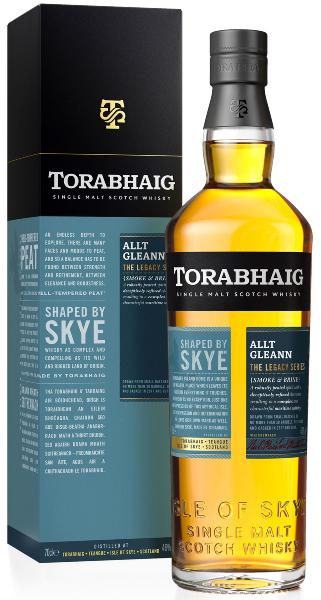
Torabhaig Allt Gleann (46%, OB, The Legacy Series, First Fill Bourbon & Refill Bourbon Barrels, Batch 001, 2021)

Not too long ago when thinking about Whisky, Skye was Talisker, and Talisker was Skye. Not any more, since a second Distillery came about on the island. Production at Torabhaig started in January 2017 and this particular bottling contains Whisky from the opening year as well as from 2018. The back label is a treasure trove for info: Barleys used for this bottling are Concerto and Laureate. Yeasts used are Pinnacle MG+ and Safspirit M-1. For me a first. I have never seen the yeast being mentioned, nor do I possess any knowledge about yeast strains that are used today. So useful info I’m sure, just not right now. The in-grain phenol content was 77 ppm, off the still, it was around 60 ppm, with a residual peating level of around 17 ppm, so this is then a heavily peated Malt. The Whisky underwent no chill filtration, nor was it coloured. Before the Allt Gleann came the 2017 vintage in the Legacy series, which was also bottled @ 46% ABV. The difference between the two probably the usage of 2018 spirit in the Allt Gleann, and by now there is also a second release of Allt Gleann called Batch 002.

Color: Pale White Wine

Nose: Modern, soft with slightly sweet peat. Very clean, including a breath of fresh air, maybe even slightly Menthos-like minty. Salty smoke (this makes my lips go dry, only by smelling it), tobacco, dust and soft wood (not virgin, yet slightly creamy and vanilla-like). Quite mature actually for such a young Whisky. Nice spicy and green notes. Slightly perfumy. Nicely peated, yet not over the top. Black tea with a slight leather note as well. Distant fruitiness and the smell of baking cookies, an ashtray and cold roasted pork. This is much better smelling than I thought it would be, well made stuff. The smell gets somewhat softer and more malty (and sweeter) after extensive breathing. If this tastes anything like it smells, we have a winner on our hands. Even the Lagavulin 12yo, I recently reviewed, showed more hints towards new make than this. Quite amazing. I only hope the reduction to 46% ABV didn’t harm it in any way.

Taste: Aiii, right from the beginning rather thin. Tastes oily and fatty, but doesn’t have the matching texture. Nice soft peat, wood and some liquid smoke and yes, quite sweet and fruity. Yellow fruits with lots of unforeseen licorice notes. Thin it is yet balanced and tasty. Quite strange and unexpected since the nose is quite big and aromatic. Elements of crushed beetle and maybe some lemonade or cola mixed in with the smoke and the peat. Less salty than the nose predicted. No new make in the taste as well. Not entirely Islay in its approach, but not far from it either. Good stuff, I hope for a bright future for Torabhaig.

I think this is already amazing stuff for a Whisky of three to four years old and definitely better than I though it would be. The quality is there, even at this reduced ABV. I’d like to try a similar product of Torabhaig at cask strength, that should be nice!.

Points: 86

Thanks go out to Auke for his sample.

Paul John 6yo 2011/2018 (56.6%, Cadenhead, Bourbon Hogshead & Bourbon Barrel, 564 bottles)

Since the last review was of an Amrut Indian Whisky finished in a cask that held peated Whisky, why not review another Indian Whisky I have on my lectern that came into contact with peat. Here we have a Cadenhead’s bottling of a Whisky that originally came from three casks that previously held peated Whisky and two casks that held unpeated Whisky. Since Indian Whisky, due to the local climate, suffers from a lot of evaporation, all this Whisky was vatted together and then transferred to only one hogshead and one barrel. My guess would be 5 years of maturation in India and one year in Scotland. Both casks were dumped together and then bottled. The label doesn’t say anything about a marrying period before bottling, there probably was, we only don’t know how long that was.

Color: Copper gold.

Nose: Slightly peaty and quite fruity (especially in the beginning). Sharp fresh air with a hint of horseradish, which is quite common for a Paul John. Some leather, wood (pencil shavings, yes) and sweet licorice. Bonfire and smoke. Somewhat creamy, nutty and green as well. Vegetal. Cold chimney and it seems a bit salty. Salty custard. Dry vanilla powder and molten ice-cream. Smells tasty and compared to the Blackadder Amrut, a bit more modern (distant hint of warm plastic) and less, definitely less complex, not a lot of evolution as well, but there is some. It reaches a certain point, and stays there. The aforementioned Amrut was putting out layer after layer, but needed a lot of time to do so. This Paul John shows its colours right away. It’s not a very big Malt but the experience I have with it now, when analysing, is the same as when casually nipping it, which is a good thing. Well, again quite a good balance. I have nothing to complain about in this department for the last few reviews, good! Yes. this is again a very nice nose. A wonderful Malt to smell. The two unpeated casks did bring the peat down a little bit, without adding to much of the nutty and waxy pencil shavings note, most unpeated Paul John’s have in abundance. Sometimes exactly this can be overwhelming, which is why I prefer peated Paul Johns yet there are examples of good unpeated expressions as well. No off notes whatsoever. Good stuff.

Taste: Nutty and peaty. Sugared fruits (pineapple) without being too sweet. Some bitter oak and hops, both with staying power on my tongue. Still, very nice on entry. Different than expected considering the nose. Here the pencil shavings have more to say than it had in the nose. Where on entry it was pleasant, now that the body starts to develop inside your mouth, a lack in balance starts to be apparent, making it less pleasant. Ice-cream combined with a funky organic note as well as some burnt plastic. Where the nose was already not all too complex, the taste is even less complex and less balanced to boot. There is something not quite right when balancing the acidic notes with the bitterness this has on offer. Nice almond-like finish though and also quite warming, but it also has a quite short aftertaste, with a bit of bitterness, cinnamon, horseradish and plastic again. Definitely not for novices, I would say. Drink this in big gulps, and nip it often to counter the somewhat short finish. Thus, definitely one for a more experienced drinker. The bitterness stays behind on my tongue for longer than the actual aftertaste. Drying it out a bit.

In the end, this still is a nice Paul John, with an interesting history to it, and an interesting palate, (plastic) warts and all. Alas it’s definitely not the best you can get, but nevertheless a good one. Good, but not great.

Points: 86

Réunion Cask Strength 7yo (60.5%, Rum Nation, Cask Strength, Rhum Traditionelle, 3.000 bottles, 2018, Réunion)

This is not the first Rum from Rum Nation on these pages and not even the first Rhum from Ile de la Réunion. Earlier I reviewed a Rhum from Rivière du Mât and I thought that one was nothing short of amazing, even though it was a reduced to a measly 42% ABV. Rivière du Mât isn’t even the most popular distillery from the Island, that honorary mention goes to Savanna, and then especially to the Rhum Agricoles Savanna produces. Savanna distillery was founded in 1870 in Saint Paul on the north west corner of the island and supposedly made Rhums based on molasses only. Fast forward many years. Since 1964 the distillery runs a continuous still. In 1992 the distillery moved to Bois-Rouge on the north eastern corner of the island, by today’s standard, some 50 kilometres by car. Today the distillery makes Rhum Agricoles, for which it is now mostly known, as well as Rhum Traditionelle (molasses based), some of the Rhums are of the high ester kind.

The Cask Strength series is a somewhat recent addition to the Rum Nation portfolio. The first Rum released in this series is actually this 7yo rum from Réunion, probably distilled at Savanna, and matured in ex-Cognac casks. Savanna uses a lot of ex-Cognac casks, because many of the official releases have been matured in Cognac casks as well. After this, examples from Jamaica and Guyana were also released.

Color: Orange Gold.

Nose: Fruity and creamy. Fresh (air) with toffee and caramel. Slightly funky and somewhat sweet smelling. Lightly waxed. Sweet White Wine, mocha, licorice and leather. Some dust on rainwater. Definitely has some traits from Rhum Agricole. The nose reminds me of J.M Agricoles. More J.M than, lets say, Rivière du Mât (Rhum Traditionelle). Initially some sweet citrus bathroom cleaner, soft chlorine and ozone from a pool or jacuzzi. These aroma’s are short lived, and are gone soon, never to return again (unless you pour yourself another one). Black tea with lemon. Hints of cookie dough, moist brown sugar, wood and sweet mint candy. Malty and biscuity, and thus some very soft oak. A whiff of fresh air, yet also spicy, a mix of many dried kitchen spices, yet also some cinnamon and hints of toasted oak (soft). Some unripe banana and also the brown bits of a banana skin and some aroma’s of overripe, almost rotting yellow fruits. Don’t worry, the Rhum still smells quite nice and is nicely balanced as well. Rum Nation also bottles quite a lot of Cask Strength Savanna’s, and I have one here to compare it with. Based on the smell of both, it is safe to assume this 7yo is a Savanna as well, nevertheless, one can be never entirely sure (please read on). By the way, the day after, the empty glass smells just wonderful. Very fruity and with hints of the fireplace at Christmas, or a nice bonfire. Love it!

Taste: Big and still sweet, although the back label mentions this is “for connoisseurs that don’t like excessive sweetness“, it is sweet but not excessively so. This sweetness is balanced out with quite some spicy wood, and toasted wood as well. Distant pine anyone? Quite hot going down. Brown sugar and candied cinnamon mixed with cola notes for freshness or zest. Very tasty. Well balanced stuff of high quality. Now for an interesting remark. Where the smell is all Savanna, there are some notes in the taste that do remind me a bit of Rivière du Mât (also from the Island of Réunion). An industrial, fatty, motor oil aroma. Crushed almonds with some woody bitterness mixed with brown sugar. I’m still convinced this is a Savanna, the smell is there and since Rum Nation has many other Savanna’s in their portfolio it is simply highly likely, but as said above, one can never be sure. Even though this is bottled @ 60.5% ABV, it isn’t hot all the time, like many other high strength R(h)ums. Licorice and Cognac, (really?), in the finish, as well as some wood. The aftertaste shows even some more wood accompanied by its bitterness. The Casks used must have been quite active or caught a lot of sunshine.

I say, high quality, big and very tasty. Lance mentions in his review: “It’s very much like the new wave of Jamaican rums now making such big waves – Hampden and Worthy Park in particular, because this presses many of the same buttons“. This is my sentiment exactly. It presses the same buttons without even being really close to those in smell nor taste. Its big and estery and bottling this @ 60.5% ABV helps the Rhum come across big time. Since this has been bottled in Rum Nation’s Cask Strength series, only mentioning it is a 7yo hailing from Réunion, thus calling it an entry level Rhum, (yeah right), this therefore also damn affordable. Heartily recommended and definitely not for novices to R(h)um. If you are just that, you should by it all the same, but do not open it just yet.

Points: 87

Kilchoman 5yo 2012/2018 (50%, OB, Sauternes Cask Finish, 10.000 bottles)

In the previous review, I wrote that the way to go with Kilchoman, (for me at least), are the red labelled ones. Nice single cask bottlings, with quite some ooomph, like this Belgian and German one. Often still young, but already finished. Not a sign of extreme youth or new make spirit in sight. Bourbon casks work well with the Kilchoman spirit and all the other varieties, are definitely not too bad either. Time maybe for a green labelled one. I just can’t claim the red ones are the best, without even considering Kilchoman’s other colours now can I? A while back Nico and I did a bottle share of this Sauternes cask finish. This, in itself is odd, since both Nico and I do have a fondness for bottlings that came in contact with Sauternes. I guess Nico wasn’t too sure about Kilchoman back then, and I’ll have to ask him how he feels about Kilchoman right now. Sauternes, by the way, is a sweet White Wine from Bordeaux (France). You may have heard of Château d’Yquem?

Color: Light gold.

Nose: Soft, creamy and dusty. Cookie dough. Sweet smelling, perfumy and fruity (white peach in sweet yoghurt comes to mind). Fruity acidity, yet not only citrus. Apples with a hint of exhaust gasses from a small, yet efficient, petrol car. Dusty with cold motor oil. Spicy as well, dry kitchen herbs, cinnamon and some white pepper. Old cardboard box, bad breath and cold dishwater. Nice soft wood and some mint. The typical Kilchoman bonfire smoke note is here again, but toned down a little. Overall quite elegant, although some of the off-putting notes, I just wrote down, seem to indicate differently. Nevertheless, elegant it is. Let’s say Islay style elegant, with Kilts and muddy wellies. The whole Whisky seems slightly toned down, compared to the Bourbon single cask bottlings (the red ones, remember) I reviewed earlier. Slightly less sparkly. Light vanilla notes combined with mocha flavoured whipped cream, mixed in with pencil shavings and a wee bit of menthol. Dry garden waste lying in the sun in autumn. This nose keeps giving and giving and evolves, it’s just not as powerful as the German Single Cask. This is again a quality Malt from Kilchoman, more complex than a Bourbon cask alone, and this one is also softer. Hint of sweet mint now. It shows a different side of Kilchoman. Very appetizing and very good again. It seems a bit more harmonious than a single cask Bourbon expression, and as said, it gained some complexity with the Sauternes finish. However, in all the aromas presented, it is impossible to find any true Sauternes notes. I no way I can smell a sweet White Wine in this Whisky. All the elements that went into making this Whisky do work perfectly, so it seems. Very good Kilchoman again.

Taste: Paper and ashes. Wax and sugar syrup. Dry tall grass and hay foremost. Borderline Grappa. Creamy and sweet candied yellow fruits. Less strong than the single cask expressions. Clearly reduced. A very appealing sweetness, aromatically close to a sweet apple. Fresh air after some rain. Ashes, black and white powder (licorice), hints of spicy wood and some (sweet) bitterness. Warming going down. Little bit of molten plastic in the finish. I know, this sounds terrible, but rest assured, it isn’t. This is a very drinkable expression, due to the balance and probably the reduction to 50% ABV. The aftertaste does pick up some more on the medium bitterness. The nose was definitely more complex than the taste. This, in all fairness, tastes simpler than expected. All is good and tasty, yet not as complex as the nose promised, (and the buzz in the anorak-y part of the Whisky world). I believe the recently tasted German Single Cask expression may have even tasted more complex. This is more of an instant gratification Malt (and the reduced ABV helps with this).

This offers a (slightly) different take on Kilchoman. It’s good and definitely softer than the Single Cask expressions I reviewed earlier. Sauternes, well, if I tried this blind I might not have picked up upon the White Wine finish, although there are some hints in the depth of the taste, some sort of brooding sweetness, if that makes any sense to you. For some, this offers a more likeable Kilchoman, personally I still like both earlier reviewed red labelled ones better. Can’t wait to open another Kilchoman though, to have some more Kilchoman’s under my belt for comparison and a better view of the Whisky that is Kilchoman. Impressive Whisky, especially considering the age of the reviewed stuff.

Points: 86

Tomatin “Water” (46%, OB, Five Virtues #5, Sherry Butts & Second Fill Bourbon Barrels, 6.000 bottles, 2018)

Alas, we’ve come to the last of the five virtues. The four previous editions were all good, for me personally, especially “Metal” was very nice, but I love well aged seemingly simple ex-Bourbon casked Whiskies. All four are definitely interesting and different from one another. No duds between them. So now the time has come to put the series to bed with “Water”. Water is made with distillate from the winter of 2005, which doesn’t make things any clearer, since the year starts and ends in winter… Half of the Whisky was matured in second fill Bourbon Barrels and the other half in Sherry Butts. Although in some communications, Tomatin does mention Sherry Hogsheads as well (just not on the packaging). If memory serves me correctly, I really liked this one as well in London, and after the very nice Metal I have high hopes for this Water as well.

Color: Copper gold, like a Bourbon, definitely not the colour of water.

Nose: Spicy wood right upfront, with sweet smelling red fruits, hints of tar, an old warehouse with a stone floor, and toasted oak. Notes of wood and fresh air. Nutty, dusty and somewhat sharp and spicy. A take on modern Sherry casks, somewhat similar to the Sherry notes, (not the peat notes), of Benromach Peat Smoke 2010 I reviewed just recently. Old warehouse with old paper and pepper with hints of a more (smelly) organic note. Wet earth and a wee bit of virgin oak. Again a quiet and balanced expression from Tomatin with lavas and gravy and some more indistinct organics. Leafy with hints of old dried out leather and a garden bonfire. Nice (dried) kitchen herbs. The Sherry makes this smell “chewy”. More whiffs of paper are flying by. A Whisky for a sunny day.

Taste: Sweet and syrupy. Fruity. Jam-like. Red fruits. Thick. The Whisky sticks to my glass. This thick, fruity, (half) sweetness, somewhat masks the big note of wood this has as well, including the also masked bitterness. Paper again. Slightly tarry, as if tarry toffee was used for this one. Well balanced as expected. Raisins and ever so slightly soapy and definitely a bit smoky, must be the toasted oak. Vanilla and pudding are here as well, so these second fill barrels still worked their expected magic too, even though the Sherry bit turned out stronger in the mix. I noticed it in Metal, but Water is also a (designed or constructed) Malt which shows what its got, right from the start, lacking a bit in complexity and evolution. This is a minor gripe however, since the balance is there and it is a delicious (red) fruit-driven Whisky with enough back-bone to it. This is not a Sherry monster, but it still is all about the Sherry in this one. Classy stuff.

This is a great companion to Metal. Both are very good and quite different from one-another, but somehow fit together. Both are fruity, but with the Bourbon casks alone that were used for Metal, that shows us an entirely different yet classic Tomatin tropical fruitiness, whereas this Water edition shows us more the Sherry-linked red fruits, in this case, the thick jam-like red fruits. Amazing contrast. At first I thought, well lets review these last two samples I have, so I can open something else, but both are so nice I’m now wondering if I shouldn’t be opening both full bottles at once, after finishing off Earth. With the Metal-edition I was wondering how it would compare to the 15yo American oak. Here with Water I’m wondering how it would compare to the 18yo Oloroso version. Both the 15yo and the 18yo are from the standard range and widely available. “Wood”, “Fire” and “Earth” are all Whiskies which are good, but you have to work them a bit, all three aren’t really for careless sipping, or you’ll miss out on the best bits they have on offer. Metal and Water are good right from the start, more like instant gratification Malts, and in my opinion the best of the bunch.

Points: 88