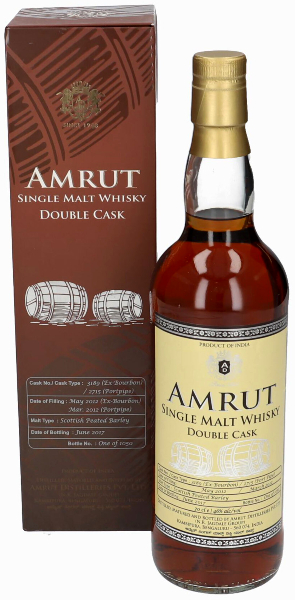
Amrut Double Cask 5yo 2012/2017 (46%, OB, Bourbon Cask #3189, Port Pipe #2716, Scottish Peated Barley, 1050 bottles)

Amrut Double Cask. In this case, Amrut just married two different casks together and reduced them to 46% ABV. In 2010 the first Double cask was released, marrying two Bourbon casks together, ehhhh, where is the fun in that? Later in 2016 and 2017 two more batches (both in two expressions) were released that seem to be a lot more exciting: batch 2, marrying Bourbon with PX (using unpeated Indian barley) and batch 3, marrying Bourbon with Port (using peated Scottish barley, most likely of the Aberdeen kind.), so I expect both later batches to differ quite a bit. I’m quite sad actually, because Double Cask seems to be a concept with many possible permutations, and I thought there would be a lot more batches than only these three. For completists here are the three batches/five expressions of Amrut Double Cask:

  • Batch 1 (2010-02-27): 2002-07-25 (Bourbon #2273) / 2003-02-27 (Bourbon #2874),
    The original Double Cask (7yo), 306 bottles
  • Batch 2 (2016, August): 2009, June (Bourbon #3451) / 2010, May (PX #3802),
    Unpeated Indian Barley (6yo), ??? bottles
  • Batch 2 (2016, August): 2009, June (Bourbon #3452) / 2010, May (PX #3803),
    Unpeated Indian Barley (6yo), 800 bottles
  • Batch 3 (2017, June): 2012, May (Bourbon #3189) / 2012, March (Port Pipe #2716),
    Scottish Peated Barley (5yo), 1050 bottles
  • Batch 3 (2017, June): 2012, May (Bourbon #3190) / 2012, March (Port Pipe #2717),
    Scottish Peated Barley (5yo), 900 bottles
Color: Dark orange brown.

Nose: Starts with peat and iodine. Very big and definitely bold. Animalesk, the acidic note of crushed beetle (don’t ask) and miscellaneous organics. Cola. Maybe too early to say, but I don’t think reduction to 46% ABV hurt this Whisky at all. Clean and tight. Port yes, but very much playing second fiddle behind the peat, adding a dimension and not really upfront or overpowering. Otherwise, as said, very fresh and tight. Definitely a winter type of affair. Because of the lack of Indian Six-row barley, this Amrut really misses its exoticness. If this was done with Indian barley, it would be highly unlikely this Whisky would come across as a winter-Whisky. So in that respect quite an unusual affair (for an Indian Whisky). I guess the other version, the 2016 one, that has been done with PX and unpeated Indian barley will be entirely different, probably back into the exotic realm. Next up some fatty clay and smoke. Scottish autumn at the bank of a river (with clay). Chocolate powder (Droste or Dutch Windmill) and warm plastic. Mocha and the tiniest hint of vanilla. Yeah, but all in all, this is yet another great smelling Amrut. As often with Whiskies that came into contact with Port casks, the nose is somewhat less complex. After the peat subsides a bit over time in my glass, the Port is able to show the fruitiness it is able to give to this Whisky. Good stuff. After a day or two, the empty glass smells of a lot of peat and a wee bit of polyester. I have smelled that before, but not in an Indian Whisky.

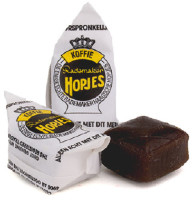
Taste: Starts thin. Where the nose was thick, bold and big, this thin texture comes a bit as a surprise, making me wonder how the unreduced Whisky would have been. Starts with berry like fruits, ripe red fruit and a lot of almonds. Nice. Its like eating unsalted roasted almonds with sweet dried cranberries. The almonds also have a lot of staying-power, and linger for a long time in my mouth. With the fruit comes also a nice sweetness. Just like the nose, not very complex. Cola here again. The cola, the fruits and the almonds put together, remind me of Cherry Coke. Needless to say this tastes highly drinkable. Haagsche Hopjes, a Dutch hard coffee candy. Well isn’t this turning into a treat? Very nice. With a taste like this, who needs complexity? In the end, this one is on the palate still a wee bit too thin. Could have done with slightly more points on the ABV-scale, 50% seems about right, but this is just a minor gripe. I haven’t tasted this at 50%, so I really don’t know if it would have been better. The finish and the aftertaste retain quite a lot of fruity sweetness. To be hones it could have done with slightly less of it. Highly drinkable every time, but not one keep pouring one after the other. If your glass is empty refill it with another Amrut. I’ll finish this like I started, really sad there aren’t any more Amrut Double-casks around. Please Amrut do some more, surprise us. I’ll even forgive you if you keep them at 46% ABV, for continuity purposes.
Well, well, well, Scottish Peated Barley. For me the strength of an Indian Whisky lies in the specialness, the “exoticness” of Indian six row barley, setting it apart from other Whiskies and carving more than only a niche for itself. A type of Whisky I really do like myself, if I may say so. There are already a lot of Amruts and Paul Johns on these pages, and also Indri is knocking at the Indian Whisky door with quite the drum-roll. Up ’till now I tried three expressions of Indri, and all are winners in my book. With this Amrut Double Cask however, don’t expect an Indian Whisky because the whole comes closer to a Scottish peated Whisky than any Indian Whisky. So in fact, what we have here is a Whisky with a bit of an identity crisis, and from now on, don’t underestimate the power and the character of Indian six-row barley.

Points: 86

Amrut Naarangi (50%, OB, Batch No. 05, August 2018)

This is a very a-typical Amrut, no I’ll correct myself, this is a very a-typical Whisky! Amrut claims this is another first of its kind, (which are the others?), and yes sir indeed is this a first one of its kind, I’ll say. This is a Single Malt Whisky finished in an orange Sherry cask. No they didn’t paint the cask orange, they didn’t, didn’t they? No, Amrut got them some Oloroso Sherry (from Spain, nonetheless) and infused the Sherry with fresh orange peels for over two years. Two whole years of infusion! After this, the cask was filled with some great three year old Amrut Whisky and they let that mature further for another three years or so, resulting in multiple batches of Naarangi (orange in Hindi).

After the reviews of some experimental special releases of Ardbeg concocted by Mad Professor Bill Lumsden, I guess Bill finally met his match, because I guess even Bill didn’t come up with an experiment as bold as this! I’m not entirely sure if this is entirely legal by SWA standards though, so maybe Bill wasn’t allowed to do such a thing and passed the idea on to Amrut? Or more likely, Amrut have even madder professors (12 Monkeys-style, too crazy even to get hired by SPECTRE). I hope for the latter! Bring it on! The bottle I’m about to review is now half full and was opened quite a while back. I remember that it oozed with orange so much when freshly opened, even so much so, that I left it alone for quite a while. I wasn’t really fond of it.

Color: Copper gold, yes, let’s just say orange gold!
Nose: Hints of orange (in the deep, yet definitely present). Smells like orange flavoured dark chocolate. Creamy, spicy wood, and very nice smelling actually. Orange liqueur bonbon, with a vodka-like alcoholic aroma, all of this kept in check and well balanced. Big ‘n bold. Dusty, like a dusty old door mat. Sometimes even slightly meaty. Vanilla cream, more soft wood notes and the nose becomes quite vegetal by now. My imagination makes green vanilla out of this. I wonder how those pods smell before turning brown. Hints of a soft licorice tarry note and more dust and some pencil shavings (especially after sipping, so the oral cavity does its work amplifying certain notes). Next come some notes of Sinaspril (orange flavoured paracetamol for children). So there are real orange-oil notes as well as artificial orange notes in this, both coming from the natural source I guess. The orange bit in the nose dissipates first from my glass, letting other aroma’s come forward. Through all this, yes, the orange notes are more than present, although not (anymore) in an overpowering way. I’m quite amazed actually, that it became more toned down, considering my experiences with a freshly opened bottle.

Taste: Wood with a chewy sweetness. Spicy and a bit prickly. Bit of cayenne pepper and again some licorice. Ashes from toasted oak. Vanilla-orange-wood fusion. Slightly more acidic than expected from the nose alone, kept in check by some honey/sugar sweetness. Initially a thin texture, where I expected it to be more oily or fatty (but this sorts itself out later in the process). The thin feel is a bit of a let down, as if the Whisky isn’t fully up to transporting all the aromas. Definitely not cloying. Surprisingly well balanced though. The wood gives off a more bitter note now, but that’s not bad. It doesn’t say so on the label, but sometimes I do find some peat in this, although I’m sure this isn’t a peated Whisky. Slightly soapy mouthfeel now. In the taste all is more upfront and less complex than the nose is. The body, and the especially the aftertaste, becomes quite creamy and very friendly to drink, with obviously hints of orange-skin oil. Very drinkable now (half full bottle that was open for quite a bit). The nose and the taste have great balance to them (again, because of the half full bottle that was open for quite a bit), and I feel this is because of the way the orange and the wood behave themselves in this expression, they work well together.

After opening this for the first time, I disliked it, I thought the orange was over the top and overpowering. Just too much. I couldn’t get past the orange, but as a flawed human I am, and I hate to break it to you, so are you, (unless you have green skin and read this from another galaxy, then you are perfect and all that we humans ever wanted is peace!) I also expected something like this, the overpowering aroma’s of orange, and maybe therefore I already disliked it before opening? You wonder why I bought it then? Well, it is an Amrut after all, isn’t it? I have yet to taste a bad or mediocre Whisky from them. I tasted a lot of Amruts by now, and they were all good or better than good. But at first the Orangey-idea was a bit to bold, even for me, and I do like extremes in Whisky!

If any Whisky in the world, or the universe if you are green, needed breathing to get the most out of it, than this is the one, boy did this one improve over time. I have to say, this Naarangi was a bit of an experience. Disliked it at first, gave it a lot of time to gather itself, and when it did, it came up trumps. I really thought this would be a negative review, and surprised myself sitting down with it and analysing it. I like it (now). The down side is that this Whisky needs a lot of time to get there, to show its strengths, so not really recommended if your collection of open bottles is rather small, because it still is a niche Whisky.

Points: 85

This review is dedicated to Surrinder Kumar, a truly wonderful, passionate and patient man, who I may have slightly offended in London last year, with my initial thoughts about Naarangi, calling it borderline illegal. I’m sooooory (from Ted 2).

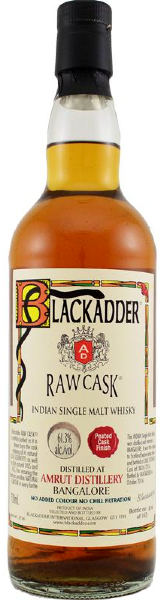
Amrut (61.3%, Blackadder, Raw Cask, Peated Cask Finish, BA26/2016, 165 bottles, 2016)

This isn’t the first Amrut on these pages, (it’s the ninth), nor is it the first Blackadder (it’s the fifth). Looking at Blackadder, this Amrut finds itself in good company with a 26yo Port Ellen, a 28yo Royal Lochnagar, a 28yo Lochside and a 40yo Glenfarclas. All scoring 88 or 91 points. I don’t think this Amrut is as old as these other ones. After 26 years an Amrut cask would probably be empty, all evaporated in the hot and humid local climate. So, this is not the first Amrut on these pages, but it most certainly is the first one bottled by an independent bottler, and somehow this bottler felt the need to finish this Whisky in a peated cask, or did Amrut already do that themselves? Was the original cask a bit tired, the Whisky a bit bland and/or did the Whisky need something of a booster, or did it just seem to be a neat experiment, a great idea? Well there is only one way to find out, and have a go at it ourselves and see if it’s any good. By the way, if you see some black cask sediment on the bottom of your bottle, don’t bring the bottle back to your retailer, it’s supposed to be there, hence the name Raw Cask.

Color: Copper gold (with black dandruff, the bigger chunks of cask sediment are still in the bottle).

Nose: Buttery with vanilla. Creamy, pudding-like, big and bold. Citrus freshness and some nice fresh oak mixed with some fresh air, sometimes even a bit sweet smelling. After the Ledaig, yet another well balanced nose, just much less peated. Green, black tea and somewhat floral with only the tiniest hint of peat, typical Indian barley smell, you can also get from a Paul John, (reminiscent of nutty pencil shavings). Definitely no smoke, but there is a dusty and dry side to it, even though this has this sweetish and chewy cream note. Crème brûlée and some licorice. The green notes are moving into the realm of wood, tree sap with a hint of pencil shavings. Somewhat spicy, as well as spices you get from a nice (oak aged) Chardonnay. Nice whiff of eucalyptus you can smell in a sauna (I only picked up on this after sipping) and unlit Cuban cigar notes. If you put some time into it, it is actually an excellent smelling Malt. It just needs quite some time and air. A nose built around green wood and the many guises of cream. Not a very complex nose at first, but a very nice one indeed, and near perfect after half an hour or so. Works well outside. The fresher the air it gets to breathe, the bigger the reward.

Taste: Sweet, fruity, nutty and somewhat waxy and yes, peaty it is this time. Sweet, wet wood, licorice and white pepper. Cold cigarette ashes and sweet fatty smoke. Menthos and a distant hint of hard red fruit (raspberry) candy. At times quite spicy and almost hot. Still creamy, although masked. Toffee. Behind this is some acidic fruit. Not only citrus, but also some acidity from (red) berries. Some white pepper. Long finish (in the wood realm again) and a nice similar aftertaste, now with a slight bitter (and soapy) edge to it. The perception of bitterness was different from one day to the other. All in all, slightly less balanced than the nose. After a few drams, I managed to anaesthetize the roof of my mouth a bit, so this really is a 60%+ ABV Malt in the end.

Yet another example of a Whisky that needs your attention to “get” everything it has. So maybe this is, in a way, a delicate Malt. For instance, the previously reviewed Ledaig, well, that one doesn’t need your attention. That one will make sure it will get your attention, by leaping out of your glass, and coming after you(r nose). Yup, the beauty of this Amrut lies in the details and the time you are willing to give it. Just leave it in your glass, move it around a bit, take the occasional sip, and only then you will find out what it’s got. I think this is wonderful stuff, but when carelessly sipping it, I didn’t think all that much of it to be honest (and alas I drammed right through most of this bottle that way). So beware how you treat it (and thus yourself). I don’t know why this was finished in a peated cask, but it clearly worked. Kudo’s!

Points: 89

Amrut 4yo 2009/2013 (59%, OB, Single Cask, for Europe, Charred American Virgin Oak & Port Pipe #2712, Peated Barley, 357 bottles)

What again? Yes here is another tandem Malt. After last weeks Amrut here is another one. This time not a direct comparison, there was no reason for that, but I did compare both behind the scenes, to assess which one is better and for the height of the scores. I do love Amrut. Most Amruts I have tasted are at least good, and some are better than that. Lovely stuff and definitely a different and exotic take on Single Malt Whisky. Maybe the people at Amrut don’t even know how to produce a bad Whisky, or maybe they are out there, but I haven’t encountered them yet? Who knows. Amrut is most welcome to the world of Single Malt Whisky, since they do bring something new into the fold.

In 2013 a few single cask bottlings emerged, especially bottled for Europe, but there should be versions for other markets as well, even bottled in a different year. Earlier, I already reviewed a virgin oak and first fill Bourbon barrel version and a charred American virgin oak and PX Sherry butt version. All good things come in threes, so the third version they released that year is this Charred American Virgin Oak and Port Pipe. This time the barley was peated. Amruts standard is so high, that even the “simple” and affordable peated and especially the unpeated cask strength versions turned out to be very tasty, and in hindsight the charred American virgin oak and PX Sherry butt version may have been somewhat less than perfect, still it was slightly better than the peated cask strength version. The peated cask strength version is my lowest scoring Amrut on these pages, and it still was a Whisky I liked. I will probably buy it again sometimes, just to see how it fares.

Color: Orange-brown gold. Bourbon.

Nose: Initially fruity and milky. I often have this Malt right after the Kadhambam, and it definitely has this milky quality to it. Even some expressions of Paul John tasted right before or right after this one makes that evident. Don’t worry though, in the nose the milky bit mostly wears off. I’m guessing this is from the Virgin oak. Fruity and very PX-like. Nosed blind I would have guessed PX instead of Port. Dusty, deep, dark and brooding. Some underlying heavy sweetness, like warm syrup and tarred wood. Treacle. No Indian spiciness, so for me the cask overpowered the original Malt. Mind you, this wasn’t initially matured in Bourbon casks, but rather in virgin oak casks. Red fruit lemonade. Strawberry and raspberry syrup, with still this tarry and treacle note underneath. Fire place smoke, yet hardly peaty. Not peaty at all actually. Pencil shavings and crushed dry leaves from trees. A more fresher citrussy note emerges next, as well as some faint mackerel in oil aroma. Since this was matured in a hot climate, the virgin oak works differently, compared to its Scottish counterparts. No harsh, creamy or sappy wood, we can pick up from Scottish Single Malts matured (in part) in virgin oak. Maybe here the milky bit is the way the virgin oak exerts itself? Also a floral bit now. Soft and delicate rose notes combined with sharper whiffs of smoke from the fire place. This is a winter Malt, bordering on Christmas. Certainly brings you in the mood. It’s a big Malt this. The aroma’s are big and bold and never stop giving…

Taste: Tarry wood. Spicy autumn leaves. Quite sweet and prickly (smoke). Treacle and cookies. Black coal. Carbon powder, gun powder. Big, very big. Almost a bit like Rhum Agricole mixed with a heavy Demerara Rum. Steampunk locomotive. Yes Port, but again, it is also not that far away from a heavy PX cask. Well balanced. Chocolate and Brownies. Candied cherries. Licorice and smoke, but also a green note. Oak, but not like the virgin oak we know. No vanilla notes to be honest. Red fruit syrup towards the finish, warming log fires as well. Some residual bitterness, from burnt down logs of wood. Since I got this heavy Rum note, its hard to picture it without it. This has a very long finish, very warming and a perfect aftertaste of everything mentioned before. All is here and all stays with you for a long time. Very good stuff.

Here a lot of the aroma’s are quite big and overpowering, so it is near impossible to make out the Spicy Indian Spirit. So for me maybe less typical than other expressions, but nevertheless a very tasty piece of work again. The beauty lies in the details, but here the details are masked. Luckily the result is still quite nice. There were more casks bottled like this. I bought cask #2714 as well. I’m especially curious now if that one will have this milky note as well as this one. Something we’ll find out in the future…or not…

Points: 89

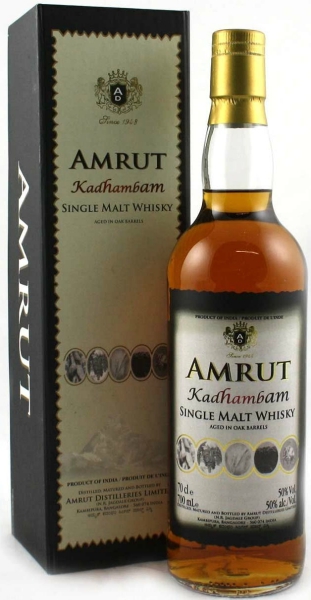
Amrut Kadhambam (50%, OB, Batch No. 6, Bourbon matured, Rum, Sherry & Brandy Finish, 2017)

If you read my reviews back about Indian Malts, you know they are quite to my liking. However, the last review I did was way back in 2019, remember those pre-Corona days? How different life was back then? So it is about time to review a few more. Today I’m having a look at another Amrut. This time Kadhambam, which is the Tamil word for mixture. Well, what they have concocted here is a mixture of different finishes. The Amrut standard Single Malt (Bourbon matured) has been further matured in casks that previously held Rum, Sherry and Brandy. Those casks are then married together to form this Single Malt.

Color: Orange gold.

Nose: Malty, somewhat less Indian spices than expected but there is still a lot here, in part masked by a lot of other aroma’s. Dusty and sweet. Toffee with nice organics. Fruity, jam-like sweetness and almonds. Vanilla and powdered orange candy. The base Bourbon matured Malt is easily discernable, so the finishes didn’t overpower the Malt. It is also definitely noticeable, that a lot of different casks were used. The Brandy bit is recognizable from my earlier experiences with Port Charlotte CC:01 which was Cognac cask matured. When I smell this with a low flow rate, let’s say 5 seconds worth of snorting (which is quite long, just try if for yourself), lots aroma’s pass by. It is soft and spicy at the same time, very fruity and appetizing. Quite late in the mix the woody bits come forward. Licorice, pencil shavings and the familiar toasted oak. Cold sweet black tea, more licorice and a slight hint of tar. This might seem like a Whisky where just a lot was thrown together, yet still it manages to reach such a high level of balance. Amazing. This turned out very nicely.

The aroma’s of this Malt are transported well. 50% ABV is a very good strength for this. 40% ABV is rather weak for a Modern Malt and 60% ABV can be quite overpowering for some. Old Malts were made differently from different barley varieties, maybe different yeast strains and the cask may have been different. Old Malt’s could be easily diluted to 40% ABV. Just look at G&M’s Longmorn from 1971. Not everything was working At 40% ABV, but a lot did, and today that percentage would be lower. I don’t think Douglas Laing bottled their Old Malt Cask Whiskies at 50% ABV by accident, although I do suspect some economics were applied as well. If you reduce Whisky (a bit), you end up with more bottles to sell. But hey, Whisky is also a business, even though for some of us it feels like a charity. So nothing wrong with the business of it all. Luckily for us aficionado’s, Douglas Laing stopped diluting at 50% ABV. A heartfelt thanks for that!

Taste: Starts sweet and fruity, but thinking back to Port Charlotte CC:01, I don’t really remember that cask giving off this kind of sweetness. Toffee, runny warm caramel, fruit syrup and jam. The perfect sweetness takes a while to move over. Indian spices, almonds and licorice, toasted oak, sweet ripe red fruits and green banana. Let it breathe, it may be a bit closed at first (especially when you’re dealing with a freshly opened bottle). Wood in the back, as well as some cold ashes from the fireplace. There is a lot happening in this Malt, so all this stuff needs a while to break free. Very well balanced with a fruity and nutty aftertaste. Tasty! The longer this stands the nuttier the taste becomes. Amazing balance. Another cracker!

The price is gradually rising over the past few years, but at today’s price-point it is still very recommended. I guess the score reflects that.

Points: 88

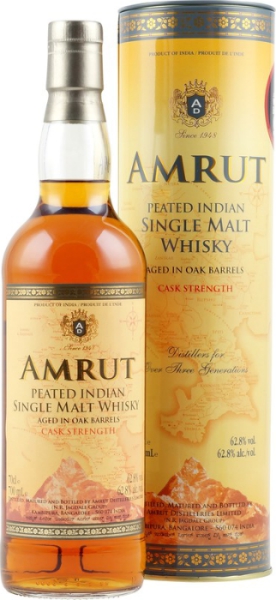
Amrut Peated Cask Strength (62.8%, OB, Batch 38, 2017)

Earlier this year, I reviewed the Amrut Unpeated Cask Strength, which turned out to be quite an excellent Whisky. I wasn’t really surprised, since I’ve come across many nice Amruts. many, but not all of them, because the one I reviewed last was nice, but also a bit unbalanced. A single cask for Europe, matured in virgin oak and finished in a PX-Sherry butt. Nevertheless, it still managed to get 84 points so it wasn’t all bad now was it? The Unpeated Cask Strength batch #87 was definitely better. It might have been a (big) batch, but it still blew the, far more costly, Single Cask out of the loch…ehhh, water. I love my peats as well, so the time has come to review The Unpeated Cask Strength’s supposedly darker brother. Again, I have high expectations for this Peated Cask Strength…

Color: Light gold.

Nose: Just opened the bottle and the soft peat welcomes you already. The first aromas already enter your nostrils even before you pour your first dram. From the glass now: youthful, lively and playful. Nice fresh and fatty peat with hints of clay (Das Pronto) and a greenish edge to it. Fresh and fruity. Wine gums and hints of sweet cherries. Sunny and summery, so definitely not a darker brother, ab-so-lutely-not. Nope, peat is not always about winter storms, twilight or salty sea spray. By the way, this Amrut has another trick up its sleeve. With this one it is possible to momentarily “forget” about the peat and smell what it would be like without the peat, as if you can turn it off. Underneath it is a very fruity, light and bright Whisky. Flip the switch and the peat comes on like a light. Next, more freshness and some smoke, way more balanced than the virgin/PX Amrut. Somewhat late hints of fragrant cedarwood and more meaty components emerge as well. Some floral notes and some Christmassy perfume. Well what a surprise it is, giving this dram some time to breathe. Dusty notes emerge next, as well as some sweeter notes. This one is more complex than its unpeated brother but also less bold, who would have thought comparing a peated version with an unpeated one.

Taste: Spicy, peaty, hot and slightly bitter at first. Slightly sweet, but not much. A lot of wood, with matching medium bitterness. Hmmm, some virgin oak again guys? Caramel with almonds and dead cigarettes in an ashtray. Much simpler than the nose, quite some bitterness as well. I get the feeling this isn’t finished yet, bottled too young, bottled too soon, but on the other hand, ageing this longer on these active casks would have extracted even more wood and bitterness, so no, not bottled too soon after all… The finish is bitter. The aftertaste is, luckily, less bitter and warming. In fact the aftertaste is better than the finish. I suspect virgin oak, too much of it. The taste is a bit of a disappointment after the nice and complex nose, and especially disappointing after the great unpeated cask strength version. It is also a bitt dissapointing aftre the virgin/PX. Its just too woody and bitter.

First of all, the color of this batch was lighter than that of its brother, so please don’t take my remark to literal. After nosing, the peated one is definitely not the darker brother, the contrary actually. Yes these two Whiskies are brothers, but the unpeated version seems to me to be more mature, maybe it’s the older brother? In this one the wood and bitterness are too much, but the peat is lovely, and much more complex than you might think, and makes this Amrut remind me a bit of a peated Paul John, something that has never happened to me before. Yes, Amrut and Paul John are both Indian, but like the place they come from, they are entirely different. Mind you, India is a big place!

Points: 82

I spoke too soon with the virgin/PX version, because now this peated cask strength version is the worst Amrut I ever had, yet still 82 points. If only the taste would match up with the wonderful nose.

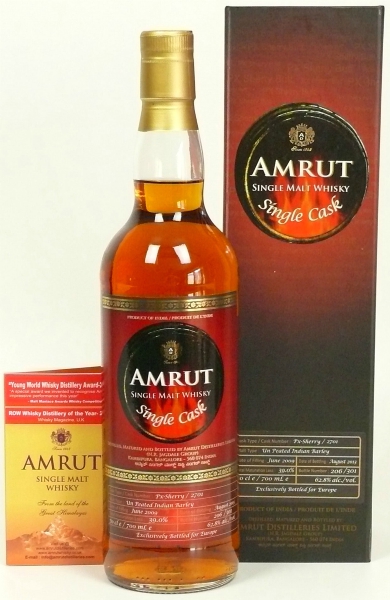
Amrut 4yo 2009/2013 (62.8%, OB, Single Cask, for Europe, Charred American Virgin Oak & PX Sherry Butt #2701, 301 bottles)

After the long overdue reviews of Port, even two of them, from Kopke and Warre and to a lesser extent, a Bourbon, Evan Williams, let’s stay away a little bit longer from Single Malt Whiskies from Scotland. Yes let’s look at some Single Malt Whisky from India! OK, so not completely different, it’s still Whisky, but don’t you worry, I plan to review some other non-Scottish stuff as well. Nevertheless, lets start with this Amrut.

In 2013, (and other years as well), some single casks were bottled for Europe, in three varieties. The Bourbon version I reviewed earlier, this Virgin Oak/PX-Sherry combination we are going to look at right now, and last but hopefully not (the) least (of the three), a peated Whisky matured in a Port pipe. I’ll open this last one soon, right after I finish the Whisky I’m about to review now, and there isn’t much left in the bottle I can tell you. Amruts never stay long on my lectern…

Color: Bright gold with a pinkish hue.

Nose: Highly aromatic. Dry, Indian, exotic (cinnamon) and winey. Lots of dusty barley notes, somewhat enhanced by funky PX. Caramel and toffee notes without the sweetness. Reminds me a bit of Port finished Whisky. Sometimes its like the smell of blood up my nose. Meaty notes as well. Fatty gravy. Soft wood now, a bit cardboard-like. Even if I wouldn’t know it, it is easily recognizable as Virgin oak. Nose-wise not the most balanced of Amruts. Like PX and the Indian Barley/Virgin Oak really don’t like to work together and don’t see each other out of the office. This Amrut needs a team-building session. Funny how up front this sensation is, because I get this instantaneously. Still dusty and drying, with hints of dry clay. Yes Wine, Port, PX. That’s it. If I’m honest, I would say that the virgin oak even overpowers the PX-finish. I’m sure this would have worked better if it started life in a nice American barrel, used before, so not virgin. Maybe then the PX finish would have worked better. I like the use of virgin oak in some Whiskies like Ardbeg Corryvreckan and Glen Garioch Virgin oak as well, but this time in my beloved Amrut, not so much. Nevertheless, still a good Whisky, just not so good as Amrut can be.

Taste: Very hot and stingy. An explosion of flavour. Bitter wood. Cherry liqueur, dark chocolate and even more oak. Unsweet caramel again, mixed with alcohol. Wait a minute, unsweet? There is also this sugary sweetness to it. Warming going down, well, hot going down might be a better way to describe it. Just like the nose, it lacks balance. Everybody was put on this team, but they really just don’t want to work together. Even before I can start to take in the aroma’s, the lack of balance and the apparent simpleness of the Whisky comes to the fore. Lots of wood, overpowering and ruining the balance a bit. Again this is still a pretty good Whisky, it’s just not quite there. After some breathing, the first sips become somewhat sweeter. Lots of virgin oak in the body too. Short, bitter-ish and very hot finish. Wood for sure. Virgin oak in the aftertaste as well. I think we all got a bit surprised by the activity of this wood. What about the PX in this bottling then? not so sure, because this Whisky is so wood-driven. Maybe it’s not the Virgin oak and yet the PX-cask gave off a lot of tannins, or maybe both?

Nope, I can tell you already that for me the Amrut distillate works better with the previously reviewed ex-Bourbon casks, like the Single Cask (with Virgin oak as well, just less of it, apparently) and the regular (or so you would think) unpeated Cask Strength version. Sherried versions like the Intermediate are also pretty good.

Points: 84

And with that this is the “worst” Amrut I ever had. It’s not bad, but there are a lot more of better Amruts to be found. nope, this one is not my favourite expression…

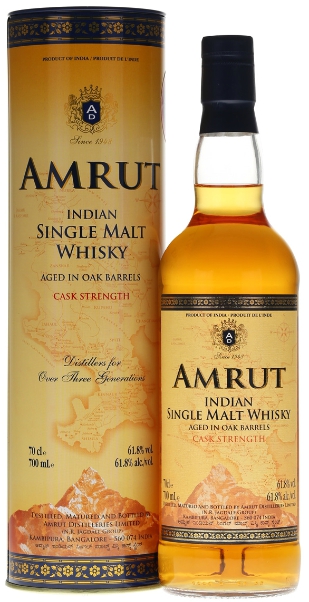
Amrut Cask Strength (61.8%, OB, Batch 87, 2017)

Well, it almost seems a bit unfair reviewing a Paul John Whisky and not look at Amrut too, so here it goes… ehhh, ok, ok, ok, it has nothing to do with being fair. I seem to like Indian Whiskies, so I will come up with almost any excuse to review another one. I had to hurry writing this review, (spoiler alert), because this one is going fast! At Amrut they also make entry-level cask strength versions of their Whiskies. We already know NAS is not a terrible problem with Indian Whisky, since maturation in India moves at a pace like trains move in Japan. Apart from this Amrut Cask Strength Single Malt Whisky there is also a Amrut Peated Cask Strength Single Malt Whisky, which will find a place on my lectern right before I finish this unpeated one, and I’m guessing that won’t take long…

Color: Vibrant orange gold.

Nose: Creamy, vanilla and oak, with a hint of orange (the fruit, this time). Vanilla powder and fairly simple initially. Hints of oak, exotic spices on oak and sometimes pencil shavings, fresh air or ozone. Sweetish and full on aroma. Warm, warming and fuzzy, sunny. This has a very positive vibe. Milk chocolate, maybe even some mocha. Creamy with a slightly acidic top note, yet not fruity, so no unripe berries here, although I do get some candied yellow fruits. Dried apricots but well in the back although on some occasions it is more upfront. That’s it really. That’s all there is. Now for something funny, in a Whisky like this, it is also all you might need. It is well-balanced and very tasty, so I have no beef with the relative simplicity here. It’s instantly rewarding, not far behind the single cask reviewed earlier.

Taste: Creamy pencil shavings on steroids. Lots of exotic spices with soft oaky bitterness. Very nice wood notes, and again fruity. A bit hot, like the climate in Bangalore, but definitely all about Indian 6-row barley malt, and American oak. Candied yellow fruits again. Apricots in sweet yoghurt. Very high quality and very, very balanced. No off notes and everything is in the right place. Spicy, with very good wood notes. Tasty stuff. Amazing value! Not for nothing, this is already batch 87, and this was back in 2017! Wonderful aftertaste, maybe even better than the body itself since it seems to reach an even higher level of balance. Good, slightly short, aftertaste with hints of lightly roasted coffee, arriving late.

First of all, this looks the part, simple bar style bottle with a nice label, and packaged in a proper shiny heavy-duty tin.

If Master Quill would be an institute of some sorts, issuing awards, this Malt would most definitely win a category, something like best (Indian, or World, or any) cask strength bang-for-your-buck Whisky. Excellent quality for an excellent price. I’m baffled you’re still reading this. Stop it now, go out and buy one. Wonderful stuff, a definite must-have.

Last but not least, I have to make the same remarks as I did the previous review (Paul John). For me, this might be a no brainer, but I have been informed, and I occasionally witness, that Indian Whisky may not be for everyone. personally, I love this style and I can’t believe someone wouldn’t like it, but the same goes for every style of Whisky. Some don’t like peat, some don’t like heavy sherry, some don’t like grassy Lowlanders and some like Loch Dhu… So be warned. Keep an open mind though, you don’t know what you’re missing otherwise…

Points: 87

Amrut 4yo 2009/2013 (60%, OB, Single Cask, for Europe, Virgin Oak & First Fill Bourbon Barrel #3445, 172 bottles)

Maybe Amrut is a true Malternative, because it’s another Malt Whisky. If you love Scottish Single Malts best, why look at other distillates? They are just different. Other distillates can broaden your horizon, but will not replace your Single Malt that has become too expensive. For instance look outside of Scotland.

Looking back I seem to like Amrut. This is now the third review, and after the Intermediate Sherry (87 points) and the Portonova (88 points), this is something of a speciality. Maybe I should take that back. Most Amruts are in fact specialities. Something out of the box is often done. Maturing on two continents, or blending many different casks together, to name but a few of things Amrut does.

This time a single cask bottling. Often, you will have a Whisky that has matured in a first fill or second fill Bourbon cask, barrel or hogshead, but no, Amrut had to do it differently. This particular example was first matured in charred virgin oak and then transferred into a first fill Bourbon barrel. Barrels being the original casks Bourbon matures in, where hogsheads are remade casks from the staves of barrels. Hogsheads are bigger than barrels. Most barrels are shipped in staves anyway.

There is some additional useful information on the label as well. I like that. In the four years this Whisky has been maturing, 42% has evaporated over time, as compared to around 8% in that evaporates is Scotland over the same period of time. By the way, unpeated (six row) Indian barley was used.

Amrut Single Cask #3445Color: Gold.

Nose: The first whiff that enters my nose is of virgin oak. Creamy sawdust and vanilla. Although only four years old, at the fast forward maturation rate, this can be called a woody Whisky. The typical American oak notes are here, but I actually miss the typical Amrut spiciness. Amrut is indian, and Indian Whisky should be a bit exotic, not just another copy of Scottish Whisky. This Amrut does hide it Indian. After some vigorous movement in the glass and some patience, there is exotic spice emerging and apart from that the Whisky becomes a bit dusty.

Taste: Initially hot and then an explosion of sweet Vanilla. When the thick vanilla, travels down, quite some (virgin) oak, emerges here in the taste as well. So we have wood and vanilla. What else? Over the top vanilla combined with hot butter. Just as with the nose this needs air to show some exotic spices. Luckily it’s Indian-ness is here at last. Spicy hot sawdust from Massaranduba. A very hard tropical wood. It’s so hard in fact that you can’t cut it without the saw charring the wood. This slightly sour odour is very similar to the spiciness of this Whisky, especially in the taste of it.

I mentioned decanting Whisky before. This Amrut is one that needs a lot of air as well to fully blossom. This is still a pretty full bottle, but already there is a difference to the first taste of the freshly opened bottle. I will score it now (after lots of air in the glass), but I feel this will grow even better and more balanced over time. This may very well be an example of a Whisky where the last drop from the bottle will be the best drop.

Points: 88

The initial score was 86 points, but as I expected, this got only better over time. The bottle is gone now, but the last third scored an easy 88 Points. Again lesson learned. Give it time to breathe…

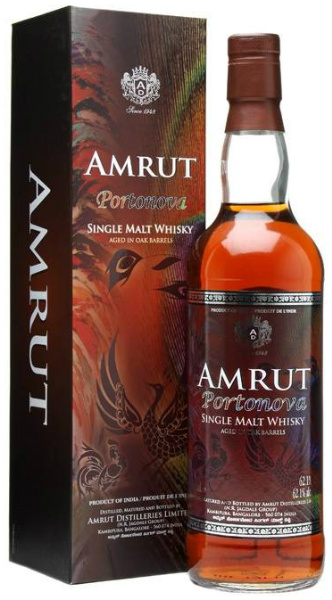
Amrut Portonova (62.1%, OB, Batch 5, 2014)

Ahhh, another Amrut. Nice. I had the pleasure to try some Amruts in the past and was very nicely surprised by the Intermediate Sherry (which I then bought) a Single PX Sherry Cask #2699 (which I then bought) and the Kadhambam (which I have yet to buy). I also tried the “plain” cask strength version, and although pretty nice, I preferred the former ones. Now this Portonova crosses my path. This time a Port finished Amrut, and yes, I have high hopes for this one too…

Amrut Portonova Batch 5Color: Light orange gold. No typical Port pinkishness.

Nose: Although this has a huge ABV, this doesn’t leap out of the glass. Give it some time and some dust and cinnamon emerges. Wow. Cookie spices, dried plums and raisins. Exotic and Christmas in a bottle. Fresh air after rain. Creamy and soft oak. Hot metal. Barley, but different from barley you get from (young) Scottish Whisky. Sweet milk chocolate and red fruit juice. Apart from this all, it has a sweet and deep feel. Exotic spices, curry, cardamom, but where is the Port? I already missed the pink hue, but I also miss its smell. Complex stuff this because there is even a lot more happening in the nose than what I noted here.

Taste: Condensed red fruits. Thick, but initially simpler than the complex nose promised. Obviously quite hot with this high ABV. The wood tastes more like paper and cardboard, than any kind of wood. Not a lot of the wealth of spices shine through on the palate, and that’s a shame. Its more a fruity Whisky with maybe some faint hints of Port. Vanilla comes next. With time if becomes more outspoken and creamy. Nice evolution though. Hints of banana in the aftertaste. Lovely.

First I have to air a disappointment. This would be a stellar malt if the spices from the nose were noticeable so more in the taste as well, without being overpowering of course. Missing the spices on the palate makes the taste of this Whisky a bit simpler than it could have been. Now that we have that out-of-the-way. The whole is still an utterly good Whisky. Very much recommended. An excellent winter warmer I would say. I will have to get me one of these soon.

Points: 88