Bowmore 1996/2014 “Aniseed Pastille” (46%, Wemyss Malts, Single Cask Release, Hogshead, 344 bottles)

This is not the first Wemyss bottling on Master Quill, but it is definitely the second and most certainly not the last. In the previous review I mentioned something about William Wemyss, so I won’t repeat that here.

Wemyss Malts (Edinburgh) was established in 2005 by William, who previously made a name for the Wemyss family in the wine business, producing Fonty’s Pool (Western Australia) and Rimauresq (Provence, France). Wemyss is Scottish and owns land where in the early 19th century John Haig’s first distillery, Cameronbridge, was built. Wemyss also grows barley there, that is used by several Scottish Malt Whisky distilleries, so historically the interest in Whisky has always been there.

Wemyss Malts releases vintage single cask Whiskies from many different distilleries as well as a few Blended Malts (since 2005), a Blended Whisky called Lord Elcho (since 2012) and through another company, a Gin (Darnley’s View, since 2010). The single cask bottlings are reduced to 46% and get a “name” in a similar way SMWS uses a flavour descriptor on their Whiskies. In 2013 William entered a new phase in their Whisky-adventure by purchasing the Kingsbarns distillery project at East Newhall Farm in Fife from Douglas Clement, who had problems raising money to fund the building of the distillery. The distillery is managed under Wemyss Distillery Ltd. which is a separate company from Wemyss Malts. Kingsbarns produces spirit since January 2015, so maybe we can expect their first Single Malt very soon. Since it is supposed to be a light and fruity Whisky, I expect it during summer. At first Douglas stayed on as founding director and as manager of the visitor centre. However, Douglas eventually left the distillery by the end of 2016 to ‘pursue other projects’.

Color: Light citrussy gold.

Nose: Big and fresh. This jumps out of my glass, like a young dog, full of life, wanting to lick you in the face. I hope this makes you understand, that this doesn’t smell like a heavy hitting Islay Malt, but a more friendly one. Nice soft peat, with a spiral of smoke rising from our bonfire. Fresh almonds, but it’s not a nutty Whisky. Apart from that, it’s quite citrussy, fresh and thus fruity, hence the friendliness of this Malt. Salty smoked fish with hints of sea-spray. Yes a bit of creamy vanilla, but no real woody notes. Only a tiny bit of wood and an even tinier hint of liquorice. Cigarette ashes? Proper refill hogshead. If smelled longer and more vigorously, I also get some more soft red fruits, ripe raspberry’s come to mind mixed in with some mud and a black pepper edge. Dirty friendly stuff. Smells excellent!

Taste: Sweet on entry. Toffee and runny caramel. Here comes sticky sweetness. Waxy and quite some soft peat. Ashes and slightly tarry. Already suffers a bit from reduction. Orange skins (bitter) and a bit of paper. Nutty notes again, not much though, followed by more smoky notes embedded in the sticky sweetness, giving some sharpness. Paper-like note keeps coming back to me. On the sides of my tongue there is this slight bitter note of aniseed. The power of suggestion? Yes I do get aniseed, but the sweetness is different. Not the dry, hard sugar of the pastilles, but rather soft toffee. Otherwise, I find this Bowmore a wee bit too simple in the taste department. Lacks development as well. It doesn’t have a long finish, nor a lot of aftertaste, which is built around sweetness and smoke (and secretly some black fruits I love in Bowmore), but where is the wood? Again, easy to drink, but a bit too simple. Depending on your day, because you, the taster, are far from being objective, the bitterness shifts in or out of focus. The second time around I tasted this for this review, on another day, I found it to be more bitter than the first time around (more fruity). Isn’t that complexity?

Comparing this Wemyss version of Bowmore, to Bowmore’s own take on Bowmore, I decided to do a head-2-head with “White Sands” an official 17yo travel retail Bowmore reduced to an even more un-modern 43% ABV. This bottling comes with the special recommendation of Eddie MacAffer, and yes, the “White Sands” is a bit more special, read: different. First of all it has development on the nose and more depth. More industrial, oily, smoky and burning notes. Brooding and more woody. However, if I had both bottles open at the same time, the Wemyss would be finished sooner…

Points: 85

Laphroaig ‘Quarter Cask’ (48%, OB, Circa 2006)

Well, it has been a while since The 2015 Laphroaig Week here on Master Quill, that a Laphroaig graced our pages. This is one of the earlier and better known examples of a NAS bottling that can still be had today. Laphroaig Quarter cask was introduced in 2004, so it almost celebrates its 15th birthday, how about that. Quarter Casks are casks of approximately 80 litres. The idea behind this bottling is that smaller casks make the Whisky age more quickly, since smaller casks have a higher surface to liquid ratio, than larger casks. And the higher the ratio the quicker the Whisky matures. However, this Laphroaig wasn’t entirely aged in Quarter casks, but is supposed to have a normal maturation in American oak bourbon barrels for 5 years (up to 11 years) and only then receive a 7 month finish in quarter casks, so essentially this Whisky is still only 5 years old, hence the price. It is very friendly priced and since it is almost 15 years available to us, this must be a recipe to success, and another way in showing the critical and discerning public that young whiskies can be very good. As I already showed in several of my previous recent reviews. Remember Bruichladdich, Cotswolds and the Kilkerran Work in Progress #2 and #3 bottlings? But let’s not get ahead of ourselves just yet, lets first find out if this Laphroaig Quarter Cask is any good. However, this won’t be a review of a more recent Quarter Cask, but an earlier example. As can be seen on the picture below, the design of the label has somewhat changed since the earlier bottlings…

Color: Light gold.

Nose: Nice peat, clean, fruity and fresh, ozonic. Meaty, with hints of sweetness. Rural. Soft and hard at the same time. If you try hard, some spicy oak is detectable. Vanilla and gravy notes emerge at the same time. Ashes, paper and citrus. Wonderful combinations. Amazing how appetizing the peat is (mixed in with Vanilla notes from the American oak). The whole is utterly balanced and every bit of aroma, every note seems to belong to the next one. There is also a very sweet, fresh “other” note present, like a fruity-floral hybrid, an added layer to the darker peaty side. Like light in the darkness. Let it stand in your glass for a while and development starts. Based on the nose alone I definitely understand its broad appeal. Young, inexpensive but with very high quality. A present for Laphroaig aficionado mourning the loss of their beloved 10yo, which simply isn’t what it was. The 10yo suffers from Alzheimer’s, but this Quarter cask, yeah, úp, steps the new generation to take over the reigns. Oh, wait a minute, I have yet to taste it!

Taste: Sweet on entry (tea with lots of sugar), with citrus notes and wonderful peat. Simple and short, very short burst of pepper and quite some ashes. Add to that lemonade-like sweetness and fruitiness, and you have a young but wonderful Whisky on your hands. Add to that some “wrong” notes of (lemon) dishwater and fruity acidity (lemon) and you still have a wonderful Malt with added complexity. Lemon can be a very nice aroma to have. It is so good it can deal with these odd notes very well. Clay and more ashes. Pencil shavings. Paper is here too. Bugger, ’till now, I mentioned peat only once when tasting it. It is simply not upfront here, which is quite odd for a young Malt. (Peat breaks down a bit with age). Anyway, also not the longest of finishes around. Aftertaste, hardly there, tiny hint of peat maybe, and here it shows its youth I guess. Still, nice stuff this is.

Since the old 10yo is no more, I guess this is its true replacement. Its higher ABV. of 48%, its peaty profile and the fact it’s not chillfiltered make this the replacement of the 10yo for Whisky geeks like me (for writing stuff like this, and you (for even bothering reading this). Mind you the old 10yo was even much better than this, but compare this to the new 10yo and you know why this is so good. If you’re not a Whisky geek and are easily scared by the medicinal and peaty notes, and yet still like to start with the big Laphroaig, try the Select or the new 10yo. They are more suited for starters. Sweet, toned down peat etc. etc. This Quarter Cask is a wonderful early bottling. I have to buy me a more recent one, to see if they managed to keep the high standard. If so this is one of the best priced peated Whiskies around.

Points: 86

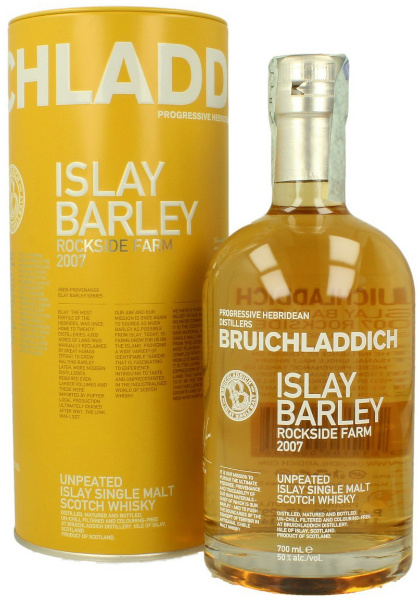
Bruichladdich 6yo Islay Barley 2007 (50%, OB, Rockside Farm, 13/126, 2013)

If you click on Bruichladdich in the right column, you’ll find that the last few reviews of “Bruichladdich” were written about an Islay Gin and two Rums. Yes, Bruichladdich is quite a progressive and busy operation, not only distilling three different kinds of Whiskies (The unpeated Bruichladdich, the heavily peated Port Charlotte and the insanely peated Octomore). They also bottle a range of Rums under the moniker of the Renegade Rum Company, mostly if not all finished in a wine casks. Yes, before I forget, they make a Gin as well, and not any Gin, it’s Gin made with botanicals from the Island of Islay. So a local Gin, and as Bruichladdich say themselves, Terroir matters. A now I have a chance for a bridge, al be it a terribly un-smooth one. Since we are on the subject of terroir…

Where Springbank lead the way with Whisky made from “Local Barley” Bruichladdich takes it one step further. Whisky-nerds always want a lot of information about their dram and Bruichladdich is sure one of those who are happy to provide, combine this with the “terroir” philosophy here we have a Whisky of which we now know it’s not only made from local Barley, but we also know how local. The barley used, Optic, was grown on Mark & Rohaise French’s Rockside farm, and not on the whole 2,500 acre farm, no, it was grown exclusively on one particular field called ‘Minister’s Field’. Two years after this 2007 Islay Barley was released, the French’s decided to sell their farm to Kilchoman, which is built on Rockside Farm land, and leave the Island…

Color: Light Gold.

Nose: Barley, bread and cereal. Warm and sweet-smelling. Vanilla, custard and pudding. Although supposedly unpeated, this still has some peat, paper and smoke. Fresh and fruity, and quite honest. A lot happening already after 6 years. Develops in my glass. Hay, citrus and fresh ripe Cherries. Appealing and appetizing. Depending on the moment, sometimes, and it’s not often, I pick up some petrol. Brings back moments of a warm silent summer in the countryside. No wind and being alone. On top of the fresh and fruity notes lies this sharper smoky note. The whole experience is less broad than the 2006 Bere Barley offered by Bruichladdich as well. Sure this is 6 years old and I guess this makes lots of people thinking it is probably simple or doesn’t offer a lot of complexity. Bollocks. I feel, this offers an amazing complexity. Yes it’s 6yo and it has youthful elements to it, but not typical youth, as in hints of new make. A nice drinker, but this time an even better one for comparison to others like it from Bruichladdich (different vintages of Islay Barley and Bere Barley), Kilchoman 100% Islay, or even the likes of the aforementioned new Springbank Local Barley’s. Yes you need more of these open at the same time. a terrible thought indeed!

Taste: Sweet, with cookies, cereal, and very fruity right out of the gate. Tiny hint of soap and wax. Nothing to worry about. Big, dirt, soil, oil and rural notes, but also creamy with vanilla powder and old dried out toffee bits. Sweet. Hard to imagine now that the Bere Barley was even more aromatic than this one. Just like Springbank, this needs some breathing before showing its true potential, but when it does, it delivers nicely. Nice presentation too by the slightly higher ABV. 50% instead of the new standard which seems to be 46% ABV. Both are great improvements over “old” 40% ABV. Yes, the alcohol is noticeable people. Mocha and milk-chocolate come next. Vegetal, grassy, linseed oil and butter. A healthy sensation gets over me now. The finish could have been better balanced and longer. First of all the Alcohol (sometimes) slightly anasthetizes my tongue and the roof of my mouth. Secondly it gives off a slightly acidic aftertaste which somehow doesn’t really fit the profile. It’s not an off-note but it just doesn’t fit in this picture. It gives too much separation (of tastes and balance) and leaves the finish in a bit of confusion. (gets better with more air). Hardly any aftertaste, which means youth I guess… This luckily doesn’t spoil the fun though, and I still love this dram. Not as complex as the nose but more than enough, especially considering, again, that this is a mere 6yo. It’s a way to go with modern Whiskies. I love this series as well as I do the Bere Barley series. Well done Bruichladdich.

It is quite nice to try several different releases from the Islay Barley series side-by-side. The differences are bigger than one would expect beforehand. In my Whisky Club we also compared this 2007 Islay Barley to the 2006 Bere Barley 2nd Edition. Both are in their own right quite good Whiskies (can we get some older examples too please?), but trying the one right after the other was for me te true way to try these, hence I feel you need several of these open at the same time. They complement each other quite well. The differences are big enough to warrant this…

Points: 86

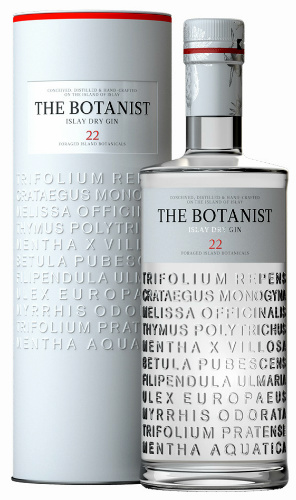
The Botanist Islay Dry Gin (46%, OB, Scotland)

It has been a long time since reviewing a Gin. How is that possible? In fact, all the Gins I have on my lectern now haven’t been reviewed yet, so I’d better get a move on, before they are gone! Like Hendrick’s, the The Botanist hails from Scotland, better still, both are made by distillers of the finest tipple of Scotland, Whisky! Where Hendrick’s is made by the people behind Glenfiddich and The Balvenie, The Botanist is made by the people of Bruichladdich. The Botanist is made with 9 rather common botanicals found across most Gin’s: juniper berries, cassia bark, coriander seeds, angelica root, dried lemon peels, dried orange peels, licorice, cinnamon and orris root. However, that was not enough. What makes this Gin about terroir, a big thing for Bruichladdich, is the addition of 22 botanicals found on the Island of Islay: apple mint, chamomile, creeping thistle, downy birch, elder, gorse, hawthorn, heather, juniper (again), lady’s bedstraw, lemon balm, meadowsweet, mugwort, red clover, spear mint, sweet cicely, bog myrtle, tansy, water mint, white clover, wild thyme and wood sage. So the focus of this Gin is actually on the details, the Islay botanicals, hence the red number 22 on the label.

The Botanist has one of the most comprehensive websites I have ever seen considering Gin, or any other drink for that matter. Beautifully made and very informative. However, reading that much and absorbing that much information makes thirsty, and you only can taste the Gin by trying it, not by reading about it. Same goes for this review obviously! So without further ado, here are my thoughts about The Botanist.

Color: Clear water.

Nose: Classic piny, juniper dry Gin aroma’s are up front. Lots of citrus with orange overpowering the lemon. Fresh smelling, with some menthol, almost clinically clean at first. Nevertheless, the nose has also a deeper sweetish note to it (licorice and cinnamon). I even get whiffs of an unexpected briny note. Unexpected in a Gin maybe, but considering this is an Islay Gin, maybe I should have known better. Underneath a warm, well-balanced, big floral scent emerges, aided by a more woody note (pencil shavings). When nosing the Gin by itself, a lot comes to the fore, I never picked up in a chilled Gin & Tonic. Excellent nose, no doubt about it, perfect!

It actually is rather strange that a distillate containing so much fine details, from many different botanicals, is used for a G&T with lots of ice, masking all those fine details. If you want to pick up on those finer details, I invite you to try your Gins neat as well (at room temperature). I do it for these reviews and it is certainly an eye-opening experience. I actually have a friend who had never heard of G&T, but likes Gin. He always drinks it neat at room temperature as a fresher alternative to Whisky. When I told him about G&T, he actually was quite surprised people do that to with their Gins.

Taste: Much drier than expected, yet not lacking sweetness. Again well-balanced stuff. Appetizing. Lots of juniper (but less piny than on the nose) and citrus notes. Here lemon almost overpowers orange. Camomile, paper and apple juice. Hints of vanilla and cream. Creamy orange. Next, some more green or vegetal notes. For the plethora of botanicals in this Gin, this is not a Gin for those who want to recognize all 31 botanicals individually. The components used are designed to work together, and they do that very well. This may very well be the best sipping Gin I know. Oily, chewy. Extremely well made. 46% ABV seems to be just right as well.

Comparing the Zuidam to the Botanist neat, the latter has definitely the more classic (juniper) Gin nose. The difference is so great, it almost seems like the Zuidam isn’t a Gin at all! Sure, if you work a bit harder the juniper and the citrus notes are definitely there, so don’t panic. The nose of the Zuidam is more mellow, less defined and fresh, but also less complex, compared to the Botanist. Tasting both, the roles seem reversed. The taste of the Botanist is remarkably mellow compared to its nose, whereas the Zuidam, seems a bit bigger, less complex again, yet fruitier (and somewhat sweeter), with a fantastic orange aftertaste. Hard to pick a favourite sipping Gin between these two!

Strange enough though, of all the Gin’s I know and/or have, (not all have been reviewed yet), the Botanist is not my favourite in a G&T. Lesson learned, not all excellent Gins work perfectly in a G&T. Personally I’m more about making G&T’s with Gin, rather than sipping them neat. Maybe I should follow the example of my friend mentioned earlier. On the other hand, The Botanist also deserves a more extensive search for the best matching Tonic.

Every time I make a Gin & Tonic at home, I always make two different ones for a proper H2H. It’s a sad thing to drink Gin & Tonics alone, so I always do that with my wife. We’ll do some proper comparisons, at least I do, and then I let her pick her favorite for her to finish. She often picks a different one than I, so it is not as bad as it sounds. Especially one time I remember we both preferred the same one, and up ’till now the combination of the aged Zuidam Gin paired with Indi Tonic is our favorite. It also shows you that taste is personal, so don’t take my word for it, make your own mind up, which is definitely more fun!

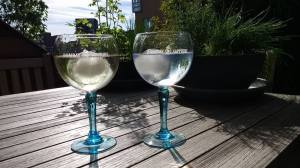
One recent nice spring day, hot, so could have been the middle of summer, I made two different G&T’s with “The Botanist”. One with Syndrome Velvet Tonic (left, with bitter oranges and thyme) and the second one (on the right) with Schweppes Premium Mixer Ginger & Cardamom. The difference was larger than expected. With Syndrome, the G&T was good, yet very soft and quite sweet as well. Rounded out, soft and sweet, toned down, covered up and a bit too sweet for my tastes. The thyme was definitely noticeable in the Tonic. The combination with the ginger and cardamom Tonic, both noticeable in the Tonic itself, was more true to the juniper driven, Dry Gin style of The Botanist and maybe Gin in general. It was more refreshing, sharper and definitely more focussed, well-defined, making it the one I preferred. Needless to say my wife preferred the other one!

Points: 82

Bowmore 17yo “White Sands” (43%, OB, for Travel Retail, Bourbon Casks, 2014)

As announced in the previous post about the Bowmore “Deep & Complex”, here is the review for the Bowmore “White Sands”, the top offering from the previous travel retail trio. Where “Deep & Complex” has something to do with Sherry casks, this one is said to have been matured only in Bourbon casks. This 2014 travel retail release is somewhat odd though. Of the three, it is the only one not in a litre bottle, the only one bottled at the higher strength of 43% ABV, and the only one with an age statement. 17yo is also an unusual age, although there used to be a oficial 17yo that was replaced by the 18yo.

Color: Full gold.

Nose: Sweet, syrupy and some very nice, medium strength, smoke. Slightly vegetal, but mostly fruity with sweet orange oil mixed in with sweet, soft peat. Papaya and mango are noticeable too. Hints of cardboard and earwax. Cold black tea. Very accessible. Creamy vanilla and hints of soft oak. It’s almost like sugar-coated oak. I fear caramel coloring is at work here. I’m already getting slightly annoyed, and I haven’t even tasted it yet. I have tasted this bottling before, and on that occasion I found the smoke to be more up-front. That’s important for this bottling since the smoke-bit is really delicious and defining this Whisky (for me). That bottle was half full, by the way, so I’m hoping this only needs some more breathing. (I just opened this bottle). It may very well be from a different batch as well. Letting it breathe right now, already brings out some more wonderful notes from the smoke-department, so I’m confident that if you work this a bit, all will be fine in the end. This will turn out to be a hidden gem, I’m sure. Just let it breathe. Leave the stopper off for a while.

Taste: On entry; sweet (Rum) and waxy. Oak and fruit. Definitely a tad simpler than the nose and most definitely lacking some oomph. This needs at least 46% ABV. Please Bowmore, please. Cereals, soft wood and caramel. Almonds and mango chutney. Milk-chocolate powder. Nesquick. Hints of smoke and some sweet peat. A tiny hint of bitterness from the peat and oak, but not much, not much of that at all. Vanilla, vanilla ice-cream. Soft and creamy. Custard and pudding. You get the picture don’t you? It isn’t hard to taste, this suffers a bit from caramel coloring. Its aromas are glued together, a property of caramel coloring. I wonder what the chill filtration did to this expression? Is the complexity of the nose over the taste a sign of this?

Dangerously drinkable. Talisker Neist Point (a NAS bottling), is another of those peated, dangerously drinkable, travel retail Whiskies. I would love to hate both, since they are obviously flawed, but somehow they turn out better than expected. Never stellar, but good and likeable.

Although this is a good one, it still is one, I feel, has been tampered with. Chill filtered and colored, and as with the other Bowmore, reduced too much. Again a potentially stellar Whisky ruined, (at least in part it is), for the sake of how it looks on the shelves, and how money can be made, at airports. What kind of heartless, soulless people make these kinds of decisions? Do marketeers have so much to say, or are people, like us, who truly like their Whiskies, actually the odd ones out, complaining when we shouldn’t?

I can confidently recommend this Bowmore, I will give you another recommendation as well. Seek out an independent bottling of Bowmore, to find out how Bowmore actually tastes like without the tampering I mentioned.

Points: 86

Bowmore 18yo “Deep & Complex” (43%, OB, for Travel Retail, Oloroso & Pedro Ximénez Sherry Casks, 2017)

Lets start this review with a confession. I’m a faulty human, and I admit to having prejudices. I don’t know where they come from, I didn’t invite them into my mind, but still they are there and I am battling them. The prejudice I have is that I have a more than healthy suspicion towards travel retail bottlings. Compared to this, my feelings towards NAS-bottlings are pretty mild, since there are enough good NAS bottlings around. Bowmore travel retail bottlings are an excellent example why I have this prejudice. A few years back I wrote a review about the Bowmore “Black Rock“, and it is travel retail at its finest. First it comes in a big litre bottle and second, it was almost reduced to death by bottling it at 40% ABV. So to celebrate your trip you bring back a souvenir of a weak Whisky and a lot of it. When tasting bottles like this, I just knew I had to stay away from such bottles, and I still will steer clear of litre bottles bottled at 40% ABV.

In comes Nico. Nico is one of the founding fathers of the Whisky club I am a member of, and he invited me over to bathe in the excellence of one of the latest batches of The Balvenie “Doublewood“. Taking about ruining a perfectly good Whisky! Since we both are very keen on Whisky, obviously the evening didn’t end with several Balvenies. We had plenty more adventures in Whisky. Funny enough, the surprise of the evening (for me) was a Bowmore travel retail bottling! Nope not this 18yo Deep & Complex but the 17yo “White Sands” of the previous travel retail series.

In 2014, Bowmore released a trio called “Black Rock” (litre, 40% ABV), “Gold Reef” (litre, 40% ABV) and “White Sands” (70 cl, 43% ABV) and I should have known better. “White Sands” wasn’t a litre bottle, was the only one of the three with an age statement (17yo), and the ABV was slightly higher as well. Tell-tale signs that there was a possibility it would be a good one. Good? I loved it! I have met (the wonderful) Eddie MacAffer (voted Whisky distillery manager of the year at Whisky Magazine’s 2013 Icons of Whisky Awards) and “White Sands” is a favorite of his, so I definitely should have known better!

So why isn’t this review about “White Sands” then? Relax, I’ll get to that shortly. Probably in the next post. When I found out how good “White Sands” was, I ordered a few of those. At the same time, I got a pretty good deal on this “Deep & Complex” (What’s in a name), and knowing now that the top offering in Bowmore’s travel retail series might be quite good, I ordered it as well. So, let’s do this new one first and we’ll get to the old one later…

Color: Copper.

Nose: Sherry all right. I would say the PX is upfront. It smells sweet and dessert-like. Caramel. Cherries on syrup. Candied orange skins. Sweet alright. Raisins and dates (freshly dried). Fresh macadamia nuts. A nice typical smokiness (birch) I get from “White Sands”as well, although that is an entirely different bottling. Garden bonfire. Wood smoke. Lovely smoke aroma’s all over. Charred wood. Nice ripe black and red fruits and definitely more smoke than peat. Excellent balance. Vanilla and dust. Islay in the summer. Tar with hints of peppermint and menthol.

Taste: Sweet and fruity. Round, they call it. Half-sweet Cherries and only some wood and peat. It has an even deeper lying smoky bit, but again a nice smoky bit. A bit thinner (and fruitier) than expected. Burning newspaper. Nice warming quality though. Warm wet earth and the fresh macadamia’s are here as well. Not too bitter dark chocolate, wood and toffee. Tar and coal. Licorice. Surprisingly short to medium finish and not a lengthy aftertaste as well. What happened over those 18 years? I’m trying this before breakfast so I have a fresh and eager palate, but still the Whisky is too weak. It’s lovely, but too weak, so don’t drink this in small sips, it won’t work as well that way.

It is somehow suggested and assumed this was matured solely in Oloroso and PX-casks, but I do have my doubts. In a way it’s almost like a “White Sands” with a Oloroso and PX-finish. Wonderful stuff, but like the 40% ABV travel retail versions. It’s a bit too thin. Even at 43% ABV, it doesn’t quite cut the mustard. It has the potential of being a wonderful Malt (scoring in the lower 90’s). It is actually a wonderful malt as is, but it could do so much better if it had some more oomph, something more to carry it. Now its like (white) sand running through my fingers…

Points: 87

P.S. In a head to head (H2H) with the 1995 Lagavulin its easy to see what I mean. The Lagavulin has only 5% ABV more, but it does so much more for the Malt. It gives it power and length. It even brings out the aroma’s more. I’m not afraid to say that this Bowmore, if it was 46 or 48% ABV like the Lagavulin, would even be better than it. Now, the Lagavulin beats it (just). Nevertheless both are damn good drams and easily worth your money. I’m enjoying them both.

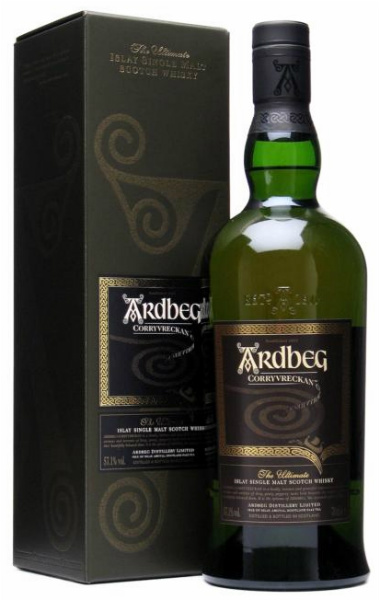
Ardbeg “Corryvreckan” (57.1%, OB, 2014, L59815)

Well, here is an Ardbeg of which nothing is known, apart that it was first released in 2009, following up on Airigh Nam Beist, which ran from 2006 -2008. I won’t bore you with my take on the marketing jazz about Corryvreckan being a whirlpool. You can read about that on the box and on many sites across the interweb. Here the golden nugget from Ardbeg’s own site: “Corryvreckan takes its name from the famous whirlpool that lies to the north of Islay, where only the bravest souls dare to venture. Swirling aromas and torrents of deep, peaty, peppery taste lurk beneath the surface of this beautifully balanced dram”. Well, what can I add to that!

What I’d like to know is, how this Whisky came to be, and that is definitely more difficult to find out. Every bottling of Ardbeg has some sort of unique twist. Casks that were burnt to a crisp before using, or casks that were forgotten in a swamp, or casks that were kept in space for a while. The unique twist this time seems to that part of the Whisky was matured in new French oak casks, (as opposed to the sole use of the immensely popular American oak). The rest of the Whisky was, of course, matured in first fill and refill American oak casks. American oak became so popular since it gives off a friendlier aroma of vanilla, making any liquor softer, creamier and more accessible. European oak, or French oak in this case, is less of the vanilla kind, but more about tannins. All the great Sherried Whiskies from yesteryear were matured in European oak Sherry butts and puncheons. Today the Sherry industry prefers American oak as well for reasons mentioned above. French oak is used a lot in the French Wine industry, so rumour has it, used Burgundy Wine casks were used for this Ardbeg as well. However we don’t know if they were virgin oak, first fill or not and what kind of Wine they contained (if any). A Chardonnay cask will result in a different Whisky, than a Pinot Noir cask…

Color: Full gold (no red or pink nuance though).
Nose: Very ashy and smoky right out of the gate. Licorice wood and sweet smoke. Garden bonfire. Sweet and soft peat. Citrussy, herbal and meaty. Crushed beetle and old tarry rope lying around in the sun. Fresh oak combined with some lemon (not the oil from the skin). Distant vanilla, but it is here. Ripe and sweet strawberry and vanilla ice-cream. More hints of red fruits and more promises of sweetness. Nice soft oak. Dusty. Very well made Ardbeg if it tastes as good as this smells, this will be a keeper!

Taste: Ashy again. Sweet, crushed beetle again, how odd. Big aroma, big body. Lots happening. Initially sweet but it is a good sweetness balanced out with sweet peat and dryness of the smoke. Definitely a type of fruitiness you don’t get from (Bourbon) oak alone, which would support the Wine cask claim. Fat peat and slightly tarry. Empty, off-season, fishing boat in the sun. Visions of an abandoned port. Not hot, only for a moment is shows some higher ABV, but I would have never guessed it is as much as 57.1% ABV. Well balanced, with only a medium, but decent, length. This is where it’s average age is noticeable.

Excellent standard bottling, and a damn good NAS as well, if I may say so. It can be done after all! I’m wondering which of the special releases, which are all more expensive, can beat this one? The 10yo is the entry-level Ardbeg and for me it has lost the most compared to the earlier tens since it has become way too sweet. I guess, that one has to appeal to a larger public, than this Corryvreckan and Uigeadail. I guess the latter are more for connoisseurs and anoraks like me and you. Now I will have to get me a new Uigeadail to compare it to this Corryvreckan. I have high hopes now…

Points: 89

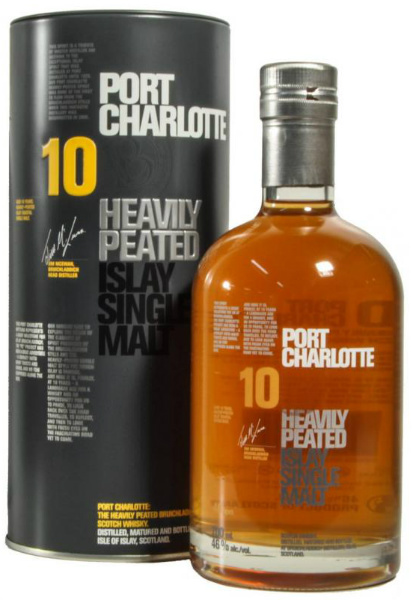
Port Charlotte 10yo (46%, OB, 13/153)

Many people like Springbank very much and some of those people, the likes of bloggers and vloggers and die-hard aficionados, call out to other distilleries to look more at Springbank as an example how they feel things have to be done. In that respect, hiding in plain sight is Bruichladdich, who are doing things like Springbank but in their own way. For one they have multiple brands: Bruichladdich, Port Charlotte and Octomore and more interestingly they are doing the “Local Barley” thing as well (f.i  the Bere Barley and Islay Barley bottlings). Both series contain rather young Whiskies, which are surprisingly good. Personally, even more exiting is the batch variation, which I find, adds to the adventure in Whisky, although I don’t think they change the composition as much as Springbank between batches. They even code like Springbank (here: 13/153). The first official Port Charlotte 10yo was bottled in 2012, so this is not the first batch of the first release, but it is still the first release, since in 2016 an official second release came out bottled at 50% ABV.

Color: Light gold.

Nose: Nice fresh peat, and dare I say it has a Sherried note? Honest and slightly sweet. Full-on aroma. Slightly sweaty and floral at the same time. Soft as well. Dusty. Clay and finger paint. Pencil eraser. Medicinal. Cold gravy. For me, very special stuff with quite some unusual markers. This big synergetic aroma easily overpowers the soft peat. Maybe not overpowers, but it sure works well in tandem with it. Nice development and evolution of the nose. Every sniff seems different from the last, unless you are sniffing continuously. Appetizing stuff.

Taste: Peat, wood and some fruit in the background. The fruit shows quite some acidity. Starts out sweet, caramel, toffee, but that isn’t here to stay. Well, the aromas stay but the sweetness retreats a bit. Licorice wood. More (different kinds of) licorice combined with milk chocolate mousse. Some soap in my toffee now, as well as some mints (mint candy). Is this the taste of the floral part? Where the nose had a big aromatic presence, the body of this Whisky isn’t as big. Alas the taste cannot keep up with the nose, but the potential is there. If the quality of any of the younger distillates is anything to go by I’m predicting the future of the 10yo to be a bright one. Just compare it to, the sweeter by the batch, offerings of Laphroaig and Ardbeg 10yo’s.

Yes even by today’s standard, 40 ppm phenols is heavily peated, even though by now we are used to the insane peating levels of Octomore, where 167 ppm is just the start.

Bruichladdich might not be the most original distillery around, although Octomore sure is as original as it gets, but it might very well be the most progressive of the bunch today. Springbank is a main stay for me and I guess Bruichladdich can be added to that list now as well. Don’t worry, these two aren’t the only ones on that list. Not by a long shot.

Points: 86

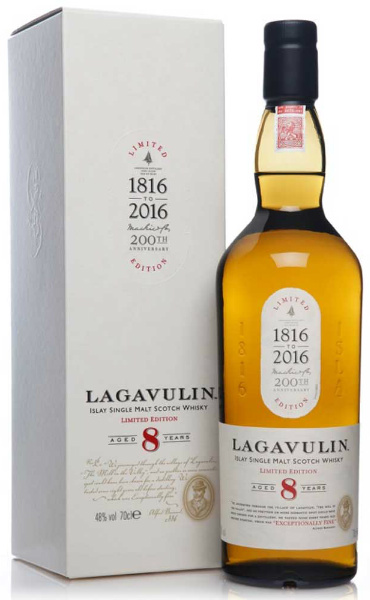
Lagavulin 8yo (48%, OB, Refill American Oak, Limited Edition, 20.000 bottles, 2016)

Here at Master Quill, we love Lagavulin. In fact if you like your peated Whiskies, then it is really hard to find a bad Lagavulin. It has always been a Single Malt of very high quality and rather rare to encounter as an independent bottling, although there are quite a few out there. Another amazing fact is that the “regular” 16yo is still very, very good, and very, very, affordable. Well done Diageo. For now, because when they start tinkering with Lagavulin 16yo, or delete the Talisker 10yo, well, that wouldn’t be so good now would it.

We all know, the Whisky marked changed quite a bit the last few years, it the demand! It’s therefore harder to put out well aged Malts for a price, older Whisky drinkers are used to. In come the NAS (No Age Statement) bottlings with funny names. Like for instance Talisker Skye (the island it hails from), Talisker (Dark) Storm (it is windy on the Isle of Skye), Talisker Port Ruighe (Pronounced as Port Ree, as in Portree, the largest town on Skye), Talisker 57 North (the location on the map) and Talisker Neist Point (a local lighthouse).

With Lagavulin, Diageo didn’t really venture into NAS territory, instead they released this 8yo. Sure still young like many other NAS bottlings, but this time we, the consumer, get to know its age. For one we now know there isn’t any three year old Whisky in this expression, because all the others must have it. No, this time we are not being conned and we are now more than happy to pay for a relatively young Whisky and feel quite good with it. Yup, put on an age statement, even if its 5yo (Benromach) or this 8yo, and everybody’s happy. I’m sure this Lagavulin got a break from the drinking public, whereas the Taliskers mentioned above were criticized to the bone. I for one like age statements, but do not necesseraly dislike NAS bottlings. However, not knowing whats in it, makes me more hesitant in buying them without tasting it first. With an 8yo, you somehow know what to expect…

Lagavulin 8yoColor: Pale straw. Very light.

Nose: Sweetish laid-back peat. Nice spicy feel to it, in part made up of burnt wood, or even better, burning wood. Usually young peated Whiskies tend to be quite heavy on the phenols, but this one smells quite nice and almost elegant. Ashes and candy. Slow development. Hints of rubber, crushed apples turning brown and some distant cigarette smoke. It also has a slightly acidic fruity note. Unripe pineapple and green apple skins. Fresh wood and fern, with mocha tones. Milk chocolate and . It wants to be warming but hardly is. It is a Lagavulin alright, in many ways a lighter version of the 12yo cask strength expression. Sure some might say it’s lighter in style, maybe slightly under-developed, or less complex, but when you spend some time with it, smelling it, it actually is wonderful stuff. Well balanced. Love it.

Taste: Sweet and fruity. To sweet and fruity? Bubblegum, well didn’t expect that. I didn’t expect it to taste like this after thát nose. Very nutty. Almonds and hazelnuts ground to a pulp. Where is the peat? Ahh there it is. Well definitely not a heavy hitting high phenol young peated Whisky. Nope. We can call this very fruity by Lagavulin standards. With some air I get hints of new make spirit. Not the spirity part, but the barley part of it. This one really doesn’t improve giving it a lot of time to aireate in the glass. It shows more imperfections that way, showing, it isn’t really finished yet or even some exposing flaws in the “design”. The finish is medium at best, but shorter than it should have been. How did it get so light, friendly and simple? High drinkability, but in this case even at 48% ABV isn’t enough. It is a very nice one to drink, but the weakness lets it down a bit, or is it too simple, and maybe that lets it down a bit. Maybe both, the truth often lies in the middle, or were my expectations a bit to high.

Beforehand I wanted to compare this one with the 1995 European oak version, but I think it’s better compared to the Wilson and Morgan Caol Ila, also a young peated Whisky.  Smelling the Caol Ila right after the Lagavulin, it seems to have some exhaust fume notes and clay. Garage, new car. Notes I didn’t pick up on when reviewing it. An unusual and very interesting note, just like the petrol taste in good Rieslings. I now love this Caol Ila even more. Smelling the Lagavulin after the Caol Ila, the Lagavulin shows more barley, bread and cocoa, and definitely more youth. I guess lots of the casks weren’t very active anymore. The Lagavulin is even lighter in colour than the Caol Ila. Although the Lagavulin is slightly higher in ABV the difference is noticeable. The Caol Ila is slightly nuttier with nice fruity notes. It tastes well matured and a bit beyond the 9yo it has under its belt. In this direct comparison, I like the Caol Ila better.

I have bought a few of these Lagavulin 8yo’s on good faith and even though I’m a bit surprised how it turned out, I’m not altogether unhappy with it. It still is pretty decent, but it’s not what I expected it to be, and it may still have to find its place in the bigger scheme of things, but let me say this, the 1995 I mentioned above is way better!

Points: 84

Heartfelt thanks go out to Nico for letting me have a sample.

Caol Ila 1991/2000 (46%, Wilson & Morgan, Barrel Selection)

This Caol Ila is one I just cracked open, literally. It is an oldie I bought some 15 years ago. Sure it is a reduced independent bottling, and it didn’t cost much, but its a Caol Ila and its bottled by Wilson & Morgan, who have bottled a lot of good Caol Ila’s, just have a look at this 24yo expression distilled in 1975, to name but one. The cork broke on this one. This time it didn’t only just break off, it seemed to disintegrate completely. Vaporized into thin air, so to speak. Luckily most of the crumbs were easy to fish out of the bottle and hardly anything sank to the bottom. Just a few weeks ago I wrote an ode to the screw cap, now you know why… Karma strikes again.

Caol Ila 1991/2000 (46%, Wilson & Morgan, Barrel Selection)Color: Pale gold.

Nose: Ahhh, right after pouring the room filled with the smell of beautiful peat. Nothing harsh and rough, but smooth and refined. Nice, clean and soft and aromatic peat. Helped along with a citrussy fruitiness. Well-balanced and much nicer to smell than the Kilchoman Spring I reviewed (much) earlier. Smells quite sweet. Leafy and chewy. Dry vanilla powder, maybe even some powdered coffee-creamer. Some hidden tar, but also an expansion on the fruits. We have hints of sweet, ripe pineapple, mango and banana, mixed with vanilla from the wood, and the wood itself somehow didn’t make it. Crushed beetle and some distant dried basil in the background. Remarkable. Ohhh yes, and some bonfire smoke. I nearly forgot to write that down! I have to say it again, well-balanced stuff and remember, this isn’t even ten years old, which today has become standard.

Taste: Quite sweet on entry. Sugar water. Syrup. Very fruity and a little hoppy bitterness. Big and chewy. Sweet, funky and nutty peat. Not at all earthy. Nice touch of smoke, but not much. It’s like all the aromas are fighting over front row seats. As mentioned, there is a lot of sweetness, that exerts itself right from the start, but these is a lot of fruitiness as well. The Whisky is also nuts. I mean, full of nuttiness. All big and all upfront. I always get some coffee in good Caol Ila’s, and this time is no exception. Sweet coffee, with a tad of toffee in the coffee. It’s not stong black coffee but rather a sweet Cappuccino or Latte Macchiato. Underneath a nice, herbal and lightly bitter undertone (from oak). Long finish and similar aftertaste. Leaves me behind with salty lips. Good Whisky! I hope todays young Caol Ila’s are just as good and affordable.

Ohhh these were the days, where young Whisky seemed better than it is these days, or maybe I’m biased.  This is a very tasty Caol Ila, not overly complex and one I’ll come back to again and again. This will not take years to empty, which it usually takes me, since there are lots of open bottles around the place…

Today there is much ado about young Whiskies, especially NAS Whiskies. It seems NAS isn’t really accepted by everybody. It sometimes is viewed as a devilish plan selling us inferior and immature Whisky (sometimes at a premium price). On the other hand, when distilleries and independent bottlers alike, just mention an age statement of a young whisky there doesn’t seem to be much of a problem anymore, since you know what you’re getting. Just look at the recently released Lagavulin 8yo and compare that to the plethora of NAS Taliskers (also owned by Diageo) and NAS Laphroaigs (not owned by Diageo), which seem to be under par and the fantasy names do not help the acceptance process of the (educated) public, or those who have seen different times buying Single Malt Whiskies.

For the fun of it, let’s compare this “9yo” Caol Ila to the NAS Talisker ‘Neist Point’. Smelling the Talisker after the Caol Ila, it is remarkable how much the Talisker smells of grainy immature Whisky and even shows some whiffs of new make! Much more than when smelled by itself alone. Although having new make in the mix is illegal, since Whisky must be at least 3 years old, there must be a big component of very young Whisky in the Talisker. The Caol Ila behaves like a 9yo, nice, well made, good cask, but lacking some of the complexity often brought to a Whisky by extensive maturation. In the taste it is noticeable that the Talisker has some more happening than just the new make, and young Whisky, alone. Thank God almighty. The Talisker needs some air to get the new make out, after that it is not bad, not bad at all. Sweet as well and buttery. The taste of the Talisker grows on you, even though the new make never really leaves the scene. A draw, or is it? Considering the amount of money Diageo wants for the Talisker (in some markets), the jury made a unanimous decision in favour of the Caol Ila. [sound of judge’s hammer on wood]

Points: 85