The Macallan ‘Fine Oak – Whisky Maker’s Selection’ (42.8%, OB, 1 Litre, Circa 2006)

I come from the times when The Macallan may have been the best Sherried Speysiders around. Almost all Macallans were made of Oloroso Sherry cask, well controlled by the distillery. Who doesn’t know the old back label with the famous last words: “FOR REASONS NOT EVEN SCIENCE CAN WHOLLY EXPLAIN, whisky has always matured best on oak casks that have contained sherry.” or the famous last two words on this very back label: “the tumbler” Well I for one was very disappointed tasting the very first Fine Oak range back in the day, having expected something like the quality of the old Macallans. For me the Fine Oaks had to be of the higher ages to get a high rating. Also the pricing has put me off back then. Some time has passed, some ten years, and here is finally another Fine Oak. Let’s give it another chance…

Color: Honey gold.

Nose: Fresh wood and fresh overall. A bit like a nice Fino Sherry. Waxy (ear wax) and slightly soapy. Apricot and bitter orange marmalade. Heather and a lot of toffee. Quite syrupy smelling and promises of a full body. Seems young with some added depth from some older casks.

Taste: A bit thin at first, but highly drinkable. Again some heather and maybe even a little bit of honey. I can’t shed the feeling this actually is a full bodied Highland Park with lots of Fino Sherry. Hidden bitterness surrounded by fruity sweetness and custard. Towards the end of the body and into the finish it gets drier with more wood and it’s bitterness. Even the toasted cask is here in minute amounts.

This reminds me of the old wide neck Highland Park 12yo, with even the same sort of bitterness in the finish. In fact, if I would have tasted this blind I most definitely would have said this was a Highland Park, who knows, same owner 😉

Points: 85

Glen Garioch Founder’s Reserve (48%, OB, Circa 2013)

Glen Garioch, pronounced Glen Geerie, used to be a powerhouse of a whisky and several legendary bottlings, like some “vintage” 1968’s or the Samaroli’s from the 70’s. It’s this tasters feeling, and I could be very wrong here, after that, Glen Garioch felt a little bit silent. Not production-wise of course. It just seems to have slipped into anonymity. I haven’t written a review of a Glen Garioch up untill now, since I don’t come across a lot of samples of Glen Garioch, nor do I buy a lot of more recent Glen Gariochs. A classic case of being biased? Thus the curtain rises and taking center stage is this bottle of Glen Garioch Founder’s Reserve.

Four years ago Glen Garioch revamped the looks of their bottles. Exit the standard scotch liquor bottle with the stag label, and enter this elegant ánd dumpy (metro man) bottle. In the new range of Glen Garioch are some NAS (No Age Statement) bottles, Like this ‘Founder’s Reserve’ and the ‘Virgin Oak’. There is also a 12yo and the rest is all ‘Vintage’, where the younger ones are all cask strength and the older ones are bottled at the new preferred strength of 48% ABV. After 40%, 43% and 46% ABV, now an even higher proof becomes standard.

Color: Full Gold.

Nose: Very young and malty, spicy wood and it smells almost like new make spirit (this wears off with lots of breathing, so a half full bottle will smell better than a full one). Funky. Very spicy. Oriental. Nosed blind I would have gone for an Indian Whisky. Hints of sulphur. It fits the fashion of issuing younger and younger whiskies. This probably is not older than five or six years old with maybe some partial ageing in virgin oak. Grassy, vegetal (hints of lavas) and latex paint. Indian spices mixed in with butter and vanilla. Not quite what I expected. It starts out young and anonymous, almost lacking character, but give it room to breathe and this becomes a different puppy altogether. The character it has on the nose comes form the oak, nice cask management.

Taste: Punchy (hot) oak carried by the higher than usual ABV. Bitter wood, Indian spices again and an edge of silky bitterness. Also, I’m guessing here, this does need the higher ABV. Half-sweet and light with the slightest hint of bitterness from virgin oak, fresh walnut skins, cardboard and some licorice (and tar). This is a young woody whisky. The wood pushes the fruity notes a bit to the background. Anonymous at first, but also nothing actually wrong. But after some breathing… Warming finish with quite some staying-power. For a short while a creamy aftertaste.

Tomatin Legacy is also a Whisky that is not older than 5 years old. But for me a better and cheaper choice if you compare it to a freshly opened Glen Garioch. However the Tomatin doesn’t change much over time, whereas this Glen Garioch evolves quicker than anything Charles Darwin encountered. Just smell it after a while. Wonderful. Consider my interest in Glen Garioch rekindled.

These new kinds of NAS Whiskies are definitely tailored for a new type of Whisky-drinker. I’d like to know how this new Whisky-drinker is described…

Points: 83

(When I tasted it right after opening I gave it 76 points, go figure)

Thanks go out to Laura!

Tomatin Legacy (43%, OB, Bourbon & Virgin Oak Casks)

There is a new Tomatin in town, and they’ve called it Legacy. No age statement on this one. First of all what does legacy exactly mean? Searching on-line I find this: anything handed down from the past, as from an ancestor or predecessor. We know this “Legacy” is aged in Bourbon and Virgin oak casks, so is this the way Whisky was made in the past? I will have to ask, but surely my interest in this Legacy has been aroused. maybe it’s not about the casks, but the way the distillate shines through?

Second thing i noticed is that it’s 43% ABV, making the 12yo the only one in the standard range this is 40% ABV. The rest is higher with 43% and 46%. Having said that, Tomatin placed this Legacy before the 12yo, simply by making it cheaper. Pretty neat.

Recently The Glenlivet released the Alpha, of which in a weeks time the true contents will be released. The Glenlivet used a huge social media ad campaign to aid its sale, whereas Tomatin did not. By now we do know that is also is made using Bourbon casks (first fill) and new wood (second fill). Alpha is 50% ABV. and costs 4 times as much as this Legacy. Let’s have a look…

Color: Light gold.

Nose: Clean and youthful, hints of mocha, caramel, toffee, but the hints don’t smell sweet. Wet new wood, freshly cut-down tree. tree sap (not resin!) and some nuttiness. Very toned down, no sharpness and only some spiciness from the wood but no burning alcohol of very young distillate. Very honest. Some vanilla and warm butter. Not bad!

Taste: Malty and half sweet. Wood and cardboard. Again wet fresh wood and tree sap, and again a very toned down profile, laid back. A hint of licorice and even an even smaller hint of tar. Not a very long finish. The virgin oak isn’t omni-present in this one so it doesn’t dominate. It’s not very sweet, but the sweetness is sugary. Good balance.

In the nose very different and younger from the Alpha. Extremely drinkable. This would be the lemonade in my lectern. The last bottle opened, but also the first one finished.

Alpha has the same color and is higher in ABV, smells spicier (older) and definitely more mature, the wood on the Legacy smells like a freshly cut down tree. Tastewise the Alpha comes across as older, spicier and bigger bodied, aided by the ABV. Conclusion: incomparable, the Whiskies are quite different and aimed at different people. Legacy is one to give some time to and feel what and aged whisky distillate really is. One to analyze, but also the easiest drinkable malt around. And it costs next to nothing to boot!

Points: 82

Thanks go out to Jennifer for providing me with this sample!

The Glenlivet Alpha (50%, OB, First Fill Bourbon & Second Fill New Wood, 3350 bottles)

Returning from my vacation, a blank white box was waiting for me. Inside this rather large sample (70cl !), wrapped in a black velvety cloth, of the new Glenlivet Alpha or α (being the first letter of the greek alphabet). Alpha is also used as a synonym for first (of a series) or simply meaning “the beginning”. If this Glenlivet is the first of a series, then there are 23 more letters in the greek alphabet. Bring on The Glenlivet Iota and Omega! (The 9th and the 24th letter of the greek alphabet).

One thing is clear though, the (Single Malt) Whisky world is rapidly changing. For starters new Whisky countries (like Brazil, Russia, India, China and South Africa) are quickly becoming a sort of black hole for Whisky. Not a lot went there before and demand is now soaring, so anything still available is flowing there. Most older whiskies are therefore quickly sold out or offered at a premium price, and maybe there are not enough casks lying around to meet the demand. It therefore has become more common practice to bottle Whisky without an age statement (or NAS), and give it a name. Just have a look at a lot of recent Ardbeg’s or some of the newest Macallan’s, but also Tomatin Legacy and Talisker Storm to name but a few, almost all with extensive add-campaigns to explain what kind of Whisky it is and what’s inside the bottle.
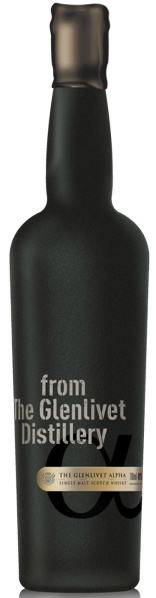
Now The Glenlivet have their own NAS bottling and an even more elaborate marketing campaign to boot! Al lot is happening on the internet with extensive use of social media to promote this new α. Just have a look at the “Master your Senses” campaign on Facebook, Twitter and Youtube, all to help you decide for yourself what Alpha really is. Well, aficionado’s already know that blind tasting is fun, and sometimes pretty revealing about our (or the tasters) abilities. We have to wait for June 6th when all will be revealed. By then I fear that all bottles will be long gone. It’s already almost sold out, and prices are getting higher and higher already on Ebay. I guess we can already call this one a success. It looks great and it got people to part with quite some hard-earned money, without even knowing what’s inside. How about that!

So what dó we know? Already we know that it has distillates from at least two different kinds of casks. First fill Bourbon casks and second fill new wood casks were used. But what is second fill new wood? If it has been filled a second time, is it still new wood? What has been in there the first time around then? How old are the different components of the Whisky? Questions, questions, questions, but is that all? Maybe besides the two different kinds of casks, a subtle finish was done? Well, again the campaign works, after all this, who isn’t curious what will be revealed on june the 6th! The most important question of them all cán be answered right now: Is it any good?

Color: Light gold with tiny hints of sediment.

Nose: Fresh and soft dusty wood. Grass from Grasse, malt, hay and small hints of green apple skin at first, but quickly turns into something more like sweet vanilla ice-cream, more toffee than caramel and hints of “Haagsche Hopjes” (Dutch sweet coffee bon-bon). Sweet vanilla. Definitely (in part) “new” wood was used, due to the light wooded or sawdusty smell. Also some kitchen herbs (basil) and anise (from the wood) were thrown in. Smallest hint of toast, licorice and moss. Fruity it is, but all in small amounts, all the things mentioned above is where it’s about. Hints of unripe pear skins, banana and pineapple can be found. The nose is very nice and quite complex.

Taste: Sweet and fruity. Slightly tarry and slightly bitter (new and/or toasted)wood. Quite a full body. Again with some toast. Sweet like burned sugar, sweet with an edge. Also quite floral. Mocha and caramel. In part some young alcohol. For me the finish is slightly unbalanced (less sweet, more woody), the best part  for me is the more sweeter full body (and the nose). The taste is definitely less complex and more youthful than the nose.

Although up untill now only Bourbon and New wood casks were mentioned, I have a feeling there maybe more happening than only this. Still I guess some older or boulder Bourbon casks were used and the second fill new wood are there to give the Whisky an edge and might be younger (or the other way around). Not sure if any finish was used though. If any, it was done sparsely.

Thanks go out to Jacob-Jan for providing the rather large sample!

Points: 86

Bowmore “Dusk” (50%, OB, Bordeaux Wine Casked, Circa 2002)

Here we have a Bowmore oldie. This is the Bowmore Dusk, that was finished for two years in a Bordeaux Wine Cask (sometimes called a Claret finish). In 1999 Bowmore Claret was released, also a Bordeaux Wine Casked Whisky (12.000 bottles, 56% ABV), and was at the time a lot more expensive. Bowmore Dusk was introduced in 2000 whilst Bowmore Dawn, that had a second maturation in (Ruby) Port pipes, was introduced one year later. Both got the same look as Bowmore darkest, that had a second maturation in Oloroso Sherry Casks. Darkest wasn’t considered a speciality as Dawn and Dusk were, so Darkest was more accepted as part of the “standard” range and still exists today. Dusk and Dawn are no longer made, and hardly available anymore. The three were also sold together as a three-piece set (3 x 200 ml). Back to Dusk. There is some batch variation over the years, so there are versions available that are much lighter in color than the one I’ll be reviewing here…

Bowmore Dusk (50%, OB, Bordeaux Wine Casked, Circa 2002)Color: Copper Gold

Nose: Smoke pops out first. Very nice organic and peated smoke. Peat smoke, bonfire at the beach, at night. That sort of thing. Next some coastal freshness, with butter and something smelly from the animal world. Animal sweat? Clean oak, without any toast. A little bit powdery. Most definitely a wine finish. Caramel and vanilla, but the wine doesn’t allow them to be full, or round. They are around as an aroma, but more spiky in nature. Still this is all about smoke and luckily the wine doesn’t take over or ruin the bonfire at the beach party.

Taste: Sweet, caramel, toffee, fatty peat and lots of licorice. Medicinal. Great body, full and balanced. Long finish. After a long time, the finish that started out creamy, shows some woody sourness and the wine part shifts the whole into a slight unbalanced state, that is less sweet and creamy. But as I said that is way in the back of the finish. Not overly complex, but the wine finish is done with taste. Very drinkable. The ABV seems just right, and I can’t imagine this needing any water.

When I had this a long time ago, the taste is what I always remembered, the nose, well I completely forgot how nice this actually smells… I have to admit this is a tastefully crafted Whisky and I appreciate it better now, than I did back then (old score was 84). Here everything fits together nicely. Well done.

Is it just me, or do these older bottles look way better than the new ones? (Also true for Old Malt Cask bottles imho).

Points: 86

Smokehead (43%, Ian MacLeod, Circa 2012)

After the extremely rare and expensive Glenfiddich (what?) I reviewed earlier, time for a more affordable and more of a heavy hitting dram. Sitting inside, hearing the wind outside, it seems an appropriate choice. Smokehead is a Islay Single Malt Whisky marketed by Ian MacLeod, who also have their Chieftain’s series of Single Malts and also own the Glengoyne Distillery, so they know their way around Whisky.

I said marketed, since I have to admit I like the look of this bottle very much, or have a look at the special website they made for this bottle alone. Yes it’s a standard Scotch Liquor Bottle, but keep in mind it’s a very affordable Whisky, but the rest looks great. Just look at the lettering and look of it all. I don’t care much for the choice of words though 😉

Color: Light Gold.

Nose: Peat, peated malt, citrus and then smoke. Peat smoke and paper smoke. Very clean. Clay and butter, hot butter like you get from smelling popcorn. Spicy smoke, like burning off your kitchen cabinet with all your dried herbs in it, or the smell you get when walking outside in a winter evening and smelling all those wood fires coming from chimneys. Still it comes across as very honest, young and untouched. The nose is great, no doubt about it, hope it tastes as good.

Taste: Smoke and burnt wood. Dry peat, very young and un-complex, but also a bit un-balanced. Ash and a stunning absence of saltness. The best Islay Whiskies I know always have a sort of hidden sweetness to it, that this example lacks. It has some sweetness, but it comes across as diluted. Don’t get me wrong, 43% ABV is all right, but tastewise there isn’t that much happening here, which makes it a good first kiss if you’re interested in peated malts. Did I mention the rather short finish?

The bottle looks great, but I liked the nose even better. Tastewise it’s a wee bit to thin for my taste, and lacking some Islay components, you get from more aged Islay Whiskies (the sweetness and the saltness). Excellent choice for those who like peat and smoke, but also excellent for peatheads or Islay-o-philes that have lost at the stock market. At this price and this quality, it’s the Johnny Walker Red Label of the peated malts!

Points: 77

Säntis Malt Säntis Edition (40%, OB, Old Oak Beer Casks)

Well we all know the Scots have a lot of success with Whisky. Just like the Irish, the Americans, the Canadians and the Japanese. Today a lot more countries try to figure out how to make a good Single Malt. As far as I know, Switzerland already has 5 reasonable distilleries, or maybe even more. This Säntis Malt comes from the Locher Brewery from Appenzell. Locher has a long history in brewing beer and distilling spirits. It’s in the family already for five generations. Locher started with its malt in 1999, before that it was illegal to distill grain spirits in Switzerland.

Säntis Malt Edition SäntisQuite hard to figure out how to call this malt. On the label is stated: Säntis Malt, Swiss Highlander, Appenzeller Single Malt, Matured in Old Oak Beer Casks. On their website, this is called the Säntis Edition.

Color: Full Gold.

Nose: Malty and sweet. Very appetizing actually. Very fresh and clean. No off notes. A small hint of minty wood. A room that was painted a week before. Something fruity, maybe apples? Quite young. Hay and caramelized toast. It was aged in old beer barrels. In the nose there is hardly any wood, and certainly no beer, so I gather the casks don’t do a lot for the nose, so it’s all the aged spirit. Not bad!

Taste: Very mellow. Apple sauce. Syrupy sweet. Short attack from the wood, a sort of liquorice note, but vanishes very quickly. Very easy drinkable and again no off notes. Very short finish. The whole is too simple and too mild.

The nose was quite up to par, so I expected something with more oomph and complexity. Still I didn’t expect much from this, but it’s not all bad, not bad at all. It’s quite reasonable actually. A more aged spirit in a more active cask and at higher strength, has a potential to become a very good malt. Well worth to check out the rest of the range. Especially the distillery only Cask 1130 (Pinot Noir) at 64% ABV (less than 20 left).

Points: 70

Thanks go out to Erik for this sample.

Bourbon Week – Day 4: Four Roses “Single Barrel” (50%, OB, BS 38-3O, 70 cl)

And now we return to Bourbon. A Kentucky Straight Bourbon Whisky from Lawrenceburg Kentucky. First of all, when writing about Four Roses we have to look at their ten recipes. What? Ten recipes. Four Roses has ten different recipes for making Bourbon. They combine two different mash bills with five different yeast strains. The ten recipes are called OBSV, OBSK, OBSO, OBSQ, OBSF and OESV, OESK, OESO, OESQ, OESF.

The letters V, K, O, Q and F designate the yeast strain used. V is described as giving light fruitiness, light vanilla, caramel and creamy notes. K gives light spiciness, light caramel and a full body. O gives rich fruitiness, light vanilla, caramel and also a full body. Q gives essences of floral aroma’s and finally F gives essences of herbal aroma’s.

The letters B and E are used for the Mash Bill. B is 60% corn, 35% rye, and 5% malted barley. E is 75% corn, 20% rye and 5% malted barley. You might wonder what the O and S stand for. O stands for Four Roses Lawrenceburg, and S means Straight Whiskey. If you want some more information about how a specific recipe might taste, have a look over here.

I think this is genius, because this scheme allows for a lot of variation (you hope) in the finished product. There are some people in the USA, that bought some single casks from those ten different recipes, if not all. I know for a fact that Binny’s just did that, but there are more. So if you’re interested in the differences between those recipes, you can have a go with those specific single barrel bottlings.

Now, we have here a Single Barrel (100 Proof), do we know which recipe it is? Yes we do! It’s OBSV (60% Corn mash bill, Rich in Spiciness, Full Body). I’m very curious. I love the concept, and the looks of it. I once had the previous version of the Single Barrel (43% ABV), which I didn’t like too much. Too weak, very light and too floral and girlie for my taste. OK, let’s have a look at this new one and see if its more masculine 😉

Color: Dark Gold Copper

Nose: Dusty, slightly woody, fern, not overly complex, or is it? Give it some time, creamy, vanilla ice-cream and an exotic sweetness you can smell in a good Gewürztraminer. It also had a meaty component, like gravy. All in all, a very intriguing nose. I like this.

Taste: Spicy, licorice. Hints of wood only, almost no toast. This rose has quite a firm body. Since it’s a “B” and not a “E” I’m surprised at its sweetness. But is definitively tastes as a Bourbon with a high rye content. It’s like a ping-pong match between the corn and the rye. It’s not balanced in a way that you have a ‘married’ taste, that tastes always the same, but it’s balanced. It goes to and fro, your palate never gets a rest, and is always surprised with each sip. There goes a coconut by the way…

For me this is a work of high quality and more than one step up from the old Single Barrel. It seems to me this is like a sponsored bottle: for the quality you get it’s really dirt cheap, even without the discount I got, so I bought me a case of this. 50%ABV is excellent too. Again kudos, this time for the people at Four Roses. Excellent.

Points: 83

Bourbon Week – Day 2: Buffalo Trace (45%, OB, Single Cask for Binny’s, 750 ml)

Day two of the Bourbon week on Master Quill. This time a bottle from Buffalo Trace simply called Buffalo Trace. Again a Kentucky Straight Bourbon Whiskey but this time from Frankfort, Kentucky. Buffalo Trace make a lot of different Whiskey’s. Bourbons, Ryes and Wheaters. Also a lot of different brands come from Buffalo Trace, and some are not the worst on the market. Just think of the Staggs and Sazeracs of this world. Wow!

For this review I’ll use and oddity of Buffalo Trace, well it’s definitively and oddity for us Europeans. They already bottle a lot of different whiskies that also taste quite different, lot of different mash bills. Here we have a single barrel version of the regular Buffalo Trace. A single cask picked by Binny’s (from the Chicago Bay Area). So the bottle is the same as the regular one, except for an elliptical golden sticker. Issued in 2010.

Color: Orange Gold

Nose: Honey, and a lot of it! Even the waxy part is there, honeyed furniture wax. Hints of toasted oak. Fresh sea air and meaty. Like sitting on the porch of your sea-side cabin, and the smell of  freshly made meatballs float by. Chocolaty and vaguely spicy. Very balanced. Nothing in this overpowers the rest.

Taste: More wood, and again a lot of honey. It tastes just less sweet than honey. It’s not overly complex, but very likeable. It’s not too sweet nor to dry. Texture is thin, even water seems thick. Just don’t confuse this with a thin taste, because that would be unfair. The people from Binny really did choose a nice cask. One that shows us what kind of whisky is (mass) produced for this ‘standard’ bottling, and it shows us what a damn good whiskey they make at Buffalo Trace. Kudos!

Yeah this is not bad, not bad at all. This will be no problem to finish, no problem whatsoever. Before finishing this piece, I already poured it four times. Very good standard bottling! Ok,ok, Single Barrel of a standard bottling. A shame really that I don’t have the standard version at hand…

Points: 82

Bourbon Week – Day 1: Labrot & Graham Woodford Reserve Distiller’s Select (43.2%, OB, Batch #49, 70 cl)

Here at Master Quill I’ve explored some Scottish Whiskies and I think it’s time to expand a little. There is a lot more out there and I feel it’s time for me to look into what America is capable of. The journey started for me with a Bourbon, as can be read here. Since I don’t have any Tennesee Whiskies, or even bottles from micro distilleries, I will focus for the time being on Bourbon, with the odd Rye-Whiskey thrown in for good measure.

What is Bourbon you might ask. The Federal Standards of Identity for Distilled Spirits state that Bourbon must be:

  1. made from a grain mixture that is at least 51% corn,
  2. aged in new, charred-oak barrels,
  3. distilled to no more than 80% ABV,
  4. entered into the barrel for aging at no more than 62.5% ABV,
  5. bottled at a minimum of 40% ABV.

It is clear that Bourbon has to be aged, but no one knows for how long. Also there are more rules for a Bourbon to be called Straight, but we’ll get to that another time.

Lets move on to the next candidate. The first Bourbon we will explore is the small batch Kentucky Straight Bourbon Whiskey, Woodford Reserve. This bourbon is made by Brown-Forman, but marketed under the name of the previous owners from long long ago: Labrot & Graham. The Distillery was built near Versailles (Kentucky) in 1812, but distilling activities started as early as 1797. Brown-Forman owned this distillery previously from 1940-1960 and now owns it again from 1996 onwards. The first batches were distilled ‘elsewhere’. Whisky is distilled partly in Scottish Pot Stills and partly from Column Stills from their Early Times plant in Shively (Kentucky). Besides this there are also Woodford versions made for the Kentucky Derby at a slightly higher ABV (45.2%, I don’t know if there are more differences, besides the illustrations on the bottle). There is also a small Masters Collection series and now a new Double Oaked version.

Color: Copper/Orange

Nose: Very Nice. Sweet/creamy character with spicy oak. Candied yellow fruits. Apples (skin), raisins and again some wood. Honey, almonds and cinnamon. Distant smoke.

Taste: Dry, more like spicy rye and spicy wood. Acetone and toast. Toffee and popcorn. Very elegant and nothing is in excess here. First a solvent like and slightly bitter finish, but after that somewhat late; a creamy finish and mouthfeel. And even later than that the toast from the cask. This really unwinds slowly. Still its a bit unbalanced, and thin. I would have bottled this at a higher ABV.

Pretty decent bourbon. But be careful, because for me this isn’t always as nice. Some day I like it more than on others.

Points: 77