Gardel 1992/2003 (42%, Fassbind, The Secret Treasures, Barrels #4, #8 & #121, 1401 bottles, Guadeloupe)

We are going to visit Guadeloupe again! This time I have more room for some geography, since the previous review was already a bit long as it is. Guadeloupe lies in the Lesser Antilles in the Caribbean. Guadeloupe is not one island. What usually is considered to be the main island is in fact two islands with a narrow strait in between. Grande-Terre in the east and Basse-Terre in the west. To the south lies Marie Galante. There are more islands to Guadeloupe, but those don’t have Rum distilleries on them. From Guadeloupe comes this Rum I’m about to review. What else could it be? The Rum was made by Gardel, which was founded in 1870 by “General Sucriere”. After working for almost 130 years the distillery is now closed, but the Gardel sugar company still exists. The sugar factory is the sole remaining sugar factory on Grande-Terre, and still one of the largest in the world. Depending on the harvest, it crushes around 500.000 tonnes of sugar cane, produces 50.000 tonnes of sugar and 25.000 tonnes of molasses per annum.

GuadeloupeThis Rum is from 1992, the same year the column still was supposedly exchanged for a pot still. As far as I know, Gardel never bottled Rums themselves, but Gardel was bottled by numerous independent bottlers, although I don’t think a lot of Gardel is still around, so If you like Rhum Agricole and if you like Gardel, be quick. This particular Gardel was bottled by Swiss distiller and spirit importer Fassbind. We already know them from the Linkwood I reviewed earlier. I have seen quite some Rums from them, but most of them have been bottled in 2003. The most recent bottling of Whisky was from 2007, so I don’t believe they are active anymore, although The Secret Treasures bottlings are still not extremely difficult to find. Just like Plantation and many bottlings of Rum Nation, this series was never really expensive, so lets see if this is a hidden gem.

Secret Treasures Guadeloupe 1992Color: Copper brown.

Nose: Very nice and aromatic. I love how this smells. Big, and very fruity. Banana and wax. Lots of heavy esters. Black tea. Leafy and green. Easily recognizable as a sugar cane distillate. Hints of burnt wood and burnt caramel. Sweet tea, flint and gunpowder. Fireworks. New wood, and overripe fruit. Papaya and passion fruit. Creamy vanilla pudding. Very appetizing and very complex. There is a lot happening here. Biscuits and to a lesser extent, fresh cookie dough. Sugared orange skins. Well balanced with lots of complexity.

Taste: Starts with diluted (ear) wax, but is less bitter than that. The bitterness is more of the sappy wood kind. Don’t be worried, the bitterness is quite faint. Some toffee and vanilla, but the Rum still is dry. I guess, If you don’t know the stuff you might not like it at first. Funky toffee, with an acidic touch, intertwined with banana. Warming. Much drier than the nose suggested. Thinner yet chewy. You always get something exciting from a sugar cane distillate. Different and special, although simpler than the nose. Hints of plastic in the finish. Maybe this should have been bottled at a higher ABV? We’ll never know.

Sure it has its faults. The taste is not all that well-integrated. You get several layers of aroma’s and not every layer fits on top of the other nor does it pass on the baton that well either. It even has notes of plastic in the finish, and the finish itself isn’t one of great length. You hardly can say it has a noticeable aftertaste. So this is not so good then? Nope, au contraire, I would say. The nose is really very special. Sure, it lacks a bit in the taste department, but it is also a distillate that puts a spell on you. Hard to put my finger on it, but it is mesmerizing and wonderful. I guess when on Guadeloupe it would be next to impossible to leave this stuff alone. This is particularly a very typical example of a cane juice distillate and definitely is not for everybody. I urge you to develop your palate, because when you get it, this is secretly wonderful (yet faulty).

Rum is a very diverse product. Most of us know Rum to be a molasses based sweet distillate, and like it. After a while you might encounter a Rhum Agricole, which can be quite a challenge. I often hear of people disliking Rhum Agricole at first, but warming up to it a while later (probably a few years, actually). Not an easy distillate, but when you get into it, you might be hooked for good. Rhum Agriciole or maybe I should say, Rum made from sugar cane juice in general, is something different.

Points: 85

Bellevue 15yo 1998/2014 (52.6%, Isla del Ron, IdR 011, 169 bottles, Guadeloupe)

The market for good Rum is on the rise, especially in markets where Single Malt Whisky is king. In the last couple of years the run on good Whisky was bigger than life, depleting the stocks considerably. Today we face not a shortage as such, but a shortage in older matured Whiskies. In part because there isn’t any, in part because it is simply not bottled because one can fetch a better price later on down the road. Hence we see an ever-growing number of Whiskies without an age statement and with a funky little name. Nothing bad here, but putting two and two together, the Whiskies must be younger and younger to be able to keep the new bottlings coming for a hungry (read: thirsty) public.

Whisky people in general are not happy with the youth of their Whiskies, nor are they happy with the development of prices of their beloved aged Whiskies. Just look at Highland Park 18yo, Talisker 18yo and Laphroaig 18yo, producers simply don’t have the time anymore to wait that long and subsequently sell it for a not so super-premium price. It’s not all romance you know, it still is a business. Happy times for Whisky producers in warm climate countries such as Taiwan and India, where very good Whisky is made today in much less time than in Scotland and the other traditional Whisky countries.

In comes Rum. Whisky people are open to trying other distillates that are nice and/or aged, and/or affordable. One of those alternatives for Whisky is Rum. Guadeloupe Sainte Anne Grande-TerreThe old Rum community is enriched with Whisky people fishing in the pond of Rum and getting to know the product and a different kind of romanticism. Where Scotland is beautiful, but also cold and wet, Rum predominantly comes for the Caribbean and especially the image of paradise islands comes to mind. Older Rums are becoming scarce very quickly and just like Whisky, will become almost extinct, Prices are on the rise as well. Where have we seen this before?

Lots of independent bottlers of fine Single Malt Whisky are turning to Rum. Some did that many, many years ago, Like Cadenhead and Berry Brothers & Rudd, and some more recently like Wilson & Morgan (Rum Nation), Kintra and David Stirks outfit Exclusive Malts, but there are many more. Today we’ll have a look at another one. Isla del Ron is the Rum brand of Thomas Ewers’ outfit, Malts of Scotland.

Thomas EwersThomas bottled a Rum from Guadeloupe from a distillery nobody has heard of, South Pacific (as stated on the label), not to be confused with the South Pacific distillery of Fiji, which is entirely different place altogether. Thomas explained to me he was offered a cask of South Pacific, which turned out to be Bellevue instead, so in this case the label is wrong. Casks like this are sold to bottlers through brokers, so it’s not a surprise there are a lot more Bellevue casks from 1998 bottled by different parties. And with brokers there lies a problem. Brokers only want to sell on casks, not really caring informing the buying party what really is in the cask if they have the information at all.

Thomas believes this to be from the Bellevue distillery on Marie Galante Island, but looking at information of many other “Bellevue’s” from 1998, it can also be Damoiseau’s Bellevue Distillery (Le Moule, Grande-Terre), which would be even more probable, since it is a larger producer. So we’re not sure about the exact distillery, nor can we be about the ingredients. It can be either distilled from molasses or from sugar cane juice. It can even be a blend of both, since some distilleries produce both. Sugar cane when it is harvested, and molasses the rest of the year. Questions, questions.

Isla del Ron GuadeloupeColor: Orange brown.

Nose: Big aroma, lots of different spices. It’s like a spice mix from Indian Whisky. Vanilla, chewy. Dry, spicy and fatty but not sweet. Hint of sweet peppermint. Butter and coffee with milk. Mocha and hot butter as well. Cinnamon, cocoa powder, leather and hints of soft wood. Damp earth and after that rather dusty. Hints of licorice mixed with a nice dry and clean woody note and slightly burned sugar, molten plastic (don’t worry) and creamy banana. Very well-balanced and a nose of great complexity. Especially when the heavier elements are snorted out of the glass, the fun starts. Wow!

Taste: Starts out with a short, sweet and aromatic burst, but quickly becomes dry and very aromatic, with again the Indian spice-mix so predominant in the nose. Nutmeg and lavas, but there is a whole lot more. When it goes down the hatch it becomes even drier. The lighter elements start to evaporate in my mouth and engulfs it with lots of beautiful aroma’s. Milk chocolate, dry leather and a slight bitter edge of wood. Hints of licorice, tar and charred oak. Hot chocolate. After getting used to the spicy dryness, it becomes creamy hot chocolate style. Lovely development as well, especially since the aftertaste is stronger than the finish. Wow, what an amazing Rum!

I like the bottle used for Isla del Ron, it’s the same bottle used for Pusser’s 15yo, HSE from Martinique and last but not least, for Bruichladdich and Port Charlotte. I only have a beef with the label, its dark, dull and depressing. Rum comes from places where life is colorful. I hope Thomas will continue to bottle a lot more Rum’s, but I hope he’ll spice up the looks a bit!

In the end, after I tasted this in the shop, I needed a whole 10 seconds to snatch one up. This stuff makes me happy!

Points: 88

Thanks go out to Rik for the sample.

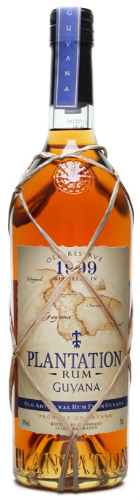
Plantation Guyana 1999 (45%, Old Reserve, 2009, Guyana)

Walk into a spirits shop which sell quite a few Rum’s, you have a big chance to find at least a shelf worth of Plantation Rums. I don’t know if this is true in all the corners of the world, but here in Europe it is. There are several reasons for this. They look quite interesting, quite a lot of Rum producing countries are available, and the price is quite nice. Especially if you are a novice it ticks all the boxes you care about. Having tried some of those, I can also say that they seem to be not bad.

Who is Plantation? Plantation is the Rum brand of Cognac Ferrand. Cognac Ferrand being the mother company that has quite a few brands in its portfolio. If you punch in Cognac Ferrand in your browser, you are quickly transferred to Maison Ferrand and there you can see that Ferrand is definitely more than Cognac alone. Back to Plantation Rum then. Plantation buys casks of Rum and ages them where they have found them. At the end of maturation, the casks are transferred to France, where they receive a second maturation for up to 18 months in small oak casks. Although it is not said that the cask previously held Cognac, we do assume that’s the case most of the time.

Here, we’ll be looking at one of the vintage releases from the Plantation Old Reserve. This particular example comes from Guyana, but according to the website there are six more Old Reserves available: Barbados, Grenada, Jamaica, Nicaragua, Panama and Trinidad. I don’t know if they discontinued some versions, but I do have a St. Lucia version as well. All are vintage releases, so there are multiple vintages available. I have tried several of the vintages of the Jamaican version and found that not only is there some batch variation between the vintages, but also that there can be more than one batch of only one vintage. Jamaica 2000 comes to mind…

Plantation Guyana 1999Color: Full Gold

Nose: Big, fatty and yet not entirely Demerara (yet). Initially, and momentarily, it has this high ester quality and funkiness like a Jamaican Rum, but in a slightly different way. With some more breathing this becomes more like a Demerara and the funkiness disappears completely, or is this my nose getting used to it? Quite fruity and has a very mild acidity to it. Is this the Cognac? Yes, maybe. The slightly off-acidity reminds me a bit of standing in the produce section of an outdoor market in the cold. Hmmm, never saw that before in a tasting note, Crazy Quill. Since these bottlings have seen wood that previously held Cognac, I’m guessing, that must be its origin. Slightly dusty with some paper-like qualities and yes some wood obviously. Hot oak. Old oak planks, yet freshly sawn. Soft. Hints of orange juice (the acidity mentioned above) and maybe banana (it does have a deeper layer, close to concentrated banana aroma). Dry soft wood and old toned down sawdust. yes, its dusty. Black, slightly sweet, tea and hints of licorice. The fruity notes start to integrate better after prolonged breathing and move back a bit, giving way to a more thicker, nutty, funky and waxy toffee character. Ok, letting this breathe seems to be the crux.

Taste: Wood, nutty, fruity and extremely syrupy (syrupy, not necessarily only sweet) at first. Yellow fruits on light syrup, so not thick or cloying. Sugar and burnt sugar (nice) and more nutty notes. A bit hot. Chewy and tasty, in a complex way. It’s not typically toffee of caramel, more like a combination of earwax and toffee. Slightly bitter. It’s in there but its more complex than that. Fresh oak notes and some licorice. Now its (sweetish) Demerara. The second Cognac cask maturation suits the original Rum. Wax with bitter notes of burnt sugar and burnt wood. The body is thick and in your face, but towards the finish that loses ground. It breaks down a bit in the finish, which otherwise has quite some length to it. It feels like a cloaking effect of added sugar. Nice note of almond in the aftertaste and the more breathing, the bigger the licorice note. Not bad, but Demerara can be better, but you will be hurting your wallet these days to try some really good ones. At this price point, it might be hard to find a better deal, but definitely not impossible. Even the El Dorado range of the 12yo, the 15yo and the 21yo do come to mind. Which also has some sugar added, but probably to a lesser extent than the Plantations.

This Plantation offering is in no way perfect, does have a good drinkability, and seems fairly priced. Good ABV as well (at 45%). Not every Plantation Old Reserve is bottled at 45% ABV though. This is an older bottle, from, April 9, 2009 (laser printed on the bottle), and has a slightly different look from current bottlings, which have a thicker glass base and a different icon on the shoulder. It’s also slightly higher in ABV (45% ABV). I fear that subsequent releases may be a bit sweeter than this one, I have already tasted some of them, and 42% ABV. might be the new strength.

Points: 84


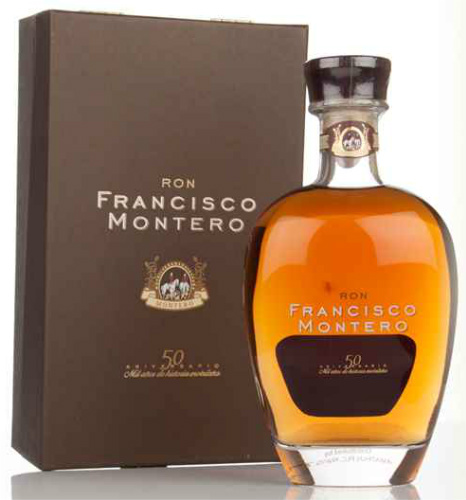
Francisco Montero “50th Anniversary” (40%, 7.000 bottles, 2013, Spain)

Francisco Montero Martin was born on April fools day 1929 in Motil, Grenada, Spain. Motil is unsurprisingly also the place Spanish sugar cane came from. For a long time Francisco dreamed about making Rum, or Ron as it is called in Spain. Finally when in his thirties, in 1963, the year of the demise of JFK, Francisco decided that life is short and started his own Rum-distillery called the Azucarera Montero distillery. Quite a bold move since (domestic) Rum was still unknown in Spain. In 2006, Sugar cane cultivation was seized and one year later, Joaquín Martín Montero, nephew of the founder buys the distillery. His daughter Andrea Martín Targa manages the place, so the business remains in the hands of the family.

Although there is a lot of history concerning sugar cane, the Rum is not distilled from sugar cane juice, but rather from the molasses from the locally grown sugar cane. The cultivation of sugar cane seized in 2006, so the distillery imports molasses made from sugar cane, from Brazil, Egypt, India or Mexico. Sometimes nice molasses from other countries can be brought in as well.

The Rum of Francisco Montero is a light style Rum. Fermentation is done for only 24 to 30 hours and the distillery uses four continuous column stills, of which the first operates under vacuum. This allows for distillation at a lower temperature, claiming less flavour is “boiled off”. However, nothing is said about the conditions provided in the other three columns and their effect on flavour of the final product. Ageing is done exclusively in 500 liter, new American oak casks, configured in a Solera system. And last but not least, in the blending process caramel coloring is done.

Francisco Montero 50th AnniversaryColor: Full Gold.

Nose: A breath of fresh air and a nice floral touch. There is a nice elegant woody nose with an edge of scented paper. Fruity black tea with a little bit of sugar in it. Definitely a molasses based Rum, bot nowhere near the thick and syrupy big Rums. No, it smells refined and elegant without being a completely different Rum, like Agricole. Hints of licorice and more fresh air, but also some wood pulp and breakfast cereals. Sweetness becomes more like a warm liquid of diluted refined sugar. Development in the glass stops rather soon, so after a short while WYSIWYG (What you smell is what you get). I like the floral tough that stays throughout.

Taste: Thin toffee and caramel. Aided by some liquid wood in the background. Lots of warming toffee, vanilla and caramel candy notes. Hints of waxy apple skins and a bitter walnut skin note, but these hints are pushed way back. You have to work for them. Quite unexpected, because the very smart and luxury packaging as well as the speciality of a “50th Anniversary” made me expect something very deep, in part old, and special, just like Abuelo Centuria stands out from the rest of the Abuelo range. This comes across as quite young. Initially very appetizing, with the toffee notes. Towards the finish the taste breaks down a bit. The nice toffee note gets weaker and thinner, and isn’t really replaced by something else. The finish is quite short, and you’re left behind with only an echo of a Rum.

Considering the packaging and the occasion, I was quite disappointed really. I expected a lot more. By its own merits I am disappointed as well. Sure, its a lighter style Rum, but just look at the Cuban Rums I reviewed earlier. The same lighter style but way more happening there. It is all right to sip, but if I would place this according to its merits it would sit right next to the most inexpensive of Abuelo’s, the Añejo, making this Montero way to expensive for what you would get. If you like the style, go for a Cuban.

Points: 78

Cadenhead Demerara Rum 12yo (46%, Green Label, Laphroaig Cask Finish, Guyana)

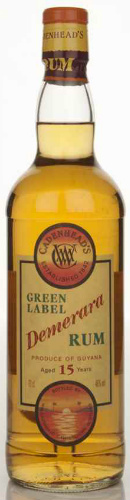
First of all I’d like to start telling you that this review won’t be about the Cadenhead 15yo Demerara Rum that’s in the picture. It’s actually about the Cadenhead 12yo Demerara Rum, and not just any 12yo, but one that was finished in an ex-Laphroaig cask. Laphroaig being one of the most famous of peated Islay Whiskies. Of course Ardbeg and Lagavulin are equally as famous, but that’s beside the point. I couldn’t find a suitable picture of the bottle (I don’t have it here), so I put in this one, since it looks pretty similar. The 12yo has an additional sticker over the neck and cork, starting this is from an ex-Laphroaig cask. The 12yo Rum is even lighter in color, than that of the 15yo in the picture. Cadenhead of course, is an Scottish independent bottler whose main business is bottling Single Malt Whiskies, who also bottle some pretty good Rums as well. I’m sure, more of those will feature on these pages in the future, especially the cask strength ones.

Cadenhead Green Label 15yo DemeraraColor: White wine. Very pale gold.

Nose: Sweet and funky. Thick and unmistakable Demerara. I know peated Whiskies very well, but I can’t detect any peat in this yet. Distant hint of yellow fruits, white peach. The fruit interacts very well with a mystical hot dry wind note. Sweet peach yoghurt (not the acidity, there is no acidity in the nose whatsoever) and sweet black tea. Creamy. Small hint of nice smelling paper, which adds to the wonderful balance this Rum emits from my glass. All aroma’s go together very well. At this point I have to stress that this Rum has had plenty of time to “settle” with air. Maybe one to decant as well. (I’ve written about the benefits of decanting Whiskies earlier). Still no peat, nor smoke, but I do get some toasted wood. A more than wonderful nose that seems to go on and on. Exceptional. Just give it time to breathe!

Taste: I get the tea note first. Starts sweet, but the sweetness is quickly gone, to be replaced by a prickly woody note, which strips most of the sweetness out of my mouth like it’s been done with sandpaper. This makes room for the strange combination of acidity from unripe berries, milk chocolate and earwax. Wow, this is getting strange fast. Is this the effect of the peat? It still doesn’t remind me of peat though. Lets take another sip. When the dryness takes over, the balance deteriorates a bit. Not everything seems to be in check, and the aroma’s feel a bit uncomfortable. Something new moved into the building and the older residents don’t know yet what to make of it. More toasted cask now, with even some bitterness from one, or both casks. The finish seems short at first but when it turn into the aftertaste a smoky prickly sensation starts to happen mixed with mustard and the typical aroma’s of Demerara that were pushed out of the body and finish of the Rum. The Laphroaig cask did have an effect on this Rum, just not as I expected.

Maybe you Rum buffs don’t know this, but Laphroaig is actually a very sweet Whisky underneath. It’s sweetness is just well hidden underneath heaps of peat and iodine. Well, Laphroaig used to taste like that. More modern Laphroaigs are more obviously sweet, and the peat became more accessible, and the iodine, well, you can get that at your local pharmacy. How strange it is then, that a sweet Whisky with a sweet and heavy Demerara Rum make for such a dry Rum?

I always passed on the Green Labels when buying Rum from Cadenhead in favour of the dumpy bottles with Cask Strength Rum’s in them. Somehow a dumpy bottle with 36yo Uitvlugt (PM Mark!) Demerara Rum from 1966 bottled at 69.3% ABV, had more appeal to me than a 12yo Laphroaig finished Demerara. It still does, but this Green Label is no punishment to drink either. Maybe a bit unusual but also a very interesting experiment. I like it, and its even better than I thought it would be. Beyond the obvious, I’m not sure what the Laphroaig cask did for this Rum, but I do feel that the Demerara Rum, before it was finished, was already good to start with. I’m pretty sure it is Enmore (VSG Mark).

Points: 86

Angostura 12yo “1824” (40%, Circa 2014, Trinidad & Tobago)

Are you mad? Reviewing the same Rum again? Nothing better to do? Well, at first I didn’t want to write two reviews about one Rum. I actually wanted to write one review about two Rums, expecting both to be the same, with just an upgrade in the presentation. When I was on my way writing the previous review, I grabbed this more recent bottling of the “1824” and was quite surprised about the difference when smelling it. I poured it back, without even tasting it, and right on the spot decided to break up the review and write two of them. So here is number two. By now we already know there is a difference in smell, but does it also taste differently? Let’s find out…

Angostura 1824 (2014)Color: Copper brown, ever so slightly lighter than the 2008 version.

Nose: Dry and woody with only a distant funkiness. Well balanced yet very laid back in the nose. Nice red fruity acidity kicks in. Dry vanilla powder and sugared almonds. Sugary in its sweetness as opposed to honey, caramel and toffee. There is vanilla. Smelling very smooth, almost elegant and sometimes perfumy. Sweet black tea with a tropical twist. Dried pineapple? It smells nice, smells like a decent brown Rum, but lacking something. It doesn’t smell like something special, but it does smell rounded out and appetizing. Also performs a bit poor in development. Altogether very middle of the road. Yes, smelling like an Abuelo, but that comes from a different place entirely.

Taste: Starts with red fruity acidity, sugary sweetness with some toffee. Warm diluted, but thin, caramel. Sugary with an herbal quality (cannabis), maybe that’s the influence of the wood. I imagine splinters taste like this. Quite simple with a short finish. Luckily this doesn’t remind me of the “1919” but this new “1824” isn’t one to be overly enthusiastic about as well. Bugger. At least Angostura was able to show its potential with the old “1824”. By the way, this Rum tastes better in big gulps. You need to concentrate it yourself to get the most out of it.

Well, there goes batch consistency. Quite worrying, the difference between a 2008 and a 2014 bottling can be so great, especially when the newest one isn’t the netter of the two. New and improved? nope, alas. Obviously they didn’t change the taste profile of this Rum with the new glass container it comes in, but if I were you, I would still seek out bottles looking like the one from the previous review. That one had a lot more going for it. This newer bottling is not a bad Rum, but the older one is a bit better better!

Tasting the old and the new “1824” side by side I now notice that the old “1824” is more akin to the old “1919” I tasted earlier. Having said that, the old “1824” is still a lot better than the new “1824” and both are better than the old “1919”. Capiche?

Points: 80

Angostura 12yo “1824” (40%, Circa 2008, Trinidad & Tobago)

A long time ago I reviewed the 8yo Angostura “1919” and to be honest, great quality, but it’s taste is not for me. Since then a long time has passed, tried the “1919” on many occasions and it still didn’t manage to grow on me. Well, sometimes that happens. Something like the saying about the organic matter and the personal-cooling-propellor-device…

As I said a long time has passed without the urge to try more Angostura and why should I, since the now defunct Caroni Rum also comes from Trinidad? I somehow liked all Caroni’s I tried better than Angostura “1919”. Finally time has come to try the older brother of the “1919”. A distinguished gentleman from the drinks business personally recommended me this 12yo “1824”, so I just had to buy it. Here goes…

Angostura 1824 (2008)Color: Copper brown

Nose: Initially sweet, but soon more funky, and dries out over time. Nutty start with nice wet outdoorsy clay. Like running with Wellington’s through the fields in autumn. A wonderful depth I didn’t expect, why? Just read the review of Angostura’s 1919 which turns out to be something completely different from this. Soft elegant notes of wood and even some red fruit scents. Red berries. After the Rum got time to breathe more and more vanilla surfaces, and for a moment I got scared this is developing into the vanilla I remember so well from the 1919. No, in this one it stays in check, it is under control, so to speak. A slightly burnt note appears as well, giving the whole some more oomph. The burnt note combines well with the dry woody notes that lies underneath.

Taste: A thin kind of sweetness to start with, with some burnt caramel and toffee combined with hints of red berries. Nice sugared fruity sweetness. At 40% ABV, it tastes a bit thin, but the aroma’s are lovely. Not overly complex, but it works well as a whole. Nice sweetish and warming. You can sense there is more to this Rum than meets the palate, but it probably is reduced too much, weakening that mystery. I’ve said it before, and I won’t say it again. (Hint: it’s about reducing too much), there, I’ve said it anyway! The funkyness from the nose is present again in the finish and aftertaste, where a sweet and slightly burnt not have the longest breath.

I scoffed a bit at the Angostura 1919. I can recognize the quality of that Rum, but after drinking the whole bottle over a prolonged period of time, I never got around to like it. In the world of Rum it is my main example of a decent Rum I really don’t like. It may work very well for you, but it is most definitely not my cup of tea. This 1824 however very much is my cup of tea. With nice Rum funkyness we know from Jamaican high ester Rum, and Borgoe 15yo to name but a few. Nice.

Points: 85

Dos Maderas PX 5+5 (40%, Spain)

Well after the fairly unusual rant of the last post lets leave the Whisky (business) behind and focus on some Rum. My other favorite distillate. A wonderful complement to the Whisky world. Oh yeah! This time around we” have a look at a Spanish Rum, although the Rums themselves come from Barbados and Guyana, places we know make excellent Rum, so if you can’t make top-notch Rum yourself, buy the best you can.

Dos Maderas is the Rum brand of Spanish Sherry producers Williams & Humbert. Williams & Humbert have a long history already, which, if you’re interested can be found all over the ol’ interweb. Remember, Google is your friend. Alexander Williams and Arthur Humbert started their wine-business in 1877. By 1972 the company was sold, and since then two times more. Current owners are the Medina’s who worked at the bodega and wanted it for themselves.

As I mentioned above, Williams and Humbert buy their Rums from Barbados and Guyana. Both Rums are approximately 5 years old. In Spain they are aged further for three years in cask that previously held a Palo Cortado Sherry. Part of this is bottled as the 5+3 expression. Another part is then further aged for another two years in casks that previously held PX Sherry, thus giving us the PX a.k.a. the 5+5. By the way both Sherries mentioned above, aged for twenty years in these casks, so these casks should impar a lot of aroma. Let’s see…

Dos Madeiras PX 5+5Color: Dark copper brown.

Nose: Smells extremely sweet. But also the liquid makes you believe that, since it is very syrupy. Hints of burnt sugar and definitely some Pédro Ximenez. Besides the depth this Sherry gives, it also impairs a fruity acidic note. Hints of paper and cardboard in the back and even some raisins. Not a lot of development and overall quite simple. Its like the sugar content this must have stopped its evolution and hides any possible form of complexity. Given the fact this contains 5 year old Rum from Barbados ánd Guyana, both highly aromatic Rums, the PX finish is a bit overpowering. That’s not bad, but its more about the PX, than it is about Rum. Altogether nice, but in a flavoured kind of way.

Taste: It starts with Rum, where the nose was more PX. Burnt sugar and Demerara qualities. Heaps of sweetness. It’s a light Demerara style which leaves room for the Bajan Rum as well. However, the PX takes the driver’s seat rather quickly and puts both Rum’s in the back to come along for the ride. Toffee, sugar and caramel, partly burned. Luckily there are some hints of vanilla and green olive (towards the finish). Hardly any wood. Finish is PX again. Aftertaste is PX as well.

I havent tried the 5+3 expression yet, and thus I don’t know if that one has some finesse to it. In this 5+5, the PX overpowers everything. I do like my PX’s, so I kind of like this, but it doesn’t have a lot to do with Rum. Maybe a shorter finish in the PX casks would have been better, and then they should be brave enough to call this 5+4 or even 5+3 1/2. But who am I to say so. Still good stuff though.

Points: 80

A.H.Riise X.O. Reserve Christmas Rum (40%, 875 bottles, 2013, Saint Thomas, U.S. Virgin Islands)

Albert Heinrich Riise was born on the 11th of September 1810 on the Danish Island Ærø. In 1932 he graduated as a pharmacist in Copenhagen. In 1838 he followed his dream to work as a pharmacist in the Danish West Indies in St. Thomas. In 1842 he married Henriette Marie Worm (1821-1889) on St. Croix. The couple had 13 children. I guessed he felt at home in the Carribean! In 1843 he had his own pharmacy which he turned into a succesful business. Being an excellent pharmacist Riise used Caribbean plants and herbs for the manufacture of pharmaceutical alcohols and cosmetics. He especially was succesful in selling Riises Bay Rum, yes you guessed it, a perfume! He also started distilling Rum and bitters as medicine. Way to go Albert. In 1868 an epidemic broke out of cholera, yellow fever and smallpox. No Rum would cure that, so the family decided to go to Denmark for a year, but in the end never returned to live on St. Thomas. Albert passed away in 1882 and his wife Henriette followed him in 1889.

A.H. Riise X.O. Reserve Christmas Rum has aged up to 20 years, and was finished in PX Sherry casks. Each bottle comes from a single cask.

A.H.Riise X.O. Reserve Christmas Rum (40%, Saint Thomas, U.S. Virgin Islands)Color: Brown with an amber hue.

Nose: Nice Demerara type of Rum nose with notes of cloves in (partly dried) orange skin and cinnamon. Old wood, speculoos cookies and very festive smelling. Its like visiting and old distillery museum where a lot is done with spirits and spices or a bakery museum where all the spices are stored for making cookies. Vanilla, hot butter and fruity acidity. Very aromatic. Also hints of ginger, cardamom, dust and nutmeg. Very nostalgic, appetizing and tasty. Based on the nose alone a must-have so lets see if it also tastes as good…

Taste: Thick and sweet. Syrupy. Sugared red fruits. White pepper and some wood. Fresh cookie dough. The orange skins are present too, but without the cloves. Noticeable is the finish in PX casks. Not the longest of finishes, but warming and just right. The part that stays on the longest is the fruity acidity, but wait…the cloves return for the finish, excellent!

The nose alone puts me in a melancholic mood and puts me in a bakery or Jenever distillery where spices and botanicals are used for the spirit. It makes me feel like it’s the 1930’s again (or so I imagine, since I wasn’t born yet in the 1930’s). The nose is very nice and suits the Christmas name they use for this Limited Edition. The taste is somewhat simpler and the finish shows that 40% ABV was  a little too light for this kind of rum. On the website the claim is made, or maybe that’s just how I read it, that the typical aroma’s come from the PX casks that were used for the finish and not by added spices, so it should not be a spiced Rum. In the end that’s not entirely important, since it is a very nice Christmas Rum, and even if it was spiced, isn’t Christmas a time to forgive? Wink, wink, nudge, nudge. Merry Christmas everybody!

Points: 87

Havana Club “Selección De Maestros” (45%, Cuba)

Havana Club is the story of José Arechabala y Aldama (Don José). In 1862 the 15yo José moved from Spain to Cuba, and in 1878 he founded the La Vizcaya Rum company in Cárdenas. He changed the name of the company to his own in 1921 and left his son-in-law José Arechabala y Sainz to run the company. In 1923 José passed away and the second José was killed just a year later by kidnappers. Gabriel Malet y Rodriguez took over, but he died already in 1926 to be succeded by Don José’s nephew José Fermín Iturrioz y Llaguno (Josechu). Under Josechu, the Havana Club brand came to be in 1934. Like so many businesses the company was nationalized on the first of january 1960, and the family moved back to Spain and the US. After nationalization, the government changed the name of the distillery into Havana Club. The Cuban government started selling Havana Club Rum in 1972 in Eastern Europe. In 1977 a new factory went into production in Santa Cruz del Norte and a second factory was opened in 2007 in San José. In 1993 the Cuban government signed a deal with Pernod Ricard, where the latter would take upon itself to “sell” Havana Club to the consumer all over the world except for the US, because Bacardi already sells a brand of Rum called Havana Club (made in Puerto Rico) in the US since 1994, after buying the name and recipe from the Arechabala family. Pernod Ricard and Bacardi, both Giants in the drinks business, are fighting over the brand and its use in the US in court ever since…

Havana Club Selección De Maestros (45%, OB, Cuba)Color: Full gold, toffee.

Nose: Just like the Cubay 10yo, this is full on aroma. Again a Rum that jumps at you from the glass, so don’t pour yourself too much at once. Somewhat less creamy and soft, but sharper and seems to have a more pronounced wood nose. A treat to nose, well-balanced but again not the most complex stuff in the world. It’s probably just the Cuban style I guess. Hints of mocha, milk chocolate and hazelnuts. Wood becomes more and more dominant. Pencil shavings and fresh succulent oak, but also a sharp dry oaky smell which transgressed into a more paper and dry leafy note. So lots of oak in the nose. Raw in a good way.

Taste: Yup oak again, but only for a short while. The sweet constituents are quick to take over. Sugar water, and creamy toffee. Quite warming and good length. This has some serious staying power for a Cuban Rum, which is supposed to be light. Quite creamy and some caramel, in a way I like my Havana Cigars. Compared tot the Cubay 10yo, this has 5% more ABV and it shows. Good length and good delivery. Fruity black tea. Overall this isn’t a very complex Rum, but it does have something of a bite and again is very drinkable and loveable. Wood. The pencil shavings from the nose stays behind for the aftertaste.

Definitely in the same style as the Cubay 10yo, but for me it even has more simplicity, which in this case is not necessarily a bad thing. Remember the Cubay has something I liked and couldn’t put my finger on? Well I still haven’t found out what it is, but this Havana Club I like as well. Overall quite nice and drinkable. I love the slightly higher ABV. On the other hand, it’s also a bit raw, good raw, and lacks a bit of complexity and development, which in this case I don’t mind. A bit young, and definitely a lot of fresh oak, but for me this one surpasses the Cubay 10yo in balance. Nice and tasty stuff but maybe a wee bit too expensive.

Points: 83