Highland Park 25yo 1988/2013 (55.7%, Cadenhead, Small Batch, 2 Sherry Butts, 1086 bottles, 13/242)

This is part three (of four) in Erik’s not-so-run-of-the-mill left behind bottles series. This time a super dark heavily Sherried offering from Cadenhead and Highland Park. Highland Park always went well with ex-Sherry casks. I used to be a big fan of Highland Park, one of the first I considered to be of the highest class available from Scotland. It is such a great tasting Whisky, honest, honeyed and humble. At least it used to be. It didn’t shout off the rooftops how great it is, and still managed to have a pretty solid fan-base around the world. Today however, Highland Park (and The Macallan) are part of a humongous marketing machine, which I tend to distrust. Sure the Whisky is still good, and there are still many, many, amazing bottles to be had (for a price), but the feeling is different, the feeling’s gone, sorry Highland Park. Just compare it to the way Springbank and Bruichladdich are marketed. The feeling is entirely different with these. Yet here we have an independent offering of Highland Park.

Cadenhead, by the way, thanks to Mr. Watt, seem to have reinvented themselves for many years to come. This bottling, it doesn’t say so on the label, seems to be the result of marrying two Sherry Butts together.

Color: Very dark orange brown, just shy of a mahogany hue.

Nose: Deep and dark, lots of oak, making it fresh. Toasted oak, and some warm plastic, which fades and disappears luckily. Fruity heavy Sherry. Meaty oak, and licorice. The wood also has quite a big floral component. Perfumy even. Next I got some Rhum Agricole “sweetness” mixed with dark chocolate. This one is neither red/black fruity, as old Longmorns nor thick and cloying. In the end it has more of the latter than the former. Elegant wood, yet definitely not old skool. Good Sherry, but modern. More and more whiffs of Rhum Agricole and cold gravy. Also drier spicy notes when you let it stand for a while.

Taste: Starts sweet and very nutty. With emerging bitterness when swallowed. A Doppler effect of bitterness. The bitterness is kept in check, so no problem here. Good tannins, not drying the mouth. Silky texture. Hints of vanillin and milk-chocolate pudding. Fruity and again this bitter end of the body. And a big body it is. Well it has been in rather active Sherry casks for 25 years, so no surprise here. Paper and clear glue. Honey, the stuff of bees, not your darling, I hear you ask? Nope, no not really, although it does remind me of licorice candy made with honey. Hardly a Highland Park. Its about the Sherry cask this one. Black tea bitterness, but with a nice edge of coal. Steam punk, but not old skool. The more this breathes in my glass the “older” it gets. More coal, and more steam (and motor oil). It may lack a tiny bit in complexity, but it makes up for it with development (in my glass). The finish is simple and again bitter (medium), but the body is very good (it finally does get into the realm of Longmorn after extensive breathing). Long aftertaste of oak, licorice and black fruits and yes, the bitter bit has the longest breath of all the notes. So it has its good and less good points. Maybe this should have been bottled a few years earlier?

Letting it breathe is a must for this Whisky, it makes all the difference.

Points: 87

Benrinnes 15yo “Flora & Fauna” (43%, OB, L8044CS000, Circa 2008)

Rummaging around the bottles Erik left behind, I found this Flora & Fauna Benrinnes 15. Wait a second, didn’t I already review this Whisky? Yes I did. Almost two years ago I reviewed The Flora & Fauna Benrinnes 15yo. Only that one was an earlier bottling from 2001 and this one was bottled some seven years later. But why not? I remember I liked the 2001 bottling, and we know Diageo doesn’t like batch variation, so now we have a chance to find out. All in good “relativeness” since I have to compare it with the “other” review, since I don’t have any of the 2001 stuff around any more. I’ll write this review first before re-reading the other review.

Color: Orange brown with a copper hue.

Nose: Sherried, with big notes of (fresh) oak. Dark and brooding, somewhat meaty and tarry with strong notes of (sweet) licorice. Dusty paper. Green notes, vegetal, with crushed beetle. So definitely both flora and fauna are in this Whisky. Hints of coal dust, and also something sharper. Smoke? Prickly. I can’t find typical PX-markers, so I do believe this is Oloroso Sherry only. Quite a nice Sherried nose. Seems to me pretty good casks were used for this bottling. Is it fruity? Yes fruits can be found, but not those I expected, what I find is marginally sharper, more acidic. Something like warm apples. Compote. Hints of raisins and honey. Nice stuff. Not a lot of development though. Every time I smell it it is more or less the same. So nice and big, very influenced by Sherry, but not overly complex. Hey, the paper note re-emerges.

Taste: Well who would have thought that the first note I taste is of warm apples again? Very nice as a whole, tasty stuff. Not as big as expected, but highly drinkable. Warming at first and quickly turning into a a pretty short finish with not a lot happening, apart from some sweetness from a coffee bonbon, in the aftertaste as well. Some woody bitterness, but the wood itself, pretty invisible actually. Hints of paper and cardboard, but nothing off putting. After every promising sip it is amazing how short the finish really is. Relatively big nose, big start, but weak finish. No off notes, but it is short. yes, Sherried, hints of some kind of petrol based solvent and woody bitterness. Not so dark and brooding, but sweetish and easy going. Hints of coals dust. Not as complex as it might have been, but its strength is its accessibility and overall taste. Pretty simple for a Sherried bottling with 15 years of age behind its belt.

It is a good Whisky, but lacks a bit of oomph, a bit of complexity and a bit of length. Other than that pretty alright for the price. I don’t have to read back my earlier review of an earlier bottle, to tell you the 2001 is better than this 2008 bottling. Having read the previous review, I believe, both are quite similar. Only the 2001 seems much bigger and longer than this 2008 offering, hence the score. I hope I get a chance to review an even more recent bottling of this, so see what happened next.

Points: 84

Talisker 20yo 1980/2001 (50%, Douglas Laing Old Malt Cask, “Tactical”, Finished in Sherry Wood, 504 bottles)

Earlier this year I had a leak in my house form a burst cold water pipe. Some demolition was done fixing the problem, so as of this past week and for three weeks in total, I live temporarily elsewhere, whilst several professionals fix up and better my place. My mate Erik offered me his house and I gladly accepted. Erik already sold his house but moved in with his girlfriend earlier than both expected, hopefully that will go well. If you think this is amazing, then let me tell you he also left me some open bottles as well, so I can review them here. And not your average run-of-the-mill, bang-for-your-buck Whiskies as well! 6.5 years ago I already did some kind of short job on another Tactical from the Old Malt Cask range and now, finally, I have a chance to review another one. Thanks mate!

Color: White Wine.

Nose: Slightly peated and sweet. Grassy and vegetal. Organic and slightly fruity acidity with every first sniff from my glass. Old scool. Slightly nutty, fresh and pungent. Hints of warm motor oil and definitely nothing like a modern Whisky or officially released Talisker I know of. If you move it around your glass for a bit, the sweetness emerges first, quickly to be taken over by a lot of the other aromas. Cooked red beets, and more of the sweetness, and some smoke again. Aromas released as by an indicator light. Sweetness on, sweetness off, sweetness on, sweetness off…More fireplace notes, with even whiffs of almost overheated plastic, and back to the green grassy notes again. Indicator light all right. Coffee, mocha, cardboard and hints of well aged Calvados. Dark chocolate bonfire. Sugar water, warm water from doing the dishes, peach and apple, for fruits. Yes, there is a lot happening here. Unique smell, very much the smell of Whisky from yesteryear. A smell to die for. Ticks boxes, awakens emotions. Great Scot(t) (and Bruce) almighty!

Taste: Starts a bit bitter, with charred wood, and again green and vegetal. Warming going down. Strong coffee notes with almonds. Smelling it after the first sip makes the smell even better. Second sip starts with the slightly bitter coffee notes with now some added fresh fruity acidity. A narrow band of green apple skins. The whole is not as big and complex as the nose promised. Next some more of the peaty notes. No heavy peat, but yes, the classic Talisker pepper attack is here people! Hello there! After the silky bitter notes finally some sweetness appears, to balance it out. Still this killer smell, wow! Sure, big on wood, peat, yes, but not as earthy nor as fatty as we’ve grown accustomed to from the usual suspects. Slight hint of warm plastic on the palate as well. Still a lot of coffee notes and dark chocolate stay on for the warming finish. The finish itself is pretty long, built around peat and wood. No big aftertaste though. 

The smell is stellar, old scool and well balanced. Amazing length, and the longer you let it breathe the better it gets, almost as if there are no limits to the development. The taste less so. Lacks a bit of complexity and evolution in my glass. Not overly bitter, but definitely bitter and wood driven. Could have been “bigger”, more complex. If only the fruity bits and some acidity could have made their way through, I believe it would do much better. Nevertheless, this is still a sort of classic Malt. From days long gone. I love it, its good and definitely an experience. 

Points: 87

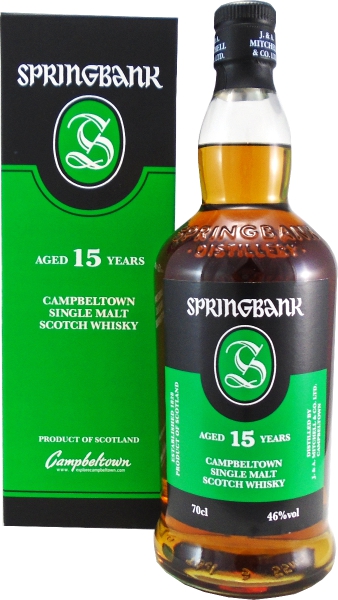
Springbank 15yo (46%, OB, 18/375)

Ahhh, Springbank 15yo. Not the first one on these pages. A few years back I wrote a review of an older batch from around 2003. After 15 years (since this example is from 2018), the glass bottle is still the same, but the label has changed quite a bit along the way. I’ve tasted quite a few of these latest batches, but not every batch. All are good enough to buy blind and many are excellent to boot. This bottle isn’t open all that long, and still I have to write this review a bit in a hurry, before it’s too late and all is gone…

Color: Gold.

Nose: Nutty and Sherried, and for a Springbank 15yo of recent years, pretty restraint. Waxy and dirty, but not as much as other batches. Hardly any smoke, but there is some nice layer of mild peat and spicy wood and even a tiny hint of sulphur, way in the back. Yes a bit dirty. When it gets some time to breathe, it opens up nicely. Typical Springbank, we love. Next a fresh, slightly acidic fruity note. Some wood, almost like fresh oak and tree sap. This however, also sets it apart from the much fattier, deeper and more brooding batches of the 15yo. Now some meat, gravy and paper (no typo, paper, not pepper), and some more oak. It’s great but “narrower” in comparison. Hints of licorice and cherry liqueur. Mon Cherie. Fresh and sharp oak abundant with some hidden chlorine. After a while the acidic fruit turns to orange juice, with a slightly more burnt and perfumy note simultaneously. This has no problem opening up, but still it’s a bit restrained compared to other batches of the 15yo with the green label. More restraint, but definitely a wonderful smelling Malt, keep it moving in your glass for a while, it needs a lot of air still, and will reward you for it. Amazing how Springbanks can smell.

Taste: Waxy, slightly peaty and fruity. Sherried. Licorice and upfront wood. Initial sweetness and no bitter oak. Even though it’s quite fatty, it also is remarkably fruity underneath. Yes, some black fruits from 60’s Bowmore or Redbreast 15yo (the L5). Wonderful. The body is big right from the start, but right around the mark it releases the black fruits, it also get a bit thinner and slightly unbalanced afterwards. There is also a wee cheesy note. Fresh cottage cheese. “Thin” is it’s only flaw compared to other batches. Where other batches stay big and Sherried, this chickens out a bit. A flaw only covered by a quick next sip. This next sip shows some Sherry, but also wood and smoke, coal dust and sweetness, but already covers the black fruit. The nuts appear here as well. So not so big body and a medium finish at best. Truth be told, the finish is rather short for a Springbank, all very typical for rotation 18/375. If you want to get the besy out of this dram, you must give it enough time to breathe. Keep it moving in your glass, and it will get better (and strange enough: sweeter).

This may not be the best batch of the latest fifteens, not by a long shot even. However, don’t make the mistake thinking this is a mediocre Whisky, because it still makes everybody else jealous! As with many Springbanks, this needs a lots of air. Another one I would recommend to leave the cork off for a while in the beginning. This might need even a day or two without a cork to get better. Try it, be brave. Capiche?

Almost hard to believe this one is 15 years old and the Longrow from 1992, only 10 years, since that one has even more depth, and is in my opinion definitely the better of the two.

Points: 86

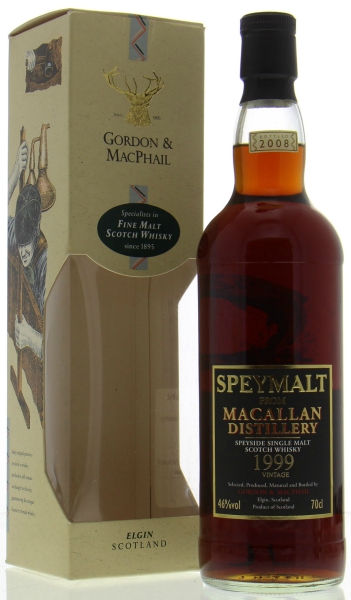
Macallan 9yo 1999/2008 (46%, Gordon & MacPhail, Speymalt, for Van Wees, First Fill Sherry Hogshead #12378)

Wow, look at his colour! I’ll explain shortly what I mean. Also, unusually dark for a Speymalt from this vintage. For those of you who don’t know, here we have an independently bottled Macallan. Maybe this is the way to go for the non-millionaires amongst us, since the owners of Macallan seem to have gone completely over-the-top bonkers with the “brand”, super premiumizing it, crystallizing the bottles, teletubbying the distillery and… well you know what I mean. Let’s shy away from the marketing and focus on quality then. The quality of Macallan’s distillate, the quality of what we’re getting, putting this quality distillate in a quality Sherry cask the good people of Gordon & MacPhail provided for this distillate and reviewing this drinkers’ Macallan…

Color: Vibrant mahogany! No it’s not just orange-brown, it’s mahogany, and it’s only mahogany when it has this redness to it, a red flame if you wish.
Nose: Restrained for a short while. Wonderful Sherry and woody notes. Ever so slightly waxy and also fresh and airy. Milk chocolate, with a tiny hint of smoke, which most likely came into the mix from the burnt insides of the cask. Next, some pencil shavings. Smells fantastic. Quality Sherry cask. Classic Macallan. Not a lot of vanilla, so, I’m hardly guessing, this was matured in european oak, although I do pick up on a slightly creamy note as well. Hard to explain why, but this smells luxurious, elegant and perfumy. Reminiscent of the great Macallans from earlier decades. Remember the times before Fine Oak, and all the stuff that came after that. Remember the days of, “…which science can’t wholly explain…”? Elegant and fruity and in no way, harsh nor overpowered by the first fill Sherry. Not cloying nor heavy. Excellent cask.

Taste: Smoky and slightly tarry. Black coal. Thin honey, yet not a lot of vanilla sweetness. Initially very, very nice. Reminds me of the Macallans, Strathisla’s and Longmorn’s, when Gordon & MacPhail bottles still had screw caps and were bottled @ 40% ABV. (…and still had enough power)! The body is about Sherry and wood, beautiful spicy, and perfumy, wood, and shows a little bit of nice woody bitterness as well. Soft and silky bitterness, which adds to the overall flavour of the Whisky. Quite fruity and almost drinks like red fruit lemonade. Nice notes of mocha and coffee with milk. Rather short finish though. This is where the relative youth comes in, but I don’t think this should have stayed in cask longer. First fill Sherry can be a brutal thing! Short bursts of warming and red fruity notes. And the aftertaste lingers longer than the finish was. Again classic style.

On the other hand, maybe, this could have stayed in cask longer, since in no way it is overoaked. The flavours could have been more powerful, and the cask itself seems very elegant and good. Or maybe it should have been bottled at cask strength, who knows. This might have had some more to it in the end. For me the best bit of this Whisky is the start, when you take a sip and keep it in your mouth for a while before swallowing. Nice woody and licorice notes start emerging that way. Tar and coal. Wonderful stuff. Tiny hint of the typical acidity from rather new oak, which is a different note from fruity acidity, mind you.

The ABV, is slightly higher than the regular expression of the Speymalt from 1999/2008 which was bottled @43% ABV. Darker as well. Still it manages to come across a bit thin. Would it be too harsh at cask strength or is it an economical move by Van Wees? As in, if you dilute it with water you get more bottles from the hoggie? Probably not since it’s a Speymalt. All things considered, this is a classic Macallan. Wonderful stuff. Sure, maybe more could have come from this, maybe not, but I’d still get it as it is. Most definitely I would. Much better than many, and I mean, many modern Macallans, bottled by the (owners of the) distillery themselves. Highly drinkable, so a bottle of this wouldn’t last long…

Points: 89

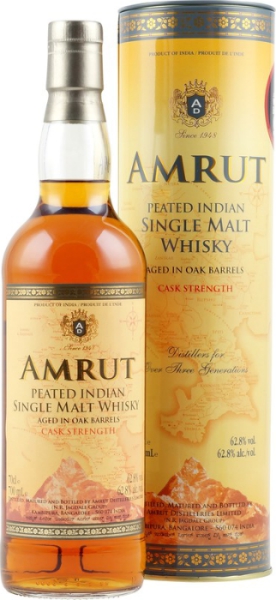
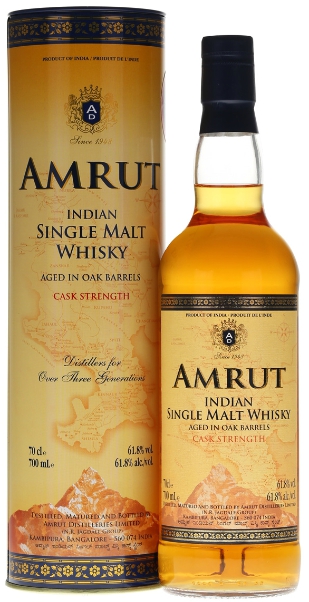
Amrut Cask Strength (61.8%, OB, Batch 87, 2017)

Well, it almost seems a bit unfair reviewing a Paul John Whisky and not look at Amrut too, so here it goes… ehhh, ok, ok, ok, it has nothing to do with being fair. I seem to like Indian Whiskies, so I will come up with almost any excuse to review another one. I had to hurry writing this review, (spoiler alert), because this one is going fast! At Amrut they also make entry-level cask strength versions of their Whiskies. We already know NAS is not a terrible problem with Indian Whisky, since maturation in India moves at a pace like trains move in Japan. Apart from this Amrut Cask Strength Single Malt Whisky there is also a Amrut Peated Cask Strength Single Malt Whisky, which will find a place on my lectern right before I finish this unpeated one, and I’m guessing that won’t take long…

Color: Vibrant orange gold.

Nose: Creamy, vanilla and oak, with a hint of orange (the fruit, this time). Vanilla powder and fairly simple initially. Hints of oak, exotic spices on oak and sometimes pencil shavings, fresh air or ozone. Sweetish and full on aroma. Warm, warming and fuzzy, sunny. This has a very positive vibe. Milk chocolate, maybe even some mocha. Creamy with a slightly acidic top note, yet not fruity, so no unripe berries here, although I do get some candied yellow fruits. Dried apricots but well in the back although on some occasions it is more upfront. That’s it really. That’s all there is. Now for something funny, in a Whisky like this, it is also all you might need. It is well-balanced and very tasty, so I have no beef with the relative simplicity here. It’s instantly rewarding, not far behind the single cask reviewed earlier.

Taste: Creamy pencil shavings on steroids. Lots of exotic spices with soft oaky bitterness. Very nice wood notes, and again fruity. A bit hot, like the climate in Bangalore, but definitely all about Indian 6-row barley malt, and American oak. Candied yellow fruits again. Apricots in sweet yoghurt. Very high quality and very, very balanced. No off notes and everything is in the right place. Spicy, with very good wood notes. Tasty stuff. Amazing value! Not for nothing, this is already batch 87, and this was back in 2017! Wonderful aftertaste, maybe even better than the body itself since it seems to reach an even higher level of balance. Good, slightly short, aftertaste with hints of lightly roasted coffee, arriving late.

First of all, this looks the part, simple bar style bottle with a nice label, and packaged in a proper shiny heavy-duty tin.

If Master Quill would be an institute of some sorts, issuing awards, this Malt would most definitely win a category, something like best (Indian, or World, or any) cask strength bang-for-your-buck Whisky. Excellent quality for an excellent price. I’m baffled you’re still reading this. Stop it now, go out and buy one. Wonderful stuff, a definite must-have.

Last but not least, I have to make the same remarks as I did the previous review (Paul John). For me, this might be a no brainer, but I have been informed, and I occasionally witness, that Indian Whisky may not be for everyone. personally, I love this style and I can’t believe someone wouldn’t like it, but the same goes for every style of Whisky. Some don’t like peat, some don’t like heavy sherry, some don’t like grassy Lowlanders and some like Loch Dhu… So be warned. Keep an open mind though, you don’t know what you’re missing otherwise…

Points: 87

Paul John “Christmas Edition 2018” (46%, OB, Batch 1, 3.000 bottles, 2018)

No, you’re dead wrong! I wasn’t hibernating. I know it’s march already, but in my defence, I opened this on december 25th, as it should be. By now, I had plenty of time to try it several times and write something sensible about this stuff. Even when spring is almost upon us, this is still available. How is that even possible with a limited edition of 3.000 bottles worldwide? Don’t say because it’s Indian, because it’s more like; even when it’s Indian. Indian Malts have managed to find their own place upon the world market and expanding on it by the day.

The people of Paul John are busy spreading the gospel about their Whisky, the people in the background are busy working on ideas for new expressions. Where, in the not to distant past, we only had a few standard expressions and some single casks, It wasn’t long before we had the green “Select Casks”, the 7yo Oloroso Sherry Cask Finish, a Kanya and a Mars orbiter. Still in the pipeline are a PX Sherry Cask Finish and the “Nirvana”. A strange move into the world of 40% ABV Whisky. An entry-entry level Malt, placed even before the Brilliance, upping the status of that one in the process. The point I was trying to make is that Paul John is expanding its range, and one of their expansions is this Christmas Edition 2018. My guess would be that it is highly possible, there will be a Christmas Edition 2019. Hopefully, for the fun of it, making it different in composition from the 2018 edition.

Color: Copper gold, cloudy.

Nose: Fruity and waxy, Paul John style. Extremely fruity. Red fruits and sugared yellow fruits. Tiniest hint of peat, no smoke and most definitely no pine cones. Vanilla, but everything comes through this barrier of fruit. Wood comes next, fresh, almost virgin oak, pepper and pencil shavings. Vanilla. Waxy. Sugared mango, sugared pineapple and sugared papaya. However I also pick up on something more like apple, Calvados comes to mind a bit. Sweet mocha and toffee finally pop out as well, after some breathing and swirling. Almonds and Amaretto. Oloroso finish? It seems to be done sparsely and tastefully. It seems to be only there, on the sides of my tongue, right upon entry and in the finish. For me? This one is about wood, wax and almonds, these are the key markers, and balance. Good stuff again from the tropical shores of Goa.

Taste: Sweet. Toffee and caramel. Wood. Fruity with a light bite of peat. And a separate fruity and slightly acidic layer of unripe red fruits. Again no smoke. Lots of the waxy almondy and Amaretto notes I got from the nose. Both fit together nicely. Nutty with definitely almonds in the finish, and a lovely development towards the aftertaste. Both the nose and the taste were not as complex as I might have thought, since this is peated ánd unpeated Paul John distillate married and finished in Oloroso casks. Still no complaints here. I like it.

For me this is the fourth member of Paul Johns entry-level output. This particular expression seems to be a mixture of casks intended for “Brilliance” and “Edited” as well as (unpeated) Whisky that was finished in Oloroso casks for a short period of time. Like “Brilliance”, “Edited” and “Bold”, this “Christmas Edition 2018” lays down a very high standard for a Whisky at very fair price-tag. It’s really amazing stuff. Sure, Indian Whisky is different from Scottish Whisky (for instance), and if you’re hooked on that, and somewhat conservative, I can imagine Indian Whisky is not for you (yet), but otherwise it is great stuff. For me Paul John, as well as Amrut (more about that later), were true eye openers, which changed and expanded my Whisky world. Rampur is a third, worth a mention, which seems to have potential.

Points: 85

Tamdhu 15yo 1991/2006 (60%, Adelphi, Bourbon Cask #1955, 257 bottles)

Well let’s continue with another oldie, shall we? Clear out some of the sample bottles to fill it up with something new. This is Tamdhu, and Tamdhu is not on Islay, nor will this Whisky be peated. I expect a lot of this Whisky. First of all it’s Tamdhu, which makes a lovely distillate. It’s bottled by Adelphi, a bottler so good, it almost seems as if they can pick any cask they like. This has 60% ABV and just look at the color. Yeah baby, bring it on!

Color: Orange gold.

Nose: Wood and sometimes a hint of an aromatic White wine. Very spicy. This must have been a very active (toasted) cask. Although you might think this cask previously held some sort of Sherry, I hardly doubt it. Creamy vanilla. American oak, all the way. No Sherry notes whatsoever and yet pretty sweet-smelling, although the dryness of the oak, soon takes over, to never let go. Ehhhm, is this all? Hints of fresh air, but it’s mostly all aroma’s that have to do with oak. It’s definitely not overoaked, mind you, but it seems to be rather mono-dimensional. I’m actually a bit disappointed now, since this is Tamdhu, from Adelphi, which has a reputation, and it’s 60% ABV. I love cask strength. Still, nothing happens for me. Sawdust and hot oak. It smells a bit like a carpenters workshop. This definitely could have done with some blueberry notes, now it smells a bit, dull…

Taste: Initially quite sweet, and again, everything you’d expect from an ex-Bourbon cask. Vanilla, powdered vanilla, creamy pudding, instant pudding powder. Milk chocolate (powder) and a totally different green feel to it, as well. My heart skips a beat right now, because, this is more or less it. Lots of oaky notes, and a strange sweetness. Not a lot more is coming to me to be honest. Earlier I already thought my nose was failing me, but tastewise I don’t “see” a lot of evolution in my glass. WYSIWYG.

Although Adelphi claim*, Tamdhu prefers ex- Bourbon casks, I guess the statement from the Adelphi website, reproduced below, is not entirely correct. What the good people at Adelphi probably meant was that Tamdhu might favour Sherry casks made from American oak, which is still a Sherry cask, and not an ex-Bourbon cask, which, yes, are also made from American oak. This particular example has no flaws, it’s nice, but it almost has no complexity, nor does it evolve a lot after pouring or whilst drinking. I’m pretty sure I will forget rather quickly, how this tasted like, and I hardly forget the taste of a Whisky. Go figure. (When reading this last sentence in November 2021, I indeed really forgot how this Tamdhu tasted like. I’m actually amazed a 15yo Tamdhu from Adelphi scored so relatively low).

Points: 83

* 15 Yr. Old Speyside, 1 of only 257 bottles from cask no. 1955

The make from Tamdhu has always impressed us for its consistency, but this cask is as good as any we have ever seen. The distillery favours American oak, ex-Bourbon casks, and this is no exception, only the whisky is such a deep amber that it might have come from a re-fill butt. The first nose is of soft sponge, filled with vanilla cream. After a short time a delectable perfume emerges (face cream or hair lacquer), and then a floral note: geraniums in a pot (there’s a mossy note as well). With the addition of water the provenance of the cask comes through loud and clear, but it retains the delightful floral/perfumed aroma, joined by a sherbert-like ‘sparkle’. A smooth mouthfeel and a flavour which remains sweet throughout, leaving an aftertaste of white chocolate. Try it frozen, with dessert!

Caol Ila 10yo 1996/2006 (57%, Berry Brothers & Rudd, Cask #732-735)

Here is an old one from the dungeons of Master Quill’s castle. (Independent) Caol Ila #11, yes another Independently bottled Caol Ila. The eleventh already on these pages, and I have yet to review an official bottling of the stuff. It’s not as if there aren’t any around now, aren’t there. Although it is a sunny day today, the nights are still cold, so no problem whatsoever to pick me another peaty dram. This time we’ll have a look at a Caol Ila bottled by independent bottler Berry Brothers & Rudd. Although it was distilled back in 1996, it is a mere 10 years old. Young Islay Whisky with a healthy ABV. I expect a nice peaty Whisky. I remember a 1996, which was also 10yo, bottled by Cadenhead’s which I liked very much. I have one of those lying around, so if this Caol Ila turns out to be great, maybe I’ll break out that one as well. Or is it time for an OB? Only time will tell.

Color: White Wine, straw.

Nose: Peaty, but in a christmassy way. Dried orange skins with cloves. Spicy. Otherwise clean. Slightly sweet, aromatic, yet light. Soft wood, almost like cardboard. Definitely refill Bourbon, and the color shows for it. Hints of pepper and overall very friendly. I no way does this smell like a Whisky with lots of alcohol or peat. Appetizing. Next the usual suspects when reviewing Whisky aged in refill American oak. Soft wood, butter, creamy and vanilla. Hints of coal and dust. What’s especially nice is the peppery bit. It suits the nose well, pulling it more to the middle, away from too much creaminess or sweetness.

Taste: soft spices, hints of cannabis and crushed beetle. I only got cannabis in some Bunnahabhains up ’till now. Nice balance. Wow, very soft indeed. Creamy and ashy. Here the ashes replaces the pepper from the nose. Nice green notes as well. Even an Islay profile like this, seems to be already gone from modern peated Whiskies. It doesn’t smell like a high ABV. Whisky, but it also doesn’t taste like one. The profile is so soft and warming. The peat is soft as well, so no heavy hitting Islay here. Spicy, green, ashy and now also fruity. There is an acidic note and the fruit closes to the aroma I pick up on is apple. Green apple, but also cooked apple. Apple sauce. However, this Whisky has also a soapy trait, like cold dishwater at the end of the body, well into the finish. This brings the whole down a notch. There is this brief moment I have to “get through” before the finish picks itself up for the very rewarding and warming aftertaste. This Whisky has a summery feel to it. Countryside in the sun, with fruity and floral bits thrown in.

Amazingly soft and totally different from what I expected. No heavy peat, no heavy alcohol, and not big at all, but friendly stuff, with a kind heart. Smells great. This has a lot of nice and almost rare aroma’s to it. It seems like something distilled longer back than 1996. Yes I’ve got it, this is a melancholic Whisky, which is able to move you, when remembering the carefree good ol’ days…

Points: 85

Longrow 14yo 2003/2018 (57.8%, OB, Limited Edition, Refill Oloroso Sherry, 9.000 bottles)

At the moment I have two Longrows open on my lectern. One is the 1992 Vintage, which, I have to admit, is damn fine, really very good, so it is a favourite and I don’t think it’ll be around for long. The second one is this, limited to 9.000 bottles only, edition of Longrow. This particular Longrow was fully matured in refill Oloroso Sherry casks. I really like the output of the Springbank Distillery, so I expect a lot for each and every Whisky of theirs I can afford to buy and review. This time a bottling that has fully matured in Oloroso cask, so not a finish and not a blend with Bourbon casks, like many standard expressions are. The 12yo cask strength version for instance is usually blended from 70% Sherry casks and 30% Bourbon casks. The link, by the way, will lead you to my review of batch 8 from 2014. Now let’s have a look at this 14yo Longrow. Yes please!

Color: Copper gold.

Nose: Spicy, with slightly rotting banana’s, some muddy sulphur and fruity Sherry. Fatty peat (not a lot) and some soft wood. Freshly ground coffee and lots of fresh coastal air. Some licorice and somewhat more sulphur. Toasted wood. Big bonfire and more aroma’s from being in the woods at night (with a bonfire burning close by). Night air, with a smelly pond (yes, sulphur again) and a sweeter bit close to creamy raisins. As I’m smelling this a lot, this raisiny bit has the staying power and not the sulphury bits mentioned earlier, but since its part of the DNA of this Whisky, I wouldn’t be surprised if it returns. More creamy bits emerge. Vanilla, Sherry casks made of American oak? Probably. Sweetness from the Sherry and the oak as well, so yes, American oak, if you ask me. Raspberry hard candy adds a tad of more fruit to it. Dries out a bit over time with more burnt notes coming forward. By now I’m again struggling to find peat on the nose of an aged Longrow. Did I already mention raisins? I did? Alright then!

Taste: Wood first, then sweet fruits, sulphur, ashes, and even some more wood. they present themselves in this order. Ashtray, and candied red fruits come next. After this first sip the nose gets bigger instantaneously. Still, not a lot of peat, but more on the smoky (sharper than peat) and ashtray side, and don’t forget about the slightly bitter wood. Maybe it’s not the wood that’s bitter, but the sulphur. Hint of burn plastic. Warming honey. Second sip reveals more of good old Oloroso, we know from the past. Red fruits and coal. Burnt rubber, and aroma’s, I tasted last in Rhum Agricole. The aromas of cold ashtray never leaves the palate. It is an integral part of this Whisky and pretty dominant. Sure, some sulphur is here as well, but it seems to be mixed in with the ashtray notes. Cigarette ashes in the aftertaste accompanied by some woody bitterness, which is not a problem in a profile like this.

Definitely not an easy Whisky, and probably not for everyone. I can imagine a lot of drinkers of Whisky and even fans of Springbank and Longrow, consider this to be somewhat flawed. Sulphur (the devil) has been detected. Sure it is here, and maybe even plenty of it. But for me it’s not the harsh and sharp kind you sometimes get, I can forgive its flaws to a degree, but one has to decide for oneself if one can. As I said, maybe not for everyone, although I believe most Longrow’s do end up on connoisseurs shelves anyway. It’s probably a wee bit to expensive as well for a casual pick at your dealer of choice. Nope, most of the people of this particular Longrow are already members of the Springbank Society. A show of hands please?

I mentioned the Vintage 1992? Well, in that one, one could easily taste what a Longrow is. It shines with distillery character. This Oloroso expression is as opposite to the 1992 Vintage, as the flat earth society is to the dead poets society. Oh, my, I hope I haven’t offended anyone. A show of hands please? Here the Sherry overpowered the Longrow, and pushed it out of sight altogether. Considering this and the overall profile of this Whisky I can’t score it as high as I did the ‘1992″. Still good though, but definitely not as good as the “1992” or the Springbank 17yo Sherry Wood, which also matured fully on Sherry casks, for even longer than this Longrow has.

Points: 86