Glenfiddich 18yo “Ancient Reserve” (40%, OB, Circa 2003)

Glenfiddich. Often scoffed at, but never really disappoints. I’ve tried quite a few and all are decent daily drinkers. Older expressions (expensive!) can be really stellar. Sure, Glenfiddich is often reduced to the max, 40% ABV, but sometimes, some more alcohol is possible too, like the Distillery Edition that was bottled at 51% ABV. The higher alcohol, transports the flavours well, so I’m a firm believer in upping te ABV with Glenfiddich to show people with a prejudice against Glenfiddich, that it actually is not that bad. Sure, often not a super-duper malt as well, but surely nothing to scoff at. Today we’ll be looking at an 18yo that is no longer with us, but should still be available if you look closely enough. The 18yo “Ancient Reserve” is blended from Whiskies from Sherry and Bourbon casks, but in this case also from virgin oak casks. The tree are married in a large Solera Vat, using the Solera system.

Glenfiddich 18yo Ancient ReserveColor: Full Gold.

Nose: Waxy and extremely creamy, with definitely quite some Oloroso Sherry influence. Smells quite good. Traits of all casks are clearly noticeable. Vanilla and creamy Bourbon wood and some thick Sherry. Candied apples. I can’t say if the Sherry is from European oak or not. Not a lot of tannins happening on the nose. Sweet peach yoghurt. All aromas are nice and creamy and integrate very well. Waxy fruit. Candied fruit mixed with a hint of yoghurt like acidity and some fresh air. A mere hint of toasted cask in the background and even a tiny hint of waxy apple skins. With air it becomes more dusty and dry. Creamy vanilla holding it’s ground. Not the most complex of noses, but very pleasing nevertheless.

Taste: Very smooth and waxy again, but that dissipates quickly. Well even before I can write down what else I taste, it’s already gone, as is the finish as is the aftertaste. Wow, quickest Malt I have ever tasted, and no it’s not a bad sample. Will this be another story about reduction? Well let’s take another sip, and another, better keep focussed now before it’s all gone. Waxy, nutty and woody. The wood is slightly acidic. Sherry influence, and … Wait a minute, it’s gone again, will have to take another sip. Bare with me. Creamy Sherry and an instant of sugar. Sweetish, Sherried and fruity. The wax carries a woody bitterness towards the end. Smells better than it tastes, although the taste isn’t bad, mind you. Vanilla powder, candied fruit, dried apricots. Nice development. But very weak going into its finish. Funny enough, in the aftertaste some bitterness appears. New wood?

40% ABV is to low for this profile. For the US market this was bottled at 43% ABV. Still quite nice, and better than the current 18yo. Alas this Ancient Reserve was discontinued in 2008. If I could find it for a decent price, I would get it, but I fear it would also be quickly gone. A real shame this got discontinued, especially since the current 18yo is no match for this one.

Points: 85

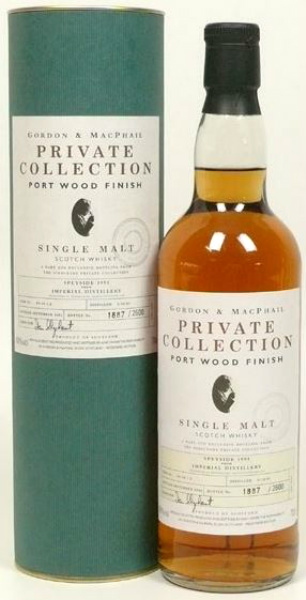
Imperial 9yo 1991/2001 “Port Wood Finish” (40%, G&M, Private Collection, Cask #99/48 1.2, 2600 bottles)

Back to some Whisky. This time around we’ll have a look at a distillery not only closed, but also torn down and already replaced. That happened quickly. In 2012 Imperial ceased to exist and just a few years later a new distillery was finished occupying the same very site. Many have thought that the new distillery would be called Imperial as well, when in fact it is called Dalmunach after a nearby pool of the river Spey. Imperial wasn’t hugely popular as a Whisky hence the new name maybe, but Pernod Ricard (the owners) never ceases to amaze us, by installing new stills replicating those of Imperial. Well in some time we can taste the replicated taste of Imperial, but for the time being let’s taste the original, shall we?

Imperial 9yo 1991/2001 Port Wood Finish (40%, G&M, Private Collection, Cask #9948 1.2, 2600 bottles)Color: Full gold with a slight pinkish hue.

Nose: Winey and candied red fruits. Easily recognizable as a Port finish. Barley, paper. New oak and some pencil shavings. Fresh-air notes, with some sugary sweetness following suit. Nice creamy vanilla mixed with fruity acidity. Typical American oak (the cask it was in before it was finished) but also some sandal wood. The Port integrated well and is used well. In those days experiments with Port finishes often went wrong since the Whisky was left in the Port cask for too long. The whole however is pretty simple and young. What you smell is what you get. Don’t expect a lot of development, if any, but keep in mind that even with the Finish, this Whisky is only 9 years old. Fruity Whisky. Smells nice. ’nuff said.

Taste: Sweet creamy vanilla and candy sweetness. Hard raspberry candy and sugar. A chunk of toffee, molten ice-cream and nice toasted cask that gives it a back bone. Milk-chocolate. Actually pretty tasty. You can taste the potential harshness of the Port. Winey yes, a bit, followed by a somewhat burnt synthetic aroma. The slightly burnt note from the Port cask stays around. If this was finished much longer it would have been over the top. It was arrested in its development just in time, which was quite unusual in those days, but I may have said that already didn’t I? Soft, smooth and tasty young stuff with a pronounced weakness in the finish-department.

Simple yet well tasting stuff. If only the finish would have been stronger. I mean the finish of the Whisky itself, not the Port finish. Still, even for a Port finish from the start of the new millennium, there is nothing wrong with this. Buy a bottle of this and expect it to be empty quickly. This time also nothing wrong with the low ABV of 40%. A higher ABV may have lengthened the finish a bit, but I’m OK with it as is…

Points: 81

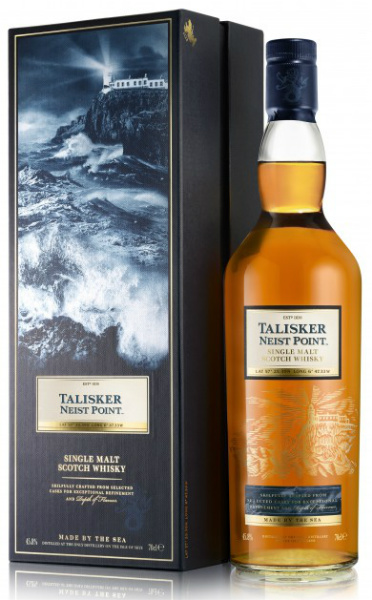
Talisker “Neist Point” (45.8%, OB, for Travel Retail)

Just a few weeks ago this new Talisker was released, not by Diageo, but by Diageo Global Travel and Middle East (GTME). What? I don’t know why, but why do I have the feeling I’m being more and more conned? First, lets back up a bit. Not so long ago you had Talisker’s with age statements like 10yo, 12yo, 20yo, 25yo and 30yo, I said, not so long ago. Longer ago we had a stellar 8yo as well. At a certain point, again, not so long ago, the 18yo was released. All of a sudden, the stocks were depleted and the owners saw that Whisky was fetching silly money all across the board. I get that, because you’re in business to make a lot of money, hopefully, so I get the prices that are asked today. It’s a question of simple economics, supply and demand. Supply, somewhat unknown, the demand high.

Screen-Shot-2015-04-09-at-9.59.34-AMConned I said. Now, we are getting NAS Whiskies, and I tell you why. We need a lot of stock of older Whiskies to make high-priced Whiskies with an age statement again for the future. Well the price I mention is uncertain, because you never know what we the public are willing to pay for our Talisker 18yo in ten years’ time. Thus a lot of young Whisky must be released with some added older Whiskies for taste, because Diageo found out that the traveller is mainly concerned with taste and not age.
So we saw a lot of young Whiskies enter the market place and top money is spent to convince us that it’s all about taste and not age, well, we are made to forget that age matters a lot when it comes to taste! As I said above, I understand that I have to shell out some serious money for my Talisker 18yo, 25yo and 30yo, but that’s my choice, since I do love those expressions, but I can decide myself if I want to spend that kind of money, now or in the future. Diageo doesn’t really care because if I won’t spend that money, someone else will, because we see a lot of people paying a lot of money for Whiskies these days. And it’s almost no use looking elsewhere (other distillates), since those prices are soaring as well.

So conned I feel (Yoda speak), because the latest Taliskers don’t have numbers anymore, but names. Storm, Skye, Dark Storm and now Neist Point. As I said before, there used to be a stellar 8yo, a stellar (Tomatin) 5yo, etc. Today those numbers are not wanted, not because they are low, lower than the modern standard, the 10yo, no. Those numbers are unwanted because they are still too high and still too much a restriction. And since we already made a leap in yield per field of barley, today’s young Whisky can’t be compared to the 5yo of yesteryear. The quality od Sherry cask today is also different from the old ones. So lots and lots of young Whisky is sold to us through NAS bottlings. Yes it’s about taste, but no, not that much young Whisky can be so good as is claimed, and that’s my conned feeling right there. I’m indoctrinated and I’m made feeling stupid by claiming that age doesn’t matter (never did) and hiding behind the statement that only taste matters.

Conned some more I say: Why the mystery? Making up a name, fine, give your Whisky the name of a lighthouse or a Hyundai car. It’s fine, I like the names and I like the screen printed lighthouse on the Neist Point bottle. We all know it’s mostly young Whisky, with some added older casks to meet a desired flavour profile. Diageo claims that the traveller doesn’t care for age, but does care for taste, but the traveler speaks some more, the traveller also wants smooth Whisky, the traveller wants smooth Talisker. But why? Talisker smooth? Laphroaig is also being made smooth. Why? Can’t we have anything not smooth anymore? Didn’t we like Talisker and Laphroaig rough? wasn’t Talisker called the lava of the Cuillins? Lava as in not smooth? Hot and peppery!

Even more conning: It was said that Neist Point (The Whisky, not the lighthouse) has a huge depth of flavour and showcases a wider range of Talisker characteristics. Combining precisely selected flavoured Whiskies with some of Talisker’s rarest and smoothest mature stocks. Yeah right. Will those of you that believe this raise their hand? Am I really to believe the rarest of all Talisker stock went into this and are not released as super-duper premium Whiskies now and especially in the future?

So instead of a nice rambling about the new Talisker I started ranting, sorry for that, it never happened to me before. Critical yes, ranting, nope. Why not try this new expression of Talisker and see if it still has some lava in it. By the way, in the past Douglas Laing bottled some smooth Talisker’s. Back then, these casks didn’t match the Talisker profile and were sold off to be used in blends, now they are especially sought out and used for Talisker Neist Point… [fanfare music is playing and curtain rises…]

Talisker Neist Point (45.8%, OB, for Travel Retail)Color: Gold.

Nose: Some light smoke. Barley sweetness, and some old Sherry wood. Tiny hint of cask toast, but very mellow altogether. Hints of citrus. There is some sweetish freshness in the back, lemon and unripe tangerines. Crushed fresh almonds, mixed with some sweet and fatty peat. Mind you not a lot. When you close your eyes and someone pulls the glass away, a more fruity note stays behind and not a peaty one. Slightly warming.

Taste: Sweet, barley and nutty, again lots of almonds. Sweet lovely peat. (Springbank style). Extremely drinkable, but even after the first sip it is lacking some power and doesn’t hang around in the mouth for too long. Fruity, but more about yellow fruits. Dried apricots and pineapple. A little bit of toasted wood. Thick clay in the finish, which is nice, but the rest of the finish is about immature and young Whisky. Young can be mature, immature just isn’t mature. No pepper attack, so how’s this a Talisker? Short and a bit unbalanced finish, with a beer like note and fresh barley as the last of the aroma’s.

After the rant above, some of you maybe expected I would hate this Talisker, but in fact I wrote the piece above before even tasting Neist Point. It is how I feel, maybe I’m wrong, who knows. Neist Point is what I thought it would be, nice, smooth, extremely drinkable, but also a bit immature, and the rarest of Talisker casks didn’t hide that. Maybe more of those casks should have gone in?

In the end it’s not bad, but not spectacular either. If they really want to sell this for 150 euro’s, pounds or dollars, I feel it’s too expensive. I paid half of that for my bottle and that would seem more than enough. Sometimes it reminds me of Springbank 18yo and obviously the smooth 1980 Tactical from Douglas Laing. Both are better Whiskies with much longer finishes. Spend your money on that I would say, although the Tactical is hard to get these days.

Points: 85

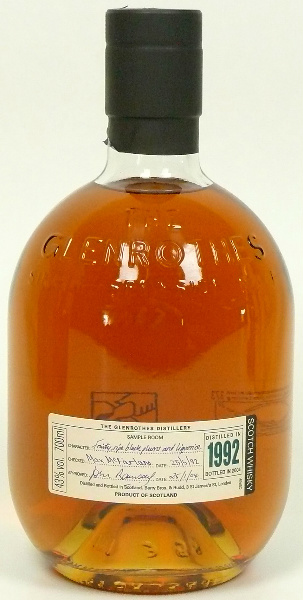
Glenrothes 1992/2004 (43%, OB)

Yeah, a Glenrothes cannonball! I may have mentioned earlier, but when I got into Whisky a long time ago, I really liked the looks of this. Didn’t care for the box though, just for the bottle. Second they are issued as vintages, like wines, so we have here an example of the 1992 vintage. Anyone remember how the summer and the harvest was in Scotland back then? So I quickly bought me something like this, and was a bit disappointed. Now many moons later I have tried quite some of these Glenrothes vintages, like this 1989, or this 1979, but somehow there never was one that really grabbed me.

Glenrothes 1992/2004 (43%, OB)Color: Gold

Nose: Creamy and funky. Definitely some Sherry influence. Vanilla and some disconcerting fruity acidity and spice. Weird combination, not all that well-integrated. Aroma of apples, Calvados. Every time you move the Whisky in your glass, the Calvados pops out first. Mild wood, hardly noticeable. More paper and lots of dust. Coffee creamer. The Sherry influence is also quite dusty and not entirely pleasant. Hints of burnt cask mixes with the Sherried funk. Meaty and ever so slightly smoky. Leaves. cold wet green tea leaves. When I let it breathe, some component, but not all, are coming together a bit. In the end not one of the best noses from planet Glenrothes.

Taste: Sweet and toffeed, quickly followed by woody spice, which combine rather well. No trace yet of the fruity acidity the nose suffers from. Dish water with some fresh coriander leaves and sweet dried basil. Paper and licorice. Medium finish with hardly any aftertaste. Although the taste of the toasted Sherry cask does remain for quite a while as well as some soapiness. A bit strange this one.

Where the nose had its faults, the taste is more likeable, but also rather simple. A typical everyday Glenrothes. Nothing special, faulty but with some good points too. A bit too simple on the taste and lacking some development. Since this is an older bottle, bottled almost twelve years ago, it manages to fetch quite some money at auctions, but that can only be collectors. Those people are definitely not paying that kind of money because this is so great or that special.

Points: 79

Aberlour 13yo 1989/2003 “Warehouse No 1” (58.7%, OB, Single Cask Selection, First Fill Sherry Cask #13330)

Yes, it’s still not over. Just like the 2003 Bourbon Cask Aberlour, I have also a Sherried one. The 1995 16yo Sherry was impressive, let’s see how this 1989 13yo compares…

Aberlour 13yo 1989/2003 Warehouse No 1 (58.7%, OB, Single Cask Selection, Sherry Cask #13330)Color: Mahogany.

Nose: Wow! This is more like it. This smells of proper Sherry cask. From proper European oak. Whisky from the old days. Wonderful wood and dry leafy quality. warm milk chocolate, no raisins. The Sherry is extremely well-integrated and immediately make the right connections in my mind. Wonderful (there is that word again!). Hints of tar and black coal. Remember this from the dark 1971 Scott’s Longmorns? Hints of warm machine oil. Warm steam locomotive, but not as strong as the aforementioned Longmorns. Dry and dusty wood. Old wood, just stripped of 50 years of paint. Wonderful dry fruit. Black berries and such. I love a Sherry profile like this. I just hope it tastes just as good…

Taste: Wow, it starts with wood and the high ABV. Careful. Extremely smooth. Here, there are some raisins put in the chocolate mix. Earwax and nice powdery wood. Cough syrup and wonderfully deep. Thick and cloying. A tad sweeter than the nose lead me to believe. Lacks the tar and black coal from the nose. In itself that’s a shame, but the overall taste and the sheer balance make up for it. This cask had much to give, that they were right to bottle it after 13 years. It would have been over the top with wood if would have aged a few years longer. Stellar aftertaste as well. Near perfect stuff.

I just finished my bottle of a heavily Sherried 1989 Mortlach, but Aberlour also had something going for them in 1989. Tasted blind I might have gone with a Japanese Whisky. I wish I visited Aberlour Distillery in 2003…

Although the Bourbon Aberlour’s are nothing to scoff at, the Sherries are the way to go. Aberlour and Sherry are a made for each other. This 13yo Aberlour is better than all the A’bunadh’s I’ve ever tasted.

Points: 93

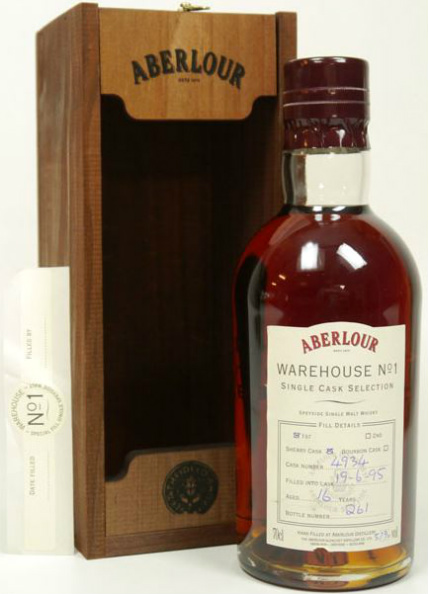
Aberlour 16yo 1995/2012 “Warehouse No 1” (57%, OB, Single Cask Selection, First Fill Sherry Cask #4934)

That’s not all! There is more. I hope you didn’t think I would have only hand-filled Aberlours from ex-Bourbon casks now didn’t you? This is a case of saving the best for last, at least so I hope. Experience showed me that the Aberlour spirit fares well in Sherry casks, and often something wonderful emerges. Just take a look at one of the best NAS bottlings in the Marketplace: The Aberlour A’bunadh. Up ’till now I reviewed two batches on Master Quill: #13 and #33 and calling both pretty good would be an understatement. Here we have a sort of A’bunadh only older and coming from a single cask. So who knows, maybe it’s even better!

Aberlour 16yo 1995/2012 Warehouse No 1 (57%, OB, Single Cask Selection, First Fill Sherry Cask #4934)Color: Warm and dark orange brown.

Nose: Wonderfully sherried. Toffee and cherries. Slightly tarry and very reminiscent of A’bunadh, so I would go with Oloroso Sherry for this one. Nice soft oak. Slightly burnt caramel and the whole comes across with nice toffee notes, without its sweetness though. Well balanced and definitely older than A’bunadh. With some air more rubbery notes appear and more dry wood. Very dusty actually. Tiny hint of cola sweetness and even a hint of florality? Where A’bunadh sometimes can smell a bit harsh, this oozes softness. Excellent stuff.

Taste: Yes more A’bunadh. Starts with a high note of acidity, that quickly moves into cherries and a tarry woody depth. Nice liquid toffee temporary sweetness. Mocha and cream. Latte Macchiato (with a wee bit too much milk). Sticky toffee pudding. Schwarzwalder kirsch trifle, all again without their usual sweetness. Dusty. Extremely drinkable. Lovely.

Even though its twice the age of A’bunadh, it’s very similar in its initial profile. Forgetting the smoothness and softness brought to this Whisky by ageing, you can see this as a single cask A’bunadh. Both share a lot. Having said that, and more or less claiming this is (easily) recognizable as an A’bunadh, I have to say that it also reminds me a lot of the 1996 Ultimate (and Signatory) Longmorns. Earlier I reviewed three of those: cask 72315, cask #72319 and cask #105091.

Points: 89

Aberlour 12yo 1990/2003 “Warehouse No 1” (58.8%, OB, Single Cask Selection, First Fill Bourbon Cask #11552)

Time to follow up the Bourbon casked Aberlour from Warehouse No 1 with another one! This one is a few years younger and bottled more than ten years ago. Right off the bat the colour does seem quite light for something that is from a first fill Bourbon cask. I think it will be quite interesting to compare the two, so without further ado…

Aberlour 12yo 1990/2003 Warehouse No 1 (58.8%, OB, Single Cask Selection, First Fill Bourbon Cask #11552)Color: Light gold, white wine.

Nose: Typically ex Bourbon cask. If you don’t know it by now, you’ll never will. High alcohol, with vanilla. Clean wood and a bit sweet smelling. Toffee. Creamy and dusty. Fresh with a hint of lemon. Mildly spicy, but in a sticky kind of way. I know it does sound a bit strange. Wet dirt and dust. Big in its typical “Bourbon-ness” (the aroma combined with the high ABV.), but the rest is all details, meaning the rest are all mere hints. Fresh air. The wood itself releases quite some nice aroma’s. Slightly sugary wet paper even. Sometimes even whiffs of something meaty can be picked up. Stuff like this may all look alike, and in a way they are. But if you give it some time and attention, yes you have to work for it, the details will show, and sometimes you’ll be rewarded when it strikes a chord with you, like this one almost does with me.

Taste: Sweet, waxy, and nutty. Almonds. Quite hot, due to the high ABV, but the aroma is, again, quite big, so the aroma and the initial sweetness overpower the alcohol and that is quite a feat. Fatty butter, and mixed with that, a dry and leafy quality. Pencil shavings. It breaks down a bit towards the finish, where some bitterness comes to the front and an acidic note decides it doesn’t want to be part of this Whisky anymore. The finish itself is shorter than expected. The finish is gone, when the strength is still making its way down and warming you.

Compared to the 16yo I reviewed last, this one is more about the wood and the vanilla, and creamy toffee. This lack the fruit the more recent 16 yo has. So there is a difference. This 12yo is cleaner and has a more typical nose for a Whisky coming from a Bourbon cask. The 16yo in comparison is way more funky and fruitier and tastewise less balanced and softer. It also has a much longer finish. Who said all ex-Bourbon cask whiskies are alike, since these two alone are already quite different, and I’m not only focussing on the details. Same score though.

Points: 85

Aberlour 16yo 1995/2012 “Warehouse No 1” (52.2%, OB, Single Cask Selection, First Fill Bourbon Cask #8959)

Aberlour was one of the first Single Malts I’ve ever tried. Back in 2000 or 2001 I got the 10yo for my birthday (thanks Arthur!). Nice stuff. Especially for the novice I was back then, and maybe still am, since there remains an awful lot to learn. For me Aberlour was always more about the Sherried Whiskies than the ones aged in Bourbon barrels or hogsheads. The character of the Aberlour distillate is definitely easier to “get” when trying Aberlours from (refill) Bourbon casks, but this hand filled Aberlour from first fill bourbon will do just nicely too. However, I’ve never came across a Bourbon cask aged Aberlour that knocked me off my feet. Maybe this is the one, since it came directly off the distillery. Distilleries hold the best for themselves don’t they?

Aberlour 16yo 1995/2012 "Warehouse No 1" (52.2%, OB, Single Cask Selection, First Fill Bourbon Cask #8959)Color: Light gold.

Nose: Floral and leafy vanilla powder with some funky organics going on. Extremely fresh and fruity. Canned concentrated fresh air. Combinations of pineapple, dried peaches, peaches in light syrup. Sweet white grapes and cherry liqueur bon-bon. Very aromatic and dusty as well. You don’t get a lot of sweet and dusty, but here it is an evolution going on in the glass. It starts sweeter than it ends. It’s fresh and lively and I’m actually surprised this is already 16 years old. I expected a darker Whisky coming from a first fill Bourbon cask. Fresh and minty with small hints of lime. It has everything you can have from an ex Bourbon cask. Florality, vanilla and lots of fruit. In the background typical wet oak and slightly meaty. Sawdust and paper, and sometimes I smell the Bourbon itself. Reminds me a lot of the 1994 Golden Cask expression I reviewed earlier.

Taste: Soft and spicy and quite sweet right from the start. Almonds and very nice creamy vanilla and fruit, peach it is again. Wow, great Bourbon cask. A lot of the elements fall in its place. For me Whiskies with this profile need to be a bit sweeter (especially when the whole lacks a bit of complexity). Creamy toffee and fine powdered sawdust. Vanilla and fudge. Well you get the picture don’t you? Soft wet wood, like snapping off a branch. Hints of latex paint and sweet wood (with a walnut skin, bitter edge to it).

I like the sweetness and the softness of this Malt. Dry, cask strength Bourbon cask Malts can be quite sharp and hot. For instance. The 1997 Tomatin that was aged in a Refill Bourbon barrel is less sweet, and therefore drier but also a bit hotter and harsher. Again a decent Bourbon Aberlour, as I’ve come to expect by now

Points: 85

Springbank 15yo (46%, OB, Circa 2003)

So the Springbank 10yo is always a nice dram and really affordable to boot. Springbank 15yo is usually quite a different dram, never simply only an older version of the 10yo. We already know there always is quite some batch variation with Springbank, and we love that. Not every consecutive 15yo is similar to the previous one, and now the 15yo is not a mere step up of the 10yo. Apart from the taste of it, probably the reason a lot of anoraks love Springbank. So without further ado lets finish off this rotten year 2015 (at least for me it was) and aim for a better year in 2016. So I’ll see you again next year, in good health. Slainthe!

Springbank 15yo (circa 2003)Color: Orange gold.

Nose: Funky Sherry, right from the bat, mixed with fresh air. Something completely different from the 10yo. More fruity with fruity acidity from all kinds of different fruits. Apply acidity as well as acidity from dark fruits. Dry and dusty. Lean and sharp, as opposed to the fatty vanilla from the 10yo. It’s not just an older version of the 10yo. Small hints of peat as well as (only) a small hint of the clay and wax from the 10yo at first, but these aroma’s, as well as the sweetness, develop a lot over time, so give it time to grow. Wonderful stuff.

Taste: Sweetish, red fruits, cloying syrup. A bit Port like. Toasted cask. Peatier than the 10yo, but the peat is well hidden behind the Sherry notes. Definitely a lot drier and fruitier from the 10yo. Alas, just like the 10yo, this has not the longest of finishes and the aftertaste is not particularly big as well. Lovely development towards more fatty peat and oil and sweet tar and a hint of licorice and sugared black tea. Extremely well made and balanced.

I remember when this was released, it wasn’t a very popular bottling. Sure it deviated quite a bit from the usual Campbeltown profile. Even today the 15yo isn’t the most popular Springbank. People seem to dish out more for the old 10yo than for this old 15yo. I’m just happy it is here and it is different from the 10yo. I love both, but for me the Sherry brings something new to the Springbank table, and therefore will score this slightly higher (and because I like it more).

Points: 86

Springbank 10yo (46%, OB, Circa 2003)

So I guess you managed to survive Christmas, congratulations! Christmas is over, but the year is not. There are still a few days left before this year is over, so I dug up two Springbank Whiskies from some twelve years ago. It’s not long ago since I reviewed a more recent 10yo from 2010, so its nice to see how this older version “behaves”. Yes, I said two Springbanks, so the last review on these pages for this year 2015 will be its brother (or sister), the 15yo, from the same time as this 10yo.

Springbank 10yo (circa 2003)Color: Gold

Nose: Oily and fatty. Typical Springbank. Warm barley.  Creamy sweetness. Vegetal. Lots of vanilla, vanilla sugar, vanilla pudding. Nice soft wood. Warm sugar-water. Amazing how sweet this actually smells. Dusty and powdery, but again think creamy and vanilla. Sure it shows its typical Campbeltown profile, but believe me, this is nowhere near the complexity of the current 10yo. Almonds and slightly acidic crushed beetle (with a hint of banana and paper), combined with more and more dusty and dry oak. Tiny hint of smoke and maybe some freshly cut muddy peat, but in fact it is hardly peaty at all. Seems a bit simpler compared to more recent offerings of the same age.

Taste: Sweet it is. Oily, nutty and slightly industrial. Lots of clay. Sweet toffee. Chewy. Very big aroma. Typical Campbeltown. Sugared fruits and again quite a lot of wax (and clay). Warming with noticeable peat this time. After a while a citrussy and fresh note appears. Lemon curd, not sharp lemon by itself. Lemon captured in sugar. After the big and sweet body, I didn’t see the rather weak finish coming. The nose still oozes aroma of wax, clay and wood, then you sip it, and it is big and sweet, and then it starts to leave the building rather quickly. The aftertaste is slightly off with oaky acidity.

It different from the 2010 10yo, but both are great. If you can get this one for not too much money, I would say pick it up. It’s good and very educational compared to more recent bottlings. Where every other distillery try to manage some kind of consistency, Springbank is not that anal about it. The Campbeltown profile is pretty specific, so I don’t think its customers are seeking consistency, but rather welcome the evolution over the years as well as the batch variation that is clearly the with all of Springbank’s products. One of the Whisky nerds favorite distillery, and you are probably one of them, and just like me, proud of it.

Points: 85