 And then there is Glen Keith. Glen Keith lies a stone’s throw away from Strathisla. The spirit from Strathisla was pumped to Glen Keith for filling into casks, but also the boiler at Glen Keith warms water for Glen Keith’s production. Glen Keith’s production started in 1958 with three stills (triple distillation). In 1970 the first two stills in Scotland that are heated by gas were installed. Soon after that, the distillery stopped the triple distillation. In 1983 a sixth still is installed. The distillery is mothballed since 1999, but plans are to restart the distillery next month (April 2013).
Chivas Brothers (owned by Pernod Ricard) already opened two of their mothballed distilleries. Allt a-Bhainne in May 2005 and Braeval (a.k.a. Braes of Glenlivet) in July 2008. If memory serves me well, Chivas Brothers also have Imperial. Alas, Imperial was considered not economically viable for reopening. (It was “old” and had the ‘wrong’ capacity, to small for a company like Chivas), so Chivas presented plans in 2012 for a new distillery to be built at the site of the old Imperial distillery. So the demolition of Imperial started around december 2012 and is now also gone for good.
 Color: Copper, cloudy.
Nose: Musty Sherry with a lot of wood. Dried oranges, and sugared orange skin. Crushed dead insects, well they really don’t make them like this anymore! Cloves which fits the orange skin perfectly. Mocha with orange cordial. A forest in the rain. Oak planks. A Whisky with character.
Taste: Old bottle effect. Very spicy oak but not over oaked. It’s heavy on the wood but that not a bad thing here. A lot of wood and paper. Along comes wood spice and some bitterness. It is so clearly a Whisky from another time, that this one needs it. Luckily the rest of the body is quite ‘heavy’ too, but not in your face. It’s a rather quiet malt. Hot butter, sugared oranges and some coal. It actually is pretty sweet, but the sweetness is hidden well behind the wood and oranges. A bottled antiques shop with a long warming finish.
 This is now my favorite Christmas malt. Just smell that dried Orange in combination with the cloves. It’s not a perfect old bottle though, but it’s so clearly a time capsule. It’s impossible to not love this. I was always a big fan of Strathisla of the sixties and seventies and this Glen Keith is therefore really no surprise at all. Merry Christmas everybody!
Points: 92
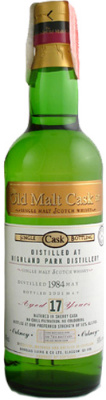 Color: White wine.
 Color: Light Copper Gold.
 So it’s time to celebrate the first anniversary of Master Quill and I’ve picked this bottle of 1979 Scapa, bottled in 2002. Well, things got off really good! Like I said, I would rip open this bottle and so I did accidentally. I broke off the cork! Bugger!
 Color: Copper
 it’s not completely balanced, but it will get there in the end. Complex, well, not exactly. It shows some sourness from the oak, but after half an hour it is pulling together, and it has a great and long finish. This again is a stunner!
 And here is another Master of Malt bottling. Earlier I reviewed a reduced
 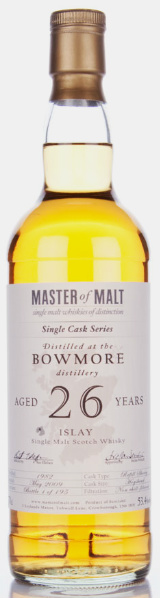 Color: Gold
 Color: Light Gold.
 Let’s continue with Glenfiddich. Known for their big out turn and fairly priced Whiskies. No cheap entry-level Glenfiddich this time, like the
  Color: Full and dull gold.
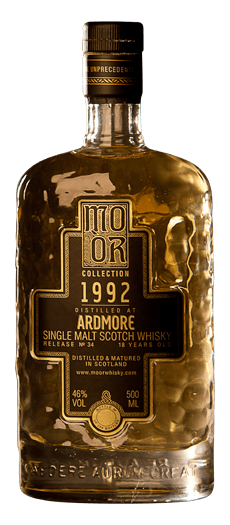 Color: White wine.
 In this day and age of battles, battles for oil, battles in politics, and even dance battles, now there are also battles in Whisky. The guys in the picture are Jan Beek (right) and Dennis Mulder (left). They do tastings/battles to see who bottles the best Whisky, the distilleries themselves or the Independent bottlers. Jan represents the independent bottlers and Dennis the official bottlers. Time for my own battle. Well not a battle with axes and swords. Earlier I reviewed an official
  Color: Lively orange brown.
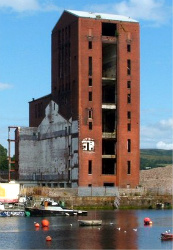 And here is another Cadenhead’s, from the same kind of cask, from the same year 1987, with three years more ageing. Cadenheads call this Distilled at Dumbarton, made with Inverleven stills. Everybody else calls this whisky just Inverleven. To clear things up. The Single malt whisky that was made this way, was called Inverleven. Inverleven was made untill 1991. This was made with the ‘normal’ type stills. In the same building was also a Lomond type still that was installed in 1959 at the Dumbarton distillery and ran untill 1985 (With the malt being called “Lomond”, not Loch Lomond). Loch Lomond lies close by to the north. Only a few kilometres away, still Loch Lomond is a Highland Whisky, and Inverleven a Lowlander. To wrap things up. The Dumbarton Distillery was the spiritual home of the Ballantine’s Blend.
 Color: Light gold. (Darker than the 15yo Cadenhead).
 Master Quill