Here an example of an independently bottled Springbank, well, not really, since the Springbank Distillery and Cadenhead (a Scottish poet) are owned by one and the same, J & A Mitchell. J & A Mitchell bought William Cadenhead Limited already in 1969. Obviously it’s easy this way to bottle some single cask Springbank. Let’s see if they have chosen a stellar Springbank for the occasion. I case you might wonder, it’s not unusual for this to happen, a lot of Springbank got bottled this way!
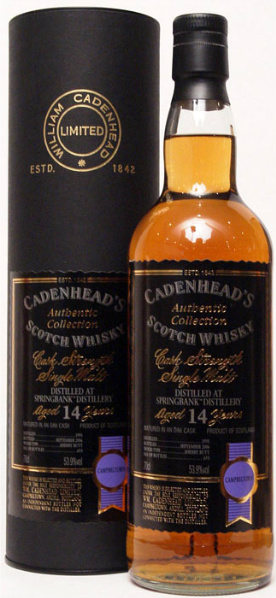 Color: Copper Gold
Nose: Sweet and floral. Very easy and likeable. A hint of soapy wood and even a hint of sowing machine oil. Hard raspberry candy. Lots of vanilla from the (toasted) wood. Old, almost dried out, lavender soap. Powdery and dusty. Lot’s of fresh air, but after that, the rest is light, but balanced.
Taste: A bit anonymous really. Initially a bit hot. Sweet and floral again, A little bit of toasted wood, woodspice. Also some fruity sourness (from the wood). Not your typical Springbank. Warm apple sauce and some acetone maybe. Diluted fruit salad syrup, from which the sweet pineapple sticks out. Initially a bit hot, but with a soothing, balmy and light finish, that is also rather short and is gone before you know it. Great contrast.
I’m very curious what kind of Sherry this cask held before. For me impossible to place. Refill Fino maybe? Not a very active cask, but nevertheless the whisky has a nice color. Do I like it? By itself it is and good whisky, but without a lot of Springbank character though. It’s very quiet and laid back. ‘nuf said.
Points: 83
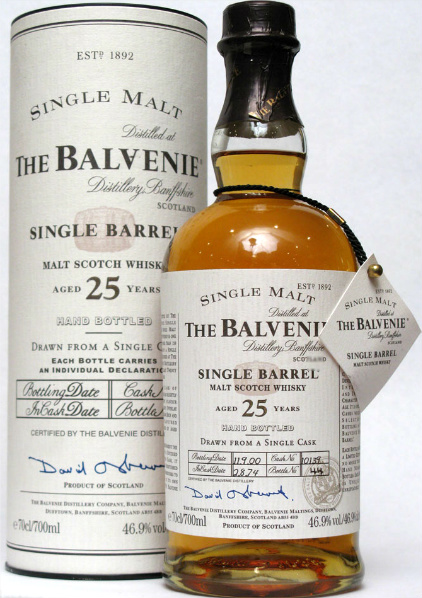 Color: Gold.
 It’s not only the bitterness that is obvious. Comparing these two there is infinitely more. That goes to show, how big the differences can be between two similar bottles, and how buying without tasting is so tricky. I would also like to point out that the reduction that obviously took place here isn’t a problem, this Whisky holds the fort. Actually it’s the best Balvenie I had in a very long time. Still no 90’s score though…
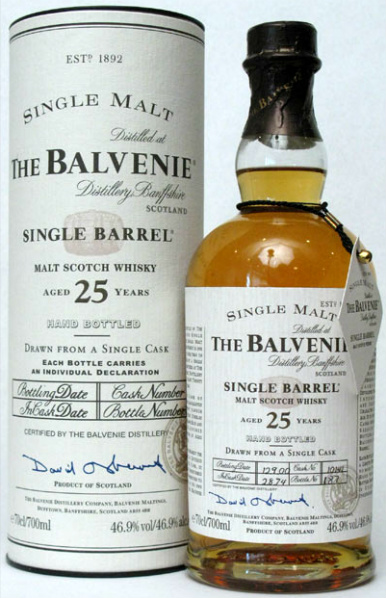 Color: Gold
 The fattiness dissipates quickly and the whisky breaks down in towards the finish. Wood attack! put this in your mouth and you think is pretty good (not great alas), but the vanilla fat is stripped, and you get hit by more bitterness than expected. The palate does lack complexity and balance. Aiii.
 First of all, the picture below is a picture of a similar bottle that was bottled at Cask Strength for Switzerland a year later. The picture is for cask #4726. Glenfarclas is great, it’s family run and most of the make is going into Single Malts, so no room for error, everything must be good. Second, it’s at its best as a Sherried Whisky and even in these times the Grants are able to make a very good Sherried Whisky. The self-proclaimed kings of the Sherried Whisky, namely The Macallan, gave up on this practice. For reasons only the marketing department will know. Good luck to them, Glenfarclas may very well be Speyside’s finest!
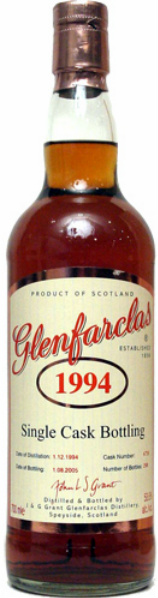 Color: Lively orange brown (like a Bourbon)
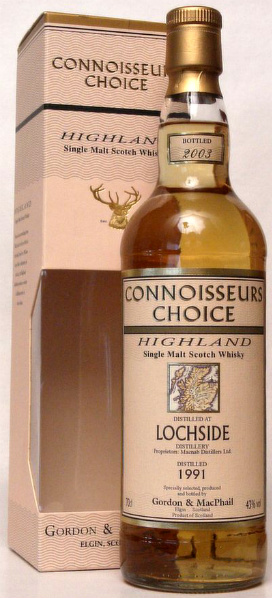 Color: Light Gold.
 Solera is an ageing system for Sherry (and other fortified wines), in which younger wines in upper rows of casks are used to top up casks of older wines stored below. Every time a batch is bottled, the wine is taken from the bottom row. Not everything though, usually up to 30% of the cask is bottled. After this, the casks in the bottom row are topped up with the wines from the casks in the row directly above, and that row is topped up with wines from the row directly above that, and so on. After a startup period this system gives wines of a consistent age and quality, even if one particular vintage is weaker than the others.
 Color: Light copper gold.
 This is number three in Tomatin’s true affordable core range. If you’re new to Tomatin and don’t want to break the bank, Tomatin offers you the 12yo, 15yo and this 18yo. This 18yo is matured in Refill Bourbon Barrels and finished in Oloroso Butts (and maybe even some Puncheons and/or Hogsheads, who knows). A Oloroso Sherry cask used to be thé cask to age your whisky in, but here the whisky was only finished in Oloroso casks.
 Color: Gold with a slight pinkish hue.
 And then there is Glen Keith. Glen Keith lies a stone’s throw away from Strathisla. The spirit from Strathisla was pumped to Glen Keith for filling into casks, but also the boiler at Glen Keith warms water for Glen Keith’s production. Glen Keith’s production started in 1958 with three stills (triple distillation). In 1970 the first two stills in Scotland that are heated by gas were installed. Soon after that, the distillery stopped the triple distillation. In 1983 a sixth still is installed. The distillery is mothballed since 1999, but plans are to restart the distillery next month (April 2013).
 Color: Copper, cloudy.
 This is now my favorite Christmas malt. Just smell that dried Orange in combination with the cloves. It’s not a perfect old bottle though, but it’s so clearly a time capsule. It’s impossible to not love this. I was always a big fan of Strathisla of the sixties and seventies and this Glen Keith is therefore really no surprise at all. Merry Christmas everybody!
 Color: White wine.
 Color: Light Copper Gold.
