 Not so long ago, this was the new-look entry-level malt from Tomatin, but in the quickly changing Whisky-world and especially the trend of releasing Whiskies without an Age Statement (NAS), Tomatin issued Legacy and they priced thát one even lower than this already inexpensive 12yo. Names hardly add something to whisky and I would have loved to see Legacy being released as a 10yo or a 8yo. Now that would have been exciting! Together with the wind of naming Whiskies, I sense a wind that loves young whiskies!
Legacy was made with new oak casks mixed with Bourbon casks. This 12yo is a mixture of Bourbon and Sherry casks, so there should be a lot of difference between the two. Besides this, the 12yo is bottled at 40% ABV, and Legacy gets three points more, 43% ABV.
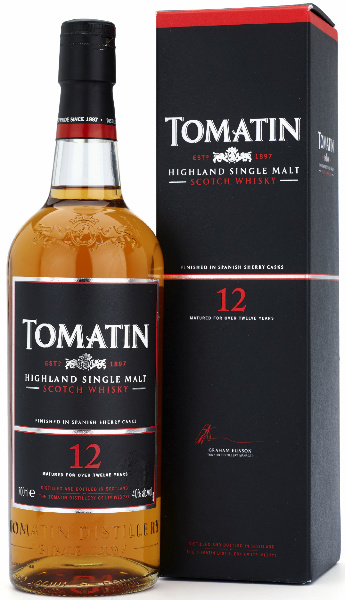 Color: Ochreous gold (Chewbacca golden hairdo).
Nose: Creamy and alcoholic. Leafy and quite woody. Hints of Sherry mustiness and just a little bit of soap. Estery and thick. It smells chewy (how is thát possible), as if you could sink your teeth into this one, (do I detect a meaty touch?). Lots of vanillin from the cask, toasted cask and toast (bread). Behind the creamy vanilla a lot of sweetness (anticipated).
Taste: Thick and actually pretty good. Woody and spicy, but noting like wood in an old Whisky. To me the wood part is pretty similar to that of the Legacy and especially in the taste both are not worlds apart. The difference being some Sherry casks, that were used for the 12yo. It’s more “dirty”, more spicy and a has a different kind of sweetness to it. Leafy. I can’t imagine the Sherry part being more than 20 to 30% of all the casks used. For a sweeter malt, it is pretty drinkable and certainly well made and it has good balance to boot.
The 40% ABV is all right, it really doesn’t need more than that for the market it targets, but the Whisky doesn’t need it too. I tasted this 12yo a few times at festivals (Thanks Alistair), but never at home in my “controlled” environment. The score didn’t change, but it is nice to concentrate on this for a bit. Again bang for your buck from Tomatin!
Points: 83
Thanks Jennifer for the sample!
 Here we have a beer from Poland. I visit the country on a regular basis, so it’s not that hard for me to come in contact with some of the Beers they’re making over there. Poland, of course, is better known for its Vodka, than for its Beers, but during the last few decades has seen a big shift away from the consumption of Vodka (even the tax on Vodka was lowered at some point) to Beer. A few moments later, brewers from the west saw this opportunity and quickly bought up all the large brands. Especially Heineken (f.i. Zywiec & Warka) and Carlsberg (f.i. Okocim & Harnas) were quick to snap up the Polish brewers. Lets have a look at this Okocim Premium Mocne then. I aged the Beer for an extra year (I love to do that), and this Beer can take some ageing.
  For me always a good sign.
 Here in Holland the Asparagus season has started and nothing goes better with that, than a nice fresh white wine. This Berger Riesling was ogling at me for quite some time, since all Austrian wines have the Austrian flag on top, it is easily recognizable.
 This Riesling (12.5% ABV), is wine from
  They are on a stony soil dating from prehistoric times. From these parts you can have a dry, minerally Riesling or Grüner Veltliner. Second on the south of the Krems Valley on the south bank of the Danube, small vintners in ancient villages make local wines in their own old-fashioned way. Third, to the east of Krems, towards Rohrendorf and Gedersdorf, there is löss in the vineyards which is noticeable in the wine, its softer and more lavish in style. The best wines from this region are called reserves.
 Color: White wine.
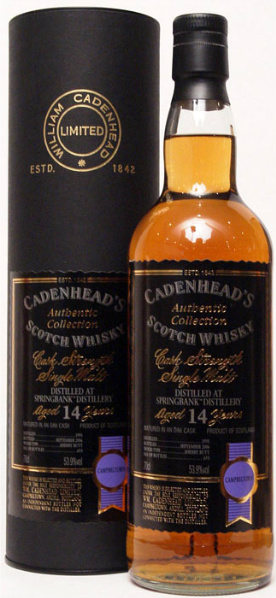 Color: Copper Gold
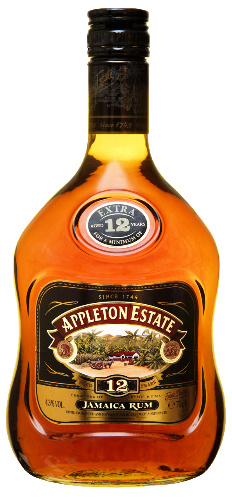 Color: Orange brown.
 Valdivia was founded by a supplier of building materials in 2003. He bought an old property in Jerez and completely renovated it. Next was locating some old stock to be able to release a series of old Sherries. This Series is called Sacromonte and are made up of 15 year old Sherries. Here we will try a PX from the ‘standard’ series. The modern look is aimed at the new trend-conscious generation. In its young history, Bodegas Valdivia already has its third owner.
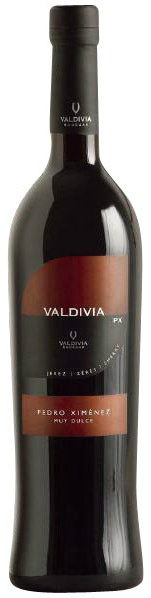 Color: Mahogany. Dark brown with a fabulous red hue.
 For me the nose is fabulous, and the taste a bit thin and short. Lacks a bit of complexity. When I finish this bottle, I will try the 15yo Valdivia.
 Earlier I reviewed a
  Tormore. One of those distilleries, you don’t hear about too much. Tormore was founded in 1958 by Long John International, and distilling started in 1960. It was the first distillery that was built after the Pattison crash of 1898, and thus the first to be built in the 20th century. Today Pernod Ricard is the owner of Tormore and is already the fourth owner in its short history. Tormore was originally built with 4 stills and in 1972 that amount was doubled.
  In 1984 the heating system for the stills was converted, so that it could be heated with… woodchips to heat the stills. Officially only a 10yo was released, later replaced by the current 12yo. For a short while also a 5yo and a 15yo existed. So mostly independent bottlers issue Tormore Single Malt today. Still, over the years not a lot was issued this way, nor does it usually score very high. I guess it’s time to have a look into Tormore. First a Tormore bottled by Dutch bottlers
  Color: White wine
 Some time ago I reviewed
  Color: Murky gravy-brown.
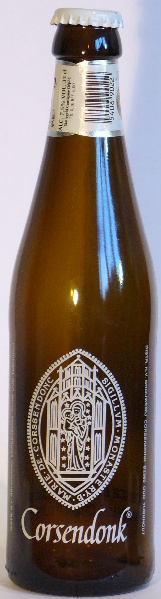 Let’s try another Tripel.
  As you know life is hard. For this review I had to drink three bottles of the Corsendonk Agnus. I bought a couple of bottles a long time ago that were brewed in august 2006. I tried one of those earlier when it was around three years old, and this time I’m trying two, of the same batch, that are now six years old. Yes you can drink Tripels well past their dont-drink-or-you’ll-die-of-food-poisoning-date. Finally I also bought a new one that was brewed in february 2012. Following notes are for the aged ones:
 Well first of all, after the prolonged ageing period, the beer turned a lot darker, than the same batch at a younger age. Originally it was radiant gold, now it turned a lot more copper. The meaty part on the nose disappeared, but it gained a lot of fruity esters. With this it gained a lot of complexity. The three-year old one was more refreshing (more lemon), but this still is refreshing. It gained more depth, but it didn’t even change that much, tastewise. It is easily recognizable as a Corsendonk Tripel. Personally, I find six years of ageing a bit too long. I think it is at it’s best, around three years old. The new batch was, in comparison, very light and really easy to drink, with an aftertaste you only know of your standard beers. After seeing it’s potential I would recommend ageing your bottles for three years. But if you’re interested, longer can be quite fun too. Drinking this right after you bought it is a waste of your money. Put it in your cellar and be patient!
 Master Quill