Longrow 14yo 2003/2018 (57.8%, OB, Limited Edition, Refill Oloroso Sherry, 9.000 bottles)

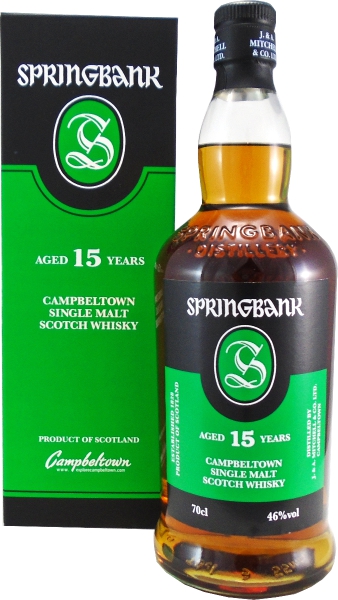
At the moment I have two Longrows open on my lectern. One is the 1992 Vintage, which, I have to admit, is damn fine, really very good, so it is a favourite and I don’t think it’ll be around for long. The second one is this, limited to 9.000 bottles only, edition of Longrow. This particular Longrow was fully matured in refill Oloroso Sherry casks. I really like the output of the Springbank Distillery, so I expect a lot for each and every Whisky of theirs I can afford to buy and review. This time a bottling that has fully matured in Oloroso cask, so not a finish and not a blend with Bourbon casks, like many standard expressions are. The 12yo cask strength version for instance is usually blended from 70% Sherry casks and 30% Bourbon casks. The link, by the way, will lead you to my review of batch 8 from 2014. Now let’s have a look at this 14yo Longrow. Yes please!

Color: Copper gold.

Nose: Spicy, with slightly rotting banana’s, some muddy sulphur and fruity Sherry. Fatty peat (not a lot) and some soft wood. Freshly ground coffee and lots of fresh coastal air. Some licorice and somewhat more sulphur. Toasted wood. Big bonfire and more aroma’s from being in the woods at night (with a bonfire burning close by). Night air, with a smelly pond (yes, sulphur again) and a sweeter bit close to creamy raisins. As I’m smelling this a lot, this raisiny bit has the staying power and not the sulphury bits mentioned earlier, but since its part of the DNA of this Whisky, I wouldn’t be surprised if it returns. More creamy bits emerge. Vanilla, Sherry casks made of American oak? Probably. Sweetness from the Sherry and the oak as well, so yes, American oak, if you ask me. Raspberry hard candy adds a tad of more fruit to it. Dries out a bit over time with more burnt notes coming forward. By now I’m again struggling to find peat on the nose of an aged Longrow. Did I already mention raisins? I did? Alright then!

Taste: Wood first, then sweet fruits, sulphur, ashes, and even some more wood. they present themselves in this order. Ashtray, and candied red fruits come next. After this first sip the nose gets bigger instantaneously. Still, not a lot of peat, but more on the smoky (sharper than peat) and ashtray side, and don’t forget about the slightly bitter wood. Maybe it’s not the wood that’s bitter, but the sulphur. Hint of burn plastic. Warming honey. Second sip reveals more of good old Oloroso, we know from the past. Red fruits and coal. Burnt rubber, and aroma’s, I tasted last in Rhum Agricole. The aromas of cold ashtray never leaves the palate. It is an integral part of this Whisky and pretty dominant. Sure, some sulphur is here as well, but it seems to be mixed in with the ashtray notes. Cigarette ashes in the aftertaste accompanied by some woody bitterness, which is not a problem in a profile like this.

Definitely not an easy Whisky, and probably not for everyone. I can imagine a lot of drinkers of Whisky and even fans of Springbank and Longrow, consider this to be somewhat flawed. Sulphur (the devil) has been detected. Sure it is here, and maybe even plenty of it. But for me it’s not the harsh and sharp kind you sometimes get, I can forgive its flaws to a degree, but one has to decide for oneself if one can. As I said, maybe not for everyone, although I believe most Longrow’s do end up on connoisseurs shelves anyway. It’s probably a wee bit to expensive as well for a casual pick at your dealer of choice. Nope, most of the people of this particular Longrow are already members of the Springbank Society. A show of hands please?

I mentioned the Vintage 1992? Well, in that one, one could easily taste what a Longrow is. It shines with distillery character. This Oloroso expression is as opposite to the 1992 Vintage, as the flat earth society is to the dead poets society. Oh, my, I hope I haven’t offended anyone. A show of hands please? Here the Sherry overpowered the Longrow, and pushed it out of sight altogether. Considering this and the overall profile of this Whisky I can’t score it as high as I did the ‘1992″. Still good though, but definitely not as good as the “1992” or the Springbank 17yo Sherry Wood, which also matured fully on Sherry casks, for even longer than this Longrow has.

Points: 86

Caol Ila 11yo 2004/2016 (46%, Gordon & MacPhail, Exclusive, for Milano Whisky Festival 2016 & Bar Metro, Refill American Hogshead #306662, 348 bottles)

Once nowhere to be found, now maybe one of the most bottled Islay Malts today. Caol Ila. For me at least, Caol Ila is always a nice Whisky which also ages well. This is a pretty young one, bottled less than four months shy of its 12th birthday. In fact, this Caol Ila has matured for precisely 4.275 days. It was bottled for the Milano Whisky Festival & Bar Metro in 2016, I picked this up at a well-known German auction and didn’t have to pay much, nor did I have a lot of competition for this bottle, so maybe there’s something I should have known? At the same auction I picked up its sister-bottling from Glen Elgin bottled for the same festival in 2016 and didn’t have to pay much for that one either. I bought these two, because I found out I had a lot of cask strength bottlings on my lectern, so I wanted to buy some bottles, to start an evening with. A bit reduced to work up an appetite. Gordon & MacPhail have (or had) lots of casks from the 3066XX-range, bottled in many different series; “Cask Strength”, “Reserve”, “Spirit of Scotland” and more “Exclusive’s” as well, so there is enough around for comparison. For instance, Refill American Hogshead #306664 was bottled for Maison du Whisky @ cask strength in the Exclusive range. By the way, some of the casks from this range are Sherry casks. Let’s find out now if this hoggie is any good.

Color: Straw.

Nose: Quite restrained. No big smoky peaty notes. Fresh, zesty but also a bit tame (at first), as in sweet barley with a wee bit of soft peat only. When the flow rate of air through the nose has been increased, lots more seems to be emerging. A prickly sensation awarded to a smoky note. Burning newspaper, and even more earthy peaty notes, still restrained though. Next more creamy notes of vanilla and pudding. Well balanced although I’m not sure yet about its complexity. Hints of sugared, or sweet, yellow fruits. Warming toffee and more soft barley, marzipan and almonds. Even a little bit of honey. All very restrained without it being closed. Dusty. All aroma’s work together nicely. Good balance. A cold and misty day with hardly any wind. As this Whisky picks up air, the good balance even gets better, definitely the forté of this Whisky, and it gets bigger, bolder and more aromatic as well. Quite a surprise. The longer it stays in my glass and I don’t hurry it, the better it gets. More of the fruity notes emerge and the marzipan, very nice. Some wood and ashes as well. So this needs a bit of air and patience. If you hurry this one, you’ll miss the reward of this Whisky.

Taste: Sweet, fruity and smoky, with a funky red fruit acidity on top (it may could do without). Yes, peat as well. Slightly too watery (at first), but as I wanted a “starting Whisky” this does the job quite well. Very nice fruity sweetness, the sweetness of ripe fruits rather than plain old sugar. Very balanced again. Milk chocolate, chocolate mousse, mocha and a tiny hint of coffee with lots of milk. Mint. Just like the nose, the sweetness moves into the territory of vanilla and pudding retaining the minty note. More toffee, caramel and mocha. Chocolate cake, custard, crème brûlée even, with the added bonus of peat, charcoal and ashes. Finally a green, leafy note. Earthy.

The finish is warming yet falls a bit short and I can’t say the wonderful balance reaches the aftertaste. A slightly acidic note peels of from the rest of the Whisky. Where the finish was somewhat short, the aftertaste recovers winning it a bit back for the team. Nevertheless a very nice Caol Ila again, and this probably its sisters as well, deserve your money. I for one, will try to find a G&M 2004 cask strength version from such a hogshead again.

Points: 86

Linlithgow 18yo 1982/2001 (43%, Signatory Vintage, Vintage Collection, Cask #3002, 472 bottles)

Here we have a rather “young” Linlithgow, a.k.a. St. Magdalene. I really, really loved the extremely layered St. Magdalene 19yo, that was released three years prior to this one, so when this came out in 2001, I snapped up a few, expecting a similar experience to the one year older and cask strength expression mentioned above. Hey it was reduced a bit, and only one year older, so it could happen, and it was half the price of the 19yo! At the time, Whiskies from the Vintage Collection were never expensive, as was the case with this one. They sold this at the price of what a Springbank 10yo sells for today. Remember, even in 2001 this was already a closed distillery, so go figure. It was a different Whisky world back then. If I look around the net today retail price for this one is £699,-, and if you read this in 2025 it will probably be even higher, or have we all moved on to something else? If that is the case, why are you even reading about an old Whisky nobody cares for anymore?

Color: Pale gold, straw.

Nose: Extremely malty. hints of sugar-water and ear wax. Fruity and grassy. A Lowlander alright. A breath of fresh air. Toned down, almost shy, but don’t think this is light, because it’s not. It shows quite some aroma. The quiet (big) guy in your class, but you already know there is more to it than meets the nose. Yellow fruits and whiffs of American oak, It is definitely something from the past. Somehow Whiskies today aren’t like this anymore. Its like sitting alone in a field, middle of summer, nothing more than crickets and almost inaudible distant sounds of the rest of the world. Life is beautiful. Hints of cold butter and hay. Warm wood and a bit of old vanilla. Definitely not as multi-layered as the Rare Malts bottling mentioned above, and it hasn’t its evolution either. This is more straightforward and shy (again). Perfectly balanced nose. It got plenty of time to breathe and it can handle the air. No worries then of oxidation. By the nose alone another great example of the variety of St. Magdalene. Closing this distillery is a real loss, and this one is not coming back, so what you are holding in your glass is a piece of history, hence the hefty price-tag.

Taste: Sweet on entry. Malty, barley sugar. Slightly warming. Paper and cardboard. Creamy, with toffee on entry but it gets thinner towards the finish. Lots of fruits emerging at different moment when you keep it in your mouth, making for a sweetish, fruity, friendly Whisky. Only a slight bitterness reminiscent of toasted wood emerges. Less “big” than the nose suggested. In comparison to other Whiskies from this distillery, this might be a rather simple expression, (is it?), but still it oozes something special. Memories of black coal, and motor oil. If so, this can only have trace amounts noticeable, because in essence it is a sweet fruity Whisky. Simple, maybe, but it rewards you with aroma’s from the past, coming from a distillery like no other. Near the end of the body a somewhat burnt note emerges, burnt wood, hot machine (oil). Very nice industrial edge after the friendly fruitiness.

I spent a lot of time with this Whisky over the years, and I remember, when freshly opened, it showed a lot more of the waxy notes and even quite some bitterness. So don’t be afraid of oxidation, even when this is a reduced Whisky, because it will only get better. In the end it turns out much better than I have always thought it was…

Points: 86

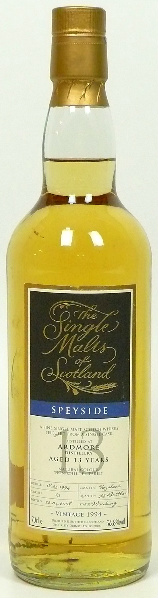
Ardmore 13yo 1994/2008 (56.8%, Specialty Drinks, The Single Malts of Scotland, Hogshead #65, 303 bottles)

Ardmore, my poor-man’s Brora. Since coming across several Ardmore’s over the time, I see huge potential in this Whisky. Very good spirit, and if it is filled into a cask of equal quality, activity, this stuff can really shine. Just have a look at the three I reviewed earlier. Whiskyman’s 1992 (89 Points), Gordon & MacPhail’s 1993 (87 Points), and finally Mo Ór’s 1992 (84 Points), where the last one was reduced to 46%, Why would one do that? All three were bottled some time ago and the reviews were written a few years back as well, so let’s continue with another one from the past. We move up only one year, since this was distilled in 1994, and bottled some ten years ago.

Color: White Wine.

Nose: Well, this most definitely doesn’t smell like White Wine. Slightly buttery, with vanilla, some soft oak, and a slightly acidic side-note. Typical Hogshead remade with American oak staves. Green, grassy and even slightly meaty. Gravy? Not very peaty and hardly any smoke at all. When searching for peat I’m welcomed by a more fruity and lemony note as well as a leafy and green note. Hmmmm, it is the lemon you get from detergents. Nice oaky note taking over from this little faux-pas though. Pencil shavings even. Yes some peat seems to be coupled with the oak, soon to be followed by the return of the creamy and buttery notes from the start as well as some cold dish water. Remember you washed the dishes yesterday and forgot to pull the plug? This may not be one of those complex Ardmores, since it is clearly from a cask that has been filled several times before. Its friendly and fruity, almost summery in demeanor. Some notes seem a bit off, but pull together just in time. Interesting feat.

Taste: Oak and sawdust first. Hints of pepper. Yeah. Right after the characterful statement, the more fruity, citrussy, notes appear. Almost with a carbonated quality to it. Although very tasty, friendly it is not. Too much alcohol for that. I love the oomph which you can sense does great things to balance this Whisky. Ashtray and nice peat mixed in with the citrus fruit. It switches effortlessly between the (fatty) creamy & woody/cardboardy part and the more fruity acidity. Although not very complex, what it does, it does it good. Quite a long finish, although it maybe better to describe it as a prolonged body, since you get all the aroma’s, all the time. Aftertaste is bitter (wood) and again all of the above. This one fools you into thinking its simple, and fruity, it is, but it is not an easy one, and that’s not only because of the high ABV.

Definitely not your typical Ardmore. Where in the past I called a particular Ardmore a potential Brora, this one most definitely isn’t. This bottling is an interesting Whisky, made form excellent spirit, but not good enough to be a Brora to be. I feel Ardmore is somewhat overlooked and underestimated by its owner Beam Suntory in favour of the other distilleries in their portfolio. Ardmore has to compete with Auchentoshan, (one of the last Lowland distilleries), Laphroaig and Bowmore (big, big Islay brands) and Glen Garioch (Highland), which seems to get a lot more love and attention than Ardmore (also Highland). So Ardmore seems to be the ugly duckling in the portfolio. Maybe Ardmore isn’t getting the best casks the company owns, since the Mo Ór example and this The Single Malts of Scotland offering seem to come from somewhat less active casks, yet still manage to turn out quite good. Apart from this, the official output doesn’t seem to be hurling at the consumer as well. Still, I have a lot of faith in Ardmore, it holds a place on my favourites list. It can be a truly amazing Whisky. As long as it stays under the radar, we have to hunt for examples from the independent bottlers world, that were ‘accidentally’ filled into good casks.

To the people of Ardmore Distillery. Keep doing the excellent work, your moment to shine will come!

Points: 86

Laphroaig ‘Quarter Cask’ (48%, OB, Circa 2006)

Well, it has been a while since The 2015 Laphroaig Week here on Master Quill, that a Laphroaig graced our pages. This is one of the earlier and better known examples of a NAS bottling that can still be had today. Laphroaig Quarter cask was introduced in 2004, so it almost celebrates its 15th birthday, how about that. Quarter Casks are casks of approximately 80 litres. The idea behind this bottling is that smaller casks make the Whisky age more quickly, since smaller casks have a higher surface to liquid ratio, than larger casks. And the higher the ratio the quicker the Whisky matures. However, this Laphroaig wasn’t entirely aged in Quarter casks, but is supposed to have a normal maturation in American oak bourbon barrels for 5 years (up to 11 years) and only then receive a 7 month finish in quarter casks, so essentially this Whisky is still only 5 years old, hence the price. It is very friendly priced and since it is almost 15 years available to us, this must be a recipe to success, and another way in showing the critical and discerning public that young whiskies can be very good. As I already showed in several of my previous recent reviews. Remember Bruichladdich, Cotswolds and the Kilkerran Work in Progress #2 and #3 bottlings? But let’s not get ahead of ourselves just yet, lets first find out if this Laphroaig Quarter Cask is any good. However, this won’t be a review of a more recent Quarter Cask, but an earlier example. As can be seen on the picture below, the design of the label has somewhat changed since the earlier bottlings…

Color: Light gold.

Nose: Nice peat, clean, fruity and fresh, ozonic. Meaty, with hints of sweetness. Rural. Soft and hard at the same time. If you try hard, some spicy oak is detectable. Vanilla and gravy notes emerge at the same time. Ashes, paper and citrus. Wonderful combinations. Amazing how appetizing the peat is (mixed in with Vanilla notes from the American oak). The whole is utterly balanced and every bit of aroma, every note seems to belong to the next one. There is also a very sweet, fresh “other” note present, like a fruity-floral hybrid, an added layer to the darker peaty side. Like light in the darkness. Let it stand in your glass for a while and development starts. Based on the nose alone I definitely understand its broad appeal. Young, inexpensive but with very high quality. A present for Laphroaig aficionado mourning the loss of their beloved 10yo, which simply isn’t what it was. The 10yo suffers from Alzheimer’s, but this Quarter cask, yeah, úp, steps the new generation to take over the reigns. Oh, wait a minute, I have yet to taste it!

Taste: Sweet on entry (tea with lots of sugar), with citrus notes and wonderful peat. Simple and short, very short burst of pepper and quite some ashes. Add to that lemonade-like sweetness and fruitiness, and you have a young but wonderful Whisky on your hands. Add to that some “wrong” notes of (lemon) dishwater and fruity acidity (lemon) and you still have a wonderful Malt with added complexity. Lemon can be a very nice aroma to have. It is so good it can deal with these odd notes very well. Clay and more ashes. Pencil shavings. Paper is here too. Bugger, ’till now, I mentioned peat only once when tasting it. It is simply not upfront here, which is quite odd for a young Malt. (Peat breaks down a bit with age). Anyway, also not the longest of finishes around. Aftertaste, hardly there, tiny hint of peat maybe, and here it shows its youth I guess. Still, nice stuff this is.

Since the old 10yo is no more, I guess this is its true replacement. Its higher ABV. of 48%, its peaty profile and the fact it’s not chillfiltered make this the replacement of the 10yo for Whisky geeks like me (for writing stuff like this, and you (for even bothering reading this). Mind you the old 10yo was even much better than this, but compare this to the new 10yo and you know why this is so good. If you’re not a Whisky geek and are easily scared by the medicinal and peaty notes, and yet still like to start with the big Laphroaig, try the Select or the new 10yo. They are more suited for starters. Sweet, toned down peat etc. etc. This Quarter Cask is a wonderful early bottling. I have to buy me a more recent one, to see if they managed to keep the high standard. If so this is one of the best priced peated Whiskies around.

Points: 86

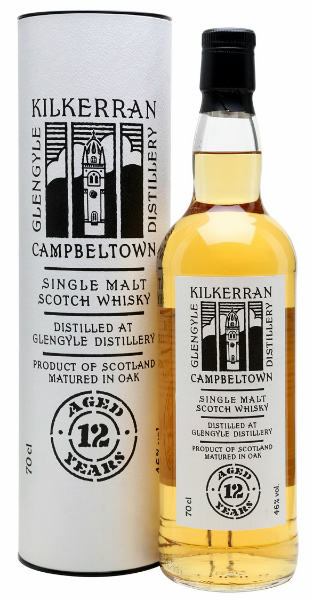
Kilkerran 12yo (46%, OB, 70% Bourbon Casks, 30% Sherry Casks, 16/468)

After many WIP’s, Works in Progress, 2016 finally saw the release of the official 12yo. As far as I know there were four, 700 ml batches released in 2016 (16/316, 16/326, 16/363 and 16/468), and one 750 ml batch. The one I’ll be reviewing here should be the fourth, and last, 700 ml batch released in 2016. Earlier I reviewed two WIP’s. First the grey WIP #2 from 2010 (6yo) and the green WIP #3 from 2011 (7yo). Thus fast forward to this 12yo. Both WIP’s were amazing and just like the Bruichladdich 2007 Islay Barley, I reviewed last, perfect examples that good Whisky doesn’t need to have to have heaps of age. Amazing young stuff is coming out these days. The future still looks bright if you can accept the change…

Color: Straw pale gold.

Nose: Definitely some autumn-like-peat happening here. Fatty, floral, green and lots of summery and fresh yellow fruits. Sweet and acidic. Nice waxy, slightly smoky, edge accompanied with nice wet and dry oaky aroma’s. All well-integrated (now). Kilkerran, just like most other Whiskies from the people of  Springbank, needs to breathe a lot. Freshly opened, I was quite disappointed with this one, lacking depth concentrating on all the wrong flavours and overall not very nice to drink, and that’s saying something, since I love the output from Campbeltown. At the time of writing my bottle is half-full (or half empty if you are a pessimist), and the change is remarkable. Coal and some tarry bits, unbelievable it got this well-balanced and downright delicious, after the more than poor start. Peaches and smoked pepper. Excellent stuff.

Taste: Sweet entry with yellow fruits in sweet yoghurt. White Peaches and old dried apricots. Smoke in the back of my mouth and again after extensive breathing so remarkably tight, big and balanced. All fits together quite well. A bit less complex than the nose was, but it makes up for this “simplicity” with big and luscious aroma’s. Green, and nutty (from the 30% matured in Sherry casks). Again a typical example of a bottle that won’t be around for long on my lectern. It’s not without its flaws, mind you. It hasn’t got the strongest finish. The finish is a bit thin, or seems thin after the big body, and falls apart a bit. Aftertaste reprises the big body with a creamy, vanilla feel to it.

So give it lots of time to breathe. Big from the start, big body, complex nose, a somewhat simpler taste with a medium to weak finish. Still nice and recommendable. I will most definitely pick up another 12yo after a few years to see what they’ve done with it, as well as other Kilkerran releases.

Points: 86

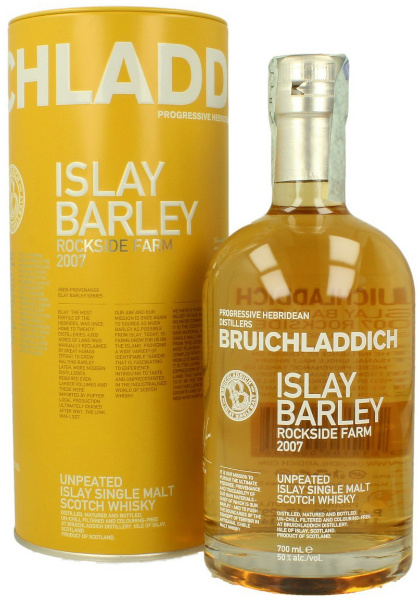
Bruichladdich 6yo Islay Barley 2007 (50%, OB, Rockside Farm, 13/126, 2013)

If you click on Bruichladdich in the right column, you’ll find that the last few reviews of “Bruichladdich” were written about an Islay Gin and two Rums. Yes, Bruichladdich is quite a progressive and busy operation, not only distilling three different kinds of Whiskies (The unpeated Bruichladdich, the heavily peated Port Charlotte and the insanely peated Octomore). They also bottle a range of Rums under the moniker of the Renegade Rum Company, mostly if not all finished in a wine casks. Yes, before I forget, they make a Gin as well, and not any Gin, it’s Gin made with botanicals from the Island of Islay. So a local Gin, and as Bruichladdich say themselves, Terroir matters. A now I have a chance for a bridge, al be it a terribly un-smooth one. Since we are on the subject of terroir…

Where Springbank lead the way with Whisky made from “Local Barley” Bruichladdich takes it one step further. Whisky-nerds always want a lot of information about their dram and Bruichladdich is sure one of those who are happy to provide, combine this with the “terroir” philosophy here we have a Whisky of which we now know it’s not only made from local Barley, but we also know how local. The barley used, Optic, was grown on Mark & Rohaise French’s Rockside farm, and not on the whole 2,500 acre farm, no, it was grown exclusively on one particular field called ‘Minister’s Field’. Two years after this 2007 Islay Barley was released, the French’s decided to sell their farm to Kilchoman, which is built on Rockside Farm land, and leave the Island…

Color: Light Gold.

Nose: Barley, bread and cereal. Warm and sweet-smelling. Vanilla, custard and pudding. Although supposedly unpeated, this still has some peat, paper and smoke. Fresh and fruity, and quite honest. A lot happening already after 6 years. Develops in my glass. Hay, citrus and fresh ripe Cherries. Appealing and appetizing. Depending on the moment, sometimes, and it’s not often, I pick up some petrol. Brings back moments of a warm silent summer in the countryside. No wind and being alone. On top of the fresh and fruity notes lies this sharper smoky note. The whole experience is less broad than the 2006 Bere Barley offered by Bruichladdich as well. Sure this is 6 years old and I guess this makes lots of people thinking it is probably simple or doesn’t offer a lot of complexity. Bollocks. I feel, this offers an amazing complexity. Yes it’s 6yo and it has youthful elements to it, but not typical youth, as in hints of new make. A nice drinker, but this time an even better one for comparison to others like it from Bruichladdich (different vintages of Islay Barley and Bere Barley), Kilchoman 100% Islay, or even the likes of the aforementioned new Springbank Local Barley’s. Yes you need more of these open at the same time. a terrible thought indeed!

Taste: Sweet, with cookies, cereal, and very fruity right out of the gate. Tiny hint of soap and wax. Nothing to worry about. Big, dirt, soil, oil and rural notes, but also creamy with vanilla powder and old dried out toffee bits. Sweet. Hard to imagine now that the Bere Barley was even more aromatic than this one. Just like Springbank, this needs some breathing before showing its true potential, but when it does, it delivers nicely. Nice presentation too by the slightly higher ABV. 50% instead of the new standard which seems to be 46% ABV. Both are great improvements over “old” 40% ABV. Yes, the alcohol is noticeable people. Mocha and milk-chocolate come next. Vegetal, grassy, linseed oil and butter. A healthy sensation gets over me now. The finish could have been better balanced and longer. First of all the Alcohol (sometimes) slightly anasthetizes my tongue and the roof of my mouth. Secondly it gives off a slightly acidic aftertaste which somehow doesn’t really fit the profile. It’s not an off-note but it just doesn’t fit in this picture. It gives too much separation (of tastes and balance) and leaves the finish in a bit of confusion. (gets better with more air). Hardly any aftertaste, which means youth I guess… This luckily doesn’t spoil the fun though, and I still love this dram. Not as complex as the nose but more than enough, especially considering, again, that this is a mere 6yo. It’s a way to go with modern Whiskies. I love this series as well as I do the Bere Barley series. Well done Bruichladdich.

It is quite nice to try several different releases from the Islay Barley series side-by-side. The differences are bigger than one would expect beforehand. In my Whisky Club we also compared this 2007 Islay Barley to the 2006 Bere Barley 2nd Edition. Both are in their own right quite good Whiskies (can we get some older examples too please?), but trying the one right after the other was for me te true way to try these, hence I feel you need several of these open at the same time. They complement each other quite well. The differences are big enough to warrant this…

Points: 86

Plantation St. Lucia 2003 (43%, Old Reserve, 2014, St. Lucia)

Last year I reviewed two other Plantation Old Reserves. One from Guyana, and one from Jamaica. Both were quite good, and very well priced. Both were quite sweet as well, since both have some sugar added. Plantation calls it dosage, enhancing Rum with sugar, in the same way you use salt for your food. Cane sugar (syrup) is added to the Rum before ageing. They do it because they really believe it makes for a better Rum.

Most of the Rum-world lacks regulations, although efforts are being made, but on the other hand, Rum also has a history based on the production of sugar. Rum in a way is a by-product of sugar, so why shouldn’t a little bit of sugar be allowed to use?. In my early days, getting to know Rum, I somehow assumed Rum should be sweet, must be sweet, at least half-sweet. Only when I encountered high quality Rums, and single casks Rums, preferably bottled at cask strength, which obviously aren’t laced with added sugar, that I really came to know about Rum! So some believe Rum has a particular sugar-history, and some believe Rum gets better with adding some sugar in the early stages of production. Others are more militant and will kill you if you add sugar anywhere in the production of Rum. Rum should be pure. No mention though of Rums being to dry or to woody.

Looking back on its history, and its use in cocktails, I’m not against adding sugar to Rums in general, as long as it enhances the final product, making it really better. There is a market for it, just like there is a market for Spiced Rums. There is a market for mixers and there is a market for sippers. Nothing wrong with Spiced Rums, it is a subdivision of Rum. As an aficionado though, a Rum sipper, I would like to know upfront, from the label on the bottle, not by searching the internet that a particular Rum contains added sugar, and especially how much was added. I have experience enough to know how much sugar I can “handle”. Because, dear reader, too much added sugar in Rum can taste really bad! (It reminds me of the discussion around caramel coloring in Whisky, which I found makes the final product not only darker, but also taste rounder, more mono, more flat. Too much sugar will flatten your Rum). I won’t kill you, but for me, many Rums are too damn sweet. On the other hand if used sparsely and with taste, why not?

Since the intro is already quite lengthy, I never got around to say much about this bottle. So in a nutshell, if you want to know more about Plantation, I invite you to read my other reviews of Plantation Rums. It is no secret this Rum comes from the St. Lucia Distillery located on the St. Lucia island. It is a distillery with a few different stills. For this Plantation expression, 80% John Dore Pot Still, 15% Vendome Pot Still and finally 5% Column Still rum was blended together. Initial ageing took place in American oak casks on St. Lucia, shipped to France where the Rum was transferred into Ex-Cognac casks made from French oak for a secondary maturation for, I believe, 18 months.

Color: Full gold.

Nose: An explosion of aroma, almost like a Jamaican high ester Rum, but with many differences as well. Rummy and very fruity. Rum-raisins. A lot of sugared yellow fruits as well as some ripe banana skins, aided by some wood, paper and a fantastic burnt note. Vegetal oak mixed with sweet black tea. Creamy dried apricots with powdered coffee creamer and a slightly acidic note on top. Toffee with something extra. Chocolate with caramel. Nutty. Unripe red berries, old ginger and ripe plums. Grape seeds with some wood and rubber. Hints of smoke. Herbal and grassy. Next, a nice floral part emerges, sweet perfume with hints of rose and juniper. Cold black tea with a slightly smoky edge. Bonfire combined with burning cables. Almonds and butter. Fresh air after rain. Wonderfully complex, it never ends. I adore this one, a wonderful (tamed) beast. Perfect nose.

Taste: The slightly burnt note comes first. Big Rum. Fruity and floral, almost Gin-like. Sweetish but in no way cloying and hardly disturbing due to the humongous body this has, however this might very well be a bit too sweet. Luckily a minor problem this time, but a problem nevertheless. Next, an aroma of sugar-water. Big. big Rum. Nutty and leafy. Burning newspapers with hints of sweet peppermint and sweet chlorine. Medium bitter wax. I know this sounds weird, but it works. Medium, slightly bitter, finish, but with a long aftertaste. Very nice. Not as complex as the nose, but still top-notch. This may very well have some added sugar, but I don’t care, I love this one to death. Easily the best of the Old Reserves. I wonder how a good cask strength St. Lucia tastes like…

This Rum is a labour of love. In 2003 the master distiller of St. Lucia Laurie Bernard, who sadly passed away in 2012, challenged Alexandre Gabriel to blend a St. Lucia Rum choosing from the many Rums produced with the many stills on site, making it the best of the Old Reserve range. The result of that challenge is this very bottle, and I have to say. Job well done! This Rum is great in many ways. When placed in a Rum line-up, it doesn’t matter where you fit it in, it can cope with anything put before it, even heavy hitting Jamaican or Demerara Rums. Amazing. Second, it is really good, it is delicious and smells fantastic. Where the aforementioned Plantation Guyana and Jamaica were ok, or even good, this one is wow!

Points: 86

Bowmore 17yo “White Sands” (43%, OB, for Travel Retail, Bourbon Casks, 2014)

As announced in the previous post about the Bowmore “Deep & Complex”, here is the review for the Bowmore “White Sands”, the top offering from the previous travel retail trio. Where “Deep & Complex” has something to do with Sherry casks, this one is said to have been matured only in Bourbon casks. This 2014 travel retail release is somewhat odd though. Of the three, it is the only one not in a litre bottle, the only one bottled at the higher strength of 43% ABV, and the only one with an age statement. 17yo is also an unusual age, although there used to be a oficial 17yo that was replaced by the 18yo.

Color: Full gold.

Nose: Sweet, syrupy and some very nice, medium strength, smoke. Slightly vegetal, but mostly fruity with sweet orange oil mixed in with sweet, soft peat. Papaya and mango are noticeable too. Hints of cardboard and earwax. Cold black tea. Very accessible. Creamy vanilla and hints of soft oak. It’s almost like sugar-coated oak. I fear caramel coloring is at work here. I’m already getting slightly annoyed, and I haven’t even tasted it yet. I have tasted this bottling before, and on that occasion I found the smoke to be more up-front. That’s important for this bottling since the smoke-bit is really delicious and defining this Whisky (for me). That bottle was half full, by the way, so I’m hoping this only needs some more breathing. (I just opened this bottle). It may very well be from a different batch as well. Letting it breathe right now, already brings out some more wonderful notes from the smoke-department, so I’m confident that if you work this a bit, all will be fine in the end. This will turn out to be a hidden gem, I’m sure. Just let it breathe. Leave the stopper off for a while.

Taste: On entry; sweet (Rum) and waxy. Oak and fruit. Definitely a tad simpler than the nose and most definitely lacking some oomph. This needs at least 46% ABV. Please Bowmore, please. Cereals, soft wood and caramel. Almonds and mango chutney. Milk-chocolate powder. Nesquick. Hints of smoke and some sweet peat. A tiny hint of bitterness from the peat and oak, but not much, not much of that at all. Vanilla, vanilla ice-cream. Soft and creamy. Custard and pudding. You get the picture don’t you? It isn’t hard to taste, this suffers a bit from caramel coloring. Its aromas are glued together, a property of caramel coloring. I wonder what the chill filtration did to this expression? Is the complexity of the nose over the taste a sign of this?

Dangerously drinkable. Talisker Neist Point (a NAS bottling), is another of those peated, dangerously drinkable, travel retail Whiskies. I would love to hate both, since they are obviously flawed, but somehow they turn out better than expected. Never stellar, but good and likeable.

Although this is a good one, it still is one, I feel, has been tampered with. Chill filtered and colored, and as with the other Bowmore, reduced too much. Again a potentially stellar Whisky ruined, (at least in part it is), for the sake of how it looks on the shelves, and how money can be made, at airports. What kind of heartless, soulless people make these kinds of decisions? Do marketeers have so much to say, or are people, like us, who truly like their Whiskies, actually the odd ones out, complaining when we shouldn’t?

I can confidently recommend this Bowmore, I will give you another recommendation as well. Seek out an independent bottling of Bowmore, to find out how Bowmore actually tastes like without the tampering I mentioned.

Points: 86

Port Charlotte 10yo (46%, OB, 13/153)

Many people like Springbank very much and some of those people, the likes of bloggers and vloggers and die-hard aficionados, call out to other distilleries to look more at Springbank as an example how they feel things have to be done. In that respect, hiding in plain sight is Bruichladdich, who are doing things like Springbank but in their own way. For one they have multiple brands: Bruichladdich, Port Charlotte and Octomore and more interestingly they are doing the “Local Barley” thing as well (f.i  the Bere Barley and Islay Barley bottlings). Both series contain rather young Whiskies, which are surprisingly good. Personally, even more exiting is the batch variation, which I find, adds to the adventure in Whisky, although I don’t think they change the composition as much as Springbank between batches. They even code like Springbank (here: 13/153). The first official Port Charlotte 10yo was bottled in 2012, so this is not the first batch of the first release, but it is still the first release, since in 2016 an official second release came out bottled at 50% ABV.

Color: Light gold.

Nose: Nice fresh peat, and dare I say it has a Sherried note? Honest and slightly sweet. Full-on aroma. Slightly sweaty and floral at the same time. Soft as well. Dusty. Clay and finger paint. Pencil eraser. Medicinal. Cold gravy. For me, very special stuff with quite some unusual markers. This big synergetic aroma easily overpowers the soft peat. Maybe not overpowers, but it sure works well in tandem with it. Nice development and evolution of the nose. Every sniff seems different from the last, unless you are sniffing continuously. Appetizing stuff.

Taste: Peat, wood and some fruit in the background. The fruit shows quite some acidity. Starts out sweet, caramel, toffee, but that isn’t here to stay. Well, the aromas stay but the sweetness retreats a bit. Licorice wood. More (different kinds of) licorice combined with milk chocolate mousse. Some soap in my toffee now, as well as some mints (mint candy). Is this the taste of the floral part? Where the nose had a big aromatic presence, the body of this Whisky isn’t as big. Alas the taste cannot keep up with the nose, but the potential is there. If the quality of any of the younger distillates is anything to go by I’m predicting the future of the 10yo to be a bright one. Just compare it to, the sweeter by the batch, offerings of Laphroaig and Ardbeg 10yo’s.

Yes even by today’s standard, 40 ppm phenols is heavily peated, even though by now we are used to the insane peating levels of Octomore, where 167 ppm is just the start.

Bruichladdich might not be the most original distillery around, although Octomore sure is as original as it gets, but it might very well be the most progressive of the bunch today. Springbank is a main stay for me and I guess Bruichladdich can be added to that list now as well. Don’t worry, these two aren’t the only ones on that list. Not by a long shot.

Points: 86