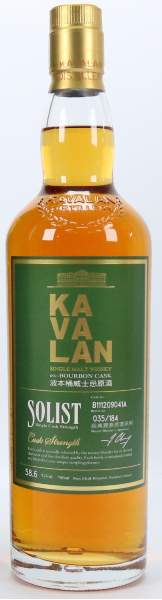
Kavalan Solist Ex-Bourbon Cask (58.6%, OB, B111209041A, 2017.07.11, 184 bottles)

After the minion-Solist I reviewed last week, here is the first true Solist on these pages. I guess that any journey into the world of a particular Single Malt should actually start with the result from maturation in a cask that previously held Bourbon, because casks like these, especially refill casks, show the distillery character best, not overpowering the true nature of the spirit. So here we have a Solist, an ex-Bourbon single cask bottling bottled at cask strength. Beforehand I was quite excited to find out if this Malt would be closer to an Indian Malt or more like an aged Scottish Malt. As said in the previous review, Kavalan is mostly made with Scottish imported barley, but matured in the hot Taiwanese climate, whereas Indian Malts are predominantly made with Indian Six-row Barley, but also matured in a similarly hot climate. By the way, another fun fact, the Indian distilleries do import something else from Scotland though: Peat, and maybe Kavalan does so as well. I’ll look into this when reviewing a peated Kavalan. But first back to basics…

Color: Gold.

Nose: Spicy, sweetish, fresh and modern. Buttery and creamy. Microwave popcorn (the buttery/salty one, definitely not the sweet one) and latex paint for walls. (Not talking about solvents here, although maybe the tiniest hint of some acetone is noticeable, like you get from fermenting over-ripe yellow fruits). Pretty fruity from multiple yellow fruits, as well as a nice Asian florality. After a while the fruit turns slightly syrupy or jam-like. Medium spicy wood. Fresh and herbal. White pepper and pencil shavings. Slightly dry and dusty as well. Mocha and light milk chocolate with distant ice-cream. Some vanilla and wood spices, suggesting of course, American oak. After some breathing the more dusty and cardboard-like notes emerge, adding to the complexity. This is a very good example for a well aged Bourbon cask Whisky, only well aged in Taiwan has thus a different meaning than it does in Scotland. It takes much less time there than a similar example of Whisky aged in Scotland. This particular Kavalan reminds me a bit of Bourbon cask matured Glen Keiths from Signatory, but it could be similar to many other well aged ex-Bourbon cask matured Scottish Single Malt Whiskies as well. The point being, that the aforementioned Glen Keith’s are some 20 years old and I don’t think this Kavalan is a lot more than 5 or 6 years of age. So quite the result for a young Whisky. All in all, a clean smelling Kavalan, this is. Thank you, Mr. Yoda for that.

Taste: Very nutty and prickly, right from the start, fresh almonds. Nice sweetness but also a wonderful fruity acidity complements the sweetness very well, making it fresher and “lighter” than a similar Scottish counterpart. Didn’t pick up on a lot of this nuttiness on the nose though. Cocoa powder, wax and clay and with just the right amount of sweetness counter-parted by spiciness. Fresh and citrussy as well. Very fruity, very tasty. On the body, since a lot is already happening, not a lot of wood is discernible, but in the finish a bitter edge is there. Warming going down. Sure it has quite a high ABV, but it really doesn’t come across as one. Well balanced stuff this, just slightly less complex than the nose was.

This, (ex-Bourbon), is one of the more nicely priced Solists available, and if the price stays as it is, it most definitely is a good alternative for an older Bourbon cask matured Single Malt. It is also closer to a Scottish Single Malt than an Indian Whisky is, and with this, Kavalan seems to be not really carving out its own niche…but rather fishes in exactly the same pond as the Scots do. In that light some of the Solists have some pretty hefty prices. Nevertheless, this “basic one” is very well made, and it takes a lot less ageing time to match the quality of a Scottish Single Malt. Recommended.

Points: 87

Entirely by chance, I found out this malt works extremely well outside on a sunny day in spring (so when it’s still a bit chilly outside), combines very well with (cold) fresh air.

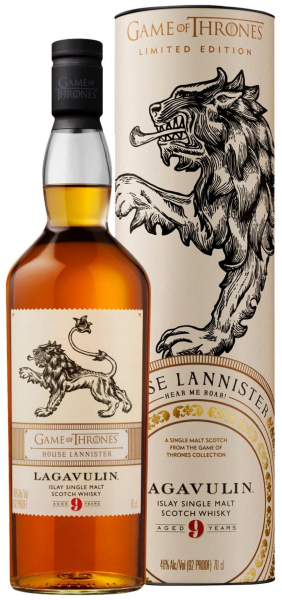
Lagavulin 9yo “Game of Thrones” (46%, OB, “House Lannister” L9016CM008, 2019)

For a Long time, Lagavulin was the unknown jewel in the crown of what is now Diageo, known to only a few. Lagavulin saw more recognition when it became part of the Classic Malts. Before that, Lagavulin was more or less only an utterly wonderful 12yo. Later came the also stellar 16yo and a nicely done Distillers Edition, again a very, very good version of this great distillery. Last of the newer regular releases the return of a 12yo, this time from Bourbon casks only and since 2002 bottled annually as a special release at cask strength. Some batches of these Whiskies have been reviewed on this site earlier.

Personally Diageo was taking a wrong turn starting with Talisker for me, with the release of a lot of mediocre (NAS) “versions”. I might have mentioned this already in several previous reviews, (Talisker is Diageo’s best selling Malt). The 10yo is still by far the best affordable Talisker, although it suffers sometimes of batch variation, just have a look at the following two more recent releases from 2015, and 2019. Incomparable to an earlier bottling from 2002. When NAS wasn’t all that accepted at first, Talisker tested out a rather young Malt, but gave it an age statement. The 8yo from 2018, is a very good Whisky, but the follow-ups from 2020 and 2021 are less so. Alas. I have tried them all, but have yet to review them here.

Back to Lagavulin. When Talisker was being taken advantage of (to up the sales), by all those aforementioned releases, Diageo left Lagavulin alone, at least for a while. Then all of a sudden in 2016 the 8yo and in 2019 the 10yo surfaced. In hindsight, both editions are gnawing away at the perfect reputation Lagavulin had (for me). Sure, both releases are not bad, especially the 8yo was acceptable (for a Lagavulin), but the downward spiral is easily noticeable. A disappointing and depressing feeling for me. Well, the time has come to look at the next one. Between the 8yo and the 10yo came a 9yo, bottled in 2018 in the Game of Thrones range, yeah because coupling up this Classic Malt with a TV-show makes sense now does it. And sure it does, from a business standpoint. I’m sure it’s making Diageo a lot of money and even selling more of the less popular Whiskies from the Diageo portfolio in the Game of Thrones series. Amazing how many people I know, have the whole range at home, some even got the GoT Johnny Walker editions. I respect the fact Diageo is in the business of making money and are not only aficionado’s. I’ve met several Diageo employees who have no clue what it is what they’re selling (but look the part and talk the talk) and only care about their monthly sales and what car they will be allowed to drive next. On the other hand I’ve also met several Diageo employees that are true aficionado’s and big ones as well! (This second group is usually a bit older than the first group).

Having said all that and with the experience I had with the 8yo and the 10yo, I’m not having high hopes for this 9yo, especially with the caramel colouring remark on the back label, but nevertheless here we go!

Color: Gold, slightly brownish.

Nose: Slightly sweet, with nice bonfire smoke and peat notes. Even some (dried) meaty notes crop up. Underneath, a little bit of fresh lemon skin acidity, as well as some menthos you are already chewing on. As always, the E150a cloaks the smell a bit, but also adds some artificial balance, as per design, although I also feel not a lot of colouring was needed for this one. Whiskies with lots of colouring tend to be dull and cloaked. But credit where credit’s due, this is a pretty good smelling Lagavulin. Nice and fresh. Since this is supposed to be first fill Bourbon casks only, is it really? Since it has this added caramel, it still has a decent spicy, ashy, waxy and fruity feel to it. On occasion, I even encounter some floral dishwater-detergent kind-of-job aroma. Spicy with some hot tar and smoking embers. Some molten plastic, clay, wood, some (burning) paper (and ashes), but some red fruit notes seem to point at Sherry, but no Sherry casks were used for this one. Yup, this is a very nice smelling Lagavulin. If the taste is on par with the nose, which has some classic Lagavulin traits to it, I’m in for a nice surprise.

Taste: Here it is a bit thinner than the nose promised. Sweet with obvious licorice and black and white powder right from the start, as well as the sweet lemon skin note from the nose. Smoky toffee. Here the caramel colouring seems to have a greater effect than it had on the nose. Nice chewy peat, nicely framed by some smoke. Waxy. Some cloaking caramel, and creamy, fatty hand ointment, but it’s also letting though some nice red fruity notes. Appetizing. Towards the finish the woody bits show some slight bitterness, fitting the rather large licorice profile quite well. However, for the profile it has it is actually a little bit too sweet. One glass of this on an evening is enough.

Well, this one is a bit of a surprise, I didn’t expect much of it to be honest, considering I’m not really a fan of the 8yo and especially the 10yo, as well as coupling it to a TV-show was a bit suspicious. The Talisker GoT was pretty decent as well. Nothing of the milky, new make-ish, youthful notes I got from both other mentioned Lagavulins. Maybe the E150a did some good here (yeah right, hahaha), or maybe the casks were just better (more likely). This would be a really really good Whisky if it was somewhat less sweet and bottled at a higher strength. Still, this was bottled at 46% ABV instead of the 43% ABV of some other Lagavulin releases. This is a review from a particular batch (L9016CM008) from 2019. I haven’t tried any others, so I can’t comment on batch variation, but there is always a chance that different batches have (slightly) different outcomes.

Points: 86

Talisker 8yo (57.9%, OB, Special Release, Carribean Rum Cask Finish, 2020)

Talisker is no stranger on these pages, and this 8yo is already the fifteenth Talisker reviewed, and why not, I ask you. Talisker has a lot going for it. It is an excellent distillate, has some peat, although not as much as some others on the market, and has a distinct and maybe unique feature, it is often considered to be peppery. A lot of wonderful aroma’s can converge in a Talisker. Works well in both Bourbon and Sherry, and the core range 10yo is already a very good Whisky. One other distillery manages to tick all these boxes save one. The distillery’s name is Springbank and the box not ticked is the box for pepper, I did say it was an unique feature, didn’t I?

In 2018 the first 8yo was released in Diageo’s annual special releases series. That “first” 8yo, was a very good one, and I remember back then, (and this is not that long ago), the talk of the town were the plethora of NAS releases (in general). At the time, there were many Talisker NAS bottles released as well. This 8yo was so good, a lower number like 8 suddenly became acceptable again, and the public always seem to prefer an age statement, so better a low number than none at all. I guess this took Diageo a bit by surprise, who knows, because there wasn’t an 8yo released in 2019. In 2020 this Caribbean Rum version saw the light of day (rushed maybe?) and earlier this year, another 8yo was released, from the smokiest stock they could find. Looks like the 8yo is here to stay. We’ll see what next year brings.

Color: White Wine.

Nose: Initially milky and young. Tasted blind, I would have guessed this was a Lagavulin, since it has some similarities with the 8yo and the 10yo, similarities, which, I didn’t like by the way. I really, really like Lagavulin, never came ‘cross one that was sub par. So when coming across the 8yo and the 10yo, it felt a bit like a sell-out by Diageo, and I was overly disappointed, damn, I didn’t think they would stoop so low as to mess with the ‘vulin. But I digress, back to the Talisker at hand. Sweet tea leaves (wet), rain water and dead dry leaves on the street in autumn. It shows more (quite nice) wood spices when the initial milky component wears off a bit. Spicy, with mild sulfury organics, sweet mint and orange powder. Smells of a distant wood fire whilst walking on a snowy street at night (by yourself). This bit is great. When drinking this Whisky casually, I have a hard time to find any notes of Rum, both in the nose and in the taste. I do now, but for me they are more similar to a Rhum Agricole than the Caribbean Rum that is stated on the label, and by the way, Caribbean Rum, that isn’t really narrowing it down now doesn’t it? So Rum yes, but there isn’t a lot of it though. I feel all the alien notes this Talisker shows us, maybe aren’t even coming from the Rum casks at all, but they probably are. Diluted smoky toffee notes and hints of Brazilian Rum (Epris 15yo). At times sharp. The wood turns towards, toffee, coffee, mocha and pencil shavings. This will improve a lot with air, so give it time, but if you pour yourself another dram, the whole experience starts anew, including the wait for the nose to improve. Recognizable as a Talisker though. Apart from the wonky start the nose is all-right.

Taste: Starts with coarse alcohol, like Wodka, right from the start, not balanced. Paper and cardboard and some residual (barley) sweetness. Not much later the wood and all the lovely aroma’s from American oak kick in, as well as a peppery attack, yes, there it is. The aroma’s are there but the balance still struggles, like its missing a component. The wood also impaired a healthy amount of bitterness onto this Whisky, but since this Whisky also has a bit of sweetness, the bitterness is kept in check. The bitter notes take residence right on the very back of your tongue. Smoky and thus a peppery attack as well, so it’s still a Talisker after all. Fresh almonds, wood and latex paint. Come to think of it, this one isn’t really all that complex. The body of the work is good, the ending a bit less, so the finish shows the unbalance again, and the aftertaste does so as well, and shows us again the bitter notes this has.

First piece of advice. Pour this dram and put it away, let the air do its job first, because the first aroma’s that escape from your glass are too close to new make spirit. And after a long wait the whole experience is much better. The nose improves a lot and therefore the taste is helped along. In the end it is an interesting Talisker, no regrets opening it and it wasn’t a nasty chore to finish it as well (not empty just yet, but it will be soon). I won’t be opening a second bottle anytime soon though. Buy the 2018 version in stead, and well see about the 2021 edition in the (near) future.

Points: 85

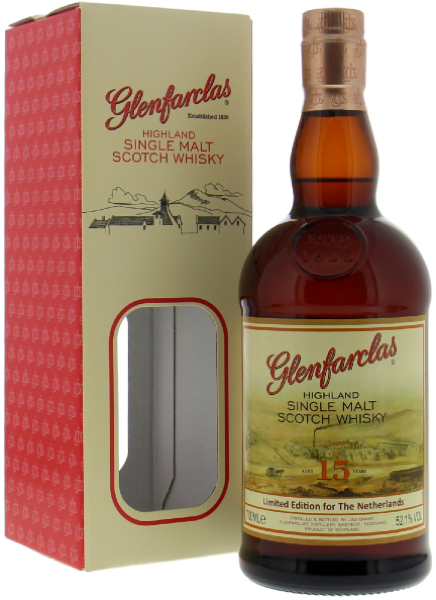
Glenfarclas 15yo (52.1%, OB, Limited Edition for The Netherlands, 50% Refill & 50% First Fill Oloroso Casks, 1.800 bottles, 2020)

In 2015, I wrote a review about the core range 15yo (from 2006), and even with 83 points being a half-decent score, it also means it didn’t really blew me away back then. But, as is often the case with core range bottlings, there is a possibility of batch variation. Most distilleries try to replicate a certain profile and they usually succeed. Understandable because the bulk of those bottles are sold to people who like consistency, because they buy the same expression over and over again because that’s the one they like. Lets mention Talisker 10yo as an example of this consistency, although this 10yo exists for quite a while now and a shift in profile as times passes is inevitable, however, the quality seems consistent. Some distilleries are less proficient. Highland Park 18yo comes to mind showing a lot of variation in batches close to one another, just punch the reviews for these 18yo’s up from this site, like these 2012 and 2014 bottlings. Some distilleries embrace the possibility that batch variation gives them, Springbank is a master at this. With Glenfarclas I’m not sure, but I do know that this Dutch 15yo differs quite a bit from the 2006 15yo mentioned earlier.

Color: Copper gold.

Nose: Fresh, tight and fruity, maybe a little bit sweaty even, as well as some deep and brooding dusty notes, dust and chocolate powder. Sometimes farty organics. Beautiful fresh wood and wax. Fruit cake. Mushy red fruits, mushy after speedy or forced defrosting in a microwave. Wet or soaked oak, slightly sour, yet also some sharp fresh air. Very lively, with red fruit acidity combined with American oak vanillins, milk chocolate and the tiniest hint of toasted cask and cigarette smoke from a sixties living room. Fresh mushrooms. An autumn Whisky for sure. Rainwater flowing down the road. Dusty and quiet with a full on aroma. The woody bits transform into more paper like and old cardboard aroma’s, which sounds horrible, but isn’t. Red fruit still present throughout. Perfumy, leafy and all sorts of kitchen spice notes (a note of some dull, weathered, cinnamon comes to mind, mixed with the toasted oak and the chocolate powder), give this one some time to release all the aroma’s. It’s almost like it is in part steeped in the past and in part modern. Very well balanced. Very nice.

Taste: Starts sweet and fruity, like diluted jam, forest strawberry jam, raspberry jam, red fruit jam altogether. Warming going down, well balanced and tasty. Nice wood aroma’s, just the right amount. Fresh oak and toasted oak are all here. Nutty. Tiny hint of tar and toast mixed in the distance with some menthos (I don’t get that all the time though), which is a nice addition to the fruity and syrupy notes. After swallowing, a slightly more dry and spicier wood note comes forth, as well as more tar. Again warming and drying my lips. So definitely some astringent wood with actually not a lot of bitterness. At times slightly soapy, but not every time I taste this. The woody bit of the body, let’s say the middle bit, seems to have some definite tarry notes to it. Tasty stuff, really good, especially after not expecting this one to be this good.

When analysing this one in my controlled environment, it is a very good expression, when tasting this one randomly, let’s say within a flight of some other Whiskies, this one performs differently, so beware. It doesn’t overpower others so it depends a bit, what came before. It can be easily overpowered by other Whiskies, and I don’t even mean your heavy hitting Islay Whisky or a bona-fide confirmed Sherry monster, no, even a normal refill bourbon casked single cask Whisky like the Tamnavulin 8yo I just reviewed can overwhelm this Glenfarclas. Something one wouldn’t say from tasting this Glenfarclas alone.

Top tip, give this one the attention it deserves, take your time with it and you’ll be rewarded. Still, this is very tasty stuff and it is better than I initially expected. As said above, it is well balanced. This is a bottle that will be gone soon, since when I see this standing on my lectern, the only words that come to mind are “yes, please” and off comes the cork. A fun and foremost a very good Whisky. An instant gratification Malt. Maybe not all that complex, but what you get is very balanced and tasty. As I said, this will be finished soon. Is this really merely the undiluted version of the core range 15yo? If so, it is a worthy special release by any means and decently priced to boot for those el cheapo Dutch. Lucky bastards!

Points: 89

Tamnavulin 8yo 2009/2017 (59%, A.D. Rattray, Cask Collection, Bourbon Barrel #700628, Finished in a First Fill Bourbon Barrel for 16 months, 229 bottles)

This will be an interesting bottle. After the Dalmore I reviewed last, here is another example from a distillery from the portfolio of Whyte and Mackay, and yet another independent bottling. This is the first review of a Tamnavulin on these pages and to be honest, I never ran out of the house to fetch me a Tamnavulin. Tamnavulin just doesn’t have such a reputation. I did buy a nice, and very old, example from Duncan Taylor once, in the USA many years ago, but that’s about it. A few years back I visited the stand of A.D. Rattray at the Whisky Show in London, and tasted this Tamnavulin, I though it was rather nice and being a Tamnavulin, I bought it at the show shop. I couldn’t have been very expensive then.

Apart from the taste, I really liked the idea of maturing a Whisky in a Bourbon Barrel and then finishing it in another first fill Bourbon Barrel. This may imply the first cask it matured in wasn’t a first fill, but I might be wrong. The other thing that grabbed me was the mention of the number of the first cask it matured in (#700628), yet not the number of the cask it was finished in. But wait, there is even more. The label claims this was first matured for “over” 7 years and then received a finish of 16 months, so 100 months or more. Distilled on 10.05.2009 and bottled on 31.08.2017 equals less than 100 months. Being a Tamnavulin and all this wonky information on the label, and having tasted it, I just needed to have it, especially since Tamnavulin is rather a scarcity on my lectern.

Color: Medium gold (and seemingly not filtered to death).

Nose: Vanilla and soft oak. Malty and biscuity. Pleasant and fruity. Quite floral and perfumy. Classy. Underneath a more sweetish and fruity bit. Big and bold, with lots of aroma’s and an open character. Even though it is quite a young Whisky, there are no traces of new make and it smells quite mature. The oak gives off some spicy notes, but not much. Seems to me the initial cask wasn’t all that active and the second maturation wasn’t long enough for that cask to dominate the strong oaky notes. Interesting finish this is. Notes of yellow fruits are a bit overshadowed by this perfumy and soap-like aroma. The more I nose this, the more spices are noticeable, but all under this floral cloak. Smelling harder pulls out the yellow fruity bits, as well as some mint and a wee hint of horseradish and rainwater. The fruit turns slightly acidic. Maybe this makes the balance department suffer a bit, but it’s not a big problem though. After a while it turns a bit dusty and the mint vapor has some staying power in my nose. The sweetness picks up some licorice as well. This is an autumn Whisky (based on the nose alone at his point). Given more time, notes of cold dish water, bad breath and honey, these are adding to the complexity, but again making the balance suffer some more. Still this is still not a big issue though. I know “interesting” often has a negative ring to it, but without implying any negativity, this one just is interesting, due to the complexity and the oddness of the aroma’s this Whisky gives off.

Taste: Ahhh, nice. Spicy, slightly bitter and sweetish. Vanilla, nutty and some nice wood, that seemed not to be there in the nose. Warming and highly drinkable. Meaty as well. The vanilla bit grows slightly stronger when you hold this in your mouth. The first sip sort of repairs the nose, focusing it on the more lovely floral bit. Very appetizing and much better balanced than the nose was. Sweet and nutty, honeyed nuts. However the wood gave off plenty of spiciness to counterbalance the sweetness, which is definitely here, yet masked by the wood. Tasty example this is, and seems definitely more mature than the 8 years it (only) has. Apart from the sweetish yellow fruits on the palate, this Tamnavulin also has some zesty citrussy notes. Here it works well, in the nose the acidity isn’t helping the balance of it, however, on the palate this Tamnavulin is well balanced and the slightly bitter notes, this shows towards the finish, can put off some tasters, who don’t like bitterness altogether, but it does add to the balance. The dishwater and soapy bit in the nose, does play an unexpected role here in the aftertaste as well. Unexpected because it arrives late and I didn’t expect it at all to be honest. Along with this bitter note the nose shows us some licorice to go with it, changing the Whisky a bit. Nice complexity thus. Still an autumn Whisky I would say.

I like this Tamnavulin. The two casks worked quite well together. It’s mature and tastes great. The first cask must have been a refill cask, not giving off too much woody and bitter notes from the cask for the stated 7 years. The second cask, a more active one, did have enough time to impair its creamy and vanilla notes, but after 16 months, it didn’t have enough time to give off a lot of woody aroma’s, making for a reasonable well balanced young Whisky without the wood dominating the palate, nope the wood is just about right.

Points: 85

Kilchoman 5yo 2012/2018 (50%, OB, Sauternes Cask Finish, 10.000 bottles)

In the previous review, I wrote that the way to go with Kilchoman, (for me at least), are the red labelled ones. Nice single cask bottlings, with quite some ooomph, like this Belgian and German one. Often still young, but already finished. Not a sign of extreme youth or new make spirit in sight. Bourbon casks work well with the Kilchoman spirit and all the other varieties, are definitely not too bad either. Time maybe for a green labelled one. I just can’t claim the red ones are the best, without even considering Kilchoman’s other colours now can I? A while back Nico and I did a bottle share of this Sauternes cask finish. This, in itself is odd, since both Nico and I do have a fondness for bottlings that came in contact with Sauternes. I guess Nico wasn’t too sure about Kilchoman back then, and I’ll have to ask him how he feels about Kilchoman right now. Sauternes, by the way, is a sweet White Wine from Bordeaux (France). You may have heard of Château d’Yquem?

Color: Light gold.

Nose: Soft, creamy and dusty. Cookie dough. Sweet smelling, perfumy and fruity (white peach in sweet yoghurt comes to mind). Fruity acidity, yet not only citrus. Apples with a hint of exhaust gasses from a small, yet efficient, petrol car. Dusty with cold motor oil. Spicy as well, dry kitchen herbs, cinnamon and some white pepper. Old cardboard box, bad breath and cold dishwater. Nice soft wood and some mint. The typical Kilchoman bonfire smoke note is here again, but toned down a little. Overall quite elegant, although some of the off-putting notes, I just wrote down, seem to indicate differently. Nevertheless, elegant it is. Let’s say Islay style elegant, with Kilts and muddy wellies. The whole Whisky seems slightly toned down, compared to the Bourbon single cask bottlings (the red ones, remember) I reviewed earlier. Slightly less sparkly. Light vanilla notes combined with mocha flavoured whipped cream, mixed in with pencil shavings and a wee bit of menthol. Dry garden waste lying in the sun in autumn. This nose keeps giving and giving and evolves, it’s just not as powerful as the German Single Cask. This is again a quality Malt from Kilchoman, more complex than a Bourbon cask alone, and this one is also softer. Hint of sweet mint now. It shows a different side of Kilchoman. Very appetizing and very good again. It seems a bit more harmonious than a single cask Bourbon expression, and as said, it gained some complexity with the Sauternes finish. However, in all the aromas presented, it is impossible to find any true Sauternes notes. I no way I can smell a sweet White Wine in this Whisky. All the elements that went into making this Whisky do work perfectly, so it seems. Very good Kilchoman again.

Taste: Paper and ashes. Wax and sugar syrup. Dry tall grass and hay foremost. Borderline Grappa. Creamy and sweet candied yellow fruits. Less strong than the single cask expressions. Clearly reduced. A very appealing sweetness, aromatically close to a sweet apple. Fresh air after some rain. Ashes, black and white powder (licorice), hints of spicy wood and some (sweet) bitterness. Warming going down. Little bit of molten plastic in the finish. I know, this sounds terrible, but rest assured, it isn’t. This is a very drinkable expression, due to the balance and probably the reduction to 50% ABV. The aftertaste does pick up some more on the medium bitterness. The nose was definitely more complex than the taste. This, in all fairness, tastes simpler than expected. All is good and tasty, yet not as complex as the nose promised, (and the buzz in the anorak-y part of the Whisky world). I believe the recently tasted German Single Cask expression may have even tasted more complex. This is more of an instant gratification Malt (and the reduced ABV helps with this).

This offers a (slightly) different take on Kilchoman. It’s good and definitely softer than the Single Cask expressions I reviewed earlier. Sauternes, well, if I tried this blind I might not have picked up upon the White Wine finish, although there are some hints in the depth of the taste, some sort of brooding sweetness, if that makes any sense to you. For some, this offers a more likeable Kilchoman, personally I still like both earlier reviewed red labelled ones better. Can’t wait to open another Kilchoman though, to have some more Kilchoman’s under my belt for comparison and a better view of the Whisky that is Kilchoman. Impressive Whisky, especially considering the age of the reviewed stuff.

Points: 86

Kilchoman 5yo 2008/2013 (60.7%, OB, Bourbon Cask #146/2008, for The World Single Malt Germany, 252 bottles)

Although not bad, I don’t really have a fond memory of the early blue labelled Spring 2010 and Summer 2010 bottlings, both are decent but not there yet. Both are showing their youth, and I’m not particularly a fan of Whiskies that still show their new make side. Aren’t all beginnings hard? However, I do have a fond memory of the previously red labelled Single cask bottling for Belgium. All three distillates are more or less from the same period of time, but this red labelled one is just a bit older, not reduced and from a single cask. In my mind, after tasting such Kilchoman’s, the red ones were the ones to go for. I like single casks especially at cask strength, warts and all. In the case of Kilchoman, usually there are no warts. Not a lot anyway. Pretty amazing considering the aforementioned single cask expression isn’t even 5yo and already very, very good and mature for its age, and remember this was matured in Scotland, not the tropical shores of Goa (India, in case you failed geography). So no surprise then, that the next Kilchoman I opened was another red labelled one. Yes, another ex-Bourbon single cask expression, why not. This time a red labelled one bottled for Germany. Let’s see if the Germans got an even better deal than the Belgians did. For starters, the German one is older, it is just over 5yo.

Color: Pale gold.

Nose: Soft warming peat, glowing embers, fine bonfire smoke, flinty, with citrus fruit upfront. A combination of lemon, lime, unripe pear, sweet spearmint and menthol. Just sniff it, put it away, wait a minute and start breathing through your nose. Are you getting the menthol now? Soft wood, creamy, toffee and clay. Slightly perfumy and slightly meaty as well. All combined with smoke. Paper and dust. Fresh and spicy. Cedar wood, vegetal. Christmassy smoke emanating from a chimney, that’s it, with more fresh acidic fruit notes. A dram for a silent, snowy evening. Mocha, vanilla powder and maybe even a hint of an unlit Cuban cigar. Next, the promise of sweet, jam-like fruit, as well as a breath of fresh air, significantly different from acidic fruit, although both bring freshness to the Whisky. Smells appetizing and lively, yet also mature. No signs of new make spirit to be found. When snorted most vigorously, a more deeper and brooding animalesk kind of note emerges. I think this smells amazing for a 5yo Malt. Very mature. This must be quality, achieving this, in so little time and in a cold climate. It also has an unexpected depth to it, like Alice’s rabbit hole, the deeper you go, the more mesmerizing are its aroma’s. Take your time with it, it’s really, really good.

Taste: Wood and paper. Sweet red fruits. (Menthol) cigarette smoke in the wind, and more sweetness than expected. Milk chocolate and liquid bonfire smoke, with maybe some plastic in the back? All elements well balanced. It’s even slightly syrupy. Soft white pepper attack combined with fresh, green and sappy oak. Waxy, with a tiny hint of rubber in the back, and a short bitter note that is soon joined by sweet yellow fruits, candied fruits and some more of this peppery attack. Lemonade. The bitter and the sweet go together well. A lot is happening at once, so I’m almost struggling to keep up and write it all down. Speaking of down, this is quite warming going down. Pencil shavings, licorice and slightly tarry. The wood note comes late and when they occur in the taste, it starts to play a bigger part in the nose as well. Slightly less complex than the nose (or is it?). This one shows most of what its got, right from the start, but doesn’t lack in the evolution department either. Towards the aftertaste, the lemon and lime returns, wonderful. Really good stuff this.

This is a really good Whisky which makes me happy. Amazing result after some 62 months from a relatively new Islay distillery. Instant favourite. The bottle is half empty, and I’m not entirely sure, it was already this good when freshly opened, so this seems to be another example of a Whisky that needs to breathe a lot.

Points: 89

P.S. The empty glass smells of black coal, peat, smoke and some plastics, more than the day before, (when the glass wasn’t empty).

Glen Ord 28yo (58.3%, OB, Limited Edition, 2003)

Back in 2012 I reviewed one of Diageo’s Special releases from 2004, the Glen Ord 25yo. That one was released a year after this 28yo. Amazingly, the review of the 25yo is, untill now, the only Glen Ord on these pages. The Rare Malts series had just been cancelled and the annual Special releases were the new kid on the block. Asking a higher price than they did for the Rare Malts, but that goes without saying, especially today. Back then, the public probably weren’t ready for this and found them too expensive, resulting in many expressions not selling very well. So after a few years Diageo just offloaded those special releases onto certain markets. This way I could get my hands on very reasonably priced Glen Ord’s, all three of them (the 25yo, the 28yo and the 30yo), but also both Glenury Royal 36yo’s and lots of Talisker 25yo’s, from many different years. More or less all the cask strength versions, apart from the first one. Diageo were ahead of their time, asking prices for super premium Malts, the public wouldn’t go for, but today, hey, that’s an entirely different matter now isn’t it. Today people scream, “take my money” and are almost throwing pure gold at “Rare” Single Malts, some of which aren’t even that good to begin with, as the earlier releases which cost a fraction of those recent ones. Fred Laing once said to me: “If only I knew then what I know now…” hinting at all his Brora’s and Port Ellen’s, put on the market for a fraction of today’s prices.

Back to Glen Ord. So, the 25yo Glen Ord has already been reviewed. A good one, especially when analysing it (hence the score of 90 points), but not an easy one for careless sipping. The 25yo does need all of your attention, which can be a nuisance. Therefore, it took a while to finish it, and I can’t say, in hindsight, that I have a lot of fond memories (of a Whisky that scored 90 points!). Yes it is very good, but it didn’t bond with me personally, and I had to work it a bit too much. I remember it as a closed Malt, hot and a bit harsh. This is also why it took me almost a decade (!) to open this next super premium Glen Ord, the 28yo. I expected more of the same to be honest. A decade, wow, amazing how time flies, truly amazing. But I’m an adventurous guy (yeah right, a hand-reader actually read differently a while back), so time has come to dip into yet another super premium Glen Ord and I’ll let you in on a little secret already, nope, I didn’t regret opening this one!

Color: Gold.

Nose: Wow, what an amazing start, aromatic, with sugared dried fruits, pineapple even, with powdered sugar and some dust. Fresh and lively even though it’s slightly dusty. Next, a hint of smoke, waxy, sweaty and big and so appetizing you just want to bite a piece of it off and chew it. These seventies distillates can be so fruity. This should be 75-ish? Reminds me, initially, a lot of Caperdonichs from 1972, which are even bigger and more aromatic. Here, with this Ord, over time the big fruitiness gets less pronounced making room for a thinner and more acidic woody note and a more organic note in the back. This is definitely the wood that is speaking to us. The Caperdonichs I mentioned earlier don’t change like this. A dry warehouse floor, again a dusty and now slightly cardboardy note comes next. Powdered orange candy, a sort of artificial orange flavour like Sinaspril, (orange flavoured Aspirin for kids, remember those headaches when you were a kid)? Funny how open this 28yo is, as well as old and lively smelling. The 25yo was closed to the last drop. An entirely different Ord. After sipping, the woody bits stand out some more in the nose.

Taste: Big, nutty (bordering on peanut butter), slightly grassy (not hay-like), waxy and so fruity. The paper is here as well. Definitely a seventies distillate, and my guess would be that this was matured solely in ex-Bourbon casks. Half sweet. The taste is less comparable to the Caperdonichs than the nose was. Sweet toffee. Waxy and woody, as well as quite some woody (and old paper) bitterness. Strange enough, the oak comes across as quite new or youthful. Not old, matured or settled. Salted caramel, slightly peaty even. Peat might be unlikely, but some smoke may very well be here. The sensation of this peat, or probably smoke, is quite prickly on the ol’ tongue. After dinner the bitterness is less pronounced, so all this depends on the taster and the moment in the day. First, fruit on my palate is again pineapple. Quite hot going down. I still keep getting a slightly smoky note throughout as well as some old Malt mint now. In part animalesk, mixed in with the waxy notes. Very tasty, but not as complex as expected. The complexity of this Malt could have, or should have been comparable to the likes of its peers like the aforementioned Caperdonichs, if it had, than the score would have been higher, because the Whisky would have been even better than it already is. A minor gripe, but an important one nevertheless. Maybe that’s why Diageo is calling it lively, since one doesn’t expect a 28yo form the seventies to be lively. There is often a lot of BS on labels, but this remark is spot-on. As a consumer you only just need to understand the meaning of these words…

Where the 25yo was hard work, it still was very good. The quality was unmistakeable. It was closed and a bit harsh and hot, this 28yo is something different entirely, even though there are many similarities, as you tend to have between siblings. Easy, open, a very damn tasty old Malt this 28yo, one of those they don’t make any more, because they can’t. The times have changed, the methods have changed and the ingredients, barley, yeast, wood from the casks (and the quality of what they previously held) have changed as well…

Points: 91, almost the same score as the 25yo, but I’ll remember this one way more fondly.

I’ll be back with the review of the Glen Ord 30yo somewhere around 2030 I guess…

Benromach Peat Smoke 2010/2018 (59.9%, OB, Sherry Cask Matured, First Fill Sherry Hogsheads, 34ppm, 22/11/2018)

Benromach is not new to these pages. This is in fact already the eighth review of Benromach on these pages, and before looking back, I wondered which of the Benromachs I reviewed, or didn’t review, I remembered the most. The one that popped up in my mind first was the old Benromach 18yo. I liked that one a lot right from the start, even though it was only bottled @ 40% ABV. It was time anyway to do a new Benromach review before the bottle I’m about to review was empty and done with. I did already start taking tasting notes for it, before I had a look at one of Ralfy’s reviews of Mortlach. Mortlach is a big name in the circles of Whisky aficionado’s, a sort of hidden secret, due to it’s austerity, meatiness and special distilling regime. Just look at the wonderful 16yo Flora & Fauna bottling.

Back to Ralfy. In this particular review he mentioned the similarities between Mortlach, Longrow and Benromach. Well if these are somewhat similar, I’m now even more than ever, interested in Benromach again. I love Springbank and the Springbank Distillery output is harder and harder to come by these days, which recently put me on the trail of Ledaig as a tasty alternative. Mortlach has always been on the radar and isn’t all that easy to get as well. Now that Ralfy also put Benromach in the grander scheme of things (for me), isn’t it now more than fortunate that I have here this Peated (and Sherried) Benromach? Planets aligned for sure!

Color: Copper brown, Bourbon.

Nose: Young, slightly milky, cold gravy, with lots of Sherry (smells of PX), and only then, very soft peat as well as some sharpish smoke. Dry oak. Very dry and dusty smelling. The alcohol is quite upfront as well. Lots of influence from (fresh) oak. Spicy, lots of vanilla and cinnamon, fruity and Sherried, this one seems to have it all. Creamy vanilla underneath, butter and pudding with some chocolate powder. Smoke from burning newspapers mixed with toffee aroma, like standing next to someone vaping a toffee scented liquid, and burning off old newspapers at the same time. Well why not, cigarette smoke as well, from very spicy tobacco. Hints of sulphur, but in a very warming and non-offensive way, like pre-lit matches. At times more flinty and closer to fireworks than rotting eggs or a liberating fart. Hints of burning plastic. All in good measure though, and the whole is quite appetizing. Modern, yes, maybe, but everything is in its right place. Smells fine, more than fine, to me.

Taste: Big! Prickly and hot. Sherried and dry, creamy (toffee again), sweet and sooty, like solid smoke. Rubber, ashes, tar and black coal. Industrial, yes very, but also lots and lots of red fruits, cocktail cherries, licorice, black and white powder and cinnamon, with steam and more black coal following up. Pencil shavings and a wee bit of motor oil. Dare I say it’s a bit meaty, now that Mortlach was mentioned above? Sure I do. This Benromach is meaty, there you have it. This one is big in many ways, and a good one as well, steam punk! Slightly minty in the aftertaste, which otherwise comprised of more of the above. After Bladnoch another type of extreme. Reminds me of aroma’s from a while back, when Whisky was different. So this one smells more modern, but it tastes less modern. Interesting. All aroma’s are big and upfront. It’s actually not very complex, nor does it show a lot of development. This Whisky wants to show it self and given the opportunity (an open glass), everything leaps out immediately, like an Olympic 100m dash. (By the way, Smoky P. Rubber, running in Lane 8 for Scotland, was the surprising winner).

This particular bottling seems to divide opinions a bit, just like Bladnoch does, and that is probably true for every “extreme” Whisky. Since I’m already an older guy, with some experience in Whisky and still a working memory, for me, this really shows (at times) a quality similar to Whiskies from another time. However, like was the case with Bladnoch 10yo, this might not be for you. If you are a novice and prefer OB’s or more middle of the road Whiskies, you might want to skip this one. If you really know your way around Whiskies you might think my score is too high, since it lacks development and distillery character might be pushed back a wee bit too much. However, I think this is very well balanced, big, and damn tasty. Add to that some aroma’s from a time long gone, so this is definitely for me. Amazing result for a Malt less than 10 years old. For me (again), time to look into Benromach some more (again), but it yet too early to say if it somehow comparable to Mortlach and Longrow. I really need to do a lot more testing/tasting for that!

Points: 89

P.S. The empty (covered up) glass the next day: big medicinal peat, wow!

Bladnoch 10yo (46.7%, OB, Limited Release, Bourbon Expression, Bourbon Barrels, 2018)

Wow, this is just the second review of Bladnoch on these pages. Bladnoch is one of those distilleries that look charming, but for the knowledgeable consumer, it has (or had) a bit of a wonky reputation for being buttery and somewhat unbalanced. I understand why some people might dislike Bladnoch, having tasted quite a few Bladnochs over the past twenty odd years. In the mean time, the only other Bladnoch I reviewed until now, is this 8yo, and this one was most definitely a learning experience. However it was a Whisky that grew on me, which also prompted an updated review, which I rarely do. Maybe it didn’t score as high as many other Whiskies reviewed here, but I still do remember it fondly.
In 1993 the distillery was bought by Raymond and Colin Armstrong and they sold it again in 2015. Raymond and Colin probably spent most of their money on purchasing the place, because it showed, there wasn’t a lot of money around. Simple bottles, not a lot of different labels, no boxes and no big refurbishments to boot. But the feeling was great. Raymond is an outspoken and accessible figure, who “did” the distillery, opened Bladnoch forum on-line, (again very a rudimentary looking affair), where aficionado’s could talk about many Whisky topics, with Raymond often participating, and last but not least, the famous Bladnoch Forum, independent bottlings of casks from other distilleries. All simple looking, home printed labels, and very nicely priced. This was a great time, and I’m sorry this didn’t last a lifetime, although Raymond’s son Martin continued the concept with Whiskybroker.co.uk.

2013 was the last year, many officially released bottling were released, but in 2014 & 2015 not so much. Finally, in 2015 Bladnoch was bought by Australian David Prior. With new management came an extensive two year refurbishment and a different and way more sophisticated look. The money was now certainly coming to Bladnoch. The contrast couldn’t be bigger. Distilling commenced in 2017. In 2016 with the releases of Talia, Samsara and Adela, the first new bottlings saw the light of day. Yes these are whiskies and not David’s daughters, at least I don’t think so. Just like the new Glenallachies, I tasted the new Bladnochs at the Whisky Show in London, and again the younger more “simple” expressions seemed best, or most promising. Of everything that was available to taste, I liked the 10yo best, it seemed to be the most interesting, and there even was this 25yo Talia to be had, just sayin’. So this 10yo is much less expensive and easily matches the others in quality. So no strange thing than, that the 10yo was the first one I bought, which has recently been replaced by an 11yo, which I recently bought as well. I guess the future of Bladnoch looks rosy again.

Color: Light gold.

Nose: Extremely malty, biscuity and slightly dusty. Warm summer air with the smell of oak planks (in the sun). Sweet malts with some distant citrus notes (the flesh, not the skins), mixed with cinnamon, green apple skins and dry banana. Warm slightly toasted bread with molten butter, cereals and dust. Grassy and dry, with some soft hay and cardboard. Perfumy (chic) and highly aromatic. Sugared yellow fruits. Friendly and appetizing. Well balanced. White latex wall paint. This is not only sweet, but also has a rough edge to it. At times, sweaty, dead leaves and organic. There is a lot here, and it’s quite big as well. There is nothing like it, and it seems almost like a style on its own. Who said a lighter style of whisky can’t be big? Remember St. Magdalene? Meaty, cold gravy, but also some milk chocolate and some more cinnamon. Soft ice cream melting in the sun. The combinations may seem strange, and to be honest, Bladnoch can be a strange Whisky at times, different from others, but in this lies also its charm. I can say that, because for me, for a long time, Bladnoch has been some sort of a guilty pleasure. I liked it a lot even when I shouldn’t. I liked it better than my scores showed. (Thinking of intrinsic quality here). Funny how this works. It’s strangeness is quite appealing (to me). I do like extremes. Sherry bombs and Peat monsters as well, and a big buttery Lowlander is an extreme as well, these three are the points of a triangle.

Taste: Sweet and fruity, definitely some sweet apple in here as well. Malty check, cinnamon check, it goes great with the sweet apple aroma. Quite quickly the woody notes, complete with some bitterness, exert themselves. Still lots of butter and vanilla and this creamy texture. Fatty and waxy. And this wax is the carrier for the bitterness of the oak. Less of the cardboard kind, which is more like paper here. Lots of aroma’s in the nose, because these must have been some pretty active casks giving off a (smoky) bitterness. Citrus fruits and some more sweet sugary yellow fruits aroma’s form on top of the body. These notes are sharper and more acidic and go together well with the more fatty base or body of this Whisky. Passion fruit and maracuja maybe, hard to tell right now which fruits make up the fruity bit.

Even though this is clearly a Lowland style Whisky, it differs from all the others Lowlanders that still operate. I remember I needed some time to get used to this, and some of that shows in the review of Bladnoch 8yo (look towards the end). To be honest the 8yo and this 10yo do have a lot in common. Even though I found it an odd one out, I really developed a liking for the strange style of Bladnoch. Here we have this new and initial, fairly standard bottling @ 10 years old, with a price to match and I really do like it. I like it for what it is and also for its style. Distilled by Raymond, and now the new owners are reaping the benefits. It seems to me the new owner is also doing the best he can to put Bladnoch out there again and putting out several expressions at reasonable prices. It is possible this style of Whisky isn’t for everyone, and if you bought it because of me and don’t like it (too extreme), I apologize, but for me this is a very nice gig fatty Lowlander, and I can’t wait to try some more expressions of Bladnoch in the near future.

Points: 86