Casa La Teja D.O. La Mancha Tempranillo – Merlot 2009

Next up is this rather cheap Spanish Wine. My mother made us a very good Moussaka with the recipe she used came the advice to combine it with a Tempranillo from the La Mancha region. So looking around on the many shelves in my “cellar” I spotted this Wine. This is a blend of Tempranillo (85%) and Merlot (15%). How unusual. Casa La Teja is a brand owned by Coop. Jesús del Perdón, and when Jesus loves it, who am I to think otherwise.

Casa La Teja 2009When looking for information about this cooperation, I can find that it is located in Manzanares, and I am led to the www.yuntero.com website. On this site I cannot find this Casa La Teja wine, so I don’t have a lot of hope this will turn out to be something good. Let’s have a go then.

Color: Deep ruby red.

Nose: Very fresh and fruity, the Obvious vanilla-like black currants and cherries, but also the smell of fresh apples. Very likeable and light. Easy, young and very pleasing. It gives off a feeling of warm, dusty soil and silence. Fleshy, buttery and bold. After this a little more on the black or rather red fruits and some more acidic freshness start to play a role. When it gets more air from swirling in the glass a more typical and fleshy Tempranillo smell oozes out of my glass. It’s not very complex but very enjoyable nevertheless.

Taste: Again easy, yet very refined. As the smell predicted, this is not very complex, but it has great body and harmony to it. Not very heavy on the acidity and certainly not a lot of tannins (at first). Given some time to breathe and develop a little, same more tannins emerge, but still not a lot. The apples return as well. Dark cherries, sweet cherries, and come to think of it, it is actually sweeter than I expected. Fruit Sugar and syrup with a hint of licorice. Great easy drinker this is. Lots of blackberries in the finish (the sweet and the sour).

Very easy drinkable and will do good with everything. Good birthday wine, because it will do well on its own. As I said before, the first time I had this was with a very tasty Moussaka and it accompanied that well, so this turns out to be a rather unknown wine, of pretty good quality that is very versatile to boot. Buy by the box.

Points: 84

Bodegas Ramón Bilbao Rioja DOCa Edición Limitada 2009

Today, Bodegas Ramón Bilbao is a modern winery with a long history dating back to the beginning of the twentieth century. The property is located in Haro, Rioja Alta, in the heart of the DOC Rioja region, and therefore Ramón Bilbao is considered to be one of the best. The soil is calcareous and loamy. The vineyards are located there, where the warm wind from the dry Sierra de Cantabria collides with the cooler Mediterranean breeze. This makes for modern, fresh and fruity entry-level wines and a classic ripe, vanilla and wood-scented Gran Reservas, and lots in between. Obviously, these Rioja’s are made with the Temperanillo grape variety.

Color: Deep ruby red

Nose: Bourbon vanilla, creamy, chewy, brooding and nice spiciness from the barrel ageing. It has that much vanilla I would say, American oak barrels or maybe the feisty Temperanillo grape variety overpowers the tannins of the French oak that could have been used in stead. Probably both are used at the same time. Dry leather and some dust. Red fruits, cherries, strawberry and raspberry. Lovely stuff.

Taste: Dark wine, dark spices, but with an added spiciness and a killer vanilla finish. Dry blackberry. Perfect woody spiciness comes through, late in the finish with no off notes whatsoever. The only beef one could have with this wine is that the finish is too short. It doesn’t have a short finish, but the wine is so good and the aftertaste is so pleasant as well, it should have gone on forever. Very mild in the tannin-department, which again makes me think that most of the barrels used for ageing is made from American oak.

Highly versatile wine. Is probably good with a lot of foods, but most certainly drinks very well on its own. For me a great Rioja! 14% ABV. Advised not to keep lying around for a long time, but another year or two can’t hurt this. Recommended.

Points: 87

Amrut Intermediate Sherry (57.1%, OB)

Amrut (अमृत) means something in between elixir of life and nectar of the gods. Amrut Single Malt Whisky is made by Amrut Distilleries which was founded in 1948, but just as with Paul John, it took them some time (untill 2004) to release their first Single Malt Whisky, with that, they were the first indian distillery to do so. In 2004 Amrut released its first Single Malt Whisky in Glasgow Scotland, (in the lion’s den you might say). Today and that isn’t even a decade later, Amrut already released a lot of different Single Malt Whiskies. Peated and non-peated, matured in Bourbon, Sherry, Brandy, Cognac, Port and all sorts of different casks. Amrut have even released in one bottle, Whisky matured in India and in Europe, or using malts from different continents. Lots of thinking out-of-the-box.
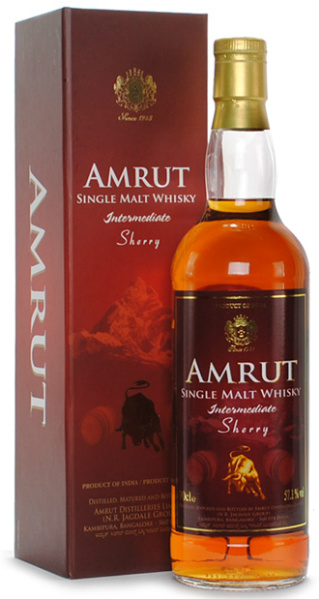
Amrut Intermediate SherryColor: Full ocher gold.

Nose: Sweet, buttery and creamy at first. Hints of malt and yoghurt. Even smaller hints of licorice and tar. Big bold fruity Whisky. Extremely likeable nose. I’m guessing this particular Sherry cask did some good work. But there is more, it also has a flowery element mixed in with the vanilla. Quite sweet and has a little smoky bite. Nice and complex, well balanced nose. Sometimes vegetal and smells of a little piece of lit cedar (to light a cigar with). Pencil shavings. The floral part gives of whiffs of floral soap, which adds to the complexity without making the Whisky soapy. The nose gives away the Indian origin.

Taste: Sweet, sherried, fruity and has a bite given by the high ABV, but I still won’t water this down, far too nice already. Fruity and cookie dough. The sweetness dissipates and gets more drying towards the oak. Sherried and toffee. Cask toast. Good long fruity finish, with a slight hint of bitter wood, which fits perfectly to the initial sweetness this Whisky has. A little bit less balanced, so it could have been even better than it already is!

Again a perfect example of the level the Indians got to. The Paul John Edited is already a great Whisky, and shows how a relative newcomer can make good Whisky. So I’m guessing the still is a lot of room for improvement there. Amrut is at it for a longer time, but as a Single Malt Whisky producer not even 10 years. Amrut are showing with this Sherried Intermediate that they already are giving a lot of Scottish Whiskies a run for their money. I consider this one is a must buy, I already secured myself a bottle. Great Whisky. I’m expecting great things from this distillery (as well as from John Paul). Way to go India!

Points: 87

Thanks Ashok Chokalingham for the sample, unfortunately I only had one sample bottle with me…

Paul John “Edited” (46%, OB, Batch 1, 2013)

Being a big fan of the Scottish tipple, I somehow ignored the products made in other countries for a long time. OK, I started out with Whiskey from the United States and very early on, some stuff from Ireland and Canada made its way onto my lectern, but that’s about it. If I tasted something else, I didn’t like it very much back then. Yes, back in the day the Whiskies from other countries, just weren’t all that good. More than a decade has passed now, and visiting the odd Whisky Show, I’m more and more exposed to whiskies from those “other countries” and guess what, they actually became pretty good! As we all have read earlier, Cyril Yates made some pretty good Whisky in New Zealand and here we have a Whisky from India. Whisky is getting really global!

Paul John Single Malt Whisky is made at the John Distillery in Goa, India. The distillery only started in 1992 and in just 20+ years became a big player on the Indian Whisky market. Paul John Single Malt Whisky is a more recent addition (presented to the world on the 4th of October 2012 in London, England) to the portfolio that also contains the regional brand Original Choice, which sells 10.000.000 cases annually. The company also sells another brand of Whisky, but also Brandy and Wine. According to the distillery they only have one thing in mind doing business, to make the best product possible…

The core range of Paul John Single Malt Whiskies consists of the unpeated “Brilliance”, this lightly peated “Edited” and up untill now three Single Casks. The peat for the Whisky I’m reviewing here was sourced from Aberdeen and Islay, and I guess there is no better island to source one’s peat from than Islay! 25 to 30% of the Whisky in this vatting is peated to a level of 35 ppm (parts per million) of phenols, resulting in a Whisky that is has a peating level of 8 to 10 ppm. Yes, that’s lightly peated alright. The Whisky has matured for 4 to 5 years in first fill American oak. If you are expecting a (heavily) peated Indian Whisky than this is not for you. If you’re open to a peated whisky where the peat is not about…in-your-face peat, then you’re in for a treat, if you let it.

Paul John EditedColor: Light ocher gold.

Nose: Malty and the slightest hint of peat. Perfumy and needs the warmth of your hand holding the glass. Hints of oily sowing machines. Powdery. Hints of citrus and vanilla ice-cream. A wee bit of drying wood, but when it gets to the right temperature is shows great balance. The powdery element is connected to some late fruitiness, that reminds me of vanilla yoghurt with apricots and mango. Mellow.

Taste: Malty again, and here the perfect sweetness does show up with toffee, mocha and vanilla. It was less sweet on the nose. This is nice! Extremely drinkable and 46% seems perfect for the profile. The ABV delivers a nice bite, but not alcoholic. Again a little bit of wood, but not typical oak, more like cedar or even plywood. I know this does sound horrible here, but it absolutely isn’t. The wood is in a curious way spicy and it delivers another type of bite or character, that sets it apart from most Scottish Whiskies. In the (medium) finish a little bit of paper and smoke appears (not peat).

Elegant stuff with a lot of potential. It is already a great start for Paul John, but I have a feeling they will make this even better over time. It’s time for the Scottish to wake up. The days of extreme pricing might soon be over and the consumer will wise up and turn to other whiskies, like Paul John and Amrut from India, amongst many, many others.

Points: 84

South Island 18yo (40%, The New Zealand Whisky Company)

Earlier I reviewed the DoubleWood blend of the New Zealand Whisky Company (NZWC). Please have a look at that review for some more history of the NZWC. Here we’ll move on to the first single malt of the NZWC on these pages. They call it the South Island 18yo, because it’s made in the Willowbank distillery in Dunedin on the South Island and its age is no less than 18yo. The Whisky was originally intended to be Lammerlaw single malt. But a new owner stepped in and there is no Lammerlaw in the collection anymore, but what is?

First of all the NZWC has some blends. The DoubleWood 10yo we know, but there also is a DoubleWood 15yo. Both blends had some extensive finishing in New Zealand wine casks. The Water of Leith is another blend by the NZWC, that one is 70% Single Malt, and 30% Grain Whisky.
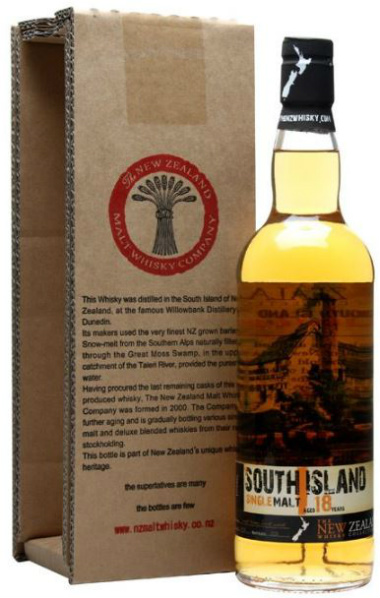
Another speciality is Diggers and Ditch which they call a ‘Double Malt’ Whisky. Once we all called something like this a Vatted Malt and nowadays we should call this a Blended Single Malt or something if it were Scottish, which it isn’t so Double Malt it is! Diggers and Ditch is a vatting of NZ Single Malt and Tasmanian Single Malt.

Next in the collection is the Milford Range. Here we have a 10yo, a 15yo, a 18yo and a 20yo. All bottled at 43% ABV.Only two series left. First the South Island range of Whiskies. Here we have a 18yo, a 21yo and a 25yo. The 18yo and the 21yo are bottled at 40% ABV. and the 25yo is bottled at 46% ABV. Hurray!

Last but not least the Cask Strength collection. Finally some examples of single casks that are bottled like it sits in the warehouse, at natural strength. For the time being the following Single Cask bottlings are released (the list may not be complete):

  • 1988: 23 year old (casks #70 and #72)
  • 1989: 22 year old (casks #58 and #148)
  • 1990: 21 year old (cask #90)
  • 1993: 18 year old (casks #21 and #32)

Color: Light gold.

Nose: Fresh, lively and fruity. Hints of cream butter, toffee, flower and cookie dough. Very rustic, light, sunny and fruity. Apple compote. Tiny hints of creamy wood. It smells like a summer’s day in the country, where a warm wind moves the curtains, and a freshly baked apple pie sits on the window sill.

Taste: Light, fresh and fruity again. Chalk and the slightest hint of malt. Apples in all its guises. Apple skins, apple compote, warm apple pie. The sugary sweetness tastes a bit watered down, but the nice fruity acidity keeps the whole fresh. The apples taste fantastic in the finish. A happy Whisky!

I wasn’t a firm believer of the “summer dram”, but if they exist, this is one of them! Extremely happy I bought myself a bottle of this 🙂 This gets the same score as the DoubleWood but it is a completely different Whisky.

Points: 84

Ogier Caves des Papes Les Caprices d’Antoine Côtes du Rhône 2010

And here is already the last one of our trio of Ogiers. This time a more modern blended Côtes-du-Rhône made as a tribute to Antoine Ogier, the founder of the Ogier Caves des Papes Winery, located in Châteauneuf-du-Pape.

Les Caprices d’Antoine is made of classic Southern Rhone varieties like Grenache and Syrah, supplemented with smaller amounts of Carignan and Mourvèdre, making this a Southern Rhône blend (GSCM). Funny enough these are all to be found in a Châteauneuf-du-Pape wine except for Carignan, which isn’t allowed! Carignan is mostly found in Rioja-wines (in Spain it is called: Mazuelo). Carignan is mostly used to give extra body and a deep color to wines. The wine was aged somewhere between 6 to 8 months in French and American oak barrels. The wine has 14,5% ABV.

Color: Dark ruby-red with a purple and / or violet edge.
Nose: Recognizable nose of a Rhône-wine. Immediate balance and young. Again at first not very heavy. Typical of Ogier. It has vanilla from the American oak, and even a slight sourness like yoghurt. Warm earth, licorice (also from Carignan), spicy wood and lots of red fruits. Red apple skin, with raspberry and hints of strawberry. (I said it was modern didn’t I?)

Taste: Fruity and acidic. Soft tannins that hardly dry the palate. Again a light style Ogier. Licorice stays a wee bit longer on the palate. Medium finish that is quite simple. Definitely a simpler wine than the two I reviewed earlier. Very typical for this wine is the thick licorice note it has, and a slight hint of bitterness that gives the finish some character, but I would have preferred some more fruitiness.

Recommended with meat and cheese, well which red wine isn’t these days. For me it is more a sort of daily drinker type of wine that doesn’t need your attention all the time. It’s good, but nothing extraordinary. I hope Antoine wasn’t like this, although the wine is not bad.

Points: 80

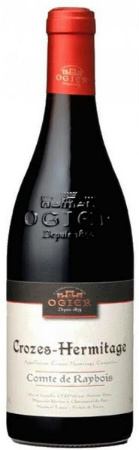
Ogier Caves des Papes Crozes-Hermitage Comte de Raybois 2009

Another red wine, another Ogier. Crozes-Hermitage lies in the northern part of the Rhône wine region and has a continental climate. Nearest town being Tournon-sûr-Rhône, where Châteauneuf-du-Pape is located more to the south near the town of Avignon, which has a mediterranean climate.

Where the previous Ogier was a Châteauneuf-du-Pape made with four grape varieties, this Crozes-Hermitage is a 100% pure Syrah. That in itself is a no-brainer since Syrah is the only red grape allowed for this appellation, or isn’t it? Strange enough two white grape varieties are allowed for use in the red wines (up to 15%). These are: Marsanne and Rousanne. Since this wine is all Syrah and the Châteauneuf-du-Pape is a blended wine of four grape varieties, I expect this wine to be rather different, albeit a Rhône wine. Syrah is a ballsy grape variety, which usually adds black and blue fruit flavors, chocolate and pepper, but knowing Ogier, this example might be lighter in style than its colleagues…

Color: Deep dark, very dark, red.

Nose: Vanilla and clotted cream. Somewhat closed, smells like a cold wine. Smallest hint of fish. (Should I be writing this? Don’t worry it’s inoffensive). After holding it in my hand, swirling it a bit, an explosion of aroma’s. Nice rich typical Syrah, warming. Hot stones. Spicy yet supple (yes still writing about the smell of it, and it smells, well…, supple). A little bit of dry but fresh uncut grass, and field flowers with strawberry jam. Nice dark fruits emerge from the jam. Nice stuff this, quite complex and interesting.

Taste: This has some more tannins than the Châteauneuf-du-Pape I reviewed last. It dries the tongue and it is a bit austere. It has the, by now typical,  Ogier lightness to it. Syrah can be very heavy, but this Syrah just isn’t. I just poured it, it is light with a light finish and a nice acidity counteracted with some butter. With some breathing it should get better. It’s a bit like Metallica played by a Finnish string quartet. After some breathing and even taking big gulps, the wine actually doesn’t get any “heavier” It just is a lighter style of Syrah, which compared to the nose, is quite simple and easy.

No pepper nor chocolate for me, so this one should be aged further in the bottle, to get the pepper out. Syrah without this most probably is young and needs more time. Leave it alone for at least five years again, but in my opinion it should age even longer than that.

Points: 84

Ogier Caves des Papes Châteauneuf-du-Pape Reine Jeanne 2010

Let’s continue with another red wine. This is a Châteauneuf-du-Pape from Ogier Caves des Papes. Not to be confused with the Ogiers from Côtes Roti.

Christophe Ogier had a wine shop established in 1859 called Ogier et Fils. In 1872, his son Etienne took over the company and he passed it over to his grandson Antoine in 1914. In the 1950’s the company joins with Bessac Caves des Papes in Châteauneuf-du-Pape. Their combined estates are all located around Châteauneuf-du-Pape.

This example of Châteauneuf-du-Pape is built around the four well-known grape varieties for the appellation of Châteauneuf-du-Pape. Grenache (versatile, easy to use and adds rich fruit flavors), Syrah (ballsy, adds black and blue fruit flavors, chocolate and pepper), Mourvèdre (spicy, leathery, gives the wine a dark red color) and Cinsault (perfumy and floral). Grenache and Syrah (and Mourvèdre) being the most popular for the region and this type of blended wine. The wine has had some ageing in oak barrels and boasts a hefty 15% ABV.

Color: Dark ruby-red.

Nose: Creamy and very fruity. Red fruits and prunes. Hot butter and warm earth. Vanilla and utterly balanced, otherwise light. It has some sweet-smelling oriental spices, most definitely some ginger and hints of licorice. Small hint of meat(loaf). Great overall perfume.

Taste: Again light, not very tannic, but still a mouth full, and a little bit drying. Licorice. Deep terroir and only slightly acidic. Medium finish with the licorice sustaining. A bit mysterious. Already needs decanting for its full aroma to show, but after some breathing (also in the glass) a very good and aromatic wine.

Very nice and somewhat light Châteauneuf-du-Pape. Today a very inoffensive wine but with a lot of quality to it. Extremely drinkable but not to be taken with heavy foods. Sometimes almost an aperitif wine! I think the wine should be aged further for at least five years. It will improve, but in which way it will develop is hard to predict. Lovely wine, but could have been better with some more body, a little bit more meat on the bone, but the meat this is there is pretty good mind you! Let’s hope it will get more body from the additional ageing. Very nice wine nevertheless.

Points: 87

Thanks Richard for the wine!

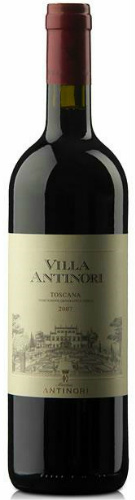
Villa Antinori Toscana IGT 2007

The history of the Antinori family dates af far back as the 12th Century, when Rinuccio di Antinoro produces wine at the Castello di Combiate near Croci di Calenzano, outside of Florence. The particular wine I’m reviewing today, Villa Antinori, was first made in 1928 and at that time it was a Chianti, but a Chianti that could be further aged. Much later, in 2001, Piero Antinori, reworked this wine into a Tuscan IGT. The wine itself is a Super Tuscan blend: with 5% Syrah, 25% Cabernet Sauvignon, 15% Merlot and of course 55% Sangiovese. After the malolactic fermentation the wine was aged in French, Hungarian, and American oak barrels for one year. ABV is 13.5%.

Villa Antinori Toscana IGT 2007Color: Dark ruby-red

Nose: Spicy and fresh, seems young although it does have some ageing under its belt. Some warm very aromatic Tuscan soil, nice! It has its roots firmly in the ground. Warm summer wind late in the evening. Nice red fruits, cherries, blueberries and slightly herbal with a little bit of wood to give it some more character. Nicely balanced wine. Lovely wine with sometimes some whiffs of field flowers.

Taste: Very supple and extremely easily drinkable and delicious. Again some terroir, but not as much as the nose had. Well integrated blend, everything seems to fall in place. Nice depth. Not very tannic, though there is some drying sensation on the tongue and it’s only slightly acidic, but the acidity increases after some more breathing. Breathing also gives the wine something of a bite, bitterness that is, from the wood. The finish is all right and half-long.

This first accompanied food and when that became to spicy, it easily overpowered this wine. The wine itself seems quite light at first, but it did pick up after more breathing. Recommended drinking window for this wine is said untill 2014, so if you have this lying around it’s now probably at it’s best, but I feel still can handle another couple of years…

Points: 83

Bruichladdich 32yo 1970/2002 (44.2%, OB, First Fill American Oak Casks, 4200 bottles)

Let’s step things up a bit with this legendary Bruichladdich. Bruichladdich was founded in 1881, and the distillery was built by Barnett Harvey with money the family got from an inheritance from his brother. It is not the Barnett family’s first distillery though. In 1881 they also own the well-known distilleries: Yoker and Dundashill. Between 1929 and 1936 the distillery is closed. Much later in 1983 the distillery was closed as many others were, but fortunately it was saved (in the same year) and didn’t get demolished. Next the distillery was again closed between 1995 and 2000. In 2000 the distillery was bought for £6.5 million, by a group of investors. Quite a good investment since this group sold the distillery again for £58 million in 2012. The new owner being Rémy Cointreau.

Color: Full gold.

Nose: Old bottle. Waxy and very full and heaps of character. Vanilla with some nice acidity. There is also a fantastic woody note. Smells a lot like a 1972 Caperdonich (from a Bourbon cask), but fresher, less heavy, but don’t make the mistake thinking this is a light nose. Very drying nose, dusty and powdery and full of fresh air. All written here isn’t released by the Whisky in one go, it is released in layers. This nose alone would score sky-high. Absolutely stunning.

Taste: Fruity vanilla which is transported by a fabulous bed of wood. Sugared yellow fruits, again apricots (I get that a lot lately), but also a nutty part, almonds, but nothing bitter. A hint of toasted cask (sweet wood). Perfect big bold body with a mouthfeel to match. Good finish, it leaves a taste in your mouth that should have gone on forever.

This is a Whisky that fetches a pretty penny at auctions today. I should have bought this when it got out. In today’s market, Whiskies like this would be put in some sort of crystal decanter or another polished over the top packaging and would go for 1000 or 2000  Euro’s easily. Having said that, it’s probably worth the 500 Euro’s it costs today. Go and get it, I’ll vouch for it. I had this at 91 up untill now, but that was a grave error on my part. The new score is…

Points: 92