My good friend Christoph asked me to have a look at a clean bourbon cask whisky and look for mint. As it happens, I have just such a thing on my lectern, so let’s have an adventurous search for mint in this whisky. This whisky was opened on November, 27 2010 at a tasting session with my Whisky club “Het Genietschap” where the theme was “Whiskies younger than 10yo”. This was one of my entries (together with the Kilkerran). I remember I found it very closed when freshly opened. Just have a look at the picture from june 5, 2012. How full it still is.
 Color: White wine, light gold.
Nose: Very clean bourbon nose, clean ethanol, some chocolaty wood and musty. Fresh sea air and powdery. Very typical for high cask strength young Cadenhead bourbon barrel whiskies. I’ve smelled everything there is now, no evolution, so we can move on to the taste. Beware it’s 63.1% ABV.
Taste: Strong and spicy, but not woody (just a bit). There’s also some smoke ánd a freshness resembling menthol a bit, but not mint. Everything is in the details. It’s great to taste something that’s spicy, not from the wood. It’s obviously sweet at this high strength, maybe a tad too sweet for my tastes. High alcohol with a lot of sugar can be a bit nauseating. This one’s on the precipice, but didn’t fall in.
As I said this is very typical for those high strength Cadenhead bottlings. They are very clean and reveal quite some information about how the cleanly distilled spirit from a distillery is. This is as honest as it can get, so it’s quite interesting to taste a few head to head. I guess this is a connoisseurs whisky. Not made for your gulping pleasure at a card game. And it can only be ‘enjoyed’ with caution. If you don’t give it enough attention, it will give you very little. The fun is maybe more in analyzing and discovery. The fun is also for those people (like me) who occasionally like their whiskies strong and utterly clean.
 I once had a similar bottle of Tormore that was even stronger and older (13yo, 63.9%, 85 Points). There were many things wrong with it, like a very metallic taste, but still I had a lot of fun with it, when ‘enjoyed’ at the right moment. I found myself another bottle before it completely vanished of the face of the earth.
Sorry C. No mint, I’ll have to look further, or you have to taste this for yourself this summer 😉
Points: 84
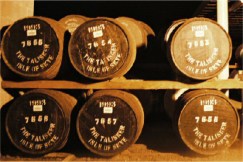 And here is Talisker. Talisker is a favourite of mine, a love affair maybe. It is a unique distillery on a unique island. Talisker is always good. So many big names from the past have slipped, some where good in the 60’s, but not now, some were good in the 70’s, but not now. Talisker isn’t one of them. Just buy any Talisker 10yo and it’s great. Even the worst Taliskers are still good. So the quality is alway delivered. Kudo’s to the people of Talisker. And when Talisker went cheating (Cask sold of to brokers or independent bottlers), Talisker was still very interesting. Just have a look at the different Taliskers issued by Douglas Laing, (as Director’s Tactical). All those casks were probably sold off since they didn’t possess the typical Talisker markers. Peat, pepper and so on. But give these a chance and something extraordinary is revealed to you about the Talisker spirit. And again even the worst Taliskers from them are still good. That’s why I like Talisker very much.
 Strange enough Talisker was never issued as a Rare Malt. But saw the light of day in many forms in a Special Release. As a Normal release we have the 10yo, 18yo and the distillers edition (finished in a Amoroso Sherry cask). And de standard Special releases were the 20yo, 25yo and the 30yo. The 20yo was released in 2002 and 2003, the 25yo was released in 2001 and from 2004-2009. The 30yo was released from 2006 untill 2010. In 2011 there were no Taliskers anymore, just a 34yo from 1975, that cost a pretty penny.
 Taste: Pepper! Animalesk. Sweet and woody (a bit sour). The clay from the nose comes through big time. Ash, almonds and putty. It has some sweetness hidden in the clay, but that disappears quickly. This is some great full-bodied stuff. The finish has some wood in it, slightly bitter and could have been a wee bit more balanced. Water does little for this whisky, so you’d better not.
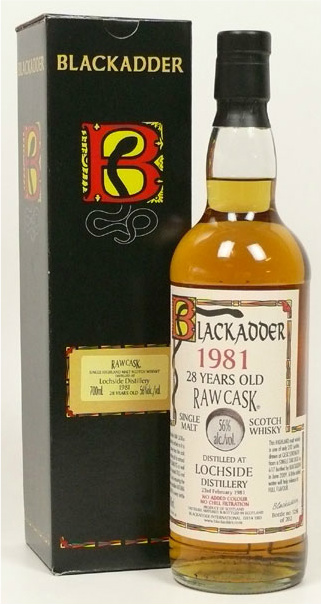 One from the (in)famous Raw Cask series. A lot of ‘stories’ are told about this one. For instance that Blackadder just throw any toasted cask trash they can get their hands on in there during bottling. That would be a shame wouldn’t it? Blackadder are also the people who bring us bottlings from the Aberdeen Distillers series and the Clydesdale series in the dumpy bottles.
 Taste: Wow, full body and spicy, Vanilla with apricot sauce. Nice! Yeah, this is it. Slightly beer like bitterness in the finish ánd black pepper. Alcoholic cherry bon-bon. Blueberry juice and creamy vanilla. Yes this has it all. When the bottle was opened at the Genietschap
  Here is a cigar that’s with me for a long time. I bought this box seven or eight years ago, so this had a good chance to age well. Still, this is a Panatela, usually a cigar people buy to smoke quickly and do not give it a chance to let is age. Hey, but I did! Rafael González is a very small brand, that has always been known for a very good Lonsdale or Corona Extra. Now only this Panatela Extra, a Petit Corona and a Perla are made. All small cigars.
 Cuban Rafael González Panatela Extra (36 x 127mm, Vegueritos, Short Panatela, Box Code ORE JUN 04)
 Taste: Draw was ok, a bit heavy at first. Great smoke that’s a bit sour. Woody and well rounded out, very balanced. Ageing did this cigar well. Mild smoke. Draw now ok. Mocha, milk chocolate mousse. Firm white ash. Easy, uncomplicated smoke. Again the second-hand smoke smells great. Still it’s not overly complex. Ash falls off rather quickly. The whole taste is on the dry side, woody, cedar, it would have been nicer if it had a creamy component.
 Than the last third, and boy what a turn! When the first part of the cigar is very mild and tasty, the last third is extremely strong. It does have its merits but if you are an inexperienced smoker, this part is the part that turns you green! (I’ve seen it happen to someone at work, with this cigar when it was younger). The strength is well countered by a good coffee, but without is it is extremely drying and a bit harsh. Heavy on nicotine. The ash turns brown so you’ll even have a visual aide in recognizing the last third…
 And here is another whisky from my lectern. This time an old (bottled in 1999) Craigellachie from Scott’s Selection. The people who brought us the fabulous Longmorns from 1971. Therefore I always have a soft spot for these guys. This Craigellachie was opened on our
  Color: White wine.
 This should turn out to be a very interesting review. If not for you, than certainly for me. Mr Bladnoch, Raymond Armstrong has a lot of fans, just have a look at the
  After giving the whisky some time to breathe it gets somewhat more balanced and friendlier, some nice spices shine through, with just the right amount of wood. It just doesn’t shed its new-make-and-wood finish.
 Points: 77
 What catches the eye with this beer is the statement: “bier met smaakevolutie” thus stating that this is a beer with an evolution in taste. Great! I love that in my drink. Evolution.
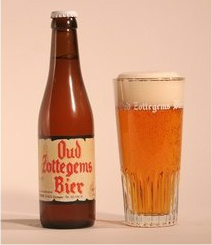 Color: Murky brown, not much foam.
 I would say. Drink this beer! It’s very nice ánd nearly extinct. It has become a very regional beer and deserves a lot of attention. Losing this would be a shame. I’m definitively buying this again, but sure am curious for the Grand Cru version of this. So thumbs up and a well-earned:
 And now for a completely different beer. This time something from the oldest brewer in Britain. Sheperd Neame from Faversham, Kent founded in 1698. Spitfire is a cask conditioned bitter that came onto the market in 1990 to commemorate the Battle of Britain. This bottle of britain is named for the famous fighter aircraft from the second world war. The beer also has a different
  kind of advertising than we are used to of which I only give you a few, but there’s a lot more. Let’s move on to the beer, shall we?
 Nose: Fresh, it almost has no scent at first, certainly malt but after that we’re in the twilight zone. Hard to tell what else there is.
 Taste: Thin (probably the low ABV). Fresh, summery ánd bitter. This bitterness once tasted, never leaves and dominates even the finish. The body is light, hoppy and malty. The middle and the finish make this less summery, although I guess this will do well as a thirst quencher on a terrace looking at people passing by.
 In the end I found this to be very easy, not to say very simple. For me even though it isn’t very bitter, still the bitterness dominates the light palate. Maybe that’s why they call this a bitter.
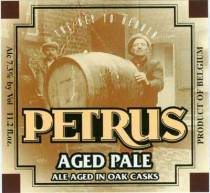
 Still nice weather and too hot for writing blogs, so hereby I apologize to my readers that it took a few days for a new review. This time a review of beer brewed by Bavik in Belgium called Petrus Aged Pale. This beer was initially intended only for the US market, hence the typical warnings on the label, even though I bought this bottle in
 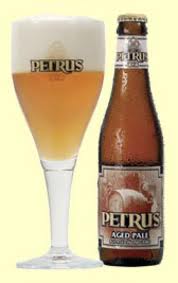 Color: Gold
 this simple beer let’s you know it has a lot more going for it. It awards you with a lot more complexity than you would say at first. It is close to a Rodenbach but in my opinion, better balanced and way more complex. You just have to work it a bit. For me this is better than the classic Rodenbach, but I’ll have to give the Rodenbach Grand Cru a go. This Petrus could be an acquired taste, but one I like a lot.
 And here’s yet another Speysider and not just any Speysider but an example of Speyside’s finest distillery…probably. Just consider the statement for a moment (maybe not if you’re called Luc). There’s also Macallan, Longmorn and Strathisla in Speyside. I know there are others, but I didn’t want to make this list too long. Glenfarclas isn’t mentioned on the label, but let me tell you this is a Glenfarclas, and a very old one too. I have tasted several very old Glenfarclas, and sometimes they tend to be very woody, but that’s also because there are a lot of very old Glenfarclas around, and 42yo is a long time to spend in a cask. I’m 42 now and I wouldn’t want to spend my whole life in a cask.
 To the whisky then. Glenfarclas is still a family owned operation that started legally in 1836. In 1965 it was bought by John and George Grant. Since then there were a lot of Georges and John Grants. Very popular names indeed in that family (and The Beatles for that matter). Sometimes they have extra letters for identification purposes.
  Next time I’ll be up at Glenfarclas, I’m dying to meet Ringo S. Grant! Good to see a still family owned distillery surviving competing with the big conglomerates like Diageo. There are several more like Bladnoch for instance. Power to them!
 Master Quill