Let’s step things up a bit with this legendary Bruichladdich. Bruichladdich was founded in 1881, and the distillery was built by Barnett Harvey with money the family got from an inheritance from his brother. It is not the Barnett family’s first distillery though. In 1881 they also own the well-known distilleries: Yoker and Dundashill. Between 1929 and 1936 the distillery is closed. Much later in 1983 the distillery was closed as many others were, but fortunately it was saved (in the same year) and didn’t get demolished. Next the distillery was again closed between 1995 and 2000. In 2000 the distillery was bought for £6.5 million, by a group of investors. Quite a good investment since this group sold the distillery again for £58 million in 2012. The new owner being Rémy Cointreau.
 Color: Full gold.
Nose: Old bottle. Waxy and very full and heaps of character. Vanilla with some nice acidity. There is also a fantastic woody note. Smells a lot like a 1972 Caperdonich (from a Bourbon cask), but fresher, less heavy, but don’t make the mistake thinking this is a light nose. Very drying nose, dusty and powdery and full of fresh air. All written here isn’t released by the Whisky in one go, it is released in layers. This nose alone would score sky-high. Absolutely stunning.
Taste: Fruity vanilla which is transported by a fabulous bed of wood. Sugared yellow fruits, again apricots (I get that a lot lately), but also a nutty part, almonds, but nothing bitter. A hint of toasted cask (sweet wood). Perfect big bold body with a mouthfeel to match. Good finish, it leaves a taste in your mouth that should have gone on forever.
This is a Whisky that fetches a pretty penny at auctions today. I should have bought this when it got out. In today’s market, Whiskies like this would be put in some sort of crystal decanter or another polished over the top packaging and would go for 1000 or 2000 Euro’s easily. Having said that, it’s probably worth the 500 Euro’s it costs today. Go and get it, I’ll vouch for it. I had this at 91 up untill now, but that was a grave error on my part. The new score is…
Points: 92
 Color: Dull light gold.
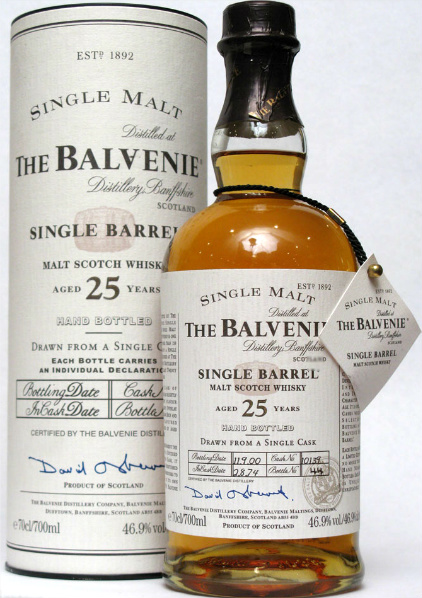 Color: Gold.
 It’s not only the bitterness that is obvious. Comparing these two there is infinitely more. That goes to show, how big the differences can be between two similar bottles, and how buying without tasting is so tricky. I would also like to point out that the reduction that obviously took place here isn’t a problem, this Whisky holds the fort. Actually it’s the best Balvenie I had in a very long time. Still no 90’s score though…
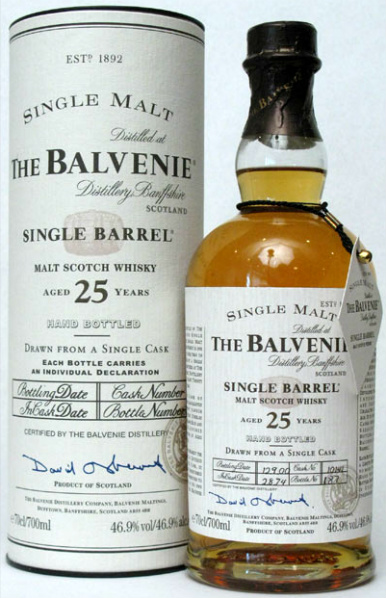 Color: Gold
 The fattiness dissipates quickly and the whisky breaks down in towards the finish. Wood attack! put this in your mouth and you think is pretty good (not great alas), but the vanilla fat is stripped, and you get hit by more bitterness than expected. The palate does lack complexity and balance. Aiii.
 So it’s time to celebrate the first anniversary of Master Quill and I’ve picked this bottle of 1979 Scapa, bottled in 2002. Well, things got off really good! Like I said, I would rip open this bottle and so I did accidentally. I broke off the cork! Bugger!
 Color: Copper
 it’s not completely balanced, but it will get there in the end. Complex, well, not exactly. It shows some sourness from the oak, but after half an hour it is pulling together, and it has a great and long finish. This again is a stunner!
 A few days ago my whisky club had a tasting of Aberlours. Quite a unique one to boot since these were almost all exclusively official bottlings. We only had one independent Aberlour. It was from a Bourbon Cask and did show the distillery profile for a while, but that was quickly gone. We had a few out of the standard range and a few from the standard ranges from the past. A few bottles stood out. We liked one old 12yo double cask matured for its high dark Oloroso Sherry content (and costing next to nothing). An old 21yo from 2000 was very good and this odd one out. The 1988 Distillers Selection, that was released exclusively in Spain. After this one 1988 came only one other Distillers Selection, the 1989. Again for Spain only. For Aberlour this is quite special. It is said that instead of the usual Oloroso, for this bottling Fino and/or Manzanilla is used!
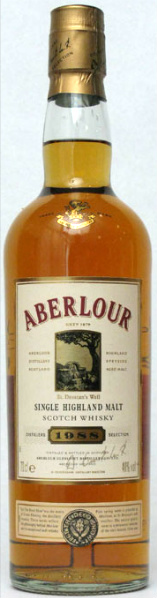 Color: Full Gold
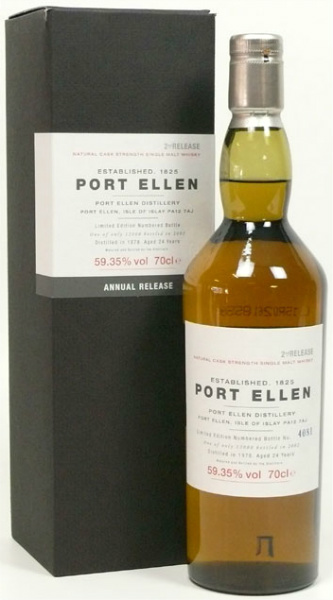 How nice it is to have another Port Ellen on these pages. This one in particular plays a strange role in the Port Ellen annual release series. First of al this strange ABV. 59,35%. New Japanese measuring equipment on loan? No it’s not that. This one is known to be a little closed. Very closed in fact. I had the chance to try this expression when it was freshly opened and it was really hard to taste this. Very hard to tell what is in there. It was nice, but nothing you’ve come to expect from such a Port Ellen. This time around the bottle is open for a while and less than half full. Is this, one of those whiskies that has to be put on the shelf without its cork, to maximize its breathing? Lets see…
 Well it does demand of you that you’ll work on it since it doesn’t give away its treasures easily, especially on the nose. Probably not the best from the series, but still it oozes Port Ellenness. It is an experience. Freshly opened bottle scored 87 Points, but after extensive breathing I’ll score this:
 Color: Copper Gold
 For the Douglas Laing brand, It all started in 1998 with the Old Malt Cask series, to commemorate their 50 years in business. Therefore if possible the series is bottled at 50% ABV. Later a more luxury series was introduced called The Old and Rare series. Although it is better known as the Platinum Series.
 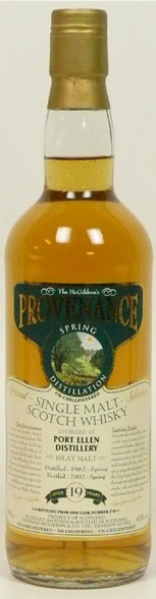 In fact there are a lot of ‘names’ on their labels. The third series I would like to mention here is the Douglas McGibbon’s Provenance series. A series placed under the Old Malt Cask series, also with lower ABV, usually 43% or 46%, but also cask strength and small batch versions exist. There are also some newer series, like the Director’s Cut, introduced in 2011 with cask strength single cask single malts and single grains. Other series by Douglas Laing are the Premier Barrel and Douglas of Drumlanrig.
 What could be more appetizing to you than the fact that the site of St. Magdalene in Linlithgow, West Lothian, housed a Lepper Colony in the 12th century, or that the water didn’t come from an ancient super pure melted snow mineral water source, but from the Union canal nearby. But enough facts. If you want more, have a look at
  Taste: Thick, grassy and medium sweet. Dried apricots and apple skins. It isn’t the same as the nose (for me the nose was not fruity), but it complements it very well. Again there is almost no wood. It’s there really, but it is hidden well and transports the body. You can taste the balancing spiciness or distant bitterness (again, hidden well) and the sourness in the finish is from the oak too. Great balance.
 Master Quill