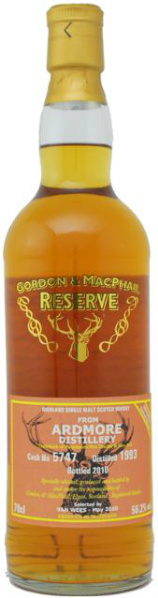
 Let’s do another Ardmore and compare it to the day before yesterday’s offering by The Whiskyman. We all know that 1992 is somewhat of a good vintage for Ardmore. So let’s see what happened in the distillery a year later. This 1993 was bottled by Gordon & MacPhail and they were so kind to do that for Van Wees of The Netherlands.
Color: Gold
Nose: The same meaty, slightly peaty nose as The Whiskyman’s offering. Nice soap with green apples and other fruits. Leather. Dryer and more powdery. A little more wood too.
Taste: Great fruity sweet start, more ashy. Somewhat less complex and a tad more sourness from the wood. Same kind of peat. The peat itself is more chewy and more farmy. Toffee. Some mint in this one too. Rare black fruits in the drier and warming finish, but overall, a little less impressive than yesterday’s Ardmore.
This is an Ardmore, no doubt about it. Just nose it and you’ll smell the family resemblance to The Ardmore bottled by the Whiskyman. It’s from another year, but the nose is quite similar. In the taste department it’s a bit less balanced, but still has a lot going for it. I’m always a sucker for those black fruits in the finish. Like old style Bowmore for instance.
These 90’s Ardmore’s seem to me to be the Brora’s of the modern age. Great stuff. Recommended. I definitively have to look into Ardmore some more. So hopefully to be continued.
Points: 87
 Color: Light Gold
 Bunnahabhain is known for being the least peated of the island, still like a lot of others, raising to the occasion by answering the call of the public for more ppm’s. Burn Steward therefore started to bottle a “Moine” expression, with more peat, mimicking pre sixties Bunnahabhain.
 Also from 2009 the second release became “Autumn 2009” next up was “Spring 2010” and after that the fourth release was this “Summer 2010”. Also in 2009 the first Single Cask releases were released at cask strength. From 2011 the Single Cask bottles were released with red labels. In 2012 a Sherry Cask release at 46% ABV was released with a black label. Also from 2012 a new addition to the core range was released called “Manchir Bay”. Last but not least there are a few releases of 100% Islay at 50% ABV, where all ingredients of the whisky were sourced form the island itself. Now it’s time for “Summer 2010” solely from Bourbon Barrels from Buffalo Trace.
 Kilchoman then. The newest addition to the immensely popular Islay Whisky family. This new small farm distillery was built in 2004 near Kilchoman in the west of Islay, and therefore named Kilchoman. Operations started in 2005 and their first disaster struck in 2005 also. No distillery can call themselves a real Scottish distillery without a big fire. Well history was in the making so let’s do the fire thing quickly, they might have thought. Not hinting at any foul play of course. In 2005 the kiln burned down. Rebuild in 2006 and operations recommenced. As of 2009 but foremost 2010, Whisky started to be released. In 2009 the first release in the new core range was the “Inaugural Release”. Next up was “Autumn 2009” Let’s try our “Spring 2010” that was the third release.
 The wine is a Bianco di Toscana and is 11,5% ABV from Subbiano Italy. Even the bottling date is on the bottle: 16 november 2011. The grapes for this wine are: 50% Trebbiano Toscano, 20% Pinot Nero, 15% Sauvignon Blanc and 15% Vermentino.
  It’s a white wine with a pink hue over it, that comes from the Pinot Nero and carbonates slightly.
 Balmenach was licensed in 1824, but existed much longer as an illicit farm distillery called Balminoch. Not earlier than 1992 the first official bottling is released, a 12yo Flora and Fauna. Not long after this United Distillers (now: Diageo) sold Balmenach to Inver House Distillers, with wich came an end to the Flora and Fauna bottling.
 This Port Ellen is from Dutch retailers
 Don’t smoke or eat. Just you with this Port Ellen. It has balance and complexity, but seems so fragile.
 And here’s yet another Speysider and not just any Speysider but an example of Speyside’s finest distillery…probably. Just consider the statement for a moment (maybe not if you’re called Luc). There’s also Macallan, Longmorn and Strathisla in Speyside. I know there are others, but I didn’t want to make this list too long. Glenfarclas isn’t mentioned on the label, but let me tell you this is a Glenfarclas, and a very old one too. I have tasted several very old Glenfarclas, and sometimes they tend to be very woody, but that’s also because there are a lot of very old Glenfarclas around, and 42yo is a long time to spend in a cask. I’m 42 now and I wouldn’t want to spend my whole life in a cask.
 To the whisky then. Glenfarclas is still a family owned operation that started legally in 1836. In 1965 it was bought by John and George Grant. Since then there were a lot of Georges and John Grants. Very popular names indeed in that family (and The Beatles for that matter). Sometimes they have extra letters for identification purposes.
  Next time I’ll be up at Glenfarclas, I’m dying to meet Ringo S. Grant! Good to see a still family owned distillery surviving competing with the big conglomerates like Diageo. There are several more like Bladnoch for instance. Power to them!
 Color: Light Gold.
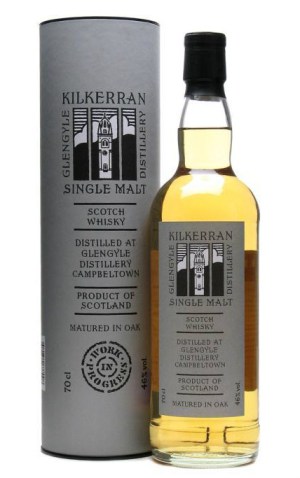
 We all like to say that the old stuff is better, and “they just don’t make it like that anymore”. Now just have a look of some of those new malts around. And it’s not only Kilkerran, but Kilchoman too, aren’t they making fabulous stuff? And the stuff is just seven years old to boot. Both of them. And if this as good as it is now, how will it be at the planned 12 years old? We just have to wait untill 2016 to try that. But untill then we’ll be just as happy with the annual WIP’s. Forget about cocaine and XTC, there’s a new uncolored and unchillfiltered drug in town and it’s called Kilkerran…(and Kilchoman).
 Master Quill